Quick Facts
- Location: Domail meadows, Minimarg area, upper Astore valley, Astore District, Gilgit-Baltistan, Pakistan
- Altitude: around 3,500–4,000 metres (high alpine zone; the lake sits in meadows ringed by peaks)
- Famous For: water that shifts colour through the day — turquoise to green to blue — ringed by wildflower meadows; brown trout; near-total solitude
- Nearest City: Astore town (Eidgah), a 2–3 day journey away via the Burzil Pass
- Accessibility: 4×4 only, over the high Burzil Pass; a permit/NOC from the Pakistan Army is required for non-locals as the area lies near the Line of Control
- Known Landmarks: Minimarg village, Burzil Pass, Domail meadows, Chillum (Chilam Chowki)
- Best For: adventure travellers, landscape photographers, trout anglers, and anyone who wants Pakistan’s most exclusive lake experience
Why Visit Domail Rainbow Lake
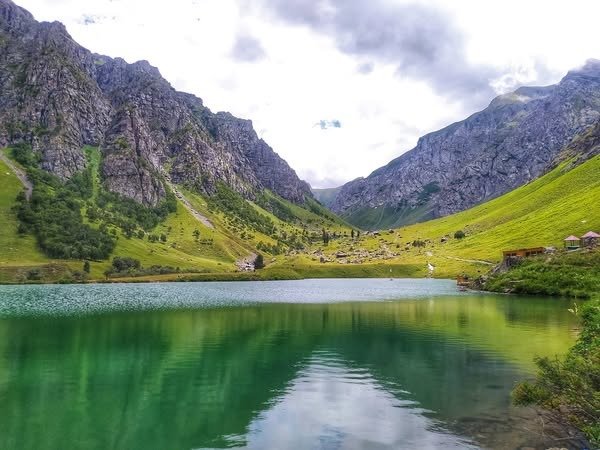
Some lakes you visit. Rainbow Lake you earn — and that is precisely why it stays with you. Hidden in the Domail meadows of Minimarg, in the far upper reaches of the Astore valley, this is the lake that travellers describe with the phrase “time stops here”. Its water is so clear you can count the stones on the bottom, so alive with colour that it shifts from turquoise to emerald to deep blue as the sun moves across the sky, and so full of brown trout that anglers speak of it in reverent tones. It is, by common consent, one of the most beautiful small lakes in Pakistan.
What makes Domail Rainbow Lake different from every famous lake in the north is the journey that guards it. To get here you cross the Burzil Pass — a high, weather-beaten crossing at around 4,400 metres that is snowbound for most of the year — and enter Minimarg, a valley so close to the Line of Control that every non-local visitor needs a permit from the Pakistan Army to enter. That single requirement has done what no tourism policy could: it has kept Rainbow Lake pristine. No resorts crowd its shore. No boat queues. Just meadows full of wildflowers, glacial streams, and silence.
The lake rewards a particular kind of traveller. If your idea of a perfect day is a 4×4 track with no guardrails, a picnic on grass that has never seen a crowd, and water so still it doubles the mountains, this is your place. Photographers call it a dream — the colour-shifting water against dark peaks and flower meadows is almost unfairly photogenic. Anglers come for the brown trout. And romantics come because there are few places left in Pakistan where you can sit beside famous water and hear nothing made by humans.
Domail Rainbow Lake is perfect for adventure seekers doing the great Astore–Deosai–Minimarg circuit, for couples who want solitude that cannot be bought, and for travellers who collect “I was there before it was famous” stories. It is not easy, it is not quick, and it is not for everyone. That is exactly the point — and exactly why you should go.
History of Domail Rainbow Lake
Rainbow Lake has no recorded ancient history as a named destination — it is a natural alpine lake in a valley that, until recent decades, saw few outsiders at all. Its story is the story of Minimarg and the Burzil Pass, and that story is old.
The Burzil Pass, the high crossing you must make to reach Domail, was for generations one of the historic caravan routes linking Gilgit-Baltistan with the Kashmir valley. Traders, shepherds and travellers moved over its snows with goods and livestock, and the meadows of Domail and Minimarg served as summer grazing grounds for the herders of the upper Astore valley — a way of life that continues today, with livestock and their keepers filling the meadows each summer.
The modern chapter of the region is shaped by geography of a harder kind: Minimarg lies close to the Line of Control, and the area has been under military oversight for decades. The requirement for non-locals to obtain a permit (NOC) from the Pakistan Army before travelling to Minimarg and Domail is the defining administrative fact of any visit — and, paradoxically, the reason the landscape remains so untouched. Limited access has preserved what open access would long ago have commercialised.
In recent years, Rainbow Lake has begun appearing in travel vlogs and on the itineraries of specialist tour operators, as improved 4×4 tracks and a small seasonal tourism footprint — tented camps in Domel, local guides — have made the journey feasible for determined travellers. It remains, however, one of Pakistan’s least-visited famous lakes. Visit with respect for that fragility: the meadows, the water and the trout are the treasure, and keeping them pristine is every visitor’s job.
Top Things to Do in Domail Rainbow Lake
Watch the Water Change Colour
This is the lake’s signature magic. Fed by freshwater streams from the surrounding mountains, Rainbow Lake’s famously clear water shifts shades — turquoise to green to blue — at different times of day as the light angle changes. Give it a full day: arrive in the morning for glassy reflections, watch the colours deepen at midday, and stay for the golden evening light on the meadows. Photographers consistently rank it among the most photogenic small lakes in the country.
Fish for Brown Trout
The lake holds good-sized brown trout and is genuinely popular with trout anglers — one of the few places in Pakistan where lake fishing matches the mountain scenery. Bring your own tackle from Gilgit or Astore (nothing is available locally), fish responsibly, and check current local rules before you cast. Even non-anglers enjoy watching the trout glide through the transparent water.
Walk the Wildflower Meadows of Domail
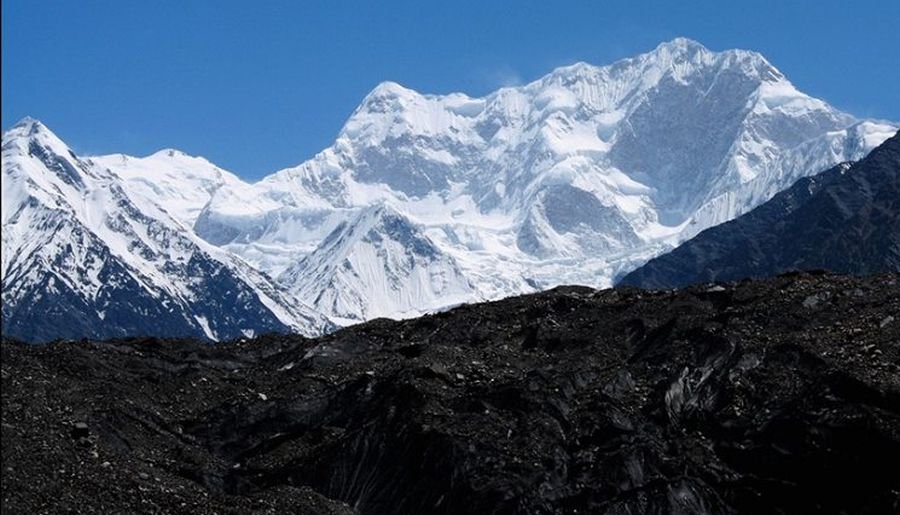
The meadows around the lake are the other half of the experience: wide, flower-filled alpine pastures with panoramic views of snow-covered peaks, grazed in summer by local livestock. Walk slowly, breathe the thin clean air, and picnic on the grass. This is also prime wildlife country — keep an eye out for marmots and high-altitude birds.
Camp Under Himalayan Stars
At nearly 4,000 metres, far from any town’s glow, the night sky over Domail is extraordinary. Summer tented camps operate in the Domail area, or bring your own expedition tent. Nights are cold even in July — but the Milky Way overhead makes every shiver worthwhile.
Explore Minimarg Village and the Burzil Pass
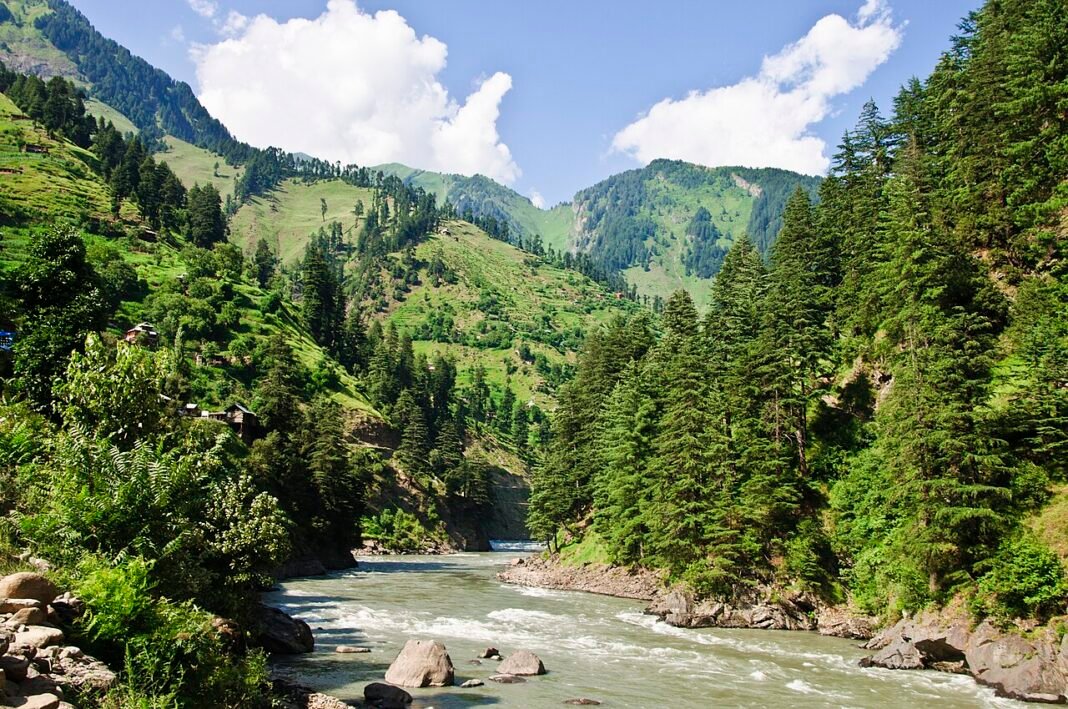
The nearby village of Minimarg — pine forests, wooden houses, and a frontier atmosphere — is worth half a day, and the crossing of the Burzil Pass itself is an adventure: a high, stark, beautiful drive that explains why this valley stayed hidden so long. Combine the lake with our Astore travel guide and Deosai National Park travel guide for the full northern circuit.
Famous Places In and Around Domail Rainbow Lake
- Minimarg Village — pine forests and frontier charm; the valley’s main settlement
- Burzil Pass — the historic high crossing (~4,400 m) on the route in
- Domail Meadows — the wildflower pastures surrounding the lake
- Chillum (Chilam Chowki) — gateway settlement on the Astore–Minimarg road
- Deosai Plains — combinable via the Astore side; Sheosar Lake and summer wildlife
- Rama Valley — Astore’s famous pine valley, on the approach route
How to Reach Domail Rainbow Lake
Read this section twice — the permit and the pass are the whole story. Domail Rainbow Lake is reached from Astore town via Chillum and the Burzil Pass to Minimarg and Domail. The journey takes two to three days from Astore, and every non-local needs a permit.
Permits (essential): Because Minimarg is close to the Line of Control, all non-locals require a No Objection Certificate (NOC) from the Pakistan Army to travel there. Arrange this well in advance through a registered tour operator, or check the current procedure at the relevant offices/checkposts in Gilgit or Astore before setting out — requirements are enforced at army checkposts on the route, and you will be turned back without one. Carry your original CNIC (and passport for foreign visitors) at all times.
From Islamabad: Drive the KKH to Gilgit (~510 km, 10–12 hours), continue to Astore town via the Thalichi junction (~3 hours), then begin the Minimarg road. Total Islamabad–Domail is a 3–4 day expedition by road — this is not a weekend trip. The route is roughly 400–450 km from Islamabad as the crow flies, far longer by mountain road.
From Lahore: Motorway to Islamabad, then the KKH–Astore–Minimarg route above. Fly to Islamabad or Gilgit to save days.
From Karachi: Fly to Islamabad, then road or connecting flight to Gilgit, then the overland expedition to Minimarg. Allow a week round trip at minimum.
Nearest airport: Gilgit Airport (PIA from Islamabad, weather-dependent). All onward travel is by 4×4.
Road conditions by season: The Burzil Pass is snowbound for much of the year and typically opens only from June to August (sometimes into September). The Minimarg road is rough, unmetalled in stretches, and strictly 4×4 territory — travellers consistently advise hiring a good vehicle with a driver who knows the route, and never driving it at night or in heavy rain.
Transport options: A private 4×4 with an experienced local driver is the only sensible option. Specialist tour operators in Gilgit and Skardu run Minimarg–Domail–Rainbow Lake trips in season that bundle the permit guidance, transport, camping gear and food — strongly recommended for first-timers.
Route Details
- Islamabad → (KKH) → Gilgit: ~510 km, 10–12 hours by road, or a short flight when weather allows.
- Gilgit → (Astore Road via Thalichi) → Astore town: roughly 3 hours.
- Astore town → Chillum (Chilam Chowki) → over the Burzil Pass (~4,400 m) → Minimarg: a full, rough day by 4×4, with army checkposts en route — permits checked.
- Minimarg → Domail meadows → Rainbow Lake: the final approach through wildflower pastures to the lakeshore.
- Allow two to three days from Astore for the round trip, with a spare day in hand — fog and rain can hide the lake and close the pass with little warning.
Where to Stay in Domail Rainbow Lake
There are no hotels at Rainbow Lake. Accommodation is seasonal, simple, and part of the adventure.
Seasonal tented camps: In summer, tented camps (“tent villages”) operate in the Domail area, offering basic sleeping tents and simple meals. Standards are rustic — expect camp beds, shared facilities and early nights. Confirm availability before you travel, as the season is short and capacity is small.
Camping: Bring your own tent and full cold-weather sleeping kit if you want independence. Camp on established ground in the meadows, well away from the lakeshore and streams, and carry out every scrap of rubbish. Nights drop near freezing even in August.
Base options: For the nights before and after, Astore town’s hotels and guesthouses and the PTDC motel at Rama are the comfortable choices. Most travellers stage from Astore, do the Minimarg–Domail run, and return.
Where to Eat: Local Foods of Domail Rainbow Lake
There are no restaurants at the lake — you eat what you bring and what the camps cook. The signature meal of a Domail trip is fresh trout, caught in the lake or its streams and fried simply over a camp fire: ask your guide or camp about current fishing permissions first, and never take more than you will eat.
Stock up in Astore town before the Minimarg road: bread, rice, daal, cooking oil, tea, dried apricots and walnuts. Camp cooking is simple Pakistani fare — daal, sabzi, chapati, chicken if you carried it. In Minimarg village you may find small shops with basic supplies and, if you are lucky, an invitation to share a local meal: the Shina kitchens of the upper valley serve chapshuro, mamtu, and endless doodh patti, the milky tea that fuels every northern journey.
Budget for self-sufficiency: there is nowhere to buy a forgotten item beyond Astore town, so pack as if the shops ended there — because they did.
Weather in Domail Rainbow Lake
Domail sits at around 3,500–4,000 metres, where summer days are mild (around 10–20°C) and nights are cold year-round. The Burzil Pass is snowbound for much of the year, which is why the season is so short. Approximate ranges for the Domail–Minimarg zone:
| Season | Temperature Range | Conditions |
|---|---|---|
| Winter (Dec–Feb) | -20 to -5°C | Deep snow; pass closed; valley inaccessible |
| Spring (Mar–May) | -8 to 8°C | Thawing; pass still closed; no access |
| Summer (Jun–Aug) | 5 to 20°C | Pass open; prime season; wildflowers, clear water, possible afternoon rain |
| Autumn (Sep–Nov) | -12 to 5°C | Pass closes early; brief golden window in September, then snow |
Language and Culture of Domail Rainbow Lake
The upper Astore valley is Shina-speaking country, and the herders and villagers of Minimarg and Domail live a semi-pastoral life that has changed little in generations: summer in the high meadows with livestock, winter in the valley villages. Urdu is understood at the checkposts and in Minimarg’s shops.
Two cultural notes matter here more than anywhere. First, this is a sensitive border-adjacent area: be unfailingly polite at army checkposts, have your permit and ID ready, photograph only where clearly permitted (never military installations), and follow instructions without argument. Second, the meadows are working pasture, not a park — respect grazing livestock, do not disturb herders’ camps, and leave gates as you find them. Dress modestly, ask before photographing people, and carry out all rubbish: the valley’s pristine state is its treasure.
Shopping in Domail Rainbow Lake
There is nothing to buy at the lake and very little in Minimarg — a couple of small shops with basic supplies at most. Do all your shopping in Astore town or Gilgit: dried apricots, apricot kernel oil, walnuts, and warm woollens for the cold nights. Trout, of course, cannot be bought at the lake — but the memory of catching it is the souvenir. There are no bazaars, handicraft markets or shopping malls anywhere on the Minimarg route.
Travel Tips for Domail Rainbow Lake
Packing Essentials
Cold-weather sleeping bag (below freezing rated), warm layers including a proper jacket, rain gear, sturdy waterproof boots, sun protection (intense at 4,000 m), headlamp, water purification, all food and cooking fuel for the Domail days, fishing tackle if desired, and every rupee in cash — there are no ATMs beyond Astore town. Carry photocopies of your ID and permit separately from the originals.
Safety Tips
Altitude is the main risk: Domail’s 3,500–4,000 m can cause headaches and nausea — ascend gradually, hydrate, and descend if symptoms worsen. The lake water is glacially cold; do not swim. The Burzil road is dangerous in rain — never pressure your driver to continue in bad weather, and build in a spare day. Weather can hide the lake in fog; patience is part of the trip. Travel with a reputable operator if this is your first high Karakoram journey.
Money & Connectivity
Cash only, carried from Astore or Gilgit — small notes. There is effectively no mobile data at Domail (limited signal in Minimarg village on some networks); tell family your itinerary in advance and check in from Astore on return. Download offline maps for the entire route.
Best Time to Visit Domail Rainbow Lake
Summer (June–August): The Only Real Season
The Burzil Pass opens, the meadows bloom, the water shows its famous colours, and the tented camps operate. July is the sweet spot — the pass reliably open, the wildflowers at peak. Go on weekdays and outside public holidays for the quietest experience.
September: The Gamble
Occasionally the pass stays open into September, offering golden light and total solitude — but early snow can close it overnight. Only for flexible travellers with days to spare.
October–May: Closed
Snow seals the Burzil Pass for seven to eight months. The lake waits under ice. Plan for summer.
Final Thoughts
Domail Rainbow Lake is the hardest-won easy beauty in Pakistan: hard to reach, easy to love. The permit, the pass, the 4×4 track, the thin air — all of it melts away the moment the water comes into view, shifting colour under a sky so close you feel you could touch it. It is a reminder that the best places are rarely the convenient ones, and that a little bureaucracy and a lot of bad road are a small price for water this clear and silence this complete.
Go in July, go prepared, go respectfully — and leave the meadows as you found them. Rainbow Lake has stayed pristine because so few reach it; let your visit be part of the reason it stays that way. For more high-adventure inspiration, browse our Explore Pakistan collection.
FAQs
Where is Domail Rainbow Lake located?
In the Domail meadows of Minimarg, in the upper Astore valley of Astore District, Gilgit-Baltistan — reached via the Burzil Pass, near the Line of Control.
What is the best time to visit Domail Rainbow Lake?
June to August, when the Burzil Pass is open. July is ideal. The pass is snowbound for most of the rest of the year.
How do I reach Domail Rainbow Lake?
Drive or fly to Gilgit, continue to Astore town (~3 hours), then take a 4×4 via Chillum over the Burzil Pass to Minimarg and Domail (2–3 days from Astore). A permit/NOC from the Pakistan Army is mandatory for non-locals.
Do I need a permit for Rainbow Lake?
Yes. Minimarg is close to the Line of Control, so non-locals need a No Objection Certificate from the Pakistan Army, checked at army checkposts en route. Arrange it in advance through a tour operator.
Is Domail Rainbow Lake safe for tourists?
Yes, with preparation: go in summer, use an experienced 4×4 driver, acclimatise to the altitude (~3,500–4,000 m), carry all supplies, and respect checkpost instructions. Do not swim in the glacial water.
Is Domail Rainbow Lake suitable for families?
Only for adventurous families with older children who can handle long rough jeep journeys and basic camping. It is not a casual family picnic destination — the altitude, road and facilities demand resilience.
Where can I stay near Domail Rainbow Lake?
Seasonal tented camps operate in Domail in summer; otherwise bring your own tent. Stage from hotels in Astore town or the PTDC motel at Rama before and after the trip.
Why is it called Rainbow Lake?
Because its exceptionally clear water changes colour — turquoise to green to blue — at different times of day as the sunlight angle shifts across the surrounding peaks.