Quick Facts
- Location: The Galyat tract, Abbottabad District, Khyber Pakhtunkhwa (with a few galis spilling into Punjab near Murree)
- Altitude: around 2,000 to 2,500 metres across the hill stations; Nathia Gali sits at about 2,410 metres
- Famous For: A chain of colonial-era hill stations — Nathia Gali, Dunga Gali, Ayubia, Changla Gali, Thandiani — wrapped in pine, cedar, and oak forest
- Nearest City: Abbottabad, about 30–35 kilometres; Islamabad roughly 80 kilometres to the south
- Accessibility: Paved mountain roads throughout; an easy 2.5 to 3-hour drive from Islamabad
- Known Landmarks: Mukshpuri and Miranjani peaks, the Pipeline Track, Ayubia chairlift, Governor House Nathia Gali, Ayubia National Park
- Best For: Families, honeymooners, hikers, snow seekers, and weekend escapes from Islamabad and Lahore
Why Visit Galiyat
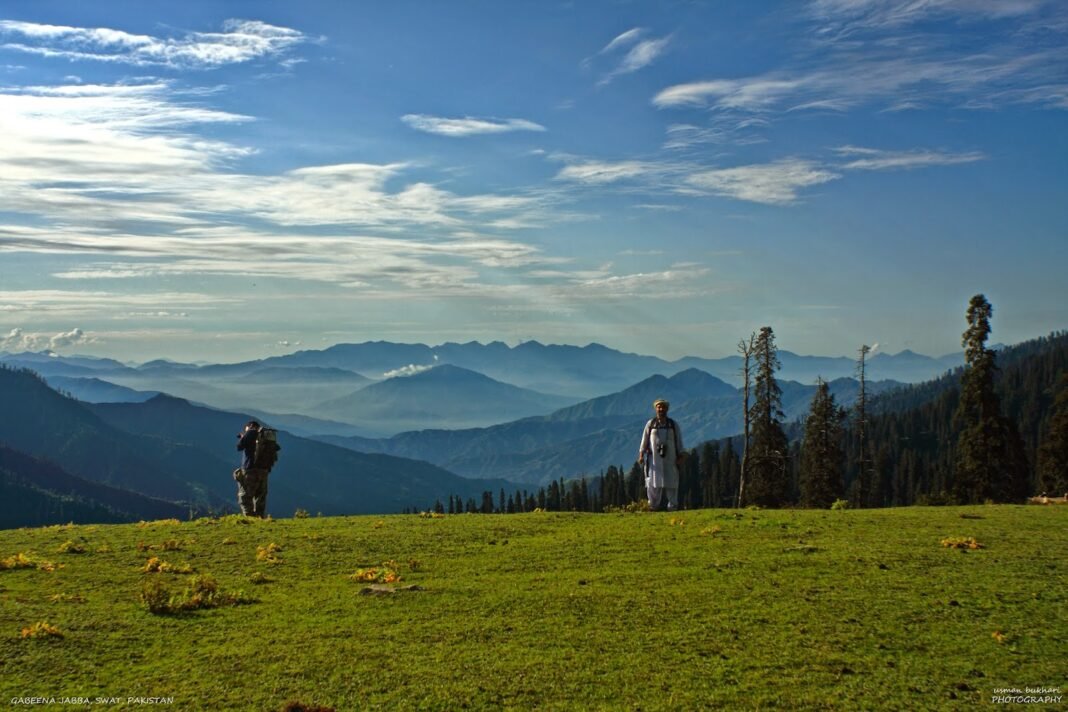
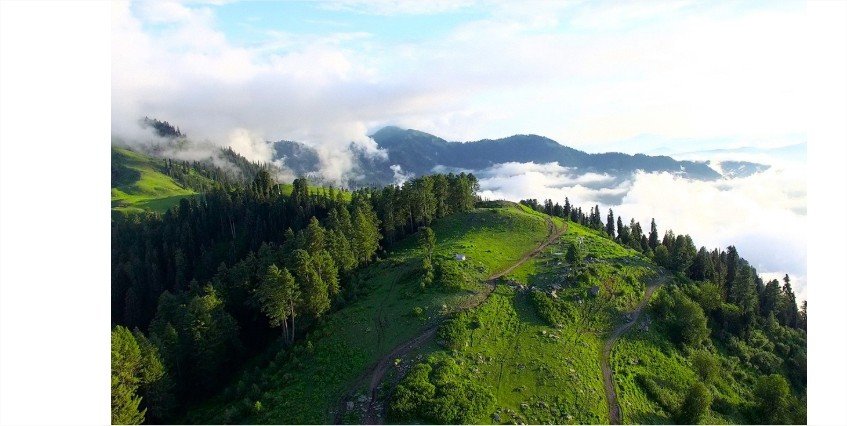
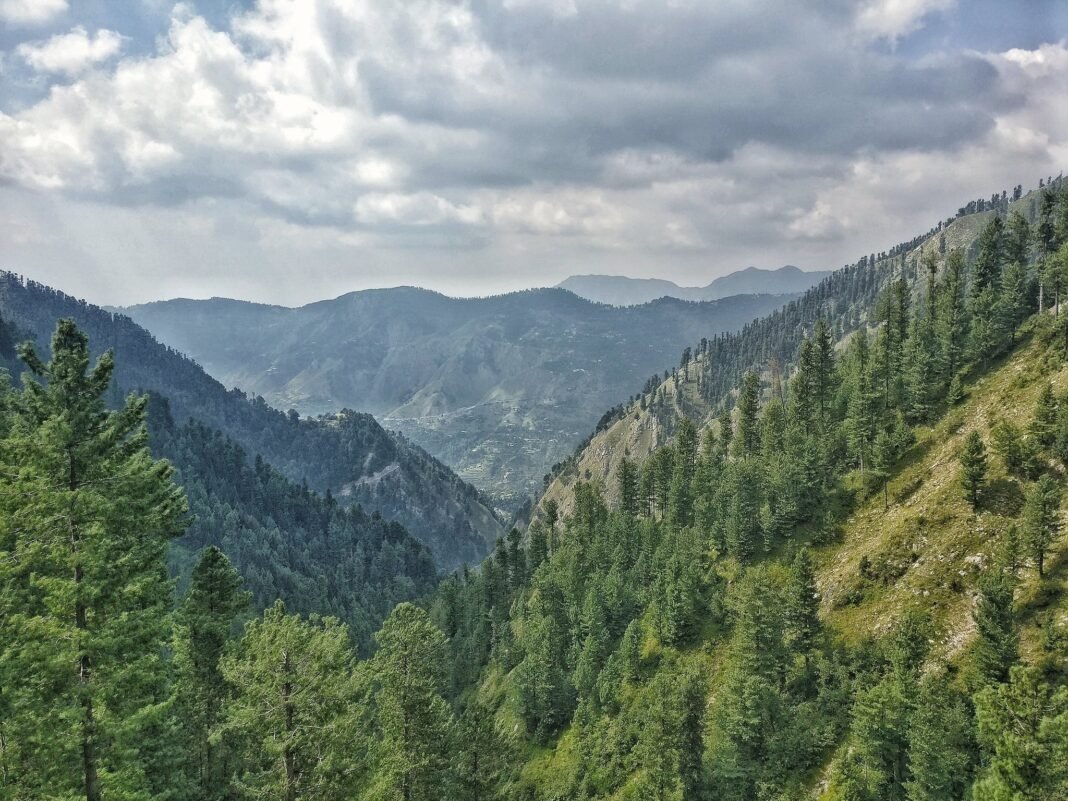
If the northern areas are Pakistan’s grand expedition, Galiyat is its beloved weekend home — and there is no shame in that. This is the mountain region Pakistanis actually grew up visiting: the chain of pine-covered hill stations strung along the ridges between Murree and Abbottabad, where the air smells of cedar, the mist rolls through the deodars by four in the afternoon, and every bend in the road opens onto another green valley. For a first mountain trip, a family holiday, or a quick escape from the plains’ heat, nothing in the country is easier or more rewarding.
What sets Galiyat apart is density of experience. Within a single long weekend you can walk the famous Pipeline Track through mossy forest, ride the Ayubia chairlift over the treetops, climb Mukshpuri for a 360-degree panorama, stand on Miranjani’s summit looking toward distant Nanga Parbat, and browse the bazaars of three different hill towns — all without ever driving more than an hour between stops. The hill stations here are close together, well connected, and each has its own character: Nathia Gali the grand old resort, Dunga Gali the quiet walker’s village, Ayubia the national park, Thandiani the high, breezy outlier.
Galiyat is also a living piece of history you can walk through. The British developed these ridges as summer escapes in the 19th century, and the colonial fingerprints are still everywhere — in the stone churches, the old bungalows, the Governor House, and the walking tracks the troops cut through the forest. In 2023 the region was recognized by UNESCO as a biosphere reserve, a formal acknowledgment of what visitors have always known: these forests are special.
Choose Galiyat when you want mountains without the expedition: cool air, real hiking, colonial charm, and snow in winter, all within a half-day’s drive of the capital. It is perfect for families with children, for couples, for older travelers who want the hills without the hardship — and for anyone who needs to remember what quiet sounds like.
History of Galiyat
The Galyat’s recorded history begins with a British officer walking into the hills. The tracts were first documented by colonial officials such as James Abbott — the founder of Abbottabad — who ventured into these areas around 1846–47 after the British annexed the Punjab. The British found the climate ideal and began developing sites along the range as hill resorts to escape the brutal summer heat of the lowlands.
The British called this the “Karral country,” after the Karlal tribe who have dominated the Galyat for centuries and still do. The Karlals speak Hindko — specifically the Dhundi-Kairali dialect — and their villages and terraced fields form the human landscape beneath the resort towns. The colonial hill stations were essentially grafted onto this tribal countryside: European bungalows and clubs on the ridges, Karlal villages in the valleys below.
Nathia Gali became the jewel of the system. During British rule it served as the summer headquarters of the Chief Commissioner of the Peshawar division, and together with Dunga Gali it was constituted a notified area under the Punjab Municipalities Act of 1891 — a piece of bureaucratic history that tells you how seriously the empire took its summer holidays. In its early 20th-century prime, Nathia Gali had seventeen bungalows for European visitors, a small bazaar, a hospital, and a post and telegraph office; Dunga Gali had its own club with lawn-tennis courts and a row of bungalows along Wisteria Drive. The Governor’s residence on the spur between the Nathia and Miranjani ridges — today’s Governor House — anchored the whole establishment.
After Partition in 1947, the hill stations were neglected for a time, then revived from the 1960s onward as Pakistan’s own middle class discovered the summer exodus. Ayubia — named for President Ayub Khan — was developed as a national park and resort complex in that era, complete with its chairlift. Today the Galyat is one of Pakistan’s most visited mountain regions, its colonial bones now carrying a thoroughly Pakistani holiday culture of family hotels, bazaar shopping, and monsoon-season escapes.
Top Things to Do in Galiyat
Walk the Pipeline Track
The single most famous walk in the Galyat is the Pipeline Track, the gentle 4-kilometre trail from Dunga Gali to Ayubia that follows the old British water pipeline through some of the finest temperate forest in Pakistan. Moss-covered stones, towering pines and cedars, bird calls, and almost no climbing — it is the rare mountain walk that a six-year-old and a sixty-year-old can enjoy together. The Motto Bridge, photographed as early as 1915, still carries walkers over the ravine. Go early in the morning for the mist and the solitude.
Ride the Ayubia Chairlift
Ayubia’s chairlift carries you up through the forest canopy to a ridge with sweeping views across the Galyat valleys. It is short, safe, and thrilling in the way only a chairlift can be — children love it, and the photographs from the top are superb. Combine it with a walk in Ayubia National Park, which protects the area’s forests and wildlife, including leopards, in the higher reaches.
Climb Mukshpuri
Mukshpuri (around 2,800 metres) is the Galyat’s classic half-day summit, climbed from Dunga Gali via a well-marked trail through Lalazar’s wildflower meadows. The top offers a 360-degree panorama — on a clear day you can see from the Galyat ridges all the way to the high Himalaya. It is a proper little mountain: allow 3 to 4 hours round trip, carry water, and start early.
Summit Miranjani
Miranjani, at nearly 3,000 metres, is the highest peak in the Galyat and a more serious undertaking — a steep 4 to 5-hour round trip from Nathia Gali. The reward is the finest viewpoint in the region: the whole Galyat spread below, and on the clearest days the white cone of Nanga Parbat on the far horizon. This is the hike that turns a Galyat holiday into a genuine mountaineering memory.
Explore Nathia Gali Town
Nathia Gali itself deserves unhurried exploration: the colonial-era St. Matthew’s Church, the Governor House (viewable from outside), the old bazaar with its woolens and handicrafts, and the ridge walks that thread between the town’s famous viewpoints. In summer the town hums with holiday life; in winter it goes quiet under snow, which has its own stark beauty.
Trek to Thandiani and Dagri Naka
For the longer walk, the trek from Nathia Gali to Thandiani via Dagri Naka is the Galyat’s great traverse — a full-day hike through deep forest to the breezy, high meadow settlement of Thandiani, with its own colonial dak bungalow heritage. It is the walk experienced Galyat hands recommend when you have done the Pipeline Track and want something wilder.
Enjoy the Snow Season
From December to February, the Galyat transforms. Nathia Gali, Dunga Gali, and Ayubia receive heavy snowfall, the pines bow under white weight, and the whole region becomes Pakistan’s most accessible winter wonderland. Snow walks, snow photography, bonfires in hotel lawns, and the particular silence of a snowbound forest — winter Galiyat is a different destination from summer Galiyat, and worth a separate trip.
Famous Places In and Around Galiyat
- Nathia Gali — the grand old hill station at 2,410 m, heart of the Galyat
- Dunga Gali — the quiet walkers’ village and start of the Pipeline Track; see our Dunga Gali travel guide
- Ayubia and Ayubia National Park — chairlift, forest walks, protected wildlife; see our Ayubia National Park guide
- Mukshpuri and Miranjani — the two classic summit hikes
- Thandiani — the high, breezy hill station at the end of the forest trek
- Changla Gali, Khaira Gali, Bara Gali — the smaller, quieter galis between the famous ones
- Murree and Bhurban — the Punjab-side hill stations, about 32 km from Nathia Gali; see our Bhurban travel guide
How to Reach Galiyat
Getting to the Galyat is one of the easiest mountain journeys in Pakistan. From Islamabad, drive the Murree Expressway (N-75) to Murree — about 60 kilometres, under 2 hours — then continue on the scenic mountain road to Nathia Gali, another 32 kilometres or so. Total: roughly 80 to 90 kilometres and 2.5 to 3 hours door to door. From Lahore, add the 4-hour motorway run to Islamabad; most Lahore families leave at dawn and are walking the Pipeline Track by afternoon.
From Karachi, fly to Islamabad (about 2 hours) and drive from there — the Galyat makes a perfect 3 to 4-day add-on to a capital visit. The alternative Abbottabad approach runs via the Hazara Motorway to Abbottabad, then up the mountain road through the galis from the northern side; this route is useful if you are combining the Galyat with a Kaghan or northern areas trip.
The nearest airport is Islamabad International; there is no air access to the hills themselves, nor is any needed. Roads throughout the Galyat are paved, though they are steep, winding, and narrow in places — drive in daylight, use low gears on descents, and in winter (December to February) carry snow chains and check conditions, as heavy snow can temporarily close the higher stretches. In the monsoon (July to mid-September), expect daily rain and occasional landslips; the roads generally stay open but drive cautiously.
Transport options are plentiful: private car or SUV is ideal, rental cars with drivers are easily arranged in Islamabad, and public vans and coasters run from Islamabad and Rawalpindi to Murree and Nathia Gali. Within the Galyat, local jeeps and taxis connect the hill stations, and most hotels can arrange transport for the trailheads.
Route Details
- Step 1: Islamabad → Murree Expressway (N-75) → Murree (approx. 60 km, under 2 hours)
- Step 2: Murree → mountain road via Bhurban → Nathia Gali (approx. 32 km, about 1 hour)
- Step 3: Nathia Gali → Dunga Gali → Ayubia along the ridge road (each leg 15–30 minutes); Thandiani via the forest road or the Dagri Naka trek
- Alternative: Islamabad → Hazara Motorway → Abbottabad → up through the galis from the north (useful when combining with Kaghan Valley)
Where to Stay in Galiyat
The Galyat has the most developed hotel infrastructure of any hill region in Pakistan, with options at every level. Nathia Gali offers everything from grand old colonial-style hotels to modern mid-range properties and budget guesthouses — many with the fireplaces, lawns, and ridge views that define the hill-station experience. Dunga Gali and Ayubia are quieter, with smaller hotels and rest houses suited to walkers. Thandiani has basic but atmospheric options for those who make the journey.
For a special stay, look for the heritage properties and old bungalows converted into hotels — sleeping in a building with a century of summers behind it is part of the Galyat experience. Government rest houses (booked through the relevant departments) offer excellent value in prime locations. In peak summer (June to August) and on winter snow weekends, book well in advance — the Galyat’s proximity to Islamabad means it fills up fast. Confirm heating for winter stays; a hill-station night without it is memorable for the wrong reasons.
Where to Eat: Local Foods of Galiyat
Hill-station food in the Galyat is a happy mix of Hazara home cooking and tourist-town comfort. The local staples shine: chapli kebabs, trout from the mountain streams (usually fried or grilled), hearty daal and sabzi, and fresh tandoori naan. Hotel restaurants serve Pakistani-Chinese standards, BBQ platters, and continental breakfasts for the family crowd; the dhabas along the ridge roads do excellent chai, parathas, and omelettes at any hour.
Nathia Gali’s bazaar has the widest choice, from sit-down restaurants to quick snack shops selling pakoras, corn on the cob (a monsoon-season ritual), and roasted peanuts. Do try the local honey and the fresh walnuts sold in the bazaar. Prices are tourist-town rather than remote-valley — a family dinner at a mid-range restaurant is moderately priced, while dhaba meals remain thoroughly budget-friendly.
Weather in Galiyat
The Galyat’s climate is the reason it exists: cool when the plains bake, snowy when the plains shiver. Summers are pleasant and often misty, the monsoon brings near-daily rain from July to mid-September, autumn turns crisp and golden, and winter brings the heavy snowfalls that define the region’s second season. Pack for the season you are visiting — and always bring one layer more than you think you need.
| Season | Temperature Range | Conditions |
|---|---|---|
| Winter (Dec–Feb) | -10°C to 10°C | Very cold; heavy snowfall in December–January; magical but check road access |
| Spring (Mar–Apr) | 5°C to 20°C | Cool and fresh; blossoms and new leaves; occasional late snow in March |
| Summer (May–Aug) | 12°C to 28°C | Pleasant and often foggy; peak season; monsoon rains July to mid-September |
| Autumn (Sep–Nov) | 5°C to 20°C | Clear skies, golden forests, cold nights; superb for hiking after the monsoon |
Language and Culture of Galiyat
The Galyat is Hindko country. The Karlal tribe — historically the dominant community, the “Karral” of the British records — speaks Hindko in its Dhundi-Kairali dialect, and you will hear it in the bazaars, on the trails, and in the villages tucked below the resort ridges. Urdu is universally understood and English is widely spoken in hotels and among guides, so visitors face no language barrier.
Culturally, the Galyat blends tribal Hazara traditions with a century and a half of hill-station cosmopolitanism. The resort towns are accustomed to visitors from every part of Pakistan and are relaxed by mountain standards, but the villages remain conservative — dress modestly when walking through them, ask before photographing people, and respect prayer times. The region’s famous hospitality is real: hotel staff, guides, and shopkeepers here have been hosting travelers for generations, and it shows.
Shopping in Galiyat
The bazaars of Nathia Gali and Dunga Gali are proper hill-station shopping streets: woolen shawls and sweaters, embroidered caps, pine-wood handicrafts, local honey, walnuts and dried fruits, and the usual cheerful tourist souvenirs. Bargaining is expected and good-natured. For higher-end shopping, Murree’s bazaars (an hour away) are bigger, and Islamabad’s markets are 2.5 hours down the hill. There is no large modern shopping mall in the Galyat itself — the bazaar is the experience, and it is a good one.
Travel Tips for Galiyat
Packing Essentials
A warm jacket in every season (summer evenings are chilly, winter days are freezing), rain gear for the monsoon months, sturdy walking shoes with grip for the forest trails, sun protection, a daypack with water and snacks for hikes, and a flashlight — hill-station lanes are dimly lit at night. In winter: thermal layers, gloves, a wool cap, and waterproof boots.
Safety Tips
The Galyat is one of Pakistan’s safest tourist regions, with heavy visitor traffic and a strong local tourism economy. Standard sense applies: hike with a companion, stick to marked trails (the forests are dense), start summit hikes early, and keep valuables secured in hotels. On the roads, drive defensively — the mountain lanes are narrow and the weekend traffic is real. In winter, check snow and road conditions before setting out.
Money & Connectivity
ATMs are available in Nathia Gali and Murree but can run out of cash on long weekends — bring enough rupees for your stay. Most mid-range and larger hotels accept cards; small shops and dhabas are cash-only. All major mobile networks cover the Galyat towns well, with 4G in Nathia Gali and Ayubia; signals fade on the forest trails. Wi-Fi is standard in hotels.
Best Time to Visit Galiyat
Summer (May to September) — the classic hill season
Cool, green, and misty — the Galyat doing what it was built for. Every trail is open, the forests are at their lushest, and the bazaars are at their liveliest. July to mid-September brings the monsoon: near-daily rain that makes the forest glow but can disrupt hiking plans. Late May, June, and post-monsoon September are the sweet spots.
Autumn (October to November) — the connoisseur’s season
Clear skies, golden forests, empty trails, and crisp air — many Galyat regulars insist this is the best time of all. The monsoon has washed the views clean, the crowds have gone home, and hotel rates soften. Pack warm layers for the cold nights.
Winter (December to February) — the snow season
Heavy snowfall, snow-laden pines, bonfires, and hot chai — winter Galiyat is Pakistan’s most accessible snow destination. Come for long weekends, walk in the snow, and photograph the white forests. Check road conditions and confirm hotel heating before you travel.
Spring (March to April) — the quiet awakening
Blossoms, birdsong, and the first green on the ridges, with few other visitors around. March can still bring late snow at the highest points; by April the walking season begins in earnest. A lovely time for a peaceful, crowd-free break.
Final Thoughts
Galiyat is where Pakistan goes to breathe. It may not have the drama of the Karakoram or the remoteness of the western valleys, but it has something rarer: a century and a half of practice at being exactly what a tired traveler needs — cool air, green forest, honest walks, and a warm room at the end of the day. Whether you come for the Pipeline Track, the snow, or simply the mist in the pines, the Galyat delivers.
Go in summer for the classic hill-station experience, in autumn for the colors and the quiet, in winter for the snow. Walk as much as you can — the Galyat is made for walking. For more mountain ideas, explore our Explore Pakistan collection, and for the wilder side of the hills, read our Malam Jabba guide.
FAQs
Where is Galiyat located?
Galiyat is a tract of hill stations in Abbottabad District, Khyber Pakhtunkhwa, between Murree and Abbottabad. Its main towns include Nathia Gali, Dunga Gali, Ayubia, Changla Gali, and Thandiani, all set in forested ridges at 2,000–2,500 metres.
What is the best time to visit Galiyat?
May to September for the classic green season (avoiding the July to mid-September monsoon if you want dry hiking), October to November for clear autumn weather, and December to February for snow.
How do I reach Galiyat from Islamabad?
Drive the Murree Expressway to Murree (under 2 hours), then continue 32 kilometres to Nathia Gali — about 2.5 to 3 hours total. Alternatively, take the Hazara Motorway to Abbottabad and approach from the northern side.
Is Galiyat safe for tourists?
Yes — it is one of Pakistan’s safest and most developed tourist regions, accustomed to heavy family tourism. Use normal mountain caution on hikes and roads, and check winter road conditions before traveling in snow season.
Is Galiyat suitable for families?
Absolutely — it is Pakistan’s premier family hill destination. The Pipeline Track, chairlift, bazaars, and gentle walks suit all ages, and hotels cater specifically to families. Save the Miranjani summit for fit teenagers and adults.
Where should I stay in Galiyat?
Nathia Gali has the widest choice, from heritage-style hotels to budget guesthouses; Dunga Gali and Ayubia are quieter. Book well ahead for summer weekends and winter snow weekends, and confirm heating in winter.
What food is Galiyat known for?
Hazara staples like chapli kebabs and trout, hearty dhaba fare, hotel BBQ and Pakistani-Chinese, plus bazaar snacks — corn on the cob, pakoras, roasted peanuts — and local honey and walnuts.
What is the difference between Galiyat and Murree?
Murree is a single large, busy hill town on the Punjab side; Galiyat is a chain of smaller, greener, generally quieter hill stations on the Khyber Pakhtunkhwa side, known for its forests, walking tracks, and colonial heritage. Many visitors combine both in one trip.