Some destinations you visit for what is there. Gurdwara Chhevin Patshahi in Minhala, a village in the Burki sector of Lahore district, you visit for what remains — one weathered tower standing beside a wide village pond, the last upright witness of a shrine linked to Guru Hargobind, the sixth Sikh Guru. The shrine’s building has collapsed; its sacred tank is now simply the village pond where buffaloes wade and children play. And yet, for travelers who love heritage as detective work — who would rather find one true story in a quiet lane than queue for a polished monument — Minhala is one of the most quietly moving stops on the Guru Hargobind trail around Lahore. This gurdwara chhevin patshahi minhala travel guide tells you exactly what you will find, how to reach it, and why the journey is worth making.
Quick Facts
- Location: Minhala village, Burki area, Lahore district, Punjab, Pakistan — on the right-hand side of the village entrance, beside the big pond
- Altitude: Around 217 metres (the Lahore plains level)
- Famous For: The shrine of Guru Hargobind (the “Chhevin Patshahi,” or Sixth Master) whose building has collapsed leaving a single standing tower; the village pond that was once its sacred tank
- Nearest City: Lahore, roughly 25–30 km to the west
- Accessibility: By road from Jalto Mor; reachable by car, rickshaw or wagon in the dry months
- Known Landmarks: The lone gurdwara tower, the big entrance pond, the wheat and rice fields of the Burki belt
- Best For: Heritage explorers, photographers of decaying architecture, Sikh pilgrims tracing the sixth Guru’s footsteps, and offbeat travelers who prefer quiet lanes to crowds
Why Visit Gurdwara Chhevin Patshahi, Minhala
Let us be honest from the first paragraph, because Minhala deserves honesty more than hype. There is no grand domed shrine waiting at the end of this road, no congregation, no langar hall, no ticket counter. What waits is a tower — one tower, the last upright fragment of a gurdwara that belonged to Guru Hargobind — rising beside a pond at the entrance to a farming village. If your idea of a perfect day trip is a manicured attraction with signage and selfie points, this is not your destination. But if you are the kind of traveler who reads history in brickwork, who feels something stir at the sight of a ruin that everyone else drove past, then Minhala will stay with you long after the polished forts fade from memory.
The second reason to come is the pond. Stand at the gurdwara’s edge and look at the wide sheet of water beside the village entrance, and you are looking at what was once the shrine’s sacred tank — the sarovar where pilgrims would have bathed before entering the darbar hall. Sacred tanks are the spiritual geography of Sikh shrines, and here the geography outlived the building. Buffaloes cool themselves in it now, egrets stalk its shallows, and village women still come down to its steps. There is something profoundly moving about a holy place that the village simply kept using, folding the sacred into the everyday without ceremony or permission.
The third reason is the trail itself. Minhala is one stop on a loose constellation of shrines around Lahore that all carry the same name — Chhevin Patshahi, the Sixth Master — because Guru Hargobind moved through this countryside in the early 1600s, and each village kept its own memory of him. Minhala pairs naturally with Gurdwara Chhevin Patshahi in Padhana, freshly restored in 2026, and Gurdwara Chhevin Patshahi in Rampur Khurd, where only the traces of a sacred well remain. Do all three in one slow day and you will understand, better than any museum could teach, how faith takes root in a landscape — one village, one pond, one tower at a time.
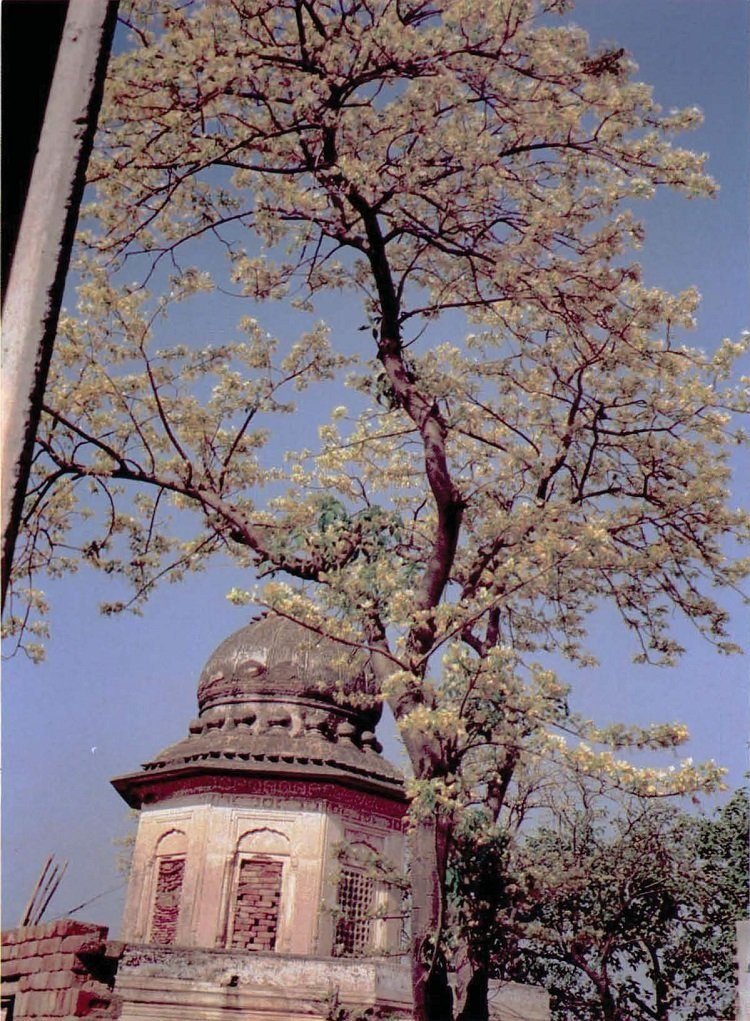
Finally, come for the photography. The lone tower — domed, weathered, half-swallowed by a flowering tree — is one of the most photogenic ruins in the Lahore countryside. Early morning light turns its old brickwork gold, and the pond throws back a perfect reflection on still winter days. Bring a camera, bring patience, and bring the respect a fragile ruin deserves: the surveys warn that the tower could collapse at any moment, so admire it from the ground, never climb it, and keep a sensible distance.
History of Gurdwara Chhevin Patshahi, Minhala
To understand Minhala’s shrine, you first need to meet the Guru it belongs to. Guru Hargobind (19 June 1595 – 28 February 1644) was the sixth of the ten Sikh Gurus, succeeding his father Guru Arjan at the age of eleven after the Guru’s execution by the Mughal emperor Jahangir in 1606. Where his father had been a poet and builder, Hargobind became a warrior-saint: he wore two swords, miri and piri, symbolizing temporal and spiritual authority, built the Akal Takht opposite the Harmandir Sahib in Amritsar, and kept an armed retinue. His long guruship — nearly thirty-eight years — took him across Punjab repeatedly, and the countryside east of Lahore remembers several of his halts. The shrines that mark them are all called Patshahi Chhevin: the Sixth Master’s places.
The published Sikh shrine surveys, drawing on the tradition recorded by researchers such as Iqbal Qaiser in Historical Sikh Shrines in Pakistan, describe Minhala’s shrine in plain, unsentimental terms. The village lies in the Burki police-station area of Lahore district, reached by a road starting from Jalto Mor, along which wagons and tongas have long plied. The sacred shrine of Guru Hargobind stands by a big pond on the right-hand side of the village entrance — and that pond, the surveys note, was once the gurdwara’s sacred tank. The building itself has collapsed. Only one tower still stands, and the surveyors add, with heartbreaking bluntness, that it too may collapse at any moment.
Unlike the shrines at Mozang or Padhana, no detailed episode from the Guru’s stay at Minhala survives in the published accounts — no named landlord, no recorded discourse, no dated rebuilding. The shrine is recorded simply as his, and its story now lives in the pond and the tower. That silence is itself part of the history: countless village shrines across Punjab were remembered locally for generations without ever being written into the grand chronicles, and Partition in 1947 broke the chain of living memory in places like Minhala, where the Sikh population migrated east and the buildings passed into other hands or into neglect.
What the twentieth century did to the shrine is the familiar story of western Punjab’s Sikh heritage: a simple early building, use and maintenance by the local sangat before 1947, then abandonment, then slow decay as the village grew around and over it. No Maharaja Ranjit Singh-era rebuilding is recorded here, no 1920s reconstruction by a village chief — Minhala’s gurdwara seems to have remained the modest village shrine it always was, until modesty became fragility. Today the tower stands as a kind of full stop at the end of that story: one vertical sentence of Sikh architecture in a village that has otherwise moved on.
Top Things to Do in Gurdwara Chhevin Patshahi, Minhala
Stand Before the Lone Tower
This is the heart of the visit, and you should give it unhurried time. The surviving tower is a domed, multi-sided structure in old brickwork, its plaster long gone, its silhouette softened by the tree that has grown up against it. Walk slowly around it and study the brick courses, the arched niches, the dome’s weathered ribs — this is the building vocabulary of the Sikh village shrine, and there is precious little of it left standing in this condition anywhere near Lahore. Photograph it in the early morning or late afternoon when the light rakes across the brickwork. And take the surveyors’ warning seriously: do not lean on it, do not try to climb it, and do not stand directly beneath its most eroded face. Ruins this old are not playgrounds.
Walk Down to the Village Pond
The big pond at the village entrance is the shrine’s other half — the sacred tank, secularized by time. Walk its perimeter and you will see the full theater of Punjabi village life: buffaloes being washed, men fishing with hand lines, kingfishers diving from the overhanging branches, children daring each other to jump from the old steps. In winter the water lies flat and mirror-like, and the tower’s reflection doubles the photograph. Sit on the bank for a while. The pond is the reason the shrine was built here — water is sacred geography — and it is the one element of the complex that never stopped serving the village.
Walk the Village Lanes
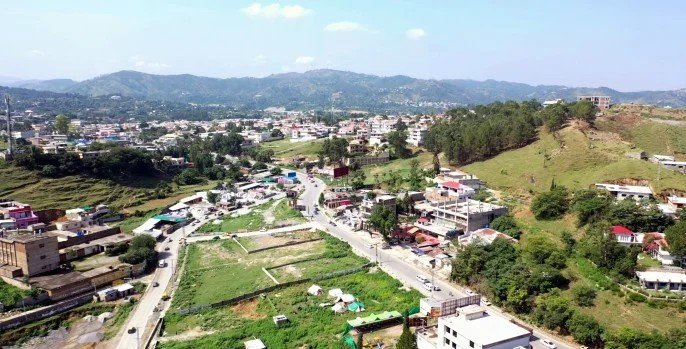
Minhala is a working farming village, not a heritage set, and its lanes reward a slow wander. You will pass brick kilns’ worth of old masonry in courtyard walls, hand pumps, tandoors set into mud-plastered platforms, and in the winter months, fields of green wheat stretching to the horizon in every direction. Greet people; Punjabi villagers are famously hospitable, and a polite “Assalam-o-Alaikum” opens doors — sometimes literally, with an invitation to sit for tea. Ask the elders about the gurdwara if you speak Punjabi or have someone who does: oral memory in these villages sometimes preserves details no survey ever recorded.
Drive the Burki Heritage Circuit
Minhala makes the most sense as part of a single slow day with its sister shrines. From Minhala, the restored Gurdwara Chhevin Patshahi in Padhana lies a short drive away through the same patchwork of fields — and from Padhana the Guru is traditionally said to have gone on to Rampur Khurd, where only a sacred well’s traces remain. Three villages, three states of a shrine’s afterlife: restored, ruined, and remembered. It is a complete education in what happened to Punjab’s Sikh heritage, and you can do the whole circuit between breakfast and sunset from Lahore.
Famous Places In and Around Gurdwara Chhevin Patshahi, Minhala
Wagah Border flag-lowering ceremony — the famous daily parade, a short drive east; arrive early for the crowds.
Gurdwara Chhevin Patshahi, Padhana — the Guru’s restored shrine in the next village over, conserved in 2026.
Gurdwara Chhevin Patshahi, Rampur Khurd — the quietest stop on the trail, where the Guru went after Padhana.
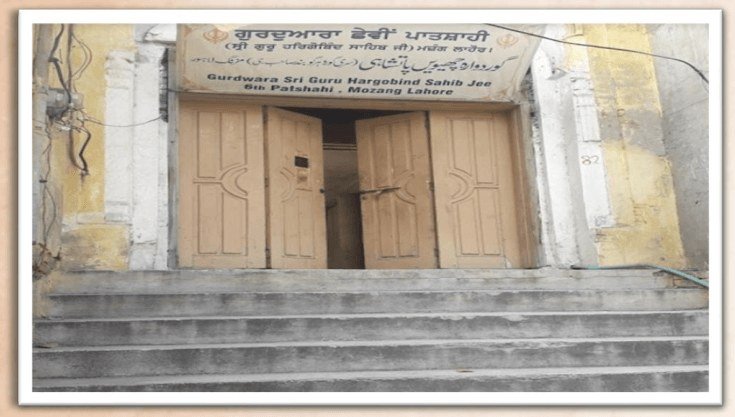
Gurdwara Chhevin Patshahi, Mozang — the living city shrine on Temple Road, Lahore, where the Guru stayed in 1619.
Badshahi Mosque — Lahore’s Mughal masterpiece, the natural bookend to a heritage day.
Gurdwara Bal Lila Sahib, Nankana Sahib — the birthplace of Guru Nanak, the great pilgrimage city west of Lahore.
How to Reach Gurdwara Chhevin Patshahi, Minhala
Minhala sits in the Burki belt east of Lahore, and the journey is half the pleasure: you leave the city’s sprawl behind and slide into the green geometry of Punjab’s farmland. From central Lahore the village is roughly 25–30 km, and the drive takes about 45 minutes to an hour depending on traffic at the city end. From Islamabad, take the M-2 motorway to Lahore — around 375 km, four to five hours — and then head east. From Karachi it is the long haul up the M-9 and M-2, roughly 1,360 km, best broken with an overnight stop; most Karachi travelers fly into Lahore and drive out to the village. The nearest airport is Lahore’s Allama Iqbal International Airport, about 35–40 km from Minhala by road.
Public transport will get you close but not all the way: wagons and buses run from Lahore toward the Burki sector and Jallo Mor area, from where you can hire a rickshaw or a Qingqi for the last stretch into the village. For a stress-free day, hire a car with a driver from Lahore for the whole Burki circuit — drivers who know the border-belt villages are worth their weight, because the link roads are unsigned and mobile maps can be patchy out here. Road conditions are generally good on the main Burki road and variable on the village link roads; after monsoon rains, expect puddles and the odd washed-out patch, so a car with decent clearance is wiser than a low sedan in July and August.
Route Details
From Lahore: Head east out of the city toward the Burki sector. At Jalto Mor (the Jallo-area junction), take the village road signposted toward Minhala. The gurdwara’s pond appears on your right as you enter the village — you cannot miss the sheet of water, and the tower stands beside it. Park on the village edge and walk the last hundred metres.
From Islamabad: M-2 to Lahore (Thokar Niaz Beg / Ring Road exits), then cross the city eastward via the Ring Road and Canal Road toward the Burki side. Allow a full day: four to five hours down, the village circuit, and four to five hours back is a very long day, so consider overnighting in Lahore.
From the airport: Exit Allama Iqbal International toward the city, join the Ring Road east, and follow the Burki-sector signs. Roughly an hour’s drive in normal traffic.
Best transport option: A hired car with driver for the day remains the most comfortable choice. Self-drivers should download offline maps, carry drinking water, and fill the tank in Lahore — there are no fuel stations in the village itself.
Where to Stay in Gurdwara Chhevin Patshahi, Minhala
There are no hotels, guesthouses or restaurants for travelers in Minhala itself — it is a farming village, and you should plan this as a day trip from Lahore, where the full range of accommodation waits. That is honestly the best arrangement: the village gives you the experience, and the city gives you the bed.
At the luxury end, Lahore’s grand old names — the Pearl-Continental and the Avari on Shahrah-e-Quaid-e-Azam — have hosted travelers for decades and sit within easy reach of the eastern exits toward Burki. The mid-range tier clusters along Main Boulevard Gulberg and in Model Town and DHA: comfortable business hotels and serviced guesthouses with parking, breakfast and reliable Wi-Fi, well suited to an early start for the village circuit. Budget travelers will find simple, clean guesthouses around the railway station and in Ichhra; they are basic but honest, and the money you save buys a lot of excellent Lahori food. Wherever you stay, tell the front desk you are heading to the Burki villages so they can arrange a driver who knows the area — it makes the morning dramatically smoother.
Where to Eat: Local Foods of Gurdwara Chhevin Patshahi, Minhala
Eat in the village if you are offered food — and you may well be, because Punjabi hospitality does not ask for your itinerary first. The Burki belt eats what it grows: in winter, sarson da saag with makki di roti and a slab of white butter is the undisputed king of the table, followed by a tall glass of lassi so thick it barely pours. Year-round, the village dhaba staples apply — daal fry, mixed sabzi, tandoori rotis slapped fresh from the clay oven, and doodh patti chai that tastes of woodsmoke. Everything is budget-friendly; a full dhaba meal costs a fraction of a city restaurant bill.
That said, Minhala has no formal restaurants, so plan ahead: carry drinking water and a few snacks, especially if you are traveling with children. Then save your appetite for Lahore on the way back. The city’s food streets are legendary for a reason — Fort Road Food Street with the Badshahi Mosque glowing behind it, Lakshmi Chowk’s late-night grills, Gawalmandi’s old-school eateries. Order nihari or paye for the full Lahori breakfast experience (weekend mornings are the ritual), halwa puri if you like it sweet, and end with kulfi falooda. It is the perfect reward after a dusty morning among the ruins.
Weather in Gurdwara Chhevin Patshahi, Minhala
Minhala shares Lahore’s classic Punjab-plains climate: a short, sharp winter with foggy mornings, a furnace summer, and a monsoon that arrives like an annual appointment. Because you will be outdoors the whole time — walking the pond bank, circling the tower, wandering the lanes — the weather genuinely shapes the visit. Winter is the sweet spot; summer demands an early start and a retreat by noon.
Lahore / Minhala region — approximate seasonal weather:
| Season | Temperature Range | Conditions |
|---|---|---|
| Winter (Dec–Feb) | Around 4–20°C | Cool, dry days; foggy mornings that usually lift by late morning; the best season for village walking |
| Spring (Mar–Apr) | Around 18–32°C | Warm and pleasant; wheat fields vivid green; excellent light for photography |
| Summer (May–Jun) | Around 28–45°C | Intensely hot and dry; visit at sunrise and leave by late morning |
| Monsoon (Jul–Sep) | Around 27–38°C | Humid with heavy downpours; village link roads can get muddy; the pond is at its fullest |
| Autumn (Oct–Nov) | Around 18–33°C | Warm, dry and clear; harvest activity in the fields; a fine shoulder season |
Language and Culture of Gurdwara Chhevin Patshahi, Minhala
The first language of Minhala is Punjabi — the Majhi dialect of central Punjab, spoken fast, warmly, and with a hospitality that needs no translation. Urdu is widely understood, especially by younger villagers, and you will manage fine with a mix of Urdu and gestures even if your Punjabi is limited to “Sat Sri Akal.” English is rare in the village itself, though your Lahore driver will bridge any gap.
Culturally, you are stepping into rural Punjab, where norms are traditional and guests are honored. Dress modestly — covered shoulders and knees for everyone — and carry a scarf or dupatta: you should cover your head at the shrine, and it is useful anyway against sun and dust. Remove your shoes if you step onto any raised shrine platform. The gurdwara site sits within a living village, so treat it like visiting someone’s neighborhood, not a monument: ask before photographing people, especially women; do not enter private courtyards uninvited; and accept tea when it is offered, because refusing hospitality lands awkwardly here. A small, genuine interest in the village — its crops, its pond, its stories — will open more doors than any amount of money.
Shopping in Gurdwara Chhevin Patshahi, Minhala
Come to Minhala for the tower and the pond, not for shopping — the village has no bazaar aimed at visitors, and that is part of its charm. What you can buy, if the season is right, is the honest produce of the fields: fresh lassi and desi ghee from a village dairy, seasonal fruit from a roadside rehri, perhaps a bundle of sugarcane in winter. These are purchases of the moment, eaten on the spot, and all the better for it.
For real souvenir hunting, save it for Lahore on your return. Anarkali Bazaar — one of the oldest surviving markets in South Asia — is the place for khussa shoes, phulkari embroidery, brass and copper work, and the general glorious chaos of a Mughal-era bazaar still doing business. Ichhra Bazaar and Liberty Market cover everyday clothes and fabrics at local prices. Buy the crafts, skip the pressure: a polite smile and a willingness to walk away are the only bargaining tools you need.
Travel Tips for Gurdwara Chhevin Patshahi, Minhala
Packing Essentials
Pack for a rural day out: a scarf or dupatta for covering your head at the shrine, sun protection (cap, sunglasses, sunscreen) for every season except deep winter, a refillable water bottle, and sturdy closed shoes — the ground around the pond and the tower is uneven, and after rain it is muddy. A power bank is wise, since you will be using your phone for maps and photographs with no charging points in the village. Binoculars are a bonus if you enjoy birdlife; the pond attracts kingfishers, egrets and winter migrants.
Safety Tips
Minhala is a quiet farming village and daytime visits are straightforward, but a few common-sense rules apply. Go in daylight and plan to be back on the main road well before dusk. You are in the border belt of Lahore district, so stick to the village’s public roads and lanes — do not wander off toward fenced or restricted areas, and do not photograph any security installations. Travel with a local driver who knows the Burki villages; the link roads are unsigned and easy to misread. Keep the fragile tower at a respectful distance and never attempt to climb it. As everywhere in rural Punjab, a calm, polite manner and modest dress will keep every interaction warm.
Money & Connectivity
There are no ATMs or banks in Minhala — carry enough cash from Lahore for the day’s fuel, food, driver and any small purchases. Mobile coverage is good across Lahore district: Jazz, Zong, Telenor and Ufone all work in the Burki belt, and 4G data is generally reliable on the main roads, though it can dip inside the village lanes. Download offline maps before you leave the city, share your live location with someone back at the hotel, and keep your phone charged.
Best Time to Visit Gurdwara Chhevin Patshahi, Minhala
November to March — The Best Season
This is when Minhala shows its best self. Days are cool and dry, the morning fog burns off to reveal blue skies, the wheat is green in the fields, and you can walk the pond bank and the village lanes for hours in comfort. Winter light is also the kindest to the old brickwork — photographers should aim for the golden hours just after sunrise and just before sunset, when the tower glows.
April to June — Hot but Possible
Spring starts pleasantly and then the great Punjab furnace kicks in. If you must come in these months, arrive at the village by 7 a.m., finish the outdoor walking by 10:30, and retreat to Lahore for the afternoon. Carry twice the water you think you need, and do not underestimate the sun on the open pond bank.
July to September — The Monsoon
Heavy downpours transform the landscape — the pond brims, the fields turn emerald, the air smells of wet earth — but the village link roads can get waterlogged and muddy. If you go, wear shoes you do not mind ruining, keep the car’s clearance in mind, and be ready to turn back if a track looks doubtful. The tower against monsoon clouds is dramatic, but no photograph is worth a stuck car.
October — The Shoulder Month
Warm, dry and clear, with harvest activity in the fields and far fewer atmospheric theatrics than the monsoon. An underrated time to visit: comfortable walking weather, good light, and the village going about its business without the extremes of any season.
Final Thoughts
Gurdwara Chhevin Patshahi in Minhala will never be the famous shrine of the Guru Hargobind trail — that honor belongs to the restored gurdwara at Padhana and the living congregation at Mozang. But fame was never the point of this place. Minhala is the shrine that time nearly erased and the village quietly kept: a tower, a pond, and a memory, holding their ground in the Burki fields while four centuries of Punjab turned around them. To stand beside that tower is to understand something essential about how sacred history survives — not always in marble and gold, but sometimes in a single column of old brick that simply refused to fall.
So go with the right expectations and the right company: a slow morning, a good driver, a camera, and ideally the rest of the trail — Padhana’s restoration, Rampur Khurd’s vanished darbar, Mozang’s open doors — to complete the story. Minhala rewards the traveler who goes looking for what remains rather than what gleams. In the Explore Pakistan series, this is the chapter for the romantics of ruins — and it earns its place.
FAQs
Where is Gurdwara Chhevin Patshahi, Minhala?
It stands at the entrance to Minhala village in the Burki area of Lahore district, Punjab, Pakistan — on the right-hand side as you enter, beside the big village pond, reached by the road from Jalto Mor.
What is the best time to visit Gurdwara Chhevin Patshahi, Minhala?
November to March, when days are cool and dry and ideal for walking the village. October is a fine shoulder month; summer visits should be limited to the early morning.
How do I reach Minhala from Lahore?
Drive east toward the Burki sector (roughly 25–30 km, 45–60 minutes), take the village road from Jalto Mor, and look for the pond at the village entrance. A hired car with a driver who knows the border-belt villages is the easiest option.
Is Gurdwara Chhevin Patshahi, Minhala safe to visit?
Yes, for a daytime visit with normal precautions. Stick to public village roads, do not approach fenced or restricted border-area installations, keep a respectful distance from the fragile tower, and plan to leave before dusk.
Is Minhala suitable for families with children?
Yes, with supervision. Children enjoy the pond and the open fields, but keep them away from the tower’s base and the water’s edge, and bring your own snacks and drinking water since the village has no restaurants.
Where can I stay near Minhala?
There is no accommodation in the village — stay in Lahore, 45–60 minutes away, which offers everything from luxury hotels like the Pearl-Continental and Avari to mid-range hotels in Gulberg and budget guesthouses near the railway station.
What food will I find around Minhala?
Village dhaba staples — daal, sabzi, tandoori roti, and in winter the classic sarson da saag with makki di roti and lassi. For a full meal, eat in Lahore on your way back; Fort Road Food Street and Lakshmi Chowk are the city’s famous food destinations.
What makes Minhala’s gurdwara different from the other Chhevin Patshahi shrines?
It is the most ruined and the most poignant: the building has collapsed leaving a single standing tower, while the village pond beside it was once the shrine’s sacred tank. It shows the afterlife of a shrine that was never rebuilt — the perfect counterpoint to restored Padhana and living Mozang on the same trail.