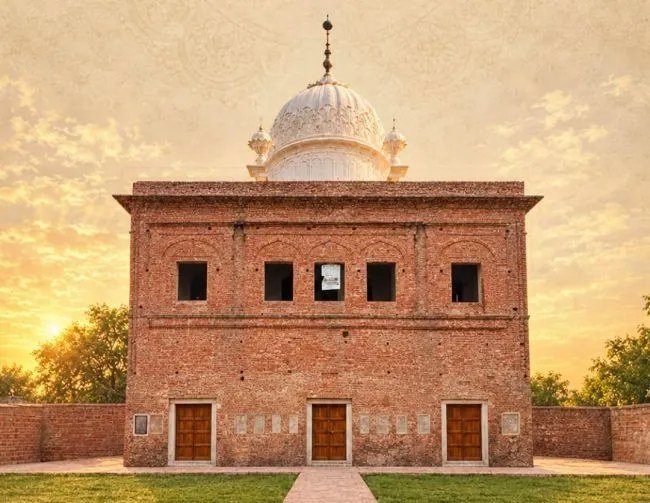
There is a village in the Burki belt where the shrine of the sixth Sikh Guru has almost completely returned to the earth — and going there is one of the strangest, quietest, most thought-provoking heritage experiences near Lahore. Gurdwara Chhevin Patshahi in Rampur Khurd is where Guru Hargobind came after Padhana, staying in recognition of the love and devotion of the village sangat. Its priests were Udasi sadhus; its domed building was once described as beautiful; fifteen bighas of land were endowed to it. Today the darbar has collapsed, Mewati refugee families settled on the site after Partition, and the vestiges of a sacred well are the only physical signs that a gurdwara ever stood here. If you have ever wanted to understand what “lost heritage” truly means — not as a slogan but as a place you can stand in — this gurdwara chhevin patshahi rampur khurd travel guide will show you the way.
Quick Facts
- Location: Rampur Khurd village, Burki police-station area, Lahore district, Punjab, Pakistan — about 3 km east of the Lahore–Burki road
- Altitude: Around 217 metres (the Lahore plains level)
- Famous For: Guru Hargobind’s visit from Padhana; its Udasi sadhu priests; the collapsed domed darbar; the surviving traces of its sacred well
- Nearest City: Lahore, roughly 25 km to the west
- Accessibility: By road — Lahore–Burki road, then a 3 km village link road east
- Known Landmarks: The sacred well’s vestiges, the village itself, the wheat fields of the Burki belt
- Best For: Heritage completists, photographers of rural Punjab, Sikh pilgrims finishing the Sixth Master trail, and travelers drawn to forgotten places
Why Visit Gurdwara Chhevin Patshahi, Rampur Khurd
Let us say plainly what this visit is and is not. It is not a shrine you go to see, because there is almost nothing left to see — the domed darbar that the old surveys called beautiful has collapsed, and the site is settled. What it is, is a shrine you go to contemplate. Stand where the sacred well’s vestiges lie, in a farming village 3 km off the Burki road, and you are standing at the far end of a four-hundred-year story: a Guru’s visit, a community’s devotion, an endowment of fifteen bighas, Udasi priests keeping the lamps lit — and then Partition, displacement, and the slow erasure of it all. Few places near Lahore make the fragility of heritage this tangible. If that sentence moved you, this village is for you.
The second reason is the trail. Rampur Khurd is the final stop on the Burki trilogy, and it only makes full sense in sequence. The tradition is explicit about the order: the Guru came to Padhana from Dhilvan, and from Padhana he came here, to Rampur Khurd, in recognition of the villagers’ love and devotion. So do it in order — Padhana‘s restored dome in the morning, Rampur Khurd’s vanished darbar by midday, Minhala‘s lone tower in the afternoon — and you will have walked a complete narrative arc that no single site can give you: restoration, remembrance, ruin. It is the most intellectually satisfying heritage day-trip in the Lahore countryside.
The third reason is the Udasi thread, which history buffs will savor. The shrine’s priests, the surveys record, were Udasi sadhus — members of the ascetic order founded in the tradition of Sri Chand, the son of Guru Nanak, who for centuries served as the custodians of Sikh shrines across Punjab. The Udasis kept the lamps lit at countless village gurdwaras; their presence at Rampur Khurd connects this tiny site to one of the great custodial traditions of Sikh history. To stand here is to remember an entire class of caretakers history mostly forgot.
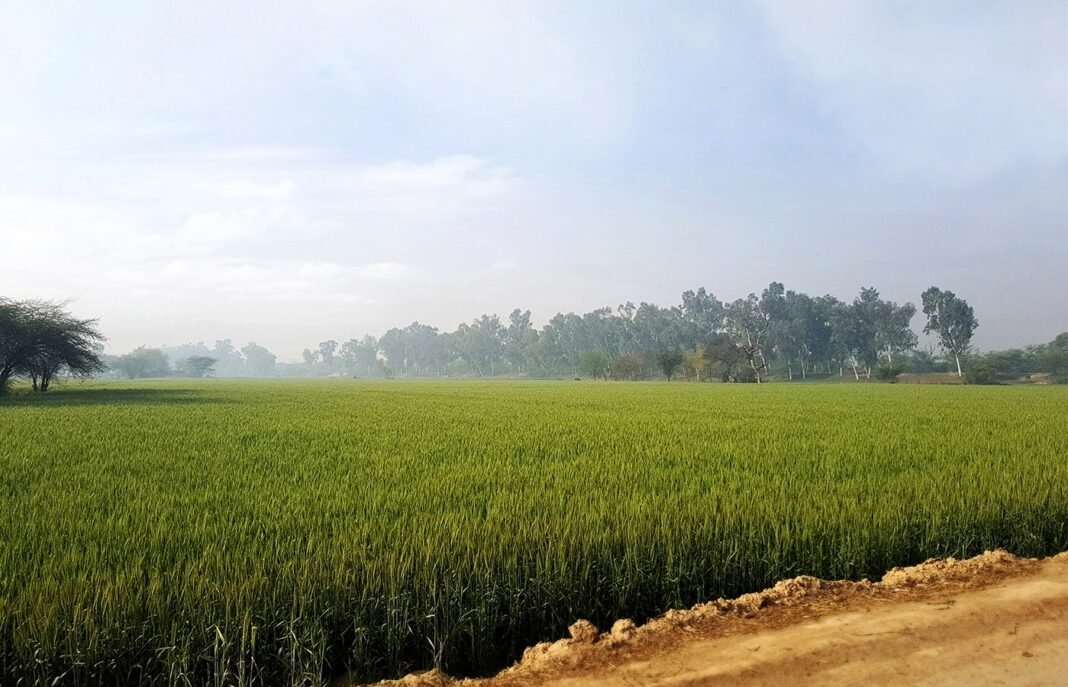
Finally, come for rural Punjab itself. The Burki belt around Rampur Khurd is some of the prettiest farmland near Lahore — flat green wheat in winter, gold at harvest, eucalyptus windbreaks stitching the horizon — and the village lanes offer the unscripted hospitality that no monument can: tea under a tree, a conversation with an elder, children racing the car down the track. The shrine may be gone, but the village that hosted the Guru is still here, still farming, still welcoming strangers. That continuity is its own kind of monument.
History of Gurdwara Chhevin Patshahi, Rampur Khurd
The history of Rampur Khurd’s shrine is preserved in the Sikh shrine surveys in a few dense, precious paragraphs — and every line of them matters, because there is so little else. Rampur Khurd is a village of the Burki police station, in the tehsil and district of Lahore, located about three kilometres east of the Lahore–Burki road. In this village stood a gurdwara of Guru Hargobind — the sixth Guru (19 June 1595 – 28 February 1644), the warrior-saint of miri and piri who built the Akal Takht and traveled these villages in the early 1600s.
The building, the surveys say, had a dome and was beautifully built. The Guru came here from Padhana — the neighboring village whose own restored shrine you can visit today — and stayed here in recognition of the love and devotion of the sangats living in the village. The priests of the shrine were Udasi sadhus, the ascetic custodians in the tradition of Sri Chand, son of Guru Nanak, who served Sikh shrines across Punjab for centuries. Fifteen bighas of land were endowed in the shrine’s name — a substantial village endowment, and a measure of how seriously the community took its custodianship.
Then the familiar rupture. With Partition in 1947, the Sikh population left, and — in the surveys’ plain words — refugees from Mewat settled in the darbar, which has collapsed. The Mewati Muslims, displaced from the Mewat region of Haryana and Rajasthan, made their homes in and around the shrine premises, as they did at Padhana and other Burki-belt gurdwaras. The priest, the survey notes with a touch of poignancy, is a Udasi — the old custodial line persisting even as the building failed. And the final line of the survey entry is the one that brings travelers here: the vestiges of the sacred well are the only signs of the former gurdwara.
That is the whole documented history — no Ranjit Singh rebuilding, no 1920s reconstruction, no recorded fair or annual gathering. Rampur Khurd’s shrine was a village shrine, kept by ascetics, loved by its sangat, and then unmade by the twentieth century. Its honesty is its distinction: where other sites were restored or rebuilt, Rampur Khurd shows what happened to the shrines nobody came back for. Visit with that understanding, and the empty ground speaks.
Top Things to Do in Gurdwara Chhevin Patshahi, Rampur Khurd
Find the Sacred Well’s Vestiges
This is the pilgrimage at the heart of the visit: locating the traces of the shrine’s sacred well, the last physical signature of the gurdwara. Ask in the village — the elders know the ground’s history even where the building is gone — and let someone show you the spot. Do not expect a monument; expect a depression, old brickwork, a place the village still recognizes. Stand there quietly for a while. Wells were the spiritual infrastructure of the Sikh shrine — water for bathing, for drinking, for the langar — and this one’s ghost is all that remains of Rampur Khurd’s darbar. Photograph respectfully, and remember you are on ground where families now live.
Walk the Village with Its Story in Mind
Rampur Khurd is a living village, and the best thing to do here is also the simplest: walk it slowly, with the shrine’s story as your lens. The lanes the Guru’s retinue would have ridden down, the fields the fifteen endowed bighas once watered, the courtyard walls built from who-knows-what recycled brick — the village is the museum now. Greet people, accept tea if offered, and if you speak Punjabi (or your driver does), ask the older residents what they remember of the old darbar. Oral history in these villages sometimes preserves what no survey captured.
Do the Full Burki Trilogy in Order
Rampur Khurd is the third act, so see the first two first: Padhana (where the Guru came from Dhilvan; restored 2026), then Rampur Khurd (where he came from Padhana; collapsed), then Minhala (the lone tower and the pond-tank). The three villages sit within a short drive of each other in the same belt of fields, and the sequence — restored, ruined, remembered — turns a day’s driving into a genuine historical argument about what survives and why.
Photograph the Burki Belt Farmland
The countryside around Rampur Khurd is the unsung visual reward of the trip. In winter the wheat runs green to every horizon; at harvest it turns to gold; eucalyptus and shisham windbreaks draw long lines across the flatness; and the big Punjab sky does the rest. Dawn and dusk are magical, with mist in the low fields on cold mornings. This is the Punjab of the postcards that never got made — bring a camera and make them yourself.
Famous Places In and Around Gurdwara Chhevin Patshahi, Rampur Khurd
Gurdwara Chhevin Patshahi, Padhana — the Guru’s previous halt, restored in 2026; the essential pairing.
Gurdwara Chhevin Patshahi, Minhala — the lone tower and the pond that was once a sacred tank.
Wagah Border flag-lowering ceremony — the famous daily parade, a short drive east through the same border belt.
Gurdwara Chhevin Patshahi, Mozang — the living city shrine of the 1619 Lahore stay, for the complete Sixth Master trail.
Gurdwara Bal Lila Sahib, Nankana Sahib — Guru Nanak’s birthplace, the great pilgrimage city west of Lahore.
Badshahi Mosque — Lahore’s Mughal masterpiece, the classic end to a heritage day.
How to Reach Gurdwara Chhevin Patshahi, Rampur Khurd
Rampur Khurd sits about 3 km east of the Lahore–Burki road, roughly 25 km from central Lahore — 45 minutes to an hour by car. From Islamabad, take the M-2 to Lahore (about 375 km, four to five hours) and continue east toward Burki; from Karachi, fly to Lahore and drive out, or drive the ~1,360 km motorway route with an overnight halt. The nearest airport is Allama Iqbal International (LHE), about 30 km from the village.
The drill is the familiar Burki-belt one: hire a car with a driver from Lahore who knows these villages, because the 3 km link road east off the Burki road is unsigned and easy to overshoot. Public wagons run toward Burki from the city, but the final stretch needs a local arrangement. The link road is paved but narrow; after monsoon rains it can be soft at the edges, so drive with care and do not attempt it in a downpour. As elsewhere in the border belt, stay on public roads and in the village, and do not photograph any security installations.
Route Details
From Lahore: Take the Lahore–Burki road east. About 3 km before the Burki side’s village cluster, turn east onto the link road signposted (or known locally) for Rampur Khurd — your driver will know it; if self-driving, ask at any Burki-road dhaba. The village is 3 km down the link.
From Islamabad: M-2 to Lahore, Ring Road east to the Burki sector. Full-day commitment — overnight in Lahore and do the trilogy (Padhana, Rampur Khurd, Minhala) the next morning.
Combined circuit: Padhana first (restored dome), then Rampur Khurd (well vestiges), then Minhala (lone tower) — the three villages form a natural loop off the Burki road, doable between breakfast and late afternoon.
Best transport option: Hired car with driver for the day. Carry water, fill the tank in Lahore, and download offline maps — signal dips on the link roads.
Where to Stay in Gurdwara Chhevin Patshahi, Rampur Khurd
There is no accommodation in Rampur Khurd — plan this as a day trip from Lahore, 45–60 minutes west. The city offers the full spectrum. Luxury travelers head for the Pearl-Continental or the Avari on Shahrah-e-Quaid-e-Azam, Lahore’s grand old hotel names. The mid-range — business hotels and serviced guesthouses in Gulberg, Model Town and DHA — suits heritage travelers best, with easy eastern exits for the Burki road. Budget guesthouses around the railway station and Ichhra are simple and honest.
For a Burki-belt day, an eastern base (DHA or the guesthouses along Bedian/Burki roads) cuts the morning drive noticeably. Pack a small day bag the night before — water, snacks, scarf, sun protection, power bank — because once you leave Lahore, the villages offer experience, not amenities.
Where to Eat: Local Foods of Gurdwara Chhevin Patshahi, Rampur Khurd
Eat what the village eats, if the village offers it: daal and sabzi with tandoori roti from a clay oven, and in winter the incomparable sarson da saag with makki di roti, white butter melting into it, and lassi thick enough to stand a spoon in. There are no restaurants in Rampur Khurd, so treat any home or dhaba invitation as the honor it is — Punjabi hospitality does not check your itinerary first.
Practically, carry drinking water and snacks from Lahore, and plan your main meal for the city on the return. The Lahori canon awaits: nihari and paye for breakfast (weekend mornings are the ritual), halwa puri with lassi, karahis and grills at Fort Road Food Street with the Badshahi Mosque floodlit behind you, late-night skewers at Lakshmi Chowk, old-school Gawalmandi. A feast for two costs very little by international standards — the perfect, delicious end to a day among the ruins.
Weather in Gurdwara Chhevin Patshahi, Rampur Khurd
The Burki belt shares Lahore’s plains climate, and the Rampur Khurd visit is entirely outdoors — village lanes, field paths, the well site — so weather is the trip. Winter is made for it; summer demands dawn starts; the monsoon brings drama and mud in equal measure.
Rampur Khurd / Burki belt — approximate seasonal weather:
| Season | Temperature Range | Conditions |
|---|---|---|
| Winter (Dec–Feb) | Around 4–20°C | Cool, dry days; foggy mornings; the ideal season for village walking |
| Spring (Mar–Apr) | Around 18–32°C | Warm and pleasant; wheat turning gold; beautiful light |
| Summer (May–Jun) | Around 28–45°C | Intensely hot; arrive at sunrise, leave by late morning |
| Monsoon (Jul–Sep) | Around 27–38°C | Humid with heavy downpours; fields emerald; link roads can be muddy |
| Autumn (Oct–Nov) | Around 18–33°C | Warm, dry, clear; harvest activity; an excellent shoulder season |
Language and Culture of Gurdwara Chhevin Patshahi, Rampur Khurd
Punjabi — the Majhi dialect — is the village’s mother tongue; Urdu is widely understood; English is scarce, so your driver’s translation matters. A few Punjabi courtesies (“Sat Sri Akal,” “Shukriya,” “Meherbani”) will carry you far.
The cultural note that matters most here is sensitivity. The shrine site is settled ground — Mewati families displaced by Partition made their homes here generations ago, and they are the village now. You are not visiting a monument; you are visiting people’s homes and the memory beneath them. Dress modestly, ask before photographing anyone or any home, do not treat the well site as a spectacle, and accept hospitality — especially tea — graciously. The villagers did not erase the shrine out of malice; they inherited its aftermath, as millions did across Punjab. Come with that understanding, and every door opens.
Shopping in Gurdwara Chhevin Patshahi, Rampur Khurd
There is no shopping for visitors in Rampur Khurd — the village economy is fields and family, and the honest purchases are the edible, immediate kind: seasonal fruit from a rehri, sugarcane in winter, lassi from a dairy household. Buy them, eat them on the spot, and consider the transaction part of the experience.
For keepsakes, Lahore is 45 minutes west and has everything. Anarkali Bazaar — Mughal-era, chaotic, essential — sells khussa shoes, phulkari embroidery, brass and copper work, and fabrics; Ichhra Bazaar and Liberty Market cover clothes at local prices. A box of mithai from an established sweet shop (barfi, gulab jamun, winter habshi halwa) is the souvenir that never disappoints.
Travel Tips for Gurdwara Chhevin Patshahi, Rampur Khurd
Packing Essentials
Pack for a sensitive rural visit: modest clothing (shoulders and knees covered), a scarf or dupatta, sun protection, sturdy closed shoes for uneven lanes, a refillable water bottle, snacks, and a power bank. A camera is a must — the farmland and the village textures are superb — but keep it in the bag until you have asked permission. Small change in cash helps for roadside purchases.
Safety Tips
Rampur Khurd is a quiet village; daytime visits are straightforward. The rules: stay on public roads and lanes, do not approach or photograph any security installations (border-belt standard), leave before dusk, and travel with a local driver who knows the link roads. At the well site and around homes, be a guest, not an inspector — quiet, polite, unhurried. Supervise children, and keep a respectful distance from any unstable old masonry.
Money & Connectivity
Cash only, from Lahore — the village has no ATMs or banks. Jazz, Zong, Telenor and Ufone all cover the Burki belt with decent 4G on the main roads, dipping on the link roads; download offline maps before you leave the city and share your live location with someone at your hotel.
Best Time to Visit Gurdwara Chhevin Patshahi, Rampur Khurd
November to March — The Best Season
Cool dry days, green fields, soft light, comfortable walking — winter is when the Burki belt is at its most beautiful and the village at its most welcoming. The well site, the lanes, the field paths: all best experienced in a jacket with the sun low.
April and October — The Shoulder Months
Warm, clear, and alive with agricultural rhythm — harvest in April, post-monsoon clarity in October. Good light for photography, fewer extremes, and the village busy with its own life rather than performing for visitors (it never does).
May to September — Hot and Monsoon
May–June is furnace season: come at sunrise or not at all. July–September brings the monsoon — spectacular skies, emerald fields, and link roads that can turn treacherous. If you go, wear shoes you can sacrifice and be ready to turn back.
Final Thoughts
Most heritage travel is about what survived. Rampur Khurd is about what did not — and why that matters just as much. The Guru came here from Padhana, drawn by the villagers’ devotion; Udasi sadhus kept the shrine; fifteen bighas were endowed; a beautiful domed darbar rose. And then the twentieth century happened, and now only a well’s vestiges mark the spot. To stand there is to complete the story that Padhana’s restoration begins: heritage is not only saved, it is also lost, and the losses deserve witnesses too.
So do the trilogy in order — Padhana, Rampur Khurd, Minhala — and let the Burki belt teach you its quiet lesson. In the Explore Pakistan series, this is the chapter for the travelers who understand that a forgotten place, visited with respect, is never truly forgotten.
FAQs
Where is Gurdwara Chhevin Patshahi, Rampur Khurd?
In Rampur Khurd village, Burki area, Lahore district, Punjab, Pakistan — about 3 km east of the Lahore–Burki road, roughly 25 km east of Lahore.
What is the best time to visit Gurdwara Chhevin Patshahi, Rampur Khurd?
November to March, for cool, dry, comfortable village walking. April and October are fine shoulder months; summer visits should be at sunrise only.
How do I reach Rampur Khurd from Lahore?
Drive the Lahore–Burki road east (45–60 minutes), then take the unsigned link road 3 km east to the village — a hired driver who knows the Burki villages is strongly recommended.
Is there anything left to see at the Rampur Khurd gurdwara?
The domed darbar has collapsed and the site is settled, but the vestiges of the shrine’s sacred well survive — the last physical trace of the gurdwara. The village itself, which hosted the Guru, is the real experience.
Is it safe to visit?
Yes, in daylight with normal rural precautions: stay on public roads, do not approach or photograph security installations, leave before dusk, and travel with a local driver.
Is Rampur Khurd suitable for families?
Yes, as part of the Burki heritage circuit with Padhana and Minhala. Bring water and snacks, supervise children around old masonry and field paths, and keep expectations honest: this is a contemplative stop, not an amusement.
Where can I stay near Rampur Khurd?
There is no accommodation in the village — stay in Lahore (45–60 minutes away), from luxury hotels like the Pearl-Continental and Avari to mid-range hotels in Gulberg and budget guesthouses near the railway station.
Why did Udasi sadhus serve as priests here?
The Udasis — ascetics in the tradition of Sri Chand, son of Guru Nanak — served as custodians of Sikh shrines across Punjab for centuries. Their presence at Rampur Khurd marks it as part of that old custodial tradition, which kept countless village gurdwaras alive long before modern management bodies existed.