Every shrine has a relic, a story, a reason people once walked for miles to reach it. At Gurdwara Guru Amar Das in Dhunni, the relic was a pair of shoes — eleven inches long, three inches wide at the toe — given by the third Sikh Guru to a beloved devotee, and the reason people came was hope: the hope that touching their cheek to the Guru’s shoe would ease the swelling in their throats. If you are putting together a heritage journey through Pakistan’s Punjab and want the places that guidebooks skip, this quiet village in Hafizabad district belongs on your list — a small brick hall with a black-and-white tiled floor, a four-door prayer room, and one of the most human stories in Sikh heritage.
Quick Facts
- Location: centre of Dhunni village, tehsil and district Hafizabad, Punjab, Pakistan — reached by metalled road from Hafizabad, past the village of Vinni
- Altitude: around 200 metres (Punjab plain)
- Famous For: the preserved shoe of Guru Amar Das, granted to the devotee Bhai Cheena Mal; the tradition of healing visits for throat ailments
- Nearest City: Hafizabad (district headquarters); Gujranwala is the nearest big city
- Accessibility: road only — metalled road from Hafizabad; nearest airport Lahore, about 110 km away
- Known Landmarks: the four-door brick hall with black-and-white glazed tile floor; village Vinni and its gurdwara on the approach road
- Best For: heritage travelers, Sikh history enthusiasts, photographers of rural Punjab, slow road-trippers exploring Hafizabad district
Why Visit Gurdwara Guru Amar Das, Dhunni
Pakistan’s Punjab holds hundreds of small gurdwaras, and most travelers — even most Pakistanis — will never hear of Dhunni. That is precisely the point. This is not a destination for ticking boxes; it is a destination for travelers who want to understand how faith actually lived in a Punjabi village: not in marble domes, but in a brick hall with a sixteen-foot ceiling, where a community gathered around a relic as humble as a pair of shoes.
The story of the shoes is worth the drive on its own. Bhai Cheena Mal — also remembered as Peera Mal — was a devotee and follower of Guru Amar Das, and the Guru, pleased with his devotion, granted him a pair of his own shoes. One was kept at this gurdwara in Dhunni; the other at the village of Madar in Nankana Sahib tehsil. For generations, people suffering from hajeeran — the swelling of the neck glands — made the journey to these villages and pressed their cheeks against the shoes, seeking relief. Whether you read that as faith, as folk medicine, or as the psychology of hope, it is a profoundly human tradition, and standing in the hall where it happened connects you to it in a way no museum panel can.
Dhunni is also a perfect excuse to explore a corner of Punjab most travelers rush past. Hafizabad district is rice country — some of Pakistan’s finest basmati grows in these fields — and the metalled road from Hafizabad through Vinni to Dhunni is the Punjab plain at its most classic: green fields, buffalo carts, village life unfolding at walking pace. Come between November and March, when the air is clear and the fields are at their best, and pair Dhunni with the other gurdwaras of the district for a full heritage day.
History of Gurdwara Guru Amar Das, Dhunni
Guru Amar Das — the third of the ten Sikh Gurus, who led the Sikh community in the mid-16th century — is the Guru associated with this shrine, though the gurdwara’s story is really the story of his devotee. Bhai Cheena Mal (Peera Mal) of this area was a devoted follower of the Guru, and in recognition of his devotion Guru Amar Das granted him a pair of his own shoes: eleven inches long and three inches wide at the toe, by the traditional account.
The pair was divided between two shrines. One shoe was enshrined at the gurdwara in Dhunni village of Hafizabad; the other was kept in the village of Madar, in Nankana Sahib tehsil of Sheikhupura district. Around both shrines grew the same tradition: people suffering from hajeeran — cervical lymphadenopathy, the painful swelling of the neck glands — would visit and touch their cheeks against the shoes in the hope of being cured. The two villages became linked pilgrimage points for the afflicted, and the shoes became among the most unusual relics in Punjab’s Sikh heritage.
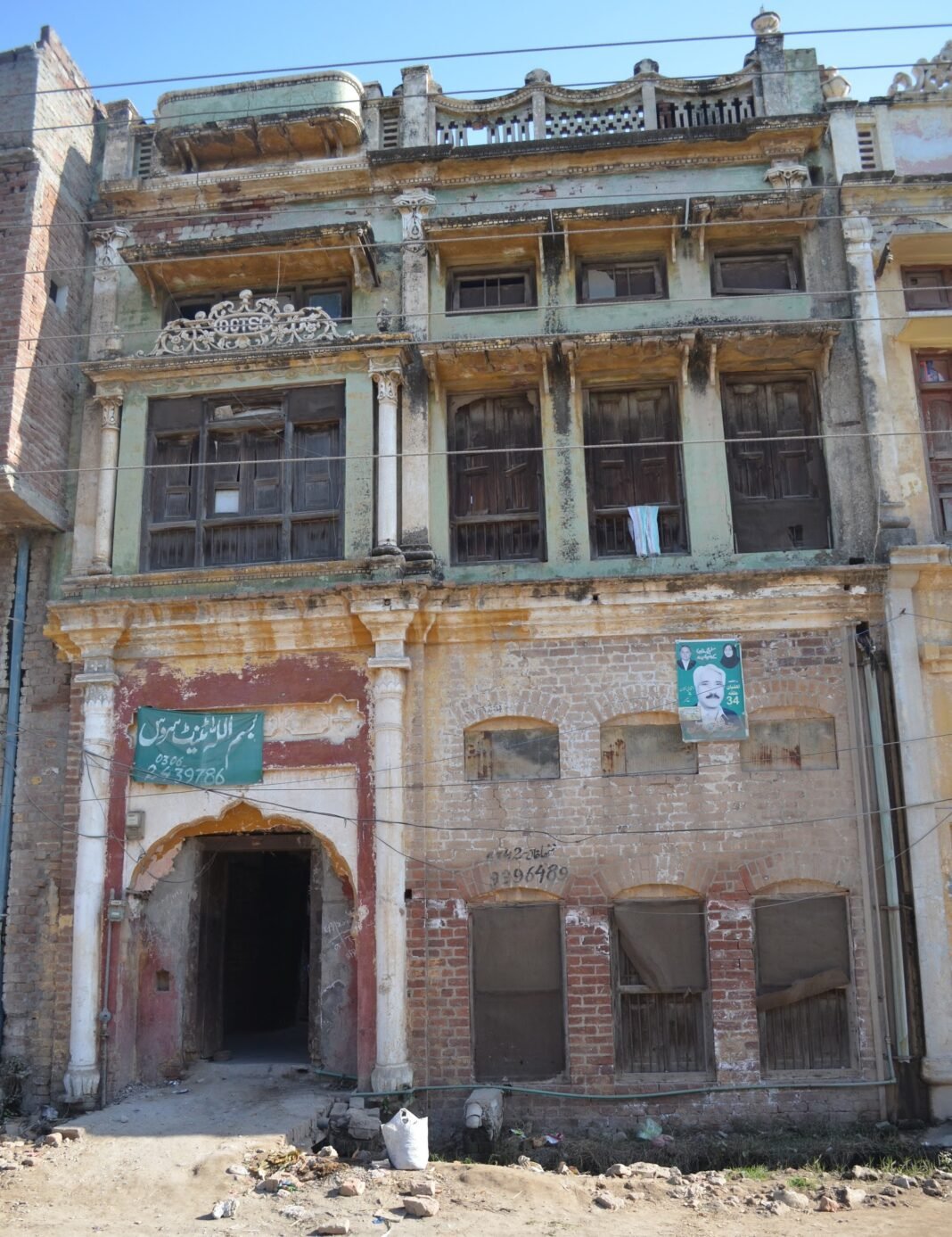
The gurdwara building itself is a handsome village structure: built of brick, with a hall entered through four doors, floors laid in black-and-white glazed tiles, and a ceiling sixteen feet high. Land was assigned to the gurdwara both in Dhunni and in neighbouring villages, supporting its upkeep and its community role. The shrine stands today in the centre of the village — a position that tells you how central it once was to village life.
Partition changed everything. Like so many of West Punjab’s village gurdwaras, the building passed out of Sikh hands in 1947, and in the decades since it has been occupied by refugee families from Ambala. Visitors today are asked to be realistic and respectful: families live in the four-door hall, so the right approach is to view the building from outside, ask the villagers’ permission before approaching closely, and treat the visit as a heritage walk rather than a shrine entry. The story survives even where access does not — and the village elders, who know exactly what the building was, are often willing to share what they remember.
Top Things to Do in Gurdwara Guru Amar Das, Dhunni
Plan Dhunni as a half-day heritage excursion from Hafizabad or Gujranwala, combined with the district’s other historic sites. The village rewards the unhurried.
Walk the metalled road from Hafizabad through Vinni
The approach is part of the experience. The metalled road from Hafizabad runs through classic rice-country Punjab, and the village of Vinni — which precedes Dhunni on the route — has its own gurdwara worth a pause. Drive it slowly, stop for tea at a village dhaba, and watch the plain do what it has done for centuries.
See the four-door hall from the village centre
The gurdwara stands in the centre of Dhunni: a brick building with its distinctive four-door hall, black-and-white glazed tile floors, and sixteen-foot ceiling. Because refugee families from Ambala now live in it, you view from outside and only with the villagers’ permission — ask first, keep a respectful distance, and do not photograph people without consent. Your guide or driver can help make the introduction; a polite request and a few minutes of conversation go a long way in a Punjabi village.
Hear the story of the shoes from village elders
The relic tradition — the Guru’s shoes, the devotee Bhai Cheena Mal, the other shoe at Madar, the generations who came seeking relief from hajeeran — is best heard from the people who inherited the memory. Village elders often know the story in detail. Listen, ask questions, and treat their account with the respect it deserves: this is their village’s history, not a tourist attraction.
Pair it with Madar and the district’s gurdwaras
The natural companion stop is the village of Madar in Nankana Sahib tehsil, where the Guru’s other shoe was kept — the two shrines were twinned in tradition. Closer at hand, Hafizabad district holds more Sikh heritage, including Gurdwara Chhevin Patshahi, Rasul Nagar. If you are building a wider Punjab gurdwara circuit, our Ali Baig Gurdwara travel guide is another good stop, and you will find more ideas in the Explore Pakistan collection.
Famous Places In and Around Gurdwara Guru Amar Das, Dhunni
- Village Vinni — the gurdwara village on the approach road from Hafizabad
- Village Madar (Nankana Sahib tehsil) — where the Guru’s other shoe was enshrined
- Gurdwara Chhevin Patshahi, Hafizabad — another historic shrine of the district
- Hafizabad city — district headquarters in the heart of basmati rice country
- Gujranwala — the nearest big city, famous across Pakistan for its food
- Nankana Sahib — birthplace of Guru Nanak, reachable as a longer day trip
How to Reach Gurdwara Guru Amar Das, Dhunni
Dhunni is a straightforward road trip from Lahore or Gujranwala, with the last stretch on a good metalled village road.
- From Lahore: around 110 km to Hafizabad via the N-5 Grand Trunk Road, roughly 2 to 2.5 hours by car. From Hafizabad city, take the metalled road toward Dhunni, passing through Vinni — the village is a short drive beyond.
- From Islamabad: around 270 km, roughly 4 to 4.5 hours by road via the motorway network. An easy day trip or an overnight combined with Gujranwala.
- From Karachi: around 1,250 km by road — fly to Lahore (about 2 hours) and drive onward; trains connect Karachi with Gujranwala and Lahore.
- Nearest airport: Allama Iqbal International Airport, Lahore — about 110 km from Hafizabad.
- Road conditions: the Grand Trunk Road and the Hafizabad–Dhunni metalled road are in good condition year-round. Village lanes inside Dhunni are narrow — park at the village edge and walk in.
- Transport options: private car or hired taxi is the practical choice; buses and vans run Lahore–Hafizabad–Gujranwala constantly, and a local rickshaw or taxi covers Hafizabad to Dhunni.
Route Details
Step 1: Reach Hafizabad from Lahore (N-5 Grand Trunk Road) or Gujranwala. Step 2: From Hafizabad city, take the metalled road signposted toward the surrounding villages. Step 3: Pass through Vinni village — worth a brief stop at its gurdwara. Step 4: Continue to Dhunni; the gurdwara stands in the centre of the village — ask any villager to point you to it. Step 5: View respectfully from outside with permission, speak with the elders, and return via the same road.
Where to Stay in Gurdwara Guru Amar Das, Dhunni
Stay in Hafizabad or Gujranwala and visit Dhunni as a day trip — the village has no accommodation for travelers. Hafizabad offers dependable mid-range hotels and guesthouses aimed at business travelers, with clean air-conditioned rooms at budget-friendly rates. Gujranwala, the bigger city nearby, has a wider range including more comfortable mid-range hotels and better dining. Luxury travelers should base themselves in Lahore (about 110 km away) and make Dhunni part of a Punjab heritage circuit. There is no formal camping around the village; an overnight village stay would require a local host’s invitation. Book Gujranwala hotels ahead during the winter wedding season, when demand peaks.
Where to Eat: Local Foods of Gurdwara Guru Amar Das, Dhunni
You are in the rice bowl of Punjab, so eat like it: fragrant basmati rice is the local pride, and the village dhabas serve it alongside dal, seasonal saag in winter, and tandoori rotis pulled fresh from clay ovens. A dhaba meal on the Hafizabad road — dal fry, chicken karahi or grilled fish in season, naan, and a towering glass of lassi — is deeply satisfying and genuinely budget-friendly, a full meal for two costing only a few hundred rupees. In Hafizabad city you will find proper restaurants with barbecue and desi breakfasts of halwa puri, siri paya and omelettes. And if your route takes you through Gujranwala, you are passing through one of Pakistan’s great food cities — its cooks are famous nationwide, so plan a meal stop. Carry bottled water in the villages, eat where the turnover is fast and the tandoor is hot, and try the local rice: this is where it grows.
Weather in Gurdwara Guru Amar Das, Dhunni
Hafizabad district shares the Lahore plain’s climate: a superb winter, a short spring, and a long, fierce summer. The village visit is entirely outdoors, so winter wins by a mile.
| Season | Temperature Range | Conditions |
|---|---|---|
| Winter (Dec–Feb) | 4–20°C | Clear, crisp days — perfect for village walking and photography |
| Spring (Mar–Apr) | 16–33°C | Pleasant mornings; the wheat harvest season in the fields |
| Summer (May–Jul) | 33–46°C | Intensely hot; avoid midday outdoor time |
| Autumn (Sep–Nov) | 22–35°C | Cooling down; November is excellent for travel |
Monsoon rains (July–September) green the rice paddies but can soften village tracks. For the best Gurdwara Guru Amar Das, Dhunni weather, travel between November and March.
Language and Culture of Gurdwara Guru Amar Das, Dhunni
Dhunni speaks Punjabi in the local Majhi-influenced dialect, with Urdu understood by nearly everyone. This is a traditional farming village: dress modestly in shalwar kameez or long trousers with covered shoulders, greet with Assalam-o-Alaikum, and accept offered tea — refusing is harder than accepting. Because families live in the gurdwara building, treat the whole visit as a call on someone’s neighbourhood: ask permission before approaching the building, never photograph people without consent, and keep your voice and manner gentle. If you are offered the story of the shoes by an elder, listen fully — interrupting a village elder’s account is poor manners anywhere in Punjab. Remove shoes and cover your head if you are ever invited near any shrine space.
Shopping in Gurdwara Guru Amar Das, Dhunni
The village itself has only everyday shops, but the district offers authentic buys. Hafizabad’s claim to fame is its rice — premium basmati bought here, close to the paddies, is excellent value; look for reputable local dealers rather than roadside bags of uncertain origin. Gujranwala’s bazaars, a short drive away, sell everything from steel goods (the city’s industrial specialty) to textiles and sweets. For genuine souvenirs, the region’s hand-embroidered Punjabi textiles (phulkari work) from Gujranwala and Hafizabad markets are beautiful and affordable. There are no malls on this route and no need for them — the honest shopping here is rice, embroidery, and village-market freshness.
Travel Tips for Gurdwara Guru Amar Das, Dhunni
Packing Essentials
Modest village-appropriate clothing, a headscarf or cap, slip-on shoes, sun protection, drinking water, and cash — Dhunni runs entirely on cash. A small gift of sweets for a host family, if you are received warmly, is a gracious Punjabi gesture.
Safety Tips
Rural Punjab is safe and famously hospitable. Travel by day with a local driver, let someone know your route, and arrive mid-morning. The only real risk on this trip is logistical — phone signal can dip between villages, so download offline maps and keep your fuel tank healthy.
Money & Connectivity
Carry all cash from Hafizabad or Gujranwala — no ATMs in Dhunni. Jazz, Telenor, Zong and Ufone all cover the Hafizabad area, though village data speeds vary. Most hotels in Hafizabad and Gujranwala offer Wi-Fi.
Best Time to Visit Gurdwara Guru Amar Das, Dhunni
Winter (November to March) — the season to come
Clear skies, green or golden fields depending on the month, and daytime temperatures in the high teens. The village walk is a pleasure, the light is made for photography, and the elders are more likely to be sitting out and happy to talk.
Spring (March to April) — harvest season
The wheat harvest transforms the plain into a working landscape — combine harvesters, threshing, and a palpable energy. Mornings remain pleasant for the village visit.
Summer (May to July) — avoid
With temperatures pushing toward 46°C, an outdoor village heritage walk is punishing. Skip unless your schedule gives no choice.
Autumn (October to November) — the quiet sweet spot
November especially: cool mornings, mild afternoons, rice harvest in the paddies, and far fewer travelers on the roads than in deep winter.
Final Thoughts
Gurdwara Guru Amar Das, Dhunni will not overwhelm you with scale — it will stay with you because of its story. A Guru’s shoes, a devotee’s love, generations of the hopeful pressing their cheeks to leather in a brick hall with a black-and-white floor. That is the kind of heritage that does not need restoration to move you; it needs only a traveler willing to drive the metalled road and listen.
Go in winter, go with respect for the families who live there now, and go with time for the elders’ stories. Dhunni is a reminder that Punjab’s deepest history is kept not in monuments, but in villages — and in the memories of the people who never left. For more journeys into Punjab’s hidden heritage, keep exploring our Explore Pakistan guides.
FAQs
Where is Gurdwara Guru Amar Das, Dhunni?
In the centre of Dhunni village, tehsil and district Hafizabad, Punjab, Pakistan — reached by metalled road from Hafizabad, past the village of Vinni.
What is the best time to visit Gurdwara Guru Amar Das, Dhunni?
November to March — winter days are clear and mild, ideal for the village walk and the drive through rice country.
How do I reach Gurdwara Guru Amar Das, Dhunni?
Drive from Lahore (about 110 km) or Gujranwala to Hafizabad, then take the metalled road through Vinni to Dhunni village.
Can visitors enter the gurdwara?
Not currently — refugee families from Ambala live in the building. View it respectfully from outside with the villagers’ permission.
Is it safe for families?
Yes. Rural Punjab is welcoming; travel by day, dress modestly, and go with a local driver who knows the area.
Where should I stay?
In Hafizabad (mid-range hotels) or Gujranwala (wider choice), or base in Lahore for a full Punjab heritage circuit.
What food should I try in the area?
Basmati rice dishes, village dhaba classics like dal fry and chicken karahi, tandoori rotis, and thick lassi.
What is the story of the Guru’s shoes?
Guru Amar Das granted a pair of his shoes to his devotee Bhai Cheena Mal; one was kept at Dhunni and the other at Madar village. People suffering from neck-gland swelling traditionally visited both shrines and pressed their cheeks to the shoes seeking relief.