This Gurdwara Pehli Patshahi, Bhail travel guide takes you to a forgotten stop on Guru Nanak’s travels in Kasur district: the village of Bhail, where the Guru rested on his journey from Manga to Ram Thaman, and where a single arched doorway — a masterpiece of old brickwork — is all that remains of a once-beautiful gurdwara. Also, inside you will find the real history, how to reach it from Lahore, Islamabad and Karachi, the best time to visit, nearby places, and practical tips for a respectful heritage trip.
Quick Facts
- Location: Village Bhail, next to the village of Rossay, on the Manga–Kasur road, Kasur district, Punjab
- Famous For: The gurdwara where Guru Nanak stayed on his way from Manga to Ram Thaman; “Pehli Patshahi” means the First Guru
- What Survives: A single arched doorway of intricate brickwork — the Prakashasthan (sanctum) has vanished
- Present Condition: The old residential quarters of the gurdwara are occupied by refugee families; view respectfully from outside
- History: Once a beautiful gurdwara of Jagat Guru Nanak Dev Ji; the surviving gate is described as an architectural treasure
- Nearest Town: Manga (Manga Mandi), about 4 km off the metalled Manga–Kasur road
- Nearest City: Kasur city; Lahore is the nearest major city
- Nearest Railway: Kasur station; Nearest Airport: Allama Iqbal International Airport, Lahore
- Best For: Heritage travellers, Sikh pilgrims, architecture lovers, photographers of old brickwork, and explorers of Kasur’s Sikh heritage trail
Why Visit Gurdwara Pehli Patshahi, Bhail
There is a particular kind of beauty that only ruins have, and Bhail’s gurdwara has it in full. A single arched doorway stands where a beautiful gurdwara once rose — its brickwork so intricate that heritage writers call it an architectural treasure — and through that doorway you can read five centuries of Punjab: the Guru’s journey, a thriving pre-partition sangat, the rupture of 1947. The refugee families who made the old quarters their home. If you want to understand what “shared heritage” really means, Bhail teaches it better than any restored monument.
The second reason to visit is the journey itself. Also, Bhail sits on the old Manga–Kasur road, in the heart of the countryside Guru Nanak walked. In fact, the Guru came here from Manga, heading for Ram Thaman. The shrine of Baba Ram Thaman at Kalu Khara, one of the most important Nanak-associated sites in this belt. Standing at Bhail, you are literally on the Guru’s route, between two greater shrines, at the quiet middle stop that history almost forgot. Heritage travellers who are mapping the Guru’s travels in Punjab should not skip it.
Old Bricks, Easy Half-Day Trips
Third, the doorway rewards the patient eye. Also, Old Punjabi brickwork — the small, hand-made bricks, the lime mortar, the geometric arch — is a craft that has nearly vanished. Bhail’s surviving gate is a textbook of it. Photographers and architecture students will find an hour here well spent, especially in the soft light of early morning or late afternoon when the brickwork glows.
Finally, Bhail is an easy, honest half-day trip from Lahore. Also, pair it with Kasur city — the shrine of Baba Bulleh Shah, the falooda shops, the old bazaar — or with Ram Thaman and Manga for a full Sikh-heritage circuit of the district. This Gurdwara Pehli Patshahi, Bhail travel guide gives you everything you need to plan it.
History of Gurdwara Pehli Patshahi, Bhail
The history of Bhail’s shrine is recorded in the standard survey Historical Sikh Shrines in Pakistan by researcher Iqbal Qaiser. Also, it repeated across Sikh heritage sources. Two villages named Bhaile (Bhail) and Rossay stand on the Manga–Kasur road, about 4 km off the metalled road. In the village of Bhail there was once a beautiful gurdwara of Jagat Guru Nanak Dev Ji. The Guru stayed in the village for some time while travelling to Ram Thaman from Manga.
That journey matters. Ram Thaman — the shrine at Kalu Khara, associated with Baba Ram Thaman, a revered figure in the Nanak tradition — was a major destination in this region. Also, Manga was the staging point. For example, the Guru’s route between them passed through villages like Bhail, and each stop became a shrine, each shrine a centre of the local sangat. Bhail’s gurdwara, by all accounts, was a handsome building in its day — the kind of village gurdwara with residential quarters, a prakash asthan. The steady rhythm of daily worship.
One Arch, Many Lives
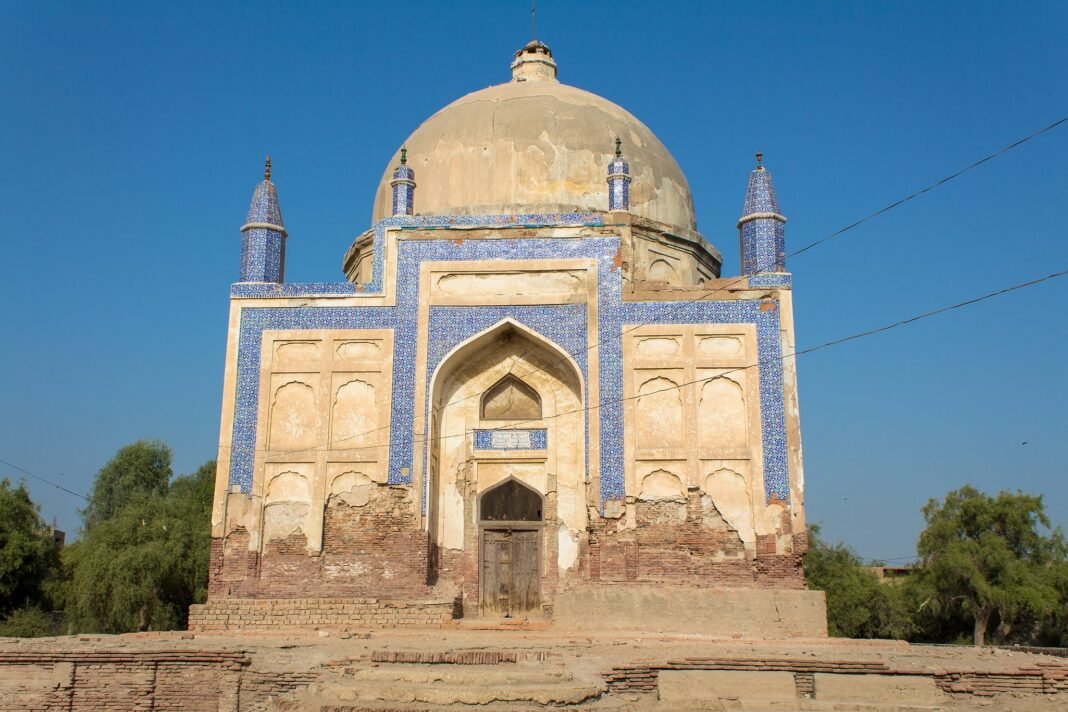
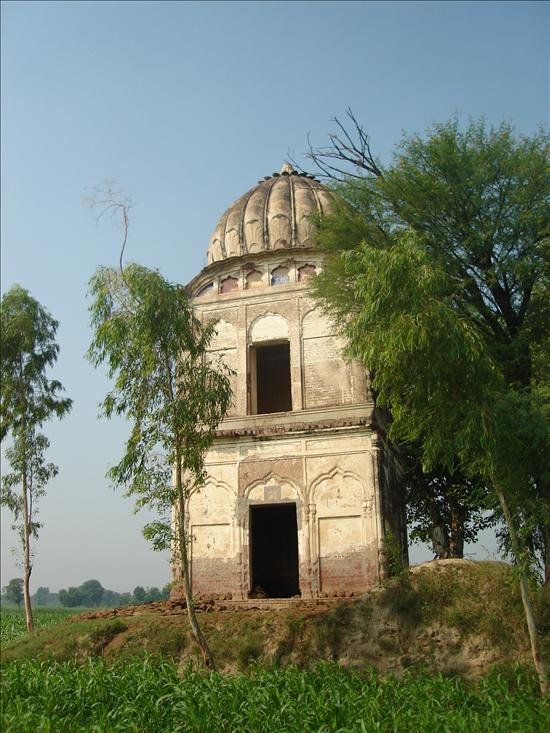
What survives today is fragmentary but eloquent. Only one arched door of the gurdwara has survived. The Prakashasthan — the sanctum where the Guru Granth Sahib was enthroned — has vanished entirely. Yet the surviving gateway is consistently described as an architectural treasure, still displaying the complicated, skilled brickwork of its builders. The residential quarters of the old gurdwara are now settled by refugee families — people displaced by partition who made the abandoned complex their home, as happened at countless religious sites across Punjab in 1947 and after.
That layered history is precisely what makes Bhail worth visiting with open eyes. It is not a frozen monument but a living palimpsest: a Sikh shrine, a partition refuge, a village home. Also, the families living in the quarters are part of the site’s story now, and visitors should treat the place as what it is — someone’s neighbourhood — with the quiet respect it deserves.
Top Things to Do in Gurdwara Pehli Patshahi, Bhail
See the surviving arched doorway
The one great survivor of Bhail’s gurdwara is its arched entrance. Also, and it is worth the trip on its own. In fact, study the brickwork up close: the small hand-made bricks, the precise arch, the lime plaster. In addition, heritage surveys single it out as a display of complicated, masterful brick engineering. Visit in the morning or late afternoon for the best light on the brick, and photograph it thoughtfully. This may be the only image record that keeps the craft alive.
Walk the village and meet the residents
Bhail and neighbouring Rossay are working Punjabi villages — wheat and fodder fields, buffaloes, brick lanes. Also, the unhurried rhythm of rural life. In fact, greet people, accept the inevitable offer of chai, and ask the elders about the old gurdwara. In addition, many will remember stories their parents told. Some may point out which quarters were the gurdwara’s and how the village has changed. Remember that families live in the old quarters — admire from the lanes, do not peer into homes.
Trace the Guru’s route: Manga to Ram Thaman
Bhail makes most sense as the middle of a journey. Start at Manga (Manga Mandi) on the Raiwind–Kasur road, where the Guru’s route began this leg, then come to Bhail, then continue to Ram Thaman at Kalu Khara. Also, the destination the Guru was heading for. Driving the route the Guru walked turns three separate shrines into one story. It is one of the most rewarding heritage drives in Kasur district.
Combine with Kasur city
Kasur is close, and it deserves half a day on its own: the shrine of Baba Bulleh Shah, the great Punjabi Sufi poet whose verses are sung across both Punjabs. Also, the old bazaar; and the city’s famous falooda and Kasuri methi. In fact, the pairing of Bulleh Shah’s Sufi shrine with Nanak’s gurdwaras makes a powerful statement about Punjab’s plural spiritual heritage.
Famous Places In and Around Gurdwara Pehli Patshahi, Bhail
Gurdwara Baba Ram Thaman, Kalu Khara (about 15–25 km): the shrine the Guru was travelling to from Manga — the natural companion to Bhail. Manga Mandi (about 10–15 km): the market town on the Raiwind–Kasur road, with its own Chota Nanakiana shrine. Kasur city (about 25–35 km): Baba Bulleh Shah’s shrine, the old fort area. Also, the food streets. Head Balloki (about 40–50 km): the Ravi headworks near Pattoki. Raiwind (about 20–25 km): the railway junction town on the way back to Lahore, famous for the annual Tablighi ijtima.
How to Reach Gurdwara Pehli Patshahi, Bhail
Bhail is reached via the Manga–Kasur road, about 4 km off the metalled road near the villages of Bhail and Rossay. From Lahore, take the Raiwind road (or the N-5 toward Kasur) to Manga Mandi, then follow the Manga–Kasur road. Also, ask locally for Bhail village — the shrine is well known in the area. The final 4 km is a village road: passable by car in dry weather, slower after rain.
- From Lahore: roughly 40–55 km via Raiwind/Manga, about 1–1.5 hours.
- From Islamabad: roughly 370–400 km via the M-2 to Lahore and onward, about 6–7 hours.
- Coming from Karachi, expect roughly 1,050–1,100 km via the N-5, about 13–14 hours — best with an overnight stop.
Nearest airport: Allama Iqbal International Airport, Lahore. Nearest railway station: Kasur station (heritage sources also note Manga’s rail links via Raiwind). Public transport: frequent vans and buses run Lahore–Raiwind–Manga–Kasur. For the last 4 km to Bhail, hire a rickshaw or Qingqi from the main road, or arrange a car from Manga.
Route Details
Step 1: From Lahore, head out on Raiwind Road toward Manga Mandi — about 35–40 km. Next, at Manga, take the Manga–Kasur road south. Step 3: After roughly 8–10 km, ask for the turnoff to Bhail/Rossay villages — the shrine site is about 4 km off the metalled road. Finally, in Bhail village, ask for the old gurdwara (“purana gurdwara”) — everyone knows it. Also, park considerately, visit the doorway, walk the lanes, and remember you are in a residential neighbourhood.
Where to Stay in Gurdwara Pehli Patshahi, Bhail
There is no accommodation in Bhail village itself — plan to stay nearby. Budget: Kasur city has a good range of inexpensive hotels and guesthouses aimed at shrine visitors and traders. Mid-range: better hotels in Kasur and on the Raiwind road offer air-conditioned rooms and in-house dining. Comfort: Lahore, only 1–1.5 hours away, is the natural base for a Bhail day trip, with the full range from business hotels to luxury properties. Local option: Manga Mandi has basic guesthouses for traders. If you are doing the full Manga–Bhail–Ram Thaman–Kasur circuit, Kasur city is the most convenient overnight stop, putting Bulleh Shah’s shrine and the food streets on your doorstep.
Where to Eat: Local Foods of Gurdwara Pehli Patshahi, Bhail
The Manga–Kasur belt serves the same hearty Punjabi food as the rest of the district. Sarson da saag with makki di roti in winter, dal, sabzi and tandoori roti year-round, and lassi so thick you need a spoon. The dhabas on the Manga–Kasur road do all of it well and cheaply. In Kasur city, do not miss the famous Kasuri falooda — the city’s signature dessert — and pick up Kasuri methi, the dried fenugreek that flavours dishes across Pakistan. Manga Mandi’s bazaar has fresh fruit, sweets shops. The usual dhaba row.
Carry water and snacks for the village stretch, and if villagers offer you food, accept — refusing hospitality in rural Punjab is taken as an insult, and accepting it is the beginning of every good story.
Weather in Gurdwara Pehli Patshahi, Bhail
Bhail sits on the Punjab plains, so expect the classic central-Punjab year: foggy winter mornings, a glorious spring, a brutal early summer. A humid monsoon. The shrine visit is outdoors and on foot, so time it for the cooler months.
| Season | Temperature Range | Conditions |
|---|---|---|
| Winter (Dec–Feb) | 4–20°C | Cold, foggy mornings; clear afternoons. Best season for the village walk. |
| Spring (Mar–Apr) | 18–35°C | Green fields, mild weather; the prettiest time to visit. |
| Summer (May–Jun) | 35–45°C | Extremely hot; visit at dawn or dusk only, with water and sun protection. |
| Monsoon (Jul–Sep) | 30–40°C | Humid with heavy showers; village tracks can get muddy. |
| Autumn (Oct–Nov) | 20–35°C | Dry and pleasant; an excellent window for the trip. |
Language and Culture of Gurdwara Pehli Patshahi, Bhail
The villages speak Punjabi (Majhi dialect) day to day, with Urdu understood by all. Also, the community is Muslim and deeply hospitable. The Punjabi tradition of mehmaan-nawazi is alive and well in Bhail and Rossay. For Sikh visitors, the emotional register of the visit is special: this is a Guru’s resting place, and local people generally understand and respect that. The fact that refugee families live in the gurdwara’s old quarters adds a layer of sensitivity — treat the site as a neighbourhood first and a monument second.
Dress modestly, ask before photographing people or homes, keep your voice down near the shrine remains, and cover your head if you pause at the doorway in prayer. Small courtesies — a greeting of “Assalam-o-Alaikum,” accepting chai — open every door in rural Punjab.
Shopping in Gurdwara Pehli Patshahi, Bhail
Bhail has only village shops, so shop in the towns. Manga Mandi’s bazaar is good for fresh produce, sweets, and everyday goods. Kasur city is the real shopping stop: Kasuri methi, leather goods, traditional sweets. The old bazaar’s fabric shops. If you are interested in craft, ask in Kasur about local embroidery and khussa (traditional shoes). There are no malls anywhere near Bhail — the nearest are in Lahore — but the bazaar experience is more rewarding anyway. Bargain politely and buy from small sellers where you can.
Travel Tips for Gurdwara Pehli Patshahi, Bhail
Packing Essentials
Sun protection for most of the year. Also, warm layers for December–January. In fact, sturdy, closed shoes for village lanes. Drinking water and snacks; a scarf or dupatta for covering your head; a power bank; and a small first-aid kit. A camera with a good lens is worthwhile for the brickwork details.
Safety Tips
Bhail is peaceful farmland, but observe the basics: travel in daylight, and go with a local contact or guide if possible. Also, the site is unsigned and the village road is easy to miss. The surviving structure is a ruin: view the doorway from the lane and do not climb on it. Be discreet and respectful around the residential quarters; do not photograph homes or families without explicit permission. Keep valuables out of sight.
Money & Connectivity
Carry cash — there are no ATMs in Bhail (nearest in Manga and Kasur). All major networks (Jazz, Zong, Telenor, Ufone) cover the Manga–Kasur road; village lanes are usually fine but can be patchy. Tell someone your route before turning off the main road.
Best Time to Visit Gurdwara Pehli Patshahi, Bhail
Winter (December–February)
The best season: cool air, clear afternoon light on the old brickwork, and comfortable walking. Also, mornings can be foggy — plan to arrive by late morning.
Spring (March–April)
Green wheat, mild temperatures, and the countryside at its most beautiful. Also, the joint-best window with winter.
Summer (May–June)
Avoid if you can — the plains heat is punishing, and there is no shade or facility at the site. If you must come, go at dawn.
Monsoon and Autumn (July–November)
The monsoon brings humidity and muddy tracks. Meanwhile, october–November, after the rains, is dry, clear and pleasant — a fine second choice.
Final Thoughts
Gurdwara Pehli Patshahi, Bhail is a doorway in every sense. A doorway of old brick that survived when the rest fell, and a doorway into the layered history of Punjab. Also, it asks nothing of you except attention and respect. It repays both: with the beauty of vanishing craftsmanship, the warmth of village hospitality. The quiet thrill of standing on the Guru’s own route between Manga and Ram Thaman.
Do not come expecting a monument. Come expecting a story — and then drive the full route, from Manga through Bhail to Ram Thaman, and on to Kasur’s Sufi shrines, for one of the richest heritage days in the district. For more, browse the Explore Pakistan collection, including Gurdwara Baba Ram Thaman, Kalu Khara and Gurdwara Chota Nanakiana, Manga.
FAQs
Where is Gurdwara Pehli Patshahi, Bhail located?
In Bhail village, next to Rossay village, on the Manga–Kasur road in Kasur district, Punjab — about 4 km off the metalled road.
What is the best time to visit Gurdwara Pehli Patshahi, Bhail?
October to March, with December–February and March–April the most comfortable. Also, avoid the May–June heat.
How do I reach Gurdwara Pehli Patshahi, Bhail?
From Lahore via Raiwind Road to Manga Mandi, then the Manga–Kasur road. The village is 4 km off the main road — ask locally for the old gurdwara.
What remains of the gurdwara?
A single arched doorway of intricate old brickwork. Also, the Prakashasthan has vanished, and refugee families live in the old residential quarters.
Is it safe and appropriate to visit?
Yes, with respect: it is a residential neighbourhood. View from the lanes, do not enter homes, and ask before photographing people.
Is it suitable for families?
Yes as a short, quiet stop combined with Kasur city or the Ram Thaman circuit. Also, carry water and snacks; there are no facilities at the site.
Where can I stay near Bhail?
Kasur city has the best nearby options (budget to mid-range). Also, Lahore, 1–1.5 hours away, is ideal for a comfortable base.
What does “Pehli Patshahi” mean?
The “First Guru” — Guru Nanak Dev Ji, the founder of Sikhism. Also, gurdwaras with this name mark places he visited.