This Gurdwara Baba Ram Thaman, Kalu Khara travel guide takes you to one of Punjab’s most extraordinary sacred places — the fort-like shrine of a 16th-century saint who was Guru Nanak’s own cousin, where Muslims still organize the Vaisakhi fair. Inside you will find the history of Baba Ram Thaman, the architecture of the shrine complex, how to reach Kalu Khara from Lahore, Islamabad and Karachi, the best time to visit, the famous Vaisakhi mela, nearby Kasur attractions, and practical tips for a respectful trip.
Quick Facts
- Location: Kalu Khara village (also recorded as Khala Kharu), Kasur District, Punjab — about 12 km from the Raja Jang and Rao Khan Wala railway stations
- Famous For: The shrine of Baba Ram Thaman, the 16th-century Vaishnav saint and elder cousin of Guru Nanak; a fort-style gurdwara with a great tank; one of the 36 dwaras of the Ramanandi Sampradaya; and a Vaisakhi fair still organized by local Muslims
- Nearest City: Kasur (the district headquarters); Lahore is roughly 80–90 km away via Kasur
- Accessibility: Easy day trip from Lahore — about an hour to Kasur via Ferozepur Road, then village roads to Kalu Khara. The shrine complex is a known local landmark
- Known Landmarks: The fort-style shrine building, the large sacred tank with its gate temple, the “Bave di Mal” shrine in front of the gurdwara
- Best For: Pilgrims and spiritual travelers of all faiths, Sikh and Hindu heritage enthusiasts, festival travelers (Vaisakhi), photographers, anyone seeking Punjab’s living syncretic traditions
Why Visit Gurdwara Baba Ram Thaman, Kalu Khara
Few places in Pakistan embody the subcontinent’s shared spiritual heritage like the shrine of Baba Ram Thaman. Here is a 16th-century Vaishnav saint — a devotee of Vishnu, one of the 36 great “dwaras” (gates) of the Ramanandi tradition — who was also the elder cousin of Guru Nanak, whom Guru Nanak himself visited several times, and whose annual Vaisakhi fair is today organized by the local Muslims of Kalu Khara, with Hindus, Christians and others joining from Lahore. Muslims offer a chaddar at his samadh just as they would at a Sufi saint’s shrine. If you want to understand what “Punjab” truly means — beyond borders, beyond categories — come here.
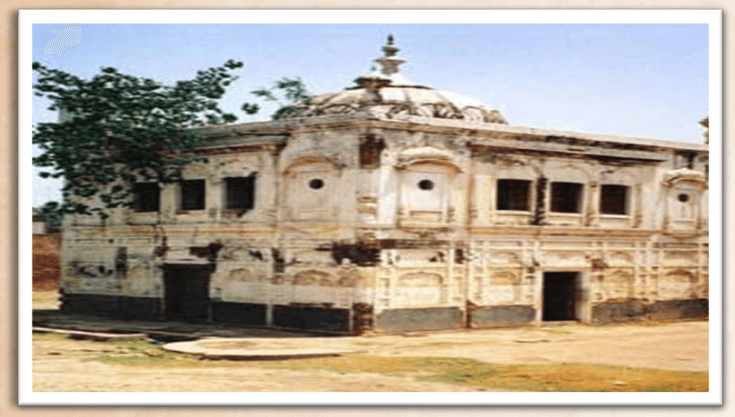
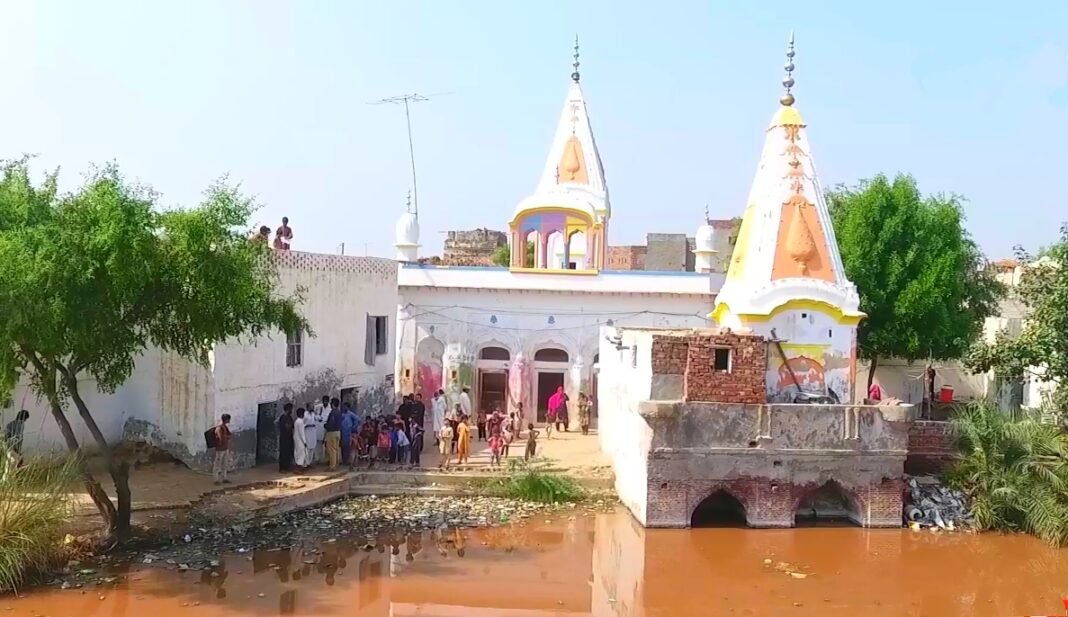
The shrine itself is architecturally striking: a gurdwara built in the style of a fort, with a large sacred tank and a beautiful temple at the tank’s main gate. The complex once sprawled across some 22 acres of boundary walls, havelis and shrines, and even now — weathered, partly settled by post-Partition residents, its frescoes faded — it has a grandeur that photographs beautifully and moves you quietly. Local people say the walls once carried elaborate frescoes of Hindu deities and mythological scenes; look closely and you can still find faint remnants of the original work beneath later layers.
Then there is the fair. The Vaisakhi mela at Ram Thaman has been held since the 16th century, once drawing some 60,000 pilgrims. It runs from the 14th of Chaiter to Vaisakhi — late March into mid-April — and it is one of the great living festivals of Pakistani Punjab: three days of devotion, music, color and commerce, kept alive across Partition by the devotion of local Muslims who never let the saint’s fair die. Time your visit for the mela and you will witness something genuinely rare — a Hindu saint’s festival, in Pakistan, thriving.
Finally, Kalu Khara is the perfect companion to a Kasur trip. The district is the land of Bulleh Shah, the great Sufi poet; the Ganda Singh Wala border; and the headworks of the Ravi and Sutlej. A day that moves from Bulleh Shah’s shrine in Kasur city to Ram Thaman’s samadh in the countryside is a day that spans the whole spiritual spectrum of Punjab — Sufi, Sikh, Hindu — in under a hundred kilometers from Lahore. Choose this destination if you travel for meaning, not just scenery.
History of Gurdwara Baba Ram Thaman, Kalu Khara
Baba Ram Thaman lived in the 16th century, and his story is woven into the very beginnings of Sikhism. He was the son of Guru Nanak’s maternal aunt — the elder cousin of the founder of the Sikh faith — and a prapti sadhu, a realized ascetic of the Vaishnav tradition devoted to Lord Vishnu. In the 1500s he set up his camp near the village then called Khala Kharu (today’s Kalu Khara), and his presence drew devotees who settled around him. During his lifetime, Guru Nanak himself visited the place on several occasions — a meeting of two spiritual giants, cousins bound by both blood and the search for truth.
After Baba Ram Thaman’s death, a shrine — a samadh, the sacred memorial built over a saint’s ashes and burial ground — was raised on the spot. Over the centuries the site grew into a vast complex: several temples, a great tank (sarovar), havelis for priests and pilgrims, and boundary walls eventually enclosing some 22 acres. The shrine was recognized as one of the 36 dwaras of the Ramanandi Sampradaya, one of the largest Vaishnav sects — a mark of its standing in the Hindu spiritual world. Thousands of acres of land and an estate were granted to the shrine, and the Vaisakhi fair held here every year from the 14th of Chaiter drew around 60,000 pilgrims in its great days.
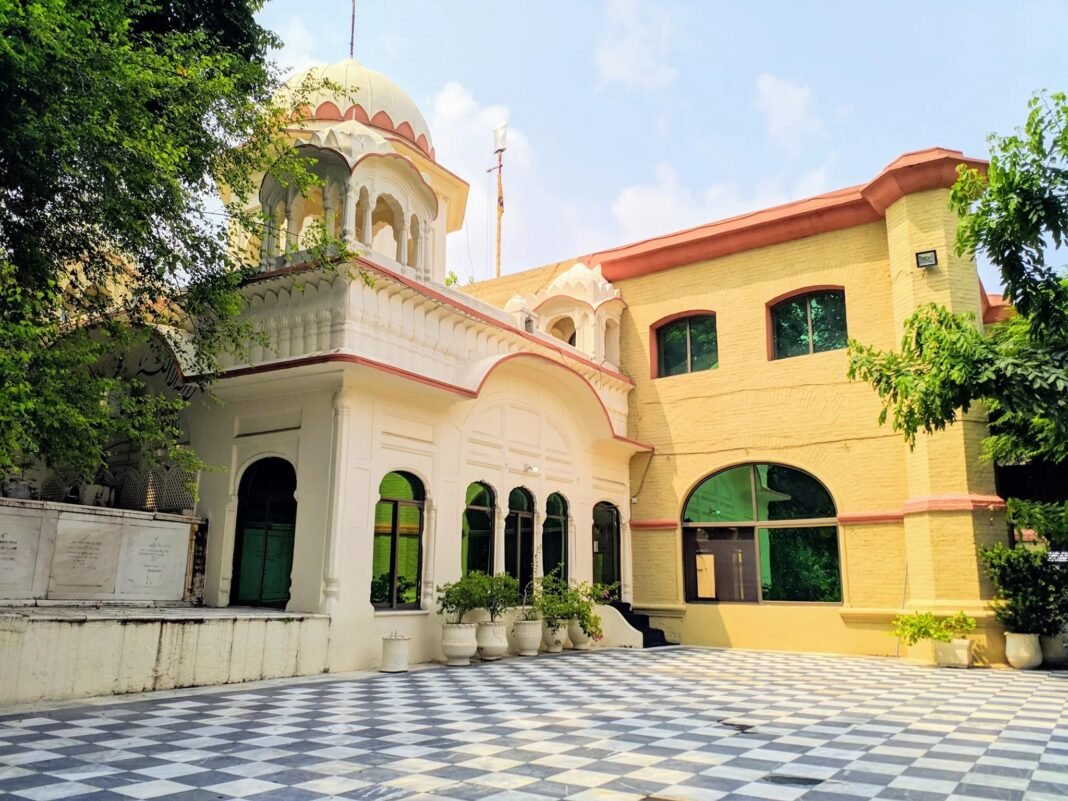
The complex’s architecture tells its own story. The gurdwara was built beautifully in the style of a fort — solid, imposing, protective — with a large tank before it and a beautiful temple at the tank’s main gate. In front of the gurdwara stands another shrine called “Bave di Mal,” ringed by fine buildings. The village also remembers Justice Baba Bay Nath Ji as one of its renowned residents. The frescoes that once covered the walls — Hindu deities, mythological characters, elaborate decoration — speak of an age when this was among the richest religious centres of the region.
Partition in 1947 scattered the Hindu and Sikh devotees, and refugees from India settled in the vacant rooms and havelis left behind — which is why the complex today wears so many layers, with faint original frescoes visible beneath later paint. But the fair refused to die. The Vaisakhi mela continued, organized now by the Muslims of the area, and it continues to this day — joined by Hindus, Christians and others who travel from Lahore. Writers who have attended describe devotees presenting chaddars at the samadh, singing and dancing in procession, and a celebration of the subcontinent’s religious syncretism that feels nothing short of miraculous. Four centuries after a saint set up his camp by this village, his fair still fills the lanes.
Top Things to Do in Gurdwara Baba Ram Thaman, Kalu Khara
Explore the fort-style shrine
Walk the perimeter and the courtyards of the fort-like gurdwara building — its scale and solidity are unusual for a village shrine and reflect the wealth and importance the institution once commanded. Note the 22-acre footprint of walls and structures, the havelis, and the way the complex was designed as a self-contained sacred settlement.
See the great tank and its gate temple
The large sacred tank is one of the complex’s defining features, with a beautiful temple built at its main gate. Tanks (sarovars) are central to the spiritual geography of Punjab’s shrines — for ritual bathing, reflection, and community gathering. The tank’s water is no longer clean, so admire it visually rather than entering it.
Visit the samadh of Baba Ram Thaman
The heart of the complex is the samadh itself — the memorial over the saint’s final resting place. This is where devotees of all faiths offer chaddars, make wishes, and pray. Approach with the reverence you’d bring to any major shrine: cover your head, remove shoes, and keep silence in the inner space.
Look for the faded frescoes
Ask locals to point out the surviving traces of the elaborate wall frescoes — Hindu deities and mythological scenes, now mostly withered or painted over. Finding these faint remnants is like reading a palimpsest: the original 16th-to-19th-century decoration showing through the layers of later history.
Attend the Vaisakhi fair
If you can time it, the annual fair from the 14th of Chaiter to Vaisakhi (late March to mid-April) is the essential experience: processions, music, stalls, devotion, and the extraordinary sight of a Hindu saint’s mela organized by Muslims. It is crowded, colorful and deeply moving — arrive early in the day and be prepared for festival crowds.
Famous Places In and Around Gurdwara Baba Ram Thaman, Kalu Khara
- Shrine of Hazrat Baba Bulleh Shah, Kasur city — the great Sufi poet’s shrine, the spiritual heart of Kasur and an essential pairing with Ram Thaman
- Ganda Singh Wala border — the Pakistan–India border crossing near Kasur, with its flag-lowering ceremony atmosphere
- Balloki Headworks (Ravi River) — the historic British-era headworks on the Ravi, a popular picnic and sightseeing spot
- Kasur Museum and old city — the district’s museum and historic quarters, famous for Kasuri methi (fenugreek) and traditional sweets
- “Bave di Mal” shrine — the beautiful shrine directly in front of the Ram Thaman gurdwara, part of the same sacred landscape
How to Reach Gurdwara Baba Ram Thaman, Kalu Khara
Kalu Khara is an easy day trip from Lahore via Kasur — the whole journey is on good roads through the agricultural heartland of central Punjab.
- From Lahore: About 80–90 km total. Drive to Kasur first — 55 km via Ferozepur Road, about an hour (there are toll plazas on the route) — then continue on village roads to Kalu Khara, about 12 km beyond the Raja Jang / Rao Khan Wala area. Total driving time: roughly 1.5 to 2 hours.
- From Islamabad: About 440–450 km — roughly 6 hours via the M-2 to Lahore, then the Kasur road. A long day trip; better as an overnight stay in Lahore or Kasur.
- From Karachi: About 1,250 km — 16+ hours by road. Fly to Lahore (1.5 hours) and drive; the only sensible option.
- Nearest airport: Allama Iqbal International Airport, Lahore — about 85–95 km from Kalu Khara, roughly 2 hours by road.
- By rail: Pakistan Railways serves the Kasur line; Raja Jang and Rao Khan Wala stations are both about 12 km from the shrine — a train to either, then a taxi or rickshaw, is a charming way to arrive.
- Road conditions: The Lahore–Kasur road (Ferozepur Road / Lahore–Kasur Road via Raiwind) is in good condition; the final village stretch is narrower but fine for cars. During the Vaisakhi fair, expect heavy local traffic near the shrine — park early and walk in.
- Transport options: Private car or rented car with driver is most flexible. Wagons and buses run frequently between Lahore and Kasur; from Kasur city, hire a taxi or rickshaw for Kalu Khara.
Route Details
- From Lahore, take Ferozepur Road south toward Kasur (55 km, about 1 hour), or the Lahore–Kasur Road via Raiwind.
- From Kasur, head toward the Raja Jang / Rao Khan Wala area on the district roads.
- Kalu Khara village is about 12 km from either railway station — the shrine complex is the village’s great landmark; ask anyone for Baba Ram Thaman.
- During the Vaisakhi fair, follow the festival traffic and park in the designated areas outside the complex.
Where to Stay in Gurdwara Baba Ram Thaman, Kalu Khara
Kalu Khara is a village — stay in Kasur or Lahore and visit as a day trip.
- Kasur city: Basic to mid-range hotels and guesthouses — the closest base, fine for an overnight stay, especially during the Vaisakhi fair when you want an early start.
- Lahore: The full range from budget guesthouses to five-star luxury — the natural base for most travelers, with Kalu Khara an easy 1.5–2 hour drive away.
- During the fair: Book Kasur accommodation well ahead of Vaisakhi (mid-April) — the mela draws large crowds and rooms fill up. Many visitors simply day-trip from Lahore to avoid the rush.
- Pilgrim rest rooms: The shrine complex historically had residential rooms for pilgrims; ask locally about current arrangements during the fair, but don’t count on them — book a proper hotel.
Where to Eat: Local Foods of Gurdwara Baba Ram Thaman, Kalu Khara
Kasur district has its own flavors within the broader Punjabi kitchen — and the fair adds its own festive food scene.
- Kasuri methi dishes — Kasur’s famous fenugreek (methi) flavors local cooking; try methi parathas and methi-infused dishes in Kasur city’s eateries.
- Classic Punjabi fare — desi ghee parathas, dal, saag, mutton and chicken karahi at the dhabas along the Lahore–Kasur road.
- Fair food — during the Vaisakhi mela, the lanes around the shrine fill with stalls selling jalebi, pakoras, chaat, sugarcane juice and sweets — the full mela menu.
- Kasur sweets — the city’s sweet shops are well regarded; pick up mithai for the road.
- Costs: Very budget-friendly — dhaba meals and mela snacks cost little, and even a comfortable meal in Kasur city stays modest. Carry cash for the village and the fair.
Weather in Gurdwara Baba Ram Thaman, Kalu Khara
Kalu Khara shares Kasur’s central-Punjab climate: hot summers, a monsoon break, and pleasant winters. For the shrine itself, November to March is ideal; for the fair, come in late March to mid-April and prepare for warm days.
| Season | Temperature Range | Conditions |
|---|---|---|
| Winter (Dec–Feb) | 5°C to 20°C | Cool and pleasant; foggy mornings possible. Best season for sightseeing. |
| Spring / Fair season (Mar–Apr) | 15°C to 35°C | Warming fast; the Vaisakhi fair falls here — warm days, festive atmosphere. |
| Summer (May–Jun) | 30°C to 42°C | Very hot; visit the shrine at dawn or dusk only. |
| Monsoon (Jul–Sep) | 28°C to 38°C | Humid with heavy showers; village lanes can get muddy. |
| Autumn (Oct–Nov) | 15°C to 32°C | Cooling and clear; November is an excellent quiet-season choice. |
Language and Culture of Gurdwara Baba Ram Thaman, Kalu Khara
Punjabi is the language of Kalu Khara, with Urdu widely understood. The culture here is defined by something special: a living tradition of interfaith devotion. Muslims organizing a Hindu saint’s fair, offering chaddars at a samadh as they would at a Sufi shrine, Hindus and Christians traveling from Lahore to join — this is the syncretic Punjab at its most authentic, and visitors are welcomed into it warmly.
At the shrine, observe the etiquette of a shared sacred space: cover your head, remove your shoes, dress modestly, keep your voice low in the inner areas, and follow the lead of local devotees. During the fair, be respectful of religious processions — watch, don’t obstruct — and ask before photographing people in devotion. Modest dress is appreciated throughout the village.
Shopping in Gurdwara Baba Ram Thaman, Kalu Khara
The village has only everyday shops — but Kasur city and the fair offer real finds.
- Kasuri methi and local produce — Kasur’s famous dried fenugreek, spices and agricultural produce make excellent, authentic souvenirs.
- Fair stalls — during the Vaisakhi mela, vendors sell bangles, trinkets, toys, traditional crafts and sweets — classic mela shopping.
- Kasur bazaars — traditional Punjabi jutti, embroidered fabrics and everyday crafts at fair prices.
- No malls: There are no shopping malls in Kalu Khara or Kasur — this is bazaar and mela country. For mall shopping, Lahore is 55 km away.
Local Events and Festivals
Vaisakhi Mela at Baba Ram Thaman (late March to mid-April)
The great annual fair of the shrine runs from the 14th of Chaiter to Vaisakhi — roughly late March into mid-April, climaxing on Vaisakhi day itself. Held since the 16th century and once drawing around 60,000 pilgrims, the three-day mela is today organized by the local Muslim community and attended by devotees of all faiths, including Hindus and Christians who travel from Lahore. Expect processions with singing and dancing, chaddar offerings at the samadh, stalls, food, and an atmosphere of genuine religious syncretism. It is one of the most remarkable festivals in Pakistan — plan your whole trip around it if you can.
Travel Tips for Gurdwara Baba Ram Thaman, Kalu Khara
Packing Essentials
- A head covering for the shrine and modest clothing covering shoulders and knees.
- Comfortable walking shoes — the complex is large and the ground uneven.
- Winter: a warm layer for cool mornings; fair season (late March–April): sun protection, a hat, and water — days are warm.
- A camera — the fort-style architecture, the tank, and the fair are all highly photogenic.
- Cash in small denominations for mela stalls, rickshaws and village shops.
Safety Tips
- Kalu Khara is a peaceful village; standard travel precautions apply. During the Vaisakhi fair, crowds are large — keep valuables secure, keep children close, and agree on a meeting point with your group.
- Don’t enter the tank water — it is not clean.
- Travel the village roads in daylight; during the fair, traffic near the shrine is heavy — park early.
Money & Connectivity
- Carry cash — ATMs are available in Kasur city, but the village and fair stalls are cash-only.
- All major mobile networks cover the Kasur district with 4G in towns; download offline maps for the village stretch.
Best Time to Visit Gurdwara Baba Ram Thaman, Kalu Khara
Fair season (late March to mid-April) — the essential experience
If you want the shrine at its most alive, come for the Vaisakhi mela. Warm days, festival crowds, processions and the full syncretic celebration — this is the reason many travelers choose Kalu Khara. Book Kasur or Lahore accommodation ahead.
Winter (November to February) — the best sightseeing season
Cool, clear days (5–20°C) perfect for exploring the complex, the tank and the fresco traces in peace. The quietest, most reflective time to visit.
Spring shoulder (March, excluding fair days) — lovely
Pleasant weather and green countryside without the fair crowds.
Summer and monsoon (May to September) — avoid
Extreme heat followed by humid monsoon makes this the worst window for the shrine and the village lanes.
Final Thoughts
Gurdwara Baba Ram Thaman, Kalu Khara, is the rare destination that changes how you see a whole region. A 16th-century saint, Guru Nanak’s cousin, a fort-like shrine with a great tank, faded frescoes of gods and myths — and a Vaisakhi fair kept alive by Muslim devotion in the heart of Pakistani Punjab. It is history, architecture, festival and living interfaith harmony in a single village.
Come for the fair if you can — late March to mid-April, when the lanes fill with music and the samadh receives its chaddars. Come in winter if you prefer the quiet — the tank, the fresco traces, the empty courtyards. Either way, pair it with Bulleh Shah’s shrine in Kasur and you’ll have traveled the full spiritual spectrum of Punjab in a single day trip from Lahore. Pack a scarf, bring an open heart, and let Kalu Khara show you what this land has always known: that devotion, here, belongs to everyone.
FAQs
Where is Gurdwara Baba Ram Thaman, Kalu Khara?
In Kalu Khara village (Khala Kharu), Kasur District, Punjab — about 12 km from the Raja Jang and Rao Khan Wala railway stations, roughly 80–90 km from Lahore via Kasur.
Who was Baba Ram Thaman?
A 16th-century Vaishnav saint and the elder cousin of Guru Nanak (the son of Nanak’s maternal aunt). His shrine is one of the 36 dwaras of the Ramanandi Sampradaya, and Guru Nanak visited him here several times.
When is the Vaisakhi fair at Kalu Khara?
Every year from the 14th of Chaiter to Vaisakhi — roughly late March to mid-April, climaxing on Vaisakhi day. It has been held since the 16th century.
Who organizes the fair now?
The local Muslim community organizes the mela, and devotees of all faiths — including Hindus and Christians traveling from Lahore — attend. Muslims offer chaddars at the samadh as at a Sufi shrine.
What is the best time to visit?
For the festival: late March to mid-April. For comfortable sightseeing: November to February (5–20°C). Avoid May–September heat and monsoon.
How do I reach Kalu Khara from Lahore?
Drive to Kasur (55 km, ~1 hour via Ferozepur Road), then continue to Kalu Khara village — about 1.5 to 2 hours total. Trains to Raja Jang or Rao Khan Wala plus a taxi also work.
Is the shrine suitable for families?
Yes — families of all faiths visit, especially during the fair. Keep children close in festival crowds and don’t let anyone enter the tank water.
What else can I see nearby?
Bulleh Shah’s shrine in Kasur city, the Ganda Singh Wala border, Balloki Headworks on the Ravi, and Kasur’s bazaars famous for Kasuri methi.
Find more spiritual journeys on our Explore Pakistan page, trace more Sikh heritage in our Ali Baig Gurdwara travel guide, and pair your Punjab trip with northern mountains in our Hunza Valley guide.