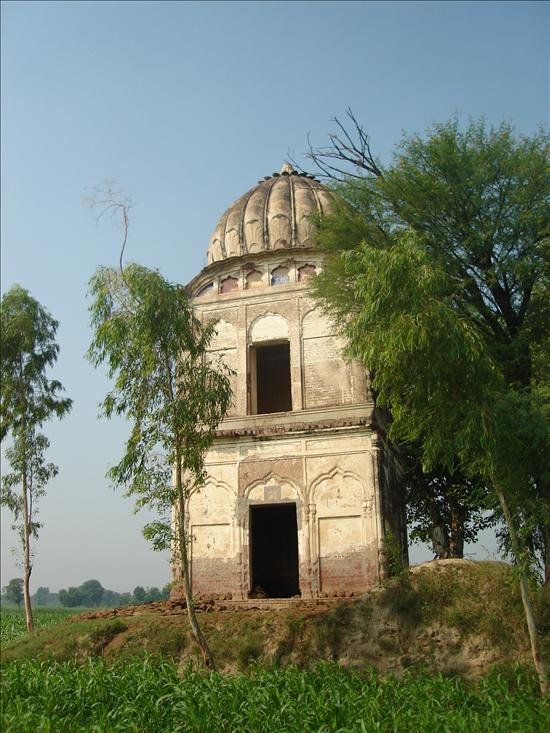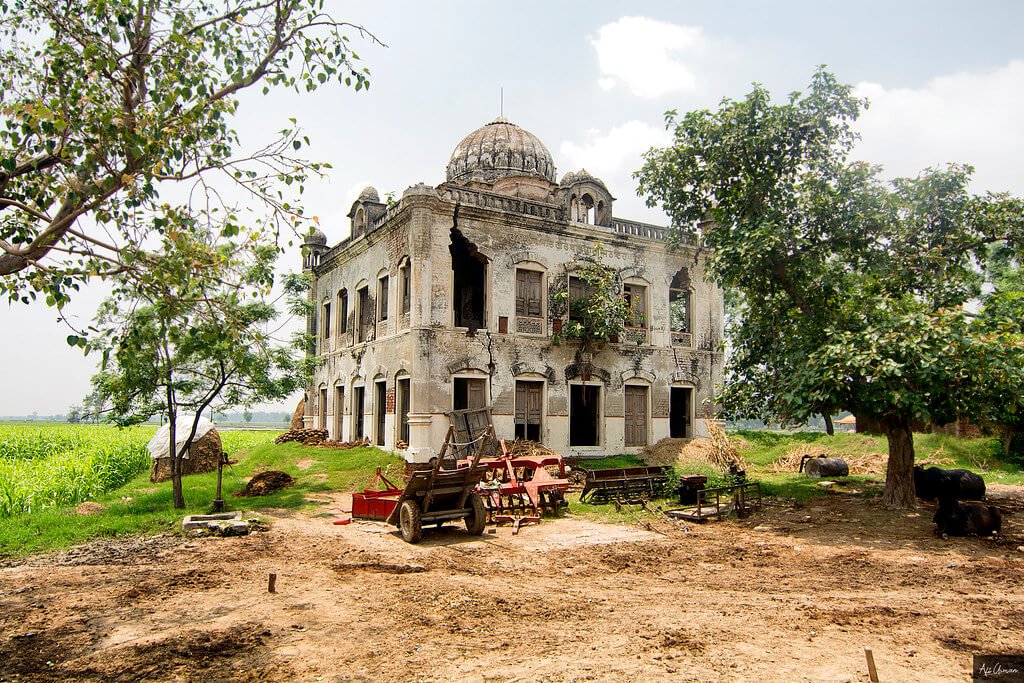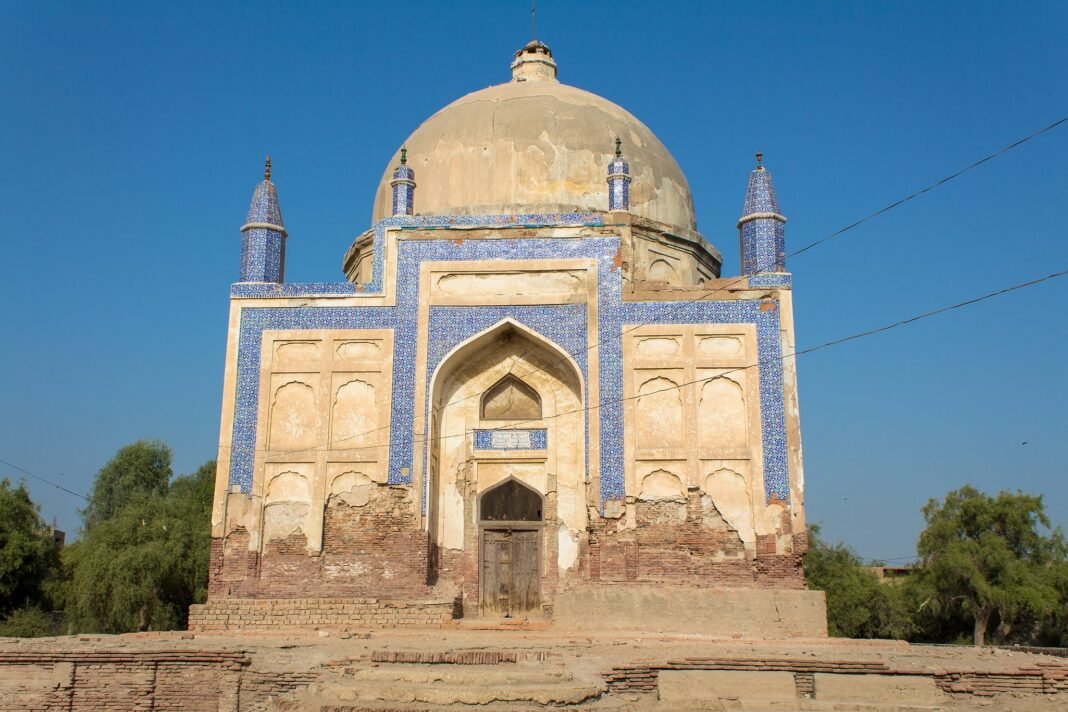
This Gurdwara Pehli Patshahi, Bulani travel guide takes you to Sindh, to the town of Bulani in Larkana district, where Guru Nanak’s journeys carried him far beyond Punjab — and where the shrine in his memory is still a living place of worship, with Nanakpanthi priests, daily prakash, and a running langar. Inside you will find the real history (including the beloved stories of the shepherd and the weaver), how to reach it from Karachi, Sukkur and Lahore, the best time to visit, nearby places like Mohenjo-daro, and practical tips for a respectful visit.
Quick Facts
- Location: Bulani, a well-known town of Larkana district, Sindh
- Famous For: The shrine marking Guru Nanak’s visit to Sindh on his western travels; “Pehli Patshahi” means the First Guru
- Living Tradition: Nanakpanthi Hindus serve as priests; prakash of the Guru Granth Sahib takes place daily; the sangat assembles enthusiastically and the Guru’s langar runs
- Stories: The shepherd Nur Nusrat’s question about good fortune, and Dawood the weaver’s rug spread under shivering puppies — “My rug is this green grass”
- Endowment: The gurdwara historically held land grants in its name
- Note: Heritage surveys record this as Gurdwara Pehli Patshahi; the identification is also associated locally with the Sant Ajulal/Jhulelal tradition, and some historians dispute the gurdwara identification — visit with an open, respectful mind
- Nearest City: Larkana, with nearby Mohenjo-daro; Sukkur about 100 km away
- Accessibility: Road via the Indus Highway (N-55); nearest airports at Sukkur and Mohenjo-daro (limited schedules), Karachi for full connectivity
- Best For: Sikh pilgrims, seekers of Sindh’s plural heritage, Mohenjo-daro visitors adding a spiritual stop, photographers of Sindh’s shrine architecture
Why Visit Gurdwara Pehli Patshahi, Bulani
Most people associate Guru Nanak’s travels with Punjab — Nankana, Kartarpur, Eminabad. Bulani reminds you how far the Guru actually walked. His journeys carried him through Sindh: through Shikarpur and Rukanpur to Larkana, on toward Harappa and the ruins of Mohenjo-daro. To stand at Bulani is to stand at the far edge of that map, where the Guru’s message met the Indus valley’s own ancient spiritual traditions — and where, remarkably, the shrine is not a ruin but a living place of worship.
That living quality is the second reason to come. Unlike the silent, roofless shrines of central Punjab, Bulani’s gurdwara has Nanakpanthi Hindu priests, daily prakash of the Guru Granth Sahib, an assembling sangat, and a running langar. You can sit in the divan, hear the shabads, and eat in the langar hall — experiencing the tradition as a participant, not just an observer. For Sikh travellers, that is profoundly moving; for everyone else, it is a window into one of Sindh’s most beautiful examples of religious continuity.
Third, the stories belong here. It was at Bulani that a shepherd named Nur Nusrat asked the Guru for the prayer that brings good fortune — and was told that all good fortune lies in virtue and in not deviating from the path of righteousness. And it was here that Dawood the weaver presented the Guru with a valuable rug, only for Nanak to spread it under a shivering litter of puppies, saying “My rug is this green grass” — teaching that our own comfort is worthless while another creature suffers nearby. These are among the most human, most quoted episodes of the Guru’s Sindh travels, and they happened on this ground.
Finally, Bulani sits in one of the most history-dense districts of Pakistan. Mohenjo-daro — the 4,500-year-old Indus metropolis and UNESCO World Heritage Site — is a short drive away. Larkana’s own heritage, Sukkur’s shrines, Shikarpur’s old bazaars: the whole region rewards the curious. This Gurdwara Pehli Patshahi, Bulani travel guide helps you build that journey.
History of Gurdwara Pehli Patshahi, Bulani
The recorded history of this shrine comes from the heritage survey Historical Sikh Shrines in Pakistan by Iqbal Qaiser and from accounts of Guru Nanak’s travels in Sindh. Bulani is described as a well-known town of Sindh province (today in Larkana district). The record states that Jagat Guru Nanak Dev Ji honoured its people by setting foot here — part of the Guru’s western udasi, which carried him from Punjab through Shikarpur and Rukanpur to Larkana, and onward toward Harappa and Mohenjo-daro.
Two episodes from the visit have been preserved in the tradition. A shepherd named Nur Nusrat served the Guru and asked to know the prayer that brings good fortune. Guru Nanak told him that all good fortune lies in virtue and in never deviating from the path shown by religion — a teaching as simple as it is demanding. Then Dawood, a weaver of the town, presented the Guru with a valuable rug. The Guru spread it not beneath himself but beneath the shivering puppies of a dog, cold in the night air, and said: “My rug is this green grass.” His teaching was that our own happiness is useless if a creature sitting close by is in pain. The sangat, the record says, assembles enthusiastically at this place, the Guru’s langar runs, and the shrine historically held land grants — the marks of a living, endowed institution.
The priests of the shrine are Nanakpanthi Hindus — followers of Guru Nanak within the Hindu tradition, a community that has kept Nanak’s memory alive across Sindh for centuries, maintaining shrines, singing his shabads, and running langars. The daily prakash of the Guru Granth Sahib continues under their care.
An honest note is owed here. The identification of this site has been disputed: Indian historian Surinder Kochhar, commenting on Iqbal Qaiser’s book, argued that the building described is actually the Sant Ajulal (Jhulelal) memorial at Bulani rather than a historical gurdwara, and urged Sikh institutions to verify such identifications. The shrine is indeed revered in the Jhulelal tradition as well — unsurprising in Sindh, where Nanakpanthi and Jhulelal devotions have overlapped for centuries. What is not in dispute is that Bulani is a genuine, living sacred site on Guru Nanak’s remembered route through Sindh, cherished by its devotees. Visit it in that spirit: with respect for the faith of the people who keep it.
Top Things to Do in Gurdwara Pehli Patshahi, Bulani
Attend the divan and daily prakash
The heart of the Bulani experience is the living worship: the daily prakash of the Guru Granth Sahib, the shabads sung by the sangat, the quiet of the prayer hall. Cover your head (scarves are usually available at the entrance), remove your shoes, wash your hands, and sit on the floor with everyone else. You do not need to be Sikh to be welcomed — respectful visitors of all faiths are received warmly at Nanakpanthi shrines across Sindh.
Eat in the langar
The Guru’s langar runs at Bulani — the free community kitchen that is Sikhism’s great social institution, where all sit together as equals. Accept the simple, nourishing food (usually dal, roti, rice) with both hands and eat seated on the floor. The langar is not a restaurant; it is an act of service and equality. Participating in it, even once, is one of the most meaningful things a traveller in Pakistan can do.
Reflect at the stories’ ground
Stand where Nur Nusrat asked his question and where Dawood’s rug warmed the shivering puppies. These are not grand architectural moments but moral ones — and Bulani’s power is that it asks you to think, not just to look. Take a few quiet minutes in the shrine’s courtyard; the stories land differently on the ground where they happened.
Explore Bulani town
Bulani is a working Sindhi town — bazaars, tea stalls, the unhurried life of the Larkana plains. Walk the main bazaar, drink doodh patti at a dhaba, and talk to shopkeepers; Sindh’s small towns are famously hospitable, and the Jhulelal/Nanakpanthi heritage gives people here a natural ease with pilgrims. If your visit coincides with a local religious gathering, join respectfully.
Famous Places In and Around Gurdwara Pehli Patshahi, Bulani
Mohenjo-daro (about 25–35 km): the 4,500-year-old Indus Valley metropolis, a UNESCO World Heritage Site — the single greatest archaeological site in Pakistan, and unmissable. Larkana city (about 20–30 km): the district centre, with the historic Tajjar Building (City Museum) and the regional bazaars. Sukkur (about 90–110 km): the Indus at its most dramatic — the Lansdowne and Ayub bridges, Sadh Belo island temple, and Gurdwara Jind Pir. Shikarpur (about 60–80 km): the old merchant city of Sindh, with its covered bazaars, wooden havelis, and the Dharamsala of Bhai Gurdas. Garhi Khuda Bakhsh (about 30–40 km): the Bhutto family mausoleum, a landmark of Pakistan’s political history.
How to Reach Gurdwara Pehli Patshahi, Bulani
Bulani is in Larkana district, reached by road on the Indus Highway (N-55) network. From Karachi, take the Superhighway/M-9 toward Hyderabad, then the Indus Highway north through Dadu to Larkana — Bulani is in the Larkana area; ask locally for directions from Larkana city. From Sukkur, take the N-65/N-55 south to Larkana. Roads are metalled highways; the final town approach is on local roads.
- From Karachi: roughly 440–470 km via the M-9 and Indus Highway, about 7–8 hours.
- From Sukkur: roughly 90–110 km, about 1.5–2 hours.
- From Lahore: roughly 880–950 km via the motorway network and Indus Highway, about 13–15 hours — fly to Sukkur or Karachi and drive.
- From Islamabad: roughly 1,100–1,200 km — fly to Sukkur and drive, or break the road journey.
Nearest airports: Sukkur Airport (regular domestic flights) and Mohenjo-daro Airport near Larkana (limited schedule); Karachi’s Jinnah International for full connectivity. Nearest railway stations: Larkana and Sukkur on the main line. Public transport: frequent buses and vans run Karachi–Larkana and Sukkur–Larkana; from Larkana take a local van, rickshaw or hired car to Bulani.
Route Details
Step 1: Reach Larkana — by road from Karachi (7–8 hours) or Sukkur (1.5–2 hours), or fly to Sukkur/Mohenjo-daro and drive. Step 2: From Larkana city, ask for Bulani town — it is well known locally; a rickshaw or hired car covers the trip. Step 3: At the shrine, observe the usual courtesies: cover your head, remove shoes, wash hands. Step 4: Time your visit to include Mohenjo-daro (best in the morning before the heat) and the Larkana bazaar in the evening. In summer (May–August), plan all outdoor movement for early morning or late afternoon — Sindh’s heat is extreme.
Where to Stay in Gurdwara Pehli Patshahi, Bulani
Stay in Larkana or Sukkur — Bulani town has no hotels for travellers. Budget: Larkana has inexpensive hotels and guesthouses around the station and main bazaar, aimed at business travellers and pilgrims. Mid-range: better hotels in Larkana and Sukkur offer air-conditioning (non-negotiable in Sindh’s summer), hot water, and in-house restaurants. Comfort: Sukkur has the widest choice in the region, including well-regarded business hotels on the Indus. Heritage option: the PTDC motel at Mohenjo-daro has hosted generations of archaeology-minded travellers and puts the ruins on your doorstep at dawn. Book ahead in winter, when Mohenjo-daro draws its peak visitors. If you are visiting the shrine for religious reasons, ask the shrine’s caretakers about simple pilgrim accommodation — Nanakpanthi shrines often help genuine pilgrims.
Where to Eat: Local Foods of Gurdwara Pehli Patshahi, Bulani
Sindhi food is distinct from Punjabi — lighter on dairy, brighter with lentils and vegetables, and unapologetic about spice. Sai bhaji (spinach, lentils and vegetables, the quintessential Sindhi dish) with rice is the meal to seek out. Dal pakwan — crisp flatbread with chana dal — is the beloved breakfast. Koki (spiced wheat flatbread) with yoghurt, Sindhi biryani with its sharp aloo-bukharay tang, and thadal (the cooling almond-and-poppy-seed drink) in summer complete the picture. Larkana’s bazaars are famous for guavas in season and for fresh dates from the region’s orchards. The dhabas on the Indus Highway serve all the classics at budget-friendly prices. And of course, eat at least once in the shrine’s langar — the simplest and most meaningful meal of the trip.
Weather in Gurdwara Pehli Patshahi, Bulani
Bulani sits on the Sindh plains, and the climate is one of Pakistan’s hottest: a long, ferocious summer, a brief mild winter, and very little rain. Winter is the season for this trip — the shrine visit, Mohenjo-daro, and the bazaars are all outdoor pleasures that demand bearable temperatures.
| Season | Temperature Range | Conditions |
|---|---|---|
| Winter (Nov–Feb) | 5–22°C | Mild, sunny days and cool nights; the ideal season for Sindh travel. |
| Spring (Mar–Apr) | 25–40°C | Warming fast; mornings still usable, afternoons harsh. |
| Summer (May–Aug) | 38–48°C | Extremely hot — among the hottest inhabited places on earth; avoid midday outdoors. |
| Autumn (Sep–Oct) | 28–40°C | Cooling slowly; late October becomes comfortable again. |
Language and Culture of Gurdwara Pehli Patshahi, Bulani
The Larkana region speaks Sindhi — one of Pakistan’s oldest literary languages — with Urdu widely understood and Saraiki spoken in parts of northern Sindh. Sindh’s culture is famously plural and Sufi-inflected: the land of Shah Abdul Latif Bhittai, of Lal Shahbaz Qalandar, of Jhulelal — and of Guru Nanak’s own travels. The Nanakpanthi community, Hindu devotees of the Guru who have kept his shrines for centuries, embodies that pluralism. Dress modestly (light, loose clothing for the heat; cover shoulders and knees), cover your head at the shrine, remove shoes, and accept langar with both hands. Sindhi hospitality is warm and direct — “mehmaan” (guest) is a title of honour. If you are offered thadal or chai in the bazaar, accept; conversations in Sindh’s small towns are among the great pleasures of travelling here.
Shopping in Gurdwara Pehli Patshahi, Bulani
Bulani’s bazaar covers daily needs; do your real shopping in Larkana and Shikarpur. Larkana is known for ajrak (the iconic Sindhi block-printed shawl), Sindhi embroidery and rilli (patchwork quilts), dates and date products, and fresh guavas in season. Shikarpur’s old covered bazaar — one of the great traditional bazaars of Sindh — sells pickles, sweets, spices, and brass work. Mohenjo-daro’s site museum shop sells books and replicas for the archaeology-minded. There are no malls in this area; the nearest modern shopping is in Sukkur. Buy ajrak from a reputable Larkana shop — the real block-printed cloth, in deep indigo and crimson, is a genuine craft, not a souvenir-shop imitation.
Travel Tips for Gurdwara Pehli Patshahi, Bulani
Packing Essentials
Light, loose, modest clothing; a wide-brimmed hat and strong sunscreen; sunglasses; a scarf or dupatta for shrine visits; comfortable walking shoes (Mohenjo-daro involves a lot of walking on ancient brick); a large water bottle; oral rehydration salts for summer; and a power bank. In winter (Dec–Jan), add a light jacket for cool nights.
Safety Tips
Northern Sindh is generally welcoming to travellers, but take standard precautions: travel in daylight on highways, use registered transport, and keep valuables discreet. The summer heat is the real hazard — heatstroke is a genuine risk from May to August; carry water always, rest at midday, and know the signs of heat exhaustion. At Mohenjo-daro, stay on marked paths and do not climb the stupa mound. At the shrine, follow the caretakers’ guidance.
Money & Connectivity
ATMs are available in Larkana and Sukkur; carry cash for Bulani town, the bazaars, and the Mohenjo-daro site. Jazz, Zong, Telenor and Ufone all cover the Indus Highway and Larkana; signals are fine in towns. Keep small change for rickshaws, dhabas and shrine donations.
Best Time to Visit Gurdwara Pehli Patshahi, Bulani
Winter (November–February)
The season for Sindh: mild sunny days, cool nights, and perfect conditions for the shrine, Mohenjo-daro, and the bazaars. This is when to come.
Spring (March–April)
Still possible, but the heat builds fast — plan shrine and ruins for the early morning, and rest through the afternoon.
Summer (May–August)
Not recommended: Larkana is among the hottest places in Pakistan, regularly touching the high 40s. If you must travel now, move only at dawn and dusk and hydrate constantly.
Autumn (September–October)
The heat eases from late October; by November the season turns ideal again. Early autumn is for the determined; late autumn is for everyone.
Final Thoughts
Gurdwara Pehli Patshahi, Bulani is proof that Guru Nanak’s message travelled further — and took deeper root — than most maps suggest. In a Sindhi town, kept by Nanakpanthi priests, with daily prakash and a running langar, the Guru’s visit is not a memory but a practice. The shepherd’s question and the weaver’s rug are not just stories; they are the moral curriculum of the place, taught fresh every day.
Come for the shrine, and stay for Sindh: Mohenjo-daro at dawn, the Indus at Sukkur, Shikarpur’s ancient bazaar, and the ajrak-sellers of Larkana. Few journeys in Pakistan combine living faith and ancient history as naturally as this one. For more, browse the Explore Pakistan collection, including nearby heritage like City Museum (Tajjar Building), Larkana, Gurdwara Jind Pir, Sukkur, and Dharamsala Bhai Gurdas, Shikarpur.
FAQs
Where is Gurdwara Pehli Patshahi, Bulani located?
In Bulani town, Larkana district, Sindh — reached by road from Larkana city, about 440–470 km north of Karachi on the Indus Highway.
What is the best time to visit Gurdwara Pehli Patshahi, Bulani?
November to February, when Sindh’s weather is mild and sunny. Avoid May–August, when the heat is extreme.
How do I reach Gurdwara Pehli Patshahi, Bulani?
Drive or bus from Karachi (7–8 hours) or Sukkur (1.5–2 hours) to Larkana, then a local rickshaw or hired car to Bulani town.
Is the shrine still active?
Yes — Nanakpanthi Hindu priests maintain it, prakash of the Guru Granth Sahib takes place daily, the sangat assembles, and the langar runs.
Can non-Sikhs visit and eat in the langar?
Absolutely. Cover your head, remove shoes, wash hands, and sit with everyone — visitors of all faiths are welcomed.
Is it suitable for families?
Yes — combine it with Mohenjo-daro for a superb family day. Travel in winter, carry water, and plan around the midday heat.
Where can I stay near Bulani?
Larkana (budget to mid-range) or Sukkur (widest choice); the PTDC motel at Mohenjo-daro is the heritage-minded option.
What is the story of Dawood the weaver’s rug?
Dawood presented Guru Nanak with a valuable rug; the Guru spread it under shivering puppies instead, saying “My rug is this green grass” — teaching that our comfort means nothing while another creature suffers.