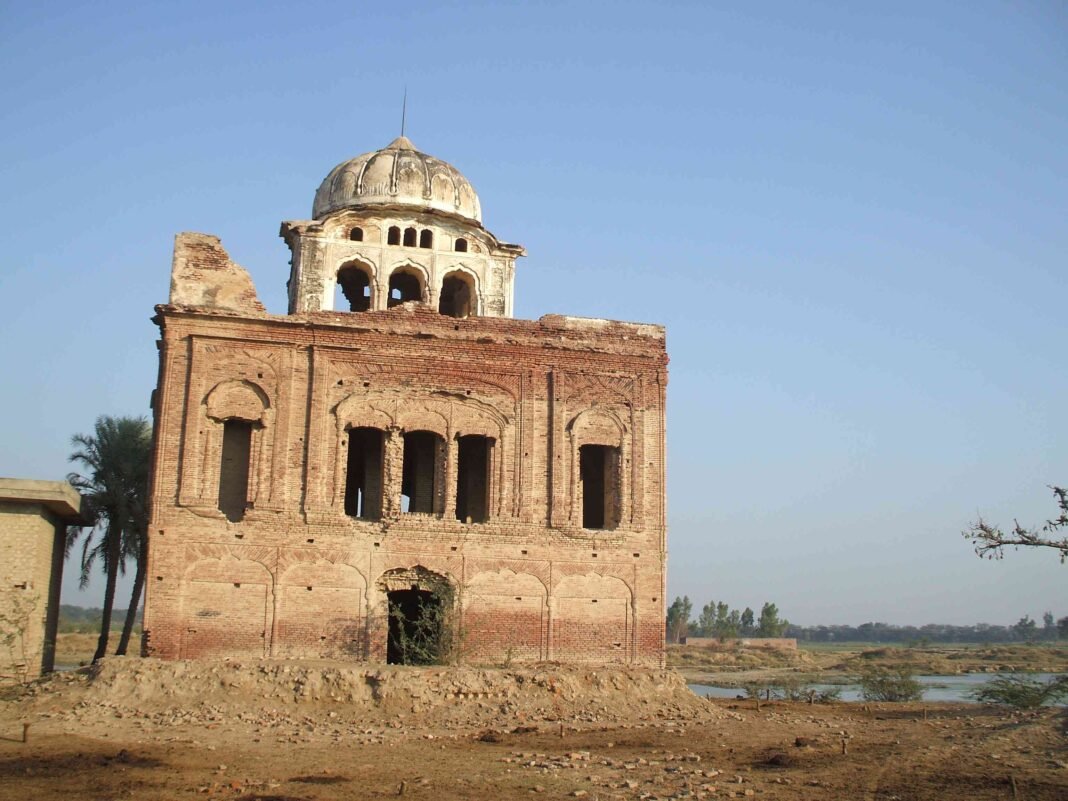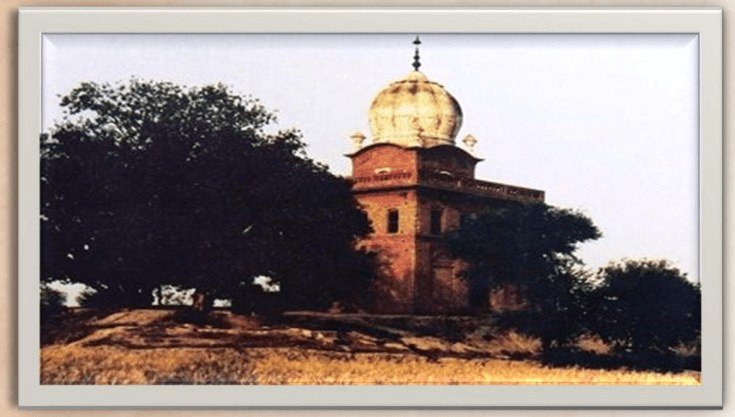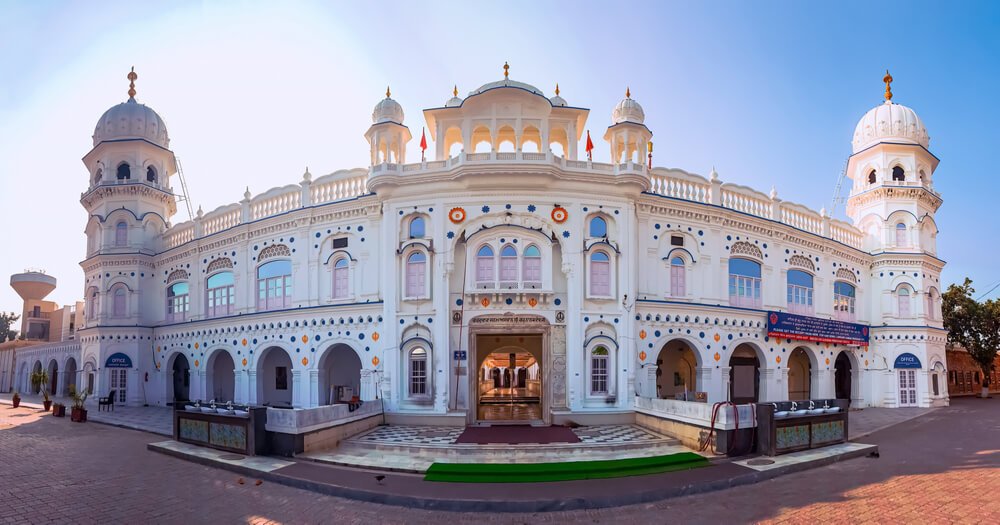
Deep in the Nankana Sahib countryside, down a narrow 5-kilometre road off the Bhai Pheru–Khunda highway, a village keeps a secret most of Pakistan has never heard. Gurdwara Sacchi Manji in Haftmadar — formally Gurdwara Sacchi Manji Pehli Patshahi — marks the place where Guru Nanak Dev Ji’s own manji (bed) was kept with the Gill landowners of the village, where Guru Arjan Dev Ji presented his staff to his devotees, and where one shoe of Guru Amar Das Ji was once preserved. If you are building a Gurdwara Sacchi Manji, Haftmadar travel guide, understand what you are signing up for: this is not a polished shrine. Most of the gurdwara has collapsed; only portions still stand. You come here as a witness — to touch a thread of Sikh history that is fraying, and to walk a corner of Punjab that mass tourism will never reach.
This article is for the traveller who has moved beyond ticking off famous sites: the heritage researcher, the Sikh pilgrim tracing the lesser-known charan (footsteps) of the Gurus, the photographer of vanishing Punjab. Haftmadar rewards the journey with authenticity — a village where the mohalla is still called “Gurdwara Mohalla”, where the old langarkhana still stands, and where the story of the Guru’s bed, the Guru’s staff and the Guru’s shoe is told with quiet pride. Come in the cool months, come with a guide, and come with the right expectations: what Haftmadar offers is not grandeur, but truth.
Quick Facts
- Location: Haftmadar village, on the Bhai Pheru–Khunda road past Jatri; 5 km down a narrow road from the highway; tehsil Nankana Sahib, Nankana Sahib district, Punjab, Pakistan
- Full name: Gurdwara Sacchi Manji Pehli Patshahi — the shrine of the True Bed, of the First Guru
- Famous for: Guru Nanak’s manji (bed) kept with the village’s Gill landowners; Guru Arjan’s staff presented to devotees here; one shoe of Guru Amar Das once kept here
- Altitude: The flat Punjab plains — easy, level ground
- Nearest city: Nankana Sahib (district centre); Lahore is roughly 60–70 km to the northeast
- Accessibility: By road; the last 5 km is a narrow village road — best in a car with a local driver, in daylight
- Condition: Mostly collapsed; only some portions of the gurdwara remain standing — visit with care
- Best for: Sikh pilgrims, heritage researchers, photographers of vanishing Punjab, off-beat travellers
Why Visit Gurdwara Sacchi Manji, Haftmadar
Let us start with the manji itself, because the shrine’s whole identity flows from it. In Sikh tradition, a “manji” is the low bed or seat on which the Guru sat — and by extension, the preaching missions established in his name. That Guru Nanak’s own manji was kept here, in the care of the Gill landowners of Haftmadar, made this village a place of exceptional sanctity: the faithful did not just visit a shrine, they stood in the presence of something the Guru himself had used. The shrine’s name — Sacchi Manji, the True Bed — carries that weight. Even in ruin, standing where the manji was kept is a profoundly moving experience for anyone who understands what it signifies.
Haftmadar’s story does not end with the First Guru. The village was also visited by Guru Arjan Dev Ji, the fifth Guru, who presented his staff to his devotees here — a tangible blessing, a physical object sanctified by a Guru’s hand, treasured by the village. And one shoe of Guru Amar Das Ji, the third Guru, was preserved in Haftmadar (its pair resting at Dhunni village in Hafizabad) — pilgrims of earlier generations would view it after a small offering. Three Gurus, one village: Nanak’s bed, Arjan’s staff, Amar Das’s shoe. Very few places in the world can claim relics or associations of three Sikh Gurus, and fewer still in such an untouched, uncommercialised setting.
There is also the second, quieter shrine in the village’s memory: the Gurdwara Manji Sahib of the Sixth Patshahi, where Guru Hargobind is remembered. Its main building has been demolished, but the langarkhana still stands, and the neighbourhood is still called “Gurdwara Mohalla” — the Gurdwara Quarter. Place names are stubborn things; they outlive buildings. Walking a mohalla that still names itself after a demolished shrine tells you everything about how deeply this history is rooted in the village’s identity.
Finally, come because Haftmadar is the Punjab that guidebooks skip. The Bhai Pheru–Khunda road runs through some of the most fertile, most traditional countryside in the province — wheat and rice fields, Persian wheels replaced by tube wells, villages where the day still moves to the rhythm of the seasons. Pair the shrine with the nearby village of Jatri, where Guru Arjan’s Panjvin Patshahi gurdwara once stood and where the samadh of Bhai Jatri still rises in a grove by the Ravi. For travellers building a serious Explore Pakistan heritage itinerary, Haftmadar is the deep cut — the site you visit after the famous ones, when you are ready for the real thing.
History of Gurdwara Sacchi Manji, Haftmadar
Haftmadar’s recorded Sikh history begins with the First Guru’s travels through this belt of Punjab. During his journeys, Guru Nanak Dev Ji came to this village, and his manji — his bed — remained here in the keeping of the Gill landowners, the village’s prominent Sikh family. In an age before grand shrine complexes, such personal associations were the very foundation of Sikh sacred geography: where the Guru had sat, slept or eaten became holy ground, and the community raised its remembrance around it. The shrine that grew here took its name from that relic: Gurdwara Sacchi Manji Pehli Patshahi — the Gurdwara of the True Bed, of the First Guru.
The village’s sanctity deepened with the visit of Guru Arjan Dev Ji, the fifth Guru and the compiler of the Adi Granth. When he came to Haftmadar, he presented his staff to his devotees here — an act of blessing that bound the village to the Guru’s lineage in the most personal way. The neighbouring village of Jatri, a little further along the Bhai Pheru–Khunda road past Balloki, holds its own memory of the fifth Guru: a Gurdwara of Guru Arjan once stood there (today vanished, only its inn remaining), and the Guru is said to have stayed several days in honour of Bhai Jatri’s devotion. Bhai Jatri’s samadh still stands in a grove of trees outside the village on the Ravi side — a quiet, green memorial worth the detour.
The third thread of Haftmadar’s sacred history belongs to Guru Amar Das Ji, the third Guru: one of his shoes was preserved in this village, while its pair was kept at Dhunni in Hafizabad. In earlier times, pilgrims could view the shoe after making a small offering — a humble, intimate form of devotion, the veneration of an everyday object made holy by the foot that wore it. Such relic traditions were once common across Sikh Punjab and have mostly vanished; Haftmadar’s memory of the shoe is among the last echoes.
Later, the village also hosted a Manji Sahib of Guru Hargobind, the sixth Guru — its main building now demolished, though the langarkhana survives and the “Gurdwara Mohalla” name endures. The main Sacchi Manji gurdwara building itself has fared badly in recent decades: photographs show that major portions have collapsed, with only some parts still standing. Like so many village shrines abandoned at Partition, it awaits the preservation attention it deserves. What survives — the standing fragments, the langarkhana, the mohalla’s name, and above all the stories — is what this guide asks you to come and witness.
Top Things to Do in Gurdwara Sacchi Manji, Haftmadar
Stand where the manji was kept
The spiritual heart of the visit. Ask village elders to show you the spot associated with Guru Nanak’s manji, kept by the Gill family. There is no grand sanctum anymore — the collapsed brick and the open sky are the shrine now — but that spareness has its own power. This is pilgrimage in its oldest form: a place, a memory, and your own attention.
Trace the three Gurus’ associations
Make it a small personal ritual: reflect on the three threads — Nanak’s bed, Arjan’s staff, Amar Das’s shoe — as you walk the site. Few villages anywhere hold associations of three Gurus. If you meet older residents, ask about the shoe of Guru Amar Das and its pair at Dhunni; oral history is the only archive this village has, and it is rich.
Visit the surviving langarkhana and Gurdwara Mohalla
Walk to the mohalla still called “Gurdwara Mohalla” and find the old langarkhana of the sixth Guru’s Manji Sahib — the one structure of that shrine still standing. The community kitchen was always the social heart of a Sikh shrine; standing in its shell, you can almost hear the clatter of the old days. The mohalla’s lanes, with their old brick homes, are worth a slow wander.
Detour to Jatri and Bhai Jatri’s samadh
A little further along the Bhai Pheru–Khunda road lies Jatri, where Guru Arjan’s gurdwara once stood. The shrine is gone but its inn remains, and outside the village, in a grove by the Ravi, stands the samadh of Bhai Jatri — the devotee in whose honour the Guru stayed several days. It is a peaceful, green spot, and pairing it with Haftmadar completes the fifth Guru’s footprint in this area.
Photograph the vanishing shrine
Document what stands: the collapsed walls, the surviving fragments, the langarkhana, the mohalla. Photographs taken now may become historical records sooner than we think. Shoot in the soft light of morning or late afternoon, ask permission before photographing people, and consider sharing your images with heritage documentation efforts — every record counts for a site this fragile.
Famous Places In and Around Gurdwara Sacchi Manji, Haftmadar
Jatri — Guru Arjan’s vanished gurdwara site and Bhai Jatri’s samadh by the Ravi. Balloki Headworks — the Ravi barrage near the Bhai Pheru–Khunda road, a popular local outing. Nankana Sahib — Guru Nanak’s birthplace and its great gurdwaras, the district’s spiritual capital. Phool Nagar (Bhai Pheru) — the historic town on the highway, your last stop for fuel and supplies. Lahore — 60–70 km away; the walled city and its shrines for a full heritage extension.
How to Reach Gurdwara Sacchi Manji, Haftmadar
Haftmadar is genuinely off the beaten path: the village lies on the Bhai Pheru–Khunda road, past Jatri, and from the main road a narrow road runs about 5 km to the village. This is a trip for a private car with a local driver, in daylight — not for public transport improvisation.
From Lahore (about 60–70 km, 1.5–2 hours): Head southwest out of Lahore toward Phool Nagar (Bhai Pheru) — roughly 55–60 km on the main highway. Continue on the Bhai Pheru–Khunda road past Balloki and Jatri, then turn onto the narrow 5-km village road to Haftmadar. Ask at Jatri or at any roadside dhaba for “Haftmadar” and “Gurdwara” — locals know both. From Islamabad (about 330 km, 5–6 hours): M-2 to Lahore, then as above — plan an overnight stay in Lahore or Nankana Sahib. From Karachi: fly to Lahore and arrange the trip from there.
Nearest airport: Allama Iqbal International Airport, Lahore. Rail: the nearest railheads are at Phool Nagar (Bhai Pheru) and Pattoki on the Karachi–Lahore main line; from either, hire a car for the last stretch. Local transport: vans and wagons run the Bhai Pheru–Khunda road, but the final 5 km to the village is best covered by a hired car or a motorcycle-rickshaw arranged at Jatri. A guide from Lahore or Nankana Sahib who knows the shrine is highly recommended.
Route Details
Step by step from Lahore: (1) Take the Multan Road / highway southwest toward Phool Nagar (Bhai Pheru). (2) Continue on the Bhai Pheru–Khunda road, passing Balloki Headworks and the village of Jatri. (3) A few kilometres past Jatri, turn onto the narrow metalled/brick road signposted (or locally known) for Haftmadar — about 5 km. (4) In the village, ask for “Gurdwara Mohalla” — the old quarter named after the shrine. Road conditions by season: the highway is good year-round; the 5-km village road is narrow but passable in dry weather — avoid after heavy monsoon rain when it turns muddy. In Dec–Jan fog, leave Lahore after 10 am.
Where to Stay in Gurdwara Sacchi Manji, Haftmadar
There is no accommodation in Haftmadar village — plan this as a day trip. Your bases: Lahore (60–70 km) with its full range from luxury five-stars to budget hotels, ideal if you are combining Haftmadar with other Punjab heritage sites; or Nankana Sahib, the district’s spiritual centre, which has mid-range hotels and pilgrim guesthouses serving Sikh yatri traffic — a good choice if your trip is pilgrimage-focused. Pattoki and Phool Nagar on the highway have basic roadside hotels for the most economical overnights. Whichever you choose, arrange your driver the evening before, confirm the narrow-road approach, and carry everything you need for the day — the village has only basic shops.
Where to Eat: Local Foods of Gurdwara Sacchi Manji, Haftmadar
Eat on the highway, not in the village. The Bhai Pheru–Khunda road and the towns along it (Phool Nagar, Pattoki) are lined with classic Punjabi dhabas: chicken karahi, daal mash, saag, fresh tandoori rotis and lassi — filling, fresh and very budget-friendly. Balloki area has popular fish spots near the headworks in winter, when fried river fish is a local favourite. Pack water, fruit and snacks for the village itself.
Back in Lahore or Nankana Sahib, eat properly: Lahore’s food streets need no introduction (mutton karahi, BBQ, nihari, falooda), while Nankana Sahib’s bazaars serve honest Punjabi dhaba food and fresh mithai. In winter, the countryside dhabas do excellent sarson da saag with makki di roti — order it if you see it on a thali. A dhaba meal on the highway typically costs a few hundred rupees per person; carry cash.
Weather in Gurdwara Sacchi Manji, Haftmadar
Classic Punjab plains climate, with the added factor of a 5-km narrow village road and an exposed ruin — dry weather makes everything easier. Approximate ranges:
| Season | Temperature Range | Conditions |
|---|---|---|
| Winter (Dec–Feb) | 5–20°C | Ideal — crisp days, green wheat fields; Dec–Jan morning fog delays starts until ~10 am |
| Spring (Mar–Apr) | 15–33°C | Beautiful; harvest season colours; Vaisakhi (mid-April) is festive across the district |
| Summer (May–Jul) | 30–45°C | Fierce heat; the ruin offers no shade — go at dawn or skip |
| Autumn (Aug–Nov) | 25–38°C | Monsoon mud on the village road Jul–Sep; October–November is superb, mild and golden |
Language and Culture of Gurdwara Sacchi Manji, Haftmadar
Punjabi is the village tongue, warm and unhurried; Urdu works for all visitor needs. Haftmadar’s culture is traditional rural Punjab: joint families, agricultural rhythms, and a quiet pride in the village’s sacred history — including among Muslim residents, who grew up alongside these stories. The “Gurdwara Mohalla” name is used naturally, without fuss: heritage here is lived, not performed.
Visiting etiquette: dress modestly, cover your head at the shrine site, and greet elders with salaam — you will be offered tea, and accepting it opens every door. Ask before photographing people or entering courtyards. Do not climb on the collapsed walls or remove bricks, plaster or pottery fragments. If you are Sikh, villagers may share the site’s stories with special warmth; receive them with the respect they deserve.
Shopping in Gurdwara Sacchi Manji, Haftmadar
There is nothing to buy in Haftmadar — and no one will try to sell you anything, which is part of its honesty. The area’s real “souvenir” is its produce: the Bhai Pheru–Pattoki belt is famous for its agriculture, and roadside sellers offer seasonal fruit, desi ghee and fresh vegetables at honest prices. For actual shopping, Nankana Sahib’s bazaars sell religious books, Sikh devotional music and Punjabi textiles, and Lahore’s markets (Anarkali, Ichhra, Urdu Bazaar) cover everything else — including excellent books on Sikh heritage. No malls anywhere near the village; none needed.
Travel Tips for Gurdwara Sacchi Manji, Haftmadar
Packing Essentials
Sturdy shoes for uneven ground, a headscarf, sun protection, at least 2 litres of water per person, snacks, basic first aid, and a power bank — there are no facilities at the site. Offline maps are essential: download the area before leaving Lahore, as the last 5 km has patchy data.
Safety Tips
The collapsed structure is the main risk: do not climb on walls or enter partially collapsed sections. Travel in daylight, go with a local driver/guide, and let someone at your base know your plan. The area is peaceful agricultural countryside; standard rural-Punjab courtesy — modest dress, polite greetings, no trespassing in fields — keeps everything smooth.
Money & Connectivity
Bring all cash from Lahore or Nankana Sahib — no ATMs in the village. Mobile signals from the major networks reach the area but weaken on the village road; 4G is intermittent. There is no entry fee at the shrine.
Best Time to Visit Gurdwara Sacchi Manji, Haftmadar
November to March — the ideal window
Heritage surveys of the area recommend these months, and they are right: mild days, green or golden fields, dry village road, and the ruin at its safest. November coincides with Gurpurab season, when the whole Nankana Sahib district is spiritually awake.
Mid-April — Vaisakhi
The district celebrates Vaisakhi with enthusiasm; combine a quiet morning at Haftmadar with the living festivities at Nankana Sahib’s great gurdwaras the same day.
May to September — only for the determined
Heat is extreme and the monsoon turns the approach road muddy. If you must come, make it a dawn visit and be back on the highway by mid-morning.
Final Thoughts
Gurdwara Sacchi Manji at Haftmadar will not give you the postcard shot. It will give you something better: the truth about how history survives — not in marble, but in memory; not in crowds, but in a village that still calls its quarter “Gurdwara Mohalla” long after the main building fell. A Guru’s bed, a Guru’s staff, a Guru’s shoe: three threads of the sacred, held by one small village against the erosion of time.
Go in the cool months. Walk gently among the ruins. Listen to the elders. And when you leave, carry Haftmadar’s story to people who have never heard the name — because places like this survive on being remembered. For more of Punjab’s hidden sacred geography, keep following our Explore Pakistan series, from the shrines of Eminabad to the valleys of Hunza.
FAQs
Where is Gurdwara Sacchi Manji, Haftmadar located?
In Haftmadar village, tehsil Nankana Sahib, Punjab — on the Bhai Pheru–Khunda road past Jatri, then 5 km down a narrow village road; roughly 60–70 km southwest of Lahore.
What is the historical significance of Sacchi Manji?
Guru Nanak’s manji (bed) was kept here with the village’s Gill landowners; Guru Arjan presented his staff to devotees here; and one shoe of Guru Amar Das was once preserved here.
What is the condition of the gurdwara?
Mostly collapsed — only portions remain standing. The old langarkhana of the sixth Guru’s Manji Sahib still stands, and the quarter is still called “Gurdwara Mohalla”. Visit with care.
What is the best time to visit?
November to March — mild weather, dry roads, safest conditions. Avoid the monsoon months.
How do I reach Haftmadar from Lahore?
Drive southwest toward Phool Nagar (Bhai Pheru), continue on the Bhai Pheru–Khunda road past Jatri, then take the 5-km village road — about 60–70 km total, 1.5–2 hours, with a local driver.
Is it safe for families?
The area is peaceful farmland. Keep children away from the unstable collapsed sections, travel in daylight, and go with a local guide.
Where can I stay nearby?
Day-trip from Lahore (full hotel range) or Nankana Sahib (mid-range hotels and pilgrim guesthouses). There is no accommodation in the village.
What else can I see nearby?
Jatri village (Bhai Jatri’s samadh by the Ravi), Balloki Headworks, and the great gurdwaras of Nankana Sahib — Guru Nanak’s birthplace.