Most travelers who come to Uch Sharif arrive for the great Sufi tombs, but there is a quieter, older story waiting in the fields on the northern edge of town. A simple well stands there among the crops, and local memory says it once watered the fields of Guru Nanak himself. Known to the people of Uch as Karrare da Khoh, it marks the place where the founder of Sikhism is believed to have stayed, talked, and drawn water in the early 1500s, while he held discourses with the pirs of one of South Asia’s most ancient Sufi towns. This Guru Nanak’s Well (Karrare da Khoh), Uch Sharif travel guide is for the traveler who wants more than a selfie at a famous tomb: it explains where the well is, why it matters, how it fits into the 500-year-old friendship between Uch’s Sufi lineages and Sikh tradition, and how to combine it with a full day exploring one of Punjab’s most atmospheric heritage towns.
Quick Facts
- Location: In the fields on the northern side of Uch Sharif, tehsil Ahmedpur East (Sharqia), Bahawalpur district, Punjab
- Altitude: Around 113 metres above sea level
- Famous For: The well believed to have been used by Guru Nanak during his visit to Uch in the early 1500s; the five relics of Guru Nanak kept by the descendants of Uch’s pirs
- Nearest City: Bahawalpur, around 80 to 84 km away
- Accessibility: Easy road access; Uch Sharif is connected by the Bahawalpur road network and plain coach vans from Bahawalpur
- Known Landmarks: Tomb of Jalaluddin Surkh-Posh Bukhari (about 1 km west of town), the Uch Monument Complex, tombs of Bibi Jawindi and Baha’al Halim
- Best For: History lovers, Sikh heritage travelers, Sufi trail seekers, photographers, day-trippers from Bahawalpur or Multan
Why Visit Guru Nanak’s Well (Karrare da Khoh), Uch Sharif
There is something rare about standing at a place where two great spiritual traditions of South Asia once met as guests and hosts. Uch Sharif was already one of the oldest cities of the Indus plains when Guru Nanak arrived here in the early 1500s, and its pirs were already famous across the Muslim world. The story told in Uch is not one of debate or conquest but of dialogue: Guru Nanak sat with the local pirs, held discourses with them, and before leaving entrusted five of his personal belongings to the descendants of Jalaluddin Surkh-Posh Bukhari. Karrare da Khoh, the well in the fields on the north side of town, is remembered as his well — the water he drank and used for the fields. For a Sikh pilgrim, this is a living chapter of the Guru’s travels. For a history lover, it is proof that Uch’s famous religious tolerance is not a modern invention.
But the well alone would not justify the drive — what makes this trip worth planning is the town around it. Uch Sharif is one of the most atmospheric heritage towns in Punjab, a place where five centuries of Sufi history are still standing. The great octagonal tombs of Bibi Jawindi and Baha’al Halim, tiled in blue and white, rise over the old quarters; the tomb of Jalaluddin Bukhari sits on its mound just west of town, barely a kilometre from the well itself. You can walk from Sikh heritage to Sultanate-era Sufi shrines in a single unhurried morning, and that combination — the well, the relics, the tombs, the old bazaars — is something no other town in Punjab offers in quite the same way.
This is also a trip that suits the independent traveler. Uch Sharif is not a ticketed tourist complex; it is a working town where pilgrims, farmers, and shopkeepers share the same lanes. The well sits out in the fields, reached on foot or by rickshaw, and visiting it feels like discovery rather than sightseeing. Come between November and February, when the air is cool and the wheat is green, and you will have one of Punjab’s most meaningful small journeys almost entirely to yourself. Photographers, in particular, should not miss the early morning light on the old town’s tombs after a visit to the well.
History of Guru Nanak’s Well (Karrare da Khoh), Uch Sharif
To understand Karrare da Khoh, you have to understand Uch itself, because this is one of the oldest continuously inhabited towns in the region. Tradition credits its founding to Alexander the Great, and for much of its early history it stood near the confluence of the Indus and Chenab rivers (the rivers have since shifted, and the confluence now lies about 40 km away near Mithankot). By the 13th century Uch was a prize fought over by Turkish rulers: Nasir-ud-Din Qabacha held it, Jalal-ud-Din Mingburnu of the Khwarazmian dynasty conquered it in 1224, and Sultan Iltutmish of the Delhi Sultanate took it in 1228. The Mongols invaded in 1245-46 and again until 1305, when Ghias-ud-Din Tughlaq — the future founder of the Tughlaq dynasty — brought Uch under his governorship. In 1398 the city was conquered by Pir Muhammad ibn Jahangir, a grandson of Timur.
It was in this turbulent medieval city that Uch became a Sufi centre. Jalaluddin Surkh-Posh Bukhari migrated from Bukhara to Uch in 1244-45, and by the mid-1400s Muhammad Ghaus Gilani, a descendant of Abdul Qadir Gilani, had established a khanqah (Sufi lodge) that made Uch the hub of the Qadiriyya order in Punjab. The town’s great tombs were raised in this era, and Uch grew into a seat of religious scholarship that continued under Mughal rule — the Ain-i-Akbari lists it as a pargana of Multan sarkar. The Punjabi poet Bulleh Shah, revered by Sufis and Sikhs alike, was born here in 1680.
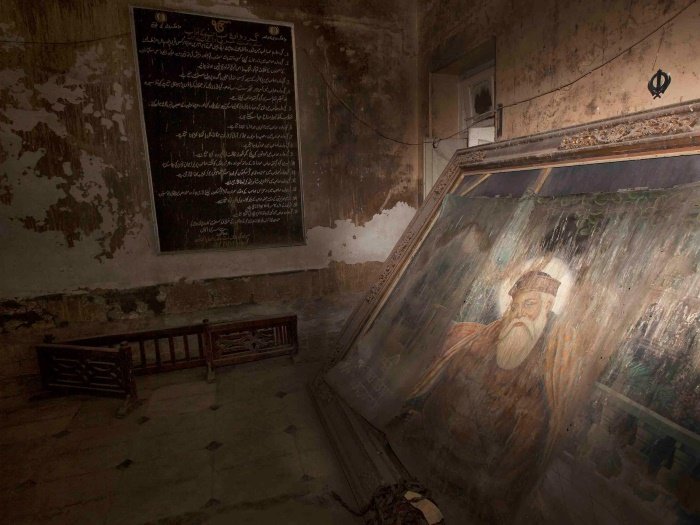
Guru Nanak’s visit belongs to the early 1500s, in the twilight of the Delhi Sultanate. According to the tradition preserved in Uch and recorded in modern accounts, the Guru met the grandchildren of Jalaluddin Bukhari, held discourses with the local pirs, and revealed a Shabd (hymn) there. Before departing he left five handwritten souvenirs — his wooden sandals (kharawan), his walking rest stick (biragan), a mace (guraj), two stone bracelets (kangan), and a small boat measuring about 1.5 by 1 foot. The descendants of the pirs are said to have kept these relics to this day. The well in the fields north of the town became known as Sat Guru Nanak Dev Ji’s well, or Karrare da Khoh, the well of Guru Nanak.
Top Things to Do in Guru Nanak’s Well (Karrare da Khoh), Uch Sharif
Visit the well itself
The well stands in the fields on the northern side of Uch Sharif, away from the bustle of the old town. It is not a grand monument, and that is exactly its charm: a simple, working piece of rural heritage that has carried the name of Guru Nanak for five centuries. Walk the field paths around it in the cool of the morning, when the surrounding wheat or cotton is green, and you get a feel for the landscape the Guru would have seen. Ask around in the nearby lanes — older residents know it simply as Karrare da Khoh and can point you to the exact spot. Treat it with respect: it is a place of memory for Sikh pilgrims and locals alike.
See the tomb of Jalaluddin Surkh-Posh Bukhari
About one kilometre west of the town, on a mound outside Uch, stands the mazaar of Pir Jalaluddin Bukhari, the 13th-century saint whose family hosted Guru Nanak. The tomb is the anchor of the whole story: the pirs whose descendants are said to keep the Guru’s five relics. Even if the relics themselves are not on public display, standing at the saint’s shrine connects the two halves of the tale — the Sufi hosts and the Sikh guest. The mound setting gives you a fine view back over the town and the flat Punjab plain.
Explore the Uch Monument Complex
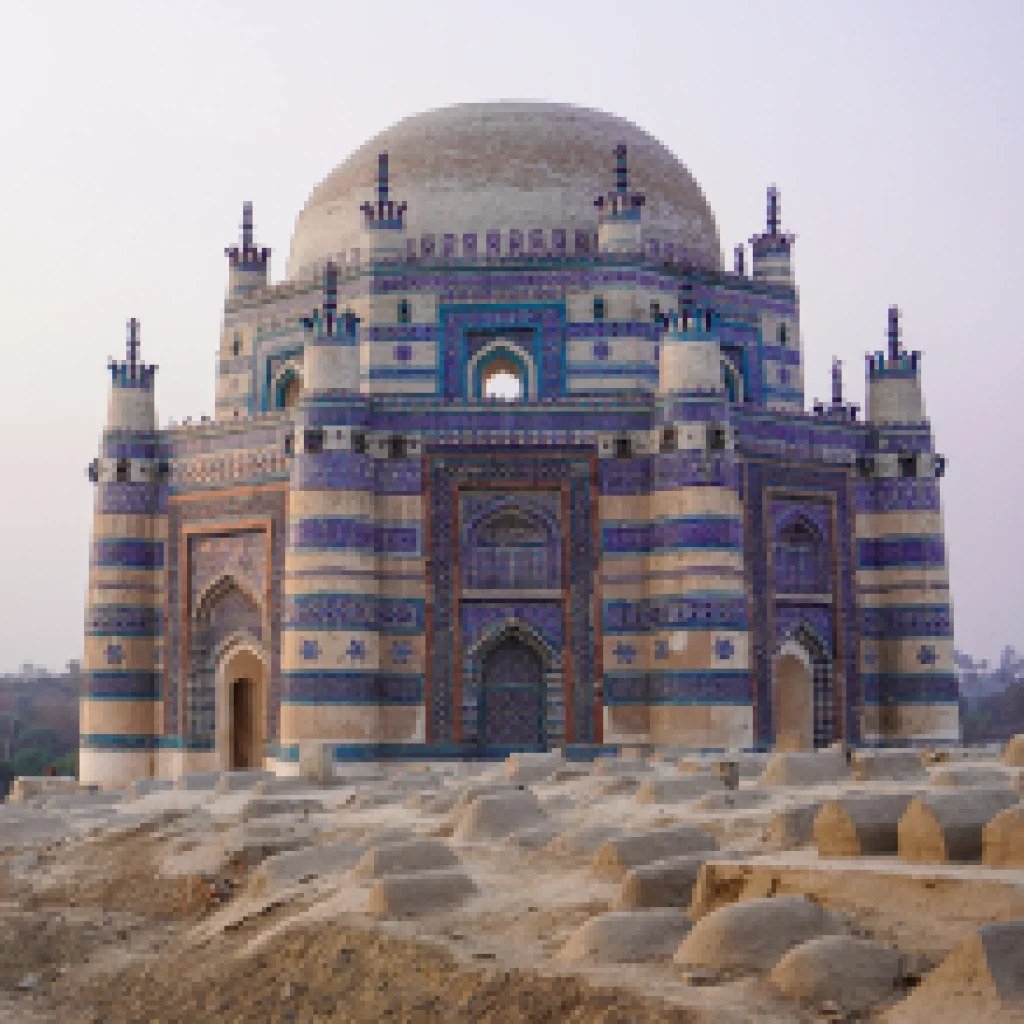
At the western edge of the old city lies the famous collection of tombs that put Uch on the heritage map. The tomb of Bibi Jawindi, with its octagonal plan and faded blue tilework, is one of the most photographed monuments in southern Punjab, and the nearby tomb of Baha’al Halim is another masterpiece of the region’s brick-and-tile architecture. These Sultanate-era tombs are on Pakistan’s tentative list for UNESCO World Heritage recognition. The complex is connected to the old core by narrow lanes and winding bazaars, so the walk between the monuments is half the experience.
Wander the old town’s three quarters
Uch Sharif has kept much of its historic urban fabric. The old town divides into three localities, each on its own mound: Uch Bukhari (named for the saints from Bukhara), Uch Gilani (named for the saints from Persia), and Uch Mughlia (named for descendants of Mongol settlers). Monuments are scattered through all three, and the bazaars between them are colourful and lively, with the women’s distinctive dress of the region. This is a town to explore on foot, slowly, with a camera and no fixed plan.
Famous Places In and Around Guru Nanak’s Well (Karrare da Khoh), Uch Sharif
- Tomb of Bibi Jawindi — the iconic blue-tiled octagonal tomb, centrepiece of the Uch Monument Complex
- Tomb of Baha’al Halim — another great tiled tomb of the Sultanate era
- Tomb of Jalaluddin Surkh-Posh Bukhari — about 1 km west of town, the saint at the heart of the Guru Nanak story
- Tomb of Ustad Nuriya — one of the lesser-known monuments of the old town
- Bahawalpur — the old princely capital, around 80 km away, with Noor Mahal, Darbar Mahal, and the Bahawalpur Museum
- Derawar Fort and the Cholistan Desert — the great square fort of the Abbasi rulers, a few hours southeast into the desert
How to Reach Guru Nanak’s Well (Karrare da Khoh), Uch Sharif
Uch Sharif sits in tehsil Ahmedpur East of Bahawalpur district, and the well itself is in the fields on the northern side of the town, best reached by rickshaw or on foot once you are in Uch. From Bahawalpur, the nearest major city, it is around 80 to 84 km — a drive of roughly an hour and a half. Plain coach vans (Hiace) run to Uch Sharif from the centre of Bahawalpur, near Shikarpuri Gate, and the ride takes about two hours. From Multan, Uch is about 130 km to the south, roughly a two-and-a-half-hour drive on the N-5. From Lahore the journey is around 500 km and from Karachi around 900 km, so for visitors from those cities the sensible plan is to base yourself in Bahawalpur or Multan and do Uch as a day trip.
There is no airport at Uch Sharif. The nearest practical airports are Bahawalpur Airport and Multan International Airport, both with regular flights from Karachi, Lahore, and Islamabad. Uch lies on the railway line between Bahawalpur and Multan, so trains stopping at Uch station are another option for rail fans. The roads are metalled and in reasonable condition year-round, though summer heat makes the drive uncomfortable — plan your travel for the cooler months.
Route Details
From Bahawalpur: Take the road south-east toward Ahmedpur East (about 60 km), then continue on the local road to Uch Sharif (about 20 km further). In Uch, ask for the northern fields and Karrare da Khoh — any rickshaw driver or shopkeeper will know it. From Multan: Take the N-5 south toward Bahawalpur, turn off for Uch Sharif near Ahmedpur East, and follow local signboards to the old town. The whole trip is about 130 km. From Islamabad or Lahore: Travel to Bahawalpur or Multan first (by road, rail, or air), then follow the routes above. Allow a full day: reach Uch by mid-morning, see the well and the Bukhari shrine, walk the old town and the Monument Complex after lunch, and return to Bahawalpur by evening.
Where to Stay in Guru Nanak’s Well (Karrare da Khoh), Uch Sharif
Uch Sharif is a small heritage town, not a tourist resort, and its lodging is modest — most visitors do it as a day trip from Bahawalpur or Multan, where the full range of hotels is available. In Uch itself you will find simple guesthouses and small local hotels around the bazaar area, suitable for an overnight stay if you want to catch the monuments at dawn and dusk. These are basic but serviceable, and the caretakers are usually happy to help with directions and local introductions.
For a more comfortable base, Bahawalpur — about an hour and a half away — offers mid-range and good budget hotels in the city centre and near the railway station, while Multan, about two and a half hours away, has everything from luxury hotels to family guesthouses. If you are traveling in winter, the peak season, book your Bahawalpur or Multan room a few days ahead, since the Cholistan and shrine tourism season fills the better hotels. Campers should note that there is no formal camping ground at the well; the fields are private farmland, so camp only with the landowner’s permission.
Where to Eat: Local Foods of Guru Nanak’s Well (Karrare da Khoh), Uch Sharif
The food of Uch Sharif is the honest food of southern Punjab: wheat rotis, dals, seasonal saag in winter, and fresh vegetables from the surrounding fields. The dhabas around the bazaar serve the standard Punjabi roadside menu — dal fry, mixed sabzi, chicken karahi, and kebabs — all budget-friendly, with a full meal for one person comfortably within the low hundreds of rupees. A glass of fresh lassi from a bazaar milk shop is almost obligatory in the morning.
Because Uch sits on the edge of the Cholistan desert, you will also find the foods of the desert-edge economy: dates and date products in season, and the simple, filling cooking of the Saraiki belt. In summer, the region’s mangoes are famous across Pakistan, and roadside stalls sell them by the crate. Carry your own drinking water for the walk out to the well, and if you are visiting in the hot months, eat your main meal at midday in the shade of the bazaar rather than out in the fields.
Weather in Guru Nanak’s Well (Karrare da Khoh), Uch Sharif
Uch Sharif sits on the flat alluvial plain of southern Punjab near the Cholistan Desert, which means a classic hot-desert-edge climate: very hot summers, mild and pleasant winters, and little rain. The difference between the seasons is extreme, and it shapes your whole trip. In winter the days are cool and clear, perfect for walking the fields to the well; in summer the same walk would be punishing, with temperatures pushing toward the mid-40s. The monsoon brings some rain in July and August, but the plain drains well and travel is rarely disrupted for long.
| Season | Temperature Range | Conditions |
|---|---|---|
| Winter (Nov–Feb) | 5–24°C | Cool, clear days and cold nights; the best season for visiting |
| Spring (Mar–Apr) | 15–38°C | Warming quickly; dry and dusty; the Uch mela season |
| Summer (May–Jul) | 30–46°C | Extreme heat; avoid midday outdoor visits |
| Monsoon (Jul–Aug) | 28–40°C | Humid with occasional heavy showers |
| Autumn (Sep–Oct) | 22–38°C | Cooling gradually; still warm in the afternoons |
Language and Culture of Guru Nanak’s Well (Karrare da Khoh), Uch Sharif
The mother tongue of the Uch region is Saraiki, the language of southern Punjab, and you will hear it in the bazaars, the fields, and the shrines. Punjabi and Urdu are widely understood, so visitors from anywhere in Pakistan will have no trouble communicating, and the shrine culture means the town is used to receiving outsiders with warmth. The people of Uch are proud of their town’s layered identity — Sufi, Punjabi, and deeply hospitable — and the story of Guru Nanak’s visit is told with genuine pride by Muslim residents, which tells you a lot about the place.
Cultural etiquette is straightforward: dress modestly, especially around the shrines and in the old quarters; remove your shoes before entering any shrine or tomb chamber; and ask before photographing people at prayer or in the bazaar. Women travelers will find the town conservative but welcoming — the bazaar is busy with local women, and a headscarf is appreciated at religious sites. If you are shown the relics or told the story of the Guru’s visit by a local family, receive it graciously; this is living oral history, and your interest honours it.
Shopping in Guru Nanak’s Well (Karrare da Khoh), Uch Sharif
Uch Sharif’s bazaar is a working town market rather than a tourist souk, but it rewards a browse. The lanes of the old town sell everyday Punjabi goods — cloth, crockery, sweets, and agricultural produce — at honest local prices. Because the town sits on the edge of Cholistan, you will sometimes find desert-edge handicrafts: simple embroidered textiles and camel-skin goods brought in by traders. For serious craft shopping, combine your Uch trip with Bahawalpur, where the city’s bazaars sell the famous embroidery, khaddar, and camel-skin lamps of the region.
There are no shopping malls in Uch Sharif, and none are needed — the pleasure here is the old bazaar itself, with its narrow lanes connecting the monuments. Pick up the local sweets (mithai) from a bazaar halwai as a take-home gift; they travel well and cost very little. If you want a meaningful souvenir, ask at the bazaar bookshops for a small booklet on the shrines of Uch — local publishers print them in Urdu and sometimes English.
Local Events and Festivals
The liveliest time in Uch Sharif is the annual Uch mela, a week-long fair held in March and April around the urs celebrations of the town’s saints. The fairground next to the old core fills with pilgrims, qawwali gatherings, food stalls, and crowds from across southern Punjab. It is a wonderful time to see the town at its most vibrant, but be aware that southern Punjab heats up fast after March, and accommodation in the area fills quickly during the mela week.
Sikh visitors sometimes time their trips around the traditional Sikh calendar, and the well draws quiet pilgrimage visits through the winter months. Whatever the season, check locally before you go — urs dates follow the Islamic lunar calendar and shift each year, so confirm the current year’s schedule with a Bahawalpur tour operator or the shrine caretakers.
Travel Tips for Guru Nanak’s Well (Karrare da Khoh), Uch Sharif
Packing Essentials
Bring sun protection for any season — a cap, sunglasses, and sunscreen — because the walk to the well is out in open fields. In winter (November to February), carry a warm layer for cold mornings and evenings; in summer, light cotton clothes, extra water, and oral rehydration salts. Comfortable walking shoes are essential for the field paths and the old town’s uneven lanes. Carry your own drinking water and a few snacks, since there are no shops at the well itself.
Safety Tips
Uch Sharif is a peaceful pilgrim town and day-trippers face no special risks beyond the usual care. Keep to the marked paths in the fields, watch your step on the old mounds, and avoid wandering farmland after dark. Foreign tourists in the Bahawalpur region are sometimes accompanied by local police as a courtesy — cooperate politely if this happens. Keep valuables out of sight in the bazaar, carry a copy of your ID, and let your hotel know your day-trip plan.
Money & Connectivity
Carry cash in Pakistani rupees — the bazaar, rickshaws, and dhabas are cash-only, and the nearest reliable ATMs are in Ahmedpur East and Bahawalpur. Mobile signals from all major networks work in the town; coverage can be patchy out in the fields around the well. There is no tourist information office at the site, so download offline maps of the Uch Sharif area before you leave Bahawalpur.
Best Time to Visit Guru Nanak’s Well (Karrare da Khoh), Uch Sharif
Winter (November to February) — the ideal season
This is when you should come. Days are cool and clear, the fields around Karrare da Khoh are green, and walking the old town is a pleasure. Morning mist on the monuments makes for the best photography of the year. Sikh pilgrims and heritage travelers both favour these months, but the town never feels crowded.
Spring (March to April) — mela season
The week-long Uch mela brings the town alive with pilgrims and festivities, and it is the most culturally exciting time to visit. The trade-off is the heat, which builds fast, and the crowds. If you come for the mela, book your Bahawalpur hotel well ahead.
Summer (May to August) — avoid if you can
Southern Punjab’s summer is genuinely extreme, with temperatures in the mid-40s. The walk to the well becomes punishing and the old town’s lanes are stifling at midday. If you must travel then, restrict sightseeing to early morning and late afternoon.
Autumn (September to October) — a good shoulder season
The heat eases and the crowds of the mela season are gone. Late October, in particular, can be lovely — warm days, cool evenings, and the monuments all to yourself.
Final Thoughts
Karrare da Khoh will never be a grand tourist attraction, and that is precisely why it deserves your visit. In an age of crowded heritage sites, this quiet well in the fields of Uch Sharif offers something increasingly rare: a place where history is still a living memory rather than a ticketed exhibit. The story it tells — of a Sikh Guru welcomed by Sufi pirs five hundred years ago — is one of the most hopeful chapters in Punjab’s past, and standing at the well brings it to life in a way no book can.
Pair the well with the great tombs of Uch, the bazaar, and the mound-top shrine of Jalaluddin Bukhari, and you have one of the finest day trips in southern Punjab. Come in winter, walk slowly, talk to the people, and let one of Pakistan’s oldest towns tell you its story at its own unhurried pace.
FAQs
Where is Guru Nanak’s Well (Karrare da Khoh)?
It is in the fields on the northern side of Uch Sharif, in tehsil Ahmedpur East, Bahawalpur district, Punjab — about 80 km from Bahawalpur city.
What is the best time to visit Guru Nanak’s Well?
November to February, when the weather is cool and clear. The week-long Uch mela in March–April is lively but hotter.
How do I reach Uch Sharif from Bahawalpur?
Drive or take a plain coach van (Hiace) from central Bahawalpur near Shikarpuri Gate — the journey takes about two hours. From Multan it is about 130 km south.
Is Guru Nanak’s Well safe for tourists?
Yes. Uch Sharif is a peaceful pilgrim town. Take normal precautions: stay on paths in the fields, carry water, and keep valuables out of sight in the bazaar.
Is it suitable for families?
Very much so. The sites are close together, the walking is easy in winter, and children enjoy the old town’s lanes and the big tombs. Avoid summer with small children.
Where can I stay near Guru Nanak’s Well?
Most visitors stay in Bahawalpur (about 1.5 hours away) or Multan (about 2.5 hours away), which have the full range of hotels. Uch itself has simple local guesthouses.
What food will I find in Uch Sharif?
Honest southern Punjabi food — dal, roti, seasonal saag, chicken karahi, kebabs, and fresh lassi at bazaar dhabas, all very budget-friendly.
What are the five relics of Guru Nanak kept at Uch?
According to the tradition preserved by the descendants of Uch’s pirs: his wooden sandals (kharawan), his walking rest stick (biragan), a mace (guraj), two stone bracelets (kangan), and a small boat about 1.5 by 1 foot.
For more journeys through Pakistan’s heritage, browse our Explore Pakistan section, pair this trip with our Gurdwara Guru Arjan Sahib, Bucheki guide, explore the princely city in our Bahawalpur Museum guide, or head to the northern mountains with our Malam Jabba guide.