Few places on earth let you walk through streets that are five thousand years old. Harappa is one of them. Long before the pyramids reached their final form, long before Rome was even a village, this city on the plains of Punjab had covered drains, standardized weights, and houses built on a grid that modern town planners would recognize. If you love history, if you travel to understand how civilizations rise and fall, or if you simply want your children to touch the deepest roots of South Asia, Harappa deserves a place on your itinerary.
This Harappa travel guide covers everything you need: why this ancient city matters, the real story of its discovery, the top things to do at the site and museum, how to reach Harappa from Lahore, Islamabad, and Karachi, where to stay, what to eat in Sahiwal, and the best time to visit. Harappa is not a hard trip. It is a day trip from Lahore that rewards you with five millennia of perspective.
Quick Facts
- Location: Sahiwal District, Punjab, Pakistan, about 24 km southwest of Sahiwal city, on the old course of the Ravi River
- Altitude: around 190 meters above sea level — flat Punjab plains
- Famous For: One of the two great cities of the Indus Valley Civilization; the type site that gave the entire civilization its name (“Harappan”); world-famous seals, granaries, and town planning dating to around 2600 BCE
- Nearest City: Sahiwal (24 km); Lahore (about 185 km)
- Accessibility: Easy — paved road from Sahiwal, reachable by car, van, or tour bus; the site is walkable with some uneven mound terrain
- Known Landmarks: The Harappa mounds (citadel and lower town), the Great Granary area, Cemetery R-37, and the Harappa Museum
- Best For: History lovers, families with school-age children, archaeology students, photographers, and anyone tracing the roots of urban life in South Asia
Why Visit Harappa
Most ancient wonders make you look up at something enormous — a temple, a pyramid, a wall. Harappa makes you look down, at the ground itself, and realize that the ground has a memory. Stand on the mounds here and you are standing on layers of city life that go back more than five thousand years. The streets were laid out on a north-south grid. Houses had wells and bathrooms with drains that carried wastewater out of the city. Merchants weighed goods on standardized weights and sealed packages with carved stone seals. All of this was happening here while much of the rest of the world lived in thatched huts. That is not an exaggeration; that is what the excavations show.
Harappa is also special because of its name. When archaeologists first dug here in 1921 and realized they had found an entirely unknown civilization, they named the whole thing after this site. The “Harappan Civilization” — the Indus Valley Civilization — carries this city’s name the way the Roman Empire carries Rome’s. You are not visiting just another ruin; you are visiting the namesake, the place where the story of urban South Asia begins. A companion site worth knowing about is Mohenjo-daro in Sindh, discovered a year later, but Harappa was first, and the name stuck.
For families, Harappa is one of the best educational day trips in Punjab. Children who have read about the Indus Valley Civilization in textbooks can suddenly see it: the bricks (still the same size after 4,500 years), the seals with animals carved on them, the toys that children played with when history was barely beginning. The on-site museum brings it all to life with real artifacts found in these very mounds, including seals, pottery, jewelry, and even skeletal remains that show how the Harappans buried their dead. A couple of hours here teaches more than a month of classroom lessons.
And honestly, Harappa is refreshingly uncrowded. Unlike the famous monuments of Lahore or the northern valleys in peak season, you will often have the mounds almost to yourself, walking with a guide or on your own through one of humanity’s earliest cities. The light on the old bricks at sunrise and sunset is beautiful for photography, and the surrounding Punjab countryside — wheat fields, the distant line of the Ravi’s old course — gives the whole visit a calm, timeless feeling. If you are planning a cultural tour of Punjab, pair Harappa with a stop in Sahiwal and you have a perfect day. For more ideas across the country, browse our Explore Pakistan collection.
History of Harappa
The story of Harappa has two halves: the five thousand years the city itself lived, and the two hundred years since the modern world rediscovered it. Both are worth knowing before you go.
The city grew up on the banks of the Ravi River as part of a farming culture that was already old when the first streets were laid. Archaeologists divide the civilization into three phases: the Early Harappan period (around 3300–2600 BCE), the Mature Harappan period (around 2600–1900 BCE) — the great age of the cities, when Harappa’s walls, granaries, and drainage systems took their classic form — and the Late Harappan period (around 1900–1300 BCE), when the cities slowly declined and their people moved to smaller settlements. At its peak, Harappa was one of the largest cities of its time anywhere in the world, home to tens of thousands of people, with craft workshops making beads, pottery, and copper tools, and trade links reaching as far as Mesopotamia.
Then, slowly, the city faded. Rivers shifted, trade routes changed, and by the second millennium BCE the great mounds were quiet. For more than three thousand years they sat as low hills in the Punjab plain, known to local people, plundered occasionally for their excellent bricks, but never understood for what they were.
The modern rediscovery began in 1826, when a traveler named Charles Masson — actually James Lewis, a British Army deserter traveling under an American alias — noted the ruins of an ancient city at Harappa. In the 1850s the site was badly damaged when British railway contractors building the Lahore–Multan railway line used Harappa’s ancient bricks as ballast for the track. In 1872–73, Sir Alexander Cunningham, the founder of the Archaeological Survey of India, made a brief excavation, but the true significance of the site was still missed.
That changed in 1921–22, when Rai Bahadur Daya Ram Sahni, an archaeologist of the Archaeological Survey of India working under its Director-General Sir John Marshall, began systematic excavations at Harappa. The seals with an unknown script, the planned streets, the standardized bricks — nothing like this had been seen before. In 1924, Marshall announced to the world the discovery of a new, previously unknown civilization: the Indus Valley Civilization, named after Harappa because this was the first site excavated. A year later, in 1922, R. D. Banerji found Mohenjo-daro in Sindh, confirming that Harappa was not an isolated wonder but part of a vast urban world.
Excavations continued through the decades: Madho Swaroop Vatsa dug here in 1926, the famous British archaeologist Mortimer Wheeler in 1946, and after independence, Mohammed Rafique Mughal of the Archaeological Survey of Pakistan excavated in 1966. In the late twentieth century, international research teams returned with modern science, studying everything from the city’s water management to the diets of its people. Each campaign has added detail to the portrait of a civilization that planned its cities, weighed its grain, sealed its trade goods, and buried its dead with care — five thousand years ago.
Top Things to Do in Harappa
Walk the Ancient Mounds
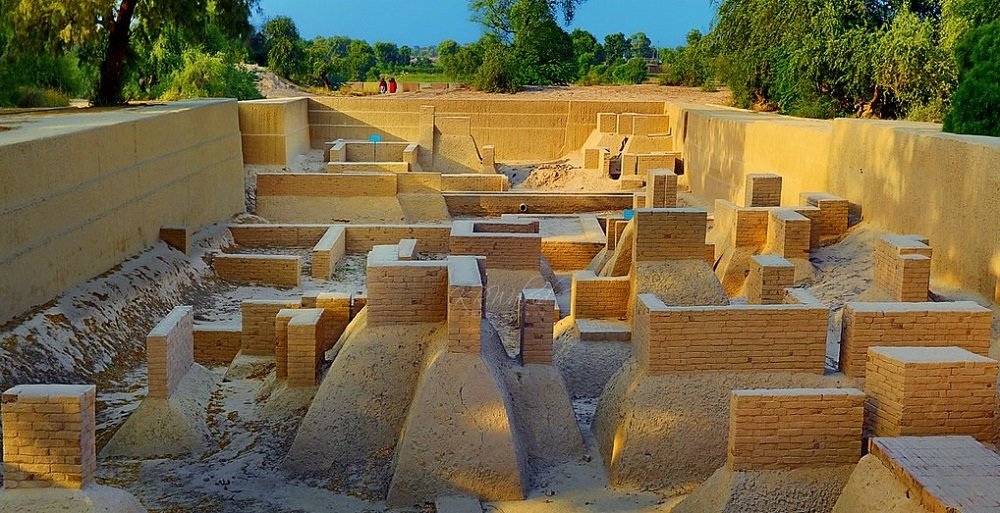
The heart of any Harappa visit is the site itself: the great mounds where the city once stood. Walk the raised citadel area and the lower town, and you will see the baked-brick foundations of houses, streets that still follow their ancient grid, and the famous drainage channels that carried wastewater out of homes — engineering that would not look out of place in a much later century. Guides at the site can point out the remains of the granaries, where the city’s grain was stored, and explain how the city was divided into planned neighborhoods. Wear a hat and good shoes; the ground is uneven and there is little shade.
Visit the Harappa Museum
Right beside the site stands the Harappa Museum, established in 1926 and housed in its current building since 1966. This small but excellent museum displays artifacts found in these very mounds: carved stone seals with the still-undeciphered Indus script, etched carnelian beads, pottery, copper and bronze tools, terracotta figurines, children’s toys, standardized weights, and jewelry that shows surprising artistic taste. The most moving exhibits are the skeletal remains from the ancient cemeteries, including a female burial adorned with ornaments, which bring the Harappans to life as real people. Allow at least an hour here; we have a full Harappa Museum travel guide if you want to plan your visit in detail.
See the Cemetery Area (R-37)
One of the most famous parts of Harappa is its cemetery, known to archaeologists as R-37, where the Harappans buried their dead with pottery, ornaments, and personal belongings. Standing at the edge of the cemetery area, you get a quiet, powerful sense of the people who lived here — not just their engineering, but their beliefs and their care for their dead. Some of the skeletons excavated here are displayed in the museum, so visiting both completes the story.
Study the Seals and Script
The square steatite seals of Harappa, carved with animals like the unicorn-like bull and lines of the mysterious Indus script, are among the most famous artifacts of the ancient world — and the script has never been deciphered. Spend time with the seal displays in the museum and you will understand why: each tiny seal is a miniature masterpiece, and each one is a locked door to a language nobody has read in four thousand years. For anyone who loves mysteries, this alone is worth the trip.
Photograph the Mounds at Golden Hour
The low, rolling mounds of Harappa, the old baked bricks, and the wide Punjab sky make for wonderful photography, especially in the soft light of early morning or late afternoon. The site is rarely crowded, so you can take your time composing shots of the excavated streets and the museum building against the fields. Drone photography rules change often, so check current permissions with the site staff before flying.
Famous Places In and Around Harappa
Harappa Museum — the site museum with the civilization’s finest artifacts, right at the entrance. Sahiwal city — the nearest city, 24 km away, with food, fuel, and hotels. Chichawatni — a nearby town on the road from Lahore, a convenient stop for refreshments. The Ravi River’s old course — the river that made this city possible; its shifted channel is part of the region’s story. Suri Mosque at Dhawa Sharma — about 30 km from Chichawatni, a ruined mosque from the Suri period (1540–1545), worth a detour for history lovers combining sites.
How to Reach Harappa
Harappa is one of the easiest major archaeological sites in Pakistan to reach. It sits about 24 km southwest of Sahiwal on the Chichawatni–Harappa Road, and the whole journey is on paved roads through the Punjab plains.
From Lahore (about 185 km, around 3 hours): Take the M-2 motorway south toward Multan, or the N-5 Grand Trunk Road via Okara and Chichawatni. The motorway route is faster and more comfortable; exit toward Sahiwal/Chichawatni and follow signs for Harappa. This is the classic day trip — leave Lahore by 7 or 8 in the morning, reach the site by 10 or 11, tour the mounds and museum, have lunch in Sahiwal, and be back in Lahore by evening.
From Islamabad (about 380 km, around 5.5 to 6 hours): Drive the M-2 motorway to Lahore, then continue as above, or take the M-2 to the M-3/M-4 corridor toward Abdul Hakeem and cut across to Sahiwal. Most visitors from the capital do Harappa as part of a two-day Punjab history trip, staying overnight in Sahiwal or Lahore.
From Karachi (about 1,000 km, around 12 to 13 hours): This is a long road journey via the N-5 through Hyderabad, Sukkur, and Multan, or the motorway network via M-9, M-5, and M-4. Most Karachi travelers fly to Lahore and do Harappa from there, or combine it with a wider Punjab tour.
By train: Sahiwal is a major station on Pakistan Railways’ main Karachi–Peshawar line, with regular trains from Lahore (about 3 hours), Rawalpindi/Islamabad, and Karachi. From Sahiwal station, hire a car or rickshaw for the 24 km to the site.
Nearest airport: Allama Iqbal International Airport, Lahore, about 185 km away, with car rental and tour operators available.
Route Details
The standard Lahore route: Lahore → M-2 motorway (south) → exit at Chichawatni/Sahiwal → N-5 toward Sahiwal → before reaching Sahiwal city, turn onto the Chichawatni–Harappa Road → follow signs to the Harappa archaeological site and museum. The site has a parking area near the museum. Roads are paved and fine for any car in all seasons; the last stretch is a smaller road but in reasonable condition. If you are coming by public transport, take a bus or van from Lahore to Sahiwal (frequent departures from Badami Bagh and other terminals), then a local van or rickshaw to Harappa. Tour companies in Lahore also run day excursions to the site.
Where to Stay in Harappa
There are no hotels at the archaeological site itself — it is a protected area — so visitors stay in nearby Sahiwal, 24 km away. Sahiwal is a proper mid-sized Punjab city with a range of options: mid-range hotels and guesthouses clustered near the city center and along the main roads, offering clean air-conditioned rooms at budget-friendly rates, plus simpler lodges for travelers watching their spending. Most are perfectly comfortable for a night or two. If you prefer more choice, Lahore (3 hours away) has everything from five-star hotels to boutique guesthouses, and many visitors simply day-trip from there. For a Harappa-focused trip, one night in Sahiwal lets you visit the site at opening time the next morning, when the light is best and the mounds are quiet. Book ahead during winter weekends, when domestic tourism to Punjab’s heritage sites picks up.
Where to Eat: Local Foods of Harappa
You eat in Sahiwal, not at the site — and Sahiwal eats like the rest of central Punjab, which is to say very well. The dhabas and restaurants along the main roads serve the classics: sarson da saag with makki di roti in winter (the region’s signature dish, cooked in desi ghee), desi chicken karahi, dal fry with tandoori roti, and thick, creamy lassi that Punjab is famous for. Breakfast means halwa puri or paye at the old-city eateries, and the city’s sweet shops sell fresh barfi, gulab jamun, and rewari in winter. Sahiwal district is also cattle country — the famous Sahiwal cow breed comes from here — so dairy is excellent; try the fresh milk sweets and rabri. A full dhaba meal for two is budget-friendly, generally in the range of a few hundred rupees per person. Carry water and snacks for the site itself, since there are no proper restaurants at the mounds; the museum canteen, if open, covers basics. For more food inspiration from Punjab’s cities, see our Islamabad food and places guide for the capital’s side of the trip.
Weather in Harappa
Harappa sits on the hot Punjab plains, and its weather follows Sahiwal’s: blazing summers, pleasant winters, and a short, intense monsoon. The site is entirely outdoors with almost no shade, so season choice matters more here than at most destinations. Winter is the clear winner — cool, clear, perfect for walking the mounds.
| Season | Temperature Range | Conditions |
|---|---|---|
| Winter (Dec–Feb) | 5–20°C | Cool, sunny, and ideal. Mornings can be foggy in December–January; carry a light jacket. |
| Spring (Mar–Apr) | 15–30°C | Pleasant and green. Wheat fields around the site are golden in April. Very good for visiting. |
| Summer (May–Jul) | 30–45°C | Extremely hot and dry. Avoid midday visits; go at opening time if you must come. |
| Autumn (Sep–Nov) | 20–35°C | Cooling down; October–November is comfortable and a good shoulder season. |
The monsoon (July–September) brings humidity and occasional heavy rain, which can make the mound paths muddy. The museum stays open, but plan the outdoor walking for drier months.
Language and Culture of Harappa
The people around Harappa speak Punjabi (the central Majhi dialect) with Urdu widely understood, so communication is easy for any Pakistani traveler and manageable for foreign visitors with a guide or translation app. This is the agricultural heartland of Punjab: wheat and cotton fields, canal irrigation, and a culture built around farming seasons, shrines, and hospitality. The local community takes quiet pride in living beside one of the world’s oldest cities, and site guides — many of whom have worked there for years — love sharing what they know.
For visitors, the norms are standard for rural Punjab: dress modestly (covering shoulders and knees is appreciated, especially for women), ask before photographing people, and remove shoes if you step into any shrine area. The site is a protected archaeological zone — do not climb on walls, pick up bricks or pottery fragments, or leave litter. Everything you see is irreplaceable. If you are visiting during Ramadan, note that roadside eateries in Sahiwal may be closed during the day; plan meals accordingly.
Shopping in Harappa
Do not expect a tourist bazaar at the site — and that is part of its charm. Small stalls near the museum sometimes sell replica Indus seals, postcards, and booklets about the civilization, which make genuinely meaningful souvenirs; a replica seal of the famous “unicorn” is the classic Harappa keepsake. For real shopping, head to Sahiwal’s main bazaars, where you will find Punjab’s everyday crafts: khussa shoes, phulkari-style embroidered fabrics, clay pottery, and excellent dry fruits in winter. The city’s sweet shops are worth a stop for fresh mithai to take home. There are no shopping malls at or near the site; Sahiwal has the usual small city markets and a few modern plazas for basics.
Travel Tips for Harappa
Packing Essentials
Pack for an open, shadeless archaeological site on the plains: a wide-brimmed hat or cap, sunglasses, sunscreen, and at least a liter of water per person (there is no reliable drinking water at the mounds). Wear comfortable closed walking shoes with grip — the mound paths are uneven dirt and brick, and they get slippery after rain. A light shawl or jacket is needed for winter mornings, which can start near 5°C. Bring a camera with a zoom lens for detail shots of brickwork and seals (photography is generally allowed, but confirm with staff), a power bank, and a small backpack for snacks. If you are visiting in summer, add an umbrella for shade and oral rehydration salts.
Safety Tips
Harappa is a safe, well-managed site in a settled agricultural district, and families visit routinely. The main risks are environmental, not criminal: heat in summer, uneven ground, and the occasional stray dog near the fields — nothing a hat, water, and sensible shoes do not solve. Stay on the marked paths and do not climb the excavation walls; they are fragile and protected by law. Keep children close near the deeper excavation trenches. The site has staff and a museum office; in any difficulty, ask them. Road travel on the N-5 and motorway is standard highway driving — leave Lahore early to avoid night driving on the smaller Sahiwal road.
Money & Connectivity
There are no ATMs at the site, so withdraw cash in Lahore or Sahiwal before you go; Sahiwal city has banks and ATMs of all major networks. Mobile signals from all major Pakistani networks (Jazz, Telenor, Zong, Ufone) work fine at Harappa and along the route — this is settled Punjab, not the mountains. Data coverage is good enough for maps and messaging. Entry to the site and museum is ticketed with a modest fee; carry small notes. The museum may have a small shop for booklets and replica seals — cash only.
Best Time to Visit Harappa
Winter (November to February) — The Best Season
This is when Harappa shines. Daytime temperatures of 15–20°C, clear blue skies, and low, golden light make walking the mounds a pleasure rather than an ordeal. The wheat fields around the site are green, the museum is comfortable, and photographers get the best conditions of the year. December and January mornings can bring fog on the drive from Lahore, so leave after it lifts (usually by 9–10 am) or plan to arrive by midday. This is the peak season for heritage tourism in Punjab, so weekends can be a little busier — still nothing like the crowds at Lahore Fort.
Spring (March to April) — Lovely Shoulder Season
Spring is nearly as good as winter: warm but not yet hot (15–30°C), the countryside at its greenest, and the site quiet. April brings the wheat harvest, and the golden fields around the ancient mounds make a striking contrast for photographs. School and university groups often visit in spring, so you may share the mounds with an enthusiastic study tour — which only adds to the atmosphere.
Summer (May to July) — Avoid If You Can
With temperatures climbing past 40°C and no shade on the mounds, summer is genuinely punishing at Harappa. If you must visit in summer, arrive at the site’s opening time, finish the outdoor walking by 10 am, spend the hot hours inside the air-conditioned museum, and carry far more water than you think you need. Early May and late September are transitional — hot but manageable with an early start.
Autumn (October to November) — The Sweet Spot Returns
By October the heat breaks, the monsoon humidity fades, and Harappa becomes pleasant again. November is one of the finest months to visit: clear skies, mild days around 20–25°C, and the site at its most peaceful. If winter weekends do not suit your schedule, autumn is your answer.
Final Thoughts
Harappa rewards the traveler who goes with curiosity rather than expectations of spectacle. There are no towering temples here, no glittering palaces — just the honest, baked-brick bones of a city that figured out urban life five thousand years ago, and a small museum full of the beautiful things its people made. It is a quiet kind of wonder, and it stays with you.
If you are building a trip through Punjab’s heritage — Lahore’s Mughal monuments, the shrines of Multan, the forts of the south — Harappa is the deep root of the whole story, the chapter before all the other chapters. Go in winter, walk the mounds slowly, spend an unhurried hour in the museum, and let the scale of it sink in: people lived, worked, traded, played, and were buried here when the pyramids were new. Few travel experiences put your own life in perspective quite like that. For the museum in detail, read our Harappa Museum travel guide, and for journeys further north, our Hunza Valley guide is a good next step.
FAQs
Where is Harappa located?
Harappa is in Sahiwal District of Punjab, Pakistan, about 24 km southwest of Sahiwal city and roughly 185 km southwest of Lahore, near the old course of the Ravi River.
What is the best time to visit Harappa?
November to February is the best time, with cool, clear weather ideal for walking the open site. March–April and October–November are also good. Avoid May to July, when temperatures exceed 40°C and there is no shade on the mounds.
How do I reach Harappa from Lahore?
Drive about 185 km (around 3 hours) via the M-2 motorway or the N-5 Grand Trunk Road toward Sahiwal/Chichawatni, then follow the Chichawatni–Harappa Road to the site. Buses and vans run frequently from Lahore to Sahiwal, from where you can hire local transport for the last 24 km. Sahiwal is also on the main railway line.
Is Harappa safe for families and children?
Yes. Harappa is a protected, staffed archaeological site in a settled farming district, and families visit routinely. The main precautions are sun, heat, and uneven ground — bring hats, water, and good shoes, and keep children on the marked paths.
What can I see at the Harappa Museum?
The museum displays seals with the undeciphered Indus script, pottery, copper and bronze tools, beads and jewelry, terracotta figurines, children’s toys, standardized weights, and skeletal remains from the ancient cemeteries — all excavated from the mounds beside it.
How much time do I need at Harappa?
Plan 3 to 4 hours: about 1.5 to 2 hours walking the mounds and at least an hour in the museum, plus time for the cemetery area and photography. Most visitors do it as a day trip from Lahore; an overnight stay in Sahiwal lets you arrive at opening time.
Where can I stay near Harappa?
Stay in Sahiwal, 24 km away, which has mid-range hotels and guesthouses, or day-trip from Lahore (3 hours each way), which has the full range of accommodation.
What food is available near Harappa?
Eat in Sahiwal: classic central-Punjabi food including sarson da saag with makki di roti in winter, desi chicken karahi, dal with tandoori roti, lassi, and fresh mithai from the city’s sweet shops. Carry water and snacks for the site itself.