Quick Facts
- Location: Kalat District, Balochistan, Pakistan (around 29°03’N 66°43’E)
- Altitude: Around 9,000 feet (2,750 metres) above sea level
- Famous For: Ancient juniper forests, green slopes in an otherwise barren landscape, and one of the least-visited mountain ranges of Balochistan
- Nearest City: Kalat (district headquarters), with Quetta the nearest major city, about 140 km to the north
- Accessibility: By road — the N-25 RCD Highway connects Quetta and Karachi to Kalat; the hills themselves are reached by local tracks and footpaths from villages around Kalat
- Known Landmarks: The Harboi massif itself, its juniper-covered slopes, and the historic Meeri Fort overlooking nearby Kalat city
- Best For: Offbeat explorers, trekkers, nature photographers, and travelers who want Balochistan without the crowds
Why Visit Harboi Hills
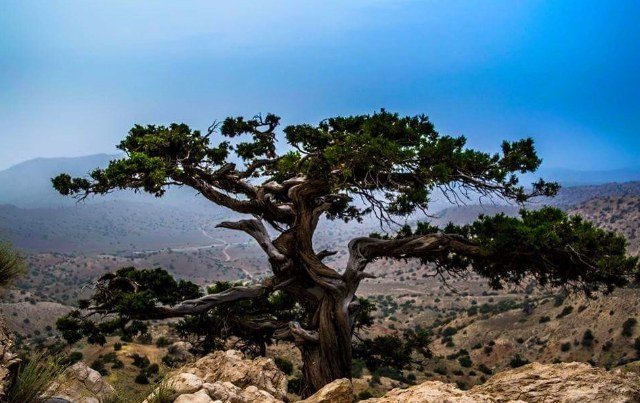
Most people who hear “Balochistan” picture black, barren mountains stretching to the horizon. And that is exactly why Harboi Hills are worth your attention. Rising to around 9,000 feet in Kalat District, the Harboi range breaks the rule: its slopes carry juniper trees and genuinely picturesque scenery in a region where almost every other peak stands bare. The Imperial Gazetteer of India noted this contrast more than a century ago. It is still the first thing that strikes you when you arrive — green on green-brown, a forest where you expected rock.
This is not a destination for people who need everything arranged for them. There are no chairlifts, no food courts, no signboards in three languages. What Harboi Hills offer instead is the rarest thing in Pakistani travel right now: real discovery. You will drive out of Kalat on rough local tracks, walk through juniper forest that has been growing here for centuries, and stand on ridges where the silence is broken only by wind and birdsong. If you have already done the northern areas and want a frontier that still feels like one, Harboi is waiting.
The World’s Second-Largest Juniper Forests
The hills are also part of a much bigger story. The Balochistan government has repeatedly named Ziarat and Harboi together as the home of the world’s second-largest juniper forests, a living natural asset that officials say needs developing as a tourist destination. Visiting now means seeing it before the development arrives. So few people come here.. As a result, the raw version, with shepherds grazing their flocks, villagers collecting firewood the way their grandparents did, and wildlife that has survived precisely
Harboi Hills are perfect for the traveler who has ticked off Murree, Naran and Hunza and is asking, “what next?” They are perfect for the photographer chasing unphotographed landscapes, for the trekker who wants real altitude without a permit queue, and for anyone who believes the best part of Pakistan is the part that has not been turned into a brochure yet.
History of Harboi Hills
There is no museum here and no plaque with dates. Also, the honest history of Harboi Hills is the history of the land around them — Kalat and the old Sarawan country. In fact, Harboi appears in the Imperial Gazetteer of India (volume 22, under Sarawan) as a 9,000-foot range noted for its juniper trees. These tells us that travelers and administrators were already marking it out in the early 1900s as something unusual in the Kalat highlands.
The region itself is ancient ground. Also, Kalat has been inhabited for millennia and became the seat of the Khanate of Kalat, the powerful Brahui-led confederacy that dominated central Balochistan from the 17th century onward. The Khans ruled from the Meeri Fort above Kalat city. The hills around the capital — Harboi among them — served as grazing grounds, fuel sources and natural fortifications for the towns and villages below. For the Brahui and Baloch tribes of the area, these slopes were working landscape long before anyone called them scenic.
Recognition and the Firewood Struggle
In the modern era, Harboi has mostly been known to foresters and administrators rather than tourists. A Dawn report from 2016 quoted then-chief minister Nawab Sanaullah Zehri naming the Ziarat and Harboi juniper forests as “assets of the province” that needed master development plans to attract visitors. A recognition that the hills’ value was finally being seen in national terms. The same reporting, and the Wikipedia entry citing the Imperial Gazetteer, records the quieter struggle underneath: local communities, with few basic necessities, have long depended on the Harboi forests for firewood, timber and hedges, putting pressure on the juniper stands and the rare wildlife they shelter.
For travelers, Harboi is still at the beginning of its story. Meanwhile, it became known to a wider public mainly through these government statements and through the slow growth of Balochistan tourism in recent years. There is no record of a “first ascent” or a founding date for tourism here. The hills simply opened to those who were curious enough to go.
Top Things to Do in Harboi Hills
Walk the Juniper Forests
The single essential experience in Harboi is also the simplest: get onto the forested slopes and walk. The juniper stands here are the Harboi range’s defining feature — the same ancient-forest ecosystem that makes Ziarat famous, but without a single souvenir shop. Old junipers grow slowly and gnarled, and walking among them on a clear morning, with the whole Kalat plateau spread below, is the kind of quiet spectacle you remember for years. Go with a local guide from Kalat. The tracks are unmarked and the forest is working land for the villages. A guide keeps you on the right paths and on good terms with everyone you meet.
Trek the High Ridges
The massif tops out around 9,000 feet. Also, the ridgelines above the tree line offer serious, strenuous hiking with enormous views across the Kalat highlands. These are not maintained trails — they are shepherds’ routes and forest tracks — so treat every outing as an expedition: start early, carry water, wear proper boots, and turn back if the weather shifts. The reward is a panorama of one of Pakistan’s least-photographed mountain ranges. The near certainty of having it entirely to yourself.
Wildlife and Bird Watching
Because Harboi has stayed remote, its slopes still shelter the wild creatures of the Kalat highlands. The animals are shy and sightings are never guaranteed.. Still, local sources and gazetteers note that rare wildlife finds refuge in these forests, Dawn visits and dusk walks with a patient local guide give you the best chance — and even when the wildlife stays hidden, the birdlife on the forested slopes is genuinely rewarding for anyone who travels with binoculars.
Photograph the Contrast
Harboi’s fame, such as it is, rests on one visual idea: green juniper forest rising out of a black, barren landscape. Late-afternoon light makes this contrast dramatic. The ridgelines give you long, clean compositions with no power lines, no billboards and no crowds. If you shoot landscapes, Harboi is one of the few places left in Pakistan where you can be fairly sure nobody has stood exactly where you are standing with a camera.
Experience Village Life Around Kalat
The villages at the foot of the hills — farming and herding communities of Brahui and Baloch families — are part of the experience, not a backdrop to it. Also, accept the tea you are offered. Ask about the harvest. The people here live close to the land in ways most of us have forgotten. A few unhurried hours in a Harboi foothill village will teach you more about Balochistan than any guidebook.
Famous Places In and Around Harboi Hills
- Meeri Fort, Kalat: The historic hilltop fort of the Khans of Kalat, overlooking the city — the essential pairing with a Harboi trip.
- Kalat City Bazaar: A working highland bazaar with dry fruits, woolens and everyday Baloch life.
- The Moro River Valley: The seasonal river valley that waters the district’s farms and orchards.
- Ziarat: The famous juniper-forest hill station further northeast — the twin half of the “Ziarat and Harboi” juniper forests.
- Quetta: The provincial capital and natural base for the journey, with its own bazaars and Hanna Lake nearby.
How to Reach Harboi Hills
Reaching Harboi is a road journey through some of Pakistan’s most dramatic highland scenery, and the gateway is Kalat. From Islamabad, the realistic route is Islamabad to Quetta (by air or the long N-50/N-70 road journey) and then south on the N-25 RCD Highway to Kalat — roughly 140 km, about 3 hours by car. Also, From Lahore, the same Quetta gateway applies: fly or drive to Quetta, then head south on the N-25. From Karachi, the drive north on the N-25 through Khuzdar toward Kalat is the direct road option, a long but spectacular desert-highland journey that most travelers split over two days.
The nearest airport is Quetta International Airport, with regular flights from Islamabad, Lahore and Karachi. From Quetta, hire a private car or 4×4 for the Kalat leg. The final approach into the Harboi foothills leaves the highway for rough local tracks.. As a result, and you will want the 4×4 anyway, Public transport (coaches and wagons) runs the Quetta–Kalat–Khuzdar corridor on the N-25, but for the hills themselves you need private transport and, ideally, a local guide arranged in Kalat.
Road conditions are good on the N-25 in fair weather — it is a national highway — but winter can bring snow and ice at these altitudes, and summer flash floods can close low-lying stretches. The foothill tracks are unsealed and rough year-round. Never attempt them in a low-clearance car, and always check conditions in Kalat before setting out. If you are coming from Karachi in winter, confirm the Khuzdar–Kalat stretch is open before you commit to the drive.
Route Details
- Fly or drive to Quetta — the provincial capital and your staging point. Stock up here: fuel, cash, water, and any trekking supplies.
- Quetta to Kalat on the N-25 RCD Highway — about 140 km south, roughly 3 hours. The road climbs through classic Balochistan highland scenery.
- Base yourself in Kalat — arrange a local guide and a 4×4 through your hotel or local contacts. This is the step that makes the trip work.
- Kalat into the Harboi foothills — local tracks lead toward the forested slopes; your guide will pick the route that matches the season and your fitness.
- On foot from the track-head — the best of Harboi is reached walking. Day hikes are realistic; overnight treks need full camping gear.
Where to Stay in Harboi Hills
Let us be honest: there are no hotels in the Harboi Hills themselves. Also, this is a wilderness destination, and your realistic options are Kalat city, Quetta, or a tent. Most travelers base themselves in Quetta, which has the full range from budget guesthouses to comfortable mid-range hotels. It do Harboi as a long day trip or an overnight expedition from there. Kalat has simpler options — basic hotels and guesthouses aimed at highway travelers and government visitors — which put you closer to the hills and are the better choice if you want an early start on the tracks.
For the full experience, camping is the way to do Harboi. Also, there are no campsites with facilities. In fact, you bring everything: tent, sleeping bag rated for cold nights, stove, food and water. In addition, camp on the lower slopes with your guide’s advice on the best flat ground, well away from village fields and grazing routes. Luxury travelers should plan on Quetta as the base and accept that Harboi is a day expedition, not a resort stay. The luxury here is the landscape, not the linen.
Where to Eat: Local Foods of Harboi Hills
Food in the Harboi region is highland Balochi food — hearty, simple and built around meat, wheat and dairy. The signature dish of the wider region is sajji, whole lamb or chicken roasted slowly over coals, seasoned with little more than salt: when you are in Kalat or Quetta, a proper sajji dinner is close to obligatory. You will also find kaak, the hard stone-baked bread of Balochistan that keeps for days and was made for travelers, and rich meat preparations like namkeen gosht at the dhabas along the N-25.
In Kalat’s bazaar, eat where the truck drivers eat. Also, the dhabas serve fresh roti, daal, and grilled meat at budget-friendly prices, and the chai is strong and sweet. Quetta, as your likely base, has a much wider scene, from traditional Balochi restaurants to the famous fruit chaat and dry-fruit shops of the city’s bazaars. If a village family in the Harboi foothills invites you to eat, say yes: home-cooked food, eaten sitting on the floor with your hosts, is the best meal you will have on the trip. Carry your own snacks and plenty of water for the hills themselves.
There is nothing to buy once you leave the road.
Weather in Harboi Hills
At around 9,000 feet, Harboi runs noticeably cooler than the Balochistan lowlands, with an extreme continental climate: hot, dry summers and genuinely cold winters with snow. The hills catch winter western disturbances. December through February can be properly wintry on the upper slopes. Summer days are warm but the nights stay comfortable. Rain is scarce year-round, and the air is dry and clear — which is exactly why the views are so good. The table below gives approximate seasonal ranges for the Harboi altitude band.
| Season | Temperature Range | Conditions |
|---|---|---|
| Winter (Dec–Feb) | -5°C to 10°C | Cold, with snowfall on the upper slopes and ridges; tracks may be blocked; only for well-equipped winter travelers |
| Spring (Mar–May) | 8°C to 24°C | Pleasant and clear; the best all-round season — forests fresh, tracks open, long daylight hours |
| Summer (Jun–Aug) | 18°C to 32°C | Warm days, cool nights at altitude; dry and sunny; a good escape from lowland heat |
| Autumn (Sep–Nov) | 5°C to 22°C | Crisp, clear and golden; excellent trekking weather before the winter snows arrive |
Language and Culture of Harboi Hills
The Harboi foothills sit in Brahui country. Brahui is the mother tongue of most villages around Kalat, with Balochi widely spoken too — the Wikipedia entry on Harboi itself gives the name in both Balochi and Brahvi script. Also, this tells you how deeply both languages belong here. Urdu works for basic communication in Kalat city and with guides, but in the villages a few words of greeting go a long way, and your guide will bridge the rest.
The culture is tribal, hospitable and conservative. Guests are honored — you will be offered tea and food almost reflexively — and the correct response is gracious acceptance. Dress modestly (long sleeves and trousers for everyone. Women should carry a headscarf), ask before photographing people, and respect that the forest is these communities’ livelihood: do not cut wood, do not light fires casually, and take every scrap of litter back out with you. Friday is the congregational prayer day; plan around it quietly rather than expecting business as usual.
Shopping in Harboi Hills
There is no shopping in the hills — and that is rather the point — but Kalat and Quetta reward the buyer who knows what to look for. The classic purchases of the region are dry fruits: almonds, apricots, pistachios and pine nuts from the highland orchards, sold in Kalat’s bazaar and in much greater variety in Quetta. Woolen goods — shawls, caps and rugs — are made for these altitudes and make genuinely useful souvenirs. Look too for Balochi embroidery, the intricate needlework of the region, on cushion covers and wall hangings in Quetta’s bazaars.
There are no shopping malls anywhere near Harboi, so set your expectations to bazaar level: cash, bargaining. The pleasure of buying something made within a hundred kilometers of where you stand. If you want polished retail, do that part of the trip in Quetta before you head south.
Travel Tips for Harboi Hills
Packing Essentials
Layers are everything: even in summer, a 9,000-foot ridge at dawn is cold. Bring a warm jacket year-round, sun protection (the highland sun is fierce), sturdy hiking boots with ankle support, a headlamp, a basic first-aid kit, and far more water than you think you need. A power bank matters because there is no electricity in the hills. Binoculars will transform the trip if you care about birds or wildlife.
Safety Tips
Harboi is remote, so safety is mostly about preparation, not danger. Travel with a local guide — non-negotiable for the forest tracks. Tell your hotel in Kalat or Quetta your planned route and return time. Carry a fully charged phone, but do not rely on it. Check the current travel situation for Balochistan before you go and follow local advice. Conditions can change, and the people of Kalat will always give you the straightest answer about what is safe right now. Avoid the hills in bad weather — the tracks turn treacherous fast.
Money & Connectivity
Bring all the cash you will need in Pakistani rupees. There are no ATMs in the hills and limited banking in Kalat, so withdraw in Quetta. Mobile signals are patchy to nonexistent once you leave the N-25 corridor. The main networks reach Kalat city but fade quickly in the foothills. Download offline maps before you leave Quetta, and consider the trip a digital detox by design.
Best Time to Visit Harboi Hills
Spring (March to May) — The Sweet Spot
This is the best time to visit Harboi Hills. Also, the snow has cleared from the tracks, the juniper forest is at its freshest, temperatures sit in the comfortable teens and twenties. The long clear days are made for ridge walks and photography. If you can only come once, come in spring.
Summer (June to August) — The Highland Escape
When the plains are baking, Harboi’s altitude keeps days warm rather than brutal and nights genuinely cool. Summer is a fine second choice, especially for trekkers who want the high ridges fully open. Carry extra water and sun protection, and start hikes at dawn.
Autumn (September to November) — The Photographer’s Season
Crisp air, golden light, empty trails. Also, autumn rivals spring for the best conditions, with the added drama of early snow dusting the highest ridges. Late November can turn cold fast, so check forecasts.
Winter (December to February) — Experts Only
Snow, sub-zero nights and possibly blocked tracks make winter a specialist season. Also, only attempt it with proper winter gear, a very experienced guide, and flexible plans. In fact, For most travelers, this is the season to admire Harboi from Quetta’s warmer valleys and plan a spring return.
Final Thoughts
Harboi Hills will never be Murree, and that is precisely their value. In a country where every beautiful place seems to acquire a parking lot within five years, Harboi remains what travel used to be: a green, juniper-scented mountain range in the highlands of Kalat that you reach by effort, patience and local friendship. The forests that the Balochistan government calls a provincial asset are still, for now, just forests — quiet, ancient and almost entirely yours.
So go — but go right. Also, Go in spring, go with a guide from Kalat, go prepared, and go with respect for the people whose home this is. The Harboi Hills travel guide you have just read can get you to the foothills. The hills themselves will do the rest. For more offbeat destinations across the country, keep exploring our Explore Pakistan collection.
FAQs
Where are the Harboi Hills located?
The Harboi Hills are a mountain range in Kalat District, Balochistan, Pakistan, rising to around 9,000 feet near Kalat city, roughly 140 km south of Quetta on the N-25 highway.
What is the best time to visit Harboi Hills?
March to May is the best time to visit, with pleasant temperatures, open tracks and the juniper forests at their best. September to November is an excellent second choice.
How do I reach Harboi Hills?
Fly or drive to Quetta, take the N-25 RCD Highway south to Kalat (about 3 hours), then continue with a local guide and 4×4 into the foothills. There is no public transport into the hills themselves.
Are the Harboi Hills safe for tourists?
With proper preparation they are. Travel with a local guide, check current conditions in Kalat before setting out, carry supplies, and avoid bad weather. Also, the remoteness is the main risk, not the people — local communities are famously hospitable.
Are the Harboi Hills suitable for families?
The Kalat side of the trip suits families. The hill tracks and ridge treks are for reasonably fit travelers. Families with small children should enjoy the foothills and juniper forest edges rather than attempting the high ridges.
Where can I stay near Harboi Hills?
There are no hotels in the hills. Also, base yourself in Quetta for comfort and range, or in Kalat for simpler guesthouses closer to the trailheads. In fact, camping with full gear is the adventurous option.
What food is available around Harboi Hills?
Highland Balochi food: sajji (slow-roasted lamb), kaak bread, daal and grilled meats at roadside dhabas, plus dry fruits and strong chai. Also, carry your own food and water into the hills.
What makes Harboi Hills different from other Balochistan mountains?
The juniper forests. Also, almost every other range in the region is black and barren. Meanwhile, Harboi’s slopes carry ancient juniper trees and genuinely green, picturesque scenery — part of what the province calls the world’s second-largest juniper forests, shared with Ziarat.