Quick Facts
- Location: Mianwali District, Punjab, Pakistan (coordinates recorded by the Directorate of Archaeology and Museums: 32.6741°N, 71.2689°E)
- Famous For: A three-storey historic haveli with a great wooden gate, open living halls and a Persian inscription slab — documented in the official archaeological survey of Mianwali district
- Nearest City: Mianwali city
- Accessibility: Road access via Mianwali city; the haveli is privately owned and not a protected monument, so view respectfully from outside
- Known Landmarks: Three storeys (ground floor plus two upper floors of open halls), a large wooden gate at the centre, and an inscribed Persian slab
- Best For: Heritage explorers, architecture admirers, off-the-beaten-path travellers, and anyone touring the Indus-side towns of western Punjab
Why Visit Haveli Sarfaraz Khan, Mianwali
Most travellers speed past Mianwali on their way somewhere else. And that is exactly why places like Haveli Sarfaraz Khan matter. This is not a famous monument with a ticket booth and a brochure. It is a genuine, three-storey historic haveli in one of Punjab’s most characterful districts, officially recorded by the Directorate of Archaeology and Museums in its survey of Mianwali’s archaeological sites and monuments. If you love discovering the buildings that history books forgot, this is your kind of destination.
What makes the haveli worth the journey is its authenticity. Meanwhile, the great wooden gate set in the middle of the building, the open halls of the first and second floors that served as living rooms. The Persian inscription slab fixed to the building speak of an era when Mianwali’s notable families built in the grand Punjabi manner — thick walls against the summer heat, open halls to catch the breeze, and craftsmanship meant to last centuries. The survey places it in the historic period, the long pre-colonial centuries of Mughal and Sikh rule. This region sat on the routes connecting Punjab with the frontier.
Mianwali’s Rivers, Lakes and Legendary Hospitality
And then there is Mianwali itself. This is the land of the Indus, where the great river bends past Kalabagh through the Salt Range. The district of Namal Lake, built by the British in 1913 and still a winter refuge for migratory waterfowl. Of Chashma Barrage, a Ramsar-listed wetland on the Indus; and of the Niazi Pashtuns, whose hospitality is legendary. A trip to see the haveli becomes, almost by accident, a journey into one of Punjab’s least-explored corners — river towns, hill-fringed lakes, and bazaars where the tea is strong and the welcome is stronger.
This is a destination for the curious rather than the casual: heritage lovers, photographers of old architecture, and travellers building a deeper Explore Pakistan itinerary beyond the famous names. Come in winter, when the light is golden and the lakes are full of birds. You will see a side of Punjab most visitors never know exists.
History of Haveli Sarfaraz Khan, Mianwali
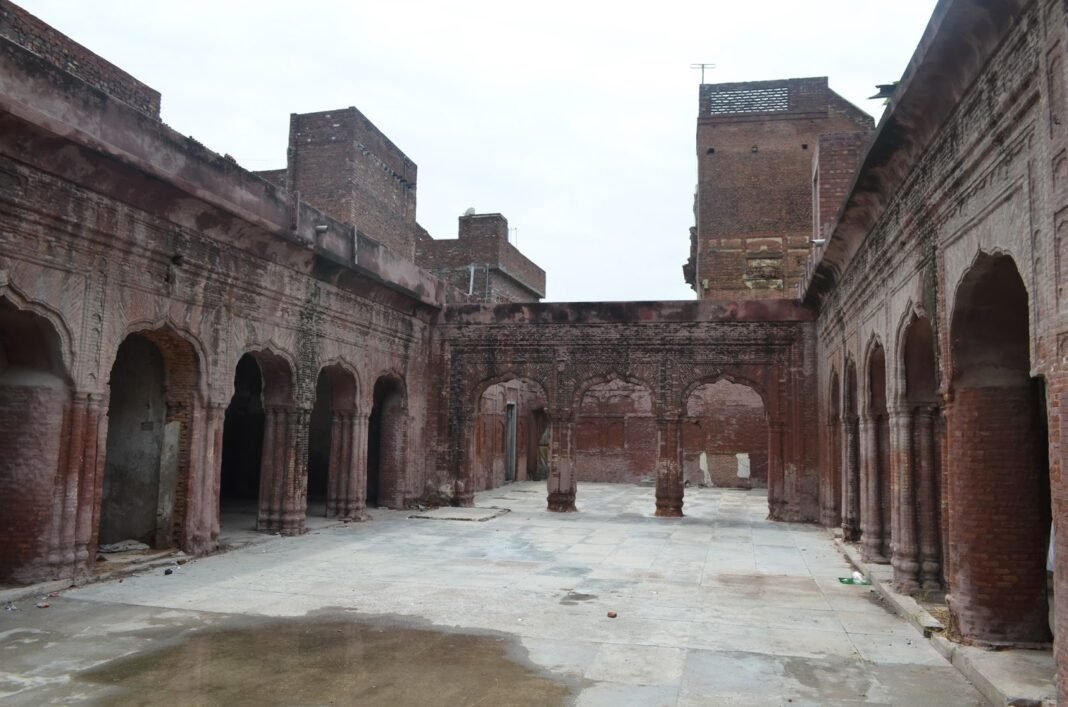
Haveli Sarfaraz Khan is documented in the official “Survey and Documentation of Archaeological Sites and Monuments in District Mianwali” (published from an M.Phil. thesis at the Taxila Institute of Asian Civilizations, Quaid-i-Azam University, Islamabad, 2021). Also, it listed by the Directorate of Archaeology and Museums, Punjab. Meanwhile, the record describes a substantial complex: three storeys — the ground portion plus first and second floors — with a big wooden gate in the middle of the building. The first and second floors are open halls that were used as living rooms. A slab bearing a Persian inscription is installed on the building.
The survey assigns it to the historic period, with a relative chronology spanning the pre-colonial centuries (1526–1857 CE) — the era of Mughal and later Sikh rule in this region. The property is privately owned and is not a protected monument.
That official description tells us a great deal. Also, a three-storey haveli with a central wooden gate and open upper halls is the classic form of the Punjabi elite residence: the ground floor for storage, servants and animals. In fact, the upper open halls — airy, shaded, catching every breeze — as the family’s living quarters in the fierce summers of the western Punjab plains. The Persian inscription slab is a signature of the Mughal cultural world, in which Persian was the language of administration and high culture. Such slabs typically recorded the builder’s name, a date, or a verse.
Frontier Country Under Mughals and Sikhs
Mianwali’s wider history gives the haveli its context. Also, the district lies on the west bank of the Indus, at the edge of the Thal desert and the foot of the Salt Range. In fact, in the Mughal centuries this was frontier country. In addition, the routes west toward the Khyber passed near here, and local chiefs and landholding families built fortified havelis as both homes and statements of status. Under the Sikhs, the region came under the administration of the expanding empire. Under the British, Mianwali became a district town, and the construction of Namal Dam in 1913 reshaped its agriculture.
Through all of it, the old havelis of the district’s notable families stood as anchors of local identity.
Today the haveli remains in private hands and is not protected by the archaeology department — which makes its survival all the more precious, and all the more fragile. Also, visitors should treat it as what it is: someone’s ancestral home, holding centuries of a family’s story in its walls. In fact, the respectful traveller views it from outside, admires the gate and the inscription, and leaves only footprints.
Top Things to Do in Haveli Sarfaraz Khan, Mianwali
Admire the Haveli’s Architecture
The main event is the building itself: three storeys rising over the street, the great wooden gate at its centre. Also, the open halls of the upper floors. Study the masonry and the proportions. This is the vernacular architecture of western Punjab, built for climate and for status. Look for the Persian inscription slab. Even if the script is weathered, it is the building’s signature, linking it to the Persianate culture of the Mughal centuries. Because the haveli is a private home and not a protected monument, admire it from the street and the surrounding lanes, and ask permission before photographing close up.
Explore Mianwali City’s Old Quarters
Mianwali city retains the feel of a classic Punjab river town. Also, walk its main bazaars, where the mix of Saraiki, Punjabi and Pashtun cultures is visible in the shops, the food and the faces. In fact, the city’s neighbourhoods — with names reflecting its Mohallah-based old structure — reward slow wandering.
Day Trip to Namal Lake
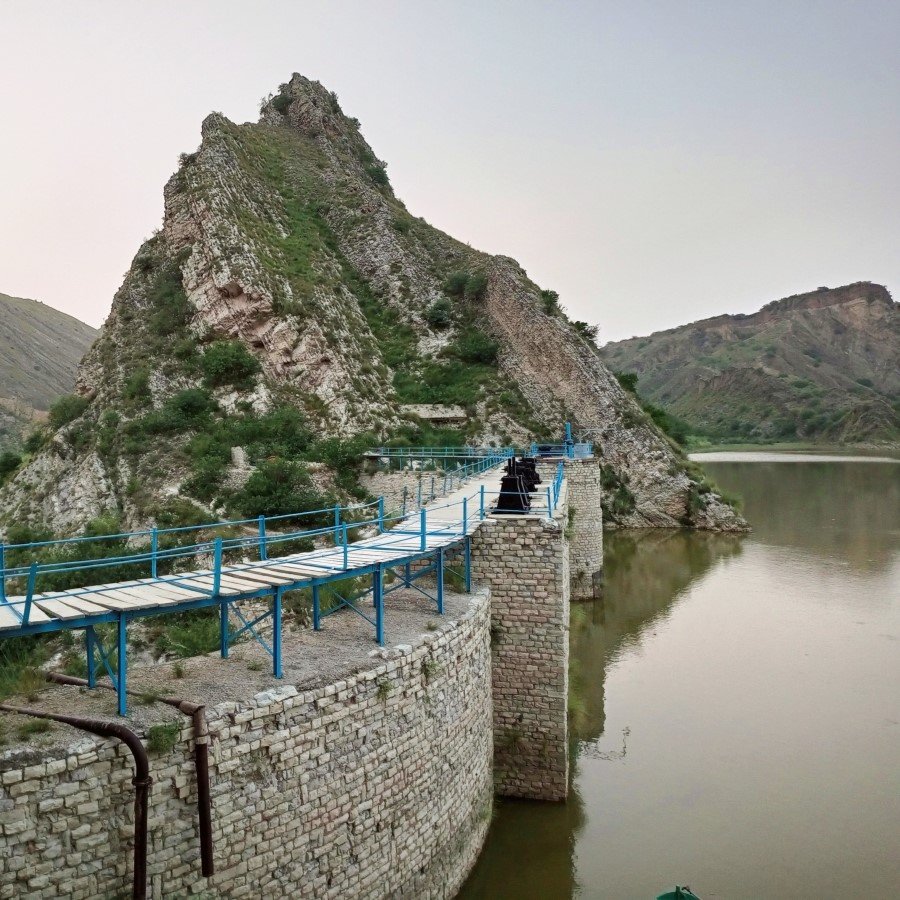
About 32 km from Mianwali city, Namal Lake is the district’s most beautiful natural attraction. Also, created by the construction of Namal Dam in 1913, the lake covers about 5.5 square kilometres, ringed by hills on its western and southern sides. In fact, in winter it hosts migratory waterfowl — ducks and cranes arriving from Central Asia — and it has long been a favourite picnic spot for the region. The Namal Valley around it, some 40 km from the city, is a landscape of rain streams, scattered trees and quiet villages.
Visit Chashma Barrage on the Indus
Southwest of the city, Chashma Barrage spans the Indus — a massive engineering work built between 1967 and 1971, with a power station of 184 MW. Also, the barrage lake and its surroundings form a Ramsar-listed wetland (designated in 1996), important for migratory birds. In fact, standing on the barrage with the Indus spreading below is one of the great river views of Punjab.
See Kalabagh and the Salt Range
The historic town of Kalabagh sits on the western bank of the Indus where the river cuts through the Salt Range — dramatic scenery of river, hills and old town. Also, the Kalabagh–Shakardara road through the hills is considered one of the most scenic drives in the region. In fact, combine it with the haveli for a full western-Punjab circuit.
Famous Places In and Around Haveli Sarfaraz Khan, Mianwali
- Namal Lake and Namal Dam: About 32 km from Mianwali city; boating, picnics and winter birdwatching.
- Chashma Barrage: On the Indus; barrage views, power station and Ramsar wetland birdlife.
- Kalabagh: Historic river town on the Indus in the Salt Range; scenic hill roads.
- Mari Indus: The railway-side settlement on the Indus east of the city, a glimpse of river-town life.
- Thal Desert fringe: The desert begins east of Mianwali — vast, quiet landscapes for the adventurous.
Planning a wider Punjab heritage route? Also, our Malam Jabba guide covers the mountains at the other end of the province’s range of experiences.
How to Reach Haveli Sarfaraz Khan, Mianwali
Mianwali sits in western Punjab, roughly between Lahore and the Khyber Pakhtunkhwa border. Also, the roads are good, and the district is well connected by highway. In fact, it is a straightforward drive from either Lahore or Islamabad.
- From Lahore: About 350 km, roughly 6 to 7 hours. Take the M-2 motorway west, exit at Balkasar Interchange onto the Talagang–Mianwali road, and follow it to Mianwali city.
- From Islamabad: About 290 km, roughly 5 hours via the M-2 to Balkasar, then the Talagang–Mianwali road southwest. This is the most common route for visitors from the capital.
- From Karachi: Around 1,200 km by road — far too long to drive comfortably in one go. Fly to Islamabad or Lahore and drive from there, or take the train to a nearby junction and continue by road.
- Nearest airport: Islamabad International Airport (about 290 km) is the practical choice; Allama Iqbal International Airport, Lahore, is the alternative.
- Transport options: Private car or hired van is by far the best option — it gives you the freedom to combine the haveli with Namal Lake and Chashma Barrage in one trip. Public buses and vans connect Mianwali with Lahore, Islamabad and Rawalpindi; within the district, hire a local car or rickshaw for the day.
- Road conditions: The motorway and the Talagang–Mianwali road are paved and in decent condition year-round. Rural roads around Namal Lake and Kalabagh can be rough — a sturdy car is advisable, and avoid them after heavy rain.
Route Details
Islamabad to Mianwali: Leave Islamabad on the M-2 motorway heading toward Lahore. Also, exit at Balkasar Interchange and take the Talagang–Mianwali road southwest through Talagang. The road crosses rolling Potohar-edge country before descending toward the Indus plains and Mianwali city — about 5 hours in total. From Mianwali city, the haveli is a short local drive. Ask residents for directions to “Sarfaraz Khan wali haveli,” and consider hiring a local guide for the final approach. Day-trip loop: Mianwali city → haveli → Namal Lake (32 km) → back via Chashma road makes a full, satisfying day.
Where to Stay in Haveli Sarfaraz Khan, Mianwali
Mianwali is a district town, not a tourist hub, so set your expectations accordingly. Also, and you will be pleasantly surprised. The city has a solid range of mid-range hotels and guesthouses along its main roads, clean and comfortable, catering to business travellers and government visitors. These are your best bet: air-conditioned rooms, attached baths and on-site restaurants at very reasonable rates.
Budget travellers will find simple guesthouses and roadside hotels near the bus stands and bazaars. There are no luxury resorts or international chains in Mianwali — and no need for them on a heritage trip. If you want more comfort, base yourself in Islamabad and make Mianwali a long day trip or an overnight with an early start. For the full experience, stay in Mianwali city itself: the evening bazaars, the dhaba dinners and the early-morning light on the old quarters are worth it. Book ahead during wedding season (winter), when local hotels fill up.
Where to Eat: Local Foods of Mianwali
Mianwali’s food is hearty Punjab with a frontier accent. Also, the cooking of the Niazi Pashtuns, Saraiki farmers and Punjabi townspeople, built around desi ghee, slow-cooked meats and fresh tandoori bread.
What to eat: Mutton karahi and chicken karahi are the stars — order them “desi ghee wali” if you want the full local treatment. Also, dal, saag and lassi appear on every traditional table. The lassi here, made from fresh buffalo milk, is thick enough to stand a spoon in. Tandoori naan and kulcha come straight from clay ovens in the bazaars. Roadside dhabas along the Talagang–Mianwali road serve some of the most honest food in Punjab: charpoy seating, endless chai, and karahi cooked to order.
Where to eat: The main bazaars of Mianwali city have the best concentration of restaurants and dhabas. For the haveli day trip, eat in the city before heading out — options thin out toward Namal Lake and Kalabagh, so carry water and snacks for the rural legs. Also, a full dhaba meal is very budget-friendly. Even the better restaurants in the city cost a fraction of Lahore or Islamabad prices.
Weather in Haveli Sarfaraz Khan, Mianwali
Mianwali has a hot semi-arid climate, moderated slightly by the Indus and the Salt Range hills. Also, summers are fierce, winters are crisp and pleasant, and the shoulder seasons are lovely.
| Season | Temperature Range | Conditions |
|---|---|---|
| Winter (Dec–Feb) | 4–20°C | Cool, dry and sunny. Perfect for the haveli, Namal Lake and birdwatching. |
| Spring (Mar–Apr) | 15–30°C | Pleasant and green; excellent for sightseeing before the heat. |
| Summer (May–Aug) | 30–45°C | Extremely hot and dry. Visit only at dawn; rest indoors midday. |
| Autumn (Sep–Nov) | 15–32°C | Cooling down; October–November are ideal for the full circuit. |
Note: ranges are approximate for western Punjab. The monsoon (July–September) brings some rain but Mianwali stays drier than eastern Punjab.
Language and Culture of Haveli Sarfaraz Khan, Mianwali
Mianwali sits at a cultural crossroads. Also, its languages show it: Saraiki and Punjabi are widely spoken. In fact, Pashto is common among the Niazi Pashtun tribes who are central to the district’s identity. Urdu works everywhere. The Niazi code of hospitality — melmastia — is real here: guests are honoured, tea appears within minutes, and strangers go out of their way to help.
The district is known nationally as the home district of Imran Khan, who won the NA-95 Mianwali-I seat in the 2013 general election — a point of pride for locals. Dress modestly, especially in the old quarters and villages (covered shoulders and knees; women may want a headscarf for shrines). When visiting the haveli, remember it is a private family home: greet the residents, ask permission before entering or photographing, and accept the inevitable offer of chai — refusing would be ruder than any faux pas.
Shopping in Haveli Sarfaraz Khan, Mianwali
Mianwali’s bazaars are traditional Punjab: cloth merchants, crockery shops, spice sellers and the everyday commerce of a district town. Also, the main bazaar in Mianwali city is the place to browse — look for khaddar (handwoven cotton) cloth, a Punjab classic, and local sweets. In fact, there are no shopping malls catering to tourists here. That is part of the charm: prices are local, bargaining is friendly, and what you buy is what the town actually uses. Pick up dried fruits and nuts from the bazaar for the road. The route back to Islamabad or Lahore is long.
Travel Tips for Haveli Sarfaraz Khan, Mianwali
Packing Essentials
Sun protection is non-negotiable for most of the year: hat, sunglasses, sunscreen and plenty of water. Also, comfortable walking shoes for the old quarters; a light jacket for winter mornings (desert-edge nights get cold). In fact, carry a power bank — you will be out all day between the haveli, Namal Lake and Chashma. A pair of binoculars is a wonderful addition in winter for the migratory birds at Namal Lake and Chashma.
Safety Tips
Mianwali is generally safe for daytime travel, and locals are famously hospitable to guests. Also, travel with a companion or hire a local driver who knows the rural roads. The tracks around Namal Lake and toward Kalabagh can be confusing. Do not attempt to enter the haveli uninvited; it is a private residence. Keep to daylight hours on rural roads, and let your hotel know your day-trip plan.
Money & Connectivity
You will not find them at Namal Lake or Kalabagh.. As a result, banks and ATMs are available in Mianwali city — withdraw there, Carry cash for the entire day trip; dhabas and village shops do not take cards. Mobile coverage is good in Mianwali city on all major networks (Jazz, Telenor, Zong, Ufone), but signals thin out around the lake and in the hills — download offline maps before you leave the city.
Best Time to Visit Haveli Sarfaraz Khan, Mianwali
Winter (November–February): The Best Season
Cool, dry, golden light — winter is Mianwali at its finest. The haveli visit is comfortable, Namal Lake hosts its migratory ducks and cranes. Also, the Chashma wetlands are alive with birds. In fact, this is the season to plan for.
Spring (March–April): Lovely and Green
Mild temperatures and the countryside at its greenest. A fine time for the full circuit of haveli, lake and barrage — before the summer heat arrives.
Summer (May–August): Avoid If Possible
Western Punjab summers are brutal, regularly crossing 40°C and touching 45°C. Also, sightseeing is limited to dawn and dusk; the rest of the day belongs to shade and cold drinks.
Autumn (September–October): The Shoulder Season
The heat breaks in late September, and October is genuinely pleasant — a smart, crowd-free window for the trip.
Final Thoughts
Haveli Sarfaraz Khan will never be on a postcard rack, and that is its gift to you. Also, in a travel world of over-photographed landmarks, here is a real haveli — three storeys of carved wood, open halls and Persian inscription — standing quietly in a district most travellers never see, holding the memory of Mianwali’s notable families. The official archaeological survey thought it worth recording. The family that owns it has kept it standing; and now you know it exists.
Come for the haveli, stay for the Indus at Chashma, the winter birds at Namal Lake. Also, the road through the Salt Range to Kalabagh. Mianwali rewards the traveller who slows down. For more journeys into Pakistan’s lesser-known corners, keep browsing our Explore Pakistan guides — and if you want to see how the other half of Punjab travels, our Islamabad guide is a good companion read.
FAQs
Where is Haveli Sarfaraz Khan?
In Mianwali District, Punjab, Pakistan — recorded by the Directorate of Archaeology and Museums at approximately 32.6741°N, 71.2689°E, near Mianwali city.
What does the haveli look like?
A three-storey complex with a big wooden gate in the middle of the building. Meanwhile, the first and second floors are open halls once used as living rooms. In fact, a Persian inscription slab is installed on the building.
Can tourists go inside?
The haveli is privately owned and not a protected monument. Admire it respectfully from outside and ask the resident family for permission before entering or photographing closely.
How old is the haveli?
The official archaeological survey of Mianwali district assigns it to the historic (pre-colonial) period — the centuries of Mughal and Sikh rule — rather than a single documented year.
What is the best time to visit Mianwali?
November to February: cool, dry weather, ideal for the haveli and for birdwatching at Namal Lake and Chashma Barrage. Also, avoid the extreme heat of May–August.
How do I reach Mianwali from Islamabad?
About 290 km, roughly 5 hours: M-2 motorway to Balkasar Interchange, then the Talagang–Mianwali road southwest to Mianwali city.
What else is worth seeing in Mianwali district?
Namal Lake and dam (1913), Chashma Barrage on the Indus (Ramsar wetland), Kalabagh on the Salt Range. Also, the Thal desert fringe.
Where should I stay and eat?
Mid-range hotels and guesthouses in Mianwali city are comfortable and affordable. Also, eat mutton karahi, dal, saag and fresh tandoori bread at the city’s bazaars and roadside dhabas.