Quick Facts
- Location: About 20 kilometres southwest of Quetta, between Koh-i-Chiltan to the west and the Hazarganji range to the east, across Quetta and Mastung districts, Balochistan.
- Altitude: From about 5,500 feet at the park gate on the Quetta–Karachi National Highway up to 10,850 feet at the summit of Chiltan Peak.
- Famous For: The Chiltan markhor — a wild goat found nowhere else on earth — plus Sulaiman markhor, Chiltan ibex, juniper forests, and the legend of “a thousand treasures” buried in its mountains.
- Nearest City: Quetta, the provincial capital, roughly a 30–40 minute drive away.
- Accessibility: The park gate sits directly on the N-25 National Highway, making it one of Pakistan’s most accessible national parks.
- Known Landmarks: Chiltan Peak, the Hazarganji and Chiltan ranges, the park museum, and established picnic spots and rest houses.
- Best For: Wildlife watchers, nature photographers, birders, students and researchers, and families wanting a real wilderness day trip from Quetta.
Why Visit Hazarganji-Chiltan National Park
There are national parks you visit for scenery. There are national parks you visit to meet an animal that exists nowhere else on the planet. Hazarganji-Chiltan is firmly the second kind — and that makes it special in a way few Pakistani destinations can match. This 27,421-hectare sweep of mountain, juniper forest and open desert is the only home of the Chiltan markhor, a wild goat whose population once fell to barely a hundred animals before protection brought it back.
When you scan a rocky ridgeline here through binoculars and pick out those magnificent spiralled horns, you are looking at one of the rarest conservation stories in South Asia — a species that survives because this park exists.
Thirty Mammals and a Thousand Treasures
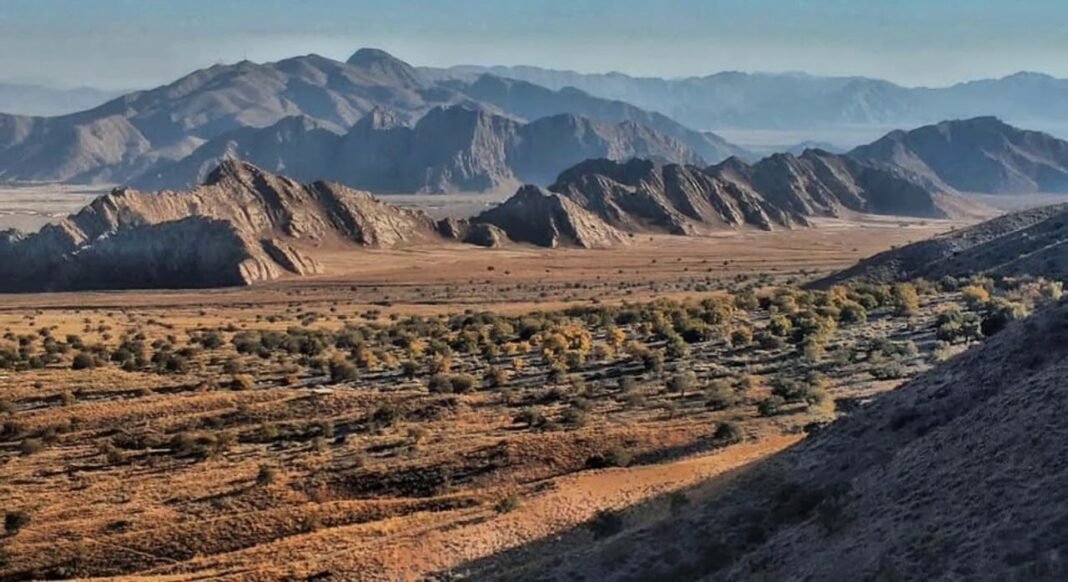
But the markhor is only the headline. The park holds some 30 species of mammals — Sulaiman markhor, Chiltan ibex, urial, Indian wolf, striped hyena, caracal, red fox — and about 120 species of birds, including the elusive houbara bustard, griffon vultures and hunting falcons. Also, the landscape itself is worth the trip: precipitous slopes divided by deep ravines and valleys, Pashtun juniper and pistachio woods, almond and ash trees. The whole range climbing from 5,500 feet at the gate to the 10,850-foot summit of Chiltan Peak. It is rugged, quiet and astonishingly close to a major city.
The park gate is a short drive from Quetta on the national highway. This means genuine high-mountain wilderness is available as a day trip.
What’s in a Name
Then there is the name itself. “Hazarganji” means “of a thousand treasures,” and the legend is irresistible: in the folds of these mountains lie buried treasures left by the great armies that marched this corridor of history. Greco-Bactrians, Scythians, Mongols and the migrating hordes of Baloch tribes all passed this way. Whether or not you believe in hidden gold, the romance of the name adds a layer of mystery that turns a walk here into something more than exercise. You are treading one of the old routes of empires.
For photographers, the park is a gift: clear mountain light, juniper silhouettes against stone, vultures circling thermals, and — if you are patient and a little lucky — wild goats on the ridgelines. For families, it offers something Karachi’s beaches and Lahore’s gardens cannot: a real national park, with a museum, picnic areas and rest houses, where children can learn what Pakistan’s wildlife actually looks like. And for anyone building a Balochistan itinerary, it pairs perfectly with Quetta’s bazaars and food scene, the dramatic Bolan Pass drive. The deeper history at the Archaeological Museum of Balochistan.
If you only have time for one wildlife destination in Balochistan, this is the one.
History of Hazarganji-Chiltan National Park
The park’s history as a protected area begins in 1980. Also, it was formally established as one of Pakistan’s national parks (IUCN Category V, Protected Landscape), covering 27,421 hectares across Quetta and Mastung districts and incorporating the Hazarganji State Forest and the Chiltan Protected Forest. Its founding mission was explicit: guard the habitat of the Chiltan markhor — the endemic wild goat found only within these boundaries — and provide recreational and educational facilities for the public. In fact, In a province where wildlife faced relentless pressure, Hazarganji-Chiltan was Balochistan’s statement that its rarest animal was worth a park.
Saving the Chiltan Markhor
The urgency of that mission is written in the markhor’s numbers. In the 1950s, the population of the Chiltan wild goat was reported at over 1,200 animals. By November 1970, a count found only about 200 — just 107 individuals were actually tallied — and hunting was the overwhelming cause. The species was sliding toward extinction in its only home on earth. Protection, enforcement and habitat management since 1980 have reversed that slide: current estimates put the Chiltan wild goat population at around 800, with 300–400 Sulaiman markhor and roughly 800 Chiltan ibex also surviving within the park boundaries.
It remains a fragile recovery — poaching incidents have made headlines, including a case registered against a provincial home minister for hunting markhor in the park — but the trajectory is the right one. It is the park’s existence that made it possible.
Millennia of History
The deeper history of the land itself stretches back millennia. Also, the name Hazarganji comes from the travelling route between the mountains. In fact, the legend of buried treasure speaks to what this corridor really was: a passage for the armies and migrations of the ancient and medieval world. The Greco-Bactrians, the Scythians, the Mongols and migrating Baloch tribes all moved through these ranges. The idea that treasure — actual gold — lies buried in the mountain folds is one of Balochistan’s most enduring folk stories. Visiting the park today, you are walking a landscape that has been strategically and romantically significant for longer than any written record.
Modern Hazarganji-Chiltan has grown into a centre for nature education as well as protection. The park welcomes nature lovers, students, scientists and researchers throughout the year, with a museum that interprets the region’s natural history, picnic spots for family visitors, and rest-house accommodation. For travellers, that means the park is not a closed scientific reserve but a working, visitable landscape — one where the twin missions of 1980, conservation and public enjoyment, are both still alive.
Top Things to Do in Hazarganji-Chiltan National Park
Spot the Chiltan Markhor
This is the reason the park exists, and it should be the centrepiece of your visit. Also, the Chiltan markhor — found nowhere else on earth — favours the rocky, precipitous slopes of the park’s higher ground. The wild goats of the Chiltan range generally prefer the wooded areas. Bring binoculars or a camera with a long lens, hire a park guide who knows the current herds’ ranges, and plan to spend unhurried hours scanning ridgelines in the early morning or late afternoon. The animals are most active.
A sighting is never guaranteed — these are wild, elusive animals — but the park’s guides know the seasonal patterns, and patience here is usually rewarded.
Wildlife Watching: Ibex, Urial and Predators
Beyond the markhor, the park supports around 800 Chiltan ibex, 300–400 Sulaiman markhor, and small numbers of urial on the western slopes between 1,500 and 2,100 metres. Also, the predator guild is impressive for a park this close to a city: Indian wolf, striped hyena, caracal, red fox and common jackal all occur here, along with the Indian crested porcupine. Take dawn and dusk drives along the park’s tracks with a guide. You will have the best chance of spotting the shyer species. Even when the big mammals stay hidden, their tracks and signs tell the story of a functioning mountain ecosystem.
Birdwatching
With 120 recorded bird species — 36 resident and 84 migratory — Hazarganji-Chiltan is one of Balochistan’s most rewarding birding sites. For example, scan the thermals for griffon and Egyptian vultures, and look for the very rare houbara bustard. Laggar and peregrine falcons hunt here too. Watch for chukar partridge on the rocky slopes and European bee-eaters in the breeding season. Winter visitors include the crested honey buzzard and Eurasian sparrowhawk. As a result, the mix of desert, forest and high-mountain habitats means the bird list changes dramatically with the season — spring and autumn migration are the peak times.
Hike the Juniper Forest Trails
The park’s woods of Pashtun juniper, pistachio, almond and ash are among the most atmospheric in Pakistan. Also, juniper forest of this kind is increasingly rare, and walking beneath centuries-old junipers — gnarled, aromatic, perfectly adapted to the dry mountains — is an experience in itself. In fact, trails range from gentle walks near the picnic areas to serious climbs toward Chiltan Peak’s 10,850-foot summit. Go with a guide, carry water, and remember that altitude and exposure change fast here: the gate sits at 5,500 feet and the high ridges are a different climate entirely.
Visit the Park Museum and Picnic Areas
The park museum is the best starting point for understanding what you are looking at — the region’s geology, flora, fauna and the conservation story of the markhor. Also, the established picnic spots make this a genuinely family-friendly destination: bring a packed lunch from Quetta, claim a shady spot, and let the day unfold. In fact, rest-house accommodation is available for those who want to stay inside the park and catch the dawn wildlife activity.
Photograph the “Thousand Treasures” Landscape
The mountain scenery here — steep slopes, deep ravines, juniper silhouettes. Also, the vast Quetta valley beyond — is made for photography. The clearest light comes in the cool months, and the golden hours transform the rocky ranges. Whether or not you find the legendary buried treasure, you will leave with images of one of Pakistan’s most distinctive mountain landscapes.
Famous Places In and Around Hazarganji-Chiltan National Park
- Chiltan Peak (10,850 ft): The park’s highest point and a serious trekking objective.
- Hazarganji Range: The eastern range that gives the park its “thousand treasures” name.
- Park Museum: Interprets the region’s natural history and the markhor’s conservation story.
- Picnic Spots and Rest Houses: Established visitor facilities for day trips and overnight stays.
- Quetta City (20 km): Bazaars, food streets and the Archaeological Museum of Balochistan — the perfect complement to the park.
- Hazar Ganji Fort, Khuzdar: For travellers continuing south on the N-25, the historic fort town of Khuzdar makes a natural next stop — see our Hazar Ganji Fort travel guide.
How to Reach Hazarganji-Chiltan National Park
One of this park’s greatest advantages is how easy it is to reach: the park gate sits directly on the N-25 (the Quetta–Karachi National Highway), about 20 kilometres southwest of Quetta city — a 30–40 minute drive from the city centre. Also, you do not need a 4×4 expedition or a multi-day trek to get here. In fact, a normal car, a hired taxi, or a Quetta-based tour will do. The nearest airport is Quetta International Airport, with regular flights from Islamabad, Karachi and Lahore.
Route Details
- From Quetta (20 km, 30–40 minutes): Take the N-25 southwest out of Quetta toward Mastung/Karachi; the signed park gate is on the highway. This is the standard approach — most visitors base themselves in Quetta and make the park a half-day or full-day trip.
- From Karachi (~680 km, 10–12 hours): Drive the N-25 north through Bela, Khuzdar and Kalat to Quetta, then continue to the park as above. The drive passes through the dramatic Bolan Pass corridor and the historic town of Khuzdar (see our Hazar Ganji Fort guide). Most travellers break this journey overnight; alternatively, fly to Quetta and drive to the park.
- From Islamabad (~1,000 km): Fly to Quetta (about 1.5 hours) and drive to the park, or take the long road journey south via Dera Ghazi Khan and the Indus highway system — a full two-day drive best done with an overnight stop.
- From Lahore (~1,050 km): Fly to Quetta (under 2 hours) and drive to the park, or drive the long route west via Multan and Dera Ghazi Khan.
- Nearest airport: Quetta International Airport, about 45 minutes from the park gate by road.
Road conditions by season: The N-25 to the park gate is paved and maintained year-round. Winter can bring frost and occasional snow to the higher sections around Quetta. Summer is hot on the plains but the park’s altitude keeps it cooler. The tracks inside the park are unpaved mountain roads — fine for high-clearance vehicles in dry weather, but ask park staff about conditions after rain.
Choosing Your Transport
Transport options: Hiring a car with a driver from Quetta is the easiest option and lets you combine the park with city sightseeing. Also, self-drive is straightforward — the route is a single highway with clear signage. In fact, public transport does not serve the park directly. Tour operators in Quetta run wildlife and nature day trips that include the museum, picnic areas and guided wildlife viewing.
Where to Stay in Hazarganji-Chiltan National Park
The park itself offers rest-house accommodation. Also, the classic forest-department option, simple and atmospheric. The best choice if you want to be inside the park for dawn wildlife activity. Book through the relevant wildlife or forest department channels in Quetta well ahead of your visit, as capacity is limited.
Quetta hotels (recommended base): Most visitors stay in Quetta, 20 km away, where the choice is far wider. Also, the city has everything from comfortable mid-range hotels on and around the main roads to budget guesthouses in the bazaar areas. Staying in Quetta also puts you close to the city’s famous food streets and bazaars, and makes it easy to combine the park with the Archaeological Museum of Balochistan and a day trip toward Ziarat.
Luxury options: Quetta has a small number of upper-end hotels catering to official and business travellers. Also, book ahead in the peak spring season.
Camping: Camping inside the park is only possible with official permission — do not assume you can pitch a tent. If you are with an organised group, your operator will arrange the necessary clearance. Otherwise, use the rest houses or return to Quetta.
Where to Eat: Local Foods of Hazarganji-Chiltan National Park
There are no restaurants inside the park, so plan your food around Quetta — which is one of Pakistan’s great eating cities and a destination in its own right. The food of the region is Pashtun and Baloch: meat, fire, and minimal fuss, plus the famous Quetta tea culture.
Rosh (Namkeen Rosh): Quetta’s signature dish — lamb slow-cooked in its own fat with just salt and black pepper until it melts. Served at traditional rosh houses across the city, it is the single dish you must not miss.
Sajji: Whole lamb roasted over an open fire, crisp-skinned and falling off the bone — the Balochistan classic, done superbly in Quetta’s food streets.
Shinwari tikka and namkeen karahi: The Pashtun grill tradition at its finest: salt-and-pepper mutton tikka and tomato-free namkeen karahi, best eaten fresh off the coals with hot naan.
Kahwa and Quetta doodh patti: Quetta runs on tea. Also, green kahwa, often with cardamom, and the city’s famously thick doodh patti are served everywhere. The roadside tea stalls (especially the late-night ones) are a cultural experience as much as a refreshment.
Dry fruits and chilgoza: Quetta’s bazaars overflow with almonds, pistachios, apricots and chilgoza (pine nuts) — buy them fresh here for a fraction of big-city prices, and pack some for the park picnic.
For the park visit itself, pack a picnic from Quetta — the park’s picnic spots are made for it. A day’s eating in Quetta is budget-friendly: a hearty rosh or sajji meal at a traditional eatery costs far less than a restaurant dinner in Islamabad or Lahore.
Weather in Hazarganji-Chiltan National Park
The park’s altitude range — 5,500 feet at the gate to 10,850 feet at Chiltan Peak — means weather changes dramatically with elevation. Also, Quetta city (at about 1,680 metres) gives the baseline: cold, dry winters; warm, pleasant summers; and sharp, clear shoulder seasons. Inside the park, temperatures run roughly 5–10°C cooler than the city. The high ridges can be bitterly cold in winter.
| Season | Temperature Range (Quetta baseline) | Conditions |
|---|---|---|
| Winter (Dec–Feb) | -5°C to 12°C | Cold and dry; frost and occasional snow around Quetta, much colder on the high ridges. Wildlife viewing can be excellent as animals descend, but dress for serious cold. |
| Spring (Mar–May) | 5°C to 26°C | The prime season. Mild days, cool nights, wildflowers in the valleys, and active wildlife. Bird migration peaks. |
| Summer (Jun–Aug) | 16°C to 34°C | Warm in the city but pleasant inside the park’s higher elevations — a genuine escape from the plains’ heat. |
| Autumn (Sep–Nov) | 3°C to 27°C | Clear, golden and superb for photography. Autumn bird migration is another highlight. |
Rainfall is low and erratic, with most precipitation in winter and spring. The high slopes are always cooler than they look.. As a result, whatever the season, mountain weather changes fast — carry a warm layer even on a summer visit,
Language and Culture of Hazarganji-Chiltan National Park
The park sits in the meeting zone of Balochistan’s two great cultures: Pashtun communities to the north and around Quetta. Also, Baloch and Brahui communities to the south. In fact, pashto, Balochi and Brahui are all spoken in the region, with Urdu widely understood in Quetta and at the park. The code of hospitality — mehman nawazi — runs deep in both cultures: guests are honoured, tea is offered, and help is given freely.
For visitors, the key cultural notes are respect and restraint. This is a national park and a wildlife sanctuary first: do not feed animals, keep noise down, stay on established tracks, and never attempt to hunt — poaching here is a serious offence. The markhor’s recovery depends on strict protection. Dress modestly, ask before photographing people, and accept offered tea graciously. If you are visiting with a local guide — which is strongly recommended — follow their lead on local customs. In this part of Balochistan, a guide is your cultural interpreter as much as your wildlife spotter.
Shopping in Hazarganji-Chiltan National Park
There are no shops inside the park. Also, it do your shopping in Quetta — one of Pakistan’s best bazaar cities. Liaquat Bazaar and Kandahari Bazaar are the classic stops: dry fruits of every kind (almonds, pistachios, dried apricots. The prized chilgoza pine nuts), hand-knotted carpets and rugs, onyx and marble handicrafts, camel-skin lamps, and traditional Pashtun and Baloch embroidery. Quetta’s dry-fruit prices are famously lower than in the rest of Pakistan, so stock up. As everywhere in traditional bazaars, gentle haggling is expected — start below the asking price, keep it friendly, and settle with a smile.
There are modern shopping centres in Quetta too, but the old bazaars are where the region’s character lives.
Travel Tips for Hazarganji-Chiltan National Park
Packing Essentials
Binoculars are the single most important item — without them, wildlife viewing is guesswork. Add a camera with the longest lens you have, a warm jacket (even in summer, for the high ridges), sun protection (the mountain sun is fierce), sturdy walking shoes, plenty of water. A packed lunch from Quetta. A field guide to the birds of Pakistan will enrich the day enormously if you are a birder.
Safety Tips
Stay on marked tracks, go with a park guide, and do not wander the ravines alone. The terrain is genuinely rugged, with precipitous slopes and deep gullies. Keep a respectful distance from all wildlife. Markhor and ibex are wild animals, and predators including wolves and hyenas live here. Carry a charged phone, let your hotel know your plans, and return to the gate well before dark. Check current travel advisories for Balochistan before your trip.
Money & Connectivity
Carry cash for park entry, guides and tips — there are no card facilities at the gate. Also, Quetta’s ATMs and banks cover larger needs. Mobile coverage from the major networks is good in Quetta and along the N-25, but becomes patchy inside the park’s valleys — download offline maps and do not rely on live navigation once you are past the gate.
Best Time to Visit Hazarganji-Chiltan National Park
March to May — The Prime Season
Spring is the park at its best: mild temperatures, active wildlife, wildflowers, and the peak of bird migration. Also, the Chiltan markhor and ibex are frequently visible on the mid slopes. The juniper forest is at its most beautiful. This is when wildlife photographers and researchers plan their visits — and when you should plan yours.
June to September — Summer in the Hills
While the plains bake, the park’s altitude keeps things comfortable — a genuine summer escape. Also, wildlife viewing remains good in the early mornings, and the long days give you maximum time on the trails. Carry extra water and sun protection.
October to November — Golden Autumn
Clear skies, golden light, and the autumn bird migration make this a superb time for photography and birding. Temperatures are crisp but comfortable, and the park is quieter than in spring.
December to February — Winter
Cold, stark and beautiful — and the season when animals often descend to lower, more visible ground. But the high ridges are bitterly cold, tracks can be icy, and you need serious winter clothing. Only for the hardy and well-prepared.
Final Thoughts
Hazarganji-Chiltan National Park is that rare thing: a wildlife destination that is both globally significant and genuinely easy to visit. Also, the Chiltan markhor’s story — from the edge of extinction to a recovering population of hundreds — is one of Pakistan’s great conservation successes, and seeing these animals in their only home on earth is an experience that stays with you. Add the juniper forests, the 120 species of birds, the legend of a thousand buried treasures. A park gate twenty minutes from a major city. You have a destination that deserves a place on every nature lover’s Pakistan itinerary.
Go in spring if you can, hire a local guide, bring your binoculars and your patience, and let the mountains do the rest. Pair the visit with Quetta’s food and bazaars, the Bolan Pass drive. The fort town of Khuzdar to the south — and find more ideas in our Explore Pakistan collection.
FAQs
Where is Hazarganji-Chiltan National Park?
About 20 kilometres southwest of Quetta, Balochistan, between Koh-i-Chiltan and the Hazarganji range. Also, the park gate is directly on the N-25 (Quetta–Karachi National Highway).
What animals can I see in Hazarganji-Chiltan National Park?
The star is the Chiltan markhor, found nowhere else on earth (around 800 in the park), plus Sulaiman markhor, Chiltan ibex, urial, Indian wolf, striped hyena, caracal, and about 120 bird species including the houbara bustard.
When was Hazarganji-Chiltan National Park established?
In 1980, specifically to protect the Chiltan markhor’s habitat. It covers 27,421 hectares and is an IUCN Category V protected landscape.
What is the best time to visit Hazarganji-Chiltan National Park?
March to September is the prime window — spring (March–May) for wildlife and bird migration, summer for cool highland weather. Winters are cold but rewarding for hardy visitors.
How do I reach the park from Quetta?
Drive 20 km southwest on the N-25 — about 30–40 minutes from Quetta city. Also, hire a car with a driver, self-drive, or join a Quetta tour operator’s day trip.
Can I stay inside the park?
Yes — the park has rest-house accommodation, best booked ahead through the wildlife/forest department in Quetta. Also, Most visitors stay in Quetta’s hotels and visit as a day trip.
Is the park suitable for families?
Very. Also, there is a museum, established picnic spots and easy trails near the gate. In fact, bring a picnic from Quetta and make a day of it — children love the wildlife angle.
What does “Hazarganji” mean?
“Of a thousand treasures.” The name comes from the old mountain route through the park, once used by Greco-Bactrians, Scythians, Mongols and migrating Baloch tribes — and from the legend that treasure lies buried in its mountains.