An hour’s drive from the chaos of Karachi, the hills open up and a vast sheet of water appears — ringed by arid ridges, loud with birdsong, and calm in a way the city never is. Hub Dam Wildlife Sanctuary is one of Pakistan’s most important wetlands and one of its most underrated weekend escapes. It is a Ramsar-listed sanctuary, a stronghold of migratory waterbirds, the source of much of Karachi’s drinking water, and a beloved picnic and fishing spot all at once. If you live in Karachi and have never been, or if you are visiting the city and want to see a wilder side of the coast, this Hub Dam Wildlife Sanctuary travel guide is your invitation.
Quick Facts
- Location: On the Hub River, on the border of Karachi (Sindh) and Lasbela/Hab District (Balochistan), about 56 km north of Karachi
- Altitude: Lowland reservoir on the arid plains — roughly 100–150 m above sea level
- Famous For: Migratory waterbirds (cranes, pelicans, ducks, waders, grebes, coots); mahseer fishing; Ramsar wetland status
- Nearest City: Karachi (about 1.5–2 hours by road)
- Accessibility: Easy — paved highway from Karachi to the dam; suitable for any car
- Known Landmarks: Hub Dam and its spillway, the WAPDA rest house, the surrounding Kirthar foothills
- Best For: Birdwatchers, anglers, families on weekend picnics, photographers
Why Visit Hub Dam Wildlife Sanctuary
Karachi is a city of nearly 20 million people, and most of them have no idea that one of Pakistan’s finest birdwatching sites sits practically on their doorstep. Also, the sanctuary around Hub Dam covers some 27,219 hectares — a huge sweep of reservoir, shoreline, scrub and hills — and every winter it fills with birds arriving from Central Asia: pelicans cruising in formation, flocks of ducks darkening the water, cranes bugling over the reeds. For a Karachi-based nature lover, there is simply no easier world-class birding than this.
What elevates Hub Dam above an ordinary picnic lake is its international standing. Also, in May 2001 it was designated a Ramsar site — a wetland of international importance — placing it in the company of Keenjhar, Haleji and Drigh lakes among Sindh’s great wetlands. In fact, that status is not ceremonial: the reservoir is a genuinely critical feeding and nesting ground, and on a good winter morning the sheer density of birdlife here can be staggering.
Picnics, Mahseer and Karachi’s Lifeline
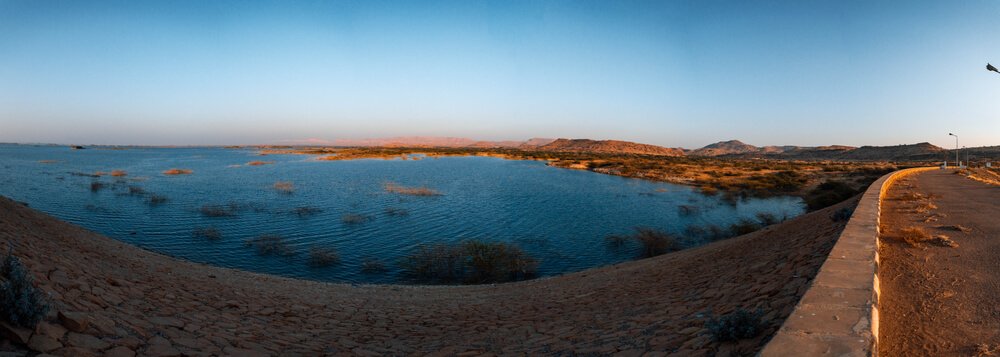
Then there is the human side. Also, generations of Karachi families have made the weekend run to Hub Dam for picnics, swimming and fishing. It is one of the city’s classic day-trip traditions. The dam itself is an impressive piece of engineering, its spillway thundering after good rains. The setting is unexpectedly dramatic: water held between arid hills on three sides, the reservoir stretching to the horizon when full. Anglers come for the mahseer, the powerful game fish the dam is famous for. The local fishing communities who work these waters are part of the sanctuary’s living character.
Finally, there is the water itself. Also, Hub Dam is a vital source of drinking water for Karachi. In fact, the reservoir you are picnicking beside quite literally keeps the city alive. Visiting gives you a tangible connection to where the city’s water comes from. A reason to care about protecting it. Few day trips are this scenic, this wild, and this meaningful at once.
History of Hub Dam Wildlife Sanctuary
The Hub River has watered this arid corner of the coast for millennia. Also, the modern story begins with the dam. Built across the river on the plains north of Karachi, Hub Dam was completed in 1981, creating a reservoir of some 24,300 acres with a gross storage capacity of about 857,000 acre-feet. Its twin purposes were irrigation for Lasbela District and domestic and drinking water for the ever-growing city of Karachi — roles it still performs today.
Almost as soon as the reservoir filled, wildlife moved in. The new wetland drew waterbirds in numbers that surprised everyone. The Sindh government acted early: in 1974 the area around the dam was declared a wildlife sanctuary, protecting 27,219 hectares of reservoir and surroundings. It was a forward-looking move — Pakistan’s wetland conservation was still in its infancy — and it gave legal shelter to one of the country’s most productive new bird habitats.
International recognition followed. Also, on 1 May 2001, Hub Dam was designated a Ramsar site, joining the global network of wetlands of international importance. In fact, it now stands among Pakistan’s 19 Ramsar sites, ten of which are in Sindh — a roll call that includes Haleji, Keenjhar and Drigh lakes and the Indus Dolphin Reserve.
The dam’s water levels tell their own dramatic story. Meanwhile, after years of low water, heavy rains in Balochistan in early 2019 lifted the reservoir dramatically, and in August 2020 the dam’s level rose close to its maximum capacity for the first time in almost 13 years. A moment celebrated across Karachi, whose water supply had been under strain. Major works had not begun as of recent reports.. Still, plans have been discussed to enhance the dam’s storage and even add a small hydroelectric project,
Through it all, the sanctuary has remained what it has been since 1974: a refuge where the desert meets the water and the birds come home.
Top Things to Do in Hub Dam Wildlife Sanctuary
Birdwatching in Winter
This is the sanctuary’s headline act. Also, from roughly November to March, migratory birds pour in from the north: cranes, pelicans, ducks, waders, grebes and coots feed and nest around the reservoir. In fact, bring binoculars and arrive early. The light is beautiful and the birds are most active in the first hours after sunrise. Even casual visitors will be struck by the pelican squadrons; serious birders can spend a full day working the shoreline.
Fish for Mahseer
Hub Dam is famous among anglers for its mahseer, the powerful native game fish prized across South Asia. Local fishermen know the reservoir intimately — hiring one as a guide dramatically improves your chances and supports the fishing communities that depend on these waters. Check locally about permits and rules before you cast. Also, fishing is regulated in the sanctuary.
See the Dam and Spillway
The dam structure itself is worth the visit — a long embankment holding back an inland sea, with a spillway that becomes genuinely spectacular after heavy rains when water thunders through. The contrast between the engineered concrete and the wild hills behind it makes for powerful photographs.
Picnic by the Water
This is the classic Karachi weekend ritual: drive out with family or friends, spread a dastarkhwan under the sparse shade, swim in the shallows (in safe areas away from the dam structures), and watch the sun drop behind the hills. Also, weekends and public holidays are lively; weekdays are wonderfully quiet.
Photography at Golden Hour
The reservoir’s vastness, the arid hills on three sides, flocks of birds lifting off the water — Hub Dam rewards photographers at dawn and dusk. Also, the light on the water with pelicans in frame is the shot everyone wants.
Explore the Shoreline Hills
The sanctuary’s hills are outliers of the Kirthar range. Also, short scrambles give sweeping views over the full sweep of the reservoir — on a clear winter day you can grasp the true scale of the 27,219-hectare protected area. In fact, stay on established paths and carry water; this is genuine desert.
Famous Places In and Around Hub Dam Wildlife Sanctuary
- Hub Dam spillway — most dramatic after monsoon rains when the reservoir is full
- WAPDA rest house — the historic rest house by the dam, a landmark of the site
- The reservoir shoreline — kilometres of bird-rich water edge, best explored slowly
- Kirthar foothills — the arid ridges enclosing the reservoir on three sides
- Hub town — the industrial town nearby for fuel, supplies and local food
- Karachi’s coast — combine the trip with the city’s beaches on a longer weekend (see our Churna Island travel guide for another Karachi escape)
Birders who love Hub will also want to read our Drigh Lake travel guide — another of Sindh’s great Ramsar wetlands.
How to Reach Hub Dam Wildlife Sanctuary
One of Hub Dam’s greatest virtues is how easy it is to reach. Also, this is a proper day trip, not an expedition.
- From Karachi: About 56 km north of the city, roughly 1.5–2 hours by car. Take the RCD Highway (N-25) north toward Hub; the dam turn-off is well known locally. Any car can do this trip — no 4×4 needed.
- From Hyderabad: Roughly 3–4 hours via Karachi or via the Indus Highway and connecting roads.
- From Islamabad/Lahore: Fly to Karachi (about 2 hours) and drive out from there. The road journey from the north is 15+ hours and not worth it for a day trip.
- Nearest airport: Jinnah International Airport, Karachi.
Road conditions by season: The highway is paved and open year-round. After heavy monsoon rain, check conditions — the surrounding desert tracks can get muddy, though the main road stays passable.
Transport options: Private car is ideal and gives you freedom around the shoreline. On weekends, Karachi tour operators and groups run coaster trips to the dam — an easy option if you don’t drive. Also, public buses run to Hub town, from where local transport can get you closer. This is fiddly for a day trip.
Route Details
- Leave Karachi heading north on the RCD Highway (N-25) toward Hub/Lasbela.
- Follow the highway past the Northern Bypass interchange, staying on the main road.
- Take the signed/locally-known turn toward Hub Dam — ask any dhaba owner if unsure; everyone knows the dam.
- Follow the dam road to the reservoir, the spillway viewpoint and the picnic areas along the shore.
- For birdwatching, continue along the shoreline tracks to the quieter western and northern edges.
Where to Stay in Hub Dam Wildlife Sanctuary
Almost everyone visits Hub Dam as a day trip from Karachi. That is the most practical plan — but overnight options exist.
WAPDA rest house: The historic rest house by the dam is the most atmospheric place to stay. It is official accommodation — access typically requires permission or a booking through WAPDA channels, so arrange this well in advance rather than turning up hopefully.
Hub town guesthouses: The nearby town has basic hotels and guesthouses used by business travellers — functional rather than charming, but fine for a night.
Karachi hotels: For the vast majority of visitors, the smart move is to sleep in Karachi — from budget guesthouses to five-star hotels — and make an early start for the dam. Also, you get the sanctuary’s best hours (dawn birding) without sacrificing comfort.
Camping: There is no organised campsite in the sanctuary, and camping right at the reservoir is not an established practice — stick to the day-trip format unless you have specific local permission and guidance.
Where to Eat: Local Foods of Hub Dam Wildlife Sanctuary
There are no restaurants inside the sanctuary, so plan like a local: bring a picnic. Karachi families arrive with coolers full of biryani, kebabs, fruit and thermoses of chai — and honestly, that is the perfect way to do Hub Dam.
Fresh fish: The local fishing communities work the reservoir daily, and buying the day’s catch near the dam — especially the celebrated mahseer — is a highlight if you can arrange cooking. Some visitors bring portable grills; if you prefer, Hub town has dhabas that will happily cook fresh fish for you.
On the road: The RCD Highway is lined with dhabas serving the great highway classics — daal fry, chicken karahi, fresh tandoori roti and doodh patti. Also, stop on the way back for a proper dhaba dinner as the sun goes down.
Costs: A self-catered picnic is as cheap as your Karachi grocery run; dhaba meals on the highway are budget-friendly. Also, there are no entry-fee surprises — just bring cash for fish purchases and snacks.
Weather in Hub Dam Wildlife Sanctuary
The sanctuary sits on the arid coastal plain — hot most of the year, with a genuinely pleasant winter that coincides perfectly with the migratory bird season. Also, temperatures are approximate.
| Season | Temperature Range | Conditions |
|---|---|---|
| Winter (Dec–Feb) | 10°C to 25°C | Mild, sunny days; peak migratory bird season; best time to visit |
| Spring (Mar–Apr) | 20°C to 35°C | Warming up; birds begin departing; still pleasant mornings |
| Summer (May–Aug) | 32°C to 42°C | Very hot; monsoon rains (Jul–Aug) can refill the reservoir dramatically |
| Autumn (Sep–Nov) | 22°C to 36°C | Cooling down; first migrants arrive by late autumn |
Language and Culture of Hub Dam Wildlife Sanctuary
The dam sits on the cultural seam between Sindh and Balochistan. Also, you will hear Sindhi, Balochi and Urdu around the reservoir — Urdu works everywhere. In fact, the fishing communities who live and work on the water are the sanctuary’s human heart. Their livelihoods depend on the same fish and water the birds do.
Visitors should respect that this is a working landscape, not just a picnic spot: don’t disturb fishing nets or boats, take all litter home with you, and keep noise down near the prime birding shorelines. Dress is casual by Karachi standards, but modest swimwear norms apply — this is Pakistan, not a resort beach. If you photograph fishermen or their families, ask first.
Shopping in Hub Dam Wildlife Sanctuary
Let’s be honest: nobody comes to Hub Dam to shop. Also, there is nothing resembling a bazaar at the reservoir. In fact, the one authentic purchase is fresh or dried fish from the local fishing communities — the day’s mahseer and other catch, bought at the shore. For everything else, Hub town’s small bazaar covers basics and supplies. Karachi — 90 minutes away — has everything from high-street malls to Empress Market. If handicrafts are your thing, save that expedition for the city and keep the dam day purely for nature.
Travel Tips for Hub Dam Wildlife Sanctuary
Packing Essentials
Sun protection is non-negotiable — hat, sunscreen, sunglasses — plus far more drinking water than you think you need. Meanwhile, binoculars transform the trip for birdwatching; a camera with a zoom lens is the next best thing. Bring all food, a picnic mat, swimwear (modest), and bags for your litter.
Safety Tips
Swim only in the calm, shallow shoreline areas well away from the dam wall, spillway and intake structures, where currents are dangerous. Also, the desert heat is the real hazard — avoid the midday sun in summer and watch children near the water. Mobile coverage is generally fine this close to Karachi, but tell someone your plans if you explore the remoter shoreline tracks.
Money & Connectivity
Bring cash — there are no ATMs at the reservoir (Hub town has them). Also, mobile networks work well in the area given its proximity to Karachi. Fuel up in the city; there are pumps on the highway but the dam itself is remote.
Best Time to Visit Hub Dam Wildlife Sanctuary
Winter (November to March) — Peak Season
The golden window. Also, mild sunny weather, the reservoir at its most comfortable. The great migratory spectacle — pelicans, cranes, ducks and waders in their thousands. This is when birdwatchers and photographers should come.
Monsoon (July to September) — The Full Reservoir
After good rains the dam fills dramatically — the spillway roars and the reservoir stretches to the horizon. The birdlife is thinner, but the sheer drama of a full Hub Dam is worth seeing. Meanwhile, Check road conditions after heavy rain.
Spring and Autumn — The Shoulders
Pleasant for picnics and fishing, with fewer crowds than winter weekends. Early autumn can still be hot; late spring sees the last migrants departing.
Summer (May to June) — Avoid
Brutal heat on an exposed reservoir with little shade. If you must come, make it a dawn-only trip and be back in Karachi by noon.
Final Thoughts
Hub Dam Wildlife Sanctuary is proof that you don’t need to cross the country to find wilderness — sometimes it is sitting an hour up the highway, waiting for you to notice. Also, it carries the weight of real conservation significance as a Ramsar wetland, it feeds a megacity, it sustains fishing families, and on a winter morning it puts on one of the great bird shows of Pakistan. That is a lot of meaning for a day trip.
So pack the cooler, charge the binoculars, and leave Karachi early. Stand on the dam wall as the sun comes up over 27,000 hectares of protected water, watch the pelicans lift off in formation, and remember: this is where your city’s water comes from, and where its wild heart still beats. For more ideas in the region, browse our Explore Pakistan collection — and if the north is calling, start with Malam Jabba.
FAQs
Where is Hub Dam Wildlife Sanctuary located?
On the Hub River at the Sindh–Balochistan border, about 56 km north of Karachi — roughly 1.5 to 2 hours by road via the RCD Highway.
What is the best time to visit Hub Dam Wildlife Sanctuary?
November to March: mild weather and the peak migratory bird season, when cranes, pelicans, ducks and waders fill the reservoir.
How do I reach Hub Dam from Karachi?
Drive north on the RCD Highway (N-25) toward Hub and take the dam turn-off — about 56 km, 1.5 to 2 hours. Any car can make the trip. Weekend coaster tours also run from Karachi.
Is Hub Dam Wildlife Sanctuary safe for families?
Yes — it is one of Karachi’s classic family picnic spots. Also, swim only in calm shallow areas away from the dam structures, carry plenty of water, and avoid midday summer heat.
Can I fish at Hub Dam?
Yes — the reservoir is famous for mahseer. Fishing is regulated in the sanctuary, so check local permit rules, and consider hiring a local fisherman as a guide.
What birds can I see at Hub Dam?
In winter: pelicans, cranes, ducks, waders, grebes and coots, plus resident species year-round. Also, it is a designated Ramsar wetland of international importance.
Where can I stay near Hub Dam?
Most visitors day-trip from Karachi. Also, the WAPDA rest house by the dam needs advance permission; Hub town has basic guesthouses.
Why is Hub Dam important for Karachi?
It is a major source of the city’s drinking water, as well as irrigation water for Lasbela District. And a 27,219-hectare protected sanctuary and Ramsar site.