Alexander the Great crossed the Indus here. So did the Scythians, the Kushans, Mahmud of Ghazni, Muhammad of Ghor, Babur, and — pursued to the riverbank — a Khwarezmian prince who leapt into the torrent rather than face Genghis Khan. A quiet village in Swabi district now guards all of it. Hund, known in antiquity as Udabhandapura, was the last capital of the Gandhara civilisation, and its museum, its Mughal fort and its riverbank hold 2,300 years of invasion, empire and scholarship in a single afternoon’s walk. If you love history you can touch, this Hund travel guide will show you why this overlooked village deserves a place on your itinerary.
Quick Facts
- Location: Right bank of the Indus River, Swabi District, Khyber Pakhtunkhwa — about 15 km upstream of Attock Fort and 80 km east of Peshawar
- Altitude: Lowland river plain — roughly 300 m above sea level
- Famous For: Alexander the Great’s Indus crossing (327 BC); last capital of Gandhara under the Hindu Shahis; Hund Museum; Akbar-era fort
- Nearest City: Peshawar (80 km) and Islamabad (about 100–120 km via the M-1)
- Accessibility: Easy — paved Swabi–Jehangira road off the Peshawar–Islamabad Motorway; a straightforward day trip
- Known Landmarks: Hund Museum, the Corinthian column (Alexander memorial), remains of the Mughal fort, the Indus riverbank
- Best For: History lovers, archaeology enthusiasts, school and college trips, cultural day-trippers
Why Visit Hund
Pakistan is full of famous ruins — Taxila, Mohenjo-daro, Takht-i-Bahi — and Hund belongs in that conversation far more than its fame suggests. This was not a provincial outpost; this was a capital. After Charsadda (Pushkalavati) and Peshawar (Purushapura), Hund became the third and final capital of Gandhara under the Hindu Shahi kings, the winter seat of a realm that commanded the great crossing of the Indus. To stand on its riverbank is to stand where the ancient world’s most consequential armies chose to cross from Central Asia into the subcontinent.
The roll call of those who passed through is genuinely astonishing. Alexander the Great spent a night here in 327 BC before crossing into the Indian plains on a bridge of boats. The Chinese pilgrim Hiuen Tsang passed through in 644 AD and recorded what he saw. The Turk Shahis made it their capital in the 7th–9th centuries; the Hindu Shahis held it until Mahmud of Ghazni ended their rule in the early 11th century. Genghis Khan chased the Khwarezmian prince Jalaluddin to this very bank, where the prince jumped his horse into the Indus rather than be captured. Muhammad of Ghor, Timur and Babur all came this way. Even Syed Ahmad Barelvi, the 19th-century reformer, took shelter in Hund’s fort during his wars against the Sikhs. Few square kilometres on Earth have seen so much history.
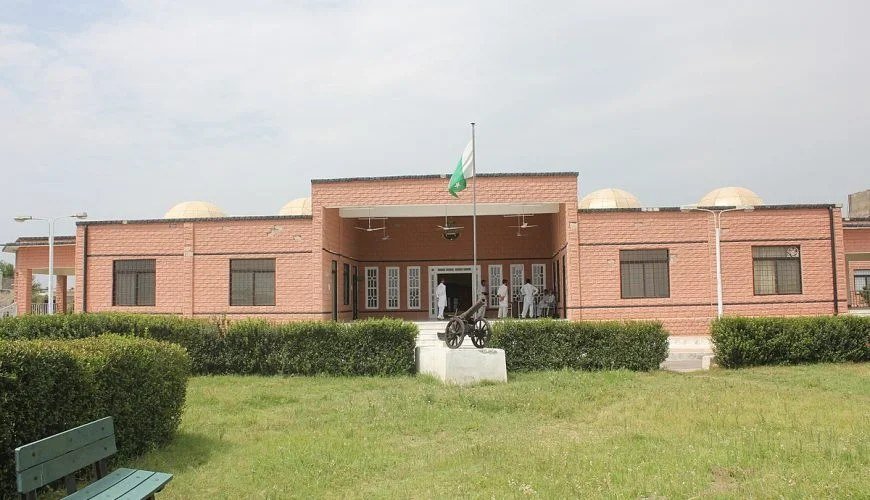
And unlike many ancient sites, Hund is not just mounds and imagination. The Hund Museum, established after excavations that began in 1996, displays the real things pulled from the soil: Indo-Greek and Hindu Shahi coins, jewellery, household articles, and sections of the old city’s boundary walls. A Corinthian column stands beside the museum to commemorate Alexander’s crossing. Across the road, the crumbling walls of Akbar’s 1586 fort still enclose a living hamlet — history with people still in it.
Best of all, Hund is easy. An hour or two from Peshawar or Islamabad, on good roads, with no trekking and no permits — this is the rare archaeological treasure you can visit between breakfast and dinner. For anyone driving the M-1 who has ever wondered what lies beyond the motorway bridge over the Indus, Hund is the answer.
History of Hund
Hund’s ancient name was Udabhandapura — “the city at the river crossing” — and the name tells you everything. Before the Grand Trunk Road was built in the 1580s and before the Attock crossing rose to prominence, the road to India passed through this village. The Indus here was the great barrier between Central Asia and the subcontinent, and whoever held Hund held the gate.
The defining moment came in 327 BC, when Alexander the Great arrived at the Indus. According to the historians of the campaign, one of his generals prepared a bridge of boats, and Alexander crossed here before advancing on Taxila. Local tradition holds that he spent a night in the village — the Corinthian column erected beside the modern museum commemorates that stay. The great chronicler of Gandhara, Dr Ahmad Hasan Dani, described Hund as a crossing where people once traversed the river on clay pots tied together, and wrote that the great invaders — Scythians, Kushans, Mahmud of Ghazni, Shahabuddin Ghauri, Timur, Babur — and the Chinese pilgrims all passed through Hund into India.
In the 7th–9th centuries AD, Hund rose to its greatest political height as the Turk Shahi capital of Gandhara, possibly alternating as a winter capital with Kabul. Then, in the 9th century, it became the third and last capital of the Hindu Shahi dynasty after Charsadda and Peshawar — the centre of what one historian called “the magnificent Gandhara civilisation.” That era ended in the early 11th century, when Mahmud of Ghazni defeated Anandapala, the last Hindu Shahi ruler of Gandhara, and the capital shifted to Nandana in the Salt Range.
The Mongol chapter is the stuff of legend: in 1221, Genghis Khan pursued the Khwarezmian prince Jalaluddin to the banks of the Indus at Hund, where the prince — rather than surrender — spurred his horse into the river and swam to safety on the far side. The Mughals left stone behind them: in 1586 Emperor Akbar built a fort at Hund for military use, its small bricks and stones still visible today. In the early 19th century the village was held by a family of Khans — Khadi Khan, an early supporter of Syed Ahmad Barelvi, was killed in 1829, and Barelvi himself sheltered in the fort during his campaigns against the Sikhs. The British annexed the Punjab in 1849, and Hund settled into the quiet agricultural life it lives today.
Modern archaeology woke the sleeping city. Excavations began in June 1996, inaugurated by Dr A.H. Dani and the provincial culture secretary, and uncovered houses, coins, jewellery and household articles of the Indo-Greek, Kushan, Hindu Shahi and Islamic eras, along with stretches of the city’s boundary walls. In 2002, 33 kanals of land were acquired for the Hund Museum, a rest house and a bypass road were built, and the Alexander monument was put in place. The dig continues to refine our picture of one of Pakistan’s great lost cities.
Top Things to Do in Hund
Explore the Hund Museum
The heart of any visit. The museum’s galleries hold the excavated wealth of Udabhandapura — coins of the Indo-Greek and Hindu Shahi kings, gold and stone jewellery, pottery and household articles, and models explaining the city’s layout. The in-charge and staff are knowledgeable and usually happy to walk visitors through the story; ask about the boundary-wall sections and the Kushan-era building remains. From the museum courtyard you can see the modern Peshawar–Islamabad Motorway bridge crossing the Indus — 2,300 years of river crossings in a single view.
See the Corinthian Column
Standing beside the museum, this classical column was erected to commemorate Alexander the Great’s night at Hund in 327 BC. It is a small monument with an enormous story — the point where the Macedonian world met the Indian world.
Walk the Mughal Fort
Just opposite the museum stand the remains of the fort built under Emperor Akbar in 1586. Time and encroachment have taken their toll — the walls are dilapidated and a hamlet of some 60 households now lives inside the old enclosure — but walking the perimeter, you can still read the military logic of the place: a walled strongpoint guarding the Indus crossing. Syed Ahmad Barelvi took refuge within these walls during his 19th-century wars with the Sikhs.
Stand on the Banks of the Indus
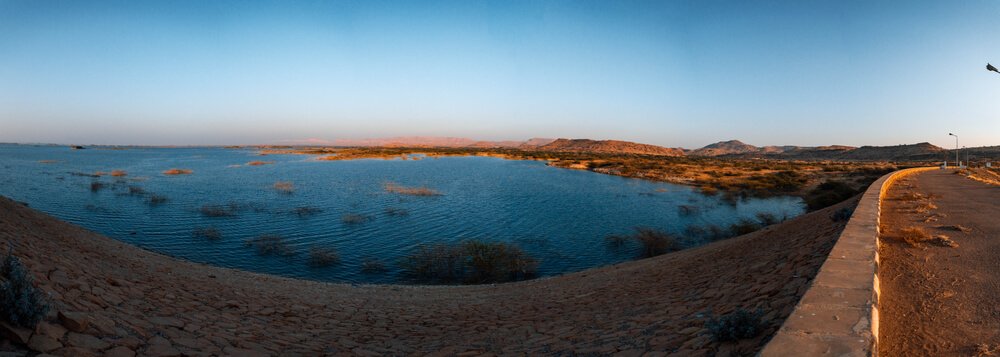
Walk down to the river and look at the water that Alexander bridged, that Jalaluddin leapt into, and that carried the trade of empires. The Indus at Hund is broad and powerful; in winter haze the motorway bridge arcs across it in the distance. It is a place for quiet contemplation — and for photographs.
Trace the Old Crossing Routes
Ask locally about the old fords and ferry points. Before the Attock crossing opened and the Grand Trunk Road bypassed the village, this was the way into India — Dani’s “medieval wail” where pots served as bridges. Local guides can point out where the ancient tracks ran.
Visit Nearby Swabi Archaeological Sites
Swabi district is rich in Buddhist heritage. Combine Hund with Aziz Dheri and Baho Dheri, the excavated Buddhist stupas and monasteries nearby — our Aziz Dheri travel guide and Baho Dheri travel guide cover them in detail. Together with Hund they make Swabi one of the most rewarding heritage day trips in Khyber Pakhtunkhwa.
Famous Places In and Around Hund
- Hund Museum — coins, jewellery and city remains from 2,300 years of history
- Corinthian column — the Alexander memorial beside the museum
- Akbar’s fort (1586) — Mughal military architecture, still inhabited
- The Indus riverbank — the historic crossing point itself
- Attock Fort — 15 km downstream, the great Mughal–Sikh fortress guarding the later crossing (see our Attock Fort travel guide)
- Aziz Dheri & Baho Dheri — Buddhist archaeological sites elsewhere in Swabi
How to Reach Hund
Hund is one of the easiest heritage sites in Pakistan to reach — a smooth day trip from either Peshawar or Islamabad.
- From Islamabad: About 100–120 km via the M-1 Peshawar–Islamabad Motorway — 1.5 to 2 hours. Exit at the Swabi/Ismaila interchange, head toward Jehangira, then follow the Swabi–Jehangira road (signposted) to Hund and its museum.
- From Peshawar: About 80 km east — just over an hour on the M-1 toward Islamabad, exiting the same way.
- From Lahore: Roughly 5–6 hours via the M-2/M-1 motorways; very doable as a long day trip or, better, combined with an overnight in Islamabad or Peshawar.
- From Karachi: Fly to Islamabad or Peshawar (about 2 hours) and drive from there.
- Nearest airport: Islamabad International Airport.
Road conditions by season: Motorway and main roads are excellent year-round. The final approach roads are paved; winter fog on the M-1 (December–January) can slow early-morning driving.
Transport options: Private car is easiest. Public transport: buses and wagons run frequently between Peshawar, Islamabad/Rawalpindi and Swabi/Jehangira; from Jehangira or Swabi, a rickshaw or taxi covers the last stretch to the museum. Tour operators in Peshawar and Islamabad run heritage day trips on request.
Route Details
- Take the M-1 motorway between Islamabad and Peshawar.
- Exit at the Swabi/Ismaila interchange.
- Follow signs toward Jehangira, then take the Swabi–Jehangira road toward Hund — the museum is signposted from the main road.
- Park at the Hund Museum; the fort remains and the riverbank are a short walk away.
For more northern heritage, browse our Explore Pakistan collection.
Where to Stay in Hund
Hund is a day-trip destination — almost nobody needs to sleep here, but options exist if you want to linger.
Museum rest house: A rest house was built near the museum when the site was developed; availability is limited and best arranged in advance through the provincial archaeology and museums directorate or local contacts.
Swabi city: The district capital has a range of modest hotels and guesthouses — clean, inexpensive, and a good base for covering Hund plus Aziz Dheri and Baho Dheri over two days.
Peshawar and Islamabad: Most visitors simply base themselves in either city, where the full range of hotels is available, and drive out for the day. Both are 1–2 hours away.
Where to Eat: Local Foods of Hund
Swabi sits in the heart of Pakhtun food country, and the dhabas around Hund serve it proudly.
What to eat: Chapli kebab — the great flat minced-meat kebab of the Peshawar valley — is the essential order, ideally with fresh tandoori naan. Namkeen gosht (salt-and-pepper mutton or beef), daal fry, saag in winter, and endless cups of doodh patti and green tea. The small shops in Hund village cover snacks and cold drinks; for a full meal, the dhabas on the Swabi–Jehangira road are the local choice.
Costs: Dhaba eating in Swabi is very budget-friendly — a hearty kebab-and-naan meal costs a fraction of city restaurant prices. Carry cash; cards are rarely accepted outside the cities.
Weather in Hund
Hund lies on the hot Peshawar-valley plain — summers are fierce, winters mild with the famous valley fog. Plan around the heat. Temperatures are approximate.
| Season | Temperature Range | Conditions |
|---|---|---|
| Winter (Dec–Feb) | 2°C to 15°C | Cool and pleasant; morning fog common on the motorway |
| Spring (Mar–Apr) | 15°C to 30°C | Green fields; the most comfortable season for walking the site |
| Summer (May–Aug) | 30°C to 42°C | Very hot; visit early morning or late afternoon; monsoon humidity in Jul–Aug |
| Autumn (Sep–Nov) | 15°C to 32°C | Cooling down; harvest season in the surrounding fields |
Language and Culture of Hund
Hund is a Pakhtun village — the founding families were Sadozai Pathans of the Balar Khel section who came with the Yusufzai migration — and Pashto is the language of daily life. Urdu is widely understood, especially around the museum. The culture is conservative and deeply hospitable in the Pakhtun tradition: guests are honoured, and you will likely be offered tea.
Visitors should dress modestly — women should cover arms and legs and carry a scarf — and behave respectfully at the museum and around the old fort, which is a living neighbourhood. Ask before photographing residents. During Ramadan, be discreet about eating and drinking in public during the day.
Shopping in Hund
Hund village has only small general stores — this is not a shopping destination. For souvenirs, head to Swabi’s bazaars, where you will find Pakhtun handicrafts, embroidered shawls, traditional caps and local sweets. Peshawar, an hour away, offers the region’s great bazaars — from the Storytellers’ Bazaar (Qissa Khwani) to modern markets — if you want a serious shopping expedition. There are no malls in or near Hund.
Travel Tips for Hund
Packing Essentials
Sun protection and plenty of water — the site is exposed. Comfortable walking shoes for the museum, fort and riverbank. A hat and sunglasses are essential in summer; a light jacket suffices in winter.
Safety Tips
Hund is a peaceful agricultural village and the museum area is calm. The usual precautions apply: keep valuables out of sight, supervise children near the river (the Indus current is powerful), and drive carefully on the M-1 in winter fog. The fort area is a residential hamlet — walk respectfully and don’t enter private homes uninvited.
Money & Connectivity
Bring cash — there are no ATMs in Hund village (Swabi city has them). Mobile coverage from all major networks is good throughout the area. The museum is a daytime attraction; confirm opening hours locally before a special trip, as timings can vary on public holidays.
Best Time to Visit Hund
Winter (November to February) — Ideal
Cool, clear days perfect for walking the museum, fort and riverbank. Morning fog can delay the motorway drive, so plan a slightly later start.
Spring (March to April) — Lovely
Green wheat fields, mild temperatures, and the site at its prettiest. Arguably the best all-round season.
Autumn (October) — Good
Harvest colours in the fields and comfortable temperatures after the summer heat breaks.
Summer (May to September) — Challenging
The plain bakes. If summer is your only option, visit at opening time, carry lots of water, and combine it with an air-conditioned museum interior break.
Final Thoughts
There is something profoundly moving about standing where Alexander stood, knowing that the river in front of you has been the hinge of history for two millennia. Hund doesn’t shout — it doesn’t need to. Its museum cases of ancient coins, its crumbling Mughal walls, its quiet riverbank all speak in the calm voice of a place that has seen everything and survived it.
Most travellers speed across the Indus on the motorway without a second glance. Take the exit instead. Spend half a day in Udabhandapura, and you’ll drive away with a deeper sense of this land than a week in the usual tourist circuit could give you. That is Hund’s gift: it turns a dot on the map into the centre of the story.
FAQs
Where is Hund located?
Hund is a village on the right bank of the Indus River in Swabi District, Khyber Pakhtunkhwa — about 15 km upstream of Attock Fort and 80 km east of Peshawar.
What is the best time to visit Hund?
November to February and March to April offer the most comfortable weather. Avoid the midday heat of May–August.
How do I reach Hund from Islamabad?
Take the M-1 motorway (1.5–2 hours), exit at Swabi/Ismaila, drive toward Jehangira, then follow the signposted Swabi–Jehangira road to the Hund Museum.
Why is Hund historically important?
Alexander the Great crossed the Indus here in 327 BC; it was the Turk Shahi capital (7th–9th century) and the last Hindu Shahi capital of Gandhara until the early 11th century; Hiuen Tsang, Mahmud of Ghazni, Genghis Khan’s quarry and Babur all passed through.
Is Hund safe for families?
Yes — it is a peaceful village and a standard school-trip destination. Supervise children near the river and dress modestly.
What can I see at the Hund Museum?
Excavated coins, jewellery, pottery and household articles from the Indo-Greek, Kushan, Hindu Shahi and Islamic eras, plus remains of the ancient city’s boundary walls — and the Corinthian column commemorating Alexander.
Where can I stay near Hund?
Most visitors day-trip from Peshawar or Islamabad (1–2 hours). Swabi city has modest hotels; a rest house exists near the museum with limited availability.
What food is the Swabi area known for?
Classic Pakhtun fare — chapli kebab, namkeen gosht, daal fry and doodh patti at roadside dhabas.