Quick Facts
- Location: Attock Khurd, Attock District, Punjab, on the eastern bank of the River Indus, sandwiched between the Grand Trunk Road and the river.
- Altitude: Around 350 metres above sea level, on a rocky spur overlooking the Indus gorge.
- Famous For: A 16th-century Mughal fortress built by Emperor Akbar, the historic crossing of the Indus, and the meeting point of the Kabul and Indus rivers.
- Nearest City: Attock city, a few kilometres to the east; Rawalpindi and Islamabad are about 80 kilometres away.
- Accessibility: Easy by road from Islamabad and Rawalpindi via the N-5 Grand Trunk Road (about 1.5 to 2 hours). The nearest airport is Islamabad International Airport.
- Known Landmarks: Attock Fort, the Old Attock Railway Bridge (1883), Attock Khurd railway station, and the Indus-Kabul river confluence.
- Best For: History lovers, day-trippers from the twin cities, photographers, and travellers tracing the old Grand Trunk Road.
Why Visit Attock Fort
There are few places in Pakistan where geography and history press against each other as tightly as they do at Attock. Stand on the old Grand Trunk Road at Attock Khurd and you are looking at the exact spot where, for two thousand years, every army that marched between Central Asia and the plains of India had to make its crossing. The fort above the river was built for one purpose: to hold that crossing. This Attock Fort travel guide explains what you can actually see, because the fort itself is an active military base and civilians cannot enter it.
That restriction surprises some visitors, but it has not stopped Attock from becoming a rewarding day trip. The experience here is about the setting rather than a walk through courtyards. You read the fortress from the road and the river: the long line of its walls above the gorge, the British-era railway bridge cutting across the Indus, and the dramatic point where the Kabul River’s grey-green water slides into the Indus. It is a landscape that explains empires.
Attock also sits at the centre of a dense cluster of heritage sites, which is why historians and weekend travellers keep coming back. Within a short drive you can stand at the tombs of Mughal nobles at Hasan Abdal, cross the road to the Sikh holy site of Panja Sahib, walk the lanes of Attock Khurd railway station, and push on to the ancient ruins of Taxila. Few day trips from Islamabad pack this much history into so few kilometres.
Finally, the trip is simply easy. The Grand Trunk Road is in good condition, the drive from Islamabad takes under two hours, and the riverside viewpoints need no tickets and no permissions. If you are interested in how Pakistan’s history was made at its frontiers, Attock is where that story starts.
History of Attock Fort
The history of Attock Fort begins long before the fort itself. Attock lies in the historic region of Gandhara, at the one point where the Indus narrows enough to be crossed in the dry season. Armies used this ford for centuries: Alexander the Great, Mahmud of Ghazni, Timur and Babur are all recorded as having crossed the Indus at or near this spot during their invasions of the subcontinent. Controlling Attock meant controlling the gateway between Central Asia and India.
The Mughal emperor Akbar recognised this clearly enough to found the city itself. Construction of the fort began in 1581 and was completed in 1583 under the supervision of Khawaja Shamsuddin Khawafi, one of Akbar’s ministers, with the specific purpose of protecting the passage of the Indus. Sixteenth-century records describe a fortress with a perimeter of about two and a half kilometres, anchored on the left bank of the river, designed to meet the needs of gunpowder-era warfare. A caravan sarai outside the fort, almost on the Grand Trunk Road, was built during the same period to serve travellers on the imperial highway.
After the Mughals, the fort changed hands with every shift in the region’s politics. The Marathas occupied Attock in 1758, a short-lived conquest ended when Ahmad Shah Durrani marched in person to recapture it after destroying the Maratha forces at Panipat. The Sikh Empire under Maharaja Ranjit Singh captured the fortress from the Durrani rulers in 1813, and it played a notable role in the Afghan-Sikh wars, including the Battle of Attock. In February 1849 the British East India Company took Attock Khurd, created Campbellpur District, and after the 1857 uprising established the Campbellpur Cantonment (1857-58), appreciating the site’s strategic value.
The British added the layer of infrastructure visitors see today. Mughal-era armies crossed the river on a bridge of boats in the dry season; the British first attempted to tunnel under the river, failed, and then built the road and rail bridge of 1883, which carried traffic until the late 1970s, when a new bridge was completed near the fort. Since 1947 the fort has remained a military installation of the Pakistan Army, which is why it is out of bounds to visitors, and entry and photography near the gates are not permitted. The fortress still serves the purpose for which Akbar built it: holding the crossing.
Top Things to Do in Attock Fort
Plan your visit around the reality that the fort’s interior is off-limits. Everything below can be done from public roads, viewpoints, and the surrounding heritage sites, and together they make a full day.
Read the Fortress from the Grand Trunk Road
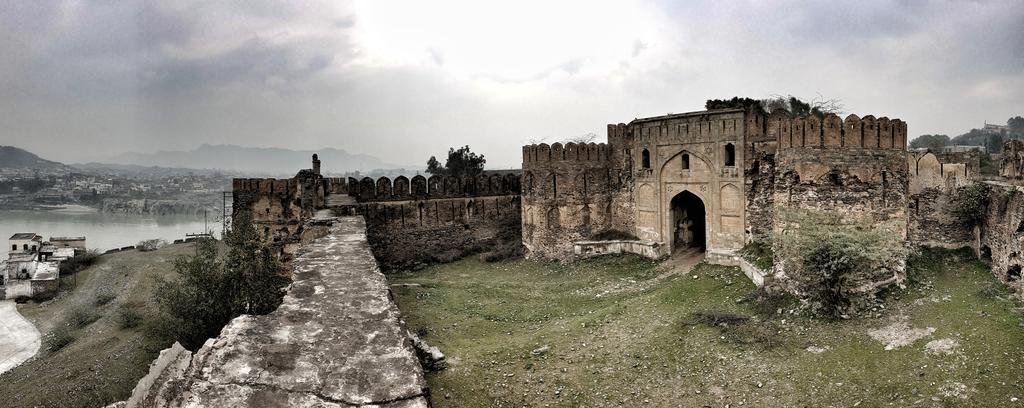
Approaching from Islamabad on the old N-5, the fort announces itself before you arrive: a long, sober line of stone walls and bastions sitting above the river gorge. Pull over safely at the viewpoints near Attock Khurd and trace the walls with your eyes. Notice how the fortress sits on the left bank, exactly where the river bends, and how its towers command both the road and the crossing. Photographers get the best results in the soft light of early morning or late afternoon, when the stone warms and the shadows define the battlements. Do not attempt to enter the gates or photograph military personnel, barriers, or installations.
View the Old Attock Railway Bridge
The 1883 road-and-rail bridge across the Indus is one of the great Victorian engineering works in Pakistan. Stand at the riverbank viewpoints and look across at its iron latticework spanning the gorge. Until the late 1970s, when the new bridge near the fort took over, this bridge carried the main line between Punjab and Peshawar. The contrast between the 16th-century fort on the cliff and the 19th-century bridge below it is the single most striking image of Attock, and it is best appreciated slowly, from the riverside.
Watch the Kabul River Meet the Indus
Just below the fort, the Kabul River joins the Indus, and the two waters run side by side for a stretch before they mix. The Kabul’s water carries a different colour and load of silt than the Indus, so on a clear day you can see the line where they meet. Local boatmen and riverside tea stalls know the best vantage points. This confluence is the geographic reason the fort exists at all: the crossing is narrowest right here, which is why every invader and every emperor stopped at this point.
Explore Attock Khurd and Its Railway Station
Attock Khurd, the old settlement below the fort, is a small town with a large railway past. The Attock Khurd railway station sits on the Karachi-Peshawar main line, and the area around it keeps the atmosphere of a frontier rail junction. Walk the bazaar lanes, look at the old station building, and you will find the pace of life noticeably slower than in Attock city a few kilometres east. History enthusiasts sometimes pair this with a look at Khairabad Kund station nearby.
Spend Time by the Indus
The riverbanks near the bridges are popular with families for picnics on weekends and public holidays. Bring your own food and drinking water, keep a safe distance from the current, and take your rubbish back with you. The Indus here is wide, fast, and genuinely dangerous for swimming, so treat it as a place to look at and sit beside, not to swim in.
Walk the Old City Bazaar
Attock city’s main bazaar gives you the everyday life that the fort’s history made possible. The market is a typical Punjab frontier-town bazaar: cloth merchants, spice sellers, dried-fruit shops, and tea houses. It is a good place to buy local dried fruit and to eat at a roadside dhaba before heading back.
Famous Places In and Around Attock Fort
Hakim’s Tomb, Hasan Abdal: The 16th-century octagonal tomb of two Mughal court physicians, built under the same supervisor as Attock Fort, Khawaja Shamsuddin Khawafi.
Tomb of Lala Rukh, Hasan Abdal: A Mughal-era tomb in the same complex, traditionally linked to a princess of the Mughal household.
Gurdwara Panja Sahib, Hasan Abdal: One of the holiest sites in Sikhism, directly across the road from the tombs.
Behram ki Baradari and Begum ki Sarai: Mughal-era pavilion and caravan sarai near Attock Khurd, part of the same Grand Trunk Road heritage.
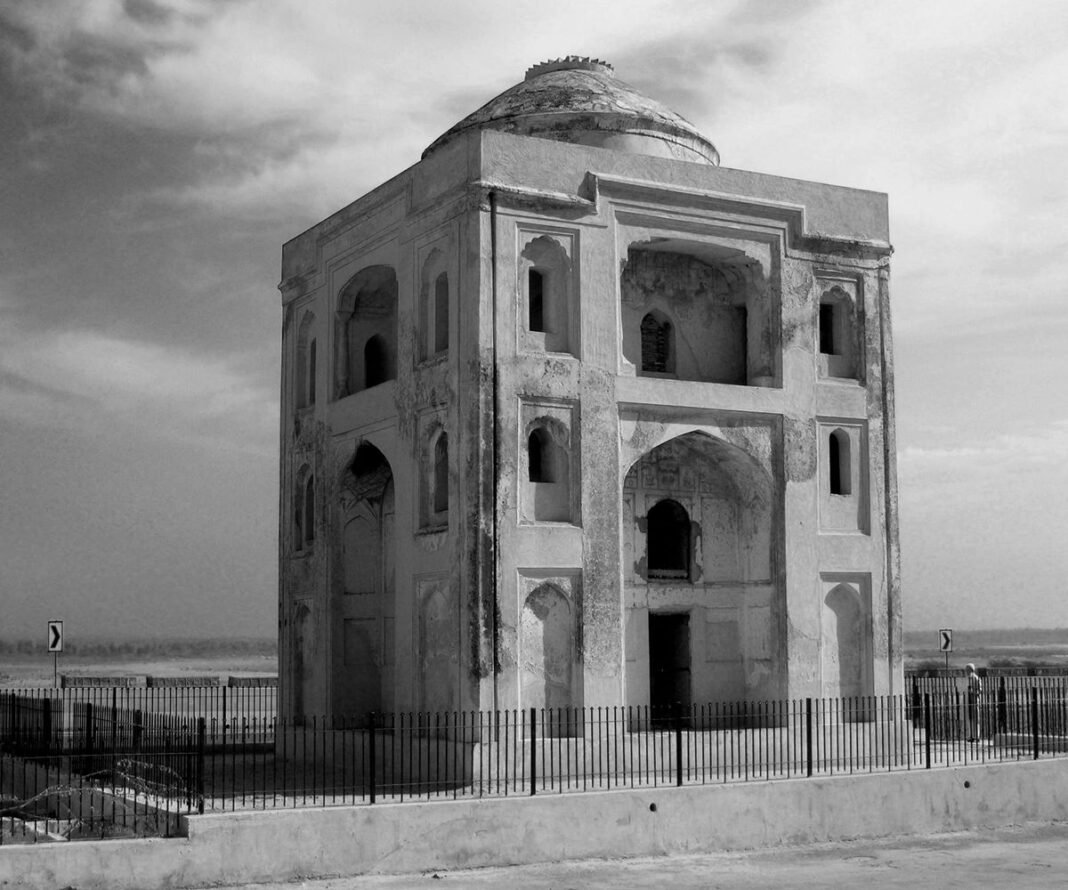
The Attock Tomb (“Kanjri ka Maqbara”): A mysterious Mughal-era tomb right beside the GT Road about a kilometre before the Indus bridge.
Taxila: The UNESCO World Heritage archaeological site, roughly an hour’s drive east, with Gandharan stupas and museums.
How to Reach Attock Fort
Reaching Attock is straightforward. The fort and the Attock Khurd viewpoints lie right on the N-5 Grand Trunk Road, about 80 kilometres from Islamabad, so almost every visitor arrives by road.
From Islamabad
The drive is about 80 to 90 kilometres and takes 1.5 to 2 hours depending on traffic out of the twin cities. Take the Grand Trunk Road (N-5) west through Tarnol, Taxila, Wah and Hasan Abdal, and continue to Khairabad and Attock Khurd. The road is a good dual and single carriageway mix, driveable year-round. This is the easiest version of the trip and the one most travellers choose.
From Lahore
The distance is roughly 420 to 450 kilometres depending on the route, about 6 to 7 hours of driving. The practical route is the M2 motorway to Islamabad/Rawalpindi and then the Grand Trunk Road west to Attock. It makes a long but comfortable day trip if you start early, and a relaxed overnight trip if you add Taxila and Hasan Abdal.
From Karachi
At around 1,450 kilometres by road, driving from Karachi is a two-day journey and only makes sense as part of a longer northern Pakistan itinerary. The sensible option is to fly to Islamabad and drive the remaining 80 kilometres, which puts you at the fort about two hours after landing.
Nearest Airport
Islamabad International Airport is the nearest airport, roughly 90 kilometres from Attock Khurd. Taxis and ride-hailing cars are available at the airport; agree on the fare or use the metered/app rate before leaving.
By Train and Public Transport
Attock City Junction and Attock Khurd station both sit on the Karachi-Peshawar main line, with regular services from Rawalpindi taking under two hours. From Rawalpindi’s bus and van stands there are frequent coasters and wagons to Attock city and onward to Attock Khurd. For a day trip with a family, a private car or a hired van with a driver is the most comfortable option.
Route Details
The classic route from Islamabad runs: Zero Point or Faizabad interchange, onto the Grand Trunk Road at Tarnol, past the Taxila museum turnoff, through Wah Cantt, into Hasan Abdal (stop for the tombs and Panja Sahib if you wish), on through Khairabad, and into Attock Khurd. The fort walls appear on your right as the road runs parallel to the Indus. The road is in decent condition in all seasons, but during the July-August monsoon the riverbanks can be slippery and the viewpoints muddy, so wear proper shoes and keep children back from the edge.
Where to Stay in Attock Fort
Most visitors do Attock as a day trip from Islamabad or Rawalpindi, which is honestly the best arrangement: the drive is short, the sights are all outdoors, and the twin cities have the widest choice of hotels. If you want to stay over, Attock city has a reasonable range of mid-range hotels and guesthouses clustered near the cantonment and the main bazaar, aimed at business travellers and visiting families. They are simple, clean, and budget-friendly by twin-city standards.
Travellers who want more comfort should base themselves in Rawalpindi or Islamabad, where everything from luxury five-star hotels to serviced apartments is available, and leave early to cover Attock, Hasan Abdal and Taxila in one unhurried day. Camping is not advisable at the river viewpoints themselves; there are no facilities, and the area near a military installation and a fast river is not the place for it.
Where to Eat: Local Foods of Attock Fort
The food around Attock is classic frontier-Punjab cooking: hearty, meat-forward, and built for travellers on the Grand Trunk Road. The Chach plain around Attock is known for katwa gosht, mutton slow-cooked in a clay pot until it falls off the bone, a dish you will find at better dhabas in the area. The GT Road dhabas between Hasan Abdal and Attock Khurd do the staples well: chicken karahi, dal fry, mixed sabzi, and tandoori naan pulled fresh from the clay oven. Breakfast is the local favourite meal of the day: halwa puri, paye, and doodh patti at the old tea houses.
River fish appears on menus in season, and the roadside stalls sell roasted corn, sugarcane juice and fresh guavas depending on the month. A filling dhaba meal for one person is budget-friendly, typically a few hundred rupees, while a family dinner at a mid-range restaurant in Attock city costs modestly more. Drink bottled water, eat at busy stalls where the turnover is high, and carry snacks and water for the riverside viewpoints, where there are only basic tea stalls.
Weather in Attock Fort
Attock sits on the hot Punjab plain at the edge of the Potohar plateau. Summers are genuinely hot, winters are cool and pleasant, and the monsoon brings heavy rain in July and August. Snowfall is effectively unknown here. The table below gives approximate seasonal ranges so you can plan what to wear for this Attock Fort travel guide.
| Season | Temperature Range | Conditions |
|---|---|---|
| Winter (Dec-Feb) | 5 to 15°C | Cool, dry and sunny; the most comfortable season for sightseeing. Mornings can be foggy in January. |
| Spring (Mar-Apr) | 15 to 30°C | Pleasant and green; occasional rain and dust storms. Excellent for outdoor exploration. |
| Summer (May-Jun) | 30 to 42°C | Very hot, especially June when highs cross 40°C. Plan visits for early morning or late evening. |
| Monsoon/Autumn (Jul-Nov) | 20 to 35°C | Heavy rain in July-August; the river runs high. October-November turn dry, clear and comfortable again. |
Language and Culture of Attock Fort
The everyday language of the Attock area is Punjabi, in the local Chachi dialect of the Chach plain, with Hindko spoken widely and Pashto common near the Khyber Pakhtunkhwa border. Urdu is understood everywhere, so visitors from other parts of Pakistan will have no trouble communicating. The culture is that of a conservative frontier town: people are hospitable but reserved with strangers, and visitors are expected to dress modestly. Women travellers will be most comfortable in shalwar kameez with a dupatta.
Two points of etiquette matter especially here. First, Attock Fort is an active Pakistan Army installation: do not approach the gates, do not photograph military personnel, barriers or installations, and obey any signage. Second, the riverside is a working landscape of fishermen and farmers, so ask before photographing people. Friday afternoons are quiet, as many shops close for prayers; plan bazaar visits around that.
Shopping in Attock Fort
Shopping here means the old bazaar, not malls. Attock city’s main market is the place for everyday Punjabi bazaar goods: dried fruits and nuts, local spices, cotton and khaddar cloth, and simple embroidered items. The dried-fruit sellers are particularly good value, and the spice shops sell the masalas used in the region’s cooking. There is no verifiable shopping mall at the destination itself; the twin cities’ malls are about 80 kilometres away if you need them. Bargaining politely is expected in the bazaar, and cash is the norm.
Travel Tips for Attock Fort
Packing Essentials
Carry sun protection in every season: a cap, sunglasses and sunscreen, because the riverside viewpoints have almost no shade. Bring drinking water and snacks, comfortable walking shoes for the uneven riverbank, and a light jacket from November to February for cool mornings. A pair of binoculars is genuinely useful here for reading the fort’s walls and watching river birds.
Safety Tips
The Indus at Attock is fast and deep; never swim in it and keep children well back from the bank, especially during and after the monsoon when the water is high. Stay on public roads and marked viewpoints, respect all military signage, and avoid stopping on the bridge itself. The area is generally safe for day visitors, but as everywhere in Pakistan, keep valuables out of sight and travel in daylight.
Money & Connectivity
ATMs are available in Attock city but not at the riverside viewpoints, so carry enough cash for food, fuel and small purchases. Mobile signals from the major networks are generally good along the Grand Trunk Road and in Attock city, though data speeds can dip right at the river gorge. Download offline maps before you leave Islamabad.
Best Time to Visit Attock Fort
October to March: The Ideal Season
This is the best time to visit Attock Fort. Temperatures sit between 5 and 25°C, the skies are clear, the river is at a photogenic level, and you can comfortably spend hours at the viewpoints and the surrounding heritage sites. December and January mornings can be foggy, which delays the views but burns off by mid-morning.
April and November: Shoulder Months
Both months are pleasant, with warm days and cool evenings. Crowds are thin, dhaba prices are at their normal level, and the light is excellent for photography. April can bring the odd dust storm, so check the forecast.
May to September: Hot and Wet
Summer heat makes midday sightseeing uncomfortable, and the July-August monsoon swells the Indus and turns the riverbanks muddy. If you must come in summer, arrive by 8 am, finish the outdoor stops by noon, and spend the hot hours in Hasan Abdal’s covered sites or back in the car.
Final Thoughts
Attock Fort rewards the traveller who understands what it is: not a museum you walk through, but a strategic idea made of stone, sitting exactly where geography demanded it. The fact that you cannot go inside is almost beside the point. From the road and the riverbank you can read the whole story, the Mughal walls above, the Victorian bridge below, the two rivers meeting, and the Grand Trunk Road running past it all like a spine through history.
Pair it with the tombs at Hasan Abdal and, if you have the day, the ruins of Taxila, and you will have traced two thousand years of the subcontinent’s history in a single drive from Islamabad. For more ideas in the region, browse the Explore Pakistan section, and if the hills are calling instead, our Malam Jabba guide and Hunza Valley guide cover very different sides of the country.
FAQs
Where is Attock Fort located?
At Attock Khurd in Attock District, Punjab, on the eastern bank of the Indus, about 80 kilometres west of Islamabad on the Grand Trunk Road.
Can tourists go inside Attock Fort?
No. It is an active Pakistan Army installation and civilians are not permitted inside. Visitors view the walls from the road and riverbank viewpoints.
When was Attock Fort built?
Between 1581 and 1583, during the reign of the Mughal emperor Akbar, under the supervision of Khawaja Shamsuddin Khawafi.
What is the best time to visit Attock Fort?
October to March, when the weather is cool and dry. Avoid the May-June heat and the July-August monsoon if you can.
How do I reach Attock Fort from Islamabad?
Drive the N-5 Grand Trunk Road west for about 80 to 90 kilometres (1.5 to 2 hours) through Taxila and Hasan Abdal to Attock Khurd. Trains and coasters also run from Rawalpindi.
Is Attock Fort safe for families?
Yes, as a day trip. Stick to public viewpoints, keep children away from the riverbank edge, carry water, and respect military signage.
Where can I stay near Attock Fort?
Most visitors stay in Islamabad or Rawalpindi and do it as a day trip. Attock city has simple, budget-friendly mid-range hotels and guesthouses.
What food is Attock famous for?
The Chach plain’s katwa gosht (clay-pot mutton), GT Road dhaba staples like chicken karahi and dal fry, and hearty Punjabi breakfasts of halwa puri and paye.