Quick Facts
- Location: Misgar Valley, near Sost, Hunza District, Gilgit-Baltistan, Pakistan (note: despite the name, this fort is not in Kalam Valley, Swat — see below)
- Famous For: A British-built frontier fort (1932–33) guarding the historic Kilik, Mintaka, and Wakhan passes; one of the highest British-era forts in Pakistan
- Nearest City: Sost, the last town on the Karakoram Highway before the Khunjerab Pass, about an hour away by jeep
- Accessibility: Unmetalled Misgar road off the Karakoram Highway; reachable by 4×4 in the summer season. Open to the public daily, 9 am to 5 pm
- Known Landmarks: The fort itself; the three-valley junction of Kilik, Mintaka, and Dlesung; Misgar village
- Best For: History lovers, Great Game enthusiasts, photographers, and travellers on the Hunza–Khunjerab route
Why Visit Kalam Darchi Fort
First, an important clarification, because the name confuses almost everyone: Kalam Darchi Fort is not in Kalam Valley. It stands hundreds of kilometres away, high in the Misgar Valley of upper Hunza, near the last Pakistani town before the Chinese border. The fort is named after a local saint, Kalam Darchi — and once you know that, the mystery dissolves. What remains is one of the most atmospheric frontier forts in Pakistan, and one of the least visited.
Built by British soldiers in 1932–33, the fort sits at the junction of three valleys — Kilik, Mintaka, and Dlesung — the very passes through which invaders, traders, and spies have moved between Central Asia, China, and the subcontinent for centuries. Standing on its ramparts, you are looking at the same corridors the British Empire watched with such nervous intensity during the final act of the Great Game. Few places in Pakistan let you feel that history so directly.
The fort has recently been restored by the Pakistan Army and opened to tourists, with a museum conversion underway — which makes this the perfect moment to visit. It is no longer a closed military post glimpsed from a distance; it is a heritage site you can walk through, photograph, and learn from. And because it sits off the main Karakoram Highway tourist trail, you will likely have its stone walls and mountain views largely to yourself.
For anyone driving the legendary highway to Khunjerab, this is the detour that turns a road trip into an expedition. The hour-long jeep ride up the Misgar Valley, the village at the road’s end, and the fort itself — restored, silent, and watchful — add a whole chapter of frontier history to your Hunza journey. If you care about the stories behind the stones, Kalam Darchi Fort deserves a day of your trip.
History of Kalam Darchi Fort
The fort’s story begins with imperial anxiety. In the early 1930s, British India was still haunted by the Great Game — the long strategic rivalry with Russia — and the remote valleys north of Hunza were a genuine concern. The Kilik and Mintaka passes led into Chinese Turkestan (Xinjiang), while the Dlesung valley connected to the Wakhan Corridor of Afghanistan. Through these high passes could come traders, pilgrims, refugees — or, in British nightmares, agents and armies.
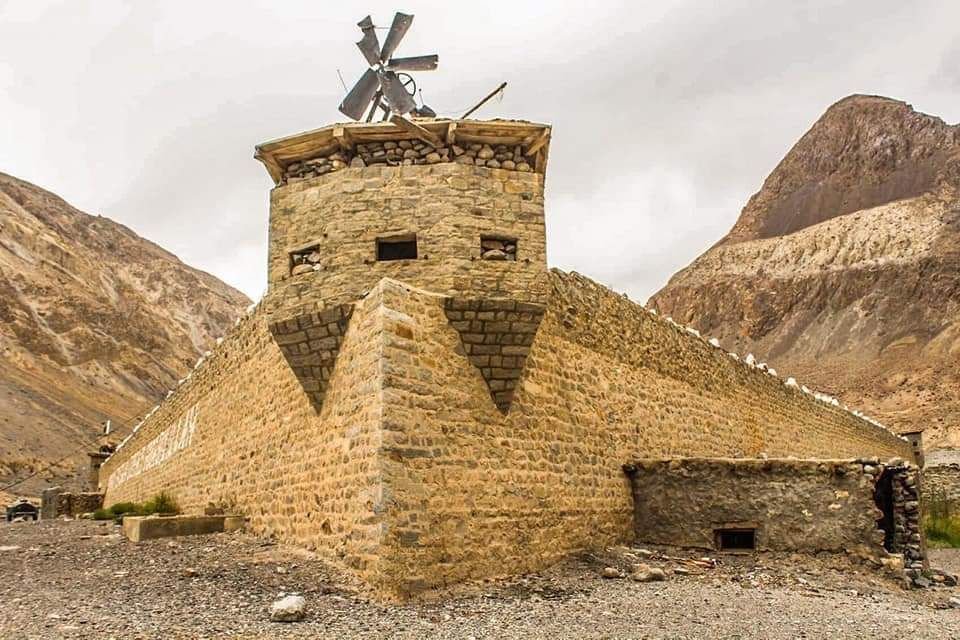
To keep watch on this movement, British soldiers built Kalam Darchi Fort in 1932–33, naming it after a revered local saint remembered as a “naked saint” (Kalam Darchi). Its placement was deliberately strategic: from its position it commands the junction of the Kilik, Mintaka, and Dlesung valleys, the three corridors that matter. It was never a palace or a town — it was a working military post, built for surveillance and control at the edge of empire.
After 1947, the fort passed into Pakistani hands and remained a military abode through successive eras: it housed the Gilgit Scouts, then the Northern Light Infantry (NLI), and then the Pakistan Army. At one point it served as a training school for the Pakistan Army. The army restored and maintained the structure on various occasions over the decades, keeping it standing when many frontier posts crumbled.
In recent years the fort has entered a new chapter. The Pakistan Army has restored it toward its original British-era shape, and since 2024 it has been open to all tourists — Pakistani and international — from 9 am to 5 pm daily, with no special permission required. Renovation work to convert parts of the fort into a museum has been underway, turning a once-closed military post into a public heritage site. Visitors today see a fort that has been continuously occupied and maintained for over ninety years — a rare continuity in the story of the northern frontier.
Top Things to Do in Kalam Darchi Fort
Tour the Restored Fort
Walk the fort’s rooms, ramparts, and courtyards, restored to their British-era appearance. Look for the thick stone walls, the small barrack rooms, and the vantage points from which soldiers watched the three valleys. With the museum conversion in progress, ask the caretakers what new exhibits have opened — the collection is expected to cover the fort’s military history and the wider story of the frontier.
Stand at the Three-Valley Junction
The fort’s whole reason for existing is its view. From the ramparts you can orient yourself to the Kilik and Mintaka valleys running toward China and the Dlesung valley toward the Wakhan Corridor of Afghanistan. Bring binoculars if you have them; on a clear day the scale of this frontier geography is breathtaking.
Explore Misgar Village
The fort is reached through Misgar, a Wakhi-speaking village at the end of the jeep road. Walk its lanes, see the traditional stone-and-timber houses, and talk to villagers — the people of Misgar are the living context of the fort’s story, descendants of the communities the British were watching so closely. Buy dried apricots or a hand-knitted cap directly from a household if offered.
Photograph the Frontier
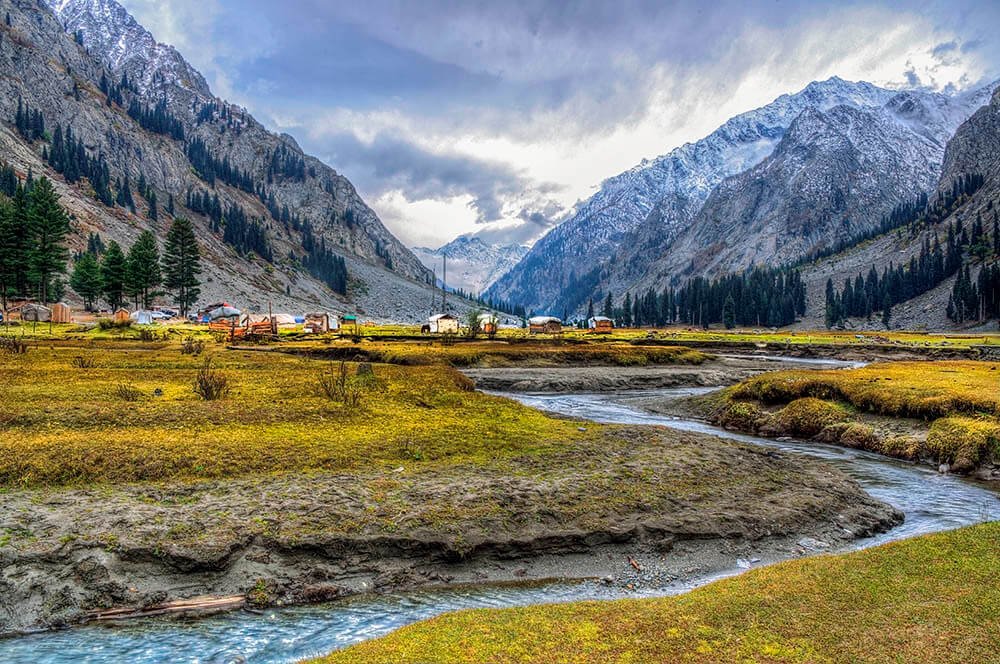
The fort against the barren, glacier-hung peaks of upper Hunza is superb photographic material, especially in the golden light of late afternoon. The unmetalled road, the stone watchtowers, and the vast empty valleys all carry the visual language of the Great Game.
Combine With the Khunjerab Journey
Almost every visitor pairs the fort with the Karakoram Highway’s greatest hits: Sost’s dry port, the Khunjerab Pass (the highest paved border crossing in the world), and the villages of Gojal. The fort detour adds a full day of history to what is otherwise a scenery drive.
Famous Places In and Around Kalam Darchi Fort
- Sost (approx. 1 hour by jeep): The last town before Khunjerab, with its famous dry port and border bazaar.
- Khunjerab Pass: The Pakistan–China border crossing on the Karakoram Highway, surrounded by Khunjerab National Park.
- Misgar Village: The Wakhi village at the fort’s doorstep, worth an unhurried walk.
- Gojal Valley: Upper Hunza’s stunning valley of lakes and glaciers — see our Gojal (Upper Hunza) travel guide.
- Attabad Lake & Passu: The turquoise lake and the serrated Passu Cones, a few hours down the highway.
How to Reach Kalam Darchi Fort
Reaching the fort is an expedition in itself — and that is part of the reward. The fort lies off the Karakoram Highway (KKH) near Sost. From Sost, the unmetalled Misgar road branches off the highway and climbs to Misgar village and the fort; the drive takes about an hour each way and requires a 4×4 jeep, which can be hired in Sost.
The long approach runs along the Karakoram Highway. From Islamabad, the road journey to Gilgit is approximately 500–560 km (12–14 hours by public transport or private car, with the usual mountain-road caveats), and Gilgit to Sost is roughly another 190 km (4–5 hours). From Karachi, the realistic route is to fly to Islamabad or Gilgit and continue by road — the full road distance from Karachi exceeds 1,600 km. The nearest airport with scheduled flights is Gilgit (weather-dependent PIA flights from Islamabad); Skardu is a further alternative.
Road conditions: the Karakoram Highway is paved but narrow and landslide-prone in places; the Misgar road is unmetalled and rough — do not attempt it in a normal car. The route is seasonal: the high passes and the Misgar road are generally accessible from late May to October. In winter, heavy snow closes the upper valleys.
Transport options: private car or hired 4×4 with a local driver is the practical choice. NATCO and private coach services run the long Islamabad–Gilgit–Sost route for budget travellers; from Sost, hire a local jeep for the fort.
Route Details
- Islamabad → Gilgit: Take the Karakoram Highway (N-35) via Mansehra, Besham, and Chilas — approximately 500–560 km. Break the journey overnight in Besham or Chilas if driving yourself.
- Gilgit → Sost: Continue north on the KKH through Hunza (Karimabad, Gulmit, Passu) to Sost — roughly 190 km, 4–5 hours.
- Sost → Kalam Darchi Fort: Hire a 4×4 jeep in Sost for the Misgar road. The unmetalled track takes about an hour to the fort. The fort is open 9 am to 5 pm daily; no prior permission is needed.
- Return: Most visitors return to Sost the same day, or continue to Khunjerab Pass (note the pass has its own seasonal and border-timing rules — check locally).
Where to Stay in Kalam Darchi Fort
There is no accommodation at the fort itself — you stay in Sost or further down the Hunza Valley and visit as a day trip.
Sost (nearest base): Sost has a cluster of basic hotels and guesthouses catering to Khunjerab-bound travellers. They are simple but serviceable, and staying here puts you an hour from the fort at dawn — the best light for photography.
Gulmit and Passu (mid-range): A couple of hours down the highway, these Gojal villages offer better mid-range hotels and guesthouses with mountain views, hot water, and warmer hospitality infrastructure. Many travellers base themselves here for both the fort and Khunjerab.
Karimabad (comfort): Central Hunza’s main tourist town has the widest range of hotels, from comfortable mid-range to the area’s best rooms — but it is a full day’s drive from the fort, so plan accordingly.
Camping: There are no formal campsites at the fort. Camping in the Misgar Valley is possible only with local guidance and permission — the area is a sensitive border zone, so check with locals and authorities first.
Where to Eat: Local Foods of Kalam Darchi Fort
You eat Hunza food on this trip, and that is a pleasure in itself. The valleys around the fort are Wakhi country, and the cuisine is the hearty mountain food of upper Hunza.
Look for chapshuro — the famous Hunza meat pie, minced beef or yak folded into wholewheat dough and baked — and dawdo, a warming hand-pulled noodle soup that tastes like it was invented for cold frontier evenings. Golee (a wholewheat pancake served with apricot oil) and buckwheat dishes appear in village homes. Sea buckthorn juice, made from the bright orange berries that grow wild in the valleys, is tart, vitamin-rich, and worth trying. Dried apricots, apricot oil, and walnuts are the classic Hunza dry fruits — buy them in Sost or Misgar.
At the fort itself there are no restaurants, so eat in Sost before you go or carry packed food and water. Meals in Sost’s hotels and dhabas are simple and budget-friendly; a filling lunch of chapshuro, soup, and salty or sweet chai costs very little by city standards. Carry snacks and at least a litre of water per person for the fort visit.
Weather in Kalam Darchi Fort
The fort stands in a high, arid mountain valley, and the weather is classic Karakoram: intense sun, thin cold air, and winters that shut the region down. The site is only practically visitable in the warmer months. Approximate conditions:
| Season | Temperature Range (approx.) | Conditions |
|---|---|---|
| Winter (Dec–Feb) | -15 to -5°C | Deep snow; the Misgar road is impassable. The fort is effectively closed to visitors. |
| Spring (Mar–May) | -2 to 12°C | Snow melting; the road usually reopens in late May. Apricot blossom in the lower valleys in April. |
| Summer (Jun–Aug) | 10 to 22°C | The visiting season: clear skies, open roads, long daylight. Carry sun protection — UV is fierce at altitude. |
| Autumn (Sep–Nov) | 0 to 15°C | Golden poplars and crisp air; a beautiful shoulder season until snow returns in November. |
Language and Culture of Kalam Darchi Fort
Misgar and the surrounding valleys are Wakhi-speaking — Wakhi is an Eastern Iranian language spoken across the Pamir region, in upper Hunza, and across the borders in Afghanistan, Tajikistan, and China. Urdu is widely understood as the lingua franca, and many locals involved in tourism speak some English.
The people of Hunza are predominantly Ismaili Muslims, followers of the Aga Khan, and the region is famous across Pakistan for its emphasis on education — including girls’ education — and its peaceful, welcoming character. Visitors are expected to dress modestly (cover shoulders and knees; women may want a light scarf, though head-covering is not strictly required in Hunza), to ask before photographing people, and to respect prayer times and religious spaces.
One special note: this is a sensitive border area with an active military presence. Follow any instructions from security personnel, do not photograph military installations or personnel, and stay on the established routes around the fort. The fort itself is open to tourists, but the wider border zone is not a place to wander freely.
Shopping in Kalam Darchi Fort
There are no shops at the fort, but Sost and the Hunza Valley offer some of the best souvenir shopping in northern Pakistan.
In Sost’s bazaar, the dry port trade brings Chinese goods — thermals, electronics accessories, and winter gear at good prices. For authentic local crafts, look in village shops and hotel gift corners for dried apricots, apricot oil, and walnuts; hand-knitted Wakhi caps and socks; pashmina and wool shawls; and gemstones (Hunza rubies and aquamarine are famous, but buy only from reputable dealers and expect real-stone prices).
Sea buckthorn products — juice, oil, and jam — are a distinctive upper-Hunza souvenir. Do not expect shopping malls anywhere on this route; the “mall” here is a row of corrugated-iron shops in Sost, and that is exactly as it should be.
Travel Tips for Kalam Darchi Fort
Packing Essentials
Warm layers even in summer (mornings and evenings are cold at this altitude), a windproof jacket, sun hat, sunglasses, and strong sunscreen, sturdy walking shoes, a water bottle, snacks, a power bank, and binoculars for the valley views. Carry your CNIC or passport — you will pass checkpoints on the Karakoram Highway.
Safety Tips
The area is peaceful and the people famously hospitable, but this is a high-altitude border zone: acclimatise, stay hydrated, and do not stray from established tracks. Landslides can block the KKH — build a buffer day into your itinerary. At the fort, follow the caretakers’ guidance and respect any restricted areas.
Money & Connectivity
Carry cash — there are limited ATMs beyond Gilgit and cards are rarely accepted. Mobile signals are patchy in the Misgar Valley; SCOM works best in Gilgit-Baltistan, with Jazz and Telenor usable in Sost and larger towns. Download offline maps before you leave Gilgit.
Best Time to Visit Kalam Darchi Fort
Summer (June to August) — Best
Open roads, the fort accessible daily 9 am–5 pm, and the Misgar Valley at its greenest. This is when to plan the trip. Book Sost accommodation ahead in July–August, the peak Khunjerab season.
Autumn (September to October) — Excellent
Fewer travellers, golden autumn colours sweeping the Hunza Valley, and usually still-open roads. Early October can be magical — but watch the weather; the first heavy snow can close the upper road with little warning.
Spring (Late May) — Possible
The road typically reopens in late May. Early-season travel means empty viewpoints but also the risk of late snow and landslides on the KKH. Confirm road status in Sost before committing.
Winter (November to April) — Not feasible
Heavy snow closes the Misgar road and the Khunjerab route. The fort is not visitable in winter.
Final Thoughts
Kalam Darchi Fort is the kind of place that rewards the traveller who reads the map carefully. Yes, the name will confuse your friends — no, it is not in Kalam, and explaining that over chai in Sost is half the fun. What you get in return is a genuine frontier fort, built by an empire that feared what might come through the passes, held by the soldiers of three eras since, and now — finally — open for you to walk through.
Pair it with Khunjerab, give Misgar village an unhurried hour, and stand on the ramparts looking into the Kilik, Mintaka, and Dlesung valleys. You will be standing where the Great Game was played for real. For more northern history, read our guides to Baltit Fort and Hunza Valley, and browse the full Explore Pakistan series for your next journey north.
FAQs
Where is Kalam Darchi Fort?
It is in the Misgar Valley near Sost, in Hunza District, Gilgit-Baltistan — close to the Khunjerab Pass and the Chinese border. Despite its name, it is NOT in Kalam Valley, Swat; it is named after the saint Kalam Darchi.
When was Kalam Darchi Fort built?
British soldiers built it in 1932–33 to monitor movement through the Kilik, Mintaka, and Wakhan-corridor passes during the final years of the Great Game.
Is Kalam Darchi Fort open to tourists?
Yes. Restored by the Pakistan Army, it has been open to all tourists (Pakistani and international) daily from 9 am to 5 pm since 2024, with no special permission required. A museum conversion has been in progress.
How do I reach Kalam Darchi Fort?
Drive the Karakoram Highway to Sost (about 190 km beyond Gilgit), then hire a 4×4 jeep for the unmetalled Misgar road — about an hour each way. The route is open roughly late May to October.
What is the best time to visit Kalam Darchi Fort?
June to August is the safest bet for open roads and full access; September–October offers golden autumn colours. Winter (November–April) is not feasible due to snow.
Is it safe to visit Kalam Darchi Fort?
The area is peaceful and locals are famously hospitable, but it is a sensitive high-altitude border zone. Carry ID, follow security instructions, do not photograph military installations, and stay on established routes.
Is it suitable for families?
Yes, for families comfortable with mountain travel. The jeep ride is bumpy but short, and the fort itself is an easy walk. It is not suitable for very young children or anyone with mobility issues, given the rough road.
Where can I stay near Kalam Darchi Fort?
Stay in Sost (about an hour away, basic hotels) or in Gulmit/Passu (better mid-range options, 2–3 hours away). There is no accommodation at the fort itself.