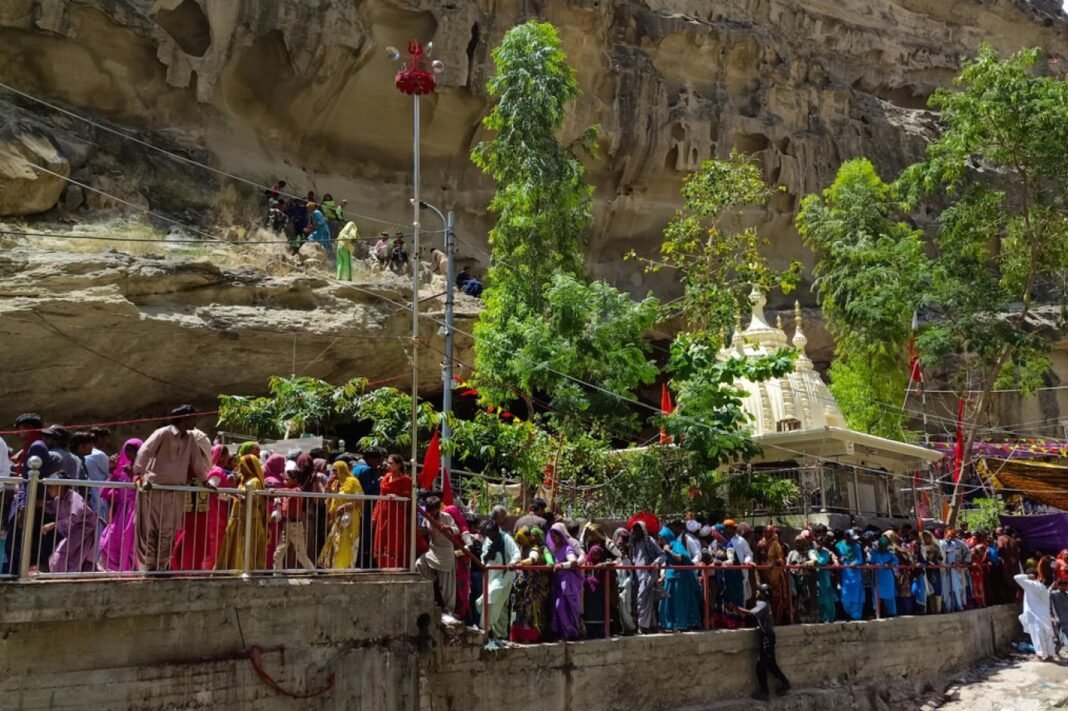
Inside a natural cave in the limestone hills of Rohri, a short drive from the ruins of ancient Aror, burns a flame that has drawn pilgrims for centuries. Also, the Kalka Devi Cave Temple — the Asthan of Kalka Devi — is considered one of the holiest Hindu temples in Pakistan, and one of the most remarkable for a reason no brochure could invent: most of its devotees are not Hindu at all. In fact, Muslims form the majority of visitors here, making this cave shrine a living symbol of Sindh’s centuries-old tradition of shared sacred space.
This Kalka Devi Cave Temple travel guide will help you plan a visit to a place where legend, history, and harmony meet underground.
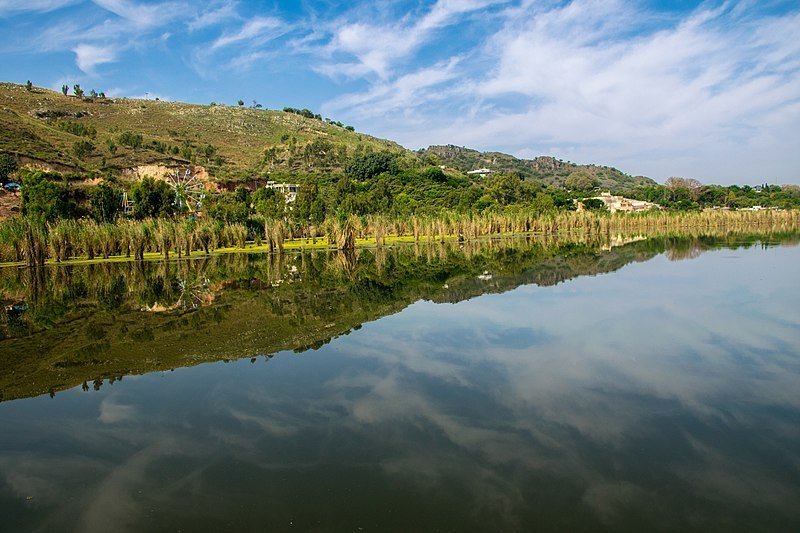
The setting alone is worth the journey. Also, the Kalka hills rise from the plains near Sukkur in strange, weathered formations. In fact, the temple nestles in a cave barely five to six feet high at its entrance, thick with the scent of incense, where the priest sits beside the idol of the goddess with her dagger and symbols of power. In addition, around the cave, rooms built over generations house pilgrims who arrive in the thousands at festival times. Come for the darshan, stay for the story of Raja Dahir, the tunnels to Hinglaj. The ruined capital of Aror waiting nearby.
Quick Facts
- Location: Inside a natural cave in the Kalka hills, Rohri — near the ruins of ancient Aror, Sukkur District, Sindh, Pakistan
- Famous For: One of the holiest Hindu temples in Pakistan; the legend of Goddess Kalka Devi’s appearance during her Hinglaj pilgrimage; a shrine where the majority of devotees are Muslims
- Nearest City: Sukkur (the temple is about a 30-minute drive from the city, via Rohri)
- Accessibility: Reached via the Rohri bypass; from the Muhammad bin Qasim Public School in Aror, turn left and drive 2–3 km to the temple
- Known Landmarks: The cave sanctum with the idol of Kalka Devi, the pilgrim rest rooms around the cave, the Kalka hills formations
- Best For: Religious pilgrims, heritage travelers, photographers, and anyone interested in Sindh’s history of interfaith harmony
Why Visit Kalka Devi Cave Temple, Aror
You should visit because this is one of those rare sacred places that belongs to everyone. The Kalka Devi Temple is counted among the holiest Hindu shrines in Pakistan — yet, according to the temple’s caretakers, around 60 percent of its visitors are Muslims or of other faiths. In a world where sacred sites so often divide, this cave in the Rohri hills unites. Families come on ordinary working days. Devotees gather on the evening of the first Monday of every month. And four to five major festivals a year fill the hills with thousands. Visiting is a firsthand encounter with the syncretic soul of Sindh.
The legends are magnificent. Hindu tradition holds that Goddess Kalka Devi — an incarnation of Durga/Kali — appeared in this cave while on her pilgrimage to the Hinglaj Mata temple in Balochistan. That two tunnels in the cave connect it mystically to Hinglaj itself. The temple’s caretaker recounts an older oral tradition: that the shrine dates to the reign of Raja Dahir (c. 695–712 CE), the last Hindu ruler of Sindh, who met the goddess here during her yatra.
When the cave’s mouth proved too narrow to enter, the goddess widened it by miracle, showed the king her self-manifested image on the rock, and won him and his people as devotees. Whether history or faith, it is a story told with complete conviction at the site.
The Lost Capital Beside the Cave
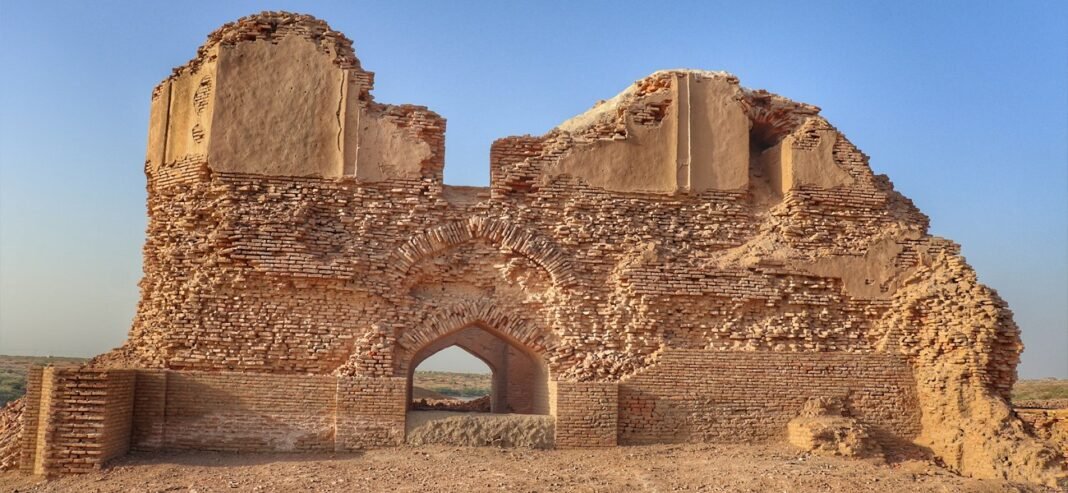
And the cave is inseparable from Aror — one of the great lost capitals of South Asia. Aror was the seat of power when Muhammad bin Qasim conquered Sindh in the early 8th century, a city of palaces and temples destroyed by a mighty earthquake in 962 AD that, it is believed, shifted the very course of the Indus. The surviving arches of one of the subcontinent’s earliest mosques still stand among the ruins. A visit to the Kalka Devi temple pairs naturally with walking the ground where thirteen centuries of Sindhi history happened. Hindu, Buddhist, and Islamic layered in one landscape.
This destination is perfect for pilgrims of all faiths, history lovers who want their ruins with living context, photographers drawn to atmospheric sacred spaces, and travelers exploring upper Sindh beyond the usual stops. Also, it suits families and respectful visitors of every background — just remember you are entering an active shrine, not a museum.
History of Kalka Devi Cave Temple, Aror
The antiquity of the Kalka Devi Temple cannot be fixed with certainty. Also, the cave itself is ancient. In fact, the structures, images, and objects around it have been renewed over generations. The goddess’s self-manifested image on the cave wall appears recently painted. What is certain is the site’s deep roots in legend: the oral tradition placing its founding in the reign of Raja Dahir (c. 695–712 CE), and the wider belief that the goddess appeared here during her journey to Hinglaj Mata, one of the subcontinent’s most revered Shakti Peethas.
Thirteen Centuries of Aror
The history that can be verified belongs to Aror, the ruined capital beside the temple. Aror (Arore) was the capital of Sindh under the Rai dynasty and the seat of power when the young Arab general Muhammad bin Qasim conquered Sindh in 711–712 CE, defeating Raja Dahir. The city flourished for centuries afterward as a center of trade and learning on the Indus — until 962 AD. A catastrophic earthquake destroyed it and, according to tradition, changed the river’s course, shifting the region’s fortunes permanently.
The ruins today preserve fragments of that glory: most famously, the arches of a mosque believed to have been built on Muhammad bin Qasim’s orders, counted among the earliest mosques of the subcontinent.
The temple’s modern history is one of devotion and, recently, defense. Meanwhile, In October 2025, after Hindu community leaders representing the area’s estimated 60,000 Hindus complained that illegal limestone mining and hill-cutting were endangering the heritage site, Sindh’s chief secretary ordered the immediate revocation of the mining lease near the temple and the sealing of the excavation site, with action against those responsible. In fact, the episode — widely welcomed by Hindu leaders and activists — showed how fiercely the community guards this shrine.
Today the temple remains what it has long been: a living, functioning site of pilgrimage, administered by its hereditary caretakers, where the evening lamps are lit as they have been for generations.
Top Things to Do in Kalka Devi Cave Temple, Aror
Enter the Cave Sanctum
The experience begins at the low entrance — hardly five to six feet high — where the smell of incense wraps around you and the cave opens into the sanctum. Also, inside sits the idol of Kalka Devi, portrayed in all her aspects as Kali, Durga. In fact, Parvati, with the figures and symbols of Shiva placed within the sanctum too. The priest sits on a stone platform beside the goddess. Move slowly, keep your voice low, and let the mystic atmosphere of the place work on you. Remove shoes before entering, as at any Hindu shrine.
Hear the Legends from the Caretakers
The temple’s caretakers are its living archive. Also, ask about the Raja Dahir miracle — the widening of the cave mouth — about the two tunnels said to run to Hinglaj Mata, and about the meaning of “Kalka” (power, in the old telling). Sit for tea if it is offered; the stories are told best unhurried. These oral traditions are the soul of the place.
Visit on the First Monday Evening
Devotees pay special homage to Kalka Devi on the evening of the first Monday of every month. Also, time your visit for one of these evenings and you will see the temple at its devotional peak — lamps, prayers, and families arriving from across the region. In fact, it is the gentlest way to witness the shrine’s living faith outside the great festivals.
Explore the Ruins of Aror
A few kilometers away lie the ruins of Aror, the ancient capital: scattered walls, the haunting arches of the Muhammad bin Qasim-era mosque. The vast silence of a city the earthquake took in 962 AD. Walk it in the late afternoon when the light rakes across the stones. Guides from Sukkur or Rohri can explain the layers — Rai, Arab, and later — that make Aror one of Sindh’s most evocative archaeological landscapes.
Climb the Kalka Hills Viewpoint
The limestone hills around the temple, part of the Rohri–Khairpur range that separates the Indus basin from the eastern desert, offer short scrambles to viewpoints over the plains. Also, go with care — the rock can be sharp and the paths informal — and go at golden hour for the best light over the Indus valley.
Famous Places In and Around Kalka Devi Cave Temple, Aror
- Ruins of Aror — the ancient capital with the Muhammad bin Qasim mosque arches, 2–3 km from the temple
- Rohri — the historic Indus town with its old bazaars and riverfront
- Sukkur Barrage and Lansdowne Bridge — the great colonial-era engineering landmarks on the Indus
- Kot Diji Fort — the dramatic Talpur-era fortress in Khairpur district, visible for miles
- Gurdwara Jind Pir, Sukkur — another of Sukkur’s historic minority shrines — see our Gurdwara Jind Pir Sukkur guide
- Mohenjo-daro — the great Indus Valley metropolis, a longer day trip south via Larkana — Larkana heritage guide
How to Reach Kalka Devi Cave Temple, Aror
The temple is an easy excursion from Sukkur, upper Sindh’s main city. From Sukkur, cross to Rohri (about 30 minutes), take the Rohri bypass toward Aror, and from the Muhammad bin Qasim Public School in Aror turn left and drive 2–3 km until the road ends at the temple in the Kalka hills. Also, Sukkur has its own airport (Sukkur Airport, SKZ) with domestic flights. The city sits on the M-5 motorway corridor — roughly a 5 to 6 hour drive from Karachi and about 6 to 7 hours from Lahore via the motorway network.
From Islamabad, fly to Sukkur or drive the motorway south (a long day’s journey).
Route Details
- From Sukkur: Sukkur → Rohri (30 minutes) → Rohri bypass → Aror → left at Muhammad bin Qasim Public School → 2–3 km to the temple. Under an hour door to door.
- From Karachi: Karachi → M-5/M-9 motorway corridor → Sukkur (approximately 5–6 hours, roughly 500 km), then as above.
- From Lahore: Lahore → motorway network south → Sukkur (approximately 6–7 hours), then as above.
- From Islamabad: Fly Islamabad → Sukkur (fastest), or drive the motorway south — a full long day.
- Nearest airport: Sukkur Airport (SKZ), about 30–40 minutes from the temple.
- Road conditions: Good — motorway to Sukkur, then paved roads to Rohri and Aror. The final stretch to the temple is a local road; travel in daylight.
- Transport options: Private car or hired taxi from Sukkur is simplest; rickshaws and local vans serve Rohri–Aror. Sukkur-based tour operators and guides can arrange the trip with the Aror ruins combined.
Where to Stay in Kalka Devi Cave Temple, Aror
The temple is a day trip — nobody needs to sleep in the hills. Also, the rooms around the cave are pilgrim rest-houses, not hotels. In fact, base yourself in Sukkur, which has a solid range of mid-range hotels and guesthouses serving business and government travelers. Standards are comfortable and prices reasonable. Rohri has simpler lodgings for the budget-conscious. Travelers combining the temple with Mohenjo-daro sometimes overnight in Larkana. Book ahead only during the great festivals, when pilgrim traffic surges; otherwise Sukkur’s hotels rarely fill. For luxury expectations, adjust downward — upper Sindh hospitality is warm, but five-star polish lives in Karachi and Lahore.
Where to Eat: Local Foods of Kalka Devi Cave Temple, Aror
Upper Sindh’s food is robust and flavorful. Also, In Sukkur and Rohri, try Sindhi biryani (the region’s beloved rice dish, distinct from Karachi’s), fresh Indus river fish — fried or curried — lentil and vegetable curries, sai bhaji (spinach and lentils). In fact, the breads of the tandoor. Roadside dhabas between Sukkur and Aror serve generous budget-friendly meals; a full dhaba lunch costs little. During temple festivals, free communal meals are often distributed to pilgrims — accept graciously if offered. Carry water and snacks for the Aror ruins walk, where there are no food stalls.
Sukkur’s old city has the best street food; ask a local for the current favorite spots.
Weather in Kalka Devi Cave Temple, Aror
Sukkur and Rohri sit in the hot plains of upper Sindh: summers are genuinely fierce, winters mild and pleasant. The cave itself stays cooler than the open hills. Also, the Aror ruins and hill walks are fully exposed — plan them for the cool months. November to February is the sweet spot for combining the temple, the ruins, and comfortable travel.
| Season | Temperature Range | Conditions |
|---|---|---|
| Spring (Mar–Apr) | 20°C to 38°C | Warming fast; mornings still pleasant. Visit early in the day. |
| Summer (May–Sep) | 35°C to 46°C | Intensely hot — among the hottest regions of Pakistan. Avoid midday outdoor sightseeing; the cave offers some relief. |
| Autumn (Oct–Nov) | 20°C to 35°C | Cooling down; good for the ruins and hills. Festival season begins. |
| Winter (Dec–Feb) | 8°C to 25°C | Mild and ideal — the best season for the temple, Aror, and all outdoor exploring. Light jacket for evenings. |
Language and Culture of Kalka Devi Cave Temple, Aror
The language of the region is Sindhi — musical, ancient, and spoken with pride — with Urdu and Saraiki widely understood. Also, the culture is the famous hospitality of Sindh: Sufi-inflected, pluralistic, and welcoming to strangers. That spirit is the temple’s story in miniature. A Hindu shrine where most devotees are Muslim, guarded by a community that petitioned the government itself to stop mining near it.
For visitors: remove shoes before entering the cave, dress modestly, keep silence in the sanctum, do not touch the idol or offerings, and ask before photographing worshippers. Accept tea if offered by the caretakers. During festivals, follow the flow of the crowd and the guidance of volunteers. Modest dress and covered heads (a simple scarf) are appreciated by all communities here.
Shopping in Kalka Devi Cave Temple, Aror
There are no shops at the cave itself beyond small stalls selling offerings, incense, and simple devotional items during festivals — buy a small offering if you wish to participate respectfully. Also, for real shopping, head to the old bazaars of Rohri and Sukkur: Sindhi ajrak (the iconic block-printed shawl), Sindhi topi caps, khussa shoes, bangles. It dried fruits and spices. Sukkur’s markets also sell the region’s dates and local sweets. Bargain with good humor. There are no malls near the temple — the bazaars of the old towns are the authentic (and better) experience.
Local Events and Festivals
The temple’s devotional calendar is rich. The most regular observance is the first Monday evening of every month. Devotees gather for special homage to Kalka Devi — the gentlest and most reliable festival experience for visitors. Navaratri (the nine nights of the goddess, in autumn) is celebrated with particular fervor, and four to five major festivals are held at the temple every year, drawing thousands from across Sindh — in the past, devotees also came from India. During the great festivals, the rooms around the cave fill with pilgrims, communal meals are served. The hills hum with devotion.
If you visit during a major festival, arrive early in the day, expect crowds, dress modestly, and follow volunteer guidance. Check the Hindu lunar calendar for exact Navaratri dates in your year of travel.
Travel Tips for Kalka Devi Cave Temple, Aror
Packing Essentials
Sun protection is critical — hat, sunscreen, sunglasses — for the exposed Aror ruins and hill walks. Also, sturdy shoes with grip for the limestone rocks. In fact, Modest clothing and a scarf for the shrine. Plenty of water: there are no shops at the temple or the ruins. A charged phone for photos (ask permission inside the shrine) and offline maps for the Rohri–Aror roads.
Safety Tips
The Sukkur–Rohri–Aror area is routinely visited by domestic tourists and pilgrims. Also, standard precautions apply: travel in daylight, keep valuables discreet, carry your CNIC or passport, and let your hotel know your plans. In fact, the cave entrance is low and the interior dim — mind your head and step. On the hills, stick to used paths; the limestone can be sharp and unstable off-trail.
Money & Connectivity
Carry cash — small notes for offerings, food stalls, and rickshaws. Also, ATMs are plentiful in Sukkur; none near the temple. In fact, mobile signals from all major networks work across Sukkur, Rohri, and Aror. Your hotel in Sukkur will have Wi-Fi; the hills will not.
Best Time to Visit Kalka Devi Cave Temple, Aror
December to February — Winter Ideal
The best season outright: mild days (8–25°C), cool evenings, and perfect conditions for the cave, the Aror ruins, and hill walks. Also, festival crowds are manageable outside the great melas.
October to November — Festival Autumn
Cooling weather and Navaratri — the nine nights of the goddess — make autumn the most devotionally vibrant season. Also, expect the largest crowds of the year.
First Monday Evenings — Year-Round
Whatever the season, the evening of the first Monday of each month brings the temple alive with special devotion — the most reliable “event” on the calendar and the easiest to plan around.
March to September — Hot Season (Caution)
Summer in upper Sindh is brutal (up to 46°C). If you must visit, go at dawn, retreat to Sukkur by midday, and save the ruins for winter. Also, the cave’s cool interior offers brief relief, not a full visit.
Final Thoughts
The Kalka Devi Cave Temple is small in size and immense in meaning. Also, a cave barely tall enough to stand in, holding a goddess who — legend says — widened its mouth by miracle for a king. In fact, a shrine counted among Pakistan’s holiest where most worshippers are Muslim. A hilltop beside a capital that an earthquake erased in 962 AD. Few places compress this much story into one visit.
Go in winter, when the light is kind and the air is cool. Also, enter the cave with reverence, listen to the caretakers’ stories, walk the ruins of Aror as the sun drops, and let Sindh’s oldest lesson — that the sacred can be shared — settle in. Continue your Sindh journey with our Explore Pakistan collection and the Gurdwara Jind Pir Sukkur guide.
FAQs
Where is the Kalka Devi Cave Temple located?
Inside a natural cave in the Kalka hills at Rohri, near the ruins of ancient Aror in Sukkur District, Sindh — about a 30-minute drive from Sukkur city.
What is the best time to visit the Kalka Devi Cave Temple?
December to February (8–25°C) is ideal. Meanwhile, October–November brings Navaratri festivities; the evening of the first Monday of every month is a special devotional gathering year-round.
How do I reach the Kalka Devi Cave Temple?
From Sukkur, drive to Rohri (30 minutes), take the Rohri bypass to Aror, turn left at the Muhammad bin Qasim Public School, and drive 2–3 km to the temple. Also, Sukkur Airport (SKZ) is 30–40 minutes away.
Faith, Legends and Etiquette
Is the Kalka Devi Temple really visited by Muslims?
Yes — according to the temple’s caretakers, around 60 percent of visitors are Muslims or of other faiths, making it a celebrated symbol of interfaith harmony in Sindh.
What is the legend of Kalka Devi at Aror?
Tradition holds the goddess appeared in the cave during her pilgrimage to Hinglaj Mata (two tunnels are said to connect the sites). Also, that she miraculously widened the cave’s narrow mouth for Raja Dahir (c. 695–712 CE), winning him as a devotee.
Can non-Hindus enter the cave temple?
Yes — visitors of all faiths are welcome. Remove shoes, dress modestly, keep silence in the sanctum, do not touch the idol, and ask before photographing worshippers.
What else can I see near the temple?
The ruins of ancient Aror (including early mosque arches), Rohri’s old town, Sukkur Barrage and Lansdowne Bridge, Kot Diji Fort, and — further afield — Mohenjo-daro.
How much time do I need?
One to two hours for the temple. Also, half a day combined with the Aror ruins. In fact, most visitors base in Sukkur and return the same day.