Quick Facts
- Location: Mubarak Shaheed Road, Central Jacob Lines, Saddar, Karachi
- Altitude: Sea level
- Famous For: One of Pakistan’s oldest sports clubs, founded in 1893, and the ground where Hanif Mohammad scored his legendary 499
- Nearest City: Karachi itself — in the heart of Saddar Town
- Accessibility: Excellent — central Karachi, well connected by road from Jinnah International Airport and all city districts
- Known Landmarks: The historic cricket pavilion and Jehangir Kothari Hall, swimming pool, and multi-sport grounds
- Best For: Cricket lovers, history enthusiasts, sports fans, and anyone interested in Karachi’s Parsi heritage
Why Visit Karachi Parsi Institute
Some places in Karachi are famous for what they look like. Also, the Karachi Parsi Institute is famous for what happened on its grass. This is the ground where, in January 1959, Hanif Mohammad — the original Little Master — scored 499 for Karachi against Bahawalpur, then a world record in first-class cricket that stood for decades. Walk past the pavilion and you are walking through one of the most storied chapters of Pakistan’s sporting history.
Stories Behind the Game
This Karachi Parsi Institute travel guide is for the traveler who loves the stories behind the game. Founded in 1893 by Parsi businessmen as the Parsi Gymkhana — later also known as the Zoroastrian Club — KPI is one of the oldest sports institutions in the country. The Parsis were among the very first communities in the subcontinent to take up cricket, and long before Pakistan existed, Parsi teams from this ground were playing the Hindus, the Muslims, the Europeans, and touring sides, stitching the diverse communities of old Karachi together through sport.
There is a deeper reason to visit, too. Also, the Parsi community — Zoroastrians who made Karachi their home — shaped this city out of all proportion to their numbers: its schools, hospitals, philanthropies, and sporting culture carry their fingerprints. In fact, visiting KPI is a way of meeting that legacy in person, on the very lawns where it was built. The club sits in Saddar, Karachi’s grand old downtown. A visit pairs naturally with the colonial-era architecture, markets, and food streets around it.
It is perfect for cricket fans, history buffs, and curious travelers who want to see a living piece of Karachi’s heritage. Also, the best time to visit is the cricket season in the cooler months, from November to March. In fact, matches are most likely to be on and the weather is at its finest.
History of Karachi Parsi Institute
The Karachi Parsi Institute — KPI — was established in 1893 by Parsi businessmen of Karachi, founded to promote education, sport, and social development within the city’s Parsi community. In its early years it was known as the Parsi Gymkhana, and also as the Zoroastrian Club. It joined a remarkable generation of sporting institutions in colonial Karachi: the Karachi Gymkhana’s ground had been developed in 1886. KPI followed in 1893, alongside the Muslim Gymkhana, Hindu Gymkhana. The Polo Ground, each serving their communities while their teams met on the field.
Cricket Was the Soul
Cricket was the club’s soul. Also, the Parsis had learned the game from the British and adopted it as their own. In fact, KPI quickly became one of Karachi’s earliest cricket nurseries. In addition, regular matches were played between the Parsis, Hindus, Muslims, and Europeans. The club produced fine cricketers who went far beyond the city: Rusi Dinshaw toured India with the Pakistan team in 1952, Jamshed Khudadad “Jenni” Irani played Tests for India before Partition, and A.H. Mehta was even on the staff of Lancashire at Old Trafford.
Kaikhusroo Collector, a member of the Parsi cricket community, served as the first president of the Board of Cricket Control in Pakistan. Jamsheed Marker became Pakistan’s noted cricket commentator, writer, and diplomat.
The ground’s immortal moment came in January 1959. Hanif Mohammad, playing for Karachi against Bahawalpur in the Quaid-e-Azam Trophy, compiled 499 — then the highest score in first-class cricket history. The innings turned the KPI ground into a permanent landmark of world cricket. Through the decades since, the institute has remained a multi-sport club and a social anchor of the Parsi community, its pavilion, pool, and playing fields still in use more than 130 years after the club’s founding — a living link between colonial Karachi’s sporting golden age and the present day.
Top Things to Do in Karachi Parsi Institute
Stand on Cricket History at the KPI Ground
The heart of any visit is the cricket ground itself. The field where Hanif Mohammad made 499 and where generations of Karachi’s cricketers learned the game. The outfield, the sightscreens, and the old pavilion carry the patina of more than a century of matches. If a game is on during your visit, watching club cricket here — the sound of leather on willow, the shouted appeals, the shade of the old trees — is one of the most authentic sporting experiences in Pakistan. Check with local cricket circles or the club about match schedules in the winter season.
Admire the Jehangir Kothari Hall and Pavilion
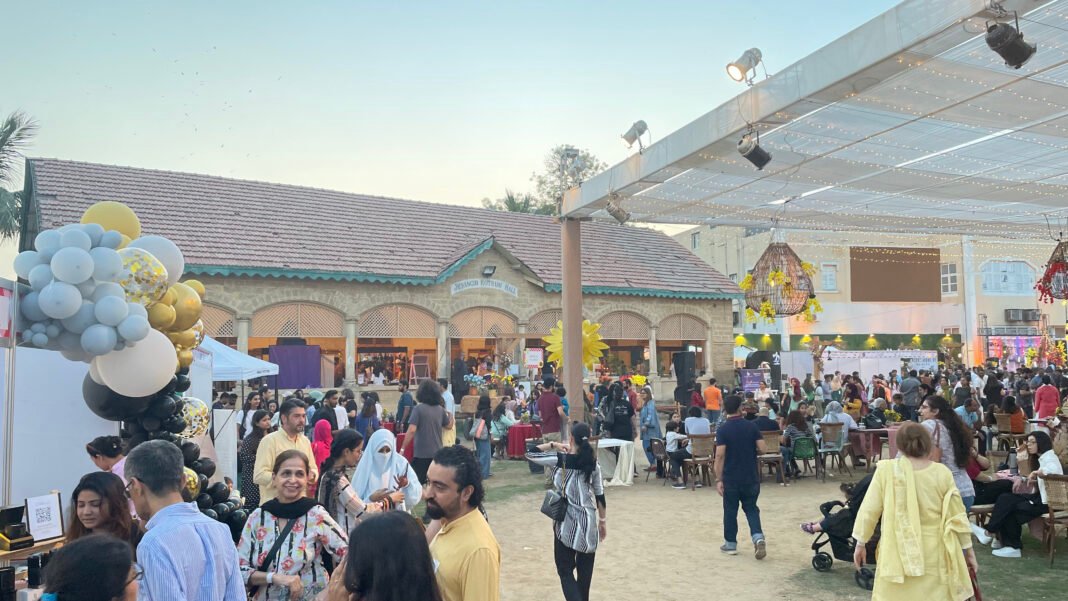
The Jehangir Kothari Hall, the club’s cricket pavilion, is a beautiful piece of old Karachi architecture in stone and timber, with arched verandas made for watching long afternoons of cricket. Jehangir Kothari was one of the great Parsi philanthropists whose gifts — parades, halls, and public works — still dot the city. Also, the pavilion and hall together tell the story of how the community built institutions that served everyone. The building photographs wonderfully in the soft light of late afternoon.
Explore the Multi-Sport Club
KPI was never only about cricket. The complex includes facilities for football, hockey, tennis, badminton, athletics, and swimming, along with a recreational hall and a billiard room. Even if you cannot use the members’ facilities, the grounds themselves — lawns, courts. The pool area — give you a sense of how the club has served as the community’s sporting home since 1893. Sports lovers will appreciate seeing a traditional club layout that has survived more or less intact into the modern era.
Pair It with a Saddar Heritage Walk
The institute sits in Central Jacob Lines, minutes from Saddar’s colonial streets. Meanwhile, after your visit, walk the neighbourhood: the area around KPI is rich with the Karachi the Parsis helped build — old stone buildings, churches, clubs, and markets from the same era. In fact, the contrast between the quiet green of the club and the bustle of Saddar’s bazaars is one of the great pleasures of old Karachi.
Famous Places In and Around Karachi Parsi Institute
Empress Market: The great colonial market hall of Saddar, a short drive away.
Holy Trinity Cathedral: Historic Anglican cathedral in the old city — see our Holy Trinity Cathedral travel guide.
Christ Church: Another landmark of old Karachi’s church heritage — see our Christ Church travel guide.
Freemasons’ Lodge Building: A colonial-era Saddar landmark from the same generation as KPI — see our Freemasons’ Lodge travel guide.
Burns Road Food Street: Karachi’s legendary food street for nihari, biryani, and kebabs.
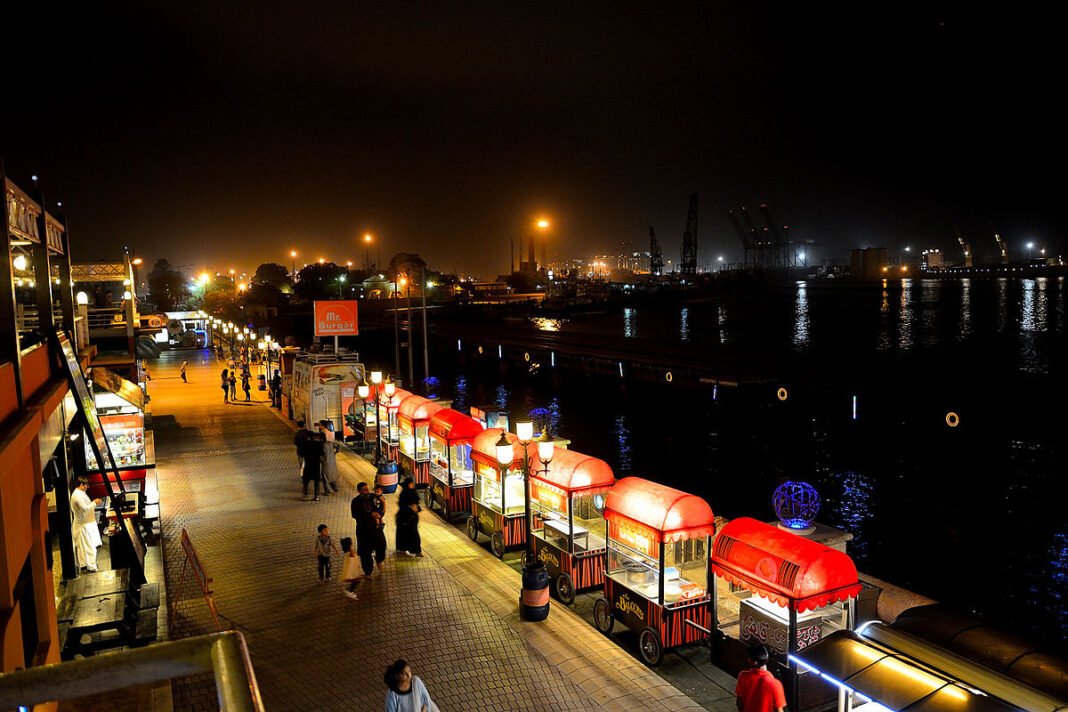
Karachi Harbour: The historic port waterfront at Keamari, about 20 minutes away — see our Karachi Harbour travel guide.
How to Reach Karachi Parsi Institute
The institute is in central Karachi, so reaching it is straightforward. Visitors from Islamabad or Lahore should fly into Jinnah International Airport (KHI) — about two hours from Islamabad and roughly an hour and forty minutes from Lahore. The overland drive is long: approximately 1,425 km (19–21 hours) from Islamabad and approximately 1,200 km (16–18 hours) from Lahore, so flying is the practical choice. For more ideas across the country, browse our Explore Pakistan series.
From Jinnah International Airport, KPI on Mubarak Shaheed Road in Central Jacob Lines is approximately 14 km, around 30–40 minutes by car via Shahrah-e-Faisal and the Saddar roads. Also, ride-hailing services are the easiest way to get there and can drop you at the club gates. Note that KPI is a private members’ club: the grounds and interior are not open to casual walk-ins, so admire the exterior and the historic streetscape, and visit during a public or community event if one is on. Always be respectful of members and staff at the gates.
Route Details
Step 1: Fly into Jinnah International Airport (KHI) from Islamabad, Lahore, or abroad.
Next, take Shahrah-e-Faisal west toward Saddar, the old city centre.
Step 3: Navigate to Mubarak Shaheed Road in Central Jacob Lines, Saddar Town — the institute’s address.
Then, park nearby and explore the exterior; combine the visit with Empress Market, Burns Road, and the Saddar heritage streets, all within a few minutes’ drive.
Step 5: If you are a cricket fan, ask locally whether any club fixtures or community events are open to spectators during your stay.
Where to Stay in Karachi Parsi Institute
KPI sits in the middle of Saddar, so you are spoiled for choice on accommodation. Budget and mid-range hotels and guesthouses cluster throughout Saddar itself — simple, air-conditioned, and within walking distance of the markets, food streets, and heritage buildings around the institute. These are ideal if your trip is about old Karachi: you can step out in the morning and be at Empress Market or Burns Road in minutes.
For more comfort, the business hotels along Shahrah-e-Faisal and the five-star properties in Clifton are a 20–30 minute drive away, with pools, gyms, and sea views. Also, PECHS and Gulshan-e-Iqbal offer good mid-range guesthouses in quieter residential streets. Book ahead in the winter season (November to February) when Karachi sees the most visitors. Wherever you stay, plan your KPI visit for the morning or late afternoon, and give the rest of the day to Saddar’s food and markets.
Where to Eat: Local Foods of Karachi Parsi Institute
You are in Saddar, which means you are in one of the best eating districts in Pakistan. Also, Burns Road Food Street, a short drive from KPI, is the pilgrimage site: nihari slow-cooked overnight, haleem, seekh kebabs. The city’s famous biryani with its potatoes and tangy masala. Zahid’s and Sabir’s nihari are institutions, but honestly, half the joy of Burns Road is wandering and following your nose.
For Parsi flavours themselves, keep an eye out for the community’s beloved dishes at Parsi-run eateries and catering kitchens around Saddar and the old city — dhansak (lentils and meat served with caramelised rice), patra ni machhi (fish steamed in banana leaf), and lagan nu custard are the classics of the cuisine. Saddar’s old Irani cafes, with their bentwood chairs and doodh patti chai, are the perfect breakfast stop before a morning around the club. Also, Street food is budget-friendly; sit-down restaurants around Saddar and Clifton cover every budget.
Weather in Karachi Parsi Institute
Karachi’s coastal climate governs your visit here just as it does everywhere else in the city. The ground is at sea level, so expect warm, humid air softened by the sea breeze. Also, the cricket season and the most comfortable sightseeing weather both fall in the cool dry months from November to March. You can walk the grounds and the Saddar streets without wilting.
| Season | Temperature Range | Conditions |
|---|---|---|
| Winter (Nov–Feb) | Approximately 8–27°C | Dry, sunny, and pleasant; peak cricket and sightseeing season. |
| Spring (Mar–Apr) | Approximately 20–34°C | Warming up; mornings and late afternoons remain comfortable. |
| Summer/Monsoon (May–Aug) | Approximately 28–38°C | Hot and humid; monsoon rains in July–August can waterlog Saddar’s streets. |
| Autumn (Sep–Oct) | Approximately 25–35°C | Warm after the monsoon; evenings improve toward October. |
Language and Culture of Karachi Parsi Institute
The Parsi community — followers of Zoroastrianism, one of the world’s oldest religions — settled on the western coast of the subcontinent centuries ago after leaving Persia. Also, a vibrant community made Karachi its home. Though small in number, the Parsis became central to Karachi’s story: industrialists, educators, doctors, philanthropists, and, as KPI shows, sportsmen. Urdu and English are spoken throughout the club and the neighbourhood. Gujarati is the traditional community language of many Parsi families.
Visitors should remember that KPI is a living community institution, not a museum. Also, dress smartly and modestly, behave as a respectful guest, and do not enter the grounds uninvited. The Parsi tradition of philanthropy and public service — schools, hospitals, and halls open to all — is part of what you are here to appreciate. If you are lucky enough to be invited inside for a match or an event, it is a privilege: the community is famously warm to genuine guests.
Shopping in Karachi Parsi Institute
The institute is surrounded by Saddar’s great bazaars. Empress Market, the colonial market hall, is the essential stop — spices, dry fruits, fresh produce, and household goods in a beautiful old building. Also, Zainab Market and Bohri Bazaar nearby are famous for clothes, fabrics, shoes, and handicrafts at prices that reward haggling. In fact, Jamaa Cloth Market on M.A. Jinnah Road is the go-to for quality fabric.
For modern retail, Dolmen Mall Clifton by the sea and Ocean Mall are the city’s flagship malls. Also, Dolmen Mall Tariq Road and the shops of Tariq Road itself cover fashion and electronics. In fact, souvenirs with a local soul: Sindhi ajrak shawls, embroidered lawn, dry fruits from Empress Market, and old-postcard views of colonial Karachi from the secondhand bookshops around Saddar.
Local Events and Festivals
KPI itself is a private club and does not host public festivals. Also, Karachi’s event calendar rewards a well-timed visit. In fact, the Karachi Literature Festival, usually in February, brings writers and thinkers to the city. In addition, Karachi Eat, usually in January, is the country’s biggest food festival. For example, and the Karachi International Book Fair, usually in December, draws publishers and readers from across Pakistan. The Parsi community celebrates Navroz, the New Year, with prayers and festive meals — a private community occasion. The season brings a celebratory mood to the neighbourhoods around the club.
National days like 23 March and 14 August are celebrated city-wide.
Travel Tips for Karachi Parsi Institute
Packing Essentials
Light cotton clothes, sunscreen, sunglasses, and a hat for walking between the club and Saddar’s streets. Also, comfortable walking shoes are essential — old Karachi is best explored on foot. In fact, carry a water bottle, and in winter bring a light jacket for the evenings.
Safety Tips
Saddar is busy and generally safe in the daytime, but keep valuables secure in crowded markets and use ride-hailing at night rather than walking unfamiliar streets. At the club itself, respect the members-only areas: do not attempt to enter the grounds or pavilion without permission, and follow any instructions from staff at the gates. Photography of the exterior from the street is fine; ask before photographing people.
Money & Connectivity
ATMs and banks are plentiful throughout Saddar, and cards work at malls and larger restaurants. Bazaars, street food, and small shops are cash-only, so keep rupees handy. Also, mobile coverage is excellent across central Karachi on all major networks — Jazz, Zong, Telenor. Ufone — with reliable 4G.
Best Time to Visit Karachi Parsi Institute
Winter (November to February) — The Best Season
Cool, dry, and sunny — the classic Karachi winter is made for this visit. Also, Club cricket is in season, the light is beautiful for photography. In fact, you can comfortably walk the Saddar heritage streets around the institute.
Spring (March to April) — Still Good
Warmer days but pleasant mornings and evenings. A good shoulder season with fewer visitors and comfortable sightseeing if you pace yourself.
Summer and Monsoon (May to August) — Not Ideal
Heat, humidity, and monsoon downpours make this the least comfortable time. Meanwhile, Cricket activity slows, and Saddar’s streets can flood after heavy rain. If you must come, keep visits short and early in the day.
Autumn (September to October) — Improving
The rains retreat and October brings back pleasant evenings. Also, the new cricket season starts to stir, making late autumn a reasonable time for a sports fan’s visit.
Final Thoughts
The Karachi Parsi Institute will not shout for your attention the way a beach or a bazaar does. Also, its appeal is quieter: a green field in the middle of a megacity, a pavilion that has watched 130 years of cricket. The memory of an innings — 499 runs by a man called the Little Master — that still echoes in the record books. It is a place that rewards the traveler who looks for stories.
Come for the cricket history, stay for old Karachi. Also, pair your visit with Saddar’s markets, Burns Road’s food. The colonial streets the Parsi community helped shape. You will leave with a deeper understanding of the city than any single monument could give you. For a sports lover, there are few more meaningful pilgrimages in Pakistan.
FAQs
1. Also, where is the Karachi Parsi Institute located?
On Mubarak Shaheed Road, Central Jacob Lines, Saddar Town, in central Karachi.
2. Also, what is the best time to visit the Karachi Parsi Institute?
November to March — the cool season and the cricket season, with the most comfortable weather for walking the area.
3. Also, can the public enter the Karachi Parsi Institute?
It is a private members’ club. The grounds are not open to casual walk-ins. Visitors can admire the exterior and visit during public or community events when held; always respect members and staff.
4. Also, why is the Karachi Parsi Institute famous in cricket?
Founded in 1893, it is one of Pakistan’s oldest sports clubs. Its ground hosted Hanif Mohammad’s 499 for Karachi against Bahawalpur in January 1959 — then a world record.
5. Also, how do I reach the Karachi Parsi Institute?
Fly to Jinnah International Airport and drive about 14 km (30–40 minutes) to Saddar. In fact, ride-hailing is the easiest option.
6. Also, what else can I see near the Karachi Parsi Institute?
Empress Market, Burns Road Food Street, Holy Trinity Cathedral, Christ Church. In fact, the colonial streets of Saddar are all minutes away.
7. Also, what is the Parsi community’s connection to Karachi?
Parsis — Zoroastrians who settled on the coast centuries ago — became central to Karachi’s development as industrialists, educators, philanthropists, and sportsmen. In fact, KPI, founded by Parsi businessmen in 1893, is one of their enduring institutions.
8. Is the Karachi Parsi Institute good for families?
The exterior and the surrounding Saddar area make a pleasant family outing, especially combined with markets and food streets. Also, interior access is limited to members and their guests.