Quick Facts
- Location: Keamari and Kharadar waterfront, Karachi, Sindh
- Altitude: Sea level
- Famous For: One of South Asia’s largest and busiest deep-water seaports, handling over 54% of Pakistan’s foreign trade
- Nearest City: Karachi itself — the harbour is part of the city
- Accessibility: Excellent — paved city roads from Jinnah International Airport and downtown Karachi
- Known Landmarks: Port Grand Food and Entertainment Complex, Native Jetty Bridge, Keamari fishing harbour, Manora Island across the channel
- Best For: Photography lovers, seafood fans, families, history buffs, and anyone who wants to see Pakistan’s maritime heartbeat up close
Why Visit Karachi Harbour
Every country has one place where its whole economy seems to breathe, and for Pakistan that place is Karachi Harbour. Stand at the waterfront at dusk and you will watch container ships, cargo vessels, and fishing boats share the same restless water while the cranes of the deep-water berths work through the night. Also, it is raw, it is real. It is the closest you can get to the pulse of Pakistan’s trade without a hard hat and a security pass.
Lights, Boat Rides and Waterfront Seafood
This Karachi Harbour travel guide exists because the harbour is far more than a port. Also, the waterfront around Keamari and the old Napier Mole has grown into one of Karachi’s best evening destinations. Port Grand, the food and entertainment complex built on the historic bridge across the creek, draws families every night with its lights, music, and waterfront restaurants. A few minutes away, local boatmen at Keamari ferry visitors around the harbour for an unforgettable ride past the ships. The fresh seafood at the fishing harbour is the kind of meal travelers talk about for years.
The harbour is also a journey through Karachi’s own history. The Talpur Mirs built Manora Fort at the harbour entrance in 1783, the British dredged the modern channel in 1854. The wharves, piers, and breakwaters that followed turned a small fishing settlement into a great ocean port. When you look across the water, you are looking at the same channel that once carried the cotton of Sindh to the mills of Britain during the American Civil War and the wheat that made Karachi the largest exporting port in South Asia by 1899.
It is perfect for photographers, families looking for an easy evening out, food lovers, and anyone visiting Karachi who wants to understand what makes this city run. Also, the best time to visit Karachi Harbour is the cool season, from November to February. In fact, the sea breeze is gentle and the sunsets over the water are at their finest.
History of Karachi Harbour
The story of Karachi Harbour begins long before the cargo ships. The harbour was a natural creek sheltered by Manora Island, and in 1783, after two prolonged sieges, the town fell to the Talpur Mirs of Sind. They built Manora Fort with its cannons on Manora Island at the harbour entrance. When the British occupied Karachi in 1839, the port served as a landing point for troops during the First Afghan War. British trading companies soon opened offices and warehouses that made the small town grow rapidly.
The modern port began to take shape in 1854. Also, the main navigation channel was dredged and a mole — a stone causeway — was constructed to link the harbour with the rest of the city. In fact, the engineers followed with the Keamari Groyne in 1863 and the Manora Breakwater, built in continuation of Manora Point between 1870 and 1874, to break the force of the south-west monsoon waves that exposed anchored ships. Merewether Pier was constructed in 1882 to berth large ocean-going ships. The Erskine and James wharves, with three berths each, were completed in 1888 and 1895.
When the Port Trust Was Born
To run this growing port, the government appointed the Karachi Harbour Board by notification on 10 March 1880. Then, in 1886, the Karachi Port Trust Act (Act IV of 1886) was passed by the Bombay Legislative Council. The Karachi Port Trust formally came into existence on 1 April 1887, with the Collector of Karachi as its ex-officio chairman. By the end of 1910, Karachi Port boasted 17 berths in one continuous line extending more than 2.5 kilometres, served with railway sidings and equipped with hydraulic floating cranes.
The period between 1856 and 1872 saw trade surge, especially during the American Civil War. Also, cotton from Sindh replaced American cotton in British textile mills. In fact, the opening of the Suez Canal in 1869 shortened the route from Europe. By 1899, Karachi was the largest wheat and cotton exporting port in South Asia. During the First World War, the port played a major role moving troops and supplies, being the first British Raj port of call for ships coming through the Suez Canal.
The West Wharf, lighterage berths, and ship-repair berths followed between 1927 and 1944, and today the port operates 40 berths across its East, West, and South wharves. A newer chapter for visitors opened in 2011. The old Napier Mole Bridge was converted into Port Grand, turning a piece of port heritage into a public waterfront destination.
Top Things to Do in Karachi Harbour
Take a Boat Ride Around the Harbour
The single best thing to do at the harbour is to get on the water. Also, local boatmen at Keamari run harbour rides that take you around the channel, past anchored cargo ships, the breakwater. The working berths where cranes load and unload through the day. From the boat, the port’s scale finally makes sense — the towering container stacks, the oil piers. The constant movement of launches and tugs. Rides are informal and arranged on the spot, so agree on the duration and fare with the boatman before you board, and go in the late afternoon so the return trip catches the sunset over the water.
Spend an Evening at Port Grand
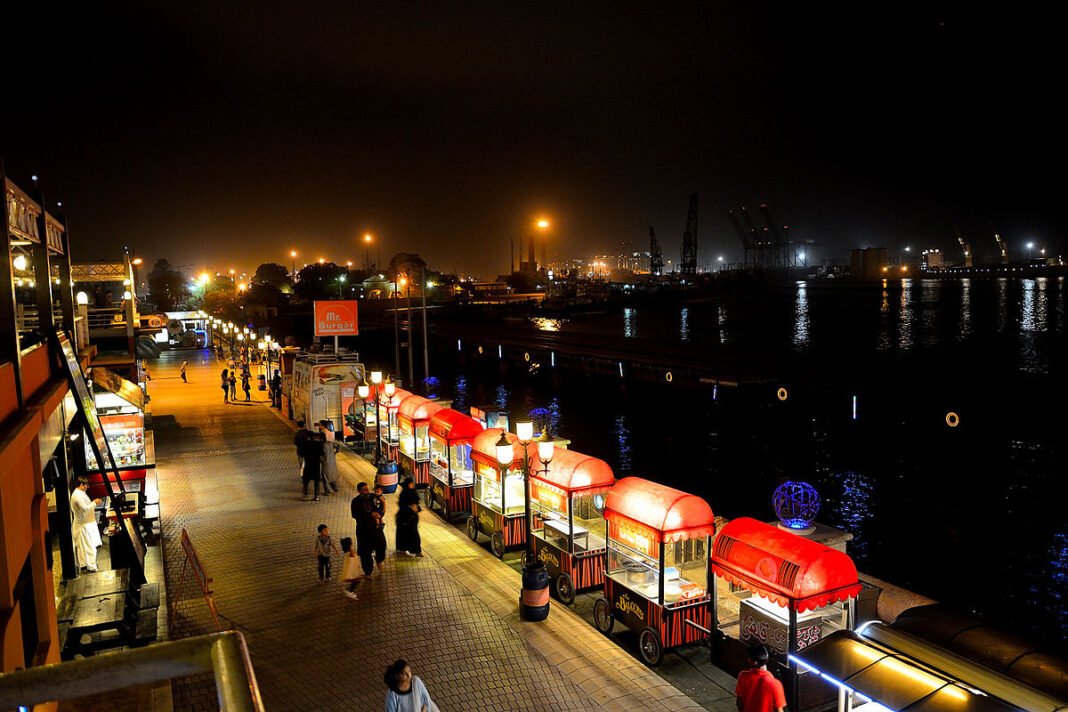
Port Grand Food and Entertainment Complex sits on the historic Napier Mole Bridge across Chinna Creek, with the harbour water on both sides. Meanwhile, built over the old bridge after the Jinnah Bridge opened in 1997, it became a full-fledged destination in 2011 with restaurants, live music, art stalls. A long promenade. It is one of the most pleasant places in Karachi for an evening walk — the sea breeze, the lit-up bridge, the boats bobbing below, and food from desi barbecue to continental grills. Come after sunset when the whole complex glows and the harbour lights reflect on the water.
Watch the Working Port in Action
You cannot walk onto the operational berths — this is a secure working port — but you can watch it from several public points. From the Native Jetty Bridge and the Port Grand promenade, you can see the giant gantry cranes, container terminals, and ships entering through the channel between Manora and Keamari. If you are interested in shipping or logistics, the sight of a fully loaded vessel being guided in by tugs is worth the trip on its own. Photography of the general waterfront is fine, but respect the security barriers and do not point cameras at restricted installations.
Visit the Keamari Fishing Harbour
Keamari’s fish harbour is one of the liveliest corners of the waterfront. Also, Fishing trawlers unload their catch here, auction halls buzz with traders, and the air smells of the sea. It is a working place, not a tourist attraction, so visit with a local guide or in a group, stay on the public walkways, and ask before photographing people at work. The reward is the freshest seafood in Karachi — nearby eateries and stalls serve fried fish, prawns. It grilled catch that went from boat to plate the same day.
Catch the Sunset from Native Jetty Bridge
The Jinnah Bridge, better known as the Native Jetty Bridge, connects the city to the port and offers sweeping views over the harbour. Also, walkers and photographers gather here in the evening for the sunset over the water, with ships silhouetted against the orange sky. In fact, the old Napier Mole Bridge, which the Jinnah Bridge replaced in 1997, runs parallel below and now carries Port Grand. For more on the bridge itself, see our Jinnah Bridge and Native Jetty travel guide.
Ferry Across to Manora Island
Boats from Keamari cross the harbour channel to Manora Island, where the old Talpur-era fort and the quiet beaches make a perfect half-day trip. Also, the ferry ride itself is part of the experience — you pass the breakwater, the lighthouse point. In fact, the big ships waiting at anchor. Manora has food stalls, a small beach, and views back toward the city skyline. Ferries run through the day from Keamari; go in the morning to have the island’s calmest hours.
Famous Places In and Around Karachi Harbour
Port Grand Food and Entertainment Complex: Waterfront dining and promenade on the historic Napier Mole Bridge.
Native Jetty Bridge (Jinnah Bridge): The 1997 bridge linking the city to the port, with panoramic harbour views.
Keamari Fishing Harbour: Working fish port with trawlers, auctions, and fresh seafood.
Manora Island: Historic island at the harbour entrance with the 1783 Manora Fort, beaches, and ferries from Keamari.
Karachi Port Trust Building: The 1916 colonial headquarters of the port authority in nearby Kharadar — see our Karachi Port Trust Building travel guide.
Merewether Clock Tower: Victorian-era landmark near the harbour area.
Shrine of Abdullah Shah Ghazi: The beloved saint’s shrine in Clifton, a short drive from the waterfront — see our Abdullah Shah Ghazi Shrine travel guide.
How to Reach Karachi Harbour
Karachi Harbour is one of the easiest destinations in this Explore Pakistan series to reach, because it sits inside Karachi itself. If you are coming from Islamabad or Lahore, the practical route is to fly into Jinnah International Airport (KHI) — roughly two hours from Islamabad and about an hour and forty minutes from Lahore — and then drive to the waterfront. The drive from Lahore to Karachi is approximately 1,200 km (16–18 hours) via the M-9 and N-5, and from Islamabad it is approximately 1,425 km (19–21 hours). The road journey is long, so flying is the sensible choice for a harbour visit.
From Jinnah International Airport to the harbour area at Keamari and Port Grand is approximately 15 km, about 35–45 minutes by car depending on traffic. Also, ride-hailing services operate throughout Karachi and are the most convenient option for visitors. Public buses and minibuses run toward Kharadar and Keamari from Saddar and Tower. In fact, they are crowded and not ideal for tourists with luggage. The harbour area is best explored on foot once you arrive — park near Port Grand or the Native Jetty and walk the waterfront.
Route Details
Step 1: Fly into Jinnah International Airport (KHI) from Islamabad, Lahore, or any domestic airport. International visitors clear immigration here too.
Step 2: From the airport, take Shahrah-e-Faisal west toward the city centre, then follow signs for M.A. Jinnah Road and Tower.
Step 3: From Tower (the old city centre), head toward Kharadar and the Native Jetty Bridge — this takes you straight to the harbour and Port Grand.
Step 4: For Keamari and the fishing harbour, continue along M.T. Khan Road toward Keamari. For the Manora ferry, follow the Keamari signs to the boat jetty.
Step 5: On foot, the best circuit is: Native Jetty Bridge viewpoint, Port Grand promenade, and the Keamari waterfront — all within a short drive of each other.
Where to Stay in Karachi Harbour
There are no hotels on the harbour itself. Also, the area around Keamari, Kharadar, and the nearby Clifton and Saddar districts give you plenty of choices. Meanwhile, luxury five-star hotels cluster along Shahrah-e-Faisal and in Clifton, about 20–30 minutes from the waterfront, with sea views, pools, and full amenities for travelers who want comfort after a day of sightseeing. Mid-range hotels and business hotels are plentiful around Saddar, PECHS. Clifton — clean, air-conditioned, and well connected by ride-hailing to the harbour.
Budget travelers will find guesthouses and small hotels in Saddar and Kharadar itself, some within walking distance of the old city and the port gates. These are simple but convenient if your focus is the harbour and Old Karachi. Also, For a quieter stay, Clifton’s guesthouses and serviced apartments offer a residential feel near the sea. Book in advance during the winter tourist season (November to February) and around public holidays. Karachi’s hotels fill up. Wherever you stay, plan your harbour visit for late afternoon and evening. The light and the breeze are at their best.
Where to Eat: Local Foods of Karachi Harbour
Eating around the harbour is half the reason to come. As a result, Keamari’s fishing harbour means the seafood here is as fresh as it gets anywhere in Pakistan — fried fish, grilled prawns, and fish curry served at humble eateries near the water. Order what the locals order, eat it hot off the grill with naan and mint chutney. You will understand why Karachiites are so proud of their seaside food.
Port Grand’s restaurants line the waterfront promenade and cover everything from desi barbecue and biryani to Chinese and continental grills, all with the harbour as your backdrop. Also, For the full Karachi food experience, head to nearby Burns Road Food Street in Saddar for nihari, haleem, and kebabs, or try the city’s legendary biryani. Karachi’s version, with its potatoes, green chillies, and tangy masala, is considered the national benchmark. Street food around Tower and Kharadar is budget-friendly and delicious: bun kebabs, dahi baray, and fresh sugarcane juice. Carry cash for the small stalls, and if you are sensitive to spice, ask for your food “halka” (mild).
Weather in Karachi Harbour
Karachi Harbour sits at sea level. Its weather is classic coastal: warm, humid. It softened by the sea breeze that locals call the “doctor’s wind.” Winters are the sweet spot — dry, sunny days and cool evenings — while summers are hot and sticky. The monsoon in July and August brings heavy showers and the possibility of waterlogged roads, so check the forecast before a harbour trip in those months.
| Season | Temperature Range | Conditions |
|---|---|---|
| Winter (Nov–Feb) | Approximately 8–27°C | Dry, sunny, and pleasant; the best season for harbour visits, boat rides, and evening walks at Port Grand. |
| Spring (Mar–Apr) | Approximately 20–34°C | Warming up; breezy afternoons are still comfortable for the waterfront. |
| Summer/Monsoon (May–Aug) | Approximately 28–38°C | Hot and humid; monsoon showers in July–August can disrupt plans and flood low-lying roads. |
| Autumn (Sep–Oct) | Approximately 25–35°C | Warm and settling after the monsoon; pleasant evenings return toward October. |
Language and Culture of Karachi Harbour
Karachi is Pakistan’s most diverse city. Also, the harbour is where that diversity is on full display — fishermen, dockworkers, traders, and tourists from every province and many countries cross paths here. In fact, Urdu is the common language and is understood everywhere; Sindhi, Punjabi, Pashto, Balochi, and English are all widely spoken. You will have no trouble getting by in Urdu or English around the waterfront, the restaurants, and the boat jetties.
Culturally, the harbour area is a working port first and a tourist spot second. Dress modestly, especially around Keamari and the fishing harbour, and ask permission before photographing people at work — a smile and a polite request go a long way. Friday afternoons are quieter as many businesses pause for prayers. Karachi is a welcoming city for visitors, but as in any big port city, keep valuables secure, use registered transport, and avoid isolated stretches of the waterfront after dark.
Shopping in Karachi Harbour
The harbour itself is not a shopping destination, but two of Karachi’s great bazaars sit a short drive away in Saddar. Empress Market, the colonial-era market hall built during the British Raj, is the city’s most atmospheric bazaar — spices, dry fruits, fresh produce, and household goods under one historic roof. Nearby Zainab Market and Bohri Bazaar are famous for clothes, shoes, fabrics, and handicrafts at bargain prices. Haggling is expected and part of the fun.
For modern shopping, Dolmen Mall Clifton sits by the sea with local and international brands and a food court overlooking the water. Also, Ocean Mall and Dolmen Mall Tariq Road are the other big names. Souvenirs worth picking up: Sindhi ajrak (the block-printed shawl), embroidered lawn fabric, dry fruits from Empress Market, and seashell crafts from the Manora and Clifton beach stalls. Port Grand also has gift and craft stalls that are handy for a last-minute keepsake.
Local Events and Festivals
The harbour does not host its own dedicated festivals. Also, Karachi’s city-wide event calendar gives you good reasons to time your visit. Karachi Eat, the city’s biggest food festival, is usually held in January and turns the waterfront and park venues into a feast of hundreds of stalls. In fact, the Karachi Literature Festival, usually in February, brings writers, poets, and thinkers to the city for a weekend of talks and book launches. In addition, the Karachi International Book Fair, usually in December at the Expo Centre, is one of the country’s largest publishing events.
Pakistan’s national days — Pakistan Day on 23 March and Independence Day on 14 August — are celebrated across the city with fireworks and flag-hoisting. The harbour area often hosts its own share of the festivities.
Travel Tips for Karachi Harbour
Packing Essentials
Pack light cotton clothes, a hat or cap, sunglasses, and strong sunscreen. Also, the sea glare is intense even on cloudy days. Bring a refillable water bottle, comfortable walking shoes for the promenades and bridges. A light jacket for winter evenings when the sea breeze turns cool. A camera or phone with good zoom will serve you well for ship photography from the bridges.
Safety Tips
The harbour is a working port with security zones, so stay on public walkways and promenades and do not cross barriers or restricted gates. Boat rides are informal — check that the boat looks seaworthy, agree on the price and duration beforehand, and wear a life jacket if one is offered. Keep to busy, well-lit areas like Port Grand after dark, use ride-hailing rather than unmarked taxis at night, and keep phones and wallets secure in crowded bazaars.
Money & Connectivity
ATMs are everywhere in Saddar, Clifton, and around the harbour, and cards are accepted at Port Grand restaurants. But boatmen, street-food stalls, and bazaar vendors are cash-only, so carry enough rupees for the day. Also, mobile signals are excellent. Jazz, Zong, Telenor, and Ufone all have strong coverage across Karachi, and 4G works fine along the waterfront.
Best Time to Visit Karachi Harbour
Winter (November to February) — The Best Season
This is when the harbour shows its best side: dry air, blue skies, gentle sea breeze, and sunsets that set the whole channel glowing. Boat rides are comfortable, Port Grand’s promenade is at its liveliest, and the seafood stalls are in full swing. If you can choose your dates, come in December or January.
Spring (March to April) — Still Pleasant
Temperatures climb but the evenings stay enjoyable, and the crowds thin out after the winter peak. A good time for photography, with clear light and fewer visitors on the promenades.
Summer and Monsoon (May to August) — Visit with Care
May and June are hot and humid; if you come, stick to early mornings and evenings. July and August bring monsoon rains that can flood roads around Keamari and disrupt boat trips — check the weather and go only on clear days.
Autumn (September to October) — The City Wakes Up
The monsoon retreats, the sea calms, and October evenings on the waterfront turn pleasant again. A fine shoulder season before the winter crowds arrive.
Final Thoughts
Karachi Harbour is not a polished tourist attraction, and that is exactly its charm. Also, it is a living, working waterfront where Pakistan’s trade, food, and history meet the sea. Few experiences in the country combine a sunset boat ride past ocean-going ships, a grilled seafood dinner. A stroll through a century of port history in a single evening.
Come for the boats and stay for the atmosphere. Whether you are a photographer chasing the light on the water, a food lover on the trail of Karachi’s famous seafood. Also, a traveler who wants to see the engine room of Pakistan’s economy, the harbour rewards the visit. Time it for winter, bring your camera, and let the sea breeze do the rest.
FAQs
1. Also, where is Karachi Harbour located?
Karachi Harbour is the port waterfront of Karachi, Sindh, centred on the Keamari and Kharadar areas near the Native Jetty Bridge and Port Grand.
2. Also, what is the best time to visit Karachi Harbour?
November to February. In fact, the weather is dry and cool — perfect for boat rides, evening walks, and sunset photography.
3. Also, how do I reach Karachi Harbour?
Fly into Jinnah International Airport and drive about 15 km (35–45 minutes) to Keamari or Port Grand via Shahrah-e-Faisal and M.A. In fact, Jinnah Road. Ride-hailing is the easiest option.
4. Also, can visitors take boat rides at the harbour?
Yes — local boatmen at Keamari offer harbour rides and ferries to Manora Island. Agree on the fare and duration before boarding.
5. For example, Is Karachi Harbour safe for families?
Yes, the public areas like Port Grand and the promenades are family-friendly. In fact, stick to busy, well-lit areas, stay out of restricted port zones, and supervise children near the water.
6. Also, where can I eat near Karachi Harbour?
Port Grand has waterfront restaurants of every cuisine, Keamari is famous for fresh grilled seafood, and nearby Burns Road Food Street offers Karachi’s legendary nihari, biryani, and kebabs.
7. What should I wear when visiting the harbour?
Light, modest clothing, a hat, and sunscreen. Bring a light jacket for winter evenings when the sea breeze is cool.
8. Also, what makes Karachi Harbour historically important?
It grew from a Talpur-era creek into one of South Asia’s busiest deep-water ports. In fact, the Karachi Harbour Board was formed in 1880 and the Karachi Port Trust in 1887, and by 1899 Karachi was the region’s largest wheat and cotton exporting port.