Not every historic fort in Pakistan has a ticket counter, a museum shop, and a lighting ceremony. Karchai Fort — Qila Karchai — in Kotli district of Azad Jammu and Kashmir is the opposite: a great ruined hilltop fortress that almost nobody visits, documented by archaeologists as a site of the Sikh and Dogra period, slowly being quarried by nearby villagers for building stone and grazed by cattle among its fallen walls. That sounds like a warning, but for the right traveler it is an invitation. This Karchai Fort Kotli travel guide will help you decide whether this forgotten stronghold belongs on your next Azad Kashmir journey — and exactly when to go. For more of Kotli’s heritage, see our Kaini Bayan Temples guide, our Gurdwara Chhevin Patshahi guide, and the Explore Pakistan collection.
Karchai Fort is for travelers who like their history unvarnished: heritage explorers, photographers of ruins, and anyone who has already seen the famous forts and wants the one that history books mention and tourists skip. Come for the archaeology, stay for the views — and leave understanding why this fort urgently needs protection.
Quick Facts
- Location: Atop a hill peak near Khuiratta tehsil, Kotli district, Azad Jammu and Kashmir (approx. 33.35°N, 74.06°E)
- Altitude: Hilltop setting above the surrounding valleys (exact elevation not officially recorded)
- Famous For: Its large, irregular hilltop fortifications attributed to the Sikh/Dogra period (1799–1849 CE), and its endangered, unprotected state
- Nearest City: Kotli, about 38 km away; Khuiratta town is roughly 4 km from the fort
- Accessibility: Road to Khuiratta, then a track and climb to the hilltop; no formal visitor facilities
- Known Landmarks: The fort’s limestone walls, two large burnt-brick water tanks, south-west entrance with guard rooms, nearby shrine of Mai Toti Sahiba
- Best For: Heritage enthusiasts, ruin photographers, offbeat explorers, and Azad Kashmir road-trippers
Why Visit Karchai Fort, Kotli
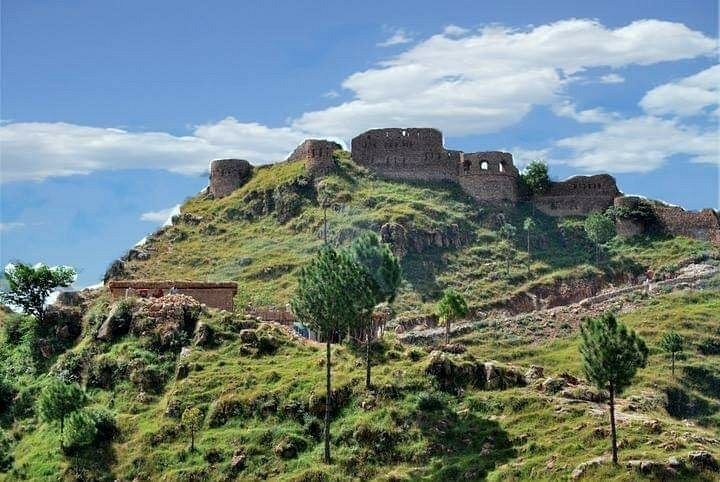
Let us be straight with you: Karchai Fort will not impress anyone looking for a polished heritage attraction. There is no signage, no guide, no cafe. What it offers is something increasingly rare — an authentic encounter with a historic fortress exactly as time and neglect left it. The fort sprawls irregularly across its hilltop, its limestone walls following the contours of the peak, with niches and slit windows of varied sizes decorating the fortification walls. Two great water tanks of burnt brick and lime mortar still survive in part. Inside, the rooms have mostly collapsed to vegetation-covered foundations, and potsherds scatter the ground underfoot. For anyone who finds beauty in ruins, it is genuinely moving.
The fort’s documented history gives the visit real weight. The official heritage survey of Azad Jammu and Kashmir — conducted by the Taxila Institute of Asian Civilizations at Quaid-i-Azam University and published in 2020 — records Qila Karchai as a large fort of strategic importance, attributing it possibly to the Sikh/Dogra period (1799–1849 CE). Its size and commanding position indicate it once held a central defensive role in this border country. Standing among its walls, you are reading a chapter of 19th-century frontier history that few travelers ever open.
There is also an urgency to visiting now. The same official survey notes, bluntly, that nearby villagers use the fort as a quarry — taking its stones for roads, houses, and field boundaries — and that cattle graze among its dense vegetation. The fort is classified as “Not Protected” and the survey calls for immediate conservation. Visiting responsibly, photographing, and writing about Karchai Fort is a small act of witness for a site that may not survive many more decades of quarrying. Heritage travelers increasingly seek out exactly these endangered places, and Karchai is a textbook case.
Finally, the fort anchors a rewarding wider trip. Khuiratta tehsil is one of Kotli’s most scenic corners — forested hills, the shrine of Mai Toti Sahiba just 4 km away, viewpoints toward the border, and easy combinations with Tatta Pani’s hot springs and Throchi Fort. Karchai works beautifully as the historical centerpiece of a two-day Kotli heritage circuit.
History of Karchai Fort, Kotli
The honest history of Karchai Fort begins with an admission: much about it remains undocumented, and what we know comes primarily from the 2020 heritage survey by the Taxila Institute of Asian Civilizations. That survey — the most authoritative documentation of the site — describes a large fort on a peak, irregular in plan, built of limestone set in lime mortar, with a south-west entrance, guard-room structures just inside, two large water tanks of burnt brick and lime mortar, and rooms that are now mostly destroyed. On the evidence of its construction and form, the survey attributes the fort possibly to the Sikh/Dogra period, placing it in the relative chronology of 1799–1849 CE — the era when Sikh power under Maharaja Ranjit Singh and then Dogra rule under the Jammu rajas reshaped the hill states of this region.
Local tradition tells a different story: some accounts in the area associate the fort — often called Karjai or Kurjai Fort locally — with the Mughal Emperor Akbar. This is worth mentioning because it shows how the fort lives in local memory, but travelers should know that the official archaeological assessment favors the later Sikh/Dogra attribution. Such conflicting traditions are common for undocumented hill forts, and only proper excavation and study could settle the question — study that has never happened, since the fort has no protected status and no conservation program.
The region’s broader history frames the fort’s likely role. Kotli district sits in the historic frontier zone between the Punjab plains and the Kashmir valley, a country of small Rajput and tribal chiefdoms — including the Mangral Rajputs who built the better-documented Throchi Fort near Gulpur. In the 19th century this country passed from Sikh to Dogra control (Maharaja Gulab Singh took the Jammu and Kashmir territories in the 1840s–1850s), and hill forts like Karchai served as garrisons, signaling posts, and refuges. Its hilltop position, water tanks, and guard rooms all speak to a working military function rather than a palace.
In living memory, the fort’s story is one of quiet decay. Without protection or maintenance, its stones have been carried off for village construction, its rooms have collapsed under vegetation, and its floors are grazed by livestock. The 2020 survey’s verdict — “needs immediate protection and conservation” — remains the last official word on Qila Karchai. Visiting today means seeing a 19th-century frontier fort at the very moment when its survival is in question.
Top Things to Do in Karchai Fort, Kotli
Explore the Fort Walls and Entrance
Enter, as everyone did, from the south-west — the historic entrance, flanked by the remains of guard-room structures just inside. Walk the wall lines and study the masonry: limestone blocks set in lime mortar, with niches and slits of varied sizes set into the fortifications, some still showing decorative patterning around them. The irregular plan follows the hilltop’s contours, so the circuit is a pleasant scramble with constantly changing views. Watch your footing — there are no railings and some edges are sheer.
See the Great Water Tanks
The two large water tanks, built of burnt brick in lime mortar, are among the fort’s most impressive survivals. They speak to the garrison’s central problem — water on a hilltop — and to the engineering that solved it. Runoff and stored water in tanks like these could sustain a fort through a siege or a dry summer. They survive “up to some extent,” in the survey’s careful phrase, so photograph them now; brick robs and weather are steadily reducing them.
Climb to the Highest Point for the Panorama
The fort crowns its peak, and the views repay the climb: rolling forested hills, terraced fields, Khuiratta town below, and on clear days the layered ridges running toward the Line of Control. Sunrise and late afternoon are the best times — the low light rakes across the ruined walls and the valleys fill with soft haze. Bring a wide-angle lens; the fort’s scale only reads in context with its landscape.
Visit the Shrine of Mai Toti Sahiba
About 4 km from Khuiratta, the shrine of Mai Toti Sahiba draws hundreds of visitors daily and makes a natural companion stop to the fort. The contrast is lovely: a living, visited shrine beside a silent, abandoned fortress, both rooted in the same hills. Dress modestly and follow the customs of devotees at the shrine.
Walk the Old Steps and Guard Posts
Remains of steps leading into and out of the fort survive, along with the guard-room foundations at the entrance. Tracing these on foot gives you the garrison’s-eye view: how sentries watched the approaches, where the gate could be held. It is the closest you will come to the fort’s working life, and it costs nothing but attention.
Famous Places In and Around Karchai Fort, Kotli
- Mai Toti Sahiba Shrine — revered shrine about 4 km from Khuiratta, visited by hundreds daily.
- Khuiratta Forest Park — forested recreation area in the tehsil, good for picnics.
- Throchi Fort — the Mangral-built hill fort near Gulpur, Kotli’s other great fortress, now under restoration review.
- Tatta Pani Hot Springs — natural hot springs on the Poonch River, a classic Kotli excursion.
- Mahuli Waterfall — one of Kotli’s scenic waterfalls.
- Kaini Bayan Temples — ancient temples in Kotli district; see our Kaini Bayan Temples guide.
How to Reach Karchai Fort, Kotli
Karchai Fort is reached via Khuiratta, a tehsil of Kotli district about 38 km beyond Kotli town; the fort itself stands roughly 4 km from Khuiratta. From Islamabad, the drive to Kotli is approximately 133 km — about 3 to 3.5 hours — via Kahuta and the Holar–Kotli road. From Kotli, follow the road to Khuiratta (under 1.5 hours), then take local guidance for the final track and climb to the hilltop. The nearest major airport is Islamabad International Airport, about 124–133 km from Kotli.
From Lahore, the journey is approximately 400 km — typically 7 to 8 hours — via the motorway to Islamabad/Rawalpindi and onward through Kahuta to Kotli. From Karachi, fly to Islamabad (about 2 hours) and continue by road; the all-road journey is over 1,300 km and impractical for a short trip. Road conditions from Islamabad to Kotli are generally good paved highway; the Kotli–Khuiratta road is paved but hill-country narrow in places; the final approach to the fort is a rough track followed by a foot climb of 20–40 minutes depending on your starting point.
Public transport (coaches and vans) runs from Rawalpindi/Islamabad to Kotli, and local vans connect Kotli to Khuiratta — but for the fort itself you will want a private car or hired jeep plus a local guide from Khuiratta, as the hilltop track is unsigned. A sturdy vehicle with decent clearance is advisable for the last stretch. Travel in daylight, and avoid the hilltop in heavy rain when the track and rocks turn slippery.
Route Details
- Islamabad → Kahuta → Holar: Drive southeast via Kahuta on the N-39 toward the Azad Kashmir boundary (about 2 hours).
- Holar → Kotli: Cross into AJK on the Holar–Kotli road and continue to Kotli town (about 1–1.5 hours from Holar).
- Kotli → Khuiratta: Head east on the Khuiratta road, about 38 km through hill country (about 1–1.5 hours).
- Khuiratta → fort base: Take the local track toward the fort hill (about 4 km); hire or follow a local guide — the turnoff is unsigned.
- Climb to the fort: A 20–40 minute uphill walk on the old path and steps to the hilltop ruins.
Where to Stay in Karchai Fort, Kotli
There is no accommodation at the fort — plan to sleep in Khuiratta or Kotli. Khuiratta town has small, simple guesthouses catering to shrine visitors and travelers; expect basic but serviceable rooms at budget-friendly rates. Kotli, as the district headquarters, offers a wider choice of mid-range hotels with attached restaurants, hot water, and parking — the sensible base for a two-day heritage circuit covering Karchai Fort, Throchi Fort, and Tatta Pani.
Do not expect luxury anywhere on this route; do expect genuine hospitality. Book by phone ahead in summer and on public holidays, when Azad Kashmir’s hotels fill with domestic tourists. If you are camping-inclined, the forested areas around Khuiratta suit tents in fair weather — ask local permission, camp away from the fort’s archaeology, and leave no trace. Whatever you choose, start for the fort early in the morning to enjoy the hilltop in good light and return before dusk.
Where to Eat: Local Foods of Karchai Fort, Kotli
The food of Kotli district is hearty Pahari–Kashmiri country cooking, and it is one of the trip’s quiet pleasures. The traditional dish to try is Pothi Chaval — also called Lobia Chaval — black-eyed peas cooked rich and dark, served over rice; it is the beloved everyday dish of the region and available at food stalls and small hotels across Kotli. Alongside it you will find the familiar comforts of Pakistani highway food done well: chicken karahi, dal fry, kebabs, and fresh tandoori naan, plus Rajma-chawal (kidney beans with rice) in the dhabas.
Kotli town has the area’s best restaurants — a spread of local favorites serving desi and barbecue dishes — while Khuiratta’s eateries are simpler dhaba-style affairs, which is exactly right after a fort climb. Carry water and snacks for the hilltop itself; there are no shops at the fort. A full dhaba meal in this region remains very budget-friendly, and the doodh patti at a Khuiratta tea stall, taken with a view of the hills, is worth the trip on its own.
Weather in Karchai Fort, Kotli
Kotli district sits at moderate elevation with a subtropical hill climate: hot summers, mild winters, and a monsoon that greens the hills dramatically. At the fort’s exposed hilltop, expect it to feel a few degrees cooler and windier than the valley towns, with strong sun at midday. Summer highs in the region can approach 40°C, while winter days are mild and pleasant — making the cooler months the most comfortable for climbing to the fort.
| Season | Temperature Range (approx.) | Conditions |
|---|---|---|
| Winter (Dec–Feb) | 5°C to 18°C | Mild and clear; excellent for the fort climb; chilly mornings on the hilltop |
| Spring (Mar–May) | 15°C to 32°C | Warm and green; wildflowers; comfortable for exploring |
| Summer (Jun–Aug) | 28°C to 40°C | Hot in the valleys; monsoon rain July–August greens the hills but makes tracks slippery |
| Autumn (Sep–Nov) | 12°C to 30°C | Clear skies post-monsoon; harvest season; ideal photography weather |
Language and Culture of Karchai Fort, Kotli
The primary languages of Kotli district are Pahari and Gujari, with Urdu and Punjabi also widely spoken — visitors using Urdu will have no trouble communicating in Khuiratta’s bazaars and with guides. The population is a mix of Pahari-speaking farming communities and Gujjar herders, with a culture shaped by the hills: terrace farming, livestock, and strong community and shrine traditions.
Cultural notes for the fort visit: the hilltop is an archaeological site, even if unprotected — do not remove stones, potsherds, or artifacts, and do not add to the quarrying that is already damaging it. Take only photographs. Dress modestly, especially when combining the trip with the Mai Toti Sahiba shrine. Ask before photographing villagers, and if a local family is grazing cattle near the fort, a friendly greeting goes a long way — these are the fort’s de facto custodians.
Shopping in Karchai Fort, Kotli
There are no shops at the fort and no souvenir industry around it — which, frankly, suits the place. Do your shopping in Khuiratta’s bazaar and Kotli town: fresh and dried fruits from the surrounding orchards (walnuts and apricots in season), Pahari-style woolen shawls, and everyday bazaar goods. Kotli’s markets are the district’s commercial hub, with a wider range of clothing, dry fruits, and local produce.
There is no shopping mall in this part of Kotli district, and travelers should not expect one — retail here is traditional bazaar retail. If you want to support the local economy around the fort, buy your supplies, meals, and guide services in Khuiratta itself; the town sees few tourists, and your spending is noticed and appreciated.
Travel Tips for Karchai Fort, Kotli
Packing Essentials
Sturdy walking shoes with grip are essential — the hilltop is rocky and uneven, with no maintained paths or railings. Carry sun protection, drinking water, and snacks; there is nothing at the top. A camera with a good zoom captures both the masonry details and the valley panoramas. In summer add a hat and extra water; in winter add a warm layer for the windy hilltop.
Safety Tips
The area is peaceful for travelers, but the fort itself demands caution: unprotected drops, loose masonry, and no safety infrastructure. Keep children close and do not climb unstable wall sections. Visit in daylight and descend well before dusk. Hiring a local guide from Khuiratta is strongly recommended — not just for the route, but for context and for introducing you to the site respectfully.
Money & Connectivity
Carry cash — there are no ATMs at the fort or in the immediate villages, and the nearest reliable ATMs are in Kotli town. Mobile coverage from the major networks is generally available in Khuiratta and along the main roads, though it can fade on the hilltop itself. Fuel up in Kotli; fill water bottles there too.
Best Time to Visit Karchai Fort, Kotli
Autumn (October to November) — The Best Window
Post-monsoon clarity, comfortable temperatures, and golden light on the ruined walls make autumn the ideal season. The hills are green from the rains, the tracks are dry, and the panoramas are at their sharpest. If you make one trip, make it now.
Winter (December to February) — Mild and Quiet
Kotli’s winters are mild rather than harsh, so the fort climb is comfortable on sunny days — though mornings on the exposed hilltop are chilly. Expect solitude; you may have the entire fortress to yourself.
Spring (March to May) — Green and Pleasant
Spring brings wildflowers to the hillsides and pleasant climbing weather before the summer heat. A lovely second choice, especially combined with the shrine’s busier season.
Summer (June to August) — Hot, Then Wet
Early summer is hot for the climb — start at dawn. The monsoon (July–August) transforms the hills into deep green but makes the track and rocks slippery; visit only in dry spells and wear proper footwear.
Final Thoughts
Karchai Fort will never be a mainstream attraction, and perhaps it should not be. Its power lies precisely in being forgotten: a great Sikh/Dogra-period hill fortress, documented by archaeologists and ignored by almost everyone else, waiting on its peak for travelers curious enough to climb. The walls, the tanks, the guard rooms, the potsherds underfoot — all of it is real, unmediated history.
Go in autumn, hire a guide in Khuiratta, walk the walls gently, and photograph everything. Sites like Karchai survive on attention: every visitor who treats the fort with respect, and every article that records its condition, adds a little weight to the case for protecting it. The 2020 survey said it needs immediate conservation. Six years on, the stones are still waiting — and so is the view from the top.
FAQs
Where is Karchai Fort located?
Karchai Fort (Qila Karchai, locally Karjai Fort) stands on a hilltop near Khuiratta tehsil in Kotli district, Azad Jammu and Kashmir — about 38 km beyond Kotli town and roughly 4 km from Khuiratta, at approximately 33.35°N, 74.06°E.
What is the best time to visit Karchai Fort, Kotli?
October–November is ideal for clear skies and comfortable climbing weather. December–February is mild and quiet; March–May is green and pleasant. Avoid the monsoon months of July–August, when the track gets slippery.
How do I reach Karchai Fort from Islamabad?
Drive approximately 133 km (3–3.5 hours) via Kahuta and Holar to Kotli, continue 38 km to Khuiratta, then take the local track about 4 km to the fort hill and climb 20–40 minutes on foot. Hire a local guide in Khuiratta, as the route is unsigned.
Who built Karchai Fort?
The official heritage survey (Taxila Institute of Asian Civilizations, 2020) attributes the fort possibly to the Sikh/Dogra period (1799–1849 CE). Local tradition sometimes associates it with the Mughal Emperor Akbar, but the archaeological assessment favors the later date.
Is Karchai Fort safe to visit?
The area is peaceful, but the fort is an unprotected ruin with no railings or maintained paths — exercise caution on walls and edges, visit in daylight, and keep children supervised. A local guide is strongly recommended.
Can families visit Karchai Fort?
Yes, with caveats: the 20–40 minute uphill walk and uneven, unprotected ruins suit older children and fit adults better than toddlers or elderly travelers. Combine it with the Mai Toti Sahiba shrine and Khuiratta’s picnic spots for a family day.
Where can I stay near Karchai Fort?
There is no accommodation at the fort. Khuiratta town has simple guesthouses, and Kotli — the district headquarters — offers a wider range of mid-range hotels, making it the best base for a heritage circuit.
What food is available near Karchai Fort?
Try Pothi Chaval (Lobia Chaval), the region’s traditional black-eyed-pea-and-rice dish, plus classic dhaba fare — karahi, dal, kebabs, fresh naan — in Khuiratta and Kotli. Carry water and snacks for the hilltop climb itself.