Beneath the dry plains of Balochistan runs one of humanity’s great quiet miracles: a network of hand-dug underground channels that has carried mountain groundwater to desert villages for over two thousand years — without a single pump, powered by nothing but gravity. This is the karez system (also spelled kariz or qanat), and in 2016 Pakistan placed it on UNESCO’s Tentative List as the “Karez System Cultural Landscape,” recognizing it as a living heritage of world significance. Visiting it is unlike any other sightseeing in Pakistan: there is no single monument, but a whole landscape shaped by water. This Karez System Cultural Landscape travel guide will help you decide whether this journey into the desert’s hidden plumbing belongs on your itinerary — and exactly when to go. For more of the region, see our Hanna Lake guide, our Archaeological Museum of Balochistan guide, and the Explore Pakistan collection.
The karez country is for curious travelers: engineering minds, culture lovers, photographers of desert landscapes, and anyone who wants to understand how human ingenuity made the desert bloom. Come to see the shafts and channels — stay for the story of the communities that have managed this water together for centuries.
Quick Facts
- Location: Across Balochistan province, concentrated in the northwest near the Afghan and Iranian borders; representative sites near Quetta, Pishin, Mastung, and Muslim Bagh
- Altitude: High desert plains and valleys, roughly 1,400–1,700 m around Quetta and Pishin
- Famous For: Ancient gravity-fed underground irrigation tunnels, on UNESCO’s Tentative List (2016), and a unique water-sharing culture
- Nearest City: Quetta, the provincial capital and gateway to the karez districts
- Accessibility: Road access from Quetta to karez villages (Pishin ~50 km, Mastung ~50 km, Muslim Bagh further east); sites are rural and unsigned — local guidance needed
- Known Landmarks: The four representative karezes: Spin Tangi and Chashma Achozai (Quetta district), Ulasi (Pishin), Kandeel (Muslim Bagh, Killa Saifullah)
- Best For: Cultural travelers, engineering enthusiasts, photographers, researchers, and offbeat explorers
Why Visit Karez System Cultural Landscape
Here is the pitch, and it is a strong one: the karez is one of the oldest continuously used technologies on Earth, and Balochistan holds one of its greatest surviving landscapes. The technology originated in Persia in the first millennium BC and traveled the Silk Road in both directions — reaching Balochistan even before it reached western China in the Han dynasty. When you stand beside a line of karez shafts marching across a desert plain toward a green patch of orchards, you are looking at an idea that is over two thousand years old and still working. Few travel experiences connect you so directly to the deep history of human ingenuity.
The engineering itself is beautiful in its simplicity. A karez begins at a “mother well” dug into an aquifer at the foot of mountains. From there, a gently sloping tunnel carries water underground for kilometres — sometimes many kilometres — emerging at a “daylight point” from which open channels feed fields and villages. Along the tunnel’s course, vertical shafts rise to the surface every few dozen metres: these are not for drawing water but for construction and maintenance, dug by hand by specialist workers. Because the water travels underground, almost none is lost to evaporation in the fierce desert heat; the flow needs no energy, resists earthquakes and floods, and varies only gradually between wet and dry years. It is, as UNESCO’s assessment puts it, an environmentally sustainable technology of extreme relevance as the world faces growing water scarcity.
But the karez is not just engineering — it is a whole social world, and that is what makes it a cultural landscape. In rural Balochistan, karez water is owned communally in time-shares called shabanas — 24-hour cycles of water rights, typically 18 to 32 per karez — and a person’s standing in the community is measured by the size of their water share, not their landholding. Maintenance is a collective tribal enterprise, governed by tradition and jirga decision-making. Visiting the karez country means encountering this living system: the shareholders, the water distributors, the orchards the water sustains.
There is urgency, too. The karez landscape is shrinking: the area it irrigates fell from around 200,000 hectares in 1971 to about 27,000 hectares in 2012, as subsidized tube wells have drawn down water tables by as much as 3 metres per year in some districts. Roughly 1,053 karezes still function, with another 270 restorable — but every year of inaction loses more. Visiting now, learning the story, and supporting the communities and organizations working to revive karezes (like the successful restorations in Pishin district) is meaningful travel in the truest sense.
History of Karez System Cultural Landscape
The karez story begins in ancient Persia in the first millennium BC, where the technology of tapping groundwater through gently sloping tunnels — known as qanat in Persian — was developed for the arid Iranian plateau. From there it spread along the great corridors of history: westward across the Middle East and North Africa, eastward along the Silk Road into Central Asia and Xinjiang (arriving in China during the Han dynasty, 206 BC–24 AD), and into Balochistan somewhat earlier. Two great waves of diffusion shaped its spread: first the expansion of the Achaemenid Empire (550–330 BC), which carried Persian hydraulic knowledge from the Indus to the Nile; then the expansion of Islam from the 7th century onward, which spread karez technology westward across North Africa and into Spain.
In Balochistan, the karez became the foundation of settled life. Wherever a karez could be built, a village could exist — and the map of historic settlement in the province follows the map of possible karez almost exactly. For more than a millennium, these underground channels were the linchpin of water in the region, supporting orchards of apricot, apple, and almond, fields of wheat, and the agro-pastoralist communities that tended them. The system was labor-intensive to build but resilient and sustainable to run, with low lifetime costs and no energy needs.
The modern chapter is one of decline and attempted revival. Until the 1980s the karez remained Balochistan’s major irrigation method; then cheap diesel and subsidized electric tube wells allowed farmers to pump groundwater directly, crashing water tables and drying karez after karez. Recognizing the crisis, Pakistan’s Council of Research in Water Resources (PCRWR) pressed the case for international recognition, and in December 2015 Pakistan moved to place the karez on the heritage agenda; UNESCO listed the “Karez System Cultural Landscape” on its Tentative List in April 2016 (reference 6110), submitted by the Government of Pakistan’s Directorate General of Archaeology, with four representative karezes proposed: Spin Tangi and Chashma Achozai in Quetta district, Ulasi in Pishin, and Kandeel at Muslim Bagh in Killa Saifullah.
Revival efforts have shown what is possible. The Balochistan Rural Support Programme rehabilitated the Alusai and Thaimrak karezes in Pishin district, benefiting over 26,000 people across three union councils — expanding cultivated land, improving orchard crops, and notably defusing tribal conflicts over water. The karez, it turns out, is not just heritage. It may be part of Balochistan’s water future.
Top Things to Do in Karez System Cultural Landscape
Walk a Line of Karez Shafts
The most evocative karez sight is also the simplest: a dotted line of crater-like shaft openings marching across a bare plain toward distant mountains. Each shaft marks the course of the underground tunnel below. Near Quetta’s representative karezes — Spin Tangi and Chashma Achozai — and around Pishin’s Ulasi karez, you can walk these alignments with a local guide, who can explain how the shafts were dug, how the tunnel gradient was surveyed by hand, and how maintenance crews still descend them. It is archaeology you can walk through.
See the Daylight Point and Open Channels
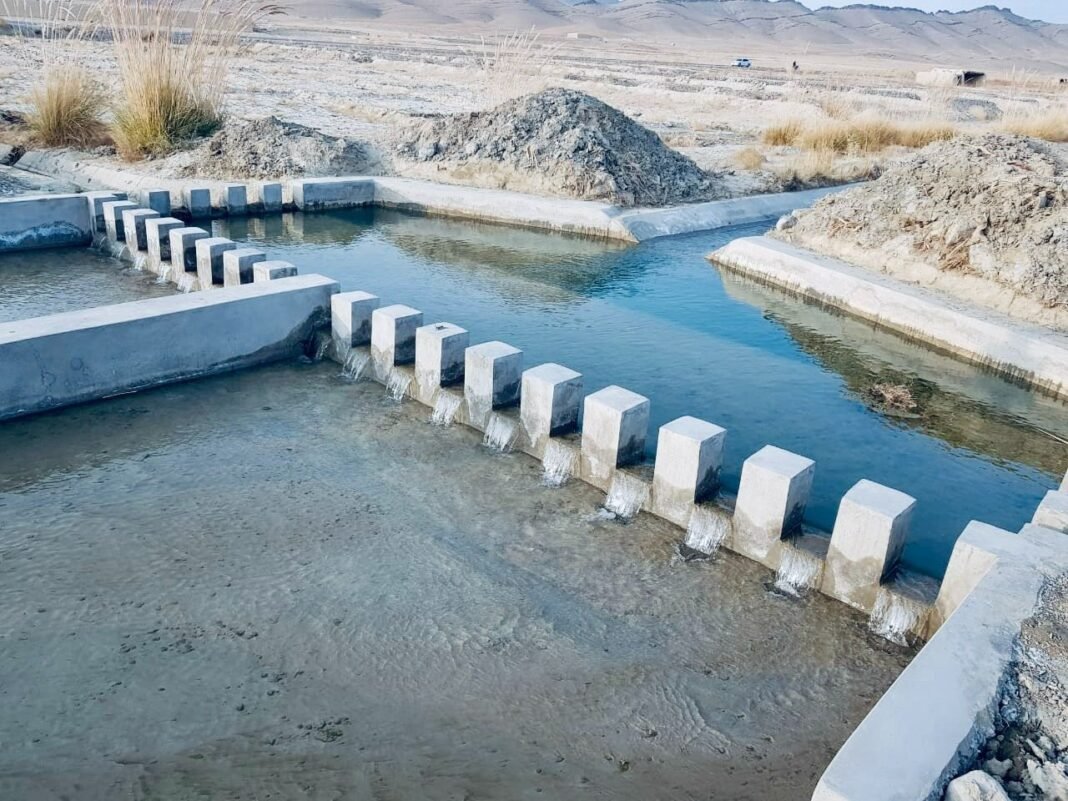
Follow a karez to where it surfaces: the daylight point, where the tunnel’s water emerges into open, often stone-lined channels that carry it to fields and villages. These surfacing points are the social heart of the karez — places to wash, water livestock, and gather — and they make the whole system legible: mountain water, underground journey, village life. The rehabilitated karezes in Pishin district show this beautifully, with clean channels feeding green orchards.
Visit an Orchard Watered by Karez
The proof of the karez is in the orchard. Balochistan’s famous fruit belt — apricots, apples, almonds, grapes, pomegranates — exists because of karez water, and visiting a working orchard in Pishin or Mastung during fruit season connects the engineering to the table. Farmers are generally welcoming to respectful visitors; ask your guide to arrange it, accept the offered fruit, and listen to how water shares divide the harvest.
Learn the Shabana System from Shareholders
If your guide can arrange a meeting with karez shareholders (shareeqs), take it. The shabana system — water rights measured in 24-hour cycles, divided and inherited like property, governing who gets water when — is a masterpiece of communal resource management. Learning how upstream and downstream users are paired so everyone shares an equal stake in maintaining the whole channel reveals a social technology as sophisticated as the engineering.
Photograph the Desert-Water Contrast
For photographers, the karez landscape offers a powerful visual theme: the stark geometry of shaft lines on empty plains, the sudden green of karez-fed fields against dun-colored hills, and the daily life gathered at channel edges. Early morning and late afternoon give the desert its best light; the dry air keeps everything razor sharp. Always ask before photographing people at work.
Famous Places In and Around Karez System Cultural Landscape
- Spin Tangi Kareze (Quetta) — one of the four UNESCO-proposed representative karezes.
- Chashma Achozai Kareze (Quetta) — the second Quetta representative site.
- Ulasi Kareze (Pishin) — the Pishin representative, in the heart of the orchard belt.
- Kandeel Kareze (Muslim Bagh, Killa Saifullah) — the easternmost representative site.
- Mastung — historic town amid karez country, with its own ancient waterworks.
- Hanna Lake, Quetta — the colonial-era reservoir east of Quetta; see our Hanna Lake travel guide.
- Archaeological Museum of Balochistan, Quetta — for the region’s deeper history; see our museum guide.
How to Reach Karez System Cultural Landscape
Quetta is the gateway. From Islamabad, the practical option is to fly to Quetta (about 1.5 hours; several daily flights) — the road journey is roughly 900 km and takes the better part of two days. From Lahore, fly via Islamabad or Karachi to Quetta (about 1,000 km by road). From Karachi, Quetta is about 700 km by road (10–12 hours) or a short flight. Quetta’s airport connects the karez country to the rest of Pakistan.
From Quetta, the karez districts fan out in every direction. Pishin — home of the Ulasi karez and the rehabilitated Alusai and Thaimrak karezes — lies about 50 km north on a good road (about an hour). Mastung is about 50 km south. The Spin Tangi and Chashma Achozai representative karezes are in Quetta district itself, including sites around 30 km southwest of the city. Muslim Bagh (Kandeel karez) is further east in Killa Saifullah district — a longer drive best done as an overnight trip.
Within the karez villages, sites are rural and unsigned: you will need a local guide, ideally arranged through a Quetta-based tour operator or through community contacts. A private car or hired 4×4 is the way to move between sites; public vans serve the main towns (Pishin, Mastung) but not the karez fields. Road conditions on the main arteries are generally good; village tracks are rough but passable. Because some karez areas lie near sensitive border districts, check current travel advisories and travel with a reputable local operator who knows the permissions landscape.
Route Details
- Fly to Quetta: Islamabad → Quetta by air (about 1.5 hours) is the sensible gateway; base yourself in Quetta city.
- Quetta → Pishin (Ulasi & rehabilitated karezes): About 50 km north on the main highway (about 1 hour); arrange village access through a local guide.
- Quetta → Spin Tangi / Chashma Achozai: Representative karez sites within Quetta district, including areas southwest of the city — half-day trips.
- Quetta → Mastung: About 50 km south; combine with Mastung’s historic sites.
- Quetta → Muslim Bagh (Kandeel karez): Longer eastern drive in Killa Saifullah district; plan as an overnight excursion.
Where to Stay in Karez System Cultural Landscape
Base yourself in Quetta. The city offers the full range from budget guesthouses to comfortable mid-range and a few upper-end hotels, with restaurants, ATMs, and tour operators — everything a karez expedition needs. The karez districts themselves have only very basic options: simple guesthouses in Pishin and Mastung towns, and village hospitality if arranged through local contacts. For the full experience, consider one night in a Pishin guesthouse to catch the karez fields at dawn, when the light and the working life are at their best.
Book Quetta accommodation in advance during spring and autumn, the city’s pleasant seasons. In the villages, do not expect online booking — your guide or operator arranges stays by phone. Camping is possible in the open country with local permission, but the desert nights are cold outside summer and water must be carried. Wherever you sleep, the pattern is the same: Quetta for comfort, the districts for the experience.
Where to Eat: Local Foods of Karez System Cultural Landscape
Balochistan’s cuisine is built for the desert and the mountains, and the karez districts serve it at its most authentic. The signature dish is sajji — whole lamb or chicken roasted slowly over coals, simply seasoned, and eaten with naan or rice. Dampukht (slow-steamed meat), rosh (meat cooked in its own fat with minimal spice), and kaak — the hard, stone-baked bread of the nomads — complete the classic Balochi table. In Quetta, Landhi-style dried meat, Balochi pulao, and fresh trout-family fish from northern streams appear on restaurant menus.
The karez connection is on the plate too: the orchards the channels water produce some of Pakistan’s finest fruit — in season, Pishin’s apples and apricots, Mastung’s produce, and Quetta’s famous dried fruits and nuts are unmissable. Eat in Quetta’s food streets for variety (budget-friendly to mid-range), and in the villages accept what is offered — a home-cooked meal with a karez shareholder’s family, eaten sitting on the floor, is worth more than any restaurant. Carry water and snacks for field days; village shops stock only basics.
Weather in Karez System Cultural Landscape
The karez country is high, dry, and extreme: Quetta and Pishin sit around 1,400–1,700 metres, with hot, dry summers, cold winters that can bring snow, and glorious spring and autumn in between. The dry air means big daily temperature swings — scorching afternoons and chilly nights are normal. Rain is scarce and precious, which is precisely why the karez was invented. For field visits, spring and autumn offer the kindest conditions.
| Season | Temperature Range (approx.) | Conditions |
|---|---|---|
| Winter (Dec–Feb) | -5°C to 12°C | Cold, with frost and occasional snow; clear desert light; dress warmly |
| Spring (Mar–May) | 10°C to 28°C | Pleasant and blooming; orchards in blossom; the best season for field visits |
| Summer (Jun–Aug) | 22°C to 36°C | Hot and very dry; work around midday heat; monsoon barely reaches here |
| Autumn (Sep–Nov) | 8°C to 28°C | Clear, calm, and golden; harvest season in the orchards; excellent for travel |
Language and Culture of Karez System Cultural Landscape
The karez districts are a linguistic crossroads: Balochi in the south and west, Pashto in the north and around Quetta and Pishin, Brahui in pockets of the central highlands, and Urdu as the lingua franca of towns and tourism. Your guide will bridge any gaps in the villages. The culture is tribal and hospitable — Baloch and Pashtun traditions of guest-honor (melmastia) run deep, and a visitor showing genuine interest in the karez is welcomed warmly.
Cultural notes: dress modestly and conservatively, especially in villages; ask before photographing people, particularly women; and treat the karez infrastructure with respect — these are working water systems, not ruins. Do not enter shafts or tunnels (they are dangerous), do not contaminate channels, and walk around cultivated fields rather than through them. If you are invited to a jirga discussion or a shareholder meeting about water, listen more than you speak — you are witnessing a governance system older than most nations.
Shopping in Karez System Cultural Landscape
Quetta is the shopping hub: its bazaars are famous across Pakistan for dried fruits and nuts — almonds, pistachios, walnuts, dried apricots and mulberries, much of it grown with karez water — at prices well below the rest of the country. Balochi handicrafts are the other prize: embroidered fabrics and shawls, camel-skin and leather work, and traditional jewelry. The main bazaars around the old city offer the full range; bargaining is expected and good-natured.
In Pishin and Mastung, buy fruit in season directly from orchard sellers — the freshest and cheapest you will find. There are shopping malls in Quetta city for those who want them, but the real shopping experience here is the bazaar: sacks of dried apricots, the smell of spices, and shopkeepers who will insist you taste before you buy. Carry cash for village purchases; cards work in Quetta’s larger stores.
Local Events and Festivals
Balochistan’s most famous cultural event is relevant to every karez traveler: the Sibi Mela, held annually in February in Sibi. This historic livestock and cultural festival — one of the oldest traditional fairs in the region — brings together Baloch and Pashtun tribes with cattle shows, camel and horse events, traditional music, dance, and sprawling bazaars. It is a vivid window onto the tribal culture that built and maintains the karez system, and it pairs naturally with a winter karez itinerary (combine Sibi in February with Quetta and Pishin field visits). Dates can shift slightly year to year, so confirm with local tourism sources before planning around it.
Travel Tips for Karez System Cultural Landscape
Packing Essentials
Pack for desert extremes: sun protection (hat, sunscreen, sunglasses) year-round, layered clothing for big day-night temperature swings, sturdy walking shoes for rough village tracks, and a warm jacket even in spring and autumn. Carry more water than you think you need for field days, plus snacks — village shops are basic. A camera with a zoom lens captures the shaft alignments; a notebook is useful for the stories shareholders will tell you.
Safety Tips
Travel with a reputable local operator who knows the districts and current conditions; some karez areas are remote and near sensitive border zones, so check travel advisories before going. Never enter karez shafts or tunnels — they can collapse and contain bad air. Stay with your guide in villages, keep to daylight hours for field visits, and let your hotel know your daily plans.
Money & Connectivity
ATMs and banks are available in Quetta; carry cash for Pishin, Mastung, and all village expenses — there are no card facilities in the karez fields. Mobile coverage from the major networks works in Quetta and the main towns but thins out in the villages; download offline maps. Fuel up in Quetta before district runs.
Best Time to Visit Karez System Cultural Landscape
Spring (March to May) — The Best Season
Spring is the karez country’s finest hour: pleasant temperatures, orchards in blossom, green fields against the desert, and comfortable days for walking shaft lines and channels. This is the season to plan for.
Autumn (September to November) — Harvest Gold
Autumn brings harvest season — fruit picking, golden light, clear skies — and the year’s second-best travel window. The fields are at their most productive, which makes the karez story tangible.
Winter (December to February) — Crisp and Cultural
Winter days are cold but often brilliantly clear, and February offers the Sibi Mela for culture lovers. Dress warmly; field mornings start near freezing.
Summer (June to August) — Hot but Workable
Summer is hot and very dry — authentic desert conditions, but demanding. Visit shaft sites early morning or late afternoon, rest midday, and carry plenty of water.
Final Thoughts
The Karez System Cultural Landscape will not give you the postcard hit of a famous lake or fort. What it gives you is deeper: a two-thousand-year-old answer to the question of how humans live in the desert, still working, still governed by the communities that built it, and now recognized by UNESCO as heritage of world significance. Walking a shaft line at dawn, watching water surface at a daylight point exactly as it has for centuries, you understand something essential about ingenuity and cooperation.
Go in spring, base in Quetta, hire a good local guide, and take the time to meet the people behind the water. The karez is endangered — every visitor who learns its story becomes part of the argument for saving it. In a century of climate crisis, this ancient desert technology may have more to teach us than ever. That alone makes the journey worthwhile.
FAQs
Where is the Karez System Cultural Landscape located?
Across Balochistan province, Pakistan, concentrated in the northwest near the Afghan and Iranian borders. The four UNESCO-proposed representative karezes are Spin Tangi and Chashma Achozai (Quetta district), Ulasi (Pishin), and Kandeel (Muslim Bagh, Killa Saifullah).
What is the best time to visit the Karez System Cultural Landscape?
March to May (spring blossom season) and September to November (harvest season) are ideal. Winter is cold but clear, with the Sibi Mela in February; summer is very hot and dry.
How do I reach the karez sites?
Fly to Quetta (about 1.5 hours from Islamabad), then travel by road: Pishin is about 50 km north, Mastung about 50 km south, with representative karez sites in Quetta district itself. Village sites are unsigned — arrange a local guide through a Quetta operator.
What is a karez, exactly?
A karez (kariz/qanat) is an underground channel that taps groundwater at a “mother well” and carries it by gravity through a gently sloping hand-dug tunnel to a “daylight point,” where it surfaces to irrigate fields. Vertical shafts along its course allow construction and maintenance. The technology originated in Persia in the first millennium BC.
Is the karez on the UNESCO World Heritage List?
It is on UNESCO’s Tentative List (inscribed April 2016, reference 6110), submitted by Pakistan’s Directorate General of Archaeology — the step before a full World Heritage nomination. Four representative karezes were proposed for the listing.
Is the Karez System Cultural Landscape safe for families?
Yes, with a good local operator: the Quetta-based sightseeing is easy, and village visits suit older children. The sites involve walking on rough ground, so they are less ideal for toddlers or travelers with mobility issues. Always travel with a guide and check current advisories.
Where can I stay near the karez sites?
Quetta is the base, with hotels across all budgets. Pishin and Mastung have simple guesthouses for overnight district trips. Village stays can be arranged through local contacts via your guide.
What food should I try in the karez region?
Classic Balochi dishes: sajji (slow-roasted lamb), dampukht, rosh, and kaak bread — plus the orchard fruit the karezes water: apples, apricots, almonds, and Quetta’s famous dried fruits and nuts from the city bazaars.