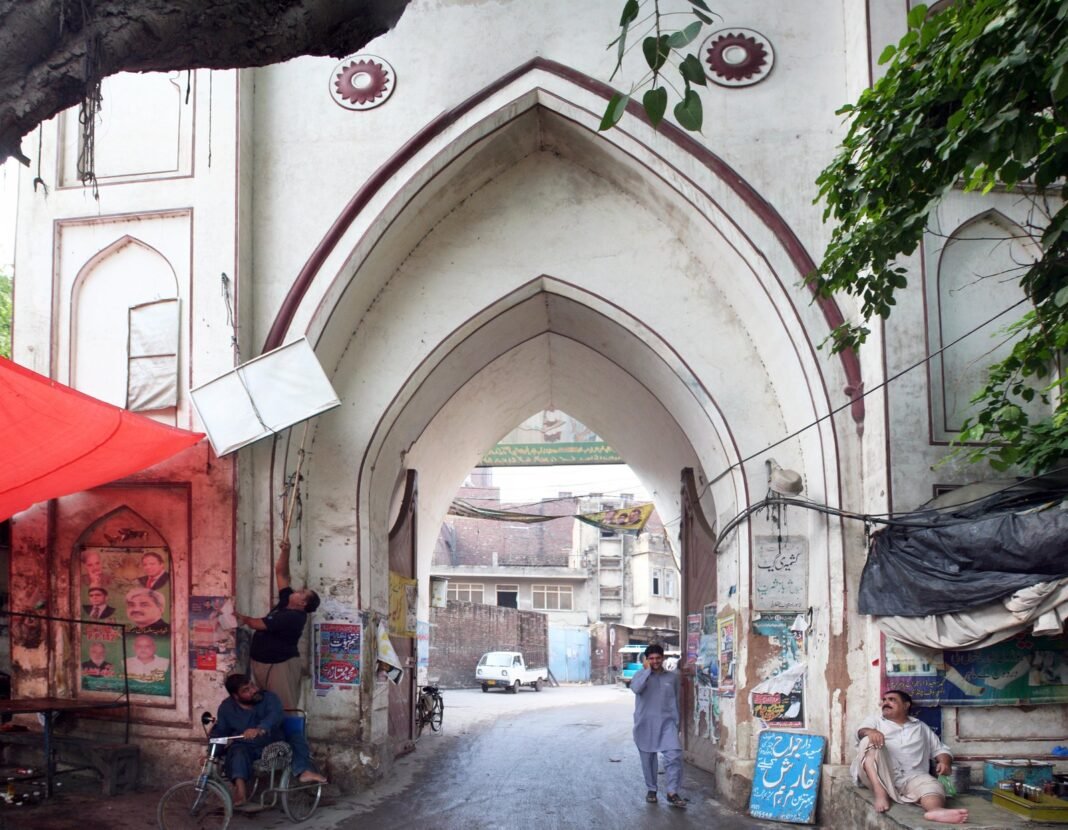
Every great old city has a doorway that tells its story, and for Lahore that doorway might just be Kashmiri Gate. Also, it stands on the northern edge of the Walled City — one of only six of Emperor Akbar’s thirteen gates to survive into the present day — named simply and beautifully for the direction it faces: toward Kashmir. For centuries, traders and travellers coming down from the valley entered Lahore through this very arch. The bazaar inside still hums with the commerce they started.
What makes Kashmiri Gate special right now is that it has just been given a new lease on life. Also, the Walled City of Lahore Authority completed a meticulous conservation of the gate — consolidating its structure, restoring its fresco lining, clearing encroachments, and making its great doors functional again. Visiting today, you walk through a monument that is both 400-plus years old in spirit and freshly reborn.
This Kashmiri Gate travel guide is your companion to one of Lahore’s most atmospheric heritage corners: why it deserves a place on your itinerary, the best time to go, what to see in and around it, and how to fold it into a perfect Walled City day.
Quick Facts
- Location: Northern edge of the Walled City of Lahore, Punjab, Pakistan
- Altitude: Around 215 metres (Lahore plains)
- Famous For: One of the thirteen historic gates of Lahore’s Walled City, named for facing Kashmir; the bustling Kashmiri Bazaar inside; freshly conserved heritage architecture
- Nearest City: It is inside Lahore itself — minutes from the Lahore Fort, Badshahi Mosque, and Delhi Gate
- Accessibility: Very easy — in the heart of Lahore, reachable by car, rickshaw, or on foot as part of a Walled City walk
- Known Landmarks: The gate structure itself, Kashmiri Bazaar, Gayan Singh’s Haveli (now a women’s college), nearby Azam Cloth Market
- Best For: Heritage lovers, photographers, shoppers hunting for traditional clothes and dupattas, and anyone exploring Lahore’s old city
Why Visit Kashmiri Gate
Lahore’s Walled City is a place you feel in your bones — narrow lanes, centuries-old havelis, the smell of frying samosas, artisans working the way their grandfathers did. Also, Kashmiri Gate is one of the finest entry points into that world. Unlike a museum piece roped off from life, the gate is still a working threshold: shoppers stream through it into Kashmiri Bazaar, children run errands beneath its arch. The whole beautiful chaos of the old city flows around it.
The gate rewards the curious. Also, its name alone opens a window onto history. In fact, this was the Kashmir-facing entrance, the door through which valley traders brought shawls, dry fruits, and goods into Mughal Lahore. In addition, the present structure dates from the British period (the original Mughal gate was razed). Its story stretches back to Akbar’s great fortification of the city in the 16th century. And thanks to the recent conservation, you can now see it as it deserves to be seen: structurally sound, its fresco work restored, its doors opening and closing again for the first time in living memory.
Practically, Kashmiri Gate is the perfect anchor for a Walled City day. Also, it pairs naturally with the gate circuit — Delhi Gate, Roshnai Gate, the survivors of Akbar’s thirteen — and with the great Mughal monuments just beyond the walls: the Lahore Fort and Badshahi Mosque are minutes away. In fact, come for the heritage, stay for the shopping (Kashmiri Bazaar’s women’s formal wear and dupattas are famously inexpensive), and leave with a camera full of photographs and a genuine feel for old Lahore.
History of Kashmiri Gate
The story begins with Emperor Akbar, who ruled from 1556 to 1605. Also, in the middle of the 16th century — sometime between 1584 and 1598. In fact, Lahore served as his capital. Akbar ringed the city with a 9-metre-high brick rampart pierced by twelve gates and one narrow passage: thirteen openings in all. They were shut after sunset against raiders and regulated the flow of goods and people. Kashmiri Gate was the northern entrance, named because it faces toward Kashmir, and historically the traders and merchants coming down from the valley entered Lahore through it.
Why the British Razed the Gates
The gates survived the Mughals, the Sikhs, and the centuries — but not the British. Also, in the 19th century, the colonial administration deliberately demolished most of the gates to weaken the old city’s defences, leaving the walled city open and controllable. The original Kashmiri Gate was razed to the ground. The structure that stands today was built by the British government in its current form and renovated several times since. Of Akbar’s thirteen, only six survive today: Bhati, Delhi, Kashmiri, Lohari, Roshnai. Sheranwala — and of these, only Roshnai Gate retains its original Mughal shape and grandeur.
The latest chapter is a happy one. Also, on 7 November 2023, the Walled City of Lahore Authority (WCLA) began a dedicated conservation of Kashmiri Gate at an estimated cost of Rs 11.47 million, completing it in about ten months. In fact, the work consolidated the structure, restored the fresco lining to its authentic outlook, repaired the floor around the gate for smooth visitor access, rebuilt the cemented fortification (pucca qilai) of the walls and roof, removed encroachments and commercial clutter around the monument. It arranged illumination and electricity. Before the project the gate’s doors were not functional; today they open and close again.
It is heritage conservation done right — and a reason to visit now.
Top Things to Do in Kashmiri Gate
Walk Through the Gate Itself
Start with the obvious: walk through it slowly. Also, stand beneath the arch and look up at the restored fresco lining and the consolidated masonry. Notice the great wooden doors — functional again after the WCLA conservation — and imagine the centuries of Kashmiri traders, Mughal officials, and ordinary Lahoris who passed under this same span. Early morning, before the bazaar crowds build, is the most atmospheric time.
Explore Kashmiri Bazaar
Inside the gate lies Kashmiri Bazaar, the real draw for many visitors. It is known for inexpensive women’s formal dresses, dopattas (dupattas), clothes, and footwear — a favourite hunting ground for Lahoris shopping for wedding-season outfits on a budget. Even if you are not buying, the bazaar is a sensory feast: bolts of fabric in every colour, shopkeepers calling out their wares. Also, the particular energy of an old-city market that has operated in some form for centuries.
See Gayan Singh’s Haveli
Next to Kashmiri Bazaar stands Gayan Singh’s Haveli, also called Asif Jah’s Haveli — a beautiful example of Mughal-era residential architecture. Also, the building now houses the Government Fatima Jinnah College for Women. You cannot wander through it as a tourist. Its facade is worth admiring from the street as a reminder of the grand havelis that once lined these lanes.
Brave the Azam Cloth Market
A short distance from the gate is the Azam Cloth Market, described as one of the biggest cloth markets in Asia. If Kashmiri Bazaar is a neighbourhood market, Azam is the wholesale ocean — endless rows of fabric merchants, tailors, and textile traders. It is overwhelming in the best way. Also, a must for anyone interested in Pakistan’s textile trade.
Do the Gate Circuit
Kashmiri Gate is one stop on the great circuit of surviving gates. Also, walk or rickshaw to Delhi Gate — the most famous of the survivors — and to Roshnai Gate, the only one retaining its original Mughal grandeur, tucked between the Badshahi Mosque and Lahore Fort. Each gate has its own character and its own bazaar spilling out around it. Together they tell the story of the walled city better than any single monument.
Photograph Old Lahore
The gate, the bazaar lanes, the haveli facades, the porters with their loaded carts. Also, Kashmiri Gate is a street photographer’s delight. The restored gate photographs beautifully in the soft light of early morning or late afternoon. Be courteous: ask before photographing shopkeepers and residents, and respect the women’s college — no photography directed at the institution.
Famous Places In and Around Kashmiri Gate
- Lahore Fort: The great Mughal citadel, minutes away — pair it with the gate for a full heritage day.
- Badshahi Mosque: One of the world’s great mosques, an easy walk from the gate circuit; see our Badshahi Mosque travel guide.
- Delhi Gate: The most celebrated surviving gate, with its own bazaar and the famous WCLA guided heritage walks starting nearby.
- Roshnai Gate: The “Gate of Lights,” the only survivor in original Mughal form, between the mosque and the fort.
- Azam Cloth Market: One of Asia’s largest cloth markets, a short hop from Kashmiri Gate.
- Fort Road Food Street: Lahore’s beloved food street near the fort — the perfect dinner stop after a day in the old city.
How to Reach Kashmiri Gate
Kashmiri Gate is inside Lahore, so “reaching” it really means reaching the Walled City. If you are already in Lahore, it is a short drive or rickshaw ride from Gulberg, DHA. Also, the Cantonment — head for the Circular Road that rings the old city and enter through or near the gate. The Orange Line metro and local buses serve the old city area. From the nearest station it is a short rickshaw hop. Many visitors simply fold Kashmiri Gate into a Walled City walking tour, arriving via Delhi Gate or the Fort area and walking the lanes between the gates.
From Islamabad, Lahore is about 375 km via the M-2 motorway — roughly 4 to 4.5 hours by car. Also, a one-hour flight to Allama Iqbal International Airport. In fact, from the airport, the Walled City is a 30-45 minute drive depending on traffic. From Karachi, fly to Lahore (about 1,100 km by air, under two hours). The road journey is the better part of 20 hours and not recommended for a heritage weekend. Lahore is also well connected by rail and by Daewoo-style coach services from every major city in Punjab.
Inside the Walled City, the best transport is your feet. The lanes around Kashmiri Gate are narrow and made for walking. For longer hops between gates, auto-rickshaws are plentiful and cheap; agree on the fare before you climb in. Parking near the gate is extremely limited, so if you are driving, park on the Circular Road or in a designated lot and walk in.
Route Details
A perfect Kashmiri Gate day (on foot + rickshaw): Start early at Delhi Gate and walk the old-city lanes toward Kashmiri Gate (or take a rickshaw along the Circular Road between gates). Also, spend the morning at Kashmiri Gate and Kashmiri Bazaar, admire Gayan Singh’s Haveli from outside, and browse the Azam Cloth Market. Meanwhile, after lunch, rickshaw to Roshnai Gate, the Lahore Fort, and Badshahi Mosque for the afternoon. End the day with dinner at Fort Road Food Street as the monuments light up. The whole circuit is compact — the gates, fort, and mosque all sit within a couple of kilometres of each other.
Where to Stay in Kashmiri Gate
You will not sleep at the gate itself — there are no hotels inside the monument — but Lahore offers everything. The Walled City is an easy ride from all of it. For heritage atmosphere, consider the boutique guesthouses and restored havelis in and around the old city (a small but growing scene, including WCLA-associated stays) — waking up inside the Walled City is an experience in itself.
Most visitors stay in Gulberg, DHA. Also, the Cantonment, where Lahore’s luxury five-stars, business hotels, and mid-range options cluster. In fact, the Walled City is a 20-40 minute drive depending on traffic. Budget travellers will find plenty of economical hotels and guesthouses around the Railway Station and on the roads ringing the old city. Wherever you stay, plan your Kashmiri Gate visit for the morning to beat both the crowds and the afternoon heat.
Where to Eat: Local Foods of Kashmiri Gate
The old city is one of Pakistan’s great food destinations. Also, the area around Kashmiri Gate puts you in the middle of it. In fact, Start the Lahori way: a traditional breakfast of halwa puri, paye (slow-cooked trotters), or nihari at one of the old city’s beloved breakfast spots, washed down with a tall glass of lassi. These are the flavours Lahoris cross the city for. They are at their best in the lanes near the gates.
For lunch, the dhabas and small restaurants around Kashmiri Bazaar and the Circular Road serve Lahori staples — chicken karahi, daal, seekh kebabs, and fresh tandoori naan — at very budget-friendly prices. Also, in the evening, head to Fort Road Food Street near the Badshahi Mosque, where rooftop restaurants serve barbecue platters and desi cuisine with a floodlit view of the mosque and fort. Street food is everywhere: samosas, pakoras, dahi bhallay, fresh sugarcane juice, and kulfi. Eat where the locals queue — it is the most reliable quality signal in the old city.
Carry bottled water, and go easy on street food if your stomach is new to it.
Weather in Kashmiri Gate
Lahore’s climate is famously extreme: furnace summers, a steamy monsoon, and short, sweet winters. Since Kashmiri Gate is all walking — open courtyards, bazaar lanes, sun-baked ramparts — the season matters enormously. Winter is the golden season for the Walled City; high summer is for the very determined (or the air-conditioned).
| Season | Temperature Range | Conditions |
|---|---|---|
| Winter (Dec-Feb) | Approx. 5-20°C | Cool, pleasant, perfect for walking; December-January mornings can bring dense fog — allow extra travel time |
| Spring (Mar-Apr) | Approx. 15-33°C | Warming and lovely; the traditional season of Basant festivities |
| Summer (May-Jun) | Approx. 30-45°C | Brutally hot; explore only in the early morning, rest midday, resume in the evening |
| Autumn (Oct-Nov) | Approx. 15-32°C | Pleasant and clear; an excellent time for the gate circuit and photography |
Note: the monsoon (July-September) brings heat, humidity, and heavy downpours that can flood old-city lanes — carry rain protection and wear sturdy shoes.
Language and Culture of Kashmiri Gate
The Walled City speaks Punjabi in its most colourful Lahori form, with Urdu universal and English workable in shops catering to tourists. Do not be surprised if shopkeepers switch effortlessly between all three. Also, Lahori hospitality is a real thing, and visitors are fussed over.
The old city is traditional and close-knit. Also, dress modestly — covered shoulders and knees for everyone; women will be more comfortable with a dupatta or scarf. The lanes are living neighbourhoods, not a theme park: keep noise down in residential streets, ask before photographing people (especially women), and respect prayer times — many shops pause briefly and the mosques fill. Bargaining is expected in Kashmiri Bazaar and Azam Cloth Market. Do it with a smile and good humour, and you will often be offered tea mid-negotiation. On Fridays, bazaars open later after Jummah prayers — plan a late start.
Shopping in Kashmiri Gate
Shopping is half the point of coming here. Kashmiri Bazaar is the headline act: women’s formal and semi-formal dresses, dopattas/dupattas in every fabric and colour, ready-made clothes, and footwear — all famously inexpensive compared to Lahore’s malls. It is a favourite for wedding-season shopping, and the variety is genuinely impressive.
Then there is the Azam Cloth Market, one of Asia’s biggest cloth markets, where you can buy fabric by the metre at wholesale-ish prices — bring a tailor’s measurements if you are serious. Nearby Urdu Bazaar (near the walled city) is Pakistan’s most famous book market, wonderful for browsing. And throughout the old city you will find traditional khussa shoes, brassware, and sweets. There are no shopping malls at the gate itself. This is old-school bazaar shopping at its best. Bargain politely, compare a few shops before buying, and keep cash handy as most stalls do not take cards.
Local Events and Festivals
Basant (traditionally February-March): Lahore’s legendary kite festival belongs to the whole city. Also, the Walled City — with its rooftop culture — is its spiritual home. For generations, spring meant skies thick with colourful kites and rooftops crowded with celebrants. The festival has faced bans and restrictions over safety concerns in various years, so check the current status before planning a trip around it — but when it flies, there is nothing else like it.
Eid Festivals: The old city transforms during Eid-ul-Fitr and Eid-ul-Adha. The bazaars around the gates stay open late, special sweets appear, and the festive crowds are a spectacle in themselves. Note that most shops close on the Eid days themselves.
Independence Day (14 August): The Walled City celebrates with characteristic enthusiasm — flags, lights, and fireworks around the historic gates.
Travel Tips for Kashmiri Gate
Packing Essentials
Comfortable walking shoes (the lanes are uneven and you will cover kilometres), a scarf or dupatta, sun protection, bottled water. Also, a small daypack. In fact, in winter, a warm jacket for foggy mornings. In summer, the lightest clothes you own and a plan to retreat indoors at midday.
Safety Tips
The Walled City is busy and generally safe for tourists during the day. Also, it is crowded and chaotic — keep valuables secure, beware of pickpockets in packed bazaars, and keep your phone tucked away in the densest crowds. The lanes are a maze: use a map app or hire a WCLA guide (their guided heritage walks are excellent and reasonably priced). Stick to well-trafficked lanes after dark, and travel in a group in the evening.
Money & Connectivity
Most bazaar stalls are cash-only, so carry enough rupees. There are ATMs and banks on the Circular Road and in the commercial areas nearby, but not inside the bazaar lanes themselves. All major mobile networks work well in Lahore, and 4G coverage around the Walled City is good.
Best Time to Visit Kashmiri Gate
November to February — The Perfect Window
Cool, clear, made for walking. This is when the Walled City shows its best self: comfortable days, crisp light for photography. The bazaars at their liveliest. If you can only pick one season for this Kashmiri Gate travel guide to recommend, pick winter.
March-April and October — The Shoulder Months
Warm but very enjoyable, especially in the mornings and evenings. Spring occasionally brings Basant festivities; October brings relief after the monsoon with clear skies.
May to September — For the Hardy
Extreme heat followed by monsoon humidity makes midday exploration punishing. If you must come, do the gates at dawn, retreat to air conditioning from late morning to late afternoon, and emerge for the food streets in the evening.
Final Thoughts
Kashmiri Gate is small as monuments go — a single arch in a crowded old city — but it opens onto something enormous: four centuries of Lahore’s history, a living bazaar culture. A conservation success story worth celebrating. In a city of grand Mughal showpieces, there is something deeply appealing about a gate that still does its original job, letting the life of the old city flow through it every day.
Walk it in the morning light, haggle for a dupatta in Kashmiri Bazaar, trace the gate circuit to Delhi Gate and Roshnai Gate, and finish the day watching the Badshahi Mosque glow from a Fort Road rooftop. That is Lahore at its most Lahore — and it starts at Kashmiri Gate. Also, for more heritage journeys across the country, explore our Explore Pakistan series.
FAQs
Where is Kashmiri Gate located?
Kashmiri Gate stands on the northern edge of the Walled City of Lahore, Punjab — minutes from the Lahore Fort, Badshahi Mosque, and Delhi Gate.
Why is it called Kashmiri Gate?
It is named for the direction it faces — toward Kashmir. Also, historically, traders and merchants coming down from the valley entered Lahore through this gate.
What is the best time to visit Kashmiri Gate?
November to February. Also, Lahore’s weather is cool and perfect for walking the old city. In fact, avoid the midday heat of May-June.
How do I reach Kashmiri Gate?
It is inside Lahore — take a car or rickshaw to the Circular Road ringing the Walled City and walk in. Also, From Islamabad it is ~375 km via M-2; from Karachi, fly to Lahore.
Is Kashmiri Gate safe for families?
Yes, during the day it is a busy, lively area popular with families and shoppers. Keep valuables secure in crowded bazaars and consider a WCLA guided walk.
What can I buy at Kashmiri Bazaar?
Inexpensive women’s formal dresses, dopattas/dupattas, ready-made clothes, and footwear — plus the vast Azam Cloth Market nearby for fabric.
What else is near Kashmiri Gate?
Delhi Gate, Roshnai Gate, Lahore Fort, Badshahi Mosque, Azam Cloth Market. Also, Fort Road Food Street are all within a couple of kilometres.
Has Kashmiri Gate been restored?
Yes. Also, the Walled City of Lahore Authority completed a Rs 11.47 million conservation (started November 2023), restoring the fresco work, consolidating the structure, and making the historic doors functional again.