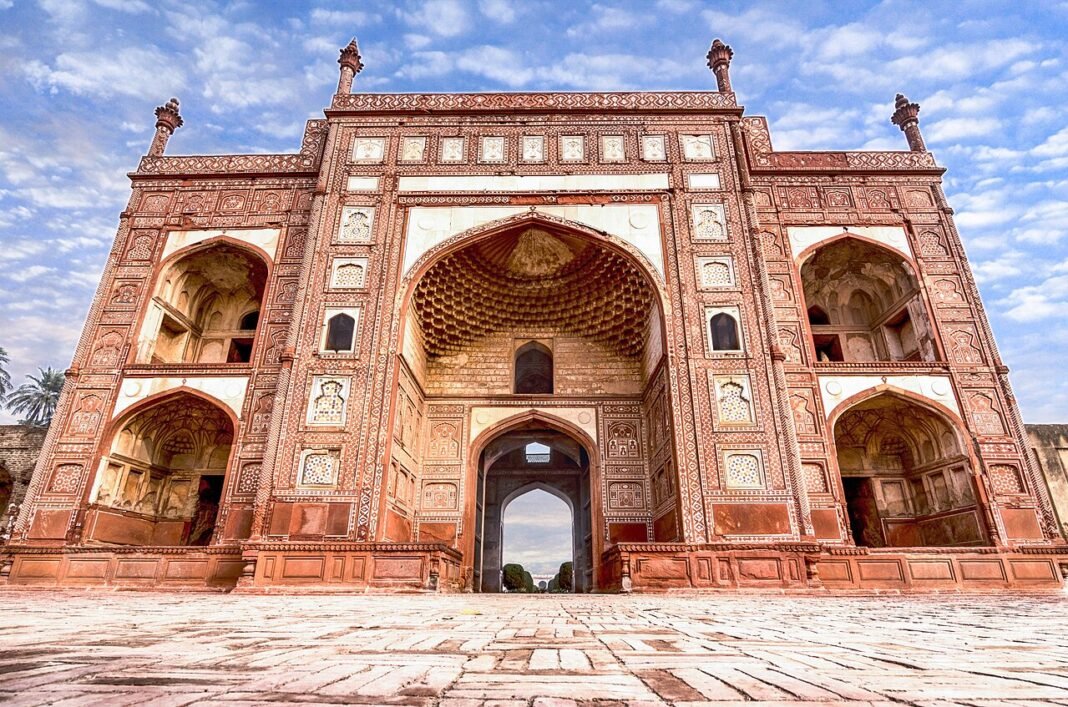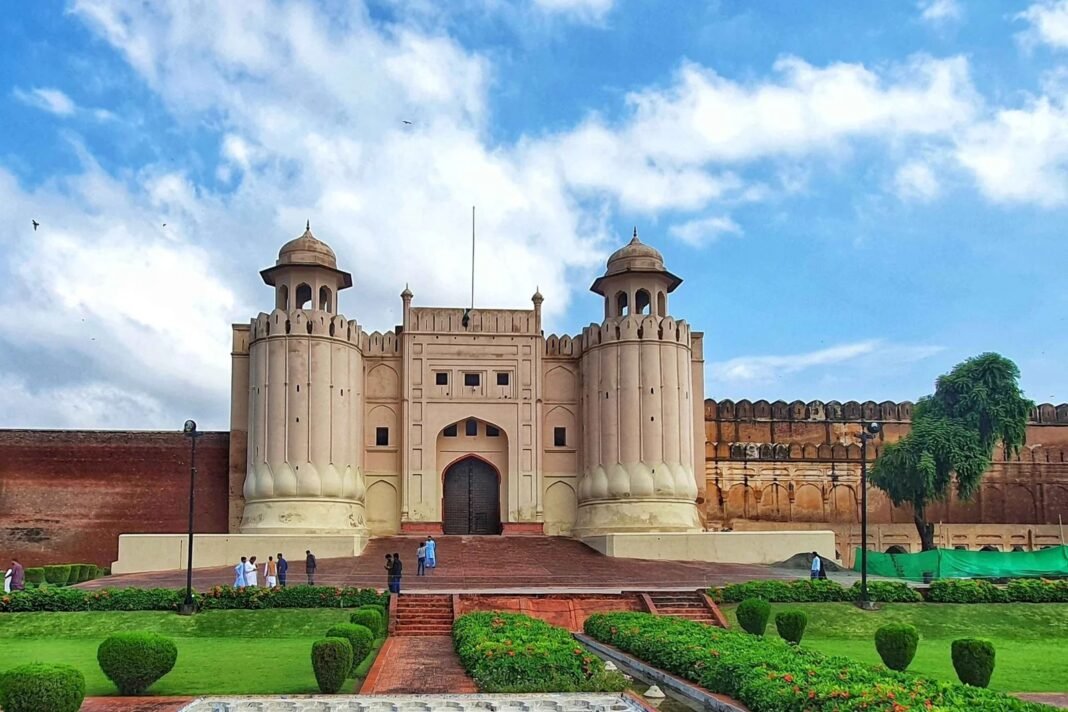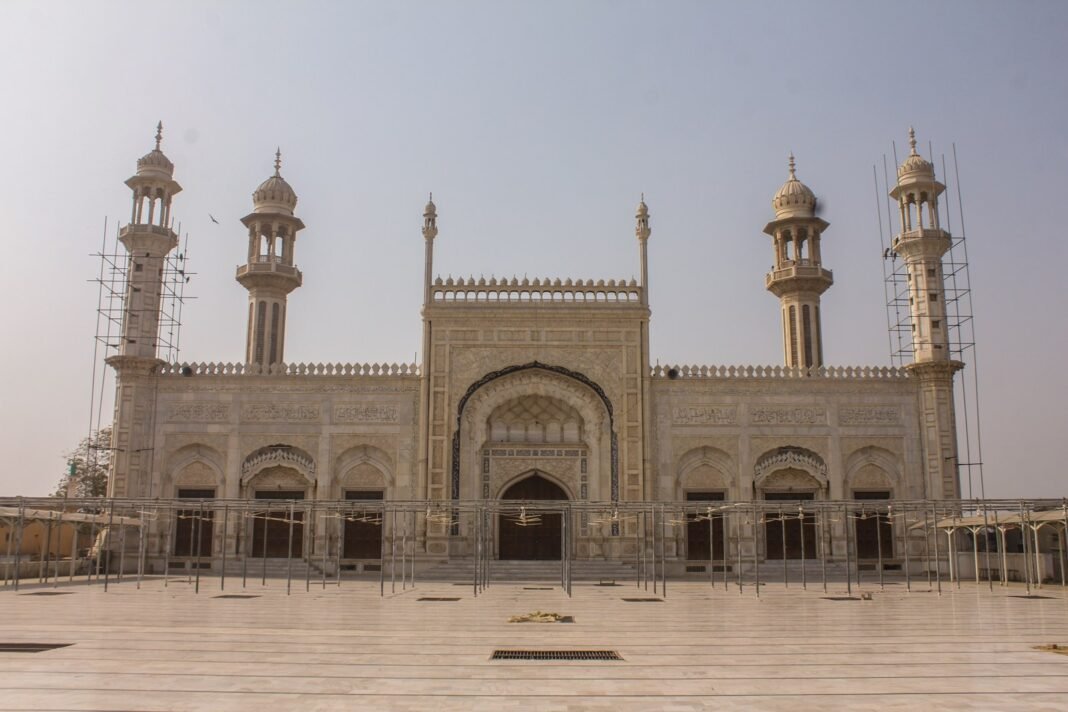
This Al-Sadiq Mosque, Bahawalpur travel guide covers everything a visitor needs: the mosque’s Nawabi history, the best time to visit, how to reach Bahawalpur from Lahore, Islamabad and Karachi, where to stay and eat, and the nearby palaces and forts that make the trip worthwhile. Whether you are planning a religious visit, a photography trip or a deep dive into the princely heritage of South Punjab, you will find the practical details below.
Quick Facts
- Location: Chowk Bazaar, Shahi Bazaar, in the old city of Bahawalpur, Punjab, Pakistan
- Famous For: A gleaming white-marble congregational mosque of the former Bahawalpur princely state, rebuilt by Nawab Sir Sadiq Muhammad Khan Abbasi V after his Hajj in 1935
- Capacity: Around 50,000 to 60,000 worshippers at a time, making it one of the largest mosques in Pakistan
- Area: 24 kanal
- Nearest City: Bahawalpur itself; Multan is around 100 km to the north
- Accessibility: Reachable by road (motorway and national highway network), rail, and domestic air links through Bahawalpur Airport
- Known Landmarks Nearby: Noor Mahal, Derawar Fort, Bahawalpur Museum, Lal Suhanra National Park
- Best For: Families, history and architecture lovers, photographers, religious travellers, and anyone exploring the princely heritage of South Punjab
Why Visit Al-Sadiq Mosque, Bahawalpur
Al-Sadiq Mosque stands in the middle of Bahawalpur’s old bazaar like a piece of carved ivory. The moment the white marble facade comes into view between the crowded shops of Shahi Bazaar, most visitors stop walking. It is that rare kind of building that manages to be both grand and graceful: two tall minarets, rows of arched openings, and walls of marble worked with Islamic calligraphy. You do not need to be an architecture student to feel the difference between this mosque and an ordinary one. The craftsmanship is visible from fifty metres away.
The second reason to visit is the story the mosque carries. This is not just a beautiful building; it is the congregational mosque of a princely state. The Nawabs of Bahawalpur ruled here for more than two centuries, and their love of learning and religion is written into these walls. Standing in the courtyard, you are standing in the devotional heart of the old capital. For anyone interested in how Pakistan’s regions looked before 1947, Bahawalpur is one of the most rewarding cities in the country, and Al-Sadiq Mosque is where that history feels most alive.
The third reason is practical. Bahawalpur is one of the easiest heritage cities in South Punjab to visit. The mosque sits in the city centre, so you can combine it in a single day with Noor Mahal, the Bahawalpur Museum and the old bazaars, and you can extend the trip to Derawar Fort in the Cholistan desert. Few places in Pakistan pack this much royal history into such a small, walkable area. Photographers get the white marble glowing at golden hour; food lovers get the famous Nawabi sohan halwa a few streets away; and families get a calm, spacious courtyard that children can enjoy without the crowds of Lahore or Islamabad.
Finally, the spiritual atmosphere is worth the journey on its own. At prayer times the mosque fills with thousands of worshippers, and on Fridays the whole bazaar seems to move toward it. Even outside prayer hours, the hall and courtyard have a stillness that visitors remember long after they leave Bahawalpur. If you are building a South Punjab itinerary, this mosque deserves the same place on your list that Badshahi Mosque holds in Lahore.
History of Al-Sadiq Mosque, Bahawalpur
The history of Al-Sadiq Mosque begins more than two hundred years ago, when the princely state of Bahawalpur was still taking shape. According to the regional archaeological handbook produced for the Government of Punjab, the foundation of the mosque was laid by Khawaja Noor Muhammad Maharvi, the Chishti Sufi saint who served as the spiritual mentor of the Abbasi rulers. For the emerging princely capital, the mosque was meant to be a devotional nucleus, a place where the new city’s religious and community life would gather.
Over the nineteenth century, successive Nawabs of Bahawalpur took up the construction and embellishment of the mosque again and again. The Abbasi family, which ruled Bahawalpur from the 1700s until the state’s accession to Pakistan in 1947, treated the mosque as a state project. Each generation added to it, which is why the building carries layers of Nawabi taste rather than the hand of a single architect or a single decade.
The defining chapter came in 1935. Sir Sadiq Muhammad Khan Abbasi V, the last sovereign Nawab of Bahawalpur, returned from the Hajj and commissioned a major rebuilding of the mosque. The white marble you see today, the grand scale of the prayer hall, the two towering minarets and the calligraphy worked into the stonework all belong to this 1930s transformation. The mosque takes its name from this Nawab, and the rebuilding is considered the last great monument commissioned by the princely state before it joined Pakistan.
Architecturally, the mosque draws openly on Mughal design, and visitors often compare it with Lahore’s Badshahi Mosque. The facade is dressed in moulded white marble, the front portico carries seven arched openings fitted with teak doors, and the inner chamber is ornamented with floral designs and inlay work in semi-precious stone. The building sits over a basement of shops and warehouses in the Chowk Bazaar, and it is approached most famously through Shahi Bazaar and the old Farid Gate, though the Ahmadpuri Gate side is closer for many visitors. With room for 50,000 to 60,000 worshippers, it remains one of the biggest mosques in the country and the principal congregational mosque of Bahawalpur.
Top Things to Do in Al-Sadiq Mosque, Bahawalpur
Admire the White Marble Architecture
Walk slowly around the exterior before you go inside. The marble facade, the carved calligraphy panels carrying the names of Allah and verses of the Quran, the lotus and floral motifs, and the twin minarets reward close looking. Morning light brings out the carving; late afternoon warms the whole building to a soft gold. This is the single best free architectural sight in Bahawalpur.
Visit During Prayer Time, Especially Jummah
If your schedule allows, plan your visit around one of the five daily prayers, and ideally the Friday congregational prayer. Watching tens of thousands of worshippers fill the courtyard and hall is an experience that photographs cannot fully capture. Non-Muslim visitors and tourists are generally welcome to observe respectfully from the designated areas, but check with the mosque management about access rules, since tourist entry to some sections is organised around prayer timings.
Explore Shahi Bazaar and the Old Gates
The mosque sits at the heart of the old city’s bazaar quarter. After your visit, walk out through Shahi Bazaar toward Farid Gate and Ahmadpuri Gate, the historic entry points of the walled city. The bazaar is a living museum of South Punjabi commerce: cloth merchants, sweet shops, spice sellers and coppersmiths, all within a few lanes of the mosque.
Photograph the Mosque at Golden Hour
The white marble photographs beautifully in the hour before sunset. The main facade faces a large open courtyard, so you can get clean, symmetrical shots without scaffolding or wires in most frames. Early mornings are quieter if you want the courtyard nearly empty.
Combine With a Heritage Day in Bahawalpur
Al-Sadiq Mosque pairs naturally with the city’s other royal landmarks. A well-planned day covers the mosque in the morning, Noor Mahal and the Bahawalpur Museum by afternoon, and the bazaar and sohan halwa shops in the evening. Travellers with two days add Derawar Fort and the Cholistan desert.
Famous Places In and Around Al-Sadiq Mosque, Bahawalpur
- Noor Mahal: The late nineteenth-century Italianate palace of the Nawabs, with chandeliers, period furniture and manicured lawns, a short drive from the old city.
- Derawar Fort: The massive square fort of the Cholistan desert, a day trip from Bahawalpur and the most dramatic sight in the region.
- Bahawalpur Museum: Established in 1976, with galleries on archaeology, Islamic art, the princely state and the region’s coins and manuscripts.
- Lal Suhanra National Park: A large protected area east of the city with desert, wetland and forest habitats and a lake.
- Sadiq Garh Palace: Another Nawabi palace of Bahawalpur, noted for its grand scale and elegant interiors.
- Gulzar Mahal: A historic royal residence in the city associated with the Abbasi family.
- Farid Gate and Ahmadpuri Gate: The surviving historic gates of the old city, both within walking distance of the mosque through the bazaar.
How to Reach Al-Sadiq Mosque, Bahawalpur
Reaching Al-Sadiq Mosque means reaching Bahawalpur, and the city is well connected by road, rail and air. Within the city, the mosque is in the old bazaar quarter, so once you arrive, a rickshaw or ride-hailing car will get you to Chowk Bazaar in minutes from almost anywhere.
From Lahore: The road distance is around 410 to 435 km depending on the route. The fastest option is the Lahore-Abdul Hakeem Motorway (M-3), then the M-4 toward Multan, then the national highway south to Bahawalpur, which takes roughly six hours of driving. The older N-5/GT Road route through Sahiwal and Multan is slightly longer at around seven hours. By rail, the Lahore-Bahawalpur line is about 390 km and trains take around seven hours.
From Islamabad: There is no direct short route; drive south on the motorway network via Lahore, which makes it a full-day journey of around nine to ten hours. Many travellers break the trip in Lahore or Multan. The practical alternative is to fly to Multan or Lahore and continue by road or rail.
From Karachi: This is a long overnight journey by road or rail, so most visitors from Karachi fly. Bahawalpur Airport (OPBW) handles domestic flights, and Multan International Airport, roughly 100 km away, offers more connections with an easy onward drive to Bahawalpur.
Nearest airport: Bahawalpur Airport, with domestic connections; Multan International Airport is the busier alternative about two hours north by road. Road conditions are good year-round on the motorways; the final city streets around Shahi Bazaar are narrow and congested, so park at the edge of the bazaar and walk in. Transport options include your own car, intercity buses and vans from Lahore and Multan, Pakistan Railways services to Bahawalpur station, and local rickshaws and ride-hailing cars within the city.
Route Details
- Lahore to Bahawalpur by road (fastest): Leave Lahore on the Lahore-Abdul Hakeem Motorway (M-3) southbound. At Abdul Hakeem, join the M-4 toward Multan. From Multan, take the national highway south to Bahawalpur. Enter the city and follow signs to the old city / Chowk Bazaar. Total: around 410 km, roughly six hours.
- Lahore to Bahawalpur by the classic route: Take the N-5 (GT Road) south through Okara, Sahiwal and Arifwala to Multan, then continue south to Bahawalpur. Slower at around seven hours, but it passes through the heart of South Punjab’s towns.
- By train: Board a Karachi-bound or Multan-bound train from Lahore Junction; Bahawalpur is a scheduled stop on the main line. From Karachi, take a Lahore/Peshawar-bound service and get off at Bahawalpur. Book sleeper or AC class for the overnight journey.
- Within Bahawalpur: From the railway station or airport, take a rickshaw or car to Shahi Bazaar. Ask for Jamia Masjid Al-Sadiq at Chowk Bazaar; every driver knows it. Visit in the morning to avoid the bazaar’s midday crowds.
Where to Stay in Al-Sadiq Mosque, Bahawalpur
Bahawalpur is a mid-sized city, and its hotels match that scale: comfortable and affordable rather than flashy. For a mosque-centred trip, staying near the city centre or along the main roads into the old city keeps everything within a short drive.
Mid-range hotels cluster around the city centre, Model Town and the roads near the railway station. These typically offer air-conditioned rooms, attached baths, room service and parking, and they are the most practical choice for families. Budget guesthouses are plentiful near the bus stands and the station area; they are simple but clean and cost a fraction of a hotel room. Government and institutional rest houses exist for entitled travellers, and a few farmhouse-style guesthouses on the city’s outskirts suit visitors who want quiet nights. Camping is not a city option, but travellers heading onward to the Cholistan desert and Derawar Fort sometimes camp with organised tour groups.
Book ahead during the winter tourist season (December to February) and on public holidays, when Bahawalpur’s hotels fill with visitors heading to Derawar and the desert. For wider choice and verified reviews, many travellers compare options in Multan as a backup base, but Bahawalpur itself is perfectly adequate for a two to three-night heritage stay. For broader trip ideas across the country, browse the Explore Pakistan section.
Where to Eat: Local Foods of Al-Sadiq Mosque, Bahawalpur
The one dish you must not leave Bahawalpur without tasting is Nawabi sohan halwa, the traditional sweetmeat of the former princely state. Famous since the days of the British Raj, it is made by cooking milk, sugar and wheat starch for hours, then enriching it with desi ghee and dry fruits including pistachios, almonds, cashews and walnuts. It comes in dry, soft and mukhaddy varieties, and shops even prepare a sugar-free version. Locals consider it a winter delicacy because its ghee and dry fruits provide warmth and energy, though it is eaten year-round and sent as a gift across Pakistan and abroad. One of the oldest makers, Haji Rasheed Sohan Halwa in the downtown Machhlee Bazaar area, has been running for five decades and is now in its third generation.
Beyond the halwa, the food streets and bazaars around the old city serve the hearty cuisine of South Punjab. Start the day with halwa puri and lassi at a traditional breakfast spot; the local lassi, served in tall glasses with a thick layer of malai, is a meal in itself. For lunch and dinner, expect desi-ghee-rich curries, saag and makki di roti in winter, grilled BBQ, chicken karahi and fresh tandoori rotis. Roadside dhabas near the bus stands serve filling meals at budget-friendly prices, while family restaurants in Model Town and Satellite Town offer cleaner sit-down dining.
A full meal at a local dhaba generally costs a few hundred rupees per person, while a comfortable restaurant dinner for two stays well within a modest budget. Vegetarians will find dal, sabzi, chana and palak paneer-style dishes everywhere, and fresh seasonal fruit, especially mangoes in summer and citrus in winter, is sold all over the city.
Weather in Al-Sadiq Mosque, Bahawalpur
Bahawalpur sits on the edge of the Cholistan desert, and its climate shows it: long, fiercely hot summers, a brief monsoon, and short, pleasant winters. The desert influence means low humidity for most of the year, sharp differences between day and night temperatures, and very little rain outside July and August. Plan your mosque visit and bazaar walks around this rhythm.
| Season | Temperature Range | Conditions |
|---|---|---|
| Winter (Dec-Feb) | 12°C to 27°C | Dry, sunny days and cool nights; the most comfortable season for sightseeing |
| Spring (Mar-Apr) | 19°C to 39°C | Warming up fast; pleasant mornings, hot afternoons by April |
| Summer (May-Jun) | 30°C to 44°C | Extremely hot and dry; outdoor sightseeing is difficult midday |
| Monsoon (Jul-Sep) | 29°C to 41°C | Hot and humid with most of the year’s rain, mainly in July and August |
| Autumn (Oct-Nov) | 19°C to 37°C | Cooling down; October can still be warm, November is pleasant |
Language and Culture of Al-Sadiq Mosque, Bahawalpur
The local language of Bahawalpur is Saraiki, spoken across South Punjab, and you will hear it in the bazaars around the mosque. Urdu is understood everywhere and works for all visitor needs, while Punjabi is also widely spoken. English is understood in hotels and by educated guides, but a few basic Urdu greetings go a long way with shopkeepers.
Culturally, Bahawalpur carries the manners of a former princely state. People are courteous, hospitality is taken seriously, and guests are treated with visible respect. The Abbasi Nawabs were patrons of learning and religion, and that heritage still shapes the city’s identity: expect a conservative, respectful atmosphere, especially around the mosque.
For visitors, the etiquette is straightforward. Dress modestly; women should cover their heads inside the mosque and wear clothing that covers arms and legs, and men should avoid shorts in the prayer areas. Remove your shoes before entering the prayer hall and leave them at the designated racks. Keep your voice low inside, ask before photographing worshippers, and avoid visiting during the Friday sermon unless you plan to attend the prayer. Bargaining in the bazaar is normal and friendly; start at around two-thirds of the quoted price and settle with a smile.
Shopping in Al-Sadiq Mosque, Bahawalpur
The lanes around Al-Sadiq Mosque are among the best shopping streets in South Punjab for traditional goods. Shahi Bazaar itself is the main event: cloth merchants sell embroidered fabrics, gota kinari (the gold-trimmed ribbon work of the region), khaddar and lawn, and ready-made shalwar kameez at prices far below Lahore or Karachi.
Bahawalpur is known for its embroidery and Cholistani crafts. Look for hand-embroidered dupattas and shawls, camel-skin and leather goods from the desert belt, and blue pottery and woodwork in the craft shops. The edible souvenir is obvious: boxes of Nawabi sohan halwa from Machhlee Bazaar travel well and are the gift every Bahawalpuri sends to relatives in other cities.
There is no large modern shopping mall clustered around the old city; for branded shopping, head to the newer commercial areas like Satellite Town and Model Town. In the old bazaar, carry cash, compare prices between two or three shops before buying, and check embroidery quality in daylight.
Travel Tips for Al-Sadiq Mosque, Bahawalpur
Packing Essentials
For winter visits (November to February), pack a warm jacket or shawl for the cool desert nights, plus a light sweater for the day. For summer, bring light cotton clothes, a wide-brimmed hat, sunglasses and sunscreen. Year-round essentials: comfortable walking shoes for the bazaar’s uneven lanes, a reusable water bottle, a headscarf (women) for mosque entry, and a power bank, since you will be out all day.
Safety Tips
Bahawalpur is generally a safe, welcoming city for tourists, and the area around the mosque is busy from morning to evening. Standard precautions apply: keep valuables out of sight in the crowded bazaar, agree on rickshaw fares before the ride, drink bottled or filtered water, and avoid the desert roads after dark unless you are with a local driver. During the hot months, plan outdoor walking for early morning or late afternoon and carry water.
Money & Connectivity
ATMs of all major banks are available in the city centre, Model Town and Satellite Town, but carry cash for the old bazaar, where most shops do not accept cards. Mobile signals from Jazz, Telenor, Zong and Ufone are strong across the city, and 4G data works well for maps and ride-hailing. Ask your hotel for the Wi-Fi password; most mid-range hotels offer it free.
Best Time to Visit Al-Sadiq Mosque, Bahawalpur
Winter (December to February): The Ideal Season
This is the best time to visit Al-Sadiq Mosque and Bahawalpur. Days are sunny and mild at 20 to 27 degrees, nights are cool, and you can comfortably walk the bazaar, photograph the mosque and day-trip to Derawar Fort. This is also sohan halwa season, when the sweet tastes its best.
Spring (March to April): The Shoulder Season
March is still pleasant, especially in the mornings, and crowds are thinner than in winter. By April the heat builds quickly, so plan mosque and bazaar visits before noon. Hotel prices are usually lower than the winter peak.
Summer (May to September): Avoid If You Can
May and June bring extreme desert heat above 40 degrees, and July to September adds humidity and monsoon rain. If you must travel in summer, visit the mosque early in the morning, rest midday, and return to the bazaar in the evening.
Autumn (October to November): The Second-Best Window
October cools down gradually and November is genuinely pleasant, with clear skies and comfortable temperatures for walking. This is an excellent time for photography, since the post-monsoon air is clear and the marble looks its brightest.
Final Thoughts
Al-Sadiq Mosque is the kind of place that justifies a detour. It is not on every tourist’s route, which is exactly why it rewards the travellers who make the effort: no ticket queues, no crowds of tour buses, just a masterpiece of Nawabi architecture standing quietly in the middle of a living bazaar. The combination of the mosque, the palaces, the museum and the desert fort nearby makes Bahawalpur one of the most complete heritage weekends in Pakistan.
Go in winter, walk the old city slowly, eat the sohan halwa where the locals buy it, and give the mosque the unhurried hour it deserves. If this guide helped you plan, share it with someone heading south, and explore more destinations in our Explore Pakistan travel section.
FAQs
Where is Al-Sadiq Mosque located?
Al-Sadiq Mosque stands at Chowk Bazaar in Shahi Bazaar, in the old walled city of Bahawalpur, Punjab, Pakistan. It is the city’s principal congregational mosque.
What is the best time to visit Al-Sadiq Mosque, Bahawalpur?
December to February offers the best weather, with sunny days around 20 to 27 degrees. October and November are also pleasant. Avoid May and June, when desert heat exceeds 40 degrees.
How do I reach Al-Sadiq Mosque from Lahore?
Drive the M-3 motorway to Abdul Hakeem, then the M-4 toward Multan and the highway south to Bahawalpur (around 410 km, six hours), or take a direct train from Lahore Junction (about seven hours). Within the city, a rickshaw reaches the mosque in minutes.
Is Al-Sadiq Mosque safe for tourists and families?
Yes. Bahawalpur is a welcoming city and the mosque area is busy and safe during the day. Families visit routinely. Dress modestly, keep valuables secure in the bazaar, and carry water in hot weather.
Can non-Muslims visit Al-Sadiq Mosque?
Tourists are generally welcome to view the architecture and courtyard, though access to some sections is organised around prayer timings. Dress modestly, remove shoes before entering the prayer hall, and check with the mosque management on arrival.
Where can I stay near Al-Sadiq Mosque?
Mid-range hotels cluster around the city centre, Model Town and the railway station area, with budget guesthouses near the bus stands. Book ahead in the December to February season.
What food is Bahawalpur famous for?
Nawabi sohan halwa, the desi-ghee sweetmeat of the former princely state, is the signature food. Also try halwa puri and lassi for breakfast, and South Punjabi BBQ, karahi and saag with makki di roti.
What else can I see near Al-Sadiq Mosque?
Noor Mahal, Bahawalpur Museum, Sadiq Garh Palace, Lal Suhanra National Park and the old city gates are all nearby, and Derawar Fort in the Cholistan desert makes an excellent day trip.