This Alamgiri Gate travel guide is your complete companion to Lahore’s most recognisable Mughal gateway: its history under Emperor Aurangzeb, what to see around it, ticket and timing details, the best time to visit, where to eat on Fort Road, and how to reach it from Islamabad, Lahore and Karachi. If you are planning a Walled City day, start here.
Quick Facts
- Location: Western end of Lahore Fort (Shahi Qila), Walled City of Lahore, Punjab, Pakistan, facing Hazuri Bagh and Badshahi Mosque
- Built: 1673 (some sources say 1674) by Mughal Emperor Aurangzeb Alamgir, alongside the Badshahi Mosque
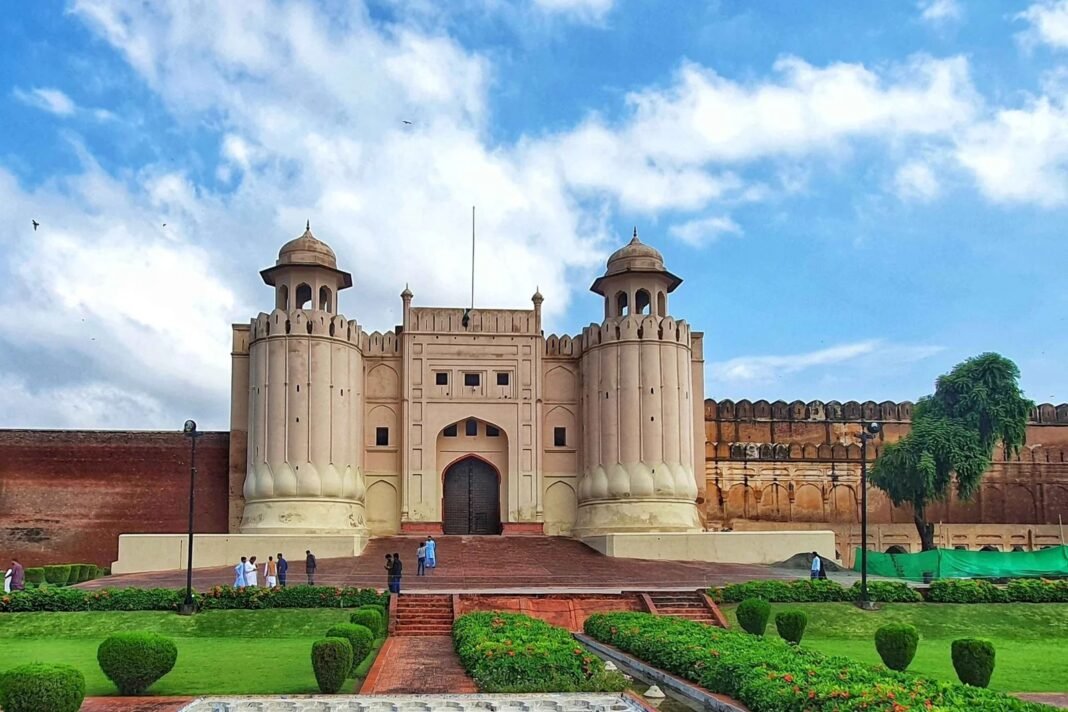
- Famous For: Monumental Mughal gateway architecture; two semi-circular bastions with fluted shafts, lotus-petal bases and domed pavilions; an arch tall enough for royal elephant processions
- Heritage Status: Part of Lahore Fort, a UNESCO World Heritage Site (inscribed 1981); the gate once appeared on Pakistan’s fifty-rupee note
- Conservation: Conserved by the Punjab Walled City and Heritage Areas Authority in 2021
- Nearest City: Lahore itself; Allama Iqbal International Airport is under an hour away by road
- Accessibility: Easy by car, ride-hailing or rickshaw; the Walled City’s narrow streets make drop-off plus walking the smartest option
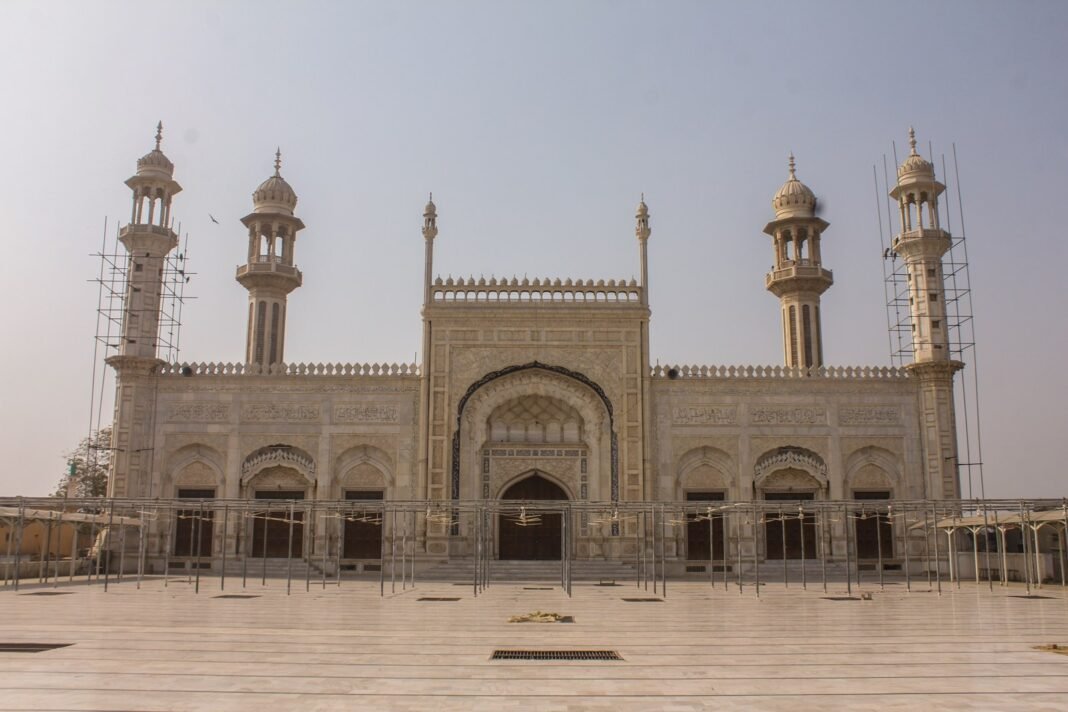
- Known Landmarks Nearby: Badshahi Mosque, Hazuri Bagh Baradari, Gurdwara Dera Sahib, Minar-e-Pakistan
- Best For: Families, photographers, history lovers, architecture students, and first-time visitors to Lahore
Why Visit Alamgiri Gate
Alamgiri Gate is not just an entrance; it is the image of Lahore. The twin fluted towers rising out of carved lotus buds, the huge central arch, and the way the gate frames the Badshahi Mosque across Hazuri Bagh make this one of the great paired views in South Asian architecture. It has appeared on Pakistani currency and postage stamps, in films, and in thousands of photographs, yet nothing prepares you for its scale in person. The arch was deliberately built high enough for caparisoned royal elephants to pass through, and standing beneath it, you feel exactly the smallness Aurangzeb intended his visitors to feel.
The second reason to come is what lies beyond the gate. Alamgiri Gate is the principal entrance to Lahore Fort, a 20-hectare complex where six Mughal emperors left their mark in brick, marble and mirror work. Walking through the gate’s angled passage, you step from the noise of the Walled City into the Diwan-i-Amm courtyard, and from there into the Sheesh Mahal, the Naulakha Pavilion, the Moti Masjid and three museums. Few heritage sites in Pakistan offer this much in one visit.
The third reason is the setting. Hazuri Bagh, the garden between the gate and the mosque, is one of Lahore’s loveliest public spaces, especially at golden hour when the marble baradari, the mosque and the fort glow together. In the evening the illuminated gate creates a glowing silhouette above the city, and the Walled City of Lahore Authority now runs night visits, so you can experience the whole complex after dark. Add the Fort Road Food Street a few minutes away, with rooftop restaurants facing the floodlit mosque, and you have the makings of a perfect Lahore evening.
Finally, Alamgiri Gate is simply the most efficient heritage stop in the city. It sits at the meeting point of the fort, the mosque, the garden and the food street, so a single well-planned half day here covers the highlights that first-time visitors come to Lahore for. Whether you are a serious student of Mughal architecture or a family looking for a memorable day out, the gate delivers.
History of Alamgiri Gate
Alamgiri Gate was built by the Mughal Emperor Aurangzeb Alamgir in 1673, in the same campaign that produced the Badshahi Mosque across the esplanade. Named for its builder, the gate was positioned on a grand axis running through Hazuri Bagh to the mosque, with Lahore Fort at the other end. It served two purposes at once: it was a defensive entrance to the fort, and it was the ceremonial doorway through which the emperor passed between his palace and his mosque. The gate’s scale was deliberate, humbling visitors to Aurangzeb’s mosque and palace, and its opening was made high enough to admit royal processions mounted on elephants.
Architecturally, the gate represents what scholars call the final flourish of imperial Mughal gateway architecture, and also a softening of the Mughal style in its later years. The two semi-circular bastions flanking the central vestibule have boldly fluted shafts rising out of intricately carved lotus-bud bases, crowned with small domed pavilions. Inside, the huge arched entrance leads to a central square hall with deep arched recesses, a staircase to the upper storey, and a southern archway into the fort’s interior. The design fuses Indian, Islamic, Timurid and even European influences into a single unmistakably Mughal creation.
The gate’s later history mirrors the fortunes of Lahore itself. In the early nineteenth century, Maharaja Ranjit Singh used the gate as stables. After the British annexed Punjab in 1849, they sealed the gate with bricks and divided the structure into military magazines. It remained in that state for generations, which is why its 2021 conservation by the Walled City of Lahore Authority mattered so much: the gate visitors see today has been carefully brought back toward its Mughal appearance.
Alamgiri Gate’s place in Pakistan’s visual identity is unique. It featured on the fifty-rupee note before the 2005 redesign, and it remains the motif photographers, filmmakers and artists reach for when they want to say “Lahore” in a single image. As the western gateway of a UNESCO World Heritage Site, it now anchors one of the country’s most visited heritage zones, with ongoing restoration work across the fort complex continuing into 2026.
Top Things to Do in Alamgiri Gate
Photograph the Gate From Hazuri Bagh
The classic view is from the garden side, with the Hazuri Bagh Baradari in the foreground and the gate rising behind it. Come in the late afternoon for the best light, when the sun rakes across the fluted bastions. Evening shots of the illuminated gate, with the Badshahi Mosque glowing beside it, are the ones that end up framed.
Enter Lahore Fort Through the Gate
Alamgiri Gate is the fort’s principal entrance, and walking through its angled passage is the proper way to arrive. The passage leads to the Diwan-i-Amm courtyard, the most public zone of the old Mughal administrative complex. Buy your fort ticket at the counter, and consider hiring one of the English or Urdu guides; the fort’s layered history rewards explanation.
Explore the Sheesh Mahal and Naulakha Pavilion
Inside the fort, the Sheesh Mahal (Palace of Mirrors), commissioned by Shah Jahan, is the single most breathtaking interior in Lahore, with its intricate mirror work and frescoes. Nearby, the Naulakha Pavilion shows Mughal marble craftsmanship at its most delicate, inlaid with precious stones.
Visit the Fort’s Museums
The fort houses three museums: the Mughal Museum, the Armoury Gallery and the Sikh Gallery. Together they cover court life, weaponry and the Sikh period of the fort’s history. Allow at least an hour if you want to do them properly.
Experience History by Night
The Walled City of Lahore Authority runs night visits to the fort, typically from 7 pm to 11 pm, when the complex is floodlit. Entry fees for night visits were set at Rs1,000 for local visitors, Rs500 for children aged three to ten, and Rs2,000 for foreign tourists. Walking the floodlit courtyards with Hazuri Bagh, Sheesh Mahal and the Diwan-e-Khas open after dark is a completely different experience from the daytime visit.
Walk Across to Badshahi Mosque
The mosque Aurangzeb built alongside the gate is a two-minute walk across Hazuri Bagh. Pair the two in one visit: the fort in the morning, the mosque at midday, and the garden between them at sunset. Remember to dress modestly and remove your shoes before entering the mosque’s prayer areas.
Famous Places In and Around Alamgiri Gate
- Badshahi Mosque: Aurangzeb’s great congregational mosque, directly across Hazuri Bagh from the gate.
- Hazuri Bagh and Baradari: The marble pavilion built by Maharaja Ranjit Singh in 1813-1818 to celebrate his capture of the Koh-i-Noor diamond.
- Sheesh Mahal: Shah Jahan’s Palace of Mirrors inside the fort.
- Naulakha Pavilion: The exquisite marble pavilion inlaid with precious stones.
- Diwan-i-Aam and Diwan-i-Khas: The halls of public and private audience.
- Moti Masjid: The Pearl Mosque, built by Shah Jahan in 1644.
- Gurdwara Dera Sahib: The prominent Sikh shrine beside the fort.
- Minar-e-Pakistan: The national monument in Greater Iqbal Park, a short drive away.
- Wazir Khan Mosque: The tile-covered Mughal mosque deeper in the Walled City.
- Fort Road Food Street: Rooftop restaurants with views of the mosque and fort.
- Shalimar Gardens: Shah Jahan’s Mughal gardens, the fort’s sister World Heritage Site.
How to Reach Alamgiri Gate
Alamgiri Gate stands in the Walled City of Lahore, so reaching it is a matter of reaching central Lahore and then navigating the old city’s narrow streets. The gate is well signposted, and every taxi and rickshaw driver knows the fort.
From Islamabad: Take the M-2 motorway south to Lahore, around 380 km and roughly four to four and a half hours of driving. From the motorway’s Lahore exits, follow signs to the Walled City / Lahore Fort. Daewoo and other bus services run frequently between the two cities.
From Lahore (within the city): The fort is 30 to 40 minutes from Allama Iqbal International Airport by car, depending on traffic. From Gulberg, DHA or Model Town, allow 30 to 45 minutes. The simplest approach is a ride-hailing car to the fort’s parking area; walking the last stretch through the Walled City lanes is part of the experience.
From Karachi: Fly to Allama Iqbal International Airport (under two hours) and drive to the fort. The road journey is an overnight trip of well over a thousand kilometres, so flying is the practical choice for most visitors.
Nearest airport: Allama Iqbal International Airport, Lahore. Road conditions are excellent on the motorways and main city roads year-round; the lanes immediately around the fort are narrow and congested, and parking is limited, so get dropped off and walk. Transport options include your own car, Uber and Careem, auto-rickshaws, Qingqi rickshaws for short hops, and local buses. Many visitors explore the Walled City on foot or by rickshaw once they arrive.
Route Details
- Islamabad to Alamgiri Gate: Join the M-2 motorway at Islamabad and drive south to Lahore (around 380 km). Take the Thokar Niaz Beg or Ring Road exit toward the city centre, then follow signs for the Walled City / Shahi Qila. Park near the fort and walk to Alamgiri Gate on the fort’s western side, facing Hazuri Bagh.
- Airport to the fort: From Allama Iqbal International Airport, take the main road toward the city centre, then head for the Walled City. A ride-hailing car is the easiest option; agree on the drop-off near the Badshahi Mosque parking area.
- The classic walking route: Start at Delhi Gate, walk through the Walled City past the Shahi Hamam and Wazir Khan Mosque, and emerge at the fort. This takes a couple of hours with stops and is best done with a local guide.
- Combining the fort and mosque: Visit Lahore Fort (through Alamgiri Gate) in the morning, cross Hazuri Bagh to Badshahi Mosque at midday, and finish with dinner on Fort Road Food Street as the monuments light up.
Where to Stay in Alamgiri Gate
Since Alamgiri Gate is in central Lahore, you stay in Lahore, and the choice comes down to atmosphere. For this trip, location matters more than luxury.
Walled City guesthouses suit travellers who want to wake up inside the old city and walk to the fort. These are small, characterful and inexpensive, though facilities are basic. Gulberg and MM Alam Road hotels offer the widest range of mid-range and upper mid-range options, with restaurants, parking and easy ride-hailing access to the fort, about 20 to 30 minutes away. Budget hotels near the railway station and bus stands work for shoestring trips. Luxury hotels on and around Mall Road and in DHA cater to visitors who want full-service comfort.
Book ahead during the winter season (November to February), the Basant festival period, and public holidays, when Lahore’s hotels fill quickly. For wider travel inspiration, see the Explore Pakistan section.
Where to Eat: Local Foods of Alamgiri Gate
Eating near Alamgiri Gate means one thing above all: Fort Road Food Street. This strip of rooftop restaurants sits a few minutes from the gate with direct views of the Badshahi Mosque and the fort, and it is at its best at dusk when the monuments light up. Well-known names on the street include Cuckoo’s Den, famous for its art-filled interior and mosque view; Haveli Restaurant, set inside the restored historic Haveli Khalil Khan and known for Mughlai and Punjabi cuisine; and Andaaz Restaurant, whose rooftop terrace looks over the fort and Hazuri Bagh. Expect Lahori classics: chicken tikka and BBQ platters, mutton karahi, desi ghee parathas, and desserts like gulab jamun, jalebi and rabri.
Beyond the food street, the Walled City is Lahore’s street-food heart. Try nihari and paya for breakfast, chargha (steam-roasted chicken) for dinner, dahi bhallay and golgappay from Anarkali’s stalls, and a tall glass of lassi with malai. A filling street meal costs a few hundred rupees per person; a rooftop dinner for two on Fort Road is pricier but still modest by big-city standards. For dessert lovers, the old city’s sweet shops sell fresh jalebi fried to order in the evenings.
Weather in Alamgiri Gate
Lahore has a classic Punjab plains climate: short, foggy winters, a glorious spring, a long blazing summer, and a humid monsoon. Since Alamgiri Gate involves a lot of walking on stone courtyards, heat and smog are the two factors to plan around. Winter mornings can be foggy enough to delay flights, and summer afternoons make the fort’s courtyards genuinely uncomfortable.
| Season | Temperature Range | Conditions |
|---|---|---|
| Winter (Dec-Feb) | 5°C to 20°C | Cool, often foggy mornings; the best season for walking the fort |
| Spring (Mar-Apr) | 15°C to 32°C | Pleasant and green; ideal for photography and the Basant season |
| Summer (May-Jun) | 28°C to 42°C | Very hot and dry; visit early morning or after sunset |
| Monsoon (Jul-Sep) | 28°C to 38°C | Hot and humid with heavy showers; courtyards can flood briefly |
| Autumn (Oct-Nov) | 15°C to 32°C | Cooling down with clear skies; excellent for sightseeing |
Language and Culture of Alamgiri Gate
The language of the Walled City is Punjabi, spoken with the warmth Lahore is famous for, and Urdu works everywhere for visitors. English is understood at hotels, museums and by most guides. Lahoris are famously hospitable, and the old city’s shopkeepers and food vendors are part of the experience: expect conversation, recommendations and the occasional free taste.
Culturally, the area around the gate is a mix of Mughal, Sikh and British layers, and it shows in the food, the architecture and the street life. Dress is relaxed by Pakistani standards, but modesty is appreciated: cover shoulders and knees when entering the Badshahi Mosque next door, and women should carry a headscarf. Remove shoes at mosque entrances, ask before photographing people, especially women and worshippers, and note that drone photography at heritage sites is restricted, so check with the Walled City authorities before flying one.
Shopping in Alamgiri Gate
The lanes around the fort are excellent for traditional shopping. Anarkali Bazaar, one of South Asia’s oldest markets, sells everything from embroidered khussas and shawls to brassware, bangles and miniature paintings. The streets near Delhi Gate and inside the Walled City have shops for traditional Lahori crafts, calligraphy art and Mughal-style miniature paintings that make meaningful souvenirs.
For modern shopping, Liberty Market in Gulberg is Lahore’s famous mid-range bazaar, and the Emporium Mall and Packages Mall offer branded stores, food courts and cinemas for an air-conditioned break. Haggling is expected in the old bazaars but not in the malls. Carry cash for the Walled City lanes, where cards are rarely accepted.
Local Events and Festivals
Basant, the kite-flying festival: Lahore’s beloved spring festival returned in February 2026 after a hiatus of about 25 years, filling the city’s rooftops with kites for three days. The Punjab government approved an expanded ten-day Basant for January 29 to February 7, 2027, with strict safety rules on kite strings. If your visit coincides with Basant, the Walled City rooftops near the fort are among the most atmospheric places to watch it, but book hotels well in advance and follow all safety advisories.
Lahore Literary Festival: The city’s major literary gathering has been held at the Alhamra Arts Council on Mall Road, with recent editions in early February, drawing writers and audiences from across the world. It pairs well with a heritage trip.
History by Night: The Walled City of Lahore Authority’s weekend night openings of the fort, with the complex floodlit from 7 pm to 11 pm, run as a regular event and are worth planning your dates around. National holidays such as Eid and Independence Day also bring special illuminations and crowds to the fort area.
Travel Tips for Alamgiri Gate
Packing Essentials
Winter (December to February) calls for a warm jacket, since mornings are cold and foggy. Summer demands light cotton, a hat, sunglasses and sunscreen. Year-round, wear comfortable walking shoes with good grip for the fort’s stone floors and stairs, carry a water bottle, and keep a headscarf handy for the mosque. A small daypack beats a bulky bag in the crowded lanes.
Safety Tips
The fort complex and Hazuri Bagh are safe and well managed, with guides and staff around. In the Walled City lanes, watch for pickpockets in crowds, agree on rickshaw fares in advance, and be cautious of traffic when walking. Drink bottled water, and in summer, avoid the midday heat by visiting the fort early and returning for the evening.
Money & Connectivity
Buy fort tickets at the counter; carry cash for the Walled City’s shops and food stalls, though ATMs are available on Mall Road and in the commercial areas. All major mobile networks (Jazz, Telenor, Zong, Ufone) have strong 4G coverage around the fort, so maps and ride-hailing work smoothly.
Best Time to Visit Alamgiri Gate
Winter (November to February): The Best Season
Cool, clear days make this the ideal time for the fort. Mornings can be foggy, so plan monument visits from late morning onward. This is also the season for night visits, when the floodlit fort looks spectacular against the cold clear sky.
Spring (March to April): Beautiful and Festive
Pleasant temperatures and green gardens make spring lovely for photography. If Basant falls during your trip, the city is electric, but expect crowds and higher hotel prices.
Summer (May to September): Visit Strategically
The heat is intense, especially on the fort’s open stone courtyards. If you travel in summer, do the fort at 9 am opening time, rest midday, and return for the evening illumination and a Fort Road dinner.
Autumn (October to November): Clear and Comfortable
Post-monsoon skies are clear, temperatures moderate, and crowds thinner than winter. An excellent all-round choice for a Walled City trip.
Final Thoughts
Alamgiri Gate earns its place on the fifty-rupee note. It is the rare monument that is both a great photograph and a great experience: the approach through Hazuri Bagh, the passage into the fort, the courtyards and palaces beyond, and the food street waiting at the end of the day. Give it at least half a day, pair it with the Badshahi Mosque, and stay for the evening lights.
If this Alamgiri Gate travel guide helped you plan, pass it on to someone heading to Lahore, and explore more of the country’s heritage in our Explore Pakistan section. Travellers combining Lahore with the capital can also read our guide to places to visit in Islamabad.
FAQs
Where is Alamgiri Gate located?
Alamgiri Gate is at the western end of Lahore Fort in the Walled City of Lahore, facing Hazuri Bagh and the Badshahi Mosque. It is the fort’s principal entrance.
Who built Alamgiri Gate and when?
Mughal Emperor Aurangzeb Alamgir built it in 1673 (some sources say 1674), at the same time as the Badshahi Mosque. It is named after him.
What are the Lahore Fort ticket prices and timings?
The fort is generally open daily from morning to late afternoon, with tickets sold at the counter at separate rates for local and foreign visitors. Night visits (7 pm to 11 pm) were priced at Rs1,000 for locals, Rs500 for children aged three to ten, and Rs2,000 for foreign tourists. Confirm current timings before visiting.
What is the best time to visit Alamgiri Gate?
November to February offers the best weather for walking the fort. October-November and March-April are also excellent. Avoid midday visits in the May-June heat.
Can you go inside Alamgiri Gate?
The gate serves as the main entrance to Lahore Fort, and visitors pass through its historic passage into the Diwan-i-Amm courtyard. The upper chambers of the gate structure itself are not a public gallery.
Is Alamgiri Gate good for families?
Yes. The fort complex is spacious, the gardens give children room to move, and guided tours keep adults engaged. Carry water and snacks, and watch small children on the fort’s stairs and ramparts.
How much time do I need at Alamgiri Gate and Lahore Fort?
Allow three to four hours for the fort including its museums, plus an hour for Hazuri Bagh and the Badshahi Mosque across the garden. A full half day with lunch or dinner on Fort Road is ideal.
What is near Alamgiri Gate for food?
Fort Road Food Street, minutes away, has rooftop restaurants like Cuckoo’s Den, Haveli Restaurant and Andaaz with views of the illuminated Badshahi Mosque. The Walled City’s lanes offer nihari, paya, chargha and lassi.