This Alhamra Arts Council, Lahore travel guide covers Pakistan’s most important cultural venue: its history from 1948 open-air performances to an Aga Khan Award-winning arts complex, what to see and do there, event and ticket information, the best time to visit, nearby food streets, and how to reach it from Islamabad, Lahore and Karachi.
Quick Facts
- Location: Shahrah Quaid-e-Azam (formerly Mall Road), Lahore, Punjab, Pakistan
- Founded: 1948, in the years immediately following Pakistan’s independence
- Architect: Nayyar Ali Dada; built in four phases from 1979 to 1992
- Famous For: Pakistan’s premier cultural venue; theatre, concerts, art exhibitions and literary festivals; recipient of the Aga Khan Award for Architecture (1998)
- The Complex: 1,000-seat auditorium (1979), 450-seat theatre (1985), 250-seat lecture and recital hall (1992), art galleries and offices in octagonal blocks (1984), semi-enclosed courtyards
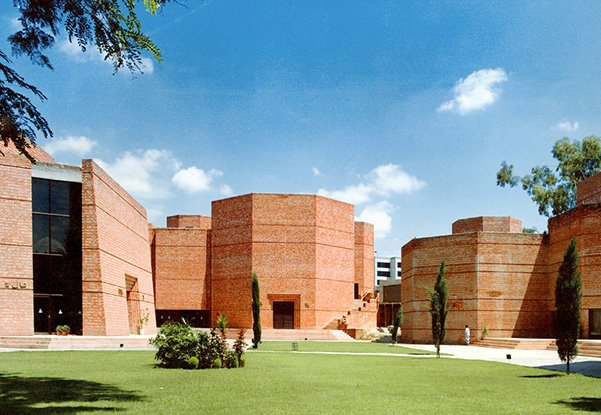
- Architecture: Handmade red brick veneer over concrete with local mortar, Mughal-inspired polygonal forms designed for acoustic performance
- Nearest City: Lahore itself; minutes from Anarkali, the Lahore Museum and Bagh-e-Jinnah
- Accessibility: On the main Mall Road artery; easy by car, ride-hailing, rickshaw or public bus
- Known Landmarks Nearby: Lahore Museum, General Post Office, Anarkali Bazaar, Lahore Zoo, Punjab Assembly
- Best For: Art and music lovers, theatre-goers, students, families, photographers of modern architecture
Why Visit Alhamra Arts Council, Lahore
Most visitors come to Lahore for the Mughals: the fort, the mosque, the gardens. Alhamra offers the other half of the city’s story, the living culture being made right now. On any given week the complex hosts a stage play in the theatre, a classical music concert in the auditorium, a painting exhibition in the Allah Bux Gallery and students sketching in the courtyards. It is where Lahore comes to perform, exhibit and argue about art, and walking in as a visitor feels like being handed a backstage pass to the city’s creative life.
The building itself is worth the trip. Designed by Nayyar Ali Dada over fifteen years, Alhamra is a masterclass in how modern architecture can speak a local language. The handmade red bricks, bonded with traditional local mortar, deliberately echo the Lahore Fort and the Badshahi Mosque, while the octagonal and hexagonal halls are shaped by the acoustic demands of performance. The jury of the Aga Khan Award for Architecture called it a rare example of flexible spaces where successive additions enhanced rather than diminished the original design. Even if you arrive between events, the courtyards, brickwork and play of light repay an hour of slow looking.
The third reason is the art. The Allah Bux Gallery, named for the eminent South Asian painter, spreads across roughly 11,000 square feet and carries a continuous programme of solo and group exhibitions. The Alhamra Modern Art Museum in Gulberg III, Pakistan’s first museum devoted exclusively to Pakistani modern art from 1945 to 1990, holds watercolours by Abdul Rahman Chughtai, paintings by Allah Bux, sculptures by Novera Ahmed, pastel drawings by Anna Molka and landscapes by Zainul Abedin. For anyone who wants to understand Pakistani visual art, there is no better single stop.
Finally, Alhamra is practical culture. Unlike many heritage sites, it sits on the city’s main road, events are frequent and affordable, and you can combine a morning at the Lahore Museum, an afternoon exhibition at Alhamra and an evening of Lahori food in Anarkali without ever travelling more than a few kilometres. It is the easiest world-class cultural experience in the city to fit into a busy itinerary.
History of Alhamra Arts Council, Lahore
The Alhamra Arts Council was founded in 1948, a year after Pakistan’s independence, when Lahore’s artists needed a home. The government granted the young council a site on Mall Road, but for years its performances happened outdoors among temporary structures. The council’s history as an exhibiting institution reaches back to 1949, when Khawaja Nazim-ud-Din inaugurated a show of paintings by Abdul Rahman Chughtai, the great painter whose watercolours would become synonymous with Pakistani art.
By the 1970s the need for a permanent venue was undeniable, and the council commissioned one of its own members, architect Nayyar Ali Dada, to design a 1,000-seat auditorium. Completed in 1979, the auditorium replaced the temporary buildings and gave Alhamra its first proper stage. What followed was one of the most patient building programmes in Pakistani architecture. After a dispute over ownership of the land, the project passed to the Lahore Arts Council, a government agency, which commissioned Dada for three further phases: offices and art galleries in four octagonal structures (1984), a 450-seat theatre in hexagonal form attached to the auditorium (1985), and an octagonal 250-seat hall for lectures and recitals (1992).
Across these fifteen years Dada held to two ideas. First, the polygonal shapes were not decoration; they were acoustic instruments, tuned so that music and speech carry cleanly in every hall. Second, the material would be handmade red brick over cast concrete, bonded with local mortar, the same material language as the Lahore Fort and the Badshahi Mosque and a deliberate echo of the red sandstone the Mughals favoured. The buildings were arranged to semi-enclose courtyards and green spaces, so the complex breathes even in Lahore’s summers.
In 1998 the Aga Khan Award for Architecture recognised the achievement, with the jury praising it as a popular and successful public building that projects its complexities in a simple and powerful manner. Today the Lahore Arts Council manages the venue, which welcomes thousands of visitors every month for performances, exhibitions and festivals, continuing a cultural mission that began in tents and open fields in 1948.
Top Things to Do in Alhamra Arts Council, Lahore
Watch a Play or Concert
Check the Alhamra schedule before your trip: the theatre and auditorium host stage plays, classical and folk music concerts, qawwali nights and dance performances through the year. Evening shows are the heart of the Alhamra experience. Arrive early, since popular performances fill up, and buy tickets at the venue box office or through the organisers’ announced channels.
Visit the Allah Bux Gallery
Named for Ustad Allah Bux, the gallery is one of Pakistan’s most active exhibition spaces, with four sections including two distinctive octagonal halls. Its programme moves constantly between established masters and emerging artists; a summer art camp exhibition in 2026, for instance, showed 85 works by young artists. Entry to exhibitions is typically free or nominal.
Explore the Alhamra Modern Art Museum
In Gulberg III, next to the Alhamra Open Air Theatre, the Alhamra Modern Art Museum is Pakistan’s first museum dedicated entirely to modern art from 1945 to 1990. Its 12,000 square feet hold the essential names of Pakistani art: Chughtai’s watercolours, Allah Bux’s paintings, Novera Ahmed’s sculptures, Anna Molka’s pastels and Zainul Abedin’s Bengal landscapes. Art lovers should treat this as a separate half-day visit.
Take an Architecture Walk
Even without a ticket, the complex rewards a slow circuit: the red-brick facades, the polygonal halls, the semi-enclosed courtyards and the way the buildings frame the sky. Photography enthusiasts get strong geometric compositions, especially in the angled light of late afternoon. The Open Air Theatre in Gulberg offers another perspective on how the institution stages culture under the sky.
Attend the Lahore Literary Festival
If you visit in February, check whether the Lahore Literary Festival is on. The festival has been staged at Alhamra on Mall Road, with recent editions running in early February and drawing writers from Pakistan and abroad for three days of sessions, debates and book launches.
Famous Places In and Around Alhamra Arts Council, Lahore
- Lahore Museum: The great colonial-era museum on Mall Road, minutes away, with Gandharan sculpture, Mughal paintings and the famous Fasting Buddha.
- Anarkali Bazaar: One of South Asia’s oldest markets, ideal for traditional shopping and street food after a show.
- Bagh-e-Jinnah (Lawrence Gardens): The historic botanical garden with its colonial library and walking paths.
- Lahore Zoo: One of the region’s oldest zoos, popular with families.
- General Post Office and Punjab Assembly: Landmark colonial buildings on Mall Road.
- Tollinton Market: The historic market building near Anarkali.
- Fort Road Food Street: A short drive away for rooftop dinners facing the Badshahi Mosque.
- Lahore Fort and Badshahi Mosque: The Mughal core of the city, easily combined in the same day.
How to Reach Alhamra Arts Council, Lahore
Alhamra sits on Shahrah Quaid-e-Azam (Mall Road), Lahore’s grandest colonial avenue, so it is one of the easiest cultural venues in Pakistan to find. Taxis, ride-hailing cars, rickshaws and buses all pass its gates.
From Islamabad: Drive the M-2 motorway south to Lahore, around 380 km and roughly four to four and a half hours. From the motorway exits, head to Mall Road in the city centre; Alhamra is on the main avenue between the Lahore Museum and Anarkali. Intercity buses connect the two cities frequently.
From Lahore (within the city): Alhamra is 30 to 40 minutes from Allama Iqbal International Airport by car. From Gulberg, DHA or Model Town, allow 20 to 35 minutes depending on Mall Road traffic. A ride-hailing car dropped at the main gate is the simplest option; public buses and wagons ply Mall Road all day.
From Karachi: Fly to Allama Iqbal International Airport (under two hours) and drive to Mall Road. The overland journey is an overnight trip, so air travel suits event-based visits where timing matters.
Nearest airport: Allama Iqbal International Airport. Road conditions on Mall Road and the motorways are good year-round, though Mall Road congests at rush hour; plan evening arrivals with a time buffer. Transport options include your own car, Uber and Careem, auto-rickshaws, and the city’s bus network.
Route Details
- Islamabad to Alhamra: Take the M-2 south to Lahore (around 380 km). Exit toward the city centre and follow signs for Mall Road / Shahrah Quaid-e-Azam. Alhamra Arts Council is on Mall Road; the main auditorium complex is the landmark red-brick building you cannot miss.
- Airport to Alhamra: From the airport, take the main road toward the city centre and join Mall Road. Allow 30 to 40 minutes; in evening rush hour, leave earlier.
- Alhamra Modern Art Museum: This is a separate site in Gulberg III, next to the Alhamra Open Air Theatre. From the Mall Road complex, drive to Gulberg (about 15 to 25 minutes) and follow signs for the museum.
- A classic culture day: Morning at the Lahore Museum, midday exhibition at the Allah Bux Gallery, evening performance at Alhamra, dinner in Anarkali. Everything sits within a few kilometres on and around Mall Road.
Where to Stay in Alhamra Arts Council, Lahore
Staying near Mall Road puts Alhamra, the museum and Anarkali within easy reach, and the area has options at every level.
Mid-range hotels on and around Mall Road and in nearby Gulberg are the most practical choice, with air-conditioning, restaurants and parking. Budget hotels and guesthouses near the railway station and in the Anarkali area suit shoestring travellers who plan to spend their days walking the old city. Upper mid-range and luxury hotels on Mall Road and in DHA offer full-service comfort for visitors combining culture with business or family travel.
Book early for February, when the Lahore Literary Festival and Basant can fill the city’s hotels, and for the winter wedding season. For more travel ideas across the country, browse the Explore Pakistan section.
Where to Eat: Local Foods of Alhamra Arts Council, Lahore
An evening at Alhamra pairs naturally with Lahore’s legendary food, and the options around Mall Road are endless. Before or after a show, walk to Anarkali Food Street for the old city’s greatest hits: nihari and paya for a late breakfast, chargha and chicken tikka for dinner, dahi bhallay, golgappay and samosa chaat for snacking, and a tall lassi with a thick layer of malai to finish.
Lakshmi Chowk, a short drive from Mall Road, is another beloved food hub, famous for its late-night BBQ and desi restaurants. For a special evening, Fort Road Food Street near the Badshahi Mosque offers rooftop dining with floodlit views; well-known names there include Cuckoo’s Den, Haveli Restaurant and Andaaz. Dessert lovers should try fresh jalebi fried to order, gulab jamun and kulfi falooda from the old city’s sweet shops.
Street meals cost a few hundred rupees per person; a comfortable restaurant dinner for two is modest by big-city standards. Most eateries around Mall Road and Anarkali are cash-friendly, and the food streets stay lively well past midnight.
Weather in Alhamra Arts Council, Lahore
Alhamra’s programme runs year-round, but Lahore’s weather shapes how much you enjoy the trip around it. The halls are air-conditioned, so summer events are comfortable indoors; it is the walks between venues, and the open-air theatre, that follow the seasons. Winter fog can delay morning travel, and the May-June heat makes midday sightseeing punishing.
| Season | Temperature Range | Conditions |
|---|---|---|
| Winter (Dec-Feb) | 5°C to 20°C | Cool with foggy mornings; peak cultural season |
| Spring (Mar-Apr) | 15°C to 32°C | Pleasant; festival season with Basant and literary events |
| Summer (May-Jun) | 28°C to 42°C | Very hot; stick to indoor halls and evening shows |
| Monsoon (Jul-Sep) | 28°C to 38°C | Hot and humid with heavy showers |
| Autumn (Oct-Nov) | 15°C to 32°C | Clear and comfortable; excellent for sightseeing |
Language and Culture of Alhamra Arts Council, Lahore
Punjabi and Urdu are the working languages of Lahore’s cultural scene, and most performances at Alhamra are in Urdu or Punjabi, with English well represented at literary events. Announcements and programmes are usually bilingual, and staff can guide non-Urdu speakers.
Alhamra’s audience culture is welcoming but has its etiquette. Arrive on time; latecomers are often held until an interval. Switch phones fully off during performances, not just to silent. Dress is smart-casual: you will see everything from shalwar kameez to jeans, but beachwear is out of place. Applause is warm and generous, and artists often mingle in the courtyards after shows. Photography during performances is usually prohibited; the architecture outside is fair game.
Shopping in Alhamra Arts Council, Lahore
Alhamra’s gallery shops and exhibition stalls sell art prints, catalogues and craft items that make meaningful souvenirs, and buying directly at exhibitions supports the artists. For wider shopping, Anarkali Bazaar offers traditional crafts, khussas, shawls and bangles; Liberty Market in Gulberg is the city’s famous mid-range bazaar; and Emporium Mall and Packages Mall cover branded shopping with food courts and cinemas. Haggle in the bazaars, not in the malls, and carry cash for Anarkali’s lanes.
Local Events and Festivals
Lahore Literary Festival: The city’s flagship literary gathering has been staged at Alhamra on Mall Road, with recent editions held in early February over three days, featuring Pakistani and international writers. If you are in Lahore in February, this is the single best cultural event to plan around.
Basant: Lahore’s spring kite festival returned in February 2026 after a hiatus of about 25 years, and the Punjab government approved a ten-day Basant from January 29 to February 7, 2027, with strict safety regulations. The festival coincides with the literary season, making February Lahore’s most festive month.
Alhamra’s own calendar: The council runs a continuous programme of theatre productions, music concerts, painting competitions and exhibitions. Recent examples include a summer art camp exhibition showing 85 works by young artists and a major painting competition exhibition, alongside regular qawwali and folk music nights. Check the Lahore Arts Council’s announcements before your visit; there is usually something on.
Eid and national-day programmes: Special concerts and cultural shows are staged around Eid, Independence Day and other national occasions, often with free or low-cost entry.
Travel Tips for Alhamra Arts Council, Lahore
Packing Essentials
For winter visits, bring a warm jacket for foggy mornings and cool evenings; the halls are heated but the courtyards are not. Summer calls for light cotton and sun protection. Always carry a water bottle, comfortable walking shoes for the museum and bazaar legs of your day, and a small notebook if you are the literary-festival type.
Safety Tips
Mall Road and the Alhamra complex are safe and well managed, with security at event entrances. Standard city precautions apply: keep valuables secure in crowded bazaars, use registered ride-hailing at night, and drink bottled water. Bag checks at performances are routine; cooperate cheerfully.
Money & Connectivity
ATMs line Mall Road and Gulberg; carry cash for Anarkali and the food streets. All major networks (Jazz, Telenor, Zong, Ufone) offer strong 4G across central Lahore. Most hotels provide free Wi-Fi.
Best Time to Visit Alhamra Arts Council, Lahore
Winter (November to February): Peak Culture Season
The best time to visit. The weather suits walking between venues, and the cultural calendar is at its fullest, with the literary festival and Basant often falling in February. Book hotels early for festival weeks.
Spring (March to April): Pleasant and Green
Comfortable temperatures and a continuing events programme make spring an excellent second choice, with thinner crowds than winter.
Summer (May to September): Indoor Culture Only
The heat keeps sightseeing to a minimum, but Alhamra’s air-conditioned halls make evening performances perfectly enjoyable. Plan museum and gallery visits for the morning.
Autumn (October to November): Clear and Comfortable
Post-monsoon clarity, moderate temperatures and a restarting events calendar make autumn a fine all-round choice.
Final Thoughts
Alhamra is proof that Lahore’s culture is not only in its monuments but in its stages, galleries and concert halls. A red-brick complex built patiently over fifteen years, crowned with an architecture award and filled every week with music, theatre and art, it belongs on every thoughtful visitor’s itinerary. Time your trip for February and you may catch the literary festival and Basant in the same week.
If this Alhamra Arts Council, Lahore travel guide helped you plan, share it with a fellow culture lover, and find more destinations in our Explore Pakistan section. Visitors pairing Lahore with the capital should also see our Islamabad travel guide.
FAQs
Where is Alhamra Arts Council located?
On Shahrah Quaid-e-Azam (Mall Road), Lahore, between the Lahore Museum and Anarkali Bazaar. The Modern Art Museum is a separate site in Gulberg III.
Who designed Alhamra Arts Council?
Architect Nayyar Ali Dada designed the complex in four phases between 1979 and 1992. It won the Aga Khan Award for Architecture in 1998.
What is the best time to visit Alhamra Arts Council, Lahore?
November to February is ideal, combining pleasant weather with the peak cultural calendar, including the Lahore Literary Festival and Basant in February.
How do I get tickets for events at Alhamra?
Check the Lahore Arts Council’s event announcements before your visit. Tickets are sold at the venue box office or through the organisers; exhibitions are often free. Arrive early for popular shows.
How do I reach Alhamra from Islamabad?
Drive the M-2 motorway to Lahore (around 380 km, four to four and a half hours), then head to Mall Road. Intercity buses also run frequently between the cities.
Is Alhamra suitable for families and children?
Yes. Exhibitions, the art museum and many concerts suit all ages, and the courtyards give children space. Check individual event guidance for age suitability of plays.
What food is available near Alhamra?
Anarkali Food Street (nihari, paya, chargha, lassi), Lakshmi Chowk’s late-night BBQ, and Fort Road Food Street’s rooftop restaurants are all minutes away.
Can I photograph inside Alhamra?
The architecture and courtyards are fine to photograph, but photography during performances is usually prohibited. The galleries may restrict flash; ask staff.