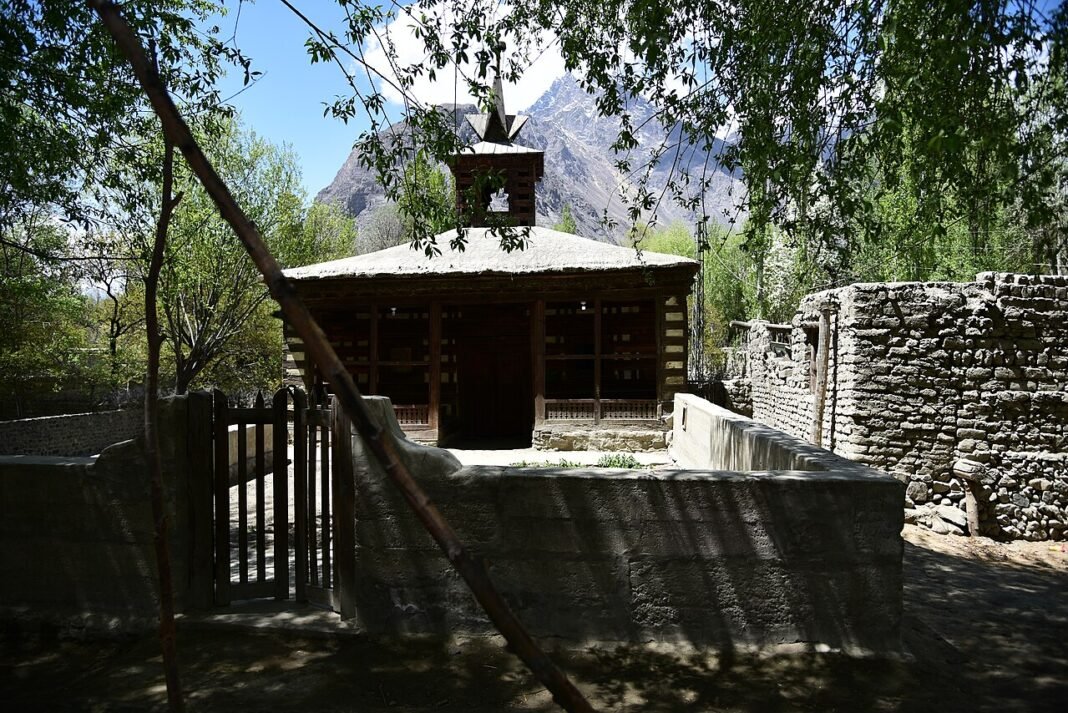
In the old town of Shigar, a short walk from the famous Shigar Fort, stands a small wooden mosque that does not look like any other mosque in Pakistan. Its tall pitched roof is Kashmiri, its carved wooden tower is Tibetan, and its prayer hall is Islamic — three cultures joined in one building. The Amburik Mosque, built in the 14th century by the Sufi saint Syed Ali Hamdani, is the first mosque of the Shigar Valley and one of the oldest in Baltistan. This Amburik Mosque travel guide covers its history, how to reach it, and everything you need for a visit.
Quick Facts
- Location: Shigar town, Shigar District, Baltistan, Gilgit-Baltistan, Pakistan, next to the Serena Shigar Fort
- Coordinates: Around 35.41 N, 75.73 E
- Altitude: Around 2,300 metres
- Famous For: The first mosque of the Shigar Valley; 14th-century wooden architecture blending Kashmiri, Tibetan, and Persian styles; a UNESCO Asia-Pacific Heritage Award-winning restoration
- Nearest City: Skardu, about 30 to 32 km away, roughly 45 to 60 minutes by road
- Accessibility: Paved road from Skardu to Shigar; the mosque is inside Shigar town, reached on foot from the fort
- Known Landmarks: Shigar Fort (Fong-Khar), Khanqah-e-Muallah, the Astana of Syed Mir Yahya, Khilingrong mosque, Sarfaranga Cold Desert
- Best For: Heritage and architecture lovers, photographers, cultural travellers, and anyone visiting Skardu who wants a meaningful half-day excursion
Why Visit Amburik Mosque
Baltistan is famous for its mountains, but its old buildings are just as extraordinary, and the Amburik Mosque is the finest small building in the region. It is a mosque that wears its history on its surface: the carved wooden balconies, the tall Kashmiri roof, and the central tower that still carries the memory of Buddhist Baltistan. You can read six hundred years of cultural change in a single glance.
The story behind it is just as compelling. Local tradition says the mosque was built by Amir Kabir Syed Ali Hamdani, the Persian Sufi saint who carried Islam into Kashmir and Baltistan in the 14th century. Passing through the Braldu La from Yarkand between 1372 and 1383 with his missionaries, he commissioned his craftsmen to raise this mosque in Shigar with the help of local builders. It was the first Islamic religious monument in the valley.
The building also carries a remarkable modern story. After an earthquake about ninety years ago left it leaning westwards, and after long years of neglect, the mosque was restored to its original form in a yearlong conservation project by the Aga Khan Cultural Service Pakistan with the local community, funded by the Norwegian Embassy. The work followed international conservation standards and won an Award of Merit in the UNESCO Asia-Pacific Heritage Awards of 2005. A small museum inside the mosque now tells the story of the site.
Practically, it is one of the easiest heritage visits in the north. The mosque stands in Shigar town, minutes from the Shigar Fort heritage hotel, and it takes less than an hour to see it properly. Combined with the fort and the cold desert, it makes a perfect half-day or full-day trip from Skardu, and the mosque is still used by locals for daily prayers, so you experience a living monument, not a museum shell.
History of Amburik Mosque
Before Islam reached Baltistan, the region was principally Tibetan Buddhist, and its architecture reflected that world. When the Sufi missionary Syed Ali Hamdani arrived in the 14th century, travelling from Yarkand over the Braldu La pass into Shigar, he found a valley of Buddhist culture and set out to plant Islam in it. According to local tradition, he established the Amburik Mosque as the first mosque in the Shigar Valley, commissioning his own craftsmen, who were joined by local builders.
The building they raised is a deliberate blend. Its structure uses the traditional cator-and-cribbage technique of timber columns and beams filled with stone and mud, and its decoration combines Kashmiri, Tibetan, and Persian patterns, symbols, and motifs. The result is a mosque with a tall Kashmiri pitched roof and a central Tibetan-style tower on top, with floral and bird woodcarvings on the outside and a prayer hall with an eastern verandah serving as a lobby inside. The tower is the clearest trace of the Buddhist culture that was still dominant in Baltistan when the mosque was built, leaving its imprint on the new Islamic way of life.
The mosque has been in continuous use for roughly six centuries. The congregation follows the Noorbakshia Sufi tradition, and the small interior, covering about 63 square metres, still fills for daily prayers. About ninety years ago an earthquake shook the valley and left the structure visibly tilted toward the west. The damage deepened over decades of neglect until the central tower was effectively destroyed and the building’s stability was in question.
Rescue came in 1998. The Aga Khan Cultural Service Pakistan began a restoration project with intensive documentation of the building’s structure, followed by conservation work that started in April 1998 and finished in August 2000. The plan emphasised locally available materials, artisans trained in earlier restoration projects elsewhere in Gilgit-Baltistan, and the preservation of as much historic fabric as possible, supplemented by modern preservation techniques. The total cost was US$18,300, of which the Royal Norwegian Embassy in Islamabad provided US$16,250 and the local community contributed the rest along with labour and knowledge of mud-building techniques. The yearlong effort also trained locals to handle the mosque’s periodic maintenance themselves, and a small museum was established on the premises. In 2005 the project won the Award of Merit in the UNESCO Asia-Pacific Heritage Awards, putting this small Shigar mosque on the world conservation map.
Top Things to Do in Amburik Mosque
Study the Wooden Architecture
Walk slowly around the mosque’s exterior and look at the cator-and-cribbage construction: the wooden columns and beams forming a shell, filled with stone and mud, and covered in carved floral and bird motifs. The tall pitched roof is pure Kashmir, while the central tower rises in the Tibetan manner. Guides and caretakers at the mosque can point out the details, and the building rewards anyone who takes the time to look closely.
Step Inside the Prayer Hall
The interior is small and intimate, about 63 square metres, with the prayer hall opening onto an eastern verandah that serves as a lobby. Visit between prayer times and be respectful: dress modestly, remove your shoes, keep your voice low, and ask the caretaker before taking photographs inside. The mosque is an active place of worship, and Friday prayers and daily prayers take priority over sightseeing.
Visit the Small Museum
A small museum has been established inside the mosque premises to explain the historical significance of the site and to encourage a conservation-minded approach to old buildings among the local community. It adds real context to what you have just seen: the story of the 1998 to 2000 restoration, the techniques used, and the community’s role in saving the building.
Photograph the Mosque with the Mountains
The mosque photographs beautifully in the morning light, with the Karakoram ridges behind Shigar town. The wooden textures, the tower, and the pitched roof give you compositions you will not find anywhere else in Pakistan. Late afternoon light is equally good, and the lane beside the mosque offers the classic angle with the Shigar Fort nearby.
Combine with Shigar Fort and the Cold Desert
The Amburik Mosque sits next to the Serena Shigar Fort, the 17th-century Fong-Khar or Palace on the Rock built by Raja Hassan Khan and restored by the same Aga Khan cultural service. After the mosque, tour the fort and its museum, then drive on to the Sarfaranga Cold Desert a few kilometres away. The three together make the classic Shigar day trip, and they tell the valley’s whole story: its Buddhist-Tibetan roots, its raja period, and its Islamic centuries.
Famous Places In and Around Amburik Mosque
- Shigar Fort (Fong-Khar): The 17th-century Palace on the Rock, restored by AKCSP and now a heritage hotel and museum.
- Khanqah-e-Muallah: An old religious assembly hall in Shigar town associated with the valley’s Sufi history.
- Astana of Syed Mir Yahya: A shrine honouring another figure of Shigar’s spiritual past.
- Khilingrong Mosque: Another historic mosque of the valley worth a look.
- Sarfaranga Cold Desert: The famous cold desert a few kilometres from Shigar town, with dunes against snow peaks.
- Blind Lake (Jarba Xoo): A serene lake on the Shigar road, a popular picnic stop.
- Basho Valley: A green side valley of meadows and waterfalls above the Shigar River.
- Askole: The last town of the Shigar Valley, 170 km on, and the trailhead for treks to K2 and Concordia.
How to Reach Amburik Mosque
The Amburik Mosque is in Shigar town, which is reached from Skardu. Skardu is the hub of Baltistan, connected to Islamabad by daily PIA flights (about an hour, though they are cancelled in bad weather) and by the long but spectacular road journey via the Karakoram Highway and the Skardu road. From Skardu, Shigar is about 30 to 32 km northeast, roughly 45 to 60 minutes by road.
From Islamabad: Fly from Islamabad to Skardu (about one hour) and drive to Shigar, or take the road journey via the Karakoram Highway, which is a full day or more of driving. From Skardu, the Shigar road runs northeast along the valley to Shigar town.
From Lahore: Fly from Lahore to Islamabad and connect to Skardu, or fly Lahore to Skardu via Islamabad. The road route from Lahore to Skardu runs through Islamabad and up the Karakoram Highway.
From Karachi: Fly from Karachi to Islamabad and onward to Skardu, or fly Karachi to Lahore or Islamabad and continue by road. There are no direct commercial flights from Karachi to Skardu on most schedules, so plan a connection.
Nearest airport: Skardu International Airport, with flights from Islamabad that are subject to weather cancellations. Always keep a buffer day in your plan.
Transport options: In Skardu, hire a jeep or car with a driver for the Shigar trip; most Skardu hotels can arrange this. Shared vans and local transport also run between Skardu and Shigar from the main bazaar area. Once in Shigar town, the mosque is a short walk from the fort and the town centre, and everything else in town is reachable on foot.
Route Details
A practical plan for the mosque visit starts in Skardu. After breakfast, drive the Shigar road northeast out of Skardu; the road is paved and the journey takes 45 minutes to an hour, passing villages, apricot orchards, and the turnoff for the Blind Lake. Enter Shigar town and head for the fort area. Park near the Serena Shigar Fort, visit the fort and its museum first, then walk the short distance to the Amburik Mosque. Spend 45 minutes to an hour at the mosque, including the small museum, timing your visit between prayer times. Afterward, drive a few kilometres on to the Sarfaranga Cold Desert for the afternoon light, and return to Skardu by evening, or stay overnight at the fort hotel or a Shigar guesthouse. If you are continuing up the valley, the road from Shigar runs all the way to Askole, the K2 trailhead, 170 km away.
Where to Stay in Amburik Mosque
Shigar town has a small but growing range of places to stay. The standout is the Serena Shigar Fort itself, a heritage hotel inside the restored 17th-century fort, right next to the mosque. It is the most atmospheric place to sleep in the valley, with rooms in the old palace, a museum on site, and gardens overlooking the town. Book well ahead in the summer season, because it is popular and has limited rooms.
For mid-range budgets, Shigar town has several hotels and guesthouses that serve the steady flow of tourists heading to the fort, the mosque, and the cold desert. These offer clean, comfortable rooms with meals, and the hosts are usually happy to arrange jeeps for onward travel. Budget travellers will find simpler guesthouses and rooms in the town bazaar area at very reasonable rates.
Many visitors base themselves in Skardu instead, which has the widest choice of hotels in Baltistan, from comfortable mid-range hotels to guesthouses, and visit Shigar as a day trip. Camping is possible in the valley with your own gear, particularly around the cold desert area, but arrange it through a local operator and respect the fragile desert environment.
Where to Eat: Local Foods of Amburik Mosque
Shigar’s food is Balti food, and it is one of the pleasures of the valley. The classic dishes include mamtu, the Balti version of steamed dumplings; prapu, a hearty noodle and apricot-kernel soup; marzan, a layered dish of flatbread, apricot oil, and cheese; and balay, hand-pulled noodles. Bread is baked fresh daily, and the valley’s apricots, in season, appear in everything from snacks to desserts. Trout from the mountain streams is served in Skardu’s restaurants and sometimes in Shigar.
The Serena Shigar Fort’s restaurant serves both Balti and continental food in a beautiful setting, and the town’s hotels and dhabas serve filling local meals at modest prices. A simple meal in a Shigar dhaba is very budget-friendly, while a dinner at the fort restaurant costs more but is worth it for the setting. In Skardu, the bazaar area has a wider choice, including barbecue, karahi, and Chinese-influenced dishes.
Do try the local qahwa, the salted or sweet tea of the mountains, and buy dried apricots from the bazaar as the perfect trail snack. If you visit in apricot season, the fresh fruit in the valley orchards is unforgettable. Carry water and snacks for the mosque visit itself, though the town has shops within a few minutes’ walk.
Weather in Amburik Mosque
Shigar sits at around 2,300 metres, so its climate is classic high-mountain: short, pleasant summers and long, cold winters. Snow falls in winter and the valley can be cut off or difficult to reach in the coldest months. Summer days are warm and sunny with cool nights, and autumn brings clear skies and the famous golden colours of the apricot and poplar trees. The Shigar Valley is at its best from May to October.
| Season | Temperature Range | Conditions |
|---|---|---|
| Winter (Dec-Feb) | -10 to 5°C | Cold, with snowfall; the valley can be hard to reach; Skardu flights often cancelled; very few tourists |
| Spring (Mar-May) | 5 to 20°C | Blossom season in April; orchards in flower; roads reopening; a beautiful, quiet time to visit |
| Summer (Jun-Aug) | 15 to 28°C | Warm days, cool nights; peak tourist season; all roads open; occasional afternoon showers |
| Autumn (Sep-Nov) | 5 to 20°C | Clear skies, golden autumn colours in October; harvest season; excellent photography light |
Language and Culture of Amburik Mosque
The language of Shigar is Balti, a Tibetan language written in the Perso-Arabic script, and it is the mother tongue of the valley. Urdu is widely understood and is the practical language for travellers, while English works in the hotels. Learning a greeting in Balti will earn you warm smiles.
The people of Shigar are predominantly Muslim, many following the Noorbakshia Sufi tradition associated with Syed Ali Hamdani himself, and the valley’s culture blends Tibetan heritage with Islamic practice. Visitors to the mosque should dress modestly, with women covering their heads inside the mosque, remove shoes before entering the prayer hall, and avoid visiting during prayer times. Always ask the caretaker before photographing the interior or worshippers. Outside the mosque, the usual courtesies apply: ask before photographing people, accept offered tea graciously, and respect the quiet of the old town lanes.
Shopping in Amburik Mosque
Shigar’s bazaar is small but worth a wander. The valley is famous for its dried apricots, apricot oil, and apricot kernel products, all of which make excellent gifts and travel snacks. You will also find local handicrafts, including woollen items and traditional Balti caps, in the town’s shops. The Serena Shigar Fort has a small shop with quality local crafts.
For a bigger selection, Skardu’s bazaar is the main shopping stop in Baltistan, with dry fruits, gemstones, pashmina shawls, and woodwork. There is no shopping mall in Shigar, and the charm of shopping here is in the small family-run shops and the chance to buy directly from the valley’s producers. Bargain politely and with a smile.
Travel Tips for Amburik Mosque
Packing Essentials
Bring layers: even in summer, Shigar’s evenings are cool and the mountain wind is brisk. Sun protection is essential at this altitude, with strong sun, a hat, sunglasses, and sunscreen. Comfortable walking shoes are enough for the mosque and the town, but bring sturdier footwear if you plan to explore the valley further. A headscarf for women visiting the mosque is a must, and a small daypack for water and snacks will serve you well.
Safety Tips
Baltistan is one of the most peaceful and welcoming regions in Pakistan for travellers, and Shigar is regularly visited by domestic and foreign tourists. The usual mountain precautions apply: acclimatise if you have flown in from the plains, drink water, and take it easy on the first day. Keep to marked paths around the cold desert, and hire local drivers for unfamiliar roads.
Money & Connectivity
Carry cash in Pakistani rupees. Skardu has ATMs and banks, and Shigar town has limited banking, so withdraw in Skardu before heading to the valley. Card payments are rare outside the larger hotels. Mobile signals from the major networks reach Shigar town, though coverage is patchy in the upper valley; buy a local SIM in Skardu if you need reliable data, and download offline maps.
Best Time to Visit Amburik Mosque
Spring (April to May)
Spring brings the famous blossom season to Baltistan. In April the apricot, cherry, and apple orchards of the Shigar Valley burst into flower, and the valley is at its most magical. Temperatures are mild, the crowds of summer have not arrived, and photographers get the blossom against snow peaks.
Summer (June to August)
Summer is the peak season and the most practical time to visit. All roads are open, the weather is warm and pleasant, and the valley is green. This is when most tourists come, so book accommodation in advance, especially at the fort hotel.
Autumn (September to October)
Autumn is many travellers’ favourite season in Baltistan. The skies are at their clearest, the poplar and apricot trees turn gold, and the harvest is in. October in Shigar is spectacular for photography, with fewer tourists than summer.
Winter (November to March)
Winter is for the hardy. Snow covers the valley, temperatures drop well below freezing, and Skardu flights are frequently cancelled. The mosque can still be visited if you are in the valley, and the snow-covered wooden building is hauntingly beautiful, but plan carefully and confirm road and flight status.
Final Thoughts
The Amburik Mosque is proof that the greatest monuments are not always the biggest. In one small wooden building, six hundred years of Baltistan’s history come together: the Buddhist Tibet that was, the Sufi missionaries who changed it, the Kashmiri craftsmen who roofed it, and the modern conservators and villagers who saved it. Standing in its small prayer hall, you feel the weight of all of it.
Make the mosque part of a Shigar day that also takes in the fort and the cold desert, and you will have seen the valley’s past and present in a single trip. For more ideas on exploring the wider region, browse our Explore Pakistan guides, and if Swat’s Buddhist heritage interests you after Baltistan’s Islamic monuments, our Malam Jabba guide is a good next read.
FAQs
Where is the Amburik Mosque located?
The Amburik Mosque is in Shigar town, Shigar District, Baltistan, Gilgit-Baltistan, next to the Serena Shigar Fort, about 30 to 32 km from Skardu.
What is the best time to visit the Amburik Mosque?
May to October is the best window, with April’s blossom season and October’s autumn colours as the highlights. Winter visits are possible but difficult.
How do I reach the Amburik Mosque?
Fly or drive to Skardu, then take the Shigar road northeast for 45 to 60 minutes to Shigar town. The mosque is a short walk from the fort.
Is the Amburik Mosque safe to visit?
Yes. Baltistan is peaceful and welcoming to tourists, and Shigar is a regular stop on the Skardu circuit. Normal mountain-travel precautions apply.
Is the Amburik Mosque suitable for families?
Very much so. It is an easy, short visit inside a town, with no climbing or difficult walking involved, and children enjoy the fort and the cold desert nearby.
Where can I stay near the Amburik Mosque?
The Serena Shigar Fort heritage hotel is next door and the most atmospheric choice. Shigar town also has mid-range hotels and budget guesthouses, and Skardu offers the widest choice for day-trippers.
What food is available near the Amburik Mosque?
Balti cuisine: mamtu dumplings, prapu noodle soup, marzan, fresh bread, trout, and the valley’s famous apricots. The fort restaurant and town dhabas cover all budgets.
Why is the Amburik Mosque architecturally unique?
It blends three traditions in one small wooden building: a Kashmiri pitched roof, a Tibetan-style central tower, and Islamic prayer-hall planning, built with the cator-and-cribbage timber technique and carved with floral and bird motifs.