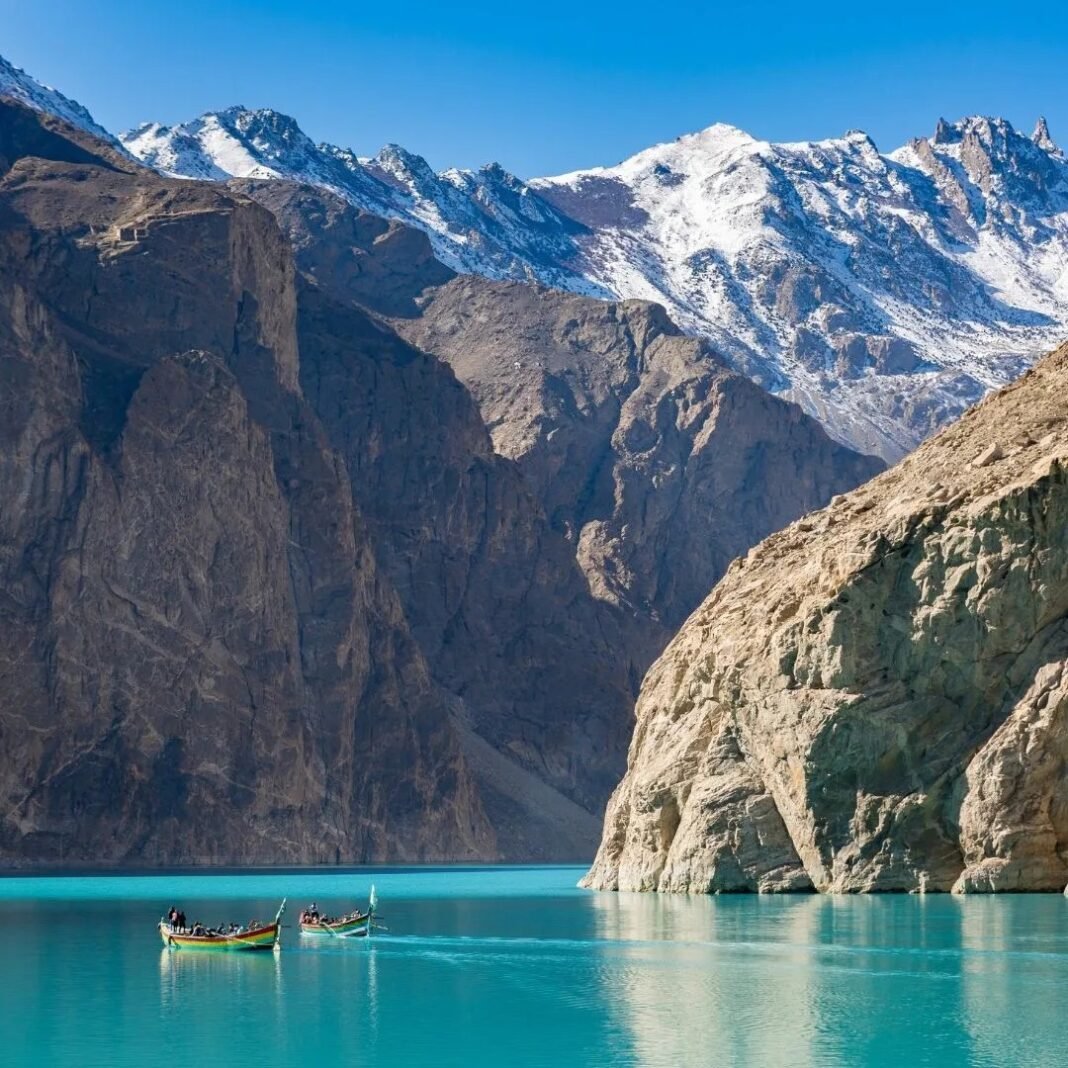
Few places on earth have a story like Attabad Lake. On 4 January 2010, a massive landslide crashed down the mountainside at Attabad village in Gojal, Upper Hunza, burying homes and blocking the Hunza River. Twenty people lost their lives. Over the following months, the river rose behind the natural dam, flooding villages upstream and drowning a long stretch of the Karakoram Highway. What emerged from the disaster was a lake of impossible turquoise blue, stretching for kilometres between bare Karakoram peaks. Today Attabad Lake, also called Gojal Lake, is one of the most visited sights in northern Pakistan: a place where tragedy and beauty exist side by side. This Attabad Lake travel guide covers the lake’s real history, the best time to visit, boating and things to do, and exactly how to reach it in 2026.
Quick Facts
- Location: Gojal region, Upper Hunza, Gilgit-Baltistan, on the Karakoram Highway
- Altitude: Around 2,500 metres above sea level
- Famous For: Striking turquoise water, boating, jet skiing, and the dramatic story of its formation in the 2010 landslide
- Nearest City: Karimabad (central Hunza), about 14 kilometres downstream; Gilgit is about 120 kilometres away
- Accessibility: Very easy: the lake sits directly on the paved Karakoram Highway, reached through the five Pakistan-China Friendship Tunnels; no trek or jeep needed
- Known Landmarks: The lake itself, the Friendship Tunnels, lakeside resorts and viewpoints, Passu Cones further up the valley
- Best For: Families, couples, photographers, boating lovers, and anyone on a Hunza road trip
Why Visit Attabad Lake
Attabad Lake is the easiest wow in northern Pakistan. You do not trek to it, you do not need a jeep, and you do not need to be fit. You simply drive the Karakoram Highway through a series of tunnels, and there it is: a long ribbon of deep turquoise water framed by stark, sun-baked mountains. The colour is unreal in photographs and even more unreal in person, shifting from electric blue to deep teal with the light.
Boating is the heart of the experience. Local boats, from simple wooden launches to faster speedboats, run from the docks at the southern end of the lake, taking you out onto water that is over a hundred metres deep. Jet skis buzz across the surface in summer, and the reflections of the peaks on calm mornings are a photographer’s dream. It is touristy in the best sense: lively, fun, and set up for visitors.
The lake’s story gives the visit a depth that pretty places often lack. This water covers villages, fields, orchards, and a stretch of the old Karakoram Highway. For years after the disaster, boats were the only way to travel between central Hunza and Gojal, and the lakeside communities rebuilt their lives around the water. Visiting with that history in mind turns a scenic stop into something moving: a lesson in how landscapes, and people, remake themselves.
Finally, Attabad is the perfect anchor for a Gojal itinerary. It sits on the highway between Karimabad and the wonders of upper Gojal: the Passu Cones, the Hussaini suspension bridge, Borith Lake, and the Khunjerab Pass. Most travellers spend one to three hours at the lake itself, but it works equally well as a lunch stop, a sunset viewpoint, or the centrepiece of a full Gojal day. In 2026, despite viral social media claims that the lake was drying up, fact-checks by major news outlets confirmed the lake is intact: what looked like dry land was natural silt at the upper end near Passu, while the main boating area and deep blue waters remain completely unaffected.
History of Attabad Lake
The history of Attabad Lake begins with disaster. On 4 January 2010, a massive landslide at Attabad village, in the Gojal region of Hunza, thundered down the mountainside and blocked the Hunza River. The slide buried part of the village, killed about twenty people, and destroyed dozens of homes. Behind the enormous natural dam, the river began to rise.
Over the following months, the water kept climbing. By June 2010, the new lake was around 21 kilometres long and more than 100 metres deep. It flooded the villages of Ayeenabad and large parts of Shishkat, Gulmit, Hussaini, and Ghulkin upstream, displacing around 6,000 people and submerging fields, orchards, and homes. It also drowned a long section of the Karakoram Highway, the vital trade and travel artery linking Pakistan with China. For years, the only way to travel between central Hunza and upper Gojal was by boat across the new lake, and an entire boat-based transport economy grew up on the water.
Engineers cut a spillway in 2012 to release a steady flow of water and stabilise the level, and the long-term answer was a rebuilt highway. In September 2015, a realigned 24-kilometre section of the Karakoram Highway opened above the lake, featuring five Pakistan-China Friendship Tunnels totalling about 7 kilometres, carved through the mountains with Chinese support. The tunnels restored the road link and are now an attraction in their own right: driving through them with the lake glittering below is one of the great road moments of the KKH.
Since then, Attabad Lake has transformed from a disaster zone into one of Pakistan’s most popular tourist destinations, and a major source of income for local communities through boating, hotels, restaurants, and shops. The lake’s distinctive turquoise colour comes from glacial silt suspended in the water, most vibrant in spring and early summer. It stands today as a monument to both nature’s destructive power and the resilience of the people of Gojal, who lost villages and rebuilt their lives around the water that replaced them.
Top Things to Do in Attabad Lake
Take a Boat Ride on the Turquoise Water
Boating is the essential Attabad activity. Boats depart from the docks near the southern end of the lake, and you can choose anything from a slow traditional-style cruise to a fast speedboat run up the lake. A typical ride lasts 20 to 45 minutes depending on the boat and the route. Go early in the morning for the calmest water and the best reflections, or late in the afternoon for golden light on the peaks. Life jackets should be provided; insist on one.
Jet Skiing and Water Sports
In the summer season, jet skis operate on the lake, offering a faster, more thrilling way to experience the water. Operators provide basic instruction and safety gear. The water is glacially cold year-round, so this is a summer-only activity for most people.
Photography at the Viewpoints
The highway offers several superb viewpoints: from the tunnel portals, from the lakeside restaurants, and from the higher pull-offs above the southern end. The classic shot is the long view up the lake toward the peaks of Gojal, best in the soft light of morning or evening. In winter, when the lake freezes, the ice patterns make for extraordinary photographs.
Walk the Lakeside and Visit the Cafes
The southern end of the lake has a lively strip of lakeside resorts, cafes, and restaurants with terraces over the water. It is the perfect place for a long lunch: trout, BBQ, and chai with the turquoise lake spread out below. An easy stroll along the shore gives you the lake at water level, a completely different perspective from the highway viewpoints.
Drive the Friendship Tunnels
The five Pakistan-China Friendship Tunnels on the realigned Karakoram Highway are an engineering landmark. Driving through them, emerging from darkness to the sudden blue of the lake, is unforgettable. Stop at the viewpoints between tunnels for the best panoramas.
Winter: Ice and Frozen Landscapes
In the depth of winter, Attabad Lake freezes over. The frozen surface, the snow-dusted peaks, and the near absence of crowds make this a magical time for photographers and solitude seekers. Ice skating is possible when conditions allow, but check ice safety locally and never venture onto thin ice.
Famous Places In and Around Attabad Lake
- Passu Cones — The jagged cathedral-like peaks further up the Gojal valley, one of the most photographed sights in Pakistan.
- Hussaini Suspension Bridge — The famous long suspension bridge over the Hunza River, a short drive up the valley.
- Borith Lake — A saline lake above Gulmit, known for birdwatching and reflections.
- Karimabad and Baltit Fort — The historic heart of central Hunza, about 30-45 minutes downstream.
- Altit Fort and Royal Garden — The older fort of Hunza with terraced gardens, near Karimabad.
- Gulmit — The old summer capital of Gojal, with traditional houses and the Ondra Fort viewpoint.
- Khunjerab Pass — The Pakistan-China border at 4,693 metres, the classic day trip from Gojal.
How to Reach Attabad Lake
Attabad Lake is one of the easiest major sights in the north to reach: it sits directly on the paved Karakoram Highway in Gojal, Upper Hunza, about 14 kilometres upstream of Karimabad and about 120 kilometres from Gilgit. No trekking, no jeep track, no special vehicle.
From Islamabad: The classic route is the Karakoram Highway: roughly 500-plus kilometres and 14 to 16 hours of driving via Mansehra, Besham, Chilas, and Gilgit to Hunza. Most travellers split this over two days with a night in Chilas or Gilgit. The faster option is the roughly one-hour flight from Islamabad to Gilgit (weather permitting; flights are frequently cancelled, so keep your plans flexible), then a three-hour drive up the KKH to the lake.
From Lahore: Drive or fly to Islamabad first, then follow the Islamabad route. The full road journey from Lahore is extremely long; flying to Gilgit via Islamabad is strongly recommended.
From Karachi: Fly to Islamabad, then to Gilgit, then drive. There is no practical overland route from Karachi for a Hunza trip.
From Gilgit: About 120 kilometres and roughly three hours by car or four by public transport, driving north on the KKH through the Hunza valley, past Karimabad, and through the Friendship Tunnels to the lake.
Nearest airport: Gilgit Airport (limited, weather-dependent flights from Islamabad). Skardu Airport is the more reliable alternative, with a longer drive to Hunza.
Road conditions: The Karakoram Highway to Attabad is paved and in generally good condition, including the tunnel section. It is a mountain highway, so expect narrow stretches, occasional rockfall zones, and winter closures on the higher sections toward Khunjerab. Ordinary cars manage the route in summer; check conditions in winter and spring.
Transport options: Private car or hired car with driver is the most comfortable. Public buses and vans run from Gilgit and Rawalpindi/Islamabad to Hunza (NATCO and private coaches), and local vans connect Karimabad with Gojal. Tour operators run packaged Hunza trips that always include Attabad.
Route Details
- Travel from Islamabad to Gilgit: by road via the KKH (14-16 hours, usually split over two days) or by air (about one hour, weather permitting).
- From Gilgit, drive north on the Karakoram Highway toward Hunza (about one and a half hours to Karimabad).
- Continue past Karimabad on the KKH for about 14 kilometres (30-45 minutes), entering the five Friendship Tunnels.
- The lake appears between and after the tunnels; the main docks, viewpoints, and lakeside restaurants are at the southern end.
- Park at the designated areas near the docks; boats, cafes, and viewpoints are all within easy walking distance.
Where to Stay in Attabad Lake
You do not need to stay at the lake itself, but you can: a strip of lakeside resorts and guesthouses has grown up around the southern end, offering rooms with direct lake views. These are mid-range properties, and they fill up in the May-to-September peak season, so book ahead.
Lakeside stays: The hotels and guesthouses right at the lake offer the unbeatable experience of waking up over turquoise water. Expect mid-range comfort: clean rooms, attached baths, and on-site restaurants. Advance booking is essential in peak season.
Karimabad (central Hunza): About 30-45 minutes downstream, Karimabad has the widest choice of accommodation in Hunza, from luxury hotels to family-run guesthouses. It is the best base for a multi-day Hunza trip covering Attabad, Baltit Fort, and the surrounding valleys.
Gulmit and Passu (upper Gojal): For travellers heading further up the valley toward Khunjerab, the villages of Gulmit and Passu have comfortable guesthouses with mountain views. Staying here puts you closer to the Passu Cones and Hussaini Bridge.
Gilgit: The city’s hotels work as a first- or last-night stop on the road journey, but the lake deserves at least one night in Hunza itself.
Where to Eat: Local Foods of Attabad Lake
The lakeside restaurants serve a mix of tourist-friendly Pakistani food and genuine Hunza cuisine. Eat at least one traditional Hunza meal while you are here.
Chapshuro: The most famous dish of Hunza, sometimes called the Hunza pizza: a hearty wheat-flour bread stuffed with minced meat, onions, and mountain spices, baked to golden perfection. It is filling, delicious, and unmistakably local.
Dawdo and manto: Dawdo is a nourishing noodle soup, and manto are steamed dumplings filled with meat: both are traditional comfort foods of the valley, perfect after a cold boat ride.
Burus barikuz: A traditional Hunza dish of flatbread layered with fresh local cheese (burus), butter or apricot oil, and herbs: simple, wholesome mountain food.
Trout and BBQ: The lakeside restaurants do excellent grilled trout and BBQ platters, served on terraces over the water. Apricot juice, dried apricots, and walnuts are the valley’s signature snacks.
Costs: Lakeside restaurants charge tourist prices but remain reasonable; a full meal typically costs a few hundred to around a thousand rupees per person depending on what you order. Village dhabas in Gulmit and Karimabad are cheaper.
Weather in Attabad Lake
Attabad sits at around 2,500 metres, so it has a true mountain climate: cold winters when the lake freezes, and pleasant summers when the water glows its brightest turquoise. The colour of the lake is most vibrant in spring and early summer, when glacial melt feeds silt into the water. The table below gives approximate seasonal ranges.
| Season | Temperature Range | Conditions |
|---|---|---|
| Winter (Dec-Feb) | -10 to 5°C | Lake freezes; snow on peaks; very few tourists; magical but very cold |
| Spring (Mar-May) | 5-20°C | Blossom season in Hunza; lake at its most turquoise; excellent visiting time |
| Summer (Jun-Aug) | 15-30°C | Warm days, peak tourist season; all activities running; book ahead |
| Autumn (Sep-Nov) | 0-18°C | Golden autumn colours; clear skies; harvest festivals; cooling fast |
Language and Culture of Attabad Lake
The lake lies in Gojal, Upper Hunza, where the main language is Wakhi, spoken by the Wakhi Tajik people; downstream in central Hunza, Burushaski is spoken by the Burusho people. Urdu and English are widely understood in the tourist areas, so communication is easy.
The people of Hunza and Gojal are predominantly Ismaili Muslims, known across Pakistan for their emphasis on education, their progressive outlook, and their legendary hospitality. Literacy rates are among the highest in the country, and visitors are welcomed warmly. The culture places great value on community, music, and traditional festivals tied to the agricultural calendar.
For visitors, the etiquette is straightforward: dress modestly (this is a mountain valley, not a beach resort), ask before photographing people, and respect places of worship. Hunza is notably relaxed by Pakistani standards, and women travellers generally report feeling comfortable here. Remember the lake’s history: this water covers lost villages, so a little reverence is appropriate.
Shopping in Attabad Lake
The shops around the lake sell the standard northern souvenir range, but the real shopping is in Karimabad’s bazaar, a short drive downstream. Dry fruits are the essential buy: Hunza’s dried apricots are famous across Pakistan, along with walnuts, almonds, and apricot kernels. Apricot oil, pressed locally, is sold for cooking and traditional use.
Look for gemstones: Hunza and Gojal are known for aquamarine, topaz, and tourmaline, and Karimabad has reputable gem shops; buy from established dealers. Woollen handicrafts, including shawls, caps, and hand-knitted socks, plus Balti and Wakhi embroidery, make authentic souvenirs. There are no shopping malls in the valley; the bazaars are the experience. Bargain politely and carry cash.
Local Events and Festivals
Hunza and Gojal have a rich calendar of traditional festivals, and timing your Attabad visit to coincide with one adds a memorable cultural layer to the trip.
Tagham (Spring Festival, March): The beautiful Wakhi spring festival celebrated in upper Gojal, including Passu, in the first week of March. It marks the arrival of spring and the start of the agricultural season, with families visiting each other, prayers for a good harvest, and the traditional dish samn shared among relatives. If you visit Attabad in early March, ask locally about Tagham gatherings.
Nowroz (21 March): The Persian new year, celebrated by the Ismaili community of Hunza with new clothes, special foods, and festive gatherings. Spring in Hunza around Nowroz, with the valley in blossom, is one of the loveliest times to visit.
Ginani (Harvest Festival, June): Traditionally celebrated around the third week of June when the crops are ready for harvest, with music, dance, and community feasting in the villages.
Baba Ghundi Festival (autumn): The annual two-day festival at the shrine of the Sufi saint Baba Ghundi in the Chipursan valley of Upper Hunza, held around International Tourism Day in late September. It honours the saint credited with spreading Islam in the region and brings together Wakhi-speaking communities from both sides of the Pakistan-Afghanistan border, with polo, buzkashi, music, and dance.
Festival dates can shift, so confirm locally before planning a trip around one.
Travel Tips for Attabad Lake
Packing Essentials
Sun protection is essential: the mountain sun reflecting off the water is intense, so bring sunscreen, sunglasses, and a hat. A light jacket even in summer, because evenings cool quickly and boat rides are breezy. Comfortable walking shoes for the viewpoints. Camera with extra batteries; the cold drains them fast in winter. Swimwear only if you are brave: the water is glacially cold year-round.
Safety Tips
Attabad is very safe for tourists and heavily visited. On the water, always wear the provided life jacket and do not lean over the sides of small boats. The lake is over 100 metres deep in places with cold currents; swim only if you are a strong swimmer, stay near the shore, and never swim alone. On the road, the KKH demands respect: rockfall zones are signposted, and winter driving needs caution.
Money & Connectivity
ATMs exist in Karimabad and Gilgit but can run dry in peak season; carry enough cash for boats, food, and shopping. The lakeside vendors take cash. Mobile signals (SCO/S COM, Telenor, and others) work along the highway and at the lake, though data speeds vary. Download offline maps before the mountain sections.
Best Time to Visit Attabad Lake
Spring (April to June) — Best Season
Spring is the top recommendation of this Attabad Lake travel guide. The lake’s turquoise colour is at its most vibrant with the glacial melt, Hunza valley is in blossom, temperatures are pleasant, and the crowds of high summer have not yet arrived. Late April through June is the sweet spot.
Summer (July to September) — Peak Season
Summer brings warm weather, all activities running at full tilt, and the liveliest atmosphere at the lake. It is also the busiest: book boats, hotels, and transport ahead, and expect company at every viewpoint.
Autumn (October to November) — Beautiful and Quiet
Autumn paints Hunza gold, the skies are crystal clear, and the harvest festivals bring cultural colour. The lake remains beautiful, the crowds thin out, but temperatures drop fast, especially in November.
Winter (December to March) — For the Adventurous
Winter is starkly beautiful: the lake freezes, snow covers the peaks, and you may have the viewpoints to yourself. But it is very cold, some facilities close, and the higher road sections can be affected by snow. Only for well-prepared travellers.
Final Thoughts
Attabad Lake is proof that beauty can grow out of catastrophe. A mountainside collapsed, a river was blocked, villages vanished under rising water, and a highway disappeared. What remains is a lake so blue it seems lit from within, crossed by boats full of laughing families, ringed by cafes and viewpoints, and driven past by one of the great highways of Asia. The people of Gojal did not choose this lake, but they made it theirs.
Visit in spring if you can, when the water is at its bluest and the valley is in flower. Take the boat ride, eat the chapshuro, drive the tunnels, and spare a thought for the villages beneath the surface. Attabad is the easiest great sight in the north to reach, and one of the hardest to forget.
FAQs
Where is Attabad Lake located?
Attabad Lake is in Gojal, Upper Hunza, Gilgit-Baltistan, on the Karakoram Highway about 14 kilometres upstream of Karimabad and about 120 kilometres from Gilgit.
How was Attabad Lake formed?
On 4 January 2010, a massive landslide at Attabad village blocked the Hunza River. The water rose for months behind the natural dam, reaching about 21 kilometres in length and over 100 metres in depth, flooding upstream villages and a section of the Karakoram Highway.
What is the best time to visit Attabad Lake?
April to June is ideal: the turquoise colour is most vibrant, the weather is pleasant, and the valley is in blossom. July to September is peak season; winter brings a frozen lake for the adventurous.
How do I reach Attabad Lake from Islamabad?
Drive the Karakoram Highway to Gilgit (14-16 hours, usually over two days) or fly to Gilgit (about one hour, weather permitting), then drive about three hours north on the KKH through the Friendship Tunnels to the lake.
Is Attabad Lake safe for tourists and families?
Yes. It is one of the most visited and tourist-friendly sights in northern Pakistan, sitting directly on a paved highway. Wear life jackets on boats, and note the water is very cold and deep.
Can you swim in Attabad Lake?
Swimming is possible but the water is glacially cold year-round. Only strong swimmers should attempt it, close to shore, with a companion; life jackets are recommended.
Where can I stay near Attabad Lake?
Lakeside resorts at the southern end offer rooms over the water; Karimabad (30-45 minutes away) has the widest choice from luxury to budget; Gulmit and Passu serve upper Gojal.
Is Attabad Lake really drying up?
No. Viral 2026 social media claims were debunked by fact-checks: what appeared as dry land is natural silt deposited at the lake’s upper end near Passu. The main lake, boating area, and deep turquoise waters remain fully intact.
For more northern Pakistan inspiration, explore our Explore Pakistan section, our full Hunza Valley guide, and the snowy slopes of Malam Jabba.