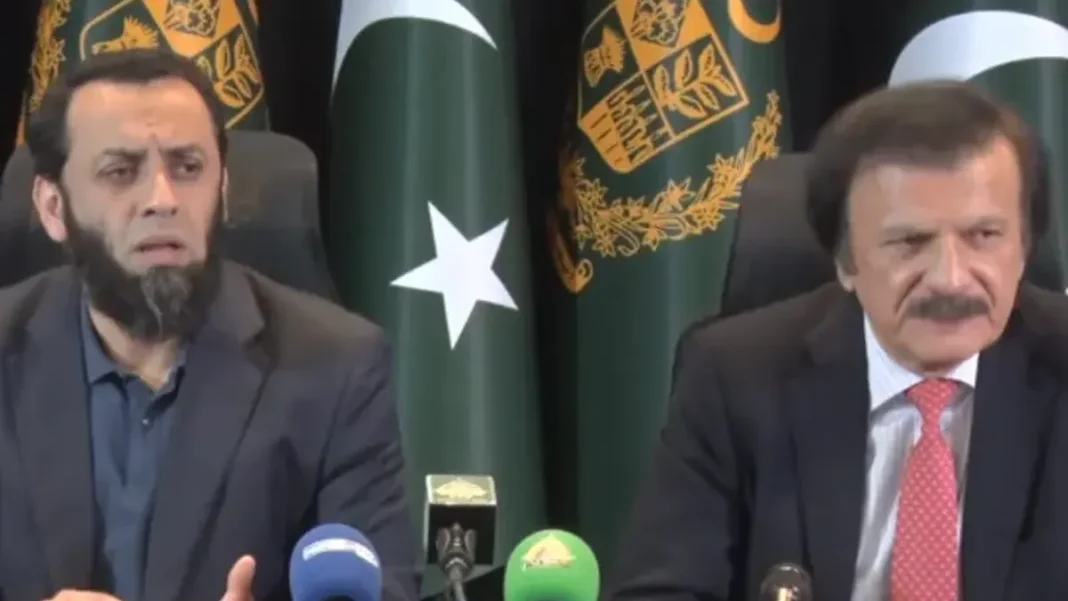
The federal government on Saturday introduced the Pakistan auto policy 2026, with a special focus on cheaper vehicles and electric vehicles (EVs). Information Minister Attaullah Tarar and Adviser to the Prime Minister for Industries and Production Haroon Akhtar Khan announced the policy at a press conference in Islamabad.
The Pakistan auto policy 2026 rests on six basic pillars. They are cheaper vehicles, especially for the middle class and lower middle class, exports, localisation, vehicle safety, promotion of EVs, and transparency.
Akhtar said a lot of work had gone into drafting the policy. He added that Prime Minister Shehbaz Sharif had personally invested a lot of time in it.
The premier’s tariff policy aims to lower production costs and the raw-material import bill.
“You will see that prices of cars will come down. The manufacturing cost of automakers will come down. These were the prime minister’s specific instructions. The prices of all vehicles, except luxury vehicles, will come down,” Akhtar said.
Prices will fall gradually, he explained, as duties on completely built units (CBUs) and assembly plants come down each year, reaching competitive tariffs after five years.
Tarar said on X that the policy drew on consultations with stakeholders, technical data and a review of global models.
“Innovation, value addition, and localisation will be promoted in the local industry to create employment opportunities and enable vehicle exports,” he said.
Encouraging EVs will cut carbon emissions and the oil import bill, Tarar said, with incentives for setting up charging stations.
He termed the initiative a “significant step toward providing Pakistani citizens with affordable, high-quality, and environmentally friendly transportation”.
Pakistan auto policy 2026: a long road to launch
The announcement ends months of uncertainty for buyers and carmakers. The new framework is the Automotive Industry Development Policy 2026-31. It replaces the Auto Industry Development and Export Policy 2021-26, which expired on June 30, 2026.
A steering committee led by Deputy Prime Minister Ishaq Dar gave the draft in-principle approval in August, and the prime minister approved it in principle in September. Talks with the International Monetary Fund ended without agreement in early October.
The delay cost buyers directly. When the old policy expired, the hybrid tax concession lapsed, and sales tax on hybrids rose from 8.5 per cent to 25 per cent from July 1. Carmakers raised hybrid prices by as much as Rs1.3 million.
The draft reported earlier set ambitious targets: annual production beyond 500,000 units, a combined export target of $6 billion for vehicles and parts over five years, and electric and hybrid vehicles at 30 per cent of car sales by 2031. Battery electric vehicles would pay sales tax of just 1 per cent, while tariffs on built-up cars and assembly kits would be capped at 15 per cent by 2030-31.
What the policy means for car buyers
Luxury vehicles are the exception. Their prices will not come down under the plan. The focus is on cars for middle and lower-middle class families, where high prices and financing costs have kept buyers away.
EV buyers stand to gain the most, as charging-station incentives should make it easier to own an electric car outside the big cities. A new electric quad bike has already reached Pakistani buyers this year.
Fuel costs matter too. Petrol prices fell by Rs6.59 per litre this month, while refineries face negative margins as fuel prices drop. Cheaper cars and lower running costs could revive a market that has been weak for two years.
The export push is the other half of the plan. Pakistan’s trade deficit reached $14.6 billion in July-October, and car exports would help narrow it, while localisation would cut the import bill.
The government has yet to publish the full policy text. Buyers and assemblers will watch for the duty schedule, the EV tax rates, and the date the new rates take effect.
Frequently asked questions
What is the new Pakistan auto policy?
It is the Automotive Industry Development Policy 2026-31. It replaces the 2021-26 policy, which expired on June 30, 2026. It aims for cheaper cars, more exports, localisation, safer vehicles, more EVs, and greater transparency.
Will car prices fall?
Yes, according to the government. Prices of all vehicles except luxury vehicles will come down gradually, as duties on completely built units and assembly plants fall each year over five years.
What does the policy offer EV buyers?
It promotes electric vehicles and offers incentives for setting up charging stations. The draft also proposed a sales tax of just 1 per cent on battery electric vehicles.
Why did hybrid car prices rise this year?
The old policy expired on June 30, 2026, and the hybrid tax concession lapsed. Sales tax on hybrids rose from 8.5 per cent to 25 per cent, pushing prices up by as much as Rs1.3 million.