Badalpur Stupa and Monastery is one of the most important Buddhist archaeological sites of the Taxila valley, lying about 9 kilometres north-west of the Taxila Museum near the village of Bhera in the Haro river valley of Haripur district. First identified by Alexander Cunningham in 1863-64 and excavated in 1916-17 and again by Pakistani archaeologists from 2005 onward, the 2.9-acre site holds a large monastery, a stupa complex, a remarkable 2nd-century Mathura-style Buddha sculpture, and Kushan-era coins and relics. If you are planning a Gandhara heritage trip, this badalpur stupa and monastery travel guide covers the history, what to see, how to reach the site, the best time to visit, and practical tips.
Quick Facts
- Location: Near Bhera village, Haro river valley, Haripur district, Khyber Pakhtunkhwa; about 9 km north-west of the Taxila Museum.
- Altitude: Around 500 metres above sea level (open Taxila valley floor).
- Famous For: Ancient Buddhist stupa and monastery, Gandhara archaeology, Kushan coins, and a rare Mathura-style Buddha sculpture.
- Nearest City: Taxila, with Islamabad about 40-50 km to the south-east.
- Accessibility: Reachable by road from Islamabad/Rawalpindi and Taxila; public access to the site is restricted, so arrange permission with the archaeology authorities in advance.
- Known Landmarks: The main stupa, the monastic complex with monk cells, the central water tank, and the Taxila Museum.
- Best For: History lovers, Buddhist heritage travellers, archaeology students, and anyone combining a Taxila day trip.
Why Visit Badalpur Stupa and Monastery
Most visitors to Taxila head straight for the museum, the Dharmarajika Stupa, or the Jaulian monastery, and almost everyone walks past Badalpur without knowing it exists. That is precisely why it is worth the effort. Badalpur is an active excavation site where the archaeology of the 3rd century BC sits side by side with the discoveries of 2015, when a team from the Taxila Institute of Asian Civilizations uncovered a 3rd-century-BC stupa measuring 25 by 25 feet on the southern side of the main monastery. Standing on the mound, you are looking at layers of history that archaeologists themselves are still unwrapping.
The finds here tell a story that is bigger than one monastery. The famous reddish-sandstone Buddha in Mathura style, seated on a throne with dharmachakra symbols on the soles of the feet and the right hand in abhaya mudra, was carved hundreds of kilometres away in Mathura and carried here as an offering by pilgrims in the 2nd century CE. Coins of the Kushan rulers Soter Megas, Kadphises I, Kanishka and Vasudeva have come out of the same ground. The site connects Taxila not just to the Indus valley but to the whole Buddhist world of ancient India.
Badalpur also shows how monastic life actually worked. The monastery measures 81 metres north-south by 78 metres east-west, with dozens of monks’ cells, kitchens, an entrance complex, and a central water tank with unusually large and well-laid pavements. The more recently excavated annexe to the south — a 40 by 40 metre mini-monastery with eight cells — was built, archaeologists believe, because the main monastery was attracting so many students and monks from across greater India that it needed extra accommodation. You are walking through an ancient university town, not just a temple.
Finally, it is honest heritage. The site is not a polished tourist attraction with ticket counters and souvenir shops, and that rawness is part of the experience. Combine it with the Taxila Museum and the great monasteries of the valley, and Badalpur gives you the full arc of Gandhara Buddhism from Mauryan beginnings to the Kushan golden age.
History of Badalpur Stupa and Monastery
The Buddhist establishment at Badalpur belongs to the wider story of Taxila, one of the oldest cities of the subcontinent. Taxila, or Takshashila, was a capital of the ancient kingdom of Gandhara, founded around 1000 BCE. Its ruins span the Achaemenid, Mauryan, Indo-Greek, Indo-Scythian and Kushan empires, and the valley became one of the great centres of Buddhist learning in Asia. Taxila’s ruins were inscribed on the UNESCO World Heritage List in 1980, and Badalpur is one of the satellite monastic sites that made the city famous.
The site was first noticed by modern scholarship when Alexander Cunningham, then Director General of the Archaeological Survey of India, visited the area during 1863-64 and recorded the mound in his report. In the winter of 1916-17, during the era of Sir John Marshall’s great excavations at Taxila, the Frontier Circle carried out the first limited excavation at the stupa. Marshall’s own guide to Taxila later noted that the remains at Badalpur were “poorly preserved” and did not recommend that casual visitors spend time there — a judgment that made sense for a site still buried under its own rubble.
Systematic work resumed under the Federal Department of Archaeology. A federal two-member team led by Dr Muhammad Arif and M. H. Khattak excavated between June and August one year and recovered a remarkable haul: 188 copper coins, 128 sealings, five chhatra (umbrellas) of votive stupas, a copper bell, copper strainers, a ritual copper pot, a surgical instrument, and the remains of eight monks’ cells whose mud-plastered walls were still in a good state of preservation. That excavation firmly established Badalpur as a protected archaeological site under the Department of Archaeology and Museums.
The most sustained modern research has come from the Taxila Institute of Asian Civilizations (TIAC), affiliated with Quaid-i-Azam University, under the direction of Dr Muhammad Ashraf Khan. Between 2005 and 2012, TIAC’s teams excavated the main compound, exposing 55 monk cells, and concluded that the monastery was a thriving centre of learning at the end of the 3rd century AD — at least 300 years older than archaeologists had previously estimated. In May 2015, the same team discovered the 3rd-century-BC stupa on the southern side of the main monastery, beside a central water tank, in the distinctive Kushan “diaper masonry” of stone blocks and thin metamorphic layers. Later work revealed the annexe monastery with eight more cells, a seven-centimetre iron key, eight Kushan coins, a water condenser — only the second found in the Taxila valley in over a century — and a large number of pottery remains, bones and nails.
The dating evidence is unusually rich. Carbon dating has placed the earliest stupa origins between the 3rd century BC and the 1st century AD. Coins from the site name the Kushan kings Soter Megas, Kadphises I, Kanishka and Vasudeva, plus a Sassanian coin, anchoring the monastery’s flourishing phase in the first to third centuries CE. The Mathura Buddha and a bodhisattva Maitreya sculpture in schist stone show that in the 2nd century CE, pilgrims were bringing sacred images from Mathura to the holy shrines of Taxila. The monastery declined with the rest of Gandharan Buddhism when the White Huns (Hephthalites) devastated the region in the 5th century CE, after which the valley sank into obscurity until the British rediscovery in the 19th century.
Top Things to Do in Badalpur Stupa and Monastery
Badalpur is an outdoor archaeological site, so the experience is about reading the landscape with the help of what archaeology has revealed. Here is what to focus on.
Walk the Main Stupa Complex
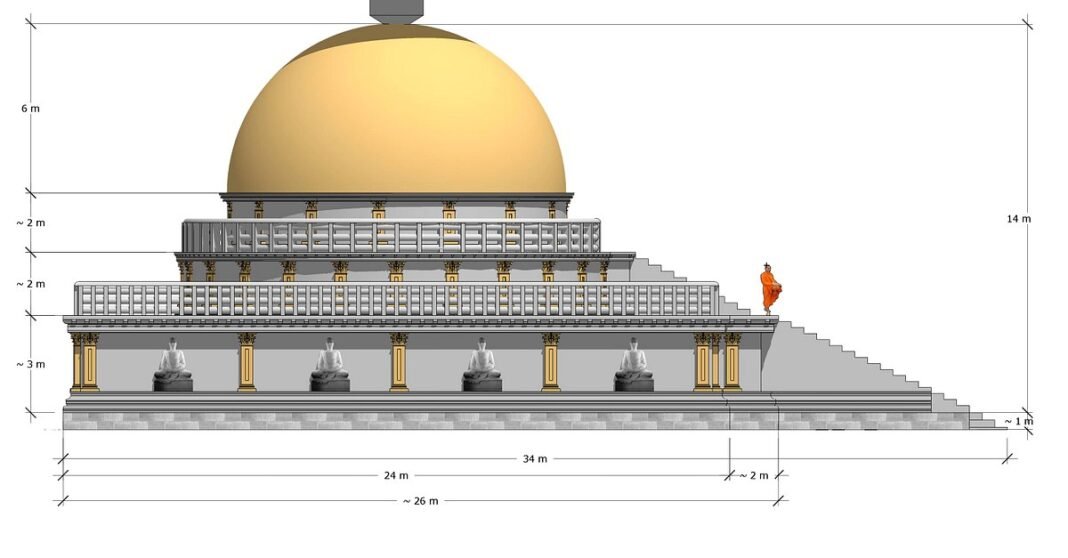
The stupa stands on the west of the site in a complex measuring 71 metres north-south and 60 metres east-west. The dome has not survived, but the drum rises about 6 metres above its base, and rows of smaller votive stupas stand in front of it on the east. Stand back and take in the scale: this was built as the sacred heart of the monastery, and the stupa-shaped relic casket found here in schist stone suggests it once held holy relics.
Explore the Monastic Complex
East of the stupa lies the monastery, an 81 by 78 metre enclosure that housed dozens of monks. Walk the lines of cells where the monks slept and studied, look for the kitchen area and entrance excavated by TIAC, and find the central water tank with its huge and distinctive pavements — the tank that made the December 2015 discoveries so interesting to archaeologists. Eight cells of the annexe monastery, with four-metre-high walls in diaper-pattern masonry, lie to the south of the main compound.
See Where the Mathura Buddha Was Found
The reddish-sandstone Buddha in Mathura style is now safely kept in museum collections, but knowing it was found here transforms the site. The sculpture — a Buddha seated cross-legged on a throne, dharmachakra symbols engraved on the soles of the feet, right hand raised in abhaya mudra with a wheel of law on the palm, and a pipal tree carved behind — is the most famous single object from Badalpur. Its discovery proved that monks travelled here from Mathura in the 2nd century CE, making this one of the few Gandhara sites with a direct documented link to the sacred art of the Indian heartland.
Combine with the Taxila Museum
Many of the antiquities from Badalpur — coins, pottery, seals, beads, iron objects and grinding mills — have been shifted to the Taxila Museum and TIAC’s study collections. Visit the museum either before or after the site so you can see the kinds of objects that came out of the ground you are standing on. The museum is one of the finest archaeological museums in South Asia and is the natural companion to a Badalpur visit.
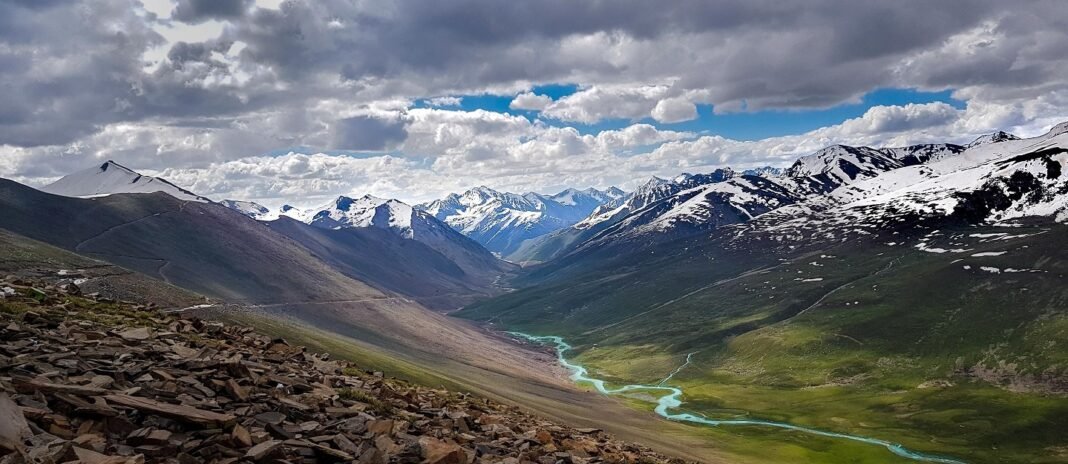
Photograph the Haro River Valley
The site sits in the open valley of the Haro river, with soft golden light in the early morning and late afternoon. The low brick mounds, the excavated walls and the valley panorama make for atmospheric photographs. Bring a wide-angle lens and come at dawn, when the site is empty and the light does the work.
Famous Places In and Around Badalpur Stupa and Monastery
- Taxila Museum — houses Gandharan sculpture and the antiquities recovered from Badalpur and the valley’s other sites.
- Jaulian Monastery — about 2 km south-east, the valley’s best-preserved hilltop monastery, a UNESCO-listed site.
- Dharmarajika Stupa — the Great Stupa of Taxila, traditionally linked to Emperor Ashoka and the 3rd century BC.
- Sirkap — the planned Indo-Greek and Kushan city with grid streets, stupas and temples.
- Mohra Moradu — a beautifully preserved monastery with stupas and stucco imagery.
- Lalchak mounds — nearby Buddhist establishment, about a mile west of Badalpur.
- Khanpur Dam — the scenic reservoir a short drive away, popular for picnics and boating.
- Haripur — the district town with local markets and the KP archaeology administration.
How to Reach Badalpur Stupa and Monastery
Badalpur lies in the Taxila valley, roughly 9 kilometres north-west of the Taxila Museum and about 2 km north-west of Jaulian village, near Bhera village in Haripur district. The site sits in the open valley of the Haro river, and the approach is on rural roads once you leave the Taxila museum road.
From Islamabad: Taxila is about 40-50 km north-west of Islamabad, roughly a 1 to 1.5 hour drive via the Grand Trunk Road through Margalla towards Taxila town. From the Taxila Museum, take the Khanpur road direction towards Jaulian and Bhera village; Badalpur is signposted locally. From Lahore: the drive is about 370 km via the M-2 motorway to Islamabad and then on to Taxila, roughly 5 to 6 hours in total. From Karachi: this is a flight journey — fly to Islamabad International Airport (about 2 hours) and drive onward, or take the train to Rawalpindi and hire a car.
The nearest airport is Islamabad International Airport, about 50-60 km from the site. The nearest railway station is Taxila Cantonment on the main Peshawar-Rawalpindi line. For transport, a private car or hired taxi from Islamabad or Taxila town is the practical option; ride-hailing apps work in Islamabad and Rawalpindi but may not cover the rural site itself. Public wagons run to Taxila town, from where you will need a rickshaw or taxi to the site. Because public access to the excavated area is restricted, contact the Khyber Pakhtunkhwa Directorate of Archaeology and Museums (or the Taxila Museum office) before your visit to confirm entry arrangements.
Route Details
- Start from Islamabad: take the Grand Trunk Road (N-5) north-west through Margalla, or the Taxila road via the M-1 motorway interchange, towards Taxila town (about 1 hour).
- Reach the Taxila Museum on Shahpur Road; park here and collect site information from the museum staff.
- From the museum, take the road towards Khanpur/Jaulian for about 9 km, passing Jaulian village; Badalpur lies to the north-west near Bhera village in the Haro river valley.
- Ask locally at Bhera village for the Badalpur excavation site; the mounds and excavated walls are visible from the approach road.
- Plan 2-3 hours at the site, then return to the museum to see the Badalpur finds on display.
Where to Stay in Badalpur Stupa and Monastery
There are no hotels at the Badalpur site itself — it is a protected archaeological mound in a rural valley. The practical base is Taxila town, which has simple, budget-friendly guesthouses and small hotels along the Grand Trunk Road catering to business travellers and tourists visiting the museum and the ruins. These are functional rather than luxurious, but they put you within a few minutes’ drive of the site.
Most visitors do Badalpur as a day trip from Islamabad or Rawalpindi, where the full range of options exists: mid-range business hotels in sectors like Blue Area and F-7, well-kept guesthouses, and luxury five-star properties. Staying in the capital means better restaurants and shopping for the evenings, with an easy early-morning drive to Taxila. If you are on a tight budget, the rest houses and budget hotels in Taxila and nearby Wah Cantt offer clean, basic accommodation. Camping at the site is not appropriate or permitted, as it is a protected archaeological area — plan your visit as a day excursion.
Where to Eat: Local Foods of Badalpur Stupa and Monastery
The Taxila valley sits in the Pothohar region of Punjab with Hazara just across the river, so the food is classic Punjabi-Pothohari fare. Expect tandoori rotis, dal, and grilled meats. The area around Taxila and Hassan Abdal is known for its tandoors and kebab shops — seekh kebabs, chapli kebabs and tandoori chicken are staples at roadside dhabas, and a hearty dal with fresh tandoori roti is a satisfying local meal. Chapli kebab, in particular, is a speciality of this corridor between Punjab and Khyber Pakhtunkhwa.
For a sit-down meal, the small restaurants and dhabas along the Grand Trunk Road in Taxila and Wah Cantt serve standard Pakistani cuisine — chicken karahi, daal fry, biryani and fresh lassi. There is no restaurant at the Badalpur site itself, and you will find nothing to eat at the mound, so carry drinking water and snacks. The site visit is best planned around a meal in Taxila town before or after. A budget dhaba meal is very affordable; a mid-range restaurant meal in Taxila costs a moderate amount by Pakistani standards.
Weather in Badalpur Stupa and Monastery
Badalpur lies on the open floor of the Taxila valley, so its weather follows the Islamabad-Rawalpindi pattern: very hot summers, a monsoon in July and August, pleasant springs and autumns, and cool, occasionally foggy winters. There is no shade at the site, so the season you choose makes a real difference to the experience.
| Season | Temperature Range | Conditions |
|---|---|---|
| Winter (Dec-Feb) | Around 5-18°C | Cool and often foggy mornings; clear, pleasant afternoons; best walking weather. |
| Spring (Mar-May) | Around 15-32°C | Green valley, wildflowers, comfortable until late April; heat builds in May. |
| Summer (Jun-Aug) | Around 28-42°C | Very hot and humid, especially June; monsoon rain in July-August; visit only early morning. |
| Autumn (Sep-Nov) | Around 15-32°C | Warm days, cooler nights, clear skies; one of the best seasons for the site. |
Language and Culture of Badalpur Stupa and Monastery
The Taxila valley is a Punjabi-speaking area — Pothohari/Pahari Punjabi is the everyday language, with Hindko spoken widely across the Haro river in Haripur. Urdu is understood everywhere, and English is spoken by educated people, museum staff and licensed guides. As a Buddhist heritage site, Badalpur draws international visitors, including pilgrims from East and South-East Asia, and the museum area is accustomed to foreign guests.
Culturally this is the meeting point of Punjab and Hazara. The local people are conservative and hospitable; dress modestly, especially if you stop at villages around the site. At an archaeological site, treat the ruins with respect: do not climb on the excavated walls, do not take away any potsherd or stone, and do not disturb areas marked for excavation. Photographs are fine, but remember that research may be in progress and excavation trenches should not be entered. Remove nothing — every sherd is part of the archaeological record.
Shopping in Badalpur Stupa and Monastery
Shopping is not the point of a Badalpur visit, and there are no souvenir shops at the site. The Taxila Museum shop, if open, sometimes stocks books and postcards on Gandharan art, which are the most meaningful souvenirs from this trip. Taxila town’s bazaars sell everyday goods rather than tourist handicrafts.
If you want Gandhara-themed souvenirs — replica coins, carved stone panels, books on Buddhist art — Islamabad’s markets (Jinnah Super, F-10, and the crafts shops near the Lok Virsa area) are the reliable places to look. Dry fruits and desi ghee from the Pothohar region are sold in Taxila’s bazaar and make good local purchases. Do not buy “ancient” coins or artefacts from anyone near the site: selling antiquities is illegal, and looting is exactly what endangers places like Badalpur.
Travel Tips for Badalpur Stupa and Monastery
Packing Essentials
Bring sun protection (a hat, sunglasses and sunscreen), at least a litre of drinking water per person, comfortable walking shoes with grip, and a camera. The ground is uneven, and there are no shops at the site. A light jacket is useful from November to February; an umbrella or rain shell helps in the monsoon months.
Safety Tips
Taxila is a safe and frequently visited heritage destination. Visit in daylight hours — the site is unlit and unguarded at night. Stick to the excavated areas and marked paths, and watch your footing on loose rubble. Because entry is controlled, confirm your permission in advance so you are not turned away at the site. Travel insurance that covers medical emergencies is sensible anywhere in Pakistan.
Money & Connectivity
Carry cash (Pakistani rupees) — there are no card machines at the site or in the villages around it. ATMs are available in Taxila town and widely in Islamabad and Rawalpindi. Mobile signals from all major networks (Jazz, Telenor, Zong, Ufone) cover the Taxila valley well, and 4G data generally works, though speeds can dip at the rural site itself.
Best Time to Visit Badalpur Stupa and Monastery
Winter (December-February): Ideal
Cool, clear days with crisp light make winter the most comfortable season for walking an open archaeological site. Mornings can be foggy, which delays the best photography until mid-morning, but by afternoon the valley glows.
Spring (March-April): Excellent
The valley turns green, the air is fresh, and temperatures are pleasant. This is arguably the prettiest time to visit, before the summer heat arrives. Combine the site with the other Taxila monasteries in one long day.
Summer (May-August): Avoid if Possible
May and June bring fierce heat, and July-August bring monsoon humidity and rain. If you must visit, come at dawn, carry plenty of water, and leave by mid-morning. Excavation teams often work in winter for the same reason.
Autumn (October-November): Very Good
Post-monsoon clarity, warm days and cool evenings make autumn a fine time for the site. This is the peak season for Gandhara tourism, so the museum and popular monasteries will be busier — Badalpur, being off the main circuit, stays quiet.
Final Thoughts
Badalpur Stupa and Monastery will not overwhelm you with towering architecture or polished galleries, and that is exactly its charm. It is a working archaeological landscape where a 3rd-century-BC stupa, a Kushan monastery of 55 cells, and the finds of modern Pakistani archaeologists — iron keys, bronze coins, a water condenser, a pilgrim’s Buddha from Mathura — coexist on 2.9 acres of the Haro river valley. For travellers who want to understand Gandhara Buddhism rather than just photograph it, Badalpur is essential.
Go with a guidebook or, better, a guide from the Taxila Museum, arrange your permission in advance, and walk the site slowly. Then stand where the monks stood two thousand years ago and look out over the same valley. Some places in Pakistan are famous; Badalpur is important. That difference is what makes the trip worthwhile.
FAQs
Where is Badalpur Stupa and Monastery located?
It lies near Bhera village in the Haro river valley of Haripur district, about 9 kilometres north-west of the Taxila Museum, close to Jaulian village.
What is the best time to visit Badalpur Stupa and Monastery?
October to March is the best time. Winter offers cool, clear walking weather; May and June are extremely hot and best avoided.
How do I reach Badalpur Stupa and Monastery?
Drive from Islamabad to Taxila (1-1.5 hours), then take the Khanpur/Jaulian road about 9 km from the Taxila Museum. Confirm entry permission with the archaeology authorities in advance.
Is Badalpur Stupa open to the public?
Access is restricted because it is an active excavation site under the archaeology department. Arrange permission through the KP Directorate of Archaeology and Museums or the Taxila Museum office before visiting.
Is it safe to visit Badalpur?
Yes, Taxila is a safe and well-visited heritage destination. Visit in daylight, stick to paths, and keep valuables secure.
Is Badalpur suitable for families?
It suits families with older children interested in history. There is no shade, food, or toilets at the site, so it is less comfortable for small children or elderly visitors in hot weather.
Where can I stay near Badalpur?
There are no hotels at the site. Stay in Taxila town’s budget guesthouses or, more comfortably, in Islamabad/Rawalpindi and visit as a day trip.
What local food should I try?
The Taxila valley’s Punjabi-Pothohari cuisine — seekh kebabs, chapli kebabs, dal with tandoori roti — served at dhabas along the Grand Trunk Road.
What makes Badalpur unique among Taxila’s sites?
Its 2015 discovery of a 3rd-century-BC stupa, the 2nd-century Mathura Buddha linking Taxila to ancient Indian pilgrimage networks, and its status as a thriving 3rd-century-AD monastic learning centre confirmed by modern Pakistani excavations.
Related reading: explore more heritage destinations on our Explore Pakistan page, and see our guides to Malam Jabba, Hunza Valley, and places to visit in Islamabad.