Quick Facts
- Location: Makli Hill, Thatta District, Sindh, inside the Makli necropolis, a UNESCO World Heritage Site.
- Altitude: Low, on the limestone ridge of Makli Hill above the Indus floodplain, roughly 15 metres above sea level.
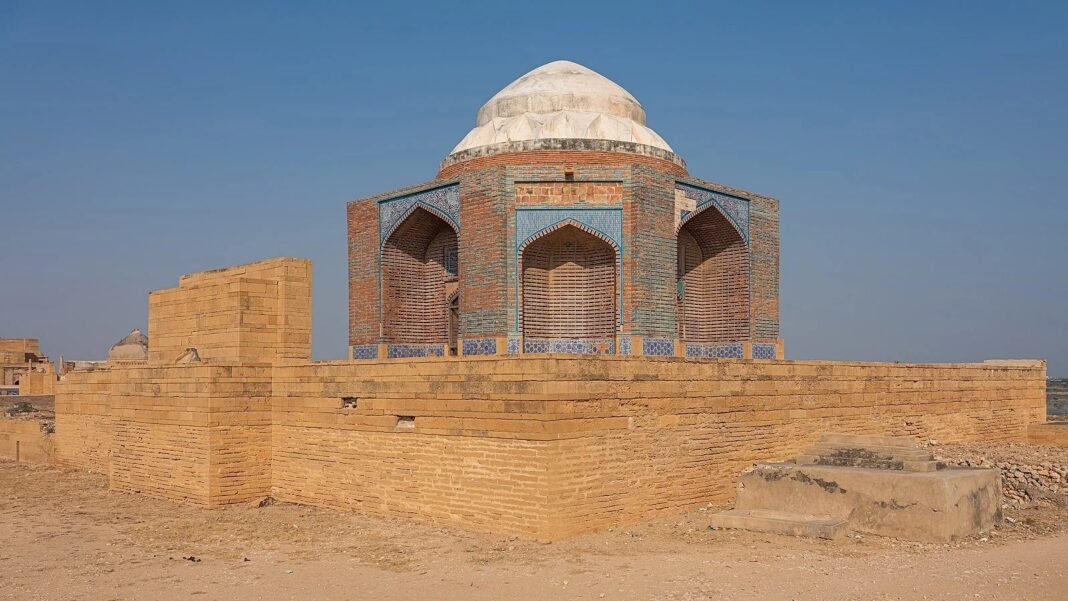
- Famous For: A 17th-century walled brick enclosure holding the grave of Baqi Baig Uzbek (died 1641), with finely laid brick panels, a domed prayer chamber and traces of glazed kashi tile.
- Nearest City: Thatta, about 5 to 7 km away; Karachi is roughly 100 km to the west.
- Accessibility: Easy day trip from Karachi or Hyderabad by road on the N-5 National Highway; a short walk within the Makli site.
- Known Landmarks: The enclosure’s arched east entrance, the domed mosque on its west wall, the three graves on the central platform, and nearby the tombs of Mirza Isa Tarkhan the Younger and the pavilion of Tughral Baig.
- Best For: Architecture lovers, history enthusiasts, photographers, and anyone visiting Makli who wants to go beyond the famous tombs.
Why Visit Brick Enclosure of Tomb of Baqi Baig Uzbek
Makli Hill is one of the largest necropolises in the world, and most visitors walk straight to the great showpieces: the tombs of Jam Nizamuddin II and Mirza Isa Khan Tarkhan. But the hill rewards those who wander. Also, the brick enclosure of the tomb of Baqi Baig Uzbek is one of Makli’s quiet masterpieces of brickwork, a high-walled compound of finely laid brick panels, arched entrances and a small domed mosque that once glittered with glazed blue tile. It is the kind of monument that makes you stop, look closer, and realise how much craftsmanship the 17th century poured even into lesser-known graves.
An Uzbek in Tarkhan Service
Part of the appeal is the mystery. Also, Baqi Baig Uzbek died in 1641. In fact, the historical record tells us little about him beyond his name and his grave. In addition, he was one of the Central Asian nobles, an Uzbek in the service of the Tarkhan rulers of Sindh, men whose tombs crowd this ridge. His enclosure stands between two better-known monuments, the tomb of Essa Khan Tarkhan the Younger and the pavilion of Tughral Baig. It reads like a footnote that turns out to be a chapter: a complete, self-contained funerary complex with its own prayer hall, its own geometry, its own lost decoration.
For the traveller, this brick enclosure of tomb of Baqi Baig Uzbek travel guide opens a door into Makli that the big tombs alone cannot. Also, the great mausoleums show you power; this shows you craft. The recessed arched panels, the semi-octagonal corner alcoves, the zigzag brick patterns picked out in light blue glaze, these are details you can study at arm’s length. They survive in a state that lets you imagine the whole as it was in 1640. If you care about how buildings were actually made, this half hour at Makli will stay with you longer than the famous domes.
And the setting does the rest. Makli Hill at golden hour is one of Sindh’s great sights, hundreds of tombs and carved gravestones stretching across the ridge in every direction, the Indus plain hazy below. Also, come for the famous tombs, stay for the brick enclosure, and leave with a far richer sense of what this necropolis really is.
History of Brick Enclosure of Tomb of Baqi Baig Uzbek
To understand this tomb, you must first understand Makli. Also, the necropolis on Makli Hill was used as a burial ground from the 14th to the 18th century, through the Samma, Arghun, Tarkhan and Mughal periods of Sindh’s history. In fact, rulers, their families, royal officers, warriors, poets and saints were buried here. The hill accumulated somewhere between half a million and a million tombs and graves, making it one of the largest necropolises on earth. It was inscribed as a UNESCO World Heritage Site in 1981.
Baig Means Nobleman
The Tarkhan dynasty, which ruled Sindh in the 16th and 17th centuries, were themselves of Central Asian origin, and their courts drew heavily on Turkic and Uzbek nobles, soldiers and administrators. These men, the military aristocracy of a frontier province, built their tombs in the styles of their homelands fused with the local Sindhi and Mughal idioms: brick and stone, arches and domes, glazed tile and carved calligraphy. Also, Baqi Baig Uzbek was one of these figures. In fact, the “Baig” (beg) in his name marks him as a nobleman, and “Uzbek” marks his Central Asian origin.
He died in 1641, and his tomb enclosure has been dated by the Sindh Directorate General of Antiquities to 1640 AD, the year his burial complex was presumably completed.
The enclosure stands in distinguished company. Also, it lies between the tomb of Essa Khan Tarkhan the Younger (Mirza Isa Tarkhan II) and the tomb pavilion of Tughral Baig, both major Tarkhan-period monuments. In fact, this clustering is no accident: the nobility of a court bury near their rulers. This stretch of Makli’s ridge is effectively the Tarkhan quarter of the necropolis.
A Textbook of Brick Craft
Architecturally, the enclosure is a textbook of 17th-century Sindhi brick craft. Also, the high walls are of finely laid brick divided into recessed arched panels, with semi-octagonal alcoves set on the inner side at the corners. The entrance on the eastern side is a high arch set in a rectangular frame that was once faced with glazed tiles. In fact, two false entrances, one each on the northern and southern sides, are each flanked by four arched windows. In addition, above the arched panels on the outer wall runs a horizontal line at cornice level.
For example, on the west side, a domed prayer chamber projects from the wall: a tall decorated pointed arch between smaller panels with a dome above, the dome itself conical, set on an octagonal drum raised on tall squinches at the corners, crowned with a lotus finial. Inside, the semi-octagonal mihrab carries arched panels over which runs a zigzag brick pattern, its joinery picked out in light blue glaze. The whole enclosure was once decorated with glazed kashi tile. The surviving fragments of blue are enough to show how brilliant it must have been.
In the centre of the courtyard stands a raised platform with three gravestones. Also, the central grave, presumably Baqi Baig’s own, has a conical headstone; the other two are plainly built. Like the rest of Makli, the monument has suffered from centuries of weather, salt and neglect. The Sindh antiquities authorities now list and protect it. Visitors should treat it as the fragile heritage it is: look closely, but do not touch, climb or remove anything.
Top Things to Do in Brick Enclosure of Tomb of Baqi Baig Uzbek
Study the Brickwork Up Close
This is the monument’s great pleasure. Also, walk slowly around the outer walls and look at the recessed arched panels, the precision of the brick courses, the horizontal cornice line and the row of dentils. Then go inside and examine the corner alcoves and the mihrab’s zigzag brickwork with its surviving light blue glaze. Seventeenth-century Sindhi masons worked brick the way others worked marble. This enclosure is one of the best places at Makli to appreciate it.
Enter Through the Glazed East Arch
The entrance on the eastern side is the monument’s ceremonial face: a high arch set in a rectangular frame that once carried glazed tiles. Also, stand in it and look back at the courtyard with its three graves on the raised platform. In fact, early morning light comes through this arch beautifully, and it is the best photographic angle on the enclosure.
Visit the Domed Prayer Chamber
The small mosque projecting from the west wall is worth several minutes of quiet attention. Also, note the tall decorated pointed arch between smaller panels, the conical dome on its octagonal drum, the squinches carrying the drum at the corners and the lotus finial crowning it. In fact, the semi-octagonal mihrab inside, with its zigzag brick pattern in light blue glaze, is one of Makli’s loveliest small interiors.
Pay Respects at the Three Graves
The raised platform in the courtyard’s centre holds three gravestones, the central one with its conical headstone marking Baqi Baig Uzbek himself. Also, whatever the man’s story, lost to us now, the grave has been honoured for nearly four centuries. In fact, behave as you would in any graveyard: quiet, respectful, shoes handled as local custom suggests.
Walk the Tarkhan Quarter of Makli
Use the enclosure as an anchor for a wider walk. Also, south of it lies the tomb of Mirza Isa Tarkhan the Younger and Tughral Baig’s pavilion. The whole ridge here is Tarkhan-period Makli at its finest. Give the necropolis at least half a day: the famous tombs near the main entrance, then the quieter compounds like this one further along the ridge.
Famous Places In and Around Brick Enclosure of Tomb of Baqi Baig Uzbek
- Tomb of Jam Nizamuddin II — the great Samma-period mausoleum near Makli’s main entrance, with its famous carved sandstone balcony.
- Tomb of Mirza Isa Khan Tarkhan — the 16th-century Tarkhan mausoleum many consider Makli’s most beautiful building.
- Tomb of Mirza Isa Tarkhan the Younger — immediately north of the Baqi Baig enclosure, a major Tarkhan monument.
- Shah Jahan Mosque, Thatta — the magnificent 17th-century mosque in Thatta town, famed for its 93 domes and tilework, a short drive away.
- Keenjhar (Kalri) Lake — the large freshwater lake near Thatta, a popular picnic and birdwatching spot.
- Haleji Lake — a wildlife sanctuary and wetland known for migratory birds, within easy reach of Thatta.
How to Reach Brick Enclosure of Tomb of Baqi Baig Uzbek
The enclosure stands on Makli Hill, about 5 to 7 km from Thatta town, on the Karachi to Hyderabad National Highway (N-5). Also, within the necropolis it lies south of the tomb of Mirza Isa Tarkhan the Younger, between that tomb and Tughral Baig’s pavilion. Any caretaker at the site can point you to it, though it is unsigned in places, so ask.
From Karachi (approx. Also, 100 km, 1.5 to 2 hours): Take the N-5 National Highway east toward Hyderabad. Makli Hill is signposted before Thatta town. This is the standard day trip, and the road is good throughout. Leave Karachi early to reach Makli in the morning light.
From Hyderabad (approx. Also, 100 km, 1.5 to 2 hours): Take the N-5 south toward Karachi and Thatta. In fact, the drive is straightforward, and many visitors combine Makli with the Shah Jahan Mosque and Keenjhar Lake in a single day from Hyderabad.
From Lahore (approx. 1,200 km): The practical option is to fly to Karachi and drive the last 100 km. Also, the road journey via the N-5 through Multan and Sukkur is a full two days.
From Islamabad (approx. 1,400 km): Fly to Karachi, then drive to Thatta and Makli. Also, there is no practical direct road itinerary for a short trip.
Nearest airport: Jinnah International Airport, Karachi, is the nearest major airport, about 100 km away. Also, Hyderabad has limited domestic flights. By rail: Thatta has a railway station with connections from Karachi, and from the station a taxi or rickshaw reaches Makli in 15 to 20 minutes. Local transport: once at Makli, you walk. In fact, the necropolis is explored on foot. The Baqi Baig enclosure is a short stroll from the main cluster of tombs.
Route Details
- From Karachi, take the National Highway (N-5) east toward Thatta and Hyderabad.
- Follow signs for Makli necropolis; the main entrance and parking area sit at the foot of the hill, about 100 km from Karachi.
- Enter the site and walk the ridge path past the great tombs near the entrance.
- Continue south along the ridge to the tomb of Mirza Isa Tarkhan the Younger; the brick enclosure of Baqi Baig Uzbek lies just south of it, between that tomb and Tughral Baig’s pavilion. Allow half an hour for the enclosure itself.
Where to Stay in Brick Enclosure of Tomb of Baqi Baig Uzbek
Almost everyone visits Makli as a day trip from Karachi or Hyderabad, where the full range of hotels is available. Thatta town itself has a handful of small hotels and guesthouses, simple, inexpensive and adequate for an overnight stop if you want two days for Makli, the Shah Jahan Mosque and Keenjhar Lake. Also, do not expect luxury in Thatta; expect clean basics, air conditioning in the better rooms, and food in the bazaar.
There is no accommodation on Makli Hill itself, and camping on the necropolis is neither permitted nor appropriate. If you are touring lower Sindh more widely, Hyderabad makes a good base: mid-range hotels with restaurants, easy road access to both Makli and the rest of the district. Book ahead in winter, when domestic tourism peaks.
Where to Eat: Local Foods of Brick Enclosure of Tomb of Baqi Baig Uzbek
Eat in Thatta town, where the bazaar around the Shah Jahan Mosque has dhabas and small restaurants serving classic Sindhi food: dal, sabzi, fresh tandoori roti. Also, the inevitable biryani. In fact, Thatta’s food is hearty, inexpensive and served fast; a full dhaba meal is budget-friendly. The tea shops near the mosque are good places to rest between monuments.
At Makli itself there are only small tea stalls and vendors near the entrance, so carry water and snacks for the walk, especially in the warmer months. If you are day-tripping from Karachi, many travellers eat on the highway: the N-5 between Karachi and Thatta has the usual highway dhabas with fresh karahi, dal fry and chai. In winter, look for seasonal treats in Thatta’s bazaar, roasted peanuts, sesame sweets and fresh dates.
Weather in Brick Enclosure of Tomb of Baqi Baig Uzbek
Thatta shares the hot, arid climate of lower Sindh. The necropolis is an exposed hilltop with no shade, so the season of your visit matters enormously. Also, november to February brings mild, clear days that are ideal for walking the ridge. From April the heat builds fast, and May and June can be brutal. The monsoon brings humidity and the occasional heavy shower from July to September.
| Season | Temperature Range | Conditions |
|---|---|---|
| Winter (Nov-Feb) | 10 to 27°C | Clear and mild; the best season for Makli. |
| Spring (Mar-Apr) | 22 to 38°C | Hot afternoons; visit early morning. |
| Summer (May-Jun) | 32 to 45°C | Extreme heat, no shade on the hill; avoid midday entirely. |
| Autumn (Jul-Oct) | 29 to 40°C | Humid with monsoon showers; October improves as rains retreat. |
Language and Culture of Brick Enclosure of Tomb of Baqi Baig Uzbek
Sindhi is the first language of Thatta district, with Urdu universally understood and English workable around the main tourist sites. The culture is Sindhi and deeply hospitable: the caretakers at Makli’s monuments are accustomed to visitors and often happy to explain what you are looking at if you show genuine interest. A small tip for their time is customary and appreciated.
Remember that Makli is a graveyard, one of the largest in the world. An active place of reverence as well as a heritage site. Keep your voice down, do not sit or stand on graves, do not scratch, climb or remove any stone or tile, and follow the caretakers’ instructions. Dress modestly, as you would for any religious or memorial site. Photography of the monuments is fine; ask before photographing people at prayer or visiting family graves.
Shopping in Brick Enclosure of Tomb of Baqi Baig Uzbek
There is no real shopping at Makli beyond small vendors near the entrance selling water, caps and simple souvenirs. Thatta town’s bazaar is the place for Sindhi handicrafts: ajrak shawls, embroidered caps, rilli quilts and lacquered woodwork from the surrounding villages. Also, the shops near the Shah Jahan Mosque cater to visitors and have a decent selection. For anything more, Karachi’s markets are an hour and a half away. There are no shopping malls in Thatta, and the bazaar experience is far more rewarding anyway.
Travel Tips for Brick Enclosure of Tomb of Baqi Baig Uzbek
Packing Essentials
Hat, sunscreen and sunglasses are essential on Makli’s shadeless ridge, along with at least two litres of water per person. Also, wear comfortable walking shoes with good grip; the paths between tombs are uneven stone and rubble. A camera with a decent zoom helps capture tile and brick details without touching them. Carry small-denomination rupees for tips, water and rickshaws.
Safety Tips
Makli is safe for daytime visitors and regularly hosts school groups and foreign tourists. Also, stay on the paths, watch your footing on old masonry. It do not climb on any structure, the brickwork is fragile and protected by law. Keep valuables minimal and leave the hill before dusk, when the site empties.
Money & Connectivity
Carry cash: there are no card facilities at Makli and limited ones in Thatta. ATMs are available in Thatta town and along the highway. Mobile coverage on the hill is generally fine on all major networks. Fuel is available in Thatta and at highway stations. Fill up before the final stretch if you are continuing to Keenjhar or Haleji.
Best Time to Visit Brick Enclosure of Tomb of Baqi Baig Uzbek
Winter (November to February)
The ideal season. Also, clear skies, mild temperatures and soft light make the brickwork and tile details glow. You can comfortably spend half a day walking the necropolis. This is peak season, so start early to enjoy the quieter hours.
Spring (March to April)
A reasonable shoulder season if you arrive at opening time and finish by late morning. The light is still good for photography, but afternoons become uncomfortably hot by April.
Summer (May to June)
Not recommended. Also, with temperatures reaching the mid-40s and no shade anywhere on the hill, even a short visit is exhausting. If you must come, limit yourself to dawn.
Autumn (July to October)
Hot and humid through the monsoon, with occasional downpours. Meanwhile, October, after the rains, is the first genuinely pleasant month and a good alternative to winter.
Final Thoughts
The brick enclosure of the tomb of Baqi Baig Uzbek is Makli in miniature: the same Central Asian ambition, the same Sindhi craftsmanship, the same centuries of weather, concentrated into one quiet walled courtyard. Also, most visitors walk past it on their way to the famous tombs, and most visitors miss one of the finest pieces of brickwork on the hill. In fact, do not be most visitors.
Give it half an hour, give Makli half a day, and give Thatta’s mosque and lakes the rest of your trip. Also, you will have one of Sindh’s great heritage days. In fact, for more journeys across the province and beyond, see our Explore Pakistan collection, and contrast the desert south with the high mountains in our Hunza Valley guide and Malam Jabba guide.
FAQs
Where is the brick enclosure of the tomb of Baqi Baig Uzbek?
On Makli Hill near Thatta, Sindh, inside the Makli necropolis (a UNESCO World Heritage Site), south of the tomb of Mirza Isa Tarkhan the Younger and beside Tughral Baig’s pavilion.
Who was Baqi Baig Uzbek?
He was a 17th-century Central Asian (Uzbek) nobleman in the service of the Tarkhan rulers of Sindh. Also, little is recorded about his life beyond his name and his grave; he died in 1641.
What is the best time to visit Makli and the tomb enclosure?
November to February, when the weather is mild and clear. Avoid May and June, when temperatures can reach the mid-40s Celsius on the exposed hill.
How do I reach Makli from Karachi?
Drive about 100 km (1.5 to 2 hours) east on the N-5 National Highway toward Hyderabad. Makli Hill is signposted before Thatta town. Also, the enclosure is a short walk within the necropolis.
Is there an entry fee or guide at Makli?
Makli is a protected site managed by the antiquities authorities; caretakers are present at the monuments. Also, hiring a local guide at the entrance greatly improves the visit, and small tips for caretakers are customary.
Is the tomb suitable for families and elderly visitors?
Yes, with care. Also, the enclosure itself is compact and easy to see. Makli involves walking on uneven ground in the sun, so bring water, hats and comfortable shoes, and visit in the cool hours.
What food is available near Makli?
Small tea stalls at the site entrance. Also, proper meals in Thatta town’s bazaar, classic Sindhi dhaba food, dal, roti, biryani, and highway dhabas on the N-5.
What else should I see near the enclosure?
The tombs of Jam Nizamuddin II and Mirza Isa Khan Tarkhan at Makli, the Shah Jahan Mosque in Thatta with its 93 domes. Also, Keenjhar Lake for an evening stop.