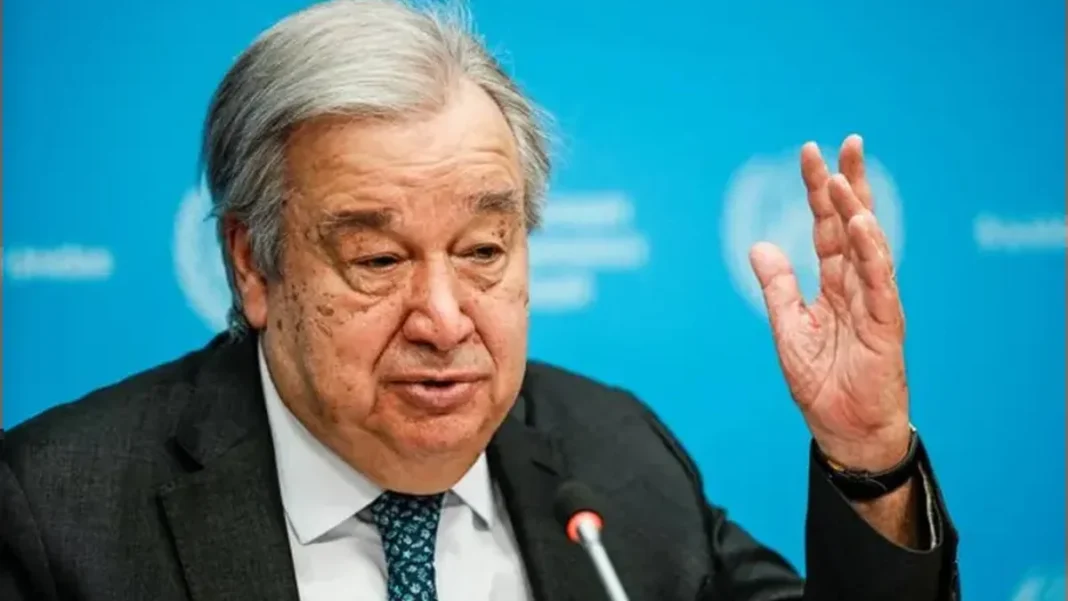
The COP31 climate summit opened in Antalya on Monday, with United Nations chief Antonio Guterres calling on world leaders to get serious about cutting emissions, moving away from fossil fuels and paying for climate protection in vulnerable countries.
Thousands of participants gathered at a sprawling expo centre in the Turkish Mediterranean city, after a year of heatwaves in Europe, wildfires in Indonesia and floods in Nepal, with an exceptionally strong El Nino adding to the strain.
“We have entered a new age of climate extremes,” Guterres said in a statement. He urged leaders to “get serious by cutting emissions faster, accelerating a just transition from fossil fuels and delivering the finance and protection vulnerable countries need”.
COP31 climate summit begins with a fight over finance
The opening ceremony was delayed by an hour without explanation. Negotiators had been locked in late-night talks on Sunday over demands by developing nations to put climate finance on the official agenda.
“This has already been a difficult start for COP31,” said Jasper Inventor, head of Greenpeace’s COP31 delegation.
Under UN climate agreements, developed countries fund help for developing nations to adapt and move to cleaner energy, but poorer countries say the sums remain insufficient.
Inventor said developed countries were “taking a hard line” over a COP30 platform on how wealthy nations should fund developing nations. African countries also want the agenda to cover tripling adaptation finance for sea walls and drought-resistant crops.
A senior European Union official warned last week there would be “no political will” for extra funding pledges at COP31. Dawn reported that observers expect few major breakthroughs, citing an oil price shock and geopolitical tensions fuelled by the US war with Iran and Russia’s conflict in Ukraine.
A difficult year behind the talks
The UN’s World Meteorological Organisation reported that 2026 has continued a streak of exceptional global temperatures, melting ice and rising sea levels. The EU’s climate monitor warned that 2026 would most likely be the second-hottest year ever recorded, and scientists say 2027 could top the chart.
The UN warned in September that global temperatures were on course to exceed 1.5 degrees Celsius above pre-industrial levels, the Paris Agreement’s most ambitious threshold.
Rachel Cleetus of the Union of Concerned Scientists said leaders must pull the world back from the brink by moving away from fossil fuels and expanding renewable energy.
Countries committed to move away from fossil fuels at COP28 in Dubai in 2023, but COP30 ended with a deal that made no explicit mention of them. Brazil instead produced a voluntary phase-out roadmap.
What the talks mean for Pakistan
The finance fight at the heart of COP31 matters directly for Pakistan, one of the countries most exposed to climate extremes. A UN report has linked Punjab’s heatwaves to food security risks, while Sindh recorded a sharp monsoon rainfall deficit this year.
Farmers in Tharparkar have needed a relief package as dry conditions bite, early cotton sowing in Sindh shows growers adjusting to shifting weather, and Lahore’s air quality index crossed 600 this month.
For Pakistan, tripling adaptation finance means money for flood defences, drought-resistant crops, water storage and early warning systems, and any short deal will leave Pakistan carrying the cost of a crisis it did little to cause.
The unusual two-country leadership
Turkey is presiding over COP31, with Australia leading negotiations under an unusual arrangement that settled a dispute over hosting. The partners have branded it the “implementation COP”, focused on turning past pledges into concrete action.
Turkey is also promoting an “action agenda” of non-binding pledges, centred on raising electricity’s share of global energy demand from around 20 per cent today to 35 per cent by 2035.
The EU has called for “clean” electrification, which could spark debate over fossil fuels in the Turkish proposal.
Climate-sceptic President Donald Trump has not sent officials to COP31, although a US congressional delegation will attend.
What happens next
The conference runs from 9 to 20 November 2026, and the first test is whether negotiators can settle the agenda fight over climate finance. The World Leaders’ Climate Action Summit takes place on 11 and 12 November.
The hardest questions come last: whether the final text mentions fossil fuels, whether adaptation finance is tripled, and whether wealthy nations offer new money.
Frequently asked questions
What is COP31?
COP31 is the UN’s annual climate summit, the 31st Conference of the Parties to the United Nations Framework Convention on Climate Change.
When and where is COP31 held?
COP31 runs from 9 to 20 November 2026 in Antalya, Turkey. Turkey holds the presidency and Australia leads the negotiations, while the World Leaders’ Climate Action Summit takes place on 11 and 12 November.
Why is climate finance the first fight at COP31?
Developing nations want climate finance on the official agenda, including a COP30 platform on how wealthy nations should provide funds. Developed countries have resisted, and a senior EU official warned there would be no political will for extra pledges.
Why does COP31 matter for Pakistan?
Pakistan is among the countries most exposed to climate extremes, from heatwaves in Punjab to a sharp monsoon rainfall deficit in Sindh. Tripling adaptation finance would fund flood defences, drought-resistant crops and water storage.
Will the United States take part in COP31?
President Donald Trump has not sent officials to COP31, but a US congressional delegation will attend.