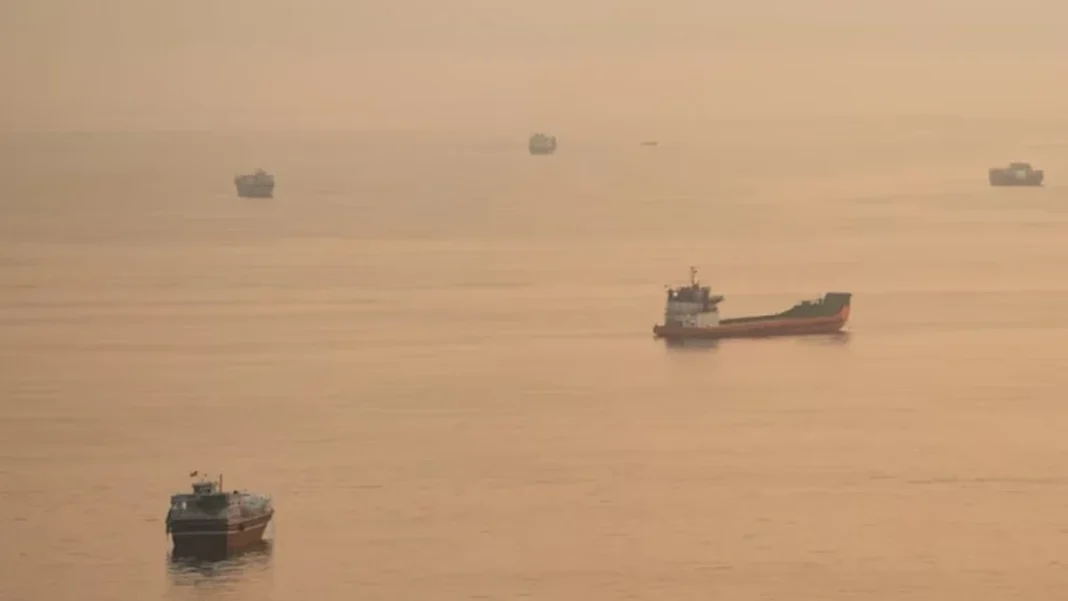
The US attack on Qeshm Island late on Sunday caused no vital damage, Iranian officials said on Monday, after American forces struck the island in the Strait of Hormuz.
The Express Tribune reported that a provincial official told the semi-official Fars news agency that no vital infrastructure or services were affected by the attack. The official said the sites targeted by the United States were away from residential and commercial areas.
Iranian state media reported explosions late on Sunday in Qeshm, an Iranian island in the Strait of Hormuz near the mouth of the Gulf.
Separately, an unnamed Revolutionary Guards Navy official told Iranian state media on Monday that navigational aid systems in the south of the strait had been destroyed. The official said no unauthorised vessels had passed through the maritime route overnight.
Rubio says a deal with Iran may not be possible
US Secretary of State Marco Rubio said on Sunday that a diplomatic agreement with Iran may not be possible. He accused Tehran of making unrealistic demands and said the talks were not close to a breakthrough.
“You have a number of countries that continue to engage them with different ideas, but I wouldn’t say we’re on the verge of a breakthrough,” Rubio told reporters before leaving for Paris to attend a meeting of G7 foreign ministers.
Rubio said the president would always prefer to solve problems through diplomacy, but added that this was sometimes not possible. He described Iran’s demands as “outrageous and ridiculous” and unrealistic, and said Washington remained willing to explore diplomatic openings.
The G7 foreign ministers meet in Paris on Monday and Tuesday, and the Iran conflict is among the issues they are expected to discuss.
The war is in its ninth month
The United States and Israel launched a military offensive against Iran on February 28. A ceasefire was reached in April, followed by a memorandum in June aimed at securing a peace agreement. The talks have failed to produce a final settlement.
Rubio was defending President Donald Trump’s handling of the war, which is now in its ninth month. He said Trump had confronted a longstanding threat to US national security despite the possible political cost, and added that keeping nuclear weapons out of Iran’s hands should remain a bipartisan priority.
Trump confirmed on Friday that American forces had targeted Iranian air defence systems. The strikes followed earlier US action against Iran in the Strait of Hormuz in recent days.
Rubio said US action would depend on the threat to American forces or shipping. “Well, the US acts defensively. If there’s a threat to our forces in the region, we will act against those. If there’s a threat to shipping, we’ve been defending shipping for a while,” he said.
He added that Washington would act if there was a clear and present threat to shipping or to US forces in the region.
Why the US attack on Qeshm Island matters for Pakistan
The Strait of Hormuz is one of the world’s busiest oil shipping lanes, and Pakistan’s fuel supplies move through it. Any fighting in the strait raises the risk of disruption to shipping and to oil prices, which feed straight into fuel and power costs in Pakistan.
The strait has already seen several incidents in recent days. Three tankers caught fire in the Strait of Hormuz, and a tanker hit a mine and caught fire in the strait earlier. Iran’s forces are stronger as Hormuz stays closed, according to earlier reporting.
Pakistan has played a diplomatic role in the crisis. Islamabad has tried to keep communication open between Washington and Tehran, and it has sought to keep the conflict from spreading. The Senate opposition leader urged Pakistan to stay out of the Yemen conflict and seek mediation instead, a line that also reflects the wider debate in Islamabad about the wars in the region.
The regional picture is also unsettled. An attack on an Aramco building in Riyadh showed how the fighting can reach Gulf cities, while the ECO Council of Ministers meeting in Islamabad on November 15 and 16 will bring regional foreign ministers together as the crisis continues.
What happens next
The G7 foreign ministers’ meeting in Paris will discuss the Iran conflict on Monday and Tuesday. Rubio’s remarks suggest Washington does not expect a breakthrough in the talks soon.
The key question is whether the United States carries out further strikes. Rubio tied any further action to threats against US forces or shipping, so the next moves will depend on what happens in the strait and the wider Gulf.
For Pakistan, the immediate concern is the safety of shipping through Hormuz and the effect on oil prices. Any closure or disruption of the strait would raise fuel costs at home.
Frequently asked questions
When did the US attack Qeshm Island?
The attack took place late on Sunday, November 8, 2026. Iranian state media reported explosions in Qeshm near the Strait of Hormuz that night.
What was damaged in the attack?
Iranian officials said no vital infrastructure or services were damaged. A Revolutionary Guards Navy official said navigational aid systems in the south of the Strait of Hormuz were destroyed.
What did Marco Rubio say about a deal with Iran?
Rubio said a diplomatic agreement may not be possible, accused Tehran of making unrealistic demands, and said the talks were not close to a breakthrough.
How long has the US-Iran war been going on?
The United States and Israel launched their offensive against Iran on February 28, 2026. A ceasefire was reached in April, but talks have failed to produce a final settlement.
Why does Qeshm Island matter for Pakistan?
Qeshm sits in the Strait of Hormuz, one of the world’s busiest oil shipping lanes. Pakistan’s fuel supplies move through the strait, so fighting there can raise oil prices and fuel costs at home.