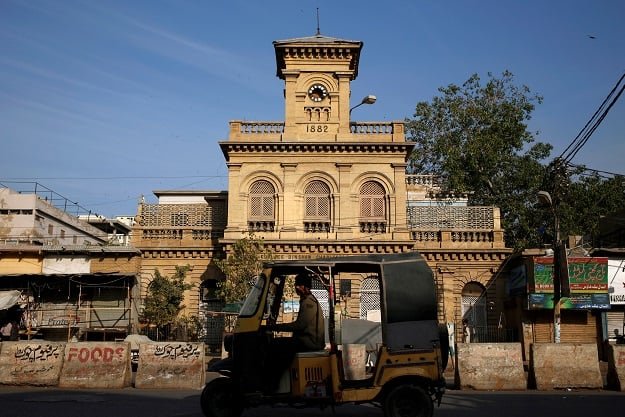
Walk down Preedy Street in Karachi’s old Saddar quarter and the 21st century presses in from every side — traffic, billboards, the famous Peshawari ice cream shop doing brisk business. Then you look up, and there it is: a graceful 1882 building in the Italianate style, the first of its kind ever built in Karachi, with a story that runs from a poor Parsi boy who became the city’s biggest landowner to the birth of free public healthcare in the port city. The Edulji Dinshaw Dispensary — officially the Eduljee Dinshaw Charitable Dispensary — is one of Karachi’s most meaningful heritage buildings, and most visitors walk straight past it. If you are exploring old Karachi and want to understand the city beyond the sea view, this Edulji Dinshaw Dispensary, Karachi travel guide will show you why this quiet landmark deserves a stop.
Built in 1882 and designed by architect James Strachan, the dispensary was a gift to the city’s poor: a charitable clinic funded in large part by Seth Edulji Dinshaw, the Parsi philanthropist who contributed Rs. 5,500 — half the building’s total cost. It stands in the middle of one of Karachi’s liveliest heritage streetscapes, with Empress Market, Jahangir Park, Bohri Bazaar, and Denso Hall all within walking distance, which makes it the perfect anchor for a walking tour of colonial Saddar. This guide covers the dispensary’s fascinating history and the Dinshaw family’s legacy, the best things to do around it, how to reach it from Islamabad, Lahore, and Karachi’s airport, where to stay, what to eat, Karachi’s weather, language and culture, shopping, practical travel tips, and the best time to visit.
Quick Facts
- Location: Preedy Street, Saddar, central Karachi, Sindh — near Empress Market
- Altitude: Around 10 meters (33 feet) — Karachi is a coastal city on the Arabian Sea
- Famous For: Opened 1882 as a charitable dispensary; Karachi’s first Italianate building; funded by Parsi philanthropist Seth Edulji Dinshaw; designed by James Strachan
- Nearest City: Karachi itself — Jinnah International Airport is about 15–20 km away
- Accessibility: Easy — in the heart of Saddar, reachable by car, rickshaw, taxi, bus, or ride-hailing from anywhere in Karachi; very walkable area
- Known Landmarks: The Italianate dispensary facade; Empress Market; Jahangir Park (behind the building); Bohri Bazaar (across the road); Peshawari Ice Cream outlet next door
- Best For: Heritage lovers, architecture photographers, history buffs, and travelers walking old Karachi
Why Visit Edulji Dinshaw Dispensary, Karachi
Visit the Edulji Dinshaw Dispensary because it is Karachi’s history written in stone — the story of a city built not just by empires but by its own citizens’ generosity. In 1882, when Karachi was a fast-growing colonial port, this building opened as a charitable dispensary: free or affordable medicine for ordinary residents, funded by a man who had risen from poverty to become the city’s largest landowner and decided to give his wealth back. That idea — that a city’s rich owe its poor a hospital — is baked into these walls, and it still resonates in a city where philanthropy remains a way of life.
Architecturally, the dispensary is a genuine first: Karachi’s first building in the Italianate style, designed by James Strachan, with the balanced proportions, arched windows, and classical detailing of the Italian Renaissance revival that was then fashionable across the British Empire. It has, as one heritage writer put it, “retained much of its grandeur despite the vagaries of weather and bureaucratic or official neglect” — which makes seeing it now, before restoration hopefully transforms it, feel like catching a piece of history just in time. For architecture lovers, it pairs beautifully with the Venetian Gothic of nearby Denso Hall (1886): two colonial styles, one walkable street.
The setting is half the pleasure. The dispensary sits on Preedy Street with the famous Peshawari ice cream shop on one side, Khyber Hotel on the other, Jahangir Park behind it, and Bohri Bazaar right across the road — one of the most characterful corners of old Saddar. A visit here is never just a building: it is ice cream after your photographs, a wander through Bohri Bazaar’s fabric and household-goods lanes, and Empress Market’s Victorian bulk looming a few minutes away. For travelers who believe a city’s old quarters tell the truth about it, this corner of Karachi is essential.
Finally, the Dinshaw story is worth knowing because its fingerprints are all over modern Karachi. Edulji Dinshaw’s donations to the Lady Dufferin Hospital fund helped create Karachi’s great women’s hospital; his son Nadirshaw Edulji Dinshaw’s name lives on in NED University of Engineering and Technology — the “NED” every Pakistani engineering aspirant knows. Standing in front of the little dispensary where the family’s public giving began, you are at the start of one of Karachi’s great philanthropic sagas.
History of Edulji Dinshaw Dispensary, Karachi
The dispensary’s story is inseparable from the man whose name it carries. Seth Edulji Dinshaw was a Parsi of Karachi who, by contemporary accounts, rose from poverty to become the city’s largest landowner — a classic 19th-century success story built on trade in a booming port. Like many successful Parsis of his generation, he belonged to a community with a deep tradition of public philanthropy, and he poured his wealth into the city’s institutions: education, medicine, and public welfare.
In 1882 his generosity took physical form on Preedy Street. The Eduljee Dinshaw Charitable Dispensary opened as a charitable clinic for Karachi’s residents, and Dinshaw personally contributed Rs. 5,500 toward its construction — fully half of the building’s total cost. The design was entrusted to James Strachan, one of the key architects of colonial Karachi, who gave the city its first Italianate building: a style drawing on the Italian Renaissance, with classical symmetry and detailing that stood out among the port city’s earlier, plainer structures.
The Dinshaw family’s giving did not stop at the dispensary. When funds were raised for a women’s hospital in Karachi — the institution that became the Lady Dufferin Hospital — Edulji Dinshaw donated Rs. 50,000 in 1894, making the project possible, bought the hospital’s first consignment of medicinal supplies, and his son Nadirshaw donated the furniture; the family’s total contribution dwarfed the official committee’s. Dinshaw also supported education on a grand scale, donating hundreds of thousands of rupees to Bombay University for needy students, and to schools including the Mama Parsi School in Karachi. His most famous legacy is the engineering college that became NED University of Engineering and Technology — NED stands for Nadirshaw Edulji Dinshaw, his son. (Travelers should note that the Edulji Dinshaw Building at the Lady Dufferin Hospital, built 1894–1898 as a 192-bed women’s hospital, is a separate — though related — heritage building on Chand Bibi Street, now under restoration.)
The dispensary building itself has had a harder century. While it retains much of its grandeur, heritage writers have long described it as being in pitiable condition, in need of protection and preservation. It stands as a reminder of both the extraordinary civic spirit of Karachi’s 19th-century communities and the fragility of the heritage they left behind. Visiting it today is a small act of witness — and, heritage advocates hope, a step toward the restoration it deserves.
Top Things to Do in Edulji Dinshaw Dispensary, Karachi
Study the Italianate Facade
Stand across Preedy Street and take in Karachi’s first Italianate building: the symmetrical composition, arched openings, and classical detailing that architect James Strachan borrowed from the Italian Renaissance. Compare it mentally with the Venetian Gothic of Denso Hall nearby — in a single afternoon’s walk, Saddar shows you two of the 19th century’s great revival styles side by side. Early morning light is kindest for photography, before the street fills.
Walk the Preedy Street Heritage Corner
The dispensary’s immediate setting is a heritage walk in miniature. Note the famous Peshawari ice cream outlet on the building’s left and Khyber Hotel on its right, Jahangir Park behind it, and Bohri Bazaar across the road. This is old Karachi at street level — busy, layered, and completely authentic. Take your time; the street rewards slow looking.
Visit Empress Market
A few minutes’ walk away stands Empress Market, the great Victorian market hall of Saddar — the natural companion to the dispensary on any heritage walk. Its clock tower, arched galleries, and bustling interior (spices, produce, household goods, pets) make it one of Karachi’s most photographed buildings. Combine the two with Denso Hall for the classic Saddar heritage triangle.
Explore Bohri Bazaar
Right across the road from the dispensary, Bohri Bazaar is one of Karachi’s oldest shopping streets — lanes of fabrics, ready-made garments, household goods, and street food. It is the perfect place to feel the commercial energy that made 19th-century Karachi rich enough to build dispensaries. Bargaining is expected; the street food is excellent.
Trace the Dinshaw Legacy
History-minded visitors can connect the dispensary to the family’s wider footprint: the Lady Dufferin Hospital (whose women’s hospital building, the Edulji Dinshaw Building of 1894–1898, is under restoration), the Mama Parsi School, and NED University. You cannot tour them all, but knowing the story transforms a walk through Saddar into a walk through Karachi’s philanthropic golden age. For another colonial landmark by the same era’s architects, see our Denso Hall travel guide.
Famous Places In and Around Edulji Dinshaw Dispensary, Karachi
- Empress Market — the Victorian market hall, minutes away on foot
- Denso Hall (1886) — Karachi’s first native library in Venetian Gothic style (see our Denso Hall guide)
- Jahangir Park — the green space behind the dispensary
- Bohri Bazaar — historic shopping street across the road
- Merewether Tower — the landmark clock tower of old Karachi, a short ride away
- Frere Hall — the 1865 colonial hall with its gardens, in nearby Civil Lines
- Burns Road — Karachi’s legendary food street, close to Saddar
How to Reach Edulji Dinshaw Dispensary, Karachi
The dispensary is in Saddar, the historic commercial heart of Karachi — one of the easiest heritage sites in the city to reach, and best explored on foot once you arrive.
Route Details
- Within Karachi: Take a taxi, rickshaw, or ride-hailing car to Preedy Street, Saddar (near Empress Market) from anywhere in the city. From Jinnah International Airport it is about 15–20 km, roughly 30–45 minutes depending on traffic. From Clifton/Defence, allow 30–40 minutes; from the northern localities, up to an hour.
- From Islamabad (~1,400 km): Fly to Karachi (about 2 hours) — the only sensible option for a heritage trip. By road it is a 17–20 hour drive; by train, the journey takes the better part of a day and night.
- From Lahore (~1,200 km): Fly to Karachi (about 1.5 hours). Trains and long-haul coaches connect the cities overnight.
- Exploring Saddar: Once at Preedy Street, walk. The dispensary, Empress Market, Bohri Bazaar, Jahangir Park, and Denso Hall are all within a compact area. Wear comfortable shoes, carry water, and plan your walk for the morning or late afternoon to avoid midday heat. Parking in Saddar is difficult — arrive by taxi or ride-hailing.
- Best approach: Start at Empress Market, walk to the dispensary on Preedy Street, cross to Bohri Bazaar, and finish at Denso Hall — a perfect two-hour colonial-Karachi walking circuit.
Where to Stay in Edulji Dinshaw Dispensary, Karachi
Saddar itself has budget hotels and guesthouses that put you within walking distance of the dispensary and Empress Market — basic, affordable, and atmospheric, though the area is noisy and congested. Most heritage-minded travelers prefer to stay in the more comfortable districts and visit Saddar by day: the Clifton and Defence areas (20–35 minutes away) hold Karachi’s best-known mid-range and luxury hotels with sea views, restaurants, and reliable standards, while the Saddar-adjacent business district around M.A. Jinnah Road and II Chundrigar Road has solid mid-range business hotels.
Karachi’s luxury tier — the big five-star properties near the coast and in the business district — suits travelers who want old-city exploration by day and full comfort by night. Wherever you stay, book ahead in the winter tourist season (November–February) when Karachi’s weather is at its best and hotels fill. For a heritage trip, a centrally located hotel minimizes the city’s famously long cross-town drives.
Where to Eat: Local Foods of Edulji Dinshaw Dispensary, Karachi
Eating is half the reason to come to Saddar. Start at the institution next door: the famous Peshawari ice cream outlet beside the dispensary, a Karachi legend for traditional ice cream and kulfi. Across the road, Bohri Bazaar’s lanes offer street food at its most authentic — bun kebabs, samosas, fresh juices, and chai. A short ride away, Burns Road — Karachi’s legendary food street — serves the city’s definitive nihari, sajji, BBQ platters, rabri, and doodh patti; it is worth a dedicated evening.
Karachi’s signature dishes are all within reach here: biryani (the city’s great love), chapli kebabs, katakat, haleem, and fresh seafood at the coast-side restaurants. Prices are budget-friendly at street level — a filling Burns Road or Bohri Bazaar meal costs little — and moderate at sit-down restaurants. For dessert after your heritage walk, the Peshawari ice cream next to the dispensary is not just convenient; it is genuinely excellent.
Weather in Edulji Dinshaw Dispensary, Karachi
Karachi’s coastal climate is hot and humid for much of the year, with a mild, pleasant winter that is the sweet spot for heritage walking. Sea breezes help, but summer afternoons in Saddar are still formidable — plan accordingly.
| Season | Temperature Range | Conditions |
|---|---|---|
| Winter (Dec–Feb) | 10 to 25°C | Mild and pleasant; the best season for walking tours of old Karachi |
| Spring (Mar–Apr) | 25 to 35°C | Warm; comfortable mornings and evenings for sightseeing |
| Summer (May–Jun) | 30 to 40°C | Hot and humid; plan indoor or coastal activities midday |
| Monsoon/Autumn (Jul–Nov) | 28 to 36°C | Humid with occasional monsoon showers; eases by October–November |
For a walking-focused heritage trip, November to February is unmissable — cool enough to wander Saddar’s streets for hours.
Language and Culture of Edulji Dinshaw Dispensary, Karachi
Saddar is Karachi in microcosm: Urdu is the lingua franca of the streets, English is widely understood in shops and hotels, and you will hear Sindhi, Punjabi, Pashto, and Gujarati in the bazaars — the city’s legendary diversity on full display. The Parsi community that built the dispensary has dwindled through emigration, but its institutions — and its tradition of quiet philanthropy — remain part of Karachi’s identity.
Street culture here is commercial and direct: shopkeepers expect bargaining, chai breaks are a social institution, and the pace is fast. Dress casually but modestly; ask before photographing people in the bazaars. The area around the dispensary is busy all day — visit in the morning for a calmer experience, and keep valuables secure in crowds, as you would in any great old commercial quarter.
Shopping in Edulji Dinshaw Dispensary, Karachi
Bohri Bazaar, right across the road from the dispensary, is the main event: one of Karachi’s oldest markets, famous for fabrics, ready-made garments, household goods, and crockery at bargain prices. Empress Market adds spices, fresh produce, and the classic market-hall experience. Nearby Zainab Market is known for clothes, shoes, and local brands, while the Saddar lanes around it offer electronics, books, and second-hand treasures.
This is proper bazaar shopping — bargaining expected, quality variable, finds guaranteed. There are no malls in the immediate heritage quarter (the big malls are in Clifton and Defence, a drive away), and honestly the bazaars are the point. For souvenirs with a Karachi flavor: Empress Market spices, Bohri Bazaar fabrics, and old prints from the second-hand book lanes.
Travel Tips for Edulji Dinshaw Dispensary, Karachi
Packing Essentials
Comfortable walking shoes are essential — Saddar is a walking quarter. Sun protection (cap, sunglasses, sunscreen) for most of the year, a light jacket for winter evenings, and a reusable water bottle. Carry a small daypack for market purchases and keep your phone charged for maps and ride-hailing.
Safety Tips
Saddar is busy and generally safe during the day, but it is crowded and traffic is chaotic — keep valuables secure, be alert in packed bazaars, and use ride-hailing or known drivers. Stick to the main heritage streets for your walking circuit, and avoid wandering unfamiliar lanes after dark. The dispensary exterior can be viewed from the street at any reasonable hour.
Money & Connectivity
Cash is essential in Bohri Bazaar and at street-food stalls; cards work at larger restaurants and hotels. ATMs are plentiful in Saddar. Mobile coverage in Karachi is excellent on all major networks, and most hotels and cafes offer Wi-Fi — you will have no trouble staying connected or hailing a ride.
Best Time to Visit Edulji Dinshaw Dispensary, Karachi
Winter (November–February): The Heritage Season
Mild 10–25°C days made for walking: the dispensary, Empress Market, Bohri Bazaar, and Denso Hall in a single comfortable circuit, with Burns Road food in the evening. This is Karachi’s peak season — book hotels ahead. Perfect for: heritage walks, photography, and first-time Karachi visitors.
Spring (March–April): The Shoulder Season
Warm but manageable, with pleasant mornings for sightseeing. Fewer tourists, easier bookings. Perfect for: relaxed itineraries and combining heritage with the coast.
Summer (May–August): The Indoor Season
Hot and humid — plan the dispensary and Saddar walks for early morning, retreat to air-conditioning midday, and emerge for Burns Road in the evening. Perfect for: travelers who don’t mind heat and want the thinnest crowds.
Autumn (September–October): The Easing Season
Humidity drops, temperatures soften, and the city becomes walkable again. A fine shoulder season for heritage trips. Perfect for: comfortable sightseeing without peak-season prices.
Final Thoughts
The Edulji Dinshaw Dispensary is a small building with a large soul. It remembers a Karachi where a man who had nothing gave half the cost of a hospital; where an architect gave the port city its first taste of Italianate elegance; and where healthcare for the poor was considered a civic duty, not a luxury. That it still stands on Preedy Street — a little worn, a little overlooked, but still graceful — is a quiet miracle in a city that rebuilds itself relentlessly.
Give it an hour on a Saddar heritage walk: the facade, the ice cream next door, Bohri Bazaar across the road, and Empress Market beyond. You will leave understanding Karachi a little better — which is the whole point of traveling. For more of the city’s colonial heritage, see our Denso Hall guide and browse the Explore Pakistan collection.
FAQs
Where is the Edulji Dinshaw Dispensary located?
On Preedy Street in Saddar, central Karachi — near Empress Market, with Bohri Bazaar across the road and Jahangir Park behind it.
When was the dispensary built?
It opened in 1882. It was designed by architect James Strachan as Karachi’s first Italianate building.
Who was Edulji Dinshaw?
A Parsi philanthropist of Karachi who rose from poverty to become the city’s largest landowner. He contributed Rs. 5,500 — half the building’s cost — to the dispensary, and his family went on to fund the Lady Dufferin Hospital and the institution that became NED University.
Can I go inside the dispensary?
The building’s exterior and streetscape can be viewed from Preedy Street at any reasonable hour. Interior access is not a regular tourist facility — the visit is about the architecture, the history, and the surrounding heritage quarter.
How do I reach it from Islamabad or Lahore?
Fly to Jinnah International Airport, Karachi (about 2 hours from Islamabad, 1.5 from Lahore), then take a taxi or ride-hailing car to Preedy Street, Saddar (30–45 minutes from the airport).
What else can I see nearby?
Empress Market, Denso Hall (1886), Bohri Bazaar, Jahangir Park, Merewether Tower, Frere Hall, and Burns Road food street — all within a short walk or ride.
What is the best time to visit?
November to February, when Karachi’s weather is mild and perfect for walking tours of old Saddar.
Is it the same as the Edulji Dinshaw Building at Lady Dufferin Hospital?
No — that is a separate heritage building (1894–1898), built as a 192-bed women’s hospital on Chand Bibi Street and now under restoration. The Preedy Street dispensary of 1882 is the original charitable clinic.