If Pakistan had a secret pink palace that most travelers walk right past, it would be Faiz Mahal. Sitting quietly in the heart of Khairpur, this 1798 royal court of the Talpur Mirs is one of the most graceful buildings in Sindh, yet it rarely makes the big travel lists. That is exactly why you should go. This Faiz Mahal travel guide will show you why this palace deserves a place on your next Sindh itinerary, who it is perfect for, and when to plan your visit so the heat of the plains does not ruin the magic.
Khairpur itself is a city with a royal past. It was the capital of the princely State of Khairpur, ruled by the Talpur dynasty from 1783 until 1955. The Mirs built palaces, forts and gardens across the region, and Faiz Mahal was their crown jewel — the sovereign’s court, where the business of a kingdom was conducted and where guests were received in true royal style. Today the palace is a living piece of history: it still serves as a residence of the Talpur family, and its gardens, durbar hall and museum-like showcases tell the story of a dynasty that shaped upper Sindh for nearly two centuries.
Unlike the crowded heritage sites of Lahore or the long trek to a mountain lake, Faiz Mahal is easy. You drive in, you walk the gardens, and you step into a world of carved doors, painted ceilings, oil paintings and royal memorabilia. Families, photographers, history lovers and anyone exploring the Explore Pakistan routes of Sindh will find it rewarding. Read on for everything you need: the history, what to see inside, how to reach Khairpur from Islamabad, Lahore and Karachi, where to stay and eat, the weather through the year, and the best time to visit Faiz Mahal.
Quick Facts
- Location: Khairpur Mir’s, Khairpur District, Sindh, Pakistan (27.53°N, 68.77°E)
- Altitude: Low-lying Indus plain — no hill climbing involved
- Famous For: The 1798 pink palace and royal court of the Talpur Mirs of Khairpur; Rajput-Mughal architecture, durbar hall with hand-painted ceiling, royal memorabilia and portraits, old cannons and gardens
- Nearest City: Sukkur, roughly 35 km to the north — most visitors arrive via Sukkur
- Accessibility: Easy road access via the N-5 national highway and the M-5 motorway corridor; nearest airport is Sukkur Airport
- Known Landmarks: Faiz Mahal itself, the old cannons of the front garden, Kot Diji Fort (nearby), the Mehrano wildlife reserve
- Best For: History lovers, architecture and photography enthusiasts, families, school trips, and anyone adding heritage stops to a Sindh road trip
Why Visit Faiz Mahal
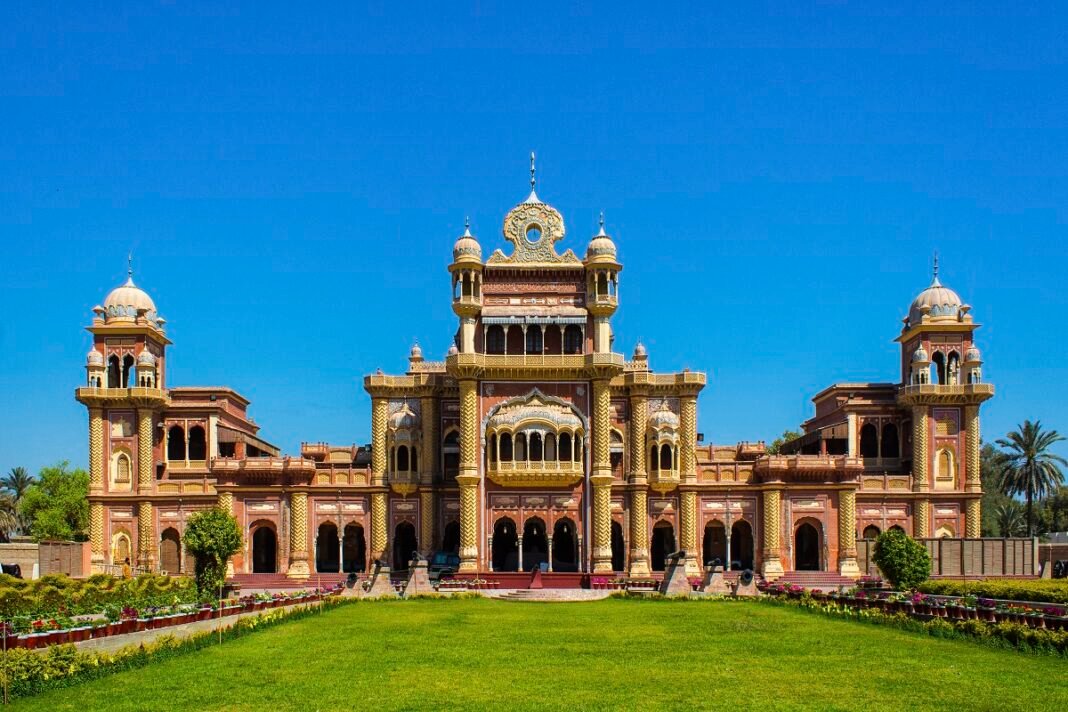
Most people who travel Pakistan’s heritage circuit head straight for Lahore Fort, Rohtas or Mohenjo-daro. Faiz Mahal is different — it is personal. This is not a ruin fenced off behind glass. It is a palace that was lived in, loved and painstakingly restored, and when you walk through it you feel the presence of the family that built it. The pink facade with white trimmings, the balconies resting on delicate cupolas, the symmetrical archways and domed towers — it photographs beautifully from every angle, and on a winter morning, with the lawns green and the light soft, it is genuinely magical.
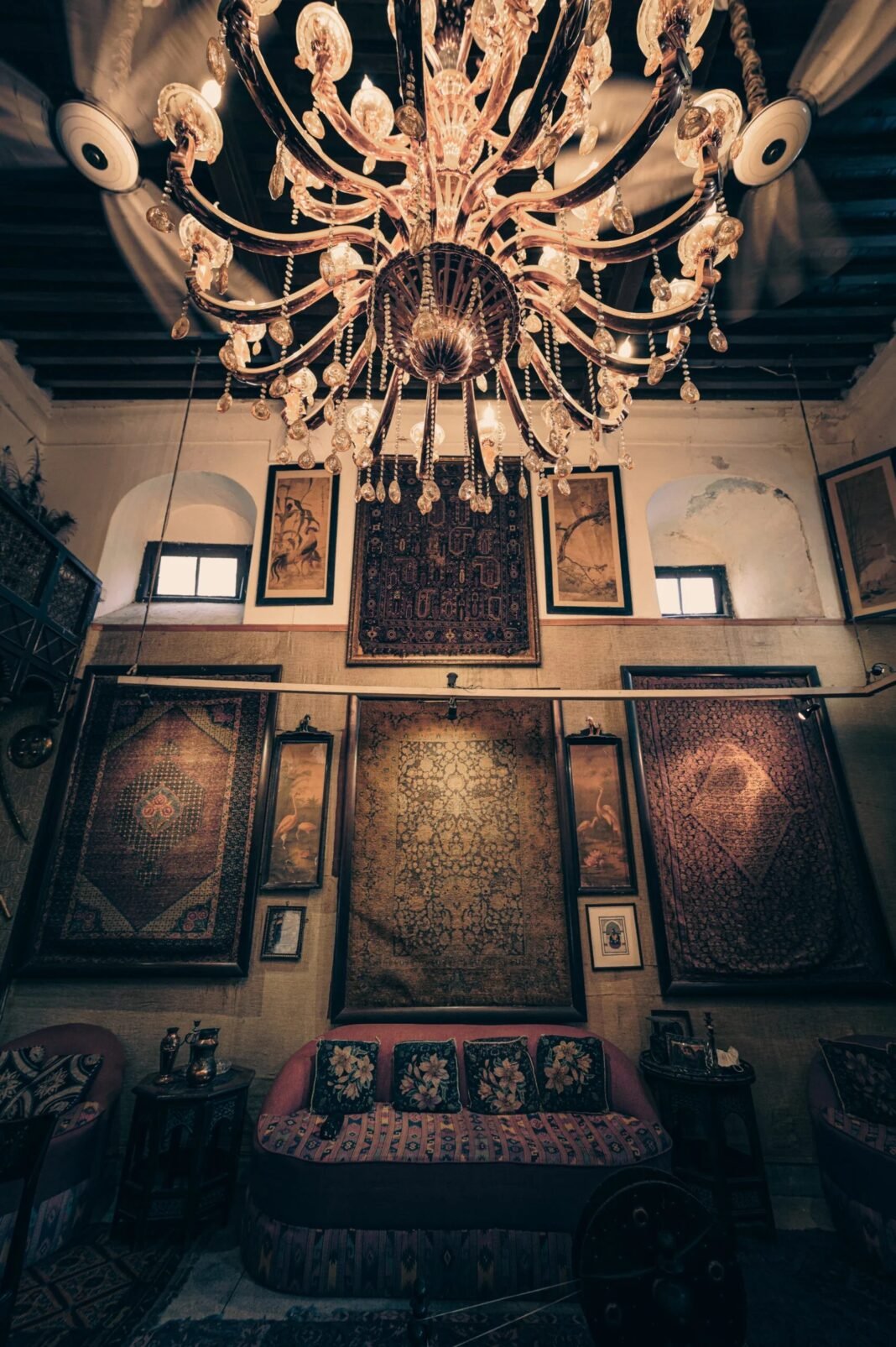
Inside, the experience deepens. The ceiling of the main durbar hall is a panorama of intricate hand-painted motifs, and rows of showcases hold Talpur memorabilia: handwritten letters, signed treaties, photographs of royal weddings, and gigantic portraits of Talpur rulers with swords and rapiers. There are oil paintings by Sher Khan depicting scenes from Sindhi life, and a collection of personal gifts and artifacts accumulated over two centuries. For anyone interested in how a princely state actually functioned — its court, its diplomacy, its art — there is no better classroom in Sindh.
Faiz Mahal is also perfect for travelers who want history without hardship. There is no hiking, no altitude, no difficult logistics. It pairs naturally with a wider Khairpur trip: Kot Diji Fort (on the federal government’s official list of antiquities), the Mehrano reserve famous for its black buck and hog deer populations, the date orchards that make Khairpur one of Pakistan’s great date-producing districts, and the Sufi shrines of the region. You can see the palace properly in half a day and use it as the anchor of a 2-3 day Sindh heritage run.
And there is something else worth saying honestly: Sindh’s heritage gets far less attention than it deserves, and places like Faiz Mahal survive on the care of families and the interest of visitors. Going there matters. Your visit, your photographs, your questions to the caretaker — all of it keeps the story alive. If you love the idea of discovering a place before the crowds do, put Faiz Mahal on your list now.
History of Faiz Mahal
The story of Faiz Mahal begins with the Talpurs. In 1783, the Talpur foot soldiers — who had been commissioned to defend the Kalhoras — wrested the fiefdom from them and established their own dynasty in Khairpur. What followed was a long reign of peace and prosperity, and the Mirs of Khairpur set about building a capital worthy of a kingdom. In 1798, Mir Sohrab Khan Talpur built Faiz Mahal as the principal building of the royal palace complex — the sovereign’s court, where the Mir held durbar and received his courtiers and guests.
The palace as originally built was a complete royal establishment. Alongside the ruler’s chambers, it contained sixteen waiting rooms for courtiers and guest rooms for royal visitors, plus the durbar and dining halls. Behind the palace stood the Hathi Khana, the stable for the royal elephants, and the horse stables — today replaced by a mango orchard. The building blended Rajput and Mughal architectural styles, built of local red brick with yellow stone accents, painted in the pink and white that makes it so recognizable today.
The Khairpur state survived the British era as a princely state, and after Partition in 1947, the Talpur Mirs acceded to Pakistan. The state was merged into Pakistan in 1955, ending the era of princely rule. Faiz Mahal remained in the Talpur family and serves as a residence of the family to this day — most notably of the last Talpur monarch, Mir Ali Murad Khan Talpur II (born 1933), and his sons. The former ruler, an environmentalist in his later years, is also credited with the Mehrano reserve, a flora and fauna safe haven famous for its black buck and hog deer populations, now rare in Sindh.
For years the palace suffered from state apathy and a shortage of funds, but a painstaking renovation process in recent years gave it a second lease of life. The building you see today — its painted ceilings, its woodwork, its gardens — is the result of that restoration, and it stands as one of the finest surviving examples of Talpur-era architecture in Pakistan.
Top Things to Do in Faiz Mahal
Admire the Pink Facade and Architecture
Start outside. The frontal view of Faiz Mahal is its signature: the mighty pink palace with white trimmings, delicately shaped balconies, cupolas of lily-leaf design, domed towers and symmetrical archways. The Rajput-Mughal blend is everywhere — in the arched doors, the carved pillars, the yellow stone detailing against the red brick. Walk the full frontage and take photographs from the lawns; the building sits in pleasing contrast to the modern city around it, and winter light flatters it best.
Walk the Durbar Hall
The main durbar (court) hall is the heart of the palace. Look up: the ceiling is a panorama of intricate hand-painted motifs that flow into one another in bands of color. This was where the Mir of Khairpur held court, and standing beneath that ceiling you can picture the scene — courtiers in the sixteen waiting rooms, guests arriving at the guest rooms, the business of a small kingdom conducted under those painted arches. Take your time here; it is the single most impressive room in the building.
Study the Royal Memorabilia Showcases
Rows of glass showcases in the palace display Talpur memorabilia that reads like a family album of a dynasty: handwritten letters, signed treaties, photographs of royal weddings and elegantly dressed women of the court, and gigantic portrait photographs of Talpur rulers with swords and rapiers hung across their shoulders. Above them, the oil paintings by Sher Khan depict scenes from everyday life in Sindh in rich, vibrant color. Ask the caretaker about individual pieces — the stories behind them are half the experience.
See the Two Old Cannons
Before you enter, you will notice two old cannons mounted on iron carriages in the front garden, standing guard over the lawns. They are reminders of the palace’s martial history — used in battle and on ceremonial occasions — and they have become one of the most photographed spots at Faiz Mahal. Travelers often stop here for pictures before heading inside.
Stroll the Gardens and Mango Orchard
The palace grounds include a vast, lush green garden with flowers lining the edges, and a mango orchard that now stands where the royal elephants and horses were once stabled. The garden was previously the haathi khana, and the caretakers can point out how the grounds have changed. It is a calm, shaded place for a slow walk after the interior — and in mango season, the orchard is a fragrant bonus.
Visit the Small Mosque at the Rear
Entering through the rear gate, visitors pass a small mosque with faded white paint, beyond which the red domed towers of the palace rise into view. It is a quiet corner of the complex that many visitors miss — pause here for the contrast between the humble prayer space and the grandeur of the domes behind it.
Famous Places In and Around Faiz Mahal
Kot Diji Fort: The great 18th-century Talpur fort south of Khairpur, built of baked brick, on the federal government’s official list of antiquities — the essential second stop on any Khairpur trip.
Mehrano Reserve: The wildlife sanctuary associated with the last Talpur monarch, famous for black buck and hog deer populations.
Shah Abdul Latif University Archaeology and Anthropology Museum, Khairpur: For a deeper dive into the region’s archaeology and culture, this Khairpur museum pairs perfectly with Faiz Mahal — see our Archaeology and Anthropology Museum Shah Abdul Latif University Khairpur travel guide.
Dargah of Sachal Sarmast, Daraza: The shrine of the great Sufi poet of Sindh, a short drive from Khairpur.
Khairpur date orchards: The district is famous for its massive date palm orchards, producing hundreds of thousands of tons annually — the Aseel variety is the local pride.
How to Reach Faiz Mahal
Khairpur sits on the main north-south corridor of Sindh, so reaching it is straightforward. The palace is in the heart of Khairpur city, easy to find once you arrive — any local driver will know “Faiz Mahal”.
From Islamabad: The drive is around 960 km and takes roughly 10 hours via the M-4 and the Sukkur–Multan Motorway (M-5). It is a long but comfortable motorway run most of the way, with palm trees lining stretches of the road.
From Lahore: Head south toward Multan and join the M-5 corridor to Sukkur/Rohri, then take the N-5 to Khairpur. Plan for a full day’s drive with rest stops — it is a long journey, so many travelers break it at Multan or Sukkur.
From Karachi: This is the easiest approach — roughly a 6-7 hour drive north on the N-5 through Hyderabad and Ranipur. The outskirts of Khairpur are dotted with date trees, a beautiful change of scenery after the desert-like stretches past Hyderabad. Many visitors do Khairpur as a weekend trip from Karachi.
By air: The nearest airport is Sukkur Airport, about 35 km from Khairpur. Pakistan International Airlines and private carriers connect Sukkur with Karachi, Islamabad and Lahore. From the airport, hire a car or take a local van to Khairpur — about 45 minutes.
By rail: Khairpur has a railway station on the main Karachi–Peshawar line, served by several express trains. The station is close to the city center.
Local transport: Rickshaws and Qingqi vans move around the city cheaply; for a comfortable visit, hire a car with driver from Sukkur or Khairpur for the day.
Route Details
Step 1: Reach Sukkur/Rohri — by motorway from the north (M-5), by N-5 from Karachi, or by air/rail into Sukkur. Step 2: From the Rohri/Khairpur interchange, take the N-5 south toward Khairpur (about 30-40 minutes). Step 3: Enter Khairpur city and head for the city center — Faiz Mahal is a well-known landmark; ask any local for directions to the palace. Step 4: Note that visits require an appointment made at least 24 hours in advance with approval from the authorities — arrange this before you travel (see Travel Tips below). The palace entrance is nondescript, so having a local guide or driver helps on the first visit.
Where to Stay in Faiz Mahal
Faiz Mahal is a day-visit palace, not a resort town, so you will stay in Khairpur city (or nearby Sukkur, which has a wider choice of hotels). Khairpur has a decent range of mid-range hotels and guesthouses clustered near the city center and the N-5, including options like the Red Palace Hotel, Chen Inn and Interpark Inn, plus simpler guest houses. Rooms are generally budget-friendly, and a comfortable mid-range room in Khairpur typically costs far less than the equivalent in Karachi or Lahore.
If you prefer more choice — including better-known hotel brands and a livelier food scene — base yourself in Sukkur, about 45 minutes away, and drive down to Khairpur for the day. Sukkur’s hotels range from budget guesthouses to comfortable mid-range and a few upscale options along the river. For a heritage-focused trip, one night in Khairpur is enough to cover Faiz Mahal and Kot Diji Fort; add a second night if you also want the Mehrano reserve and the Sachal Sarmast shrine. Book ahead in winter, when Sindh’s heritage circuit gets busiest.
Where to Eat: Local Foods of Faiz Mahal
Khairpur is Sindh, and Sindh eats well. The city’s eateries serve the classics of Sindhi cuisine: fragrant Sindhi biryani, sai bhaji (the beloved spinach-and-lentil dish), dal pakwan at breakfast, and rich curries with fresh tandoori roti. Sweet lovers should try the local lola and coconut-based sweets from the old-city sweet shops.
But Khairpur’s true edible fame is the date. The district’s massive date palm orchards produce hundreds of thousands of tons a year, and the Aseel variety is the local pride — buy them fresh from orchard-side stalls or the city markets, especially in the harvest season. Meals in Khairpur are very budget-friendly: a filling lunch at a local dhaba or restaurant costs little by big-city standards, and even a comfortable restaurant dinner for two stays easy on the wallet. For a sit-down meal near the palace, the hotel restaurants (Red Palace and similar) are reliable; for the real local flavor, follow the crowds to the bazaar eateries.
Weather in Faiz Mahal
Khairpur has a hot, dry desert-edge climate. Summers are fierce, winters are mild and pleasant, and rain is scarce outside the monsoon months. Plan your Faiz Mahal trip for winter — the palace, its gardens and the nearby fort are all outdoor experiences, and the difference between a 25°C January day and a 44°C June day is the difference between a wonderful trip and a miserable one.
| Season | Temperature Range | Conditions |
|---|---|---|
| Winter (Dec–Feb) | 12–28°C days, cooler nights | Mild, sunny, dry — the ideal season for sightseeing; light jacket needed for evenings |
| Spring (Mar–Apr) | 20–40°C | Rapidly warming; March is pleasant, April turns hot; clear skies |
| Summer (May–Sep) | 30–44°C, peaks around 45°C | Extremely hot and dry; some monsoon rain in July–August; avoid midday outdoor sightseeing |
| Autumn (Oct–Nov) | 19–37°C | Cooling down; October still warm, November pleasant; very dry |
Language and Culture of Faiz Mahal
Khairpur is a Sindhi city through and through. Sindhi is the language of the bazaar, the home and the shrine; Urdu is widely understood and works fine for visitors, and Saraiki is also spoken in the region. English is understood in hotels and by guides but less so in the old city — a few Urdu phrases go a long way.
The culture here is shaped by two things: the royal Talpur legacy and the Sufi tradition of Sindh. People are proud of the Mirs and of the palace — ask about it and you will get stories. The city is conservative and deeply hospitable; greet shopkeepers and caretakers warmly, accept the offered tea, and you will be treated like an honored guest. Dress modestly (covered shoulders and knees for everyone), especially when visiting the small mosque on the palace grounds and any shrine. Remove shoes before entering prayer areas. Photography inside the palace is generally allowed, but ask before photographing people, and check with the caretaker about any restricted rooms — remember, part of the palace is still a family residence.
Shopping in Faiz Mahal
Khairpur’s bazaars are a pleasure for souvenir hunters. The number one buy is dates — Aseel and other varieties, sold fresh, dried and pressed in the date markets and orchard stalls; they make the perfect edible souvenir. Beyond dates, look for classic Sindhi handicrafts: ajrak shawls with their distinctive block prints, Sindhi topi caps, rilli patchwork quilts, and embroidered textiles. The old-city bazaars near the palace also sell pottery and everyday brassware at local prices. There is no big modern shopping mall culture in Khairpur — the charm is in the traditional markets, where bargaining is expected and friendly. If you want branded shopping, Sukkur (45 minutes away) has more options.
Travel Tips for Faiz Mahal
Packing Essentials
Sun protection is non-negotiable for most of the year: hat, sunglasses, sunscreen and a water bottle. In winter (the best season), pack a light jacket for cool evenings. Comfortable walking shoes for the gardens and the palace floors. A camera or phone with good storage — you will take more photos than you expect. Carry some cash in small notes for bazaar purchases, rickshaws and the caretaker’s tip.
Safety Tips
Khairpur is generally safe for tourists, and the palace area is calm. The one essential rule: book your visit at least 24 hours in advance and get the required approval — you cannot simply walk in. Travelers report summer opening hours of roughly 8:00 AM to 7:00 PM and winter hours of 9:00 AM to 6:00 PM. Go early in the day to avoid heat and crowds. Keep valuables minimal in busy bazaars, as you would anywhere. If traveling from Karachi, start early to reach Khairpur with daylight to spare.
Money & Connectivity
ATMs are available in Khairpur city, but carry enough cash for the day — small bazaar shops and rickshaws do not take cards. Mobile signals from all major networks (Jazz, Telenor, Zong, Ufone) work in the city; 4G data is generally fine in Khairpur. The palace itself is a relaxed visit — no special connectivity concerns.
Best Time to Visit Faiz Mahal
Winter (December to February) — The Best Season
This is when to go. Daytime temperatures sit in the pleasant 20s, the gardens are green, the light is soft for photography, and you can comfortably combine Faiz Mahal with Kot Diji Fort and the date orchards. Expect the most fellow visitors (still modest numbers) and book hotels a little ahead.
Spring (March to April) — Good, Warming Up
March is still comfortable for sightseeing; by April the heat builds and midday visits get uncomfortable. If you come in spring, schedule the palace for early morning.
Summer (May to September) — Avoid If Possible
With temperatures regularly crossing 40°C and peaking near 45°C, summer is the wrong season for a palace-and-gardens visit. If you must come, go at opening time and keep the visit short; the monsoon months (July–August) bring some rain but no real relief.
Autumn (October to November) — Pleasant Again
October is still warm but October–November cool down nicely, and the dry, clear weather returns. A fine second-choice season, with fewer visitors than winter.
Final Thoughts
Faiz Mahal is the kind of place that rewards the curious. It will not shout for your attention like the great forts of Punjab — it waits quietly in Khairpur, pink and graceful, holding two centuries of Talpur history in its painted ceilings and glass showcases. For history lovers it is essential; for photographers it is a gift; for families it is an easy, enriching day out. Pair it with Kot Diji Fort and the date orchards, and you have one of Sindh’s finest short heritage trips.
Go in winter, book your visit a day ahead, take the caretaker’s stories seriously, and leave time for the bazaars. Sindh’s royal heritage deserves more visitors than it gets — be one of the ones who makes the trip. If you are building a wider northern or heritage itinerary, our guides to Malam Jabba and the Hunza Valley will help you plan the mountain half of your Pakistan journey.
FAQs
Where is Faiz Mahal located?
Faiz Mahal is in the heart of Khairpur Mir’s city, in Khairpur District of Sindh, Pakistan — about 35 km south of Sukkur on the main Karachi–Peshawar corridor.
Who built Faiz Mahal and when?
It was built in 1798 by Mir Sohrab Khan Talpur as the sovereign’s court — the principal building of the royal palace complex of the Talpur Mirs of the Khairpur state.
What is the best time to visit Faiz Mahal?
Winter, from December to February, when daytime temperatures are mild (low to high 20s °C) and the gardens are at their best. Avoid the May–September heat.
How do I reach Faiz Mahal from Karachi?
Drive north on the N-5 via Hyderabad and Ranipur — about 6-7 hours. From Islamabad it is roughly 960 km (about 10 hours) via the M-4/M-5 motorways. Sukkur Airport, 35 km away, is the nearest airport.
Do I need permission to visit Faiz Mahal?
Yes — visits require an appointment made at least 24 hours in advance with approval from the authorities, as the palace remains a Talpur family residence. Arrange this before traveling.
Is Faiz Mahal good for families?
Very. There is no hiking or difficult terrain — just gardens, halls and showcases. Children enjoy the cannons, the gardens and the royal memorabilia, and the visit takes only a few hours.
Where can I stay near Faiz Mahal?
In Khairpur city (mid-range hotels and guesthouses near the center) or in Sukkur, 45 minutes away, which has a wider range of hotels. One night in Khairpur covers the palace and Kot Diji Fort.
What local food should I try in Khairpur?
Sindhi biryani, sai bhaji and dal pakwan — and above all, Khairpur’s famous Aseel dates from the district’s great date orchards. Meals are very budget-friendly.