Some museums you visit. Fakir Khana you are received into — by the sixth generation of the family that has guarded its treasures for nearly three centuries. Tucked inside Bhatti Gate in Lahore’s Walled City, this is the largest privately owned museum in South Asia, with over 20,000 artifacts spanning the Mughal, Sikh and British eras. If you want to understand Lahore — not the postcard version, but the layered, lived-in city of emperors, maharajas and poets — this Fakir Khana Museum travel guide will show you why a visit here belongs at the top of your Lahore itinerary, who it is perfect for, and when to go.
The Fakir family settled in Lahore around 1730 and rose to extraordinary prominence: three brothers — Fakir Azizuddin, Fakir Nooruddin and Fakir Imamuddin — served as trusted ministers to Maharaja Ranjit Singh, the Lion of Punjab. As foreign minister, royal physician and treasurer of the Sikh Empire, they received gifts from sovereigns across the world and collected art on their travels. In 1901 the family opened their home to the public as a museum, and it has remained a family-run treasure house ever since — the only private museum formally recognized by the Government of Pakistan.
What makes Fakir Khana special is not just what it holds — though the miniatures, manuscripts, Sikh-era textiles, carved ivory and Gandharan pieces are extraordinary — but how you see it. There are no ropes, no hushed institutional galleries. A family curator walks you through the rooms, telling the stories behind the objects: which painting was a gift from Ranjit Singh, which manuscript took fifteen years to complete, which sword belonged to whom. Visitors consistently call it a hidden gem and the highlight of their Walled City day. Read on for the history, the must-see treasures, how to arrange your visit (appointments are essential), and the practical details for reaching Lahore’s old city.
Quick Facts
- Location: Bazaar Hakiman, inside Bhatti Gate, Walled City of Lahore, Punjab, Pakistan
- Altitude: Low-lying plains city — no climbing, but narrow old-city lanes
- Famous For: The largest privately owned museum in South Asia; over 20,000 artifacts including 10,000 manuscripts, 180 displayed miniature paintings, Sikh-era textiles, gifts from Maharaja Ranjit Singh and Queen Victoria, carved ivory and Gandharan art
- Nearest City: It is in Lahore itself — minutes from Lahore Fort and Badshahi Mosque
- Accessibility: Reach Bhatti Gate by rickshaw or car, then walk about 500 meters into the Walled City; visits are by appointment only
- Known Landmarks: The Miniature Hall, the manuscript collection, the family haveli itself (originally the estate of Raja Todar Mal, Akbar’s finance minister)
- Best For: History and art lovers, culture seekers, photographers, Sikh-heritage travelers, and anyone who wants the real Walled City of Lahore
Why Visit Fakir Khana Museum
Lahore has grand state museums, but Fakir Khana offers something they cannot: intimacy. You are walking through a home where six generations of one family have lived with these objects — where a Quran manuscript, a Sikh cannon or a Mughal miniature is not an accession number but a family story. The curator’s narration turns a room of paintings into a living history of Punjab: the rise of Ranjit Singh’s empire, the diplomacy of the Fakir brothers, the meeting of Mughal, Sikh and British worlds. Travelers who have done the big Lahore sights often say this was the experience they remembered longest.
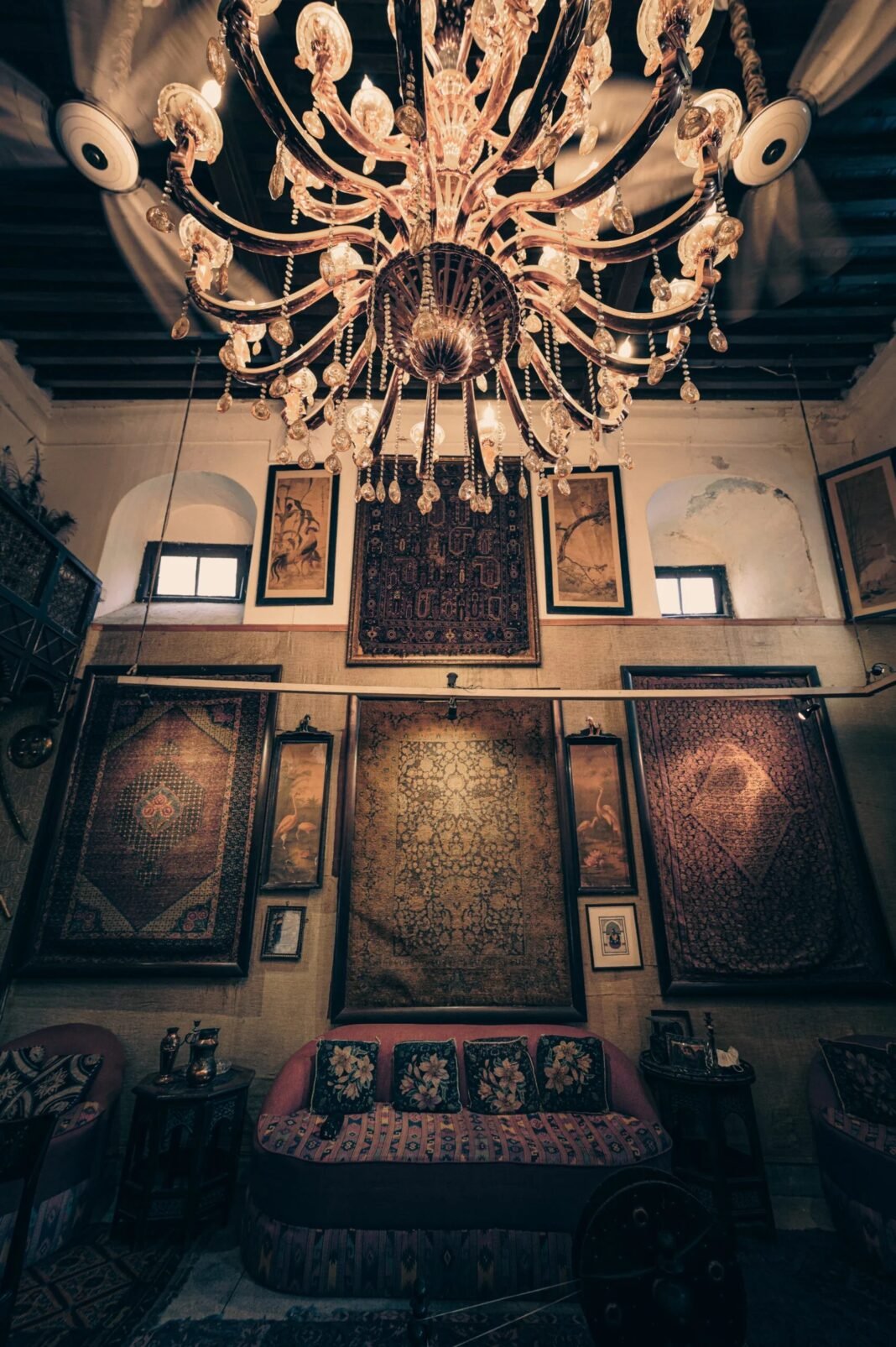
The collection itself is staggering for a private house. Around 21,000 pieces of art and artifacts, mostly from the 18th to 20th centuries: 10,000 manuscripts, 180 miniature paintings on display, Sikh-era textiles, statuary, pottery, carved ivory, old coins, porcelain, Islamic calligraphy, carpets from royal courts, and a small armoury of Sikh weapons. The showpiece stories are unforgettable — a 12-by-6-inch painting of Nawab Mumtaz Ali painted with a single hair that took 15 years to complete; relics associated with the Prophet Muhammad displayed to the public during the Islamic month of Muharram; clothes worn by Mughal emperors; gifts bestowed by Ranjit Singh himself.
Then there is the house. The haveli originally belonged to Raja Todar Mal, the legendary finance minister in Emperor Akbar’s court — so the building itself reaches back to the Mughal Empire, centuries before the Fakir family settled in Lahore in the 1730s. Walking its rooms, with their Sikh-era and British-era fittings, is a lesson in how upper-class Lahori families actually lived. For photographers, the old woodwork, the entrance gate and the arranged interiors are rich material — and the whole visit, done properly, takes a satisfying two to three hours.
Finally, Fakir Khana is the perfect anchor for a Walled City day. It sits a short walk from Bhatti Gate, near the food streets and bazaars of the old city, and pairs beautifully with the Explore Pakistan heritage trail through Lahore — the Fort, Badshahi Mosque, Shahi Hammam and the gates of the Walled City. If you only have one day for old Lahore, spend half of it here.
History of Fakir Khana Museum
The roots of Fakir Khana reach back to the Mughal Empire: the property originally belonged to Raja Todar Mal, finance minister to Emperor Akbar. By around 1730, the Fakir family — originally from Bukhara — had settled in Lahore, where they established and ran a publishing house. Their rise to political prominence came with the Sikh Empire. Three Fakir brothers became trusted ministers of Maharaja Ranjit Singh: Fakir Azizuddin as foreign minister, Fakir Nooruddin as royal physician and governor, and Fakir Imamuddin as treasurer.
Their positions at the heart of Ranjit Singh’s court brought them into contact with sovereigns, diplomats and travelers from across the world. Gifts flowed in — from Ranjit Singh himself, and later from figures including Queen Victoria — and the family added to the collection through their own travels and connoisseurship. Persian was the official language of the Sikh court, and the family’s manuscripts, miniatures and textiles reflect the refined Persianate culture of 19th-century Punjab, layered over older Mughal and Gandharan pieces.
In 1901, the family formally opened their house to the public as a museum — making Fakir Khana one of the oldest museums in the region and, today, the largest privately owned museum in South Asia. It is the only private museum recognized by the Government of Pakistan, and it receives some government funds for maintenance. The sixth generation of the Fakir family now runs it, and the Miniature Hall’s exhibit arrangement has been maintained for three quarters of a century — a continuity of care you can feel in every room.
Top Things to Do in Fakir Khana Museum
Tour the Miniature Hall
The Miniature Hall is the most impressive section of the museum, and most visitors’ favorite. Around 180 miniature paintings are displayed here, in an arrangement maintained for 75 years — a large room of a well-to-do Lahori family from the era when Western influences were beginning to penetrate established Lahori life. The early Mughal miniatures are the jewels: exquisite detail, luminous color, and each with a story the curator will tell you. Give this room the most time.
See the Manuscript Collection
The family has acquired some 10,000 manuscripts over the generations — early Qurans, illuminated Persian manuscripts, Kufic calligraphy and rare texts. Among the legends of the collection: a tiny 12-by-6-inch painting of Nawab Mumtaz Ali, painted with a single hair over 15 years. Even if you are not a manuscript specialist, seeing these objects up close — and hearing how they were made — is mesmerizing.
Admire the Sikh-Era Treasures
Many of the finest pieces were gifts from Maharaja Ranjit Singh to the Fakir brothers: textiles, weaponry, statuary and court objects from the Sikh Empire at its height. The small armoury of Sikh weapons and the royal-court carpets give you a tactile sense of the Lahore durbar in the early 1800s — a chapter of Punjab’s history that is rarely presented this personally anywhere else.
Explore the Haveli Itself
Do not treat the building as just a container. This is a historic haveli with narrow staircases, carved woodwork, old furniture and the famous entrance gate — a house turned inside out, as the family puts it, where what is private has been made public. Access to all parts of the building is unhindered, and the domestic scale of the rooms is part of the charm: you see how art lived in a Lahori home, not in a gallery.
Accept the Green Tea and the Stories
This is a genuine tip from countless visitor reviews: the curator will likely offer you safe drinking water and green tea, and open with a brief history of the family, the haveli and the Sikh conquest. Accept, listen, and ask questions. The stories — told in a mixture of Punjabi and English, with abundance and good humor — are the soul of the visit. Budget 1.5 to 3 hours; an hour covers the objects, but two or three let the family stories unfold.
Famous Places In and Around Fakir Khana Museum
Bhatti Gate: One of the thirteen historic gates of the Walled City, about 500 meters from the museum — start your walk here.
Lahore Fort and Badshahi Mosque: The Mughal giants of Lahore, a short rickshaw ride away — the natural companions to a Fakir Khana morning.
Delhi Gate and Shahi Hammam: The restored Walled City trail runs from Delhi Gate through the old bazaars — see our Delhi Gate travel guide for the route.
Food Street and Bazaar Hakiman: The lanes around the museum are full of old-city eateries and shops — plan lunch here after your visit.
Alhamra Arts Council: For contemporary Pakistani art after your history immersion — our Alhamra Arts Council Lahore travel guide covers it.
How to Reach Fakir Khana Museum
The museum sits in Bazaar Hakiman near Kucha Pehalwanan, about 500 meters inside Bhatti Gate. Cars are little help once you reach the Walled City’s narrow lanes — take a rickshaw to Bhatti Gate (or Taxali Gate), then walk in. From Lahore Fort, the western side of Hazoori Bagh gives a natural old-city walking route toward Bhatti Gate.
From Islamabad: Lahore is about 375 km via the M-2 motorway — roughly 4-5 hours by car or Daewoo-style coach. From the motorway terminal, take a rickshaw or ride-hailing car to Bhatti Gate (30-45 minutes depending on traffic).
From Karachi: Fly to Allama Iqbal International Airport (about 2 hours), then 45-60 minutes by road to the Walled City. By rail, the Karachi–Lahore expresses (Karachi Express, Tezgam, Khyber Mail) take 18-22 hours to Lahore Junction, 15-20 minutes from Bhatti Gate by rickshaw.
From within Lahore: Ride-hailing apps (Careem, Uber, inDrive) will take you to Bhatti Gate from anywhere in the city; the Orange Line metro and metrobus connect major corridors. Ask the driver to drop you at Bhatti Gate and walk in — the museum is well known locally, and shopkeepers in Bazaar Hakiman can point you to Kucha Faqirkhana.
The essential rule: Visits are by appointment only. Call ahead (the family is reachable by phone) and confirm your day and time before you go — do not just show up. Typical visiting hours are around 10:00 AM to 5:00 PM; confirm when you book, as the museum operates more like a family house than a standard museum, and days can vary.
Route Details
Step 1: Reach Bhatti Gate — by rickshaw, ride-hailing car or on foot from the Fort/Hazoori Bagh side. Step 2: Enter the gate and walk about 500 meters along Bazaar Hakiman (roughly five football fields); the museum is on the right-hand side near Kucha Pehalwanan. Step 3: Call the family when you are close if needed — locals know “Fakir Khana” well. Step 4: Arrive at your confirmed appointment time, ideally in the morning, and allow 1.5 to 3 hours inside.
Where to Stay in Fakir Khana Museum
You will stay in Lahore, which has Pakistan’s widest range of accommodation. For a Walled City-focused trip, consider staying near the old city or in Gulberg/Model Town with easy ride-hailing access to Bhatti Gate.
Luxury: Lahore’s top hotels (Pearl Continental, Avari, Nishat) offer full-service comfort in Gulberg and on Mall Road, 20-30 minutes from the Walled City.
Mid-range: Dozens of comfortable hotels and serviced apartments cluster in Gulberg, DHA and Johar Town — good value, reliable Wi-Fi and easy transport links.
Budget/guesthouses: The old city and nearby Anarkali have budget hotels and family guesthouses; they are atmospheric and cheap, though simpler. Backpacker hostels have also opened in central Lahore in recent years.
Book centrally if your trip is heritage-focused — you will spend your days in the Walled City and your evenings on the food streets. One full day covers Fakir Khana plus the Fort and Badshahi Mosque; two days let you add the Walled City trail, the museums and Anarkali at a relaxed pace.
Where to Eat: Local Foods of Fakir Khana Museum
Eat where the Walled City eats. The lanes around Bhatti Gate are part of Lahore’s legendary food landscape: nihari and paye for breakfast, chargha, seekh kebabs and tawa qeema at the old-city barbecue shops, chanay and halwa puri in the morning bazaars. The nearby Food Street (Fort Road) offers the same classics with a view of Badshahi Mosque at night.
For sweets, Lahore is famous for gulab jamun, barfi and jalebi from the old sweet houses, and no Lahore food day is complete without lassi — the thick, creamy Punjabi yogurt drink, served in the Walled City’s old lassi shops. A full meal at a Walled City eatery is very budget-friendly; even the sit-down restaurants on Food Street stay reasonable. After your museum visit, walk out into Bazaar Hakiman hungry — the family will have given you history, and the bazaar will give you lunch.
Weather in Fakir Khana Museum
Lahore’s climate is extreme at both ends: scorching summers, foggy winters, and a monsoon in between. For a Walled City walking trip — lanes, bazaars, a haveli with stairs — the mild months matter. The museum itself is indoors, but you will walk 500 meters through the bazaar to reach it and likely spend the rest of the day outdoors.
| Season | Temperature Range | Conditions |
|---|---|---|
| Winter (Dec–Feb) | 5–20°C | Cool, often foggy mornings (especially December–January); pleasant afternoons — excellent for walking the old city; warm layers needed |
| Spring (Mar–Apr) | 15–35°C | Warming up; March pleasant, April hot; the best balance of weather and daylight |
| Summer (May–Jul) | 28–45°C | Extremely hot, especially May–June; monsoon rains arrive in July; sightsee early morning only |
| Autumn (Aug–Nov) | 18–38°C | Monsoon tail in August; October–November dry and pleasant — a great second-choice season |
Language and Culture of Fakir Khana Museum
Lahore speaks Punjabi in its heart and Urdu everywhere else — you will hear both in the Walled City, often in the same sentence. The curator’s stories come in a lively mix of Punjabi and English. English works in hotels and with guides; in the bazaar lanes, basic Urdu is a big help.
Culturally, remember what Fakir Khana is: a family’s home, not a government institution. The family asks for no fixed ticket — entry is free, with donations accepted at the end — and they give their time generously. Repay that generosity with genuine interest: visit only if you care about art and history, listen to the stories, and leave a donation that reflects the value of the experience (bring cash in small notes). Dress modestly for the old city, ask before photographing people, and be mindful that the haveli has narrow staircases and uneven floors — it is a historic house, not a modern gallery.
Shopping in Fakir Khana Museum
The museum has no gift shop in the modern sense — the treasures are not for sale, and that is the point. But the Walled City around it is one of Pakistan’s great shopping experiences. Bazaar Hakiman and the adjoining old-city markets sell khussa (embroidered leather shoes), phulkari textiles, brassware, calligraphy art and old books. Anarkali Bazaar, a short ride away, is Lahore’s historic shopping street — fabrics, jewelry, spices and street food in dense, colorful rows. Ichhra and Liberty markets offer more modern clothing and household shopping. Bargain politely in the old bazaars; fixed prices are more common in the newer markets. For books and prints related to what you have seen, the Urdu Bazaar near the museum is worth a wander.
Travel Tips for Fakir Khana Museum
Packing Essentials
Comfortable walking shoes — the 500-meter bazaar walk and the haveli’s stairs demand them. Cash in small notes for the donation, rickshaws and bazaar shopping (no card machines in the old lanes). A phone/camera for the interiors (confirm photography permission with the family on arrival). In winter, a warm layer for foggy mornings; in summer, sun protection and water.
Safety Tips
The Walled City is busy and generally safe for tourists during the day; go in the morning as recommended. Keep valuables discreet in crowded bazaars. The haveli itself has narrow staircases and uneven floors with effectively no wheelchair access — anyone with mobility concerns should call ahead and ask what can be shown on the ground floor. Most importantly: book your appointment before you go. The family runs the museum around their lives; showing up unannounced wastes everyone’s time.
Money & Connectivity
There is no ticket counter — entry is free and donations are given at the end, so carry cash. ATMs are plentiful on the main roads outside the Walled City (stock up before walking in). All major mobile networks work in Lahore with strong 4G; the old city’s thick walls can weaken signals indoors, but you will not need your phone much inside — you will be listening.
Best Time to Visit Fakir Khana Museum
Winter (December to February) — Excellent
Cool, pleasant afternoons are ideal for the bazaar walk and a full Walled City day. Mornings can be foggy (especially December–January), which delays early starts but adds atmosphere to the old city. This is peak Lahore tourism season — book your appointment well ahead.
Spring (March to April) — The Sweet Spot
Arguably the best balance: warm but not hot, clear skies, long daylight. March is perfect for combining the museum with the Fort, gardens and food streets in a single long day.
Summer (May to July) — Difficult
Lahore’s heat is brutal in May–June (40°C+), and the July monsoon brings humidity and sudden downpours. The museum interior is shaded, but the bazaar walk and any wider sightseeing will be punishing. If summer is your only option, book the earliest morning slot.
Autumn (August to November) — Very Good
Once the monsoon retreats, October and November offer dry, golden weather that flatters the Walled City’s brickwork. A lovely season with fewer tourists than winter.
Final Thoughts
Fakir Khana is proof that the best museums are not always the biggest ones — they are the ones where someone who loves the objects shows them to you. Six generations of the Fakir family have kept this house and its 20,000 treasures alive through empires and upheavals, and a morning in their company will change how you see Lahore. The miniatures, the manuscripts, the Sikh-era gifts, the green tea and the stories: it is the most human history lesson in the Walled City.
Book ahead, arrive in the morning, and give it the two or three hours it deserves. Then walk out into Bhatti Gate’s racket — the bazaars, the food, the thirteen gates — and see the old city with new eyes. For the mountain half of your Pakistan travels, our guides to Malam Jabba and the Hunza Valley pick up where Lahore’s history leaves off.
FAQs
Where is Fakir Khana Museum located?
Inside Bhatti Gate in Lahore’s Walled City — in Bazaar Hakiman, about 500 meters inside the gate, on the right-hand side near Kucha Pehalwanan.
Do I need an appointment to visit Fakir Khana Museum?
Yes — visits are by appointment only. Call the family ahead of time and confirm your day and visiting hours (typically around 10:00 AM to 5:00 PM) before going.
What is the entry fee for Fakir Khana Museum?
Entry is free; there is no fixed ticket. Donations are accepted at the end of the visit — bring cash in small notes and give generously for the family’s time.
What is the best time to visit Fakir Khana Museum?
October to March, when Lahore’s weather suits old-city walking. Winter (December–February) has pleasant afternoons; March–April offers the best balance of warmth and clear skies.
How do I reach Fakir Khana Museum?
Take a rickshaw or ride-hailing car to Bhatti Gate, then walk about 500 meters into the Walled City along Bazaar Hakiman. From Lahore Fort, walk from the Hazoori Bagh side toward Bhatti Gate.
Is Fakir Khana Museum good for families?
Yes, for families with an interest in history and art — children enjoy the weapons, the tiny single-hair painting story and the old house. Note the narrow stairs and uneven floors, which are tricky for strollers and wheelchairs.
Where can I stay near Fakir Khana Museum?
Anywhere in central Lahore works — Gulberg and Model Town have the widest mid-range choice, with luxury options on Mall Road and in Gulberg, all 20-35 minutes from Bhatti Gate by car.
What makes Fakir Khana Museum unique?
It is the largest privately owned museum in South Asia, run by the sixth generation of the Fakir family — ministers to Maharaja Ranjit Singh — in a haveli that once belonged to Akbar’s finance minister Raja Todar Mal, opened to the public since 1901.