GB Mines and Minerals Are Provincial Subject, Says CM
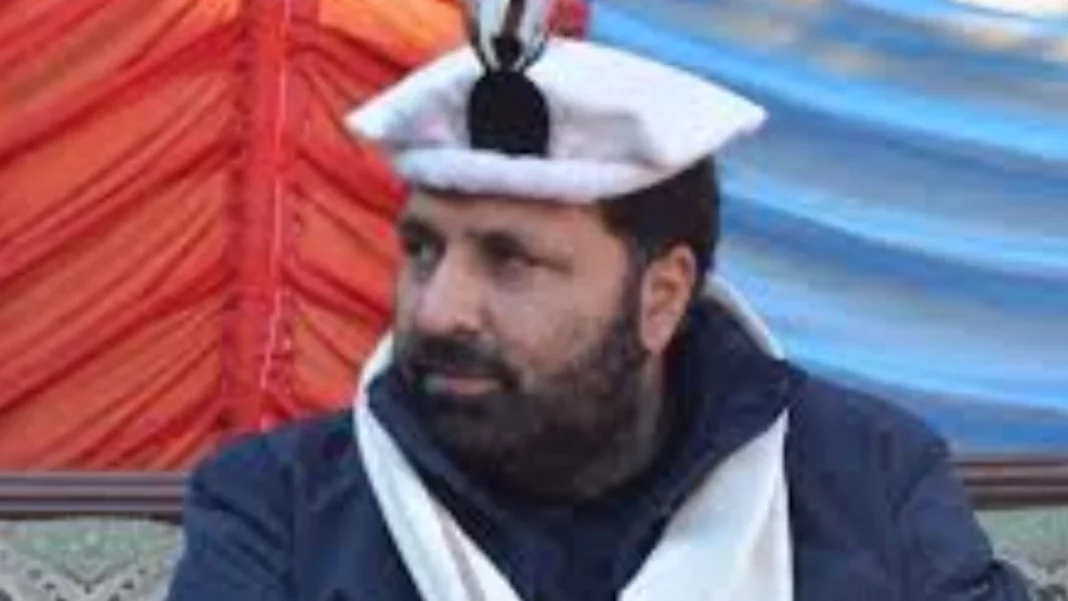
Gilgit-Baltistan Chief Minister Advocate Amjad Hussain Azar says mines and minerals are a provincial subject. He told reporters in Karachi on Saturday that the sector should not be treated as the exclusive domain of the federal government.
Azar said the region needs stronger enforcement and monitoring of its mineral resources. He argued that the federal government cannot handle every matter itself, and provinces should be allowed to discharge their own responsibilities.
The chief minister was speaking to the media in Karachi on Saturday. He said his government had completed its first 100 days in office and had begun implementing the Pakistan Peoples Party manifesto.
What Azar said about provincial rights
Azar backed the creation of new provinces wherever consensus exists. He said the Gilgit-Baltistan Assembly had already passed a resolution demanding provincial status for the region, and the PPP supports that demand.
He added that the issue should not be pursued in areas where agreement has yet to emerge.
Work is under way to improve higher education, healthcare and education in Gilgit-Baltistan, he said. He highlighted transparent recruitment, livestock, commerce, tourism and border trade.
Why mines and minerals matter for Gilgit-Baltistan
Gilgit-Baltistan holds rich mineral deposits, and the chief minister has made the sector a priority since taking office. The GB cabinet recently approved steps on healthcare, education and development, and mining enforcement sits alongside that agenda.
Azar said the mining and minerals sector particularly requires effective enforcement and monitoring. His government has also set up a public-private partnership unit in the region, and he disclosed that the United States had shown interest in investing in Gilgit-Baltistan’s energy sector.
The region’s mineral wealth has long been part of its political debate. Local leaders argue that mountain communities see little benefit from resources taken from their own land, while Azar puts control of the sector firmly with the region rather than Islamabad.
Energy, tourism and daily life
Commenting on the country’s economic difficulties, Azar said industrial activity had stalled. He said industries cannot operate sustainably on expensive thermal electricity, while hydropower is the cheapest source of electricity and offers considerable potential for industrial growth.
He also highlighted Gilgit-Baltistan’s vast tourism potential. The region’s economic opportunities should be developed so its people do not remain poor, he said, and local resources must be harnessed to improve livelihoods.
Azar pledged to work towards ending load-shedding in Gilgit-Baltistan. He asked residents to allow the government some time to address the problem, and said his government remains in contact with Gilgit-Baltistan residents living in Karachi and is attentive to their concerns.
The chief minister’s remarks also touched daily pressures in the region. A landslide recently blocked a road in Baltistan, showing how fragile access remains, while tens of thousands of children remain out of school in Diamer.
Criticism of PTI rule in Khyber Pakhtunkhwa
Azar also took aim at the Pakistan Tehreek-e-Insaf record in Khyber Pakhtunkhwa. He urged people to assess the province’s 13 years under PTI-led governments by examining conditions across its different regions.
He alleged that the party had failed to focus on governance and instead remained engaged in confrontations with political parties and state institutions. Such an approach was bound to produce adverse consequences, he argued, because the PTI had relied on popular slogans and political disputes rather than effective governance.
What happens next
The chief minister’s statement frames the next phase of his government’s agenda. Stronger monitoring of mines and minerals, a push for provincial status, and the new public-private partnership unit all point to a government trying to convert resource wealth into local development.
The Diamer Basha Dam contract signed this week shows how large the stakes are, since the region hosts projects of national importance while its own residents wait for reliable power and services.
For now, Azar’s message is that Gilgit-Baltistan should control its own minerals and end load-shedding. Whether Islamabad accepts that reading of provincial rights will shape the debate ahead.
What did the GB chief minister say about mines and minerals?
He said mines and minerals are a provincial subject and should not be treated as the exclusive domain of the federal government, calling for stronger enforcement and monitoring.
Has the GB Assembly demanded provincial status?
Yes, Azar said the assembly has passed a resolution demanding provincial status for the region, and the PPP supports that demand.
What did Azar say about new provinces?
He backed the creation of new provinces wherever consensus exists, but said the issue should not be pursued where agreement has yet to emerge.