Quick Facts
- Location: Village Chak 11/1-L, on the Renala Khurd–Dipalpur Road, Okara District, Punjab, Pakistan
- Altitude: Punjab plains (lowland — exact figure not published)
- Famous For: A pre-partition Sikh gurdwara whose buildings later housed refugee families from Amritsar, and part of which became the village’s Government High School
- Nearest City: Renala Khurd, then Okara and Dipalpur
- Accessibility: Reachable by road from Lahore via Renala Khurd; the last stretch is a 3 km walk west along the canal from the Chak 10/1-L bridge bus stop. Families live in the buildings — view from outside with permission
- Known Landmarks: The gurdwara complex itself, Government High School Chak 11/1-L, and nearby Dipalpur’s Gurdwara Chota Nankiana
- Best For: Sikh heritage travelers, partition-history enthusiasts, photographers of old Punjab, and slow-travel explorers of rural Okara
Why Visit Gurdwara Ajeet Sar, Chak 11/1-L
Not every destination on the map is a monument with a ticket booth. Some are quieter, sadder, and — if you let them — more moving. Gurdwara Ajeet Sar in Chak 11/1-L is one of those places. Before 1947, this was a living Sikh shrine in the canal-colony villages of Okara. After Partition, its buildings sheltered refugee families arriving from Amritsar, and part of the complex became the village’s Government High School. Today it stands as a palimpsest of Punjab’s twentieth century: a sacred place, a refuge, and a school, all in the same walls.
If you are tracing Sikh heritage in Pakistan, or trying to understand what Partition actually did to the villages of Punjab, Ajeet Sar deserves a place on your route. It is not Nankana Sahib or Kartarpur — there is no grand dome here, no pilgrim crowds. What there is, is authenticity: the real, unpolished story of how a community’s shrine became another community’s home and classroom. For photographers and writers, the weathered brickwork, the canal-side walk to reach it, and the village life around it offer images and stories you will not find at the famous sites.
The journey itself is part of the reward. You get off at a canal bridge in the middle of Okara’s farmland, walk three kilometers west along the water with kingfishers and buffalo for company, and arrive at a village where the past is not curated but simply lived in. Combine it with Dipalpur — one of Punjab’s oldest towns, with its own Guru Nanak shrine — and you have a full, deeply textured day in a corner of Pakistan most travelers never see.
This gurdwara ajeet sar chak 11/1-l travel guide gives you the honest picture: the shrine’s documented history, how to reach it from Lahore, Islamabad, or Karachi, what the seasons are like, and how to visit respectfully. For more journeys across the country, explore our Explore Pakistan collection.
History of Gurdwara Ajeet Sar, Chak 11/1-L
Gurdwara Ajeet Sar stands in village Chak 11/1-L, one of the numbered canal-colony villages laid out when the British developed the Lower Bari Doab with canal irrigation in the late 19th and early 20th centuries. The “11/1-L” name itself is a relic of that engineering: chak number 11 on distributary 1-L of the canal system. In these planned agricultural settlements, Sikh, Muslim, and Hindu families farmed side by side, and the gurdwara served the area’s Sikh community as its spiritual and social center.
What the historical record preserves about the shrine is specific and poignant. According to Sikh heritage surveys documented on SikhiWiki, the sacred shrine sits on the Renala Khurd–Dipalpur Road, with its bus stop at the bridge for Chak 10/1-L on the canal; from there the shrine is reached by walking 3 kilometers west along the canal. After the Partition of 1947, refugee families from Amritsar settled in the buildings of the gurdwara — a reversal written into brick and mortar, as the shrine of a departing community became the shelter of an arriving one. And the village school now known as Government High School Chak No. 11/1-L was once part of this gurdwara — its classrooms carrying forward, in the most literal way, the Sikh tradition of education and community service.
This pattern repeats across Okara district, which holds a cluster of pre-partition Sikh sites: Gurdwara Chota Nankiana at Dipalpur, the shrine at Satghara (Nanak Jagir), Gurdwara Bhuman Shah at Dipalpur, and the Darbar of Baba Sri Chand at Bhuman Shah. Ajeet Sar belongs to this constellation — a smaller, humbler star, but one that tells the Partition story with unusual directness. There is no longer any prakash (daily worship) here; the darbar hall stands vacant, and the complex is lived in by local families. It is heritage as everyday life rather than heritage as museum.
The wider setting deepens the story. Nearby Dipalpur is one of the oldest towns in Punjab — it was once a capital of the region — and its Gurdwara Chota Nankiana marks where Guru Nanak Dev Ji himself is remembered to have stayed, under a dead pipal tree that turned green again, and where he cured a leper named Nuri (Nauranga), whose grave lies behind the shrine. The priests of that shrine were traditionally Bedi Singhs. Visiting Ajeet Sar together with Dipalpur’s shrines connects the small village story to the great Guru-period history of the region.
Top Things to Do in Gurdwara Ajeet Sar, Chak 11/1-L
Walk the Canal to the Shrine
The approach is half the experience. Get down at the bridge bus stop for Chak 10/1-L on the canal and walk the 3 kilometers west along the water. This is the Punjab of the canal colonies at its most elemental: wheat and cotton fields, eucalyptus windbreaks, herons on the banks, and village life unfolding at walking pace. Go in the cool of the morning, carry water, and wear a hat — the walk is exposed.
See the Gurdwara Complex from Outside
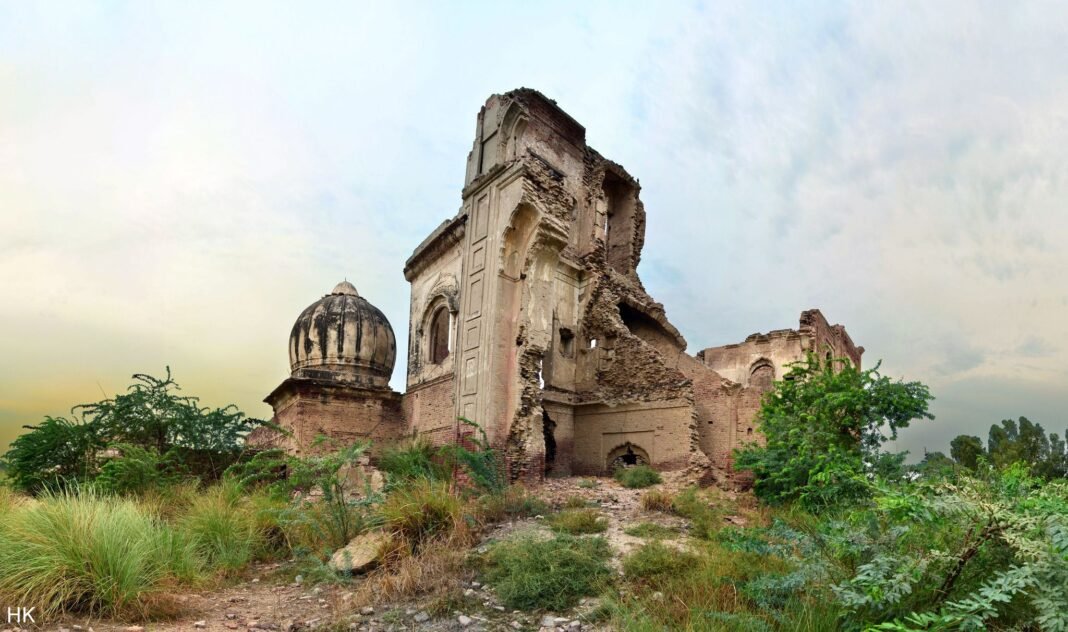
The shrine buildings are occupied by local families, so this is a respectful exterior visit: look at the old brickwork and layout, note which portion became the Government High School, and imagine the complex in its original life. Always ask the residents before approaching closely or taking photographs — a polite greeting in Punjabi or Urdu, and an explanation of your interest, opens doors that cameras alone cannot.
Visit Government High School Chak 11/1-L
Ask at the village whether you may see the school that was once part of the gurdwara. School hours visits, with the head teacher’s permission, are usually welcomed — and there is something quietly profound about children studying in rooms built for worship and community gathering nearly a century ago.
Combine with Dipalpur’s Sikh Heritage
Dipalpur town, a short drive away, repays a half-day. Visit Gurdwara Chota Nankiana on the southeastern outskirts — the shrine of Guru Nanak Dev Ji with its famous pipal tree — and the Darbar Baba Bhuman Shah complex. Dipalpur’s old town, once a capital of Punjab, has lanes and havelis worth wandering with a local guide.
Experience Canal-Colony Village Life
Chak 11/1-L is a working agricultural village. With permission and a local introducer, you can see the rhythms of the canal colonies: the water rotation schedules, the wheat threshing in season, the village dera where elders gather. This is slow travel at its best — no itinerary, just attention.
Famous Places In and Around Gurdwara Ajeet Sar, Chak 11/1-L
- Gurdwara Chota Nankiana, Dipalpur: Guru Nanak Dev Ji’s shrine with the miraculous pipal tree, on Dipalpur’s southeastern edge.
- Darbar Baba Bhuman Shah, Dipalpur: Historic shrine complex honoring the saint famed for his never-failing langar.
- Gurdwara Chota Nankiana, Satghara (Nanak Jagir): Another Guru-period shrine in the Okara cluster.
- Renala Khurd: The nearest town — canal-colony heritage, bazaars, and the famous Renala hydel and horticulture history.
- Okara city: District headquarters with the well-known Okara military farms and bustling bazaars.
- Nankana Sahib: Further afield but the essential Sikh pilgrimage city of the region — best combined on a multi-day Sikh heritage circuit.
How to Reach Gurdwara Ajeet Sar, Chak 11/1-L
The shrine is in rural Okara district, and reaching it is straightforward if unhurried. The landmark to aim for is the Renala Khurd–Dipalpur Road; from the canal bridge bus stop at Chak 10/1-L, it is a 3 km walk west along the canal to Chak 11/1-L.
From Lahore (about 90–130 km, 2–3 hours): Take the N-5 (G.T. Road) south toward Okara/Renala Khurd, then turn toward Dipalpur and follow the Renala Khurd–Dipalpur Road to the Chak 10/1-L canal bridge. This is the natural day-trip route — leave Lahore early morning.
From Islamabad (about 470 km, 6–7 hours): Take the M-2 to Lahore, then follow the Lahore route above. Most visitors do this as an overnight trip with a Lahore stay.
From Karachi: Fly to Lahore (Allama Iqbal International Airport), then drive. The shrine is not served by rail; the nearest railway stations are at Renala Khurd and Okara on the main Karachi–Lahore line, from where you can hire a car or rickshaw.
Public transport will get you to Renala Khurd or Dipalpur by bus or van from Lahore and Okara; from there, hire a local car, rickshaw, or motorcycle-rickshaw to the canal bridge, and walk the last 3 km. A private car with a driver who knows the chak-numbered village roads is by far the least stressful option. If you are building a wider Punjab itinerary, our Islamabad city guide covers the capital end of the journey.
Route Details
- Lahore → N-5 south toward Renala Khurd/Okara.
- Turn onto the Renala Khurd–Dipalpur Road.
- Reach the canal bridge bus stop at Chak 10/1-L and park/hire onward transport.
- Walk 3 km west along the canal to village Chak 11/1-L; ask villagers to point out the gurdwara buildings and the school.
Where to Stay in Gurdwara Ajeet Sar, Chak 11/1-L
There is no accommodation in Chak 11/1-L itself — plan this as a day trip. The practical bases are Renala Khurd and Okara city, which have simple mid-range hotels and guesthouses aimed at business and family travelers: clean rooms, air conditioning, and attached restaurants at budget-friendly rates. Dipalpur has smaller guesthouses.
For the most comfortable option, stay in Lahore — with the full range from budget guesthouses to luxury hotels — and drive down for the day; the round trip is very manageable. If you are touring Sikh heritage sites across Punjab (Nankana Sahib, Kartarpur, Lahore’s own gurdwaras), Lahore is the obvious hub. Whatever you choose, book ahead only in the sense of confirming by phone — these are walk-in-friendly towns, not resort destinations. Camping near the shrine or canal is not appropriate.
Where to Eat: Local Foods of Gurdwara Ajeet Sar, Chak 11/1-L
You are in the heart of Punjab’s canal colonies, and the food is pure Punjabi comfort. The dhabas of Renala Khurd, Dipalpur, and Okara serve sarson da saag with makki di roti in winter, daal fry and mixed vegetable curries, chicken and mutton karahi, and endless fresh tandoori rotis. Breakfast like a local: halwa puri or parathas with lassi — the thick, creamy Punjabi lassi is non-negotiable.
Okara district is famous for its dairy — the area’s milk, butter, and desi ghee are prized across Punjab, and you will taste the difference in everything from chai to sweets. In season, buy citrus (kinnow), guava, and mangoes from roadside sellers. Meals are hearty and inexpensive; a full dhaba meal generally costs only a few hundred rupees per person. Carry water and snacks for the canal walk, as there are no eateries at the shrine itself.
Weather in Gurdwara Ajeet Sar, Chak 11/1-L
Chak 11/1-L sits on the Punjab plains, with the classic extremes of the region: a cool, foggy winter, a blazing summer, and a monsoon that breaks the heat. The comfortable window is generous — roughly November to March — which is exactly when heritage walking is pleasant. Summer visits are possible but punishing; plan any canal walk for dawn.
| Season | Temperature Range | Conditions |
|---|---|---|
| Winter (Dec–Feb) | 5°C to 22°C | Cool and often foggy in the mornings; crisp afternoons. Best season for the canal walk. |
| Spring (Mar–Apr) | 15°C to 35°C | Warming fast; wheat harvest season. Pleasant in March, hot by late April. |
| Summer (May–Jul) | 28°C to 45°C | Intensely hot with dust storms (andhi); monsoon arrives in July. Avoid midday outdoor walking. |
| Autumn (Aug–Nov) | 18°C to 38°C | Humid monsoon tail in August–September; October–November turn dry and golden — excellent. |
Language and Culture of Gurdwara Ajeet Sar, Chak 11/1-L
The language here is Punjabi in its central-dialect warmth, with Urdu universally understood. The village is a mix of long-settled farming families and descendants of the 1947 refugees from Amritsar who were settled in the gurdwara buildings — a living reminder of the area’s layered history. Agriculture sets the rhythm of life: sowing, canal water turns, and harvests.
Visitors should dress modestly (shalwar kameez blends in best), greet elders with respect, and always ask before entering courtyards or photographing people — especially women. Because the gurdwara buildings are family homes, not a functioning shrine, treat the visit as calling on a neighborhood: introduce yourself, explain your interest in the history, and accept the tea you will almost certainly be offered. Covering your head is a respectful gesture when viewing the old darbar area, in keeping with gurdwara custom.
Shopping in Gurdwara Ajeet Sar, Chak 11/1-L
There are no tourist shops at the shrine — shop in the bazaars of Renala Khurd, Dipalpur, and Okara. Good buys include Punjabi textiles and phulkari-style embroidery, desi ghee and dairy sweets (Okara’s dairy belt is famous), fresh and dried seasonal fruit, and everyday brass and steel household ware from the bazaar rows. Prices are local and fair; gentle bargaining is normal. There are no shopping malls in the immediate area — the nearest modern retail is in Okara city and, of course, Lahore. Carry cash.
Travel Tips for Gurdwara Ajeet Sar, Chak 11/1-L
Packing Essentials
Sun hat, sunscreen, and sunglasses for the exposed canal walk; comfortable closed walking shoes (the canal bank path is uneven); drinking water and snacks; a light shawl or scarf for head-covering at the shrine site; and a power bank for your phone camera.
Safety Tips
This is a peaceful farming area. The main cautions are environmental: do the 3 km canal walk in the cool hours, never in the May–June midday heat; watch your footing on the canal bank; and keep to daylight hours. Let someone know your walking plan, and take a local companion if offered — village guides are the best safety measure and the best storytellers.
Money & Connectivity
Bring cash — there are no ATMs in the village, though Renala Khurd and Okara have them. Small vendors are cash-only. Mobile coverage from all major networks is generally good across the Okara plains, including at the village. Download offline maps marking the Chak 10/1-L bridge, since chak-numbered roads confuse navigation apps.
Best Time to Visit Gurdwara Ajeet Sar, Chak 11/1-L
Winter (November to February) — Ideal
Cool, clear days made for walking the canal and wandering Dipalpur’s old town. Morning fog can delay the start — plan the canal walk for after 9 am — but afternoons are glorious.
Spring (March to April) — Lovely but Brief
Green wheat fields and comfortable temperatures in March; by late April the heat builds. If you visit in mid-April, you may catch Vaisakhi observances at the great gurdwaras of the region, such as Nankana Sahib.
Monsoon and Autumn (July to October) — Mixed
July–August bring monsoon humidity and muddy canal banks; October–November, once the rains retreat, are dry, golden, and very pleasant — a fine second choice after winter.
Summer (May to June) — Avoid if Possible
Temperatures cross 40°C and the canal walk becomes genuinely dangerous at midday. If you must come, restrict all outdoor time to dawn and dusk.
Final Thoughts
Gurdwara Ajeet Sar will not give you the grandeur of Kartarpur or the crowds of Nankana Sahib. It will give you something rarer: the unvarnished truth of what Partition did to an ordinary Punjab village, written in the walls of a shrine that became a shelter and then a school. Walking the canal to reach it, standing quietly outside its lived-in buildings, and then driving on to Dipalpur’s ancient shrines makes for one of the most thoughtful days you can spend in Pakistani Punjab.
Go in winter, go slowly, and go with respect — introduce yourself, ask permission, drink the tea. The past here is not behind glass; it is at home, and it answers the door. For more journeys into the country’s lesser-known corners, keep exploring our Explore Pakistan guides.
FAQs
Where is Gurdwara Ajeet Sar located?
In village Chak 11/1-L on the Renala Khurd–Dipalpur Road, Okara District, Punjab, Pakistan — reached via a 3 km walk west along the canal from the Chak 10/1-L bridge bus stop.
What is the best time to visit Gurdwara Ajeet Sar?
November to March, when the weather is cool and dry. Avoid May–June, when extreme heat makes the canal walk unsafe at midday.
How do I reach Gurdwara Ajeet Sar from Lahore?
Drive the N-5 south to Renala Khurd, then the Renala Khurd–Dipalpur Road to the Chak 10/1-L canal bridge (about 90–130 km, 2–3 hours), and walk 3 km west along the canal.
Is Gurdwara Ajeet Sar still a functioning gurdwara?
No. There is no daily worship now; refugee families from Amritsar settled in the buildings after 1947, part of the complex became Government High School Chak 11/1-L, and the darbar hall stands vacant. View from outside with the residents’ permission.
Is it safe for tourists?
Yes — it is a peaceful farming village. Walk in daylight and the cool hours, watch your footing on the canal bank, and take a local companion if possible.
Is it suitable for families?
Yes for families with older children, as a day trip from Lahore or Okara. The 3 km canal walk may be too much for small children or elderly travelers in anything but winter.
Where can I stay near Gurdwara Ajeet Sar?
There is no lodging in the village; stay in Renala Khurd or Okara (simple mid-range hotels) or base yourself in Lahore for a comfortable day trip.
What else can I see nearby?
Dipalpur’s Gurdwara Chota Nankiana (Guru Nanak Dev Ji’s shrine), the Darbar Baba Bhuman Shah complex, Renala Khurd town, and — on a longer Sikh heritage circuit — Nankana Sahib.