Quick Facts
- Location: Skardu city, Baltistan, Gilgit-Baltistan, Pakistan — crowning the great rock at the confluence of the Indus and Shigar rivers
- Altitude: The fort rock rises roughly 150 metres above the Skardu valley floor (historical travelers estimated the promontory at about 1,300 feet); Skardu town itself sits near 2,500 metres
- Famous For: The 16th-century “King of Forts” — Baltistan’s most dramatically positioned citadel, reached by a steep 30-minute trek
- Nearest City: Skardu (the fort is inside the city); Gilgit ~200 km west
- Accessibility: On foot only — a steep uphill trek from Skardu town; open in the tourist season
- Known Landmarks: The Rock of Skardu, Indus River, Shigar River confluence, Skardu bazaar
- Best For: History lovers, photographers, trekkers, and anyone visiting Skardu
Why Visit Kharphocho Fort
There are forts you drive up to, and there are forts you earn. Kharphocho — the “King of Forts” in Balti — is firmly the second kind. It crowns a sheer, isolated rock that rises straight out of the Skardu valley floor at the meeting of the Indus and Shigar rivers, and from below it does not look built so much as grown: a brute fist of stone and timber fused with the mountain itself. The Express Tribune called it Skardu’s “crown jewel,” and standing on its parapets, with the whole city spread beneath you on one side and the Indus curling away on the other, you will not argue.
The climb is the experience. It takes about 30 minutes of steep, honest trekking — jutting rocks, a slope that steepens as you near the top, and an entrance so narrow you squeeze through a window-like opening one person at a time. Inside, the 16th-century reception hall soars nearly 30 feet high, its ceiling held up by massive ancient tree trunks, and the rooms stay cool even when the sun hammers the rock outside — the old Balti builders understood passive cooling centuries before the term existed. An ancient mosque stands in what was once the courtyard, and legend speaks of a hidden tunnel through the mountain that the royals used in wartime.
Kharphocho is perfect for anyone already in Skardu — which should be everyone reading an Explore Pakistan series. It takes half a day, costs nothing but effort, and delivers the single best panoramic view in the city along with a genuine encounter with Baltistan’s royal past. Go in the morning for the best light and the coolest climb; the prime season is May through October. For the wider Skardu journey, see our Deosai National Park travel guide and browse the Explore Pakistan collection.
History of Kharphocho Fort
Kharphocho’s origins reach back to Baltistan’s age of kings. The historian Hashmatullah attributed the fort’s construction to Maqpoon Bukha (also rendered Bugha), the founder of the Skardu kingdom who ruled around 1490–1515, while Mughal historians credited it to his grandson Ali Sher Khan Anchan (c. 1560–1625) — universally regarded as the greatest king in Baltistan’s history, who briefly united the region’s kingdoms under single rule. Either way, the fort belongs to the 16th century and to the Maqpoon dynasty that made Skardu a capital: an administrative and military seat built exclusively for defence, positioned where the Indus could be watched and where the Rock of Skardu itself formed half the fortification.
The great Italian traveler and historian Fosco Maraini, who saw the fort in the mid-20th century, described it as “perched like a veritable eyrie on rock of tawny hue rising sheer and to immense height from the Indus” — “almost an island in the midst of the plain.” He noted its reputation for impregnability, and recorded that during the disorders following the 1947 Partition, the people of Skardu once again flocked to the old fort for safety, just as their ancestors had done against earlier enemies.
Those enemies were real enough. The Mughal emperor Aurangzeb is said to have tried to take the fort and failed — the rock kept its king. In the 19th century, the Dogras came: General Zorawar Singh, campaigning for Maharaja Gulab Singh of Jammu and Kashmir, recognized the fort’s commanding position and occupied it as part of the annexation of Baltistan. The fort was later razed in 1857 under the direction of Ranbir Singh, and what visitors climb today is the evocative ruin of that great stronghold — walls and halls open to the sky, but still unmistakably the King of Forts.
Top Things to Do in Kharphocho Fort
Make the Climb
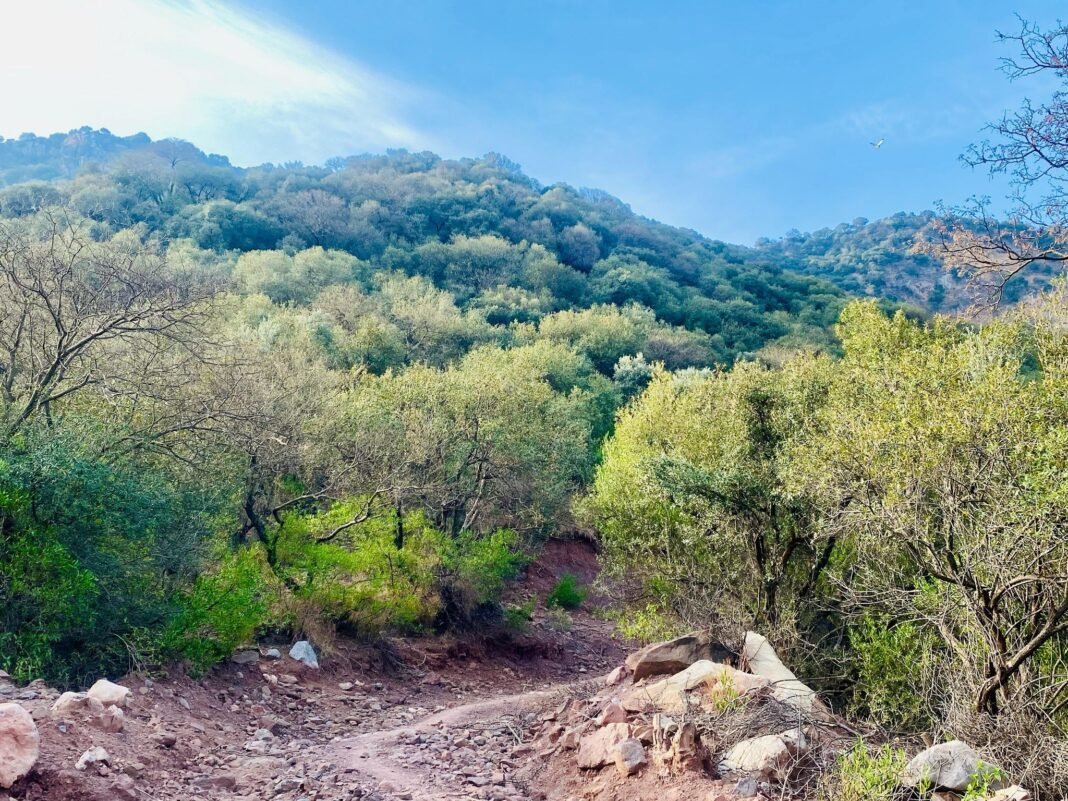
The 30-minute trek from Skardu town is the essential Kharphocho experience. The path starts gently and then turns serious — loose rock underfoot, a slope that steepens toward the top, and that famous final squeeze through the window-like opening in the fort’s wall. Wear proper shoes, carry water, and go in the morning or late afternoon; midday summer sun on an exposed rock face is punishing. The climb is manageable for anyone reasonably fit, including older children, but it is not suitable for anyone with knee problems or a fear of heights.
Take In the Bird’s-Eye View
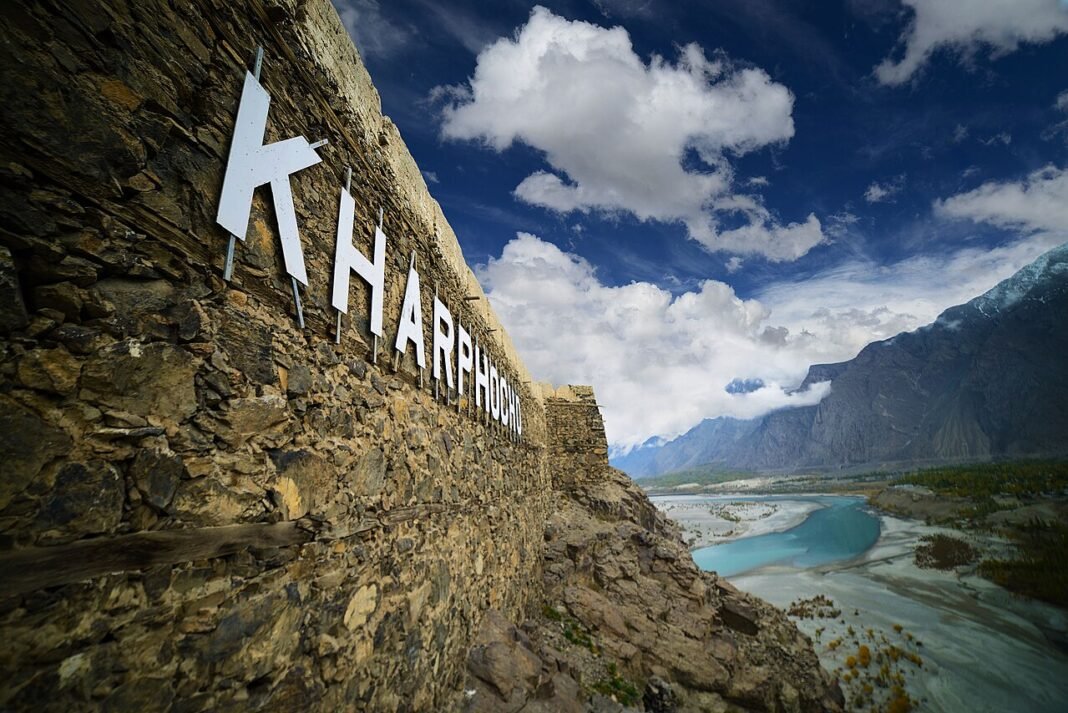
From the parapets, Skardu lies spread out like a map: the grid of the old town, the green of the orchards, the airstrip, and beyond it all the grey-brown mountains hiding the great 8,000-metre Karakoram peaks. Turn around and the Indus runs broad and silver at the rock’s foot, with the Shigar River joining it. Sunrise and sunset are magical; photographers should allow at least an hour at the top.
Explore the Great Hall and Cool Rooms
Step inside and look up: the reception hall’s ceiling rises nearly 30 feet, carried on huge tree trunks and ancient stonework. The architecture is quietly brilliant — thick stone walls and clever ventilation keep the interior cool even when the rock outside bakes. Wander the remaining rooms and terraces slowly; every doorway frames the valley like a painting.
Visit the Courtyard Mosque
An ancient mosque stands on a wooden structure in what was once the fort’s courtyard — identified in local accounts as the Masjid-e-Panjatun Pak. It is kept locked and visitors are not admitted inside, but its presence, weathered wood against weathered stone, is a reminder that this was a living royal residence, not just a military shell. Show the usual respect: quiet voices, modest dress.
Hunt for the Hidden Tunnel Legend
Local legend insists the fort includes a hidden tunnel running through the mountain, used by the royals to escape or move unseen in times of war. Guides in Skardu love telling the story, and while you will not find a marked entrance, the tale adds a delicious layer of mystery to the climb — every dark doorway starts looking like a candidate.
Combine With the Rock of Skardu Viewpoints
The fort rock — the Rock of Skardu — is itself the landmark. View it from across the Indus at dusk, when the last light catches the fort’s silhouette, or from the riverside paths below in the morning. The classic Skardu photograph is the fort crowning its rock above the town; Kharphocho gives you both the postcard and the climb behind it.
Famous Places In and Around Kharphocho Fort
- Skardu bazaar — the old market town at the foot of the rock
- Shigar Fort — the restored 17th-century Raja’s palace in Shigar Valley, ~30 km away
- Shangrila (Lower Kachura) Lake — the heart-shaped lake with its famous red-roofed huts
- Upper Kachura Lake — wilder and quieter than Shangrila
- Satpara Lake — the turquoise reservoir above Skardu town
- Deosai National Park — the high plateau of the “Land of Giants,” summer only
- Khaplu Palace and Fort — the restored royal residence in Ghanche District
How to Reach Kharphocho Fort
The fort is in Skardu city itself — once you are in town, you walk to the base of the rock and climb. Getting to Skardu is the journey. From Islamabad, the road route follows the Karakoram Highway (N-35) via Mansehra, Chilas, and Gilgit, then the Skardu Road (S-1) along the Indus — about 630 km and 14–16 hours of mountain driving, realistically done with an overnight stop. From Lahore, reach Islamabad first (4–5 hours by motorway) and continue as above, or fly to Islamabad and pick up the Skardu leg. From Karachi, the road is a multi-day expedition of roughly 1,900 km; flying is the sane choice.
The nearest airport is Skardu International Airport, right in the valley — PIA operates regular flights from Islamabad of about an hour, and the airport has handled growing traffic including international connections in recent years. Flights are weather-dependent, so keep a buffer day in your plans. Within Skardu, the fort trailhead is reachable on foot from most hotels or by a short taxi ride; ask any local for “Kharpocho” and they will point you uphill.
Road conditions on the Skardu Road have improved greatly in recent years but it remains a mountain highway: landslides can cause short closures after rain, and winter (December–March) brings snow and ice. The fort trek itself is a summer-season activity in practice — May to October — since winter winds on the exposed rock are brutal and the path can ice over. Start the climb early, carry water, and descend well before dark.
Route Details
- Islamabad → Gilgit: N-35 Karakoram Highway via Mansehra, Babusar or Naran, and Chilas (~470 km, 10–12 hours).
- Gilgit → Skardu: S-1 Skardu Road along the Indus gorge (~200 km, 4–5 hours).
- Or fly: Islamabad → Skardu, about 1 hour, with spectacular views of Nanga Parbat on a clear day.
- Skardu town → Kharphocho trailhead: short walk or taxi to the base of the fort rock.
- The climb: ~30 minutes steep trek to the summit; allow 2–3 hours total with exploring and photography.
Where to Stay in Kharphocho Fort
You cannot sleep in a 16th-century ruin (tempting as it sounds), but Skardu town offers the full range of mountain accommodation within minutes of the trailhead. Budget travelers find clean hostels and family guesthouses in the old town; mid-range hotels with hot water, heating, and proper restaurants cluster along the main roads; and a handful of upscale resorts sit by the lakes and rivers outside town with views worth the price. Staying near the city centre puts the fort climb, the bazaar, and the restaurants all within walking distance.
Book ahead for June–August, when Skardu fills with domestic tourists, and for the autumn colours of October. In winter, many hotels close or run on skeleton staff — confirm heating before you commit. For the fort specifically, a central Skardu base is ideal: climb at dawn, breakfast in the bazaar, and spend the afternoon at the lakes.
Where to Eat: Local Foods of Kharphocho Fort
The fort has no café, but Skardu town below it eats very well. Balti cuisine is the draw: mamtu (steamed meat dumplings), balay (hand-pulled noodle soup), khambir (stone-baked wholewheat bread), prapu, and the salty, fortifying marzan butter tea. Trout from the valley’s streams and fish farms appears on most restaurant menus — grilled simply, it is superb. Apricot products are everywhere: fresh in summer, dried and juiced year-round, plus the famous apricot oil.
Skardu’s bazaar and main road are lined with restaurants serving Balti food alongside standard Pakistani and Chinese dishes for less adventurous appetites. A dhaba meal is budget-friendly; the better hotel restaurants charge mid-range prices for the comfort of a proper dining room. For the fort climb, pack water and snacks from town — there is nothing to buy on the rock. Try the local bakeries for fresh khambir and sweet apricot pastries to fuel the ascent.
Weather in Kharphocho Fort
Skardu sits at about 2,500 metres where the Karakoram meets the Himalaya, giving it a cold desert mountain climate: intense sun, very little rain, hot summer days, and bitter winter nights. The fort rock amplifies everything — freezing winds scour it in winter, which the Express Tribune noted makes the colder months “almost impossible to enjoy,” while summer sun bakes the stone. For the climb, the shoulder seasons of May–June and September–October are arguably the most pleasant, with clear skies and moderate temperatures.
| Season | Temperature Range | Conditions |
|---|---|---|
| Winter (Dec–Feb) | -12°C to 2°C | Freezing winds on the rock; path may ice over; fort trekking not recommended |
| Spring (Mar–May) | 2°C to 20°C | Blossom season in the valley; climb becomes pleasant from late April |
| Summer (Jun–Aug) | 12°C to 32°C | Hot sun on the rock — climb early morning; peak tourist season |
| Autumn (Sep–Nov) | 0°C to 20°C | Clear skies, golden colours; excellent climbing weather until November |
Language and Culture of Kharphocho Fort
Skardu is the capital of Baltistan, and the fort is the physical embodiment of Balti heritage. The Balti people speak a language related to Tibetan, and their culture — stone architecture, terraced fields, polo, music, and a cuisine built on barley, apricots, and dairy — reflects centuries at the crossroads of Tibet, Central Asia, and the subcontinent. The valley is predominantly Shia Muslim, with mosques and imambargahs woven into daily life, and the old Sufi and Noorbakhshi traditions add further layers.
At the fort, the etiquette is simple: it is a heritage site and, with its mosque, a place of reverence. Keep voices down, dress modestly, do not climb on fragile walls or carve names into stone, and take all litter back down with you. In town, greet people warmly, accept offered tea when you can, and ask before photographing — the hospitality is genuine, and courtesy is its currency. If you visit during Muharram or other religious observances, be especially respectful around processions and places of worship.
Shopping in Kharphocho Fort
Do your shopping in Skardu’s bazaars after the descent. The classic buys: pashmina and woolen shawls, hand-knitted caps and socks, dried apricots and apricot oil, walnuts and almonds, Balti woodwork and carved souvenirs, and the region’s gemstones — aquamarine and tourmaline from the surrounding mountains are famous, but buy from reputable dealers and get authenticity assurances. Bargaining is expected and good-natured. There are no shopping malls at or near the fort; Skardu has modern markets and plazas for everyday needs, but the bazaar is where the character is.
Travel Tips for Kharphocho Fort
Packing Essentials
For the climb: broken-in trekking shoes or sturdy sneakers with good grip, a sun hat, sunscreen, sunglasses, at least a litre of water per person, and a light jacket even in summer — the wind at the top is always cooler than the town. A small daypack, a fully charged phone or camera, and a power bank cover the rest. If you are continuing to Deosai or the lakes, pack for real mountain weather: layers, rain shell, and warm evening wear.
Safety Tips
The fort path is steep with loose rock and real exposure in places — take it slowly, keep children close, and do not attempt it in rain or high wind. The window-like entrance and some interior drops demand care; this is a ruin, not a managed tourist site, so there are no railings. Climb in daylight only, and tell your hotel your plans. In Skardu generally, the usual mountain cautions apply: do not swim in the Indus, and hire local drivers for unfamiliar roads.
Money & Connectivity
Skardu town has banks, ATMs, and money changers, so stock up on cash before heading to the valleys — smaller villages are cash-only. All major Pakistani mobile networks work in Skardu city, with 4G data in town; signals fade on the surrounding roads and at the high lakes. The fort has no facilities at all: no tickets, no toilets, no water — plan accordingly and carry everything out.
Best Time to Visit Kharphocho Fort
May to June — blossom and mild days
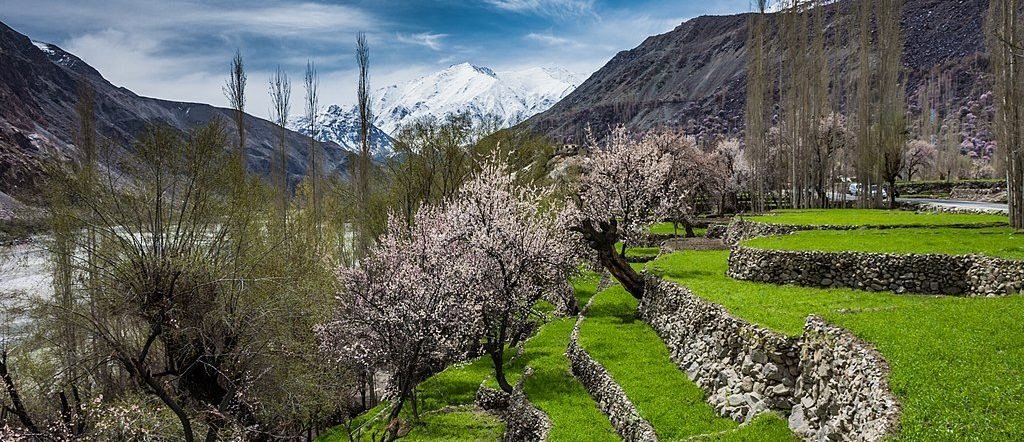
Spring in Skardu brings apricot blossom, green fields, and comfortable climbing temperatures. The fort path is clear, the crowds of high summer have not arrived, and the Indus runs high with meltwater — spectacular from the parapets.
July to August — peak season
Warm, dry, and fully accessible — but climb early in the morning to beat both the heat on the rock and the day-trippers. This is also the season for combining the fort with Deosai, the lakes, and Shigar in one trip.
September to October — the photographer’s season
Clear skies, golden poplars, harvest colours in the orchards, and crisp air: many Skardu regulars call autumn the finest season. The climb is at its most pleasant, and the low sun gives the fort rock a bronze glow.
November to April — winter closure in practice
Freezing winds and possible ice make the exposed climb unpleasant and potentially dangerous. Skardu itself in winter is starkly beautiful for the hardy, but save Kharphocho for the warmer months. Winter sports travelers can look at our Malam Jabba guide instead.
Final Thoughts
Kharphocho Fort is the rare historical site that asks for your legs as well as your imagination. Anyone can photograph it from the bazaar; the reward goes to those who climb — the 30-foot hall of tree trunks and stone, the cool rooms the old builders designed so cleverly, the locked mosque in the courtyard, and then the view that explains everything: a king’s eye view over the city, the rivers, and the mountains that made this rock worth fortifying five centuries ago.
If you are going to Skardu — and you should — put Kharphocho on the first morning of your itinerary. Climb it before the heat, stand where Ali Sher Khan Anchan’s world was commanded, and look down at the Indus beginning its long journey to the sea. Some forts are museums. This one is still a mountain.
FAQs
Where is Kharphocho Fort located?
Kharphocho Fort crowns a great rock in Skardu city, Gilgit-Baltistan, at the confluence of the Indus and Shigar rivers. The rock rises roughly 150 metres above the valley floor, and the fort is reached by a steep 30-minute trek from the town.
What does Kharphocho mean?
In the Balti language it means the “King of Forts” — from khar (fort) and a superlative sense of greatness. The name suits a citadel that was considered impregnable for centuries.
Who built Kharphocho Fort?
The fort dates to the 16th century. The historian Hashmatullah attributed it to Maqpoon Bukha, founder of the Skardu kingdom (c. 1490–1515), while Mughal historians credited his grandson Ali Sher Khan Anchan (c. 1560–1625), Baltistan’s greatest king.
What is the best time to visit Kharphocho Fort?
May to October, when the path is clear of ice and the weather suits climbing. September–October offers the finest light and colours; July–August is peak season, so climb early in the day.
How long does the Kharphocho Fort trek take?
About 30 minutes of steep climbing each way for a fit walker. Allow 2–3 hours total to explore the halls, the courtyard mosque exterior, and the panoramic viewpoints at a relaxed pace.
Is Kharphocho Fort safe to visit?
Yes, with normal mountain caution. The path is steep with loose rock and exposure, so wear good shoes, avoid rain and high wind, keep children close, and climb only in daylight. There are no railings — it is a genuine ruin.
Where can I stay near Kharphocho Fort?
In Skardu town, minutes from the trailhead: budget guesthouses and hostels, mid-range hotels, and upscale resorts by the lakes. Book ahead in June–August and October.
What should I combine with a Kharphocho Fort visit?
Shigar Fort, Shangrila and Upper Kachura lakes, Satpara Lake, the Skardu bazaar, and — in summer — a day trip to Deosai National Park. The fort itself takes half a day.