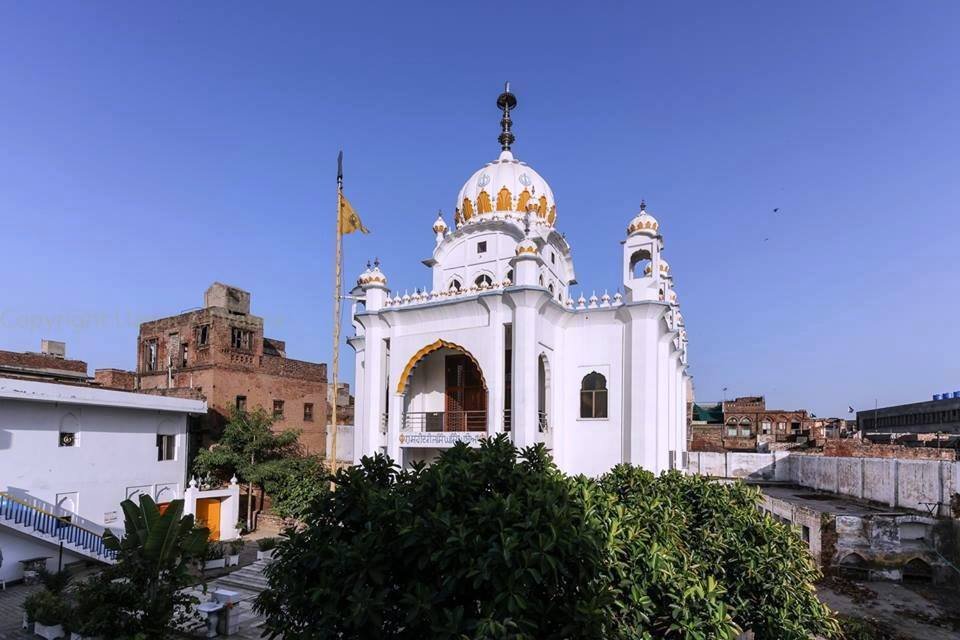
This Gurdwara Amir Shah Singh, Dera Ismail Khan travel guide takes you into the old lanes of a centuries-old Indus-side city, where a handsome three-storey gurdwara built in 1895 still stands near Chota Bazaar. Inside you will find the story of this once-thriving Sikh congregation, what the building looks like today, how to reach Dera Ismail Khan from Islamabad, Lahore and Karachi, the best time to visit, where to stay and eat, nearby places to explore, and practical tips for a respectful heritage trip.
Quick Facts
- Location: Jhanda Ram Street, near Chota Bazaar, old city of Dera Ismail Khan, Khyber Pakhtunkhwa, on the western bank of the Indus River
- Famous For: A three-storey gurdwara built in 1895; once the second-biggest centre of the Sikh sangat in Dera Ismail Khan town; its high gateway, pilgrims’ courtyard and saffron Nishan Sahib
- Nearest City: Dera Ismail Khan city itself — the gurdwara stands inside the old city; Mianwali is roughly 100 km northeast via the M-14 motorway
- Accessibility: Easy road access — the M-14 Islamabad–Dera Ismail Khan motorway has cut the drive from Islamabad to about 3.5 hours; the site is inside the old city on a narrow street, best approached on foot or by small vehicle from Chota Bazaar
- Known Landmarks: Chota Bazaar, the Indus riverfront, Bilot Sharif temple-fort ruins (D.I. Khan district), Government Higher Secondary School No. 1 (currently housed in the gurdwara building)
- Best For: Heritage travelers, Sikh-history enthusiasts, photographers of old-city architecture, offbeat explorers, slow-travel pilgrims
Why Visit Gurdwara Amir Shah Singh, Dera Ismail Khan
Some places deserve your visit not because they are grand and polished, but because they carry a story the maps forgot to tell you. Gurdwara Amir Shah Singh is exactly that kind of place. Tucked into Jhanda Ram Street in the old city of Dera Ismail Khan, this three-storey shrine was raised in 1895 and once served as the second-largest centre of the town’s Sikh sangat. Stand before its high main gate and you are standing where generations of pilgrims — yatrees — once arrived, rested in the courtyard rooms, and gathered for the reading of the sacred scriptures. In a Pakistan where the big, famous gurdwaras draw the crowds, this quiet survivor offers something rarer: an intimate, unhurried encounter with living heritage.
This is a destination for travelers who look past the obvious. Dera Ismail Khan itself is one of Pakistan’s most characterful old cities, set on the west bank of the mighty Indus, with bazaars that have traded for centuries and a strong Saraiki cultural soul. The gurdwara adds a deep Sikh chapter to that story. You will not find gift shops or guided tours here; you will find a stately old building, a saffron Nishan Sahib still flying by the stairs, and a neighborhood that remembers. If you are building a serious journey through Sikh heritage sites of Pakistan — Nankana Sahib, Panja Sahib, Kartarpur — then Gurdwara Amir Shah Singh gives you the southern, Indus-side chapter that most itineraries skip.
It is also the perfect excuse to discover Dera Ismail Khan itself. The city is famous for its warm hospitality, its legendary dish Sohbat, and a pace of life that lets you actually breathe. Photographers will love the old city’s crumbling havelis and crowded lanes; history lovers can combine the gurdwara with the ancient Bilot Sharif ruins in the district; and anyone who enjoys traveling beyond the tourist circuit will find the journey here — down the M-14 motorway through rugged Khyber Pakhtunkhwa countryside — an adventure in its own right. Come with respect, come curious, and the old city will open up to you.
Perhaps the most moving reason to visit is a simple one: buildings like this need visitors. The structure is strong but needs proper care and maintenance, and it currently houses a government school. Every respectful visitor, every photograph, every article written about Gurdwara Amir Shah Singh is a small vote for its preservation. Heritage tourism, done right, is how places like this survive. Your trip here is not just a journey through the past — it is a contribution to the future.
History of Gurdwara Amir Shah Singh, Dera Ismail Khan
Dera Ismail Khan’s history runs deep. The city was founded in the 15th century by Malik Sohrab Dodai, a Baloch chief, and named after his son Ismail Khan — “Dera” meaning a settlement or camp. Sitting on the western bank of the Indus, it grew into an important trading town on the routes between the Punjab plains and the mountain frontier, with Sikh, Hindu and Muslim traders all working side by side in its five great old markets. The city remained a district centre through the Mughal era, the Sikh period of the early 19th century, and British rule, and it is that layered past that you still feel in the old city’s streets today.
Within this cosmopolitan trading town, the Sikh sangat built several places of worship, and Gurdwara Amir Shah Singh was among the most important. The present three-storeyed building was constructed in 1895 AD, at a time when Dera Ismail Khan’s Sikh community was well established and prosperous. The shrine was considered the second biggest centre of the sangat in the town — a mark of its standing in the community’s religious life. Inside the high main gate, two rooms open onto a courtyard ringed with rooms for yatrees — the pilgrims who came from the surrounding countryside and beyond. The prakashasthan, where the Guru Granth Sahib was placed for reading, stood within these rooms.
One of the most touching details of the gurdwara’s history is its Nishan Sahib. The saffron flag that still flies near the stairs was placed in memory of Raj Indar Shah Singh, who died on 14th Magh, Samvat 1990 (in the Bikrami calendar) — a reminder that this building was, and in memory remains, a living community institution built around real people and real devotion. Heritage records note that the building is remarkably strong — a testament to late-19th-century construction — but that it requires proper care and maintenance if it is to survive another century.
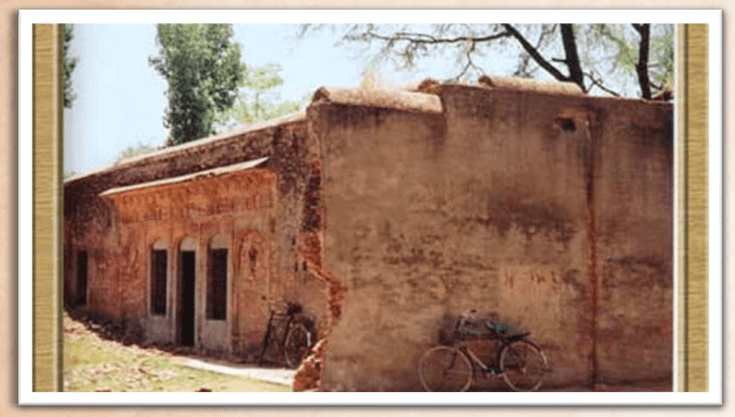
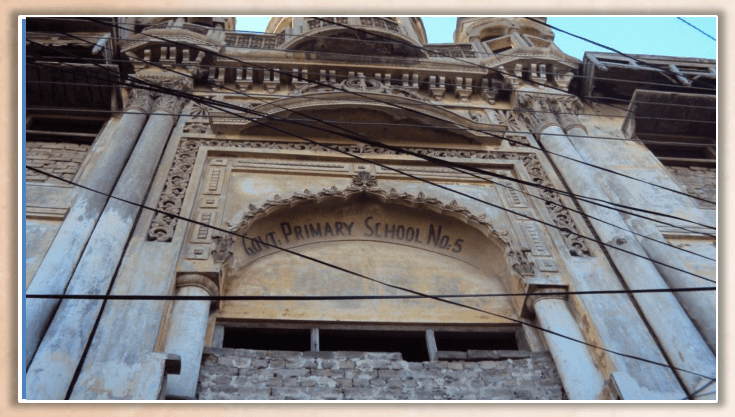
After the Partition of 1947, the Sikh congregation that had filled these rooms moved away, and like many minority religious buildings across the region, the gurdwara found a new purpose: it now houses Government Higher Secondary School No. 1. Schooling, in other words, continues in the halls where scripture was once read. Visitors today will find the building in use on school days, and the school office is effectively the way in. This living, working state — a shrine that has become a school — is part of what makes Gurdwara Amir Shah Singh such a poignant stop: it is history that has not been frozen in a museum but continues to serve the city, in a different voice.
Top Things to Do in Gurdwara Amir Shah Singh, Dera Ismail Khan
Study the 1895 architecture
Take time to read the building itself. The high main gate, the two entrance rooms, the courtyard with its ring of pilgrim rooms, the prakashasthan, and the stairwell where the saffron Nishan Sahib still flies — together they describe how a small-town gurdwara of the late 1800s functioned. Three storeys is ambitious for a neighborhood shrine, and the solidity of the construction is exactly what heritage records praise. Look at the proportions, the brickwork, and the way the courtyard organizes everything around it: this is classic subcontinental religious architecture, built for gathering.
Walk Jhanda Ram Street and Chota Bazaar
The gurdwara is inseparable from its neighborhood. Jhanda Ram Street and the nearby Chota Bazaar are old Dera Ismail Khan at its most authentic — narrow lanes, small shops, the smells of cooking and spices, and a market rhythm that has barely changed in a century. Go slowly, greet the shopkeepers, and let the old city show itself. This is also where you will find the tea shops and food stalls that make the visit complete.
Reflect at the Nishan Sahib memorial
Ask to see the stairwell area where the saffron Nishan Sahib flies in memory of Raj Indar Shah Singh. It is a small, quiet detail, but it personalizes the building: this was not an abstract institution but a community’s house of worship, raised and remembered by named people. A moment of silence here connects you directly to the sangat of 1895.
Photograph the old city
The lanes around the gurdwara are full of textures — weathered brick, arched doorways, old havelis, street life. Bring your camera in the morning or late afternoon when the light is kind. Always ask permission before photographing people, and keep in mind that the school inside the gurdwara means you should be discreet and respectful with photography around students.
Visit the Indus riverfront
Dera Ismail Khan sits on the west bank of the Indus, and the riverfront — especially at sunset — is one of the city’s great free experiences. After your gurdwara visit, head to the river for the evening light on the water, the boats, and the wide southern-Punjab/KP sky. It is a peaceful way to end the day.
Famous Places In and Around Gurdwara Amir Shah Singh, Dera Ismail Khan
- Bilot Sharif (Bilot Fort and Temples), D.I. Khan district — ancient Hindu temple-fort ruins a short drive from the city, one of the great heritage sites of southern Khyber Pakhtunkhwa
- Chota Bazaar and the old city markets — the historic trading bazaars of Dera Ismail Khan, once shared by Sikh, Hindu and Muslim merchants
- The Indus River at Dera Ismail Khan — riverfront views and sunset points along the city’s eastern edge
- Other Sikh-era relics of the old city — the old city holds several historic gurdwaras and shrines; local historians and heritage walkers can point you to them
- Gomal University area and Cantt parks — greener, quieter parts of the city for a relaxed evening walk
How to Reach Gurdwara Amir Shah Singh, Dera Ismail Khan
Reaching Dera Ismail Khan has become dramatically easier in recent years. The M-14 Islamabad–Dera Ismail Khan motorway — the Hakla–Yarik motorway, part of the western route of the China–Pakistan Economic Corridor — was inaugurated on 5 January 2022 and cut the journey from Islamabad from around seven hours to about three and a half. Once you reach Dera Ismail Khan city, the gurdwara is inside the old city on Jhanda Ram Street near Chota Bazaar; navigate to Chota Bazaar first, then continue on foot or in a small vehicle into the narrow lane.
- From Islamabad: About 285–293 km via the M-14 motorway (join at the Hakla interchange near Fateh Jang on the M-1). Drive time is roughly 3 to 3.5 hours. The motorway passes through Pindi Gheb, Jand, Tarap and Mianwali, crossing the Indus near Mianwali before reaching Yarik, just north of Dera Ismail Khan.
- From Lahore: Around 500 km, roughly 7 to 8 hours by road via the M-2 to Islamabad and then the M-14 — or via the GT Road network and the Mianwali route. This is a long day drive; break it in Islamabad or Mianwali.
- From Karachi: Around 900 km, roughly 12 to 14 hours by road via the Indus Highway (N-55) corridor through Sukkur and Multan, or via the motorway network. Consider splitting the trip with an overnight stop in Multan.
- Nearest airport: Dera Ismail Khan has its own airport (DSK), but scheduled commercial flights are not currently reliable. The practical air gateways are Islamabad International Airport and Multan International Airport — fly in, then drive. From Multan the drive is roughly 5 to 6 hours; from Islamabad about 3.5 hours on the M-14.
- Road conditions: The M-14 is a modern four-lane motorway in good condition. The old-city streets around the gurdwara are narrow and congested — park near Chota Bazaar and walk the last stretch.
- Transport options: Private car or rented car with driver is the most flexible option. Intercity buses and vans connect D.I. Khan with Islamabad, Multan, Lahore and Karachi from the city’s bus terminals; from the terminal, take a local taxi or rickshaw to Chota Bazaar. Tour operators in Islamabad and Lahore run occasional heritage tours to southern KP that can be customized.
Route Details
- From Islamabad, take the M-1 motorway west to the Hakla interchange near Fateh Jang.
- Join the M-14 (Hakla–Yarik motorway) heading southwest through Pindi Gheb, Jand, Tarap and Mianwali.
- Cross the Indus River near Mianwali and continue into Khyber Pakhtunkhwa.
- Exit at Yarik, just north of Dera Ismail Khan city, and follow signs into the city.
- Navigate to Chota Bazaar in the old city; from there, Jhanda Ram Street — home of Gurdwara Amir Shah Singh — is a short walk or rickshaw ride into the lanes.
Where to Stay in Gurdwara Amir Shah Singh, Dera Ismail Khan
Dera Ismail Khan is a mid-sized city with a decent range of places to stay, though it is not a luxury-hotel destination. Plan for comfort rather than five-star polish, and you will be pleasantly looked after — Derawali hospitality is genuine.
- Mid-range hotels: The city’s main hotels cluster along the main roads and near the city centre, offering air-conditioned rooms, attached baths, room service and usually in-house restaurants. These are the most reliable option for families and the best value for heritage travelers.
- Budget guesthouses and rest houses: Several budget guesthouses and government rest houses operate in and around the city. They are simple, clean enough, and very affordable — fine for a short heritage stop.
- What not to expect: There are no international-chain luxury hotels in Dera Ismail Khan. If you want high-end accommodation, stay in Islamabad or Multan and make D.I. Khan a day trip or an overnight stop — though the M-14 makes it an easy 3.5-hour drive from Islamabad, so a day trip is genuinely feasible.
- Booking tip: Book ahead during winter (the best season), when the city hosts visitors and rooms fill faster. Ask your hotel about secure parking if you are driving.
Where to Eat: Local Foods of Gurdwara Amir Shah Singh, Dera Ismail Khan
One of the great pleasures of coming to Dera Ismail Khan is the food — this is the heartland of Saraiki cuisine, and the old city’s eateries do it properly.
- Sohbat — the city’s signature dish and a must-try. Pieces of flatbread are soaked in a rich, slow-cooked meat curry (usually beef or mutton) until they drink up all the flavor, then eaten together. It is hearty, communal, and unlike anything else in Pakistan.
- Dodi and other Saraiki staples — ask in the old city for the day’s specials: slow-cooked dals, meat curries and fresh tandoori roti.
- Bazaar snacks — Chota Bazaar and the surrounding food streets serve samosas, pakoras, jalebi and milky doodh patti chai from morning to night.
- Seasonal fruit — the Indus-side orchards and farms around D.I. Khan supply fresh citrus, guava and dates in season; winter visitors get the best of it.
- Costs: Eating in Dera Ismail Khan is very budget-friendly. A full meal at a local eatery is easy on the wallet, and even a comfortable restaurant dinner for two stays modest. Carry cash — small bazaar shops rarely take cards.
Weather in Gurdwara Amir Shah Singh, Dera Ismail Khan
Dera Ismail Khan has a hot, dry climate with sharp seasonal swings — mild, pleasant winters and long, fierce summers. The sweet spot for heritage travel is winter, when the old city’s lanes are comfortable to walk all day and the light is beautiful.
| Season | Temperature Range | Conditions |
|---|---|---|
| Winter (Dec–Feb) | 4°C to 20°C | Mild and dry; cool mornings, pleasant sunny days. Best season for sightseeing. |
| Spring (Mar–Apr) | 15°C to 35°C | Warming up fast; early March still pleasant, late April already hot. |
| Summer (May–Sep) | 28°C to 41°C (peaks near 44°C in June) | Very hot and dry; sightseeing only early morning or evening. July–August bring some monsoon rain. |
| Autumn (Oct–Nov) | 14°C to 33°C | Cooling down; November turns genuinely pleasant and is a fine time to visit. |
Language and Culture of Gurdwara Amir Shah Singh, Dera Ismail Khan
The dominant language of Dera Ismail Khan is Saraiki, with Urdu widely understood and Pashto spoken by many residents as well — the city sits at the meeting point of Punjab, Khyber Pakhtunkhwa and Balochistan’s cultural worlds. You will be warmly received if you greet people in Urdu; a few Saraiki words will earn you big smiles. As in all of southern KP and the Saraiki belt, hospitality runs deep — don’t be surprised if a shopkeeper insists you sit for chai.
For visiting the gurdwara, observe the same respectful norms as at any Sikh shrine: cover your head (carry a scarf or handkerchief), remove your shoes before entering the inner rooms, dress modestly with shoulders and knees covered, and keep your voice low. Because the building currently houses a school, be especially considerate — visit outside school rush hours if possible, avoid photographing students, and check with the school office on arrival. In the old city generally, modest dress is appreciated, and asking permission before photographing people is simply good manners.
Shopping in Gurdwara Amir Shah Singh, Dera Ismail Khan
Chota Bazaar and the old city’s markets are the shopping experience here — not malls, but centuries-old trading lanes. This is where you come for the atmosphere as much as the goods.
- Dry fruits and local sweets — the bazaars stock almonds, pistachios, dates and traditional mithai; good, affordable gifts to take home.
- Everyday crafts and textiles — look for locally made khussas (traditional shoes), embroidered fabrics and household goods in the old bazaars.
- Spices and desi staples — D.I. Khan’s markets are strong on spices, dals and grains; buy small quantities as flavorful souvenirs.
- No malls on the itinerary: Dera Ismail Khan is a traditional bazaar city — there is no major shopping mall here, and that’s part of the charm. Bargain politely; it’s expected and enjoyed.
Travel Tips for Gurdwara Amir Shah Singh, Dera Ismail Khan
Packing Essentials
- A head covering (scarf or handkerchief) for the gurdwara, plus modest clothing with covered shoulders and knees.
- Comfortable walking shoes — the old city is best explored on foot over uneven lanes.
- Winter (Nov–Feb): a warm jacket for cool mornings and evenings; days are mild.
- Summer: sun protection, a water bottle, and light cotton clothes — and plan sightseeing for early morning or late afternoon.
- A power bank and your camera; old-city photography is a highlight.
Safety Tips
- Dera Ismail Khan is a settled, functioning city, but it sits in a sensitive region — check current travel advisories before your trip and register your travel plans with someone at home.
- Travel in daylight for intercity legs, keep valuables discreet, and use registered transport.
- Inside the old city, stay aware of your surroundings in crowded bazaars as you would anywhere.
- Respect the school inside the gurdwara: keep noise down, don’t photograph students, and follow the staff’s guidance.
Money & Connectivity
- Carry cash in Pakistani rupees — ATMs exist in the city centre, but small bazaar shops and eateries are cash-only.
- All major Pakistani mobile networks operate in Dera Ismail Khan; 4G coverage is generally available in the city. Download offline maps before heading into the old city’s lanes.
Best Time to Visit Gurdwara Amir Shah Singh, Dera Ismail Khan
Winter (November to February) — the best season
This is when Dera Ismail Khan shows its best face: daytime temperatures around 15–20°C, clear skies, and old-city lanes you can wander for hours. The gurdwara, the bazaars and the Indus riverfront are all at their most enjoyable. If you can choose one window, choose December or January.
Spring (March to April) — good, warming fast
Early March is still pleasant and the countryside is green. By late April the heat is building, so keep sightseeing to mornings and evenings.
Summer (May to September) — avoid if you can
With daytime highs of 38–41°C and peaks near 44°C in June, summer is punishing for heritage walks. If you must travel in summer, visit the gurdwara at opening hours in the morning and retreat indoors by midday.
Autumn (October to November) — the second window
October is still warm but October–November cools steadily, and November is genuinely pleasant — a fine shoulder season with fewer visitors.
Final Thoughts
Gurdwara Amir Shah Singh will not shout for your attention — and that is precisely its power. In an age of crowded heritage circuits, this 1895 three-storey shrine in Dera Ismail Khan’s old city offers the rarer gift of quiet authenticity: a high gate, a pilgrims’ courtyard, a saffron flag flying in memory of a named devotee, and a neighborhood that still remembers the sangat that built it. It is the kind of place you visit once and think about for years.
Come for the gurdwara, but give the city its due: walk Chota Bazaar, eat Sohbat, watch the sun go down over the Indus, and drive out to the Bilot Sharif ruins. Dera Ismail Khan rewards the traveler who slows down — and with the M-14 motorway now putting it just 3.5 hours from Islamabad, there has never been an easier time to add this Indus-side chapter of Sikh heritage to your journey. Pack a scarf, bring your curiosity, and go.
FAQs
Where is Gurdwara Amir Shah Singh located?
On Jhanda Ram Street near Chota Bazaar in the old city of Dera Ismail Khan, Khyber Pakhtunkhwa, on the western bank of the Indus River.
What is the best time to visit Gurdwara Amir Shah Singh, Dera Ismail Khan?
November to February. Winters are mild (4–20°C) and perfect for walking the old city; summers are extremely hot (up to 44°C) and best avoided.
How do I reach Dera Ismail Khan from Islamabad?
Take the M-14 Islamabad–Dera Ismail Khan motorway from the Hakla interchange — about 285–293 km, roughly 3 to 3.5 hours by car.
Is the gurdwara open to visitors?
The building currently houses Government Higher Secondary School No. 1. Visit on a school day and check in with the school office; be respectful, quiet, and avoid disrupting classes or photographing students.
Is Dera Ismail Khan safe for tourists?
It is a settled city, but the region is sensitive — check current travel advisories, travel in daylight, use registered transport, and keep someone informed of your plans.
Is this trip suitable for families?
Yes. The old city, bazaars and riverfront are family-friendly; just keep children close in crowded lanes and plan around the school hours at the gurdwara.
Where can I stay in Dera Ismail Khan?
Mid-range hotels in the city centre offer the most reliable comfort; budget guesthouses and rest houses are also available. There are no international-chain luxury hotels — for five-star stays, base yourself in Islamabad or Multan.
What local food should I try in Dera Ismail Khan?
Sohbat — the city’s famous dish of flatbread soaked in rich meat curry — plus Saraiki dals, bazaar snacks like samosas and jalebi, and seasonal Indus-side fruit.
Explore more heritage journeys on our Explore Pakistan page, and if you love old-city Sikh heritage, don’t miss our Ali Baig Gurdwara travel guide and Dera Baba Bhuman Shah travel guide. For a mountain escape after your heritage tour, see Malam Jabba.