Quick Facts
- Location: Hudiara (Hadiara) village, Lahore district, Punjab, Pakistan — on the Lahore–Ghawindi road (the old Lahore–Patti road)
- Altitude: Around 215 metres above sea level (the flat Lahore plain)
- Famous For: The overnight visit of Guru Hargobind, the sixth Sikh Guru, around 1620; the tallest building in the village, visible from a distance; a rich set of old frescoes inside
- Nearest City: Lahore, a short drive to the west
- Accessibility: Road access via village roads off the Lahore–Ghawindi road; best visited by car with a local guide; note that the site sits less than 4 km from the international border with India
- Known Landmarks: The gurdwara’s tall dome and frescoed walls; the village itself was once one of the largest Sikh-populated villages in the region
- Best For: Heritage travelers, Sikh pilgrims, history lovers, photographers, and anyone tracing the footsteps of the Sikh Gurus through Punjab
Why Visit Gurdwara Chhevin Patshahi, Hudiara
Some destinations earn a place on your itinerary because they are beautiful. Others earn it because they are moving. Gurdwara Chhevin Patshahi in Hudiara is the second kind — a quiet, weathered shrine in a small border village that carries nearly four hundred years of Sikh history in its walls. If you have ever wondered what it feels like to stand where a Guru once stood, this is one of those places.
The story is simple and powerful. Around 1620, Guru Hargobind — the sixth Sikh Guru, the Miri-Piri warrior-saint who wore two swords — came to Hudiara to bless its large Sikh sangat. He stayed overnight, and the village never forgot. Generations of devotees raised a shrine on the spot, and over time it became the tallest building in the village, its dome visible for miles across the flat green fields. Before Partition, a huge fair gathered here every Maghi. A hundred acres of land were attached to the gurdwara. This was not a minor village shrine; it was a center of community life.
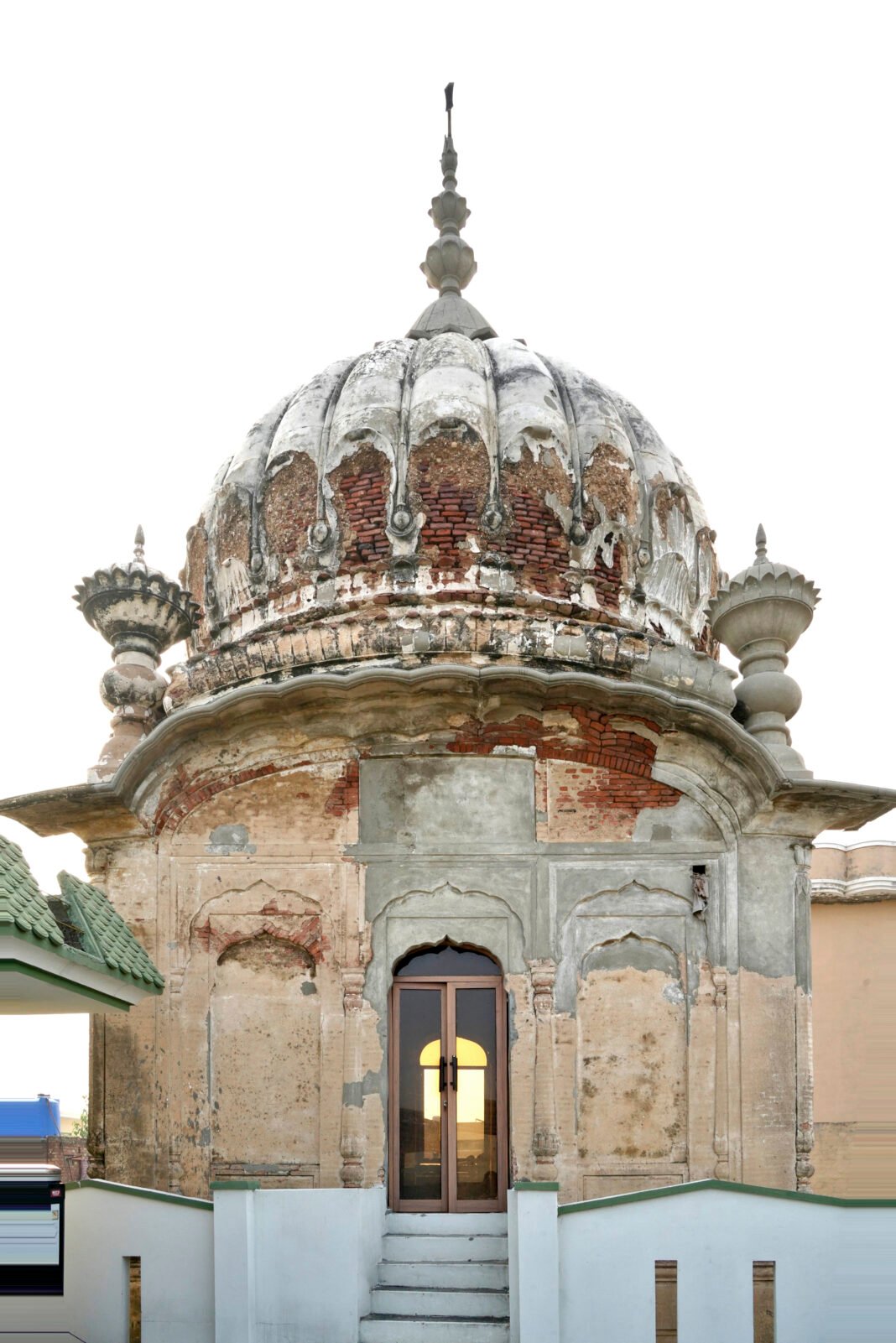
Today, the gurdwara is quiet. Like so many Sikh shrines left behind in 1947, it became a residence for migrant families, and there is no formal maintenance. But the building itself has survived beautifully — its architecture intact, its frescoes still there if faded. And it carries one more layer of story that few places can claim: during the 1965 war, soldiers of the Indian Army’s Sikh Regiment captured this very site, repaired the dome that shelling had damaged, and raised the Nishan Sahib flag on top. Imagine that — Sikh soldiers, in wartime, pausing to repair a gurdwara and hoist their sacred flag. If history could speak, this building would have a great deal to say.
This is a visit for the thoughtful traveler rather than the casual sightseer. Come to pay your respects, to see the frescoes, to understand what Partition meant for the religious landscape of Punjab — and to support, by your interest, the case for preserving these places. Pair it with the other Lahore-area Gurdwara Chhevin Patshahi shrines at Jhalian, Padhana, and Amar Sidhu, and you have a full day’s pilgrimage through one of the most historically dense pockets of Sikh heritage anywhere in Pakistan.
History of Gurdwara Chhevin Patshahi, Hudiara
Hudiara (also spelled Hadiara) was, before 1947, a very large Sikh-populated village divided into 14 pattis, or wards. In the 1911 Census of Imperial British Punjab, the village counted 1,571 Sikh Batth jats alone — a measure of how deeply Sikh the settlement was. It sat on the Lahore–Patti road (today’s Lahore–Ghawindi road), a traveled route that brought visitors, traders, and, in around 1620, a Guru.
Accounts preserved in historical surveys record that Guru Hargobind Sahib — “Miri Piri de Malik,” the master of both spiritual and temporal power — arrived in Hudiara in around 1620 with some Sikh soldiers, drawn by the affection of the local Sikh sangat. The Sikh zamindars and the Chaudhri of Patti Taju ke received the Guru with great devotion. The sangat built a Thara (a raised platform) at the site of his stay. Some two hundred years later, the sangat raised a tall, grand gurdwara on that spot, and 100 acres of land were donated to it as a jagir for its upkeep.
The village’s spiritual life drew other holy visitors too. Baba Bir Singh Ji of Dhillon Gagobua in Tarn Taran (1768–1844), a respected Sikh saint who was martyred during the Sikh era, came to Hadiara in 1838. Under the Sikh Empire, the gurdwara held its hundred-acre endowment, and before Partition it was managed by the Shiromani Gurdwara Parbandhak Committee, with daily prakash and Singh priests. Every Maghi — the festival falling in mid-January — a huge fair gathered at the shrine.
Partition changed everything. In 1947 the Sikh population left, the gurdwara was abandoned, and migrant families arriving from Amritsar settled in it. The building survived, beautiful but unmaintained, with no arrangement for its upkeep. Then came the 1965 Indo-Pakistani war. The village lies less than 4 km from the Radcliffe Line, and the gurdwara was caught in the fighting zone. Soldiers of the Indian Army’s Sikh Regiment captured the site; they repaired the dome, which shelling had damaged, and installed a Nishan Sahib flag at the top of the structure. The gurdwara still contains many frescoes, though they are in poor condition. The building has been documented and geo-tagged by Gurdwarapedia, and its coordinates are recorded as 31°26’40.9″N, 74°33’57.7″E — it is visible from Nushehra Dhala village across the border in India.
In recent years, attention has slowly returned to Lahore’s Guru Hargobind shrines: in July 2026, after nearly 79 years, the Gurdwara Chhevin Patshahi at Amar Sidhu on the Lahore–Kasur road was reopened to devotees following restoration. Hudiara’s gurdwara still waits for its own revival — which is part of why visiting, documenting, and writing about it matters.
Top Things to Do in Gurdwara Chhevin Patshahi, Hudiara
See the Tall Gurdwara Rising Over the Village
The first thing you will notice, long before you reach the shrine, is its height. The gurdwara is the tallest building in Hudiara, and on the flat Lahore plain it can be seen from a great distance — a pale dome and walls rising over the fields. As you approach down the village lanes, it grows in the frame, exactly as it must have appeared to travelers a century ago. Take your time with the exterior: this is the building the sangat raised, some two hundred years after the Guru’s visit, to honor the night he spent here.
Study the Frescoes
Inside the gurdwara are old fresco paintings, including courtly scenes with figurative work, in the style of 19th-century Sikh-era wall painting. They are in poor condition — weather, time, and neglect have taken their toll — but they are still there, and they are precious. Frescoes like these, in the Nanakshahi and Sikh-imperial tradition, survive in only a handful of Pakistan’s gurdwaras. Look closely, photograph respectfully, and remember that you are seeing art that has outlasted empires. Their fading state is itself an argument for why heritage documentation matters now.
Reflect at the Thara Site
Ask around in the village and find the spot where the sangat first built the Thara platform in memory of the Guru’s overnight stay — the humble beginning of everything here. Village elders may still point out the remembered layout of the old shrine complex and tell you how their grandparents spoke of the Maghi fairs. In villages like Hudiara, oral history lives in the lanes; a respectful conversation with an elder can be the most memorable part of your visit.
Photograph the Border Landscape
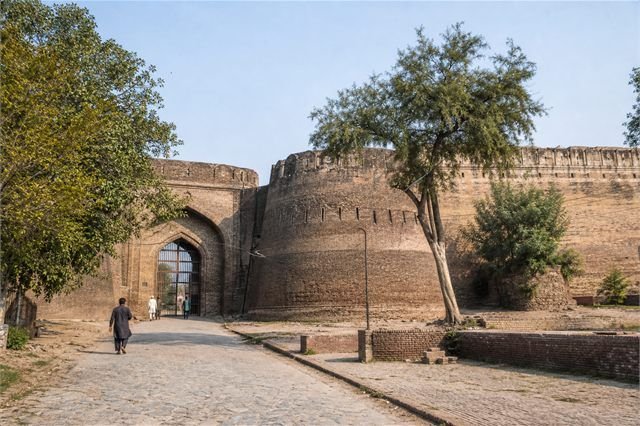
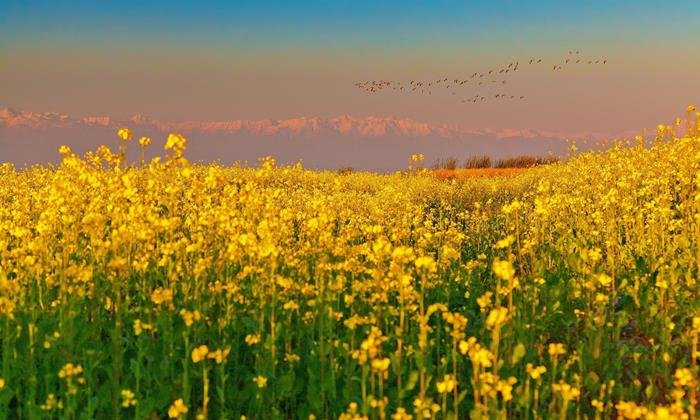
Hudiara sits less than 4 km from the Radcliffe Line, and the flat agricultural landscape — wheat, mustard, and rice fields by season — stretches toward the border. The gurdwara’s dome against this open sky makes for evocative photography, especially at dawn or late afternoon. Keep in mind you are near a sensitive border area: stay on public paths, don’t point cameras toward border installations, and travel with a local who knows the area.
Famous Places In and Around Gurdwara Chhevin Patshahi, Hudiara
- Gurdwara Chhevin Patshahi, Jhalian — the companion shrine about which tradition says Guru Hargobind came to Hudiara; twin villages Jhalian–Dhilwan, 5 km east of Burki.
- Gurdwara Chhevin Patshahi, Amar Sidhu — on the Lahore–Kasur road; reopened to devotees in July 2026 after 79 years, with its 1923-era dome and verandahs.
- Gurdwara Chhevin Patshahi, Padhana — in the Burki area, where the Guru conversed with the landlord Jalhan; rebuilt by village chief Sardar Attar Singh.
- Burki and the Wagah border region — the border-town landscape east of Lahore, part of the same historic corridor the Guru traveled.
- Lahore’s old city — Badshahi Mosque, Lahore Fort, and the Ali Baig Gurdwara travel guide area shrines, all within reach for a full heritage day.
How to Reach Gurdwara Chhevin Patshahi, Hudiara
Hudiara village lies east of Lahore on the Lahore–Ghawindi road (the old Lahore–Patti road), not far from the Burki side of the city. The most practical approach is by private car or hired van from Lahore, ideally with a driver who knows the village lanes — and given the proximity to the border, a local contact or guide is strongly recommended. The gurdwara is the tallest building in the village and is visible from a distance, so once you are in the village you simply follow the dome.
From Lahore: Drive east out of Lahore toward Burki and continue on the Lahore–Ghawindi road to Hudiara. The trip is a short one — well under an hour’s drive from central Lahore in normal traffic — though village roads at the end are narrow. From Islamabad: Take the M-2 motorway to Lahore (around 380 km, roughly 4 hours), then continue east as above; most travelers make this a day trip from a Lahore base. From Karachi: Fly to Allama Iqbal International Airport in Lahore (about 2 hours) and drive over, or take the long road/rail route north — nearly all visitors sensibly fly.
Nearest airport: Allama Iqbal International Airport, Lahore. Road conditions: The highway and main road to the village are paved; the final lanes inside the village are narrow and may be rough after rain. Winter mornings (December–January) can bring dense fog on the Lahore plain — plan daytime travel. Transport options: Private car or hired van is the realistic choice; public transport runs to the general area but not to the shrine’s door, and ride-hailing cars may be reluctant to go near the border zone without a confirmed return.
Route Details
A practical step-by-step route: (1) Start from Lahore city — the Gulberg/DHA side gives the quickest exit east. (2) Head for the Burki Road corridor, following signs toward Burki village on the eastern edge of Lahore. (3) Continue on the Lahore–Ghawindi road (the old Lahore–Patti road) toward Hudiara. (4) Enter the village and look for the gurdwara’s dome — the tallest building, unmistakable from anywhere in the settlement. (5) Park at the village edge and walk the final lanes on foot; greet locals, ask for the “gurdwara,” and remember the building is occupied as a residence, so view it from outside and be respectful. Allow half a day for the round trip, and combine it with Jhalian or Padhana for a fuller pilgrimage circuit.
Where to Stay in Gurdwara Chhevin Patshahi, Hudiara
There are no hotels in Hudiara village itself, and none are needed — everyone visits on a day trip from Lahore. The honest advice is simple: base yourself in Lahore, where the full range of accommodation exists, and drive out to the village for the morning or afternoon.
Luxury: Lahore’s top-tier hotels cluster around Gulberg, DHA, and the Cantonment — full-service properties with pools, restaurants, and tour desks that can arrange a driver for the border villages. Mid-range: Comfortable business hotels and serviced guesthouses are plentiful along Main Boulevard Gulberg, Ferozepur Road, and near the airport; these offer the best balance of comfort and value for heritage travelers. Budget/guesthouses: Clean, family-run guesthouses in areas like Johar Town, Model Town, and near Lahore’s railway station keep costs low and are fine for a short stay. Camping: Not appropriate here — this is a settled agricultural village near a sensitive border area; stay in Lahore and return the same day.
Book in advance if you are traveling during a Sikh pilgrimage season (such as around Baisakhi in April or the Guru Nanak birth anniversary in November), when Lahore’s hotels fill with yatris visiting Nankana Sahib and the city’s gurdwaras.
Where to Eat: Local Foods of Gurdwara Chhevin Patshahi, Hudiara
You will eat in Lahore, and that is no hardship — Lahore is one of the great food cities of South Asia. This is Lahori cuisine at its richest: slow-cooked paye (trotter stew) for breakfast, nihari simmered overnight, murgh channay with fresh kulcha naan, chargha (deep-fried spiced chicken), and for dessert the famous rabri falooda and kulfi. The old city’s food streets — around Fort Road and in Gawalmandi — are institutions: wander, graze, and eat where the crowds are thickest.
In the village itself, your experience will be simpler and, in its own way, more memorable. If you travel with a local guide or are hosted by a village family, expect a Punjabi village meal: saag with makki di roti in winter, daal with fresh tandoori roti, and lassi churned that morning. Punjabi village hospitality is generous — if tea is offered, accept it. Carry your own water and snacks for the drive, as there are no restaurants at the shrine. A meal in Lahore is generally budget-friendly to mid-range; village food, when shared, is about warmth rather than money.
Weather in Gurdwara Chhevin Patshahi, Hudiara
Hudiara sits on the Lahore plain, so its weather is classic Punjab plains weather: a short, foggy winter; a brief, lovely spring; a long, fierce summer; and a monsoon that breaks the heat but drenches everything. November to March is the comfortable window — cool, dry air, clear skies, and the wheat fields green around the village.
| Season | Temperature Range | Conditions |
|---|---|---|
| Winter (Dec–Feb) | Around 4–20°C | Cool days, cold nights, frequent morning fog; the most pleasant time to be out walking the village |
| Spring (Mar–Apr) | Around 15–35°C | Warming up fast; fields green then golden; Maghi and spring fairs season historically |
| Summer (May–Jun) | Around 30–45°C | Intensely hot and dry; avoid midday visits; dust storms possible |
| Monsoon (Jul–Sep) | Around 28–38°C | Humid with heavy rain spells; village lanes get muddy; lush green landscape |
| Autumn (Oct–Nov) | Around 15–32°C | Drying out, clear skies return; comfortable shoulder season |
Language and Culture of Gurdwara Chhevin Patshahi, Hudiara
Punjabi is the mother tongue here — the Lahori dialect, warm, direct, and musical. Urdu is universally understood and works fine for visitors; English is understood in Lahore city but less so in the village. The village today is Muslim-majority and Punjabi in culture: modest dress, warm greetings, and deep hospitality to guests.
As a visitor to a gurdwara site, a few courtesies matter. Cover your head before approaching the shrine (carry a scarf or handkerchief — men and women both), remove your shoes if you step onto any raised platform or into a prayer space, and dress modestly. The building is currently a residence, so you will almost certainly be viewing from outside; do not enter private living spaces, and ask permission before photographing people. A small courtesy — greeting elders with “Assalam-o-Alaikum” — goes a long way. If you are Sikh and wish to offer a quiet prayer or ardas at the site, villagers are generally respectful of pilgrims; a local guide can help arrange this sensitively.
Shopping in Gurdwara Chhevin Patshahi, Hudiara
There is no shopping at the shrine — Hudiara is a farming village, and that is part of its charm. Do your souvenir hunting in Lahore on the way back. For authentic Punjabi crafts, head to Ichhra and Liberty markets for khussa shoes, lawn and khaddar fabric, and embroidered shawls; Anarkali — one of South Asia’s oldest bazaars — for bangles, traditional jewelry, and street snacks; and the old city’s Akbari Mandi area for spices and dry fruits. Phulkari embroidery pieces and Punjabi jutti make lovely, packable souvenirs. No malls are needed for this trip — the bazaars are the experience.
Local Events and Festivals
The one festival historically tied to this gurdwara is Maghi (mid-January). Before Partition, a huge fair gathered at the shrine every Maghi, drawing the Sikh sangat of Hudiara and surrounding villages — a day of congregation, langar, and celebration at the Guru’s remembered resting place. The fair ended with Partition and the dispersal of the Sikh population, but its memory survives in village oral history and in the records of the shrine’s past.
Today, visitors sometimes time trips to the Lahore region around the wider Sikh calendar — Baisakhi in April and the Guru Nanak birth anniversary in November — when the yatras to Nankana Sahib and Lahore’s gurdwaras fill the region with pilgrims. If you visit during those seasons, Hudiara makes a meaningful add-on to a pilgrimage itinerary. There is no current fair at the shrine itself, so come for the history rather than an event.
Travel Tips for Gurdwara Chhevin Patshahi, Hudiara
Packing Essentials
Carry a head covering (a light scarf or bandana) for the gurdwara visit, comfortable walking shoes for village lanes, and sun protection — the plain offers no shade at midday. In winter (December–January), bring a warm jacket for cold mornings and fog; in summer, light cotton, a hat, and plenty of water are essential. A camera is worthwhile for the frescoes and the dome, but bring modest expectations about access: this is a residence now, so exteriors and details are your subjects.
Safety Tips
Hudiara is a peaceful farming village, and visitors are generally welcomed — but it sits less than 4 km from the international border, which calls for common sense. Travel with a local guide or driver who knows the area, stay on public paths and village lanes, and avoid photographing anything border-related (posts, patrols, fencing). Do not wander into fields near the border line. Keep your CNIC or passport with you, as border-area checks are routine. Women travelers will be most comfortable visiting with a companion or in a small group, as with most rural Punjab travel.
Money & Connectivity
Bring cash from Lahore — there are no ATMs in the village and small shops may not take cards. Mobile signals from all major networks (Jazz, Telenor, Zong, Ufone) generally reach the area since it is close to Lahore, but data can be patchy inside old thick-walled buildings. Download offline maps before you leave the city, and share your live location with someone in Lahore while you are near the border zone.
Best Time to Visit Gurdwara Chhevin Patshahi, Hudiara
Winter (November to March) — The Best Window
This is when to come. Cool, dry air, clear blue skies, and the wheat fields at their greenest make the village walk a pleasure. December and January bring the famous Punjab fog — atmospheric in the morning, but plan your drive for after it lifts, around mid-morning. If you visit in mid-January, you will be there in the season of the historic Maghi fair, which adds a quiet poignancy to the visit.
Spring (March to April) — Lovely but Brief
March is beautiful — mild temperatures and golden fields — but the heat builds fast. By April, midday is already uncomfortable. Early spring mornings are fine for photography, and Baisakhi season brings pilgrim energy to the wider Lahore region.
Summer and Monsoon (May to September) — Avoid if You Can
The Lahore plain in summer is brutally hot, and the monsoon turns village lanes to mud. If you must travel in these months, go at dawn, carry water, and keep the visit short. The landscape is at its lushest after the rains, which is the one consolation.
Autumn (October to November) — A Good Shoulder Season
October brings relief: the rains end, skies clear, and temperatures settle into a comfortable range. Late October and November are nearly as good as winter for a visit, with fewer fog delays.
Final Thoughts
Gurdwara Chhevin Patshahi, Hudiara is not a polished tourist attraction, and it would be dishonest to present it as one. It is a weathered shrine in a border village, occupied as a home, its frescoes fading, its fairs a memory. But that is precisely why it deserves your visit. Places like this are where history actually lives — not in museums, but in buildings that survived Partition, a war, and seventy-five years of neglect, and still stand.
Come with respect, come with a guide, and come with your eyes open. Stand before the dome the sangat raised two centuries ago, remember the Guru who spent a night here four centuries ago, and the soldiers who repaired it in 1965. Then go home and tell someone about it. For shrines like Hudiara, being remembered is the first step toward being preserved. Explore more of Pakistan’s living heritage through our Explore Pakistan series — from the peaks of Malam Jabba to the valleys of Hunza.
FAQs
Where is Gurdwara Chhevin Patshahi, Hudiara?
It is in Hudiara (Hadiara) village in Lahore district, Punjab, on the Lahore–Ghawindi road east of Lahore — less than 4 km from the India-Pakistan border.
Which Guru is associated with this gurdwara?
Guru Hargobind, the sixth Sikh Guru, who is believed to have visited Hudiara and stayed overnight around 1620.
What is the best time to visit?
November to March, when the weather on the Lahore plain is cool and dry. Mid-January is the season of the historic Maghi fair once held here.
How do I reach Hudiara from Lahore?
Drive east from Lahore toward Burki and continue on the Lahore–Ghawindi road to the village; the gurdwara’s dome is the tallest building and visible from afar. A private car with a local driver is the practical option.
Is the gurdwara open to visitors?
The building is currently occupied as a residence, so there is no formal visitor arrangement; view it respectfully from outside and do not enter private living spaces.
Is it safe to visit a village so close to the border?
Hudiara is a peaceful farming village. Go with a local guide, stay on public paths, keep ID with you, and avoid photographing border installations.
Can families visit?
Yes — it is a calm, short day trip from Lahore suitable for families, though very young children may find the history-heavy visit less engaging than a picnic spot.
What else can I see nearby?
The companion Chhevin Patshahi shrines at Jhalian, Padhana, and Amar Sidhu (reopened in 2026) make a natural circuit, and Lahore’s old city is close enough for the same day.