Quick Facts
- Location: Northern edge of Rohtas Fort, near Jhelum, Punjab — just outside the fort’s Kabuli Gate on the bank of the River Ghan, close to the Talaqi Gate.
- Altitude: Around 819 metres (2,687 ft) above sea level — the hill-top level of the Tilla Jogian range on which Rohtas Fort stands.
- Famous For: The sacred spring Guru Nanak is believed to have struck from the rock with his cane; a beautiful 1834 Sikh-era building; reopened to pilgrims in November 2019 after being closed since 1947.
- Nearest City: Dina (about 6–8 km) and Jhelum (about 16–18 km); Islamabad is roughly 100 km away.
- Accessibility: Paved road from Dina on the Grand Trunk Road up to the fort; the gurdwara is reached from inside the fort, on foot.
- Known Landmarks: Rohtas Fort (UNESCO World Heritage Site, 1997), the River Ghan, the gurdwara’s baoli (stepwell).
- Best For: History lovers, Sikh heritage pilgrims, photographers, families on a day trip from Islamabad or Jhelum, and anyone who loves combining a spiritual site with a mighty fortress.
Why Visit Gurdwara Chowa Sahib, Rohtas
Some places you visit for the scenery. Others you visit because a story has been flowing through them for five hundred years — literally. At Gurdwara Chowa Sahib, a spring of sweet water bubbles out of the hillside below the great walls of Rohtas Fort, and the story attached to it is one of the most beloved in Sikh tradition: Guru Nanak, the founder of Sikhism, struck the earth with his walking cane here during one of his long journeys, and water appeared where there had been none.
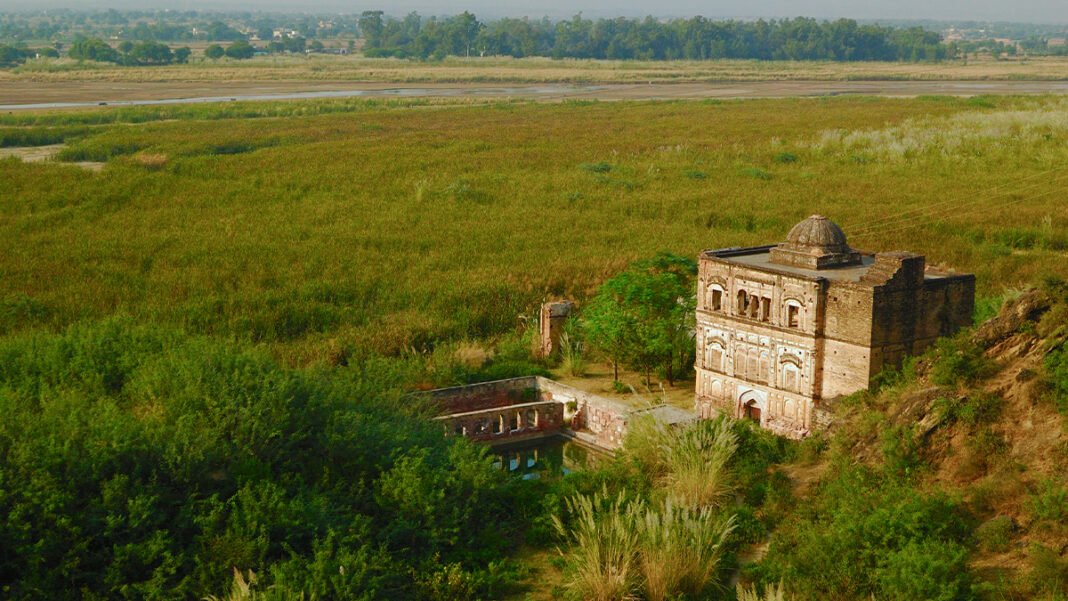
What makes this destination genuinely special is the setting. The gurdwara sits at the northern edge of Rohtas Fort, Sher Shah Suri’s colossal 16th-century fortress — a UNESCO World Heritage Site that sprawls across 70 hectares of hilltop. On one side of the shrine runs the River Ghan, on the other rise the fort’s bastions, and all around are trees and scrub of the Potohar hills. It is one of those rare places where sacred history and military history stand side by side, and you can walk from one to the other in minutes.
This is also a pilgrimage with a happy recent chapter. Closed and neglected since 1947, the gurdwara was restored by Pakistan’s Evacuee Trust Property Board and reopened to Sikh devotees — including visitors from India and around the world — in November 2019, seventy-two years after Partition. Restoration work has continued since, with an American Sikh community organisation, Ranjit Nagara, taking up rehabilitation of the shrine in 2020. Visiting now means seeing a heritage site coming back to life, and your presence is part of that revival.
And the practical side is easy to love: this is a perfect day trip. The gurdwara pairs naturally with a walk through Rohtas Fort, so you get a fortress, a shrine, a spring, and the Potohar countryside in a single outing from Islamabad, Jhelum, or Gujranwala. If you are the kind of traveller who collects places with real stories — not just pretty views — Chowa Sahib belongs on your list.
History of Gurdwara Chowa Sahib, Rohtas
The story of Chowa Sahib begins with Guru Nanak’s fourth udasi — his long spiritual journey. Sikh tradition holds that Guru Nanak and his companion Bhai Mardana were travelling through this region in the hot summer, having just spent forty days at the Tilla Jogian temples nearby. When Mardana, parched by the heat, lamented that water was nowhere to be found in this rocky country, Guru Nanak struck the earth with his cane and moved a stone — and a natural spring revealed itself. The word chowa means a spring or fountain of water, and the gurdwara took its name from it: the Gurdwara of the Exalted Spring.
The spring’s fame travelled fast. Sikh lore records that when Sher Shah Suri built Rohtas Fort in the 1540s, his engineers tried three times to shift the spring up the hill to supply the new fortress with water — and failed each time. The spring, the story goes, refused to move. Even today, the residents living inside the fort use water from this spring, five centuries on.
The first commemorative structure at the site was built by Charat Singh, the grandfather of Maharaja Ranjit Singh, who installed a sarovar (sacred pool) and set aside an area for the recitation of the Guru Granth Sahib. The handsome building that stands today dates from 1834 and was commissioned by Maharaja Ranjit Singh himself. His general Gurmukh Singh Lamba — the commander who captured Rohtas Fort from the local Gakhar chief Raja Noor Khan in 1825 — played an important role in maintaining the shrine. The Maharaja endowed the gurdwara with 27 ghumaon of land and an annual grant of Rs 260, and Sikh history records that he prized the spring’s water so highly that it was specially transported to Lahore for him.
After the Partition of 1947, the gurdwara fell silent and into neglect as the Sikh community of the area migrated. For over seven decades it stood closed. That changed in November 2019, when the Evacuee Trust Property Board restored and reopened it in a colourful ceremony of ardas (prayer) and kirtan (devotional songs), in the run-up to the 550th birth anniversary of Guru Nanak. The doors were opened to Sikh devotees from Pakistan, India, and every corner of the world — a new era for one of Punjab’s oldest sacred springs.
Top Things to Do in Gurdwara Chowa Sahib, Rohtas
See the sacred spring and baoli
The heart of your visit is the spring itself and the gurdwara’s baoli — the traditional stepwell where the water collects. This is the spot Sikh tradition ties to Guru Nanak’s cane. Take a quiet moment here; pilgrims consider the water holy, and many carry a little of it away with them. The sound of the spring, the old stonework, and the fort looming above make this one of the most atmospheric corners of Rohtas.
Explore the 1834 gurdwara building
The shrine building is a fine example of early-19th-century Sikh architecture, commissioned in Maharaja Ranjit Singh’s reign. Walk around it slowly — note the domes, the arched openings, and the way the structure sits between the River Ghan on one side and the fort walls on the other, wrapped in trees. Photography is welcome from outside; if the interior is open, remember to cover your head, remove your shoes, and dress modestly, as at any gurdwara.
Walk the walls of Rohtas Fort
You cannot come this far and skip the fort. Rohtas was built by Sher Shah Suri in the 1540s to guard against the return of the Mughal emperor Humayun and to subdue the local Gakhar tribes — and it is one of the finest fortresses in South Asia, a UNESCO World Heritage Site since 1997. Its twelve gates, including the monumental Sohail Gate and the Kabuli Gate near the gurdwara, its step-wells, and its ramparts running along the gorge are a full day’s exploration on their own. Since the gurdwara is reached from inside the fort, the two visits flow naturally into one.
Picnic by the River Ghan
The gurdwara stands on the bank of the Ghan river (Ghan Nadi), and the riverside, shaded by large old trees, is a lovely spot for a family picnic after the fort walk. Local families from Dina and Jhelum do exactly this on weekends. Carry your food from Dina — there are no restaurants at the shrine — and carry your litter back out.
Famous Places In and Around Gurdwara Chowa Sahib, Rohtas
- Rohtas Fort — the 70-hectare UNESCO fortress itself, with its gates, baolis, and the living village inside its walls; the gurdwara is part of the fort experience.
- Tilla Jogian — the famous hilltop temple complex where Guru Nanak and Bhai Mardana spent forty days before coming to Chowa Sahib; a major historic and scenic spot in the same range.
- Khewra Salt Mines — the world’s second-largest salt mine, an easy extension for a two-day trip in the Jhelum region.
- Mangla Dam — one of Pakistan’s great reservoirs, set in attractive countryside not far to the east.
- Jhelum city — the old cantonment town on the Jhelum river, with its colonial-era architecture and lively bazaars.
How to Reach Gurdwara Chowa Sahib, Rohtas
Getting here is straightforward: the shrine sits just off the Grand Trunk Road, and the last stretch is a short paved road from the town of Dina up to Rohtas Fort. Once inside the fort, the gurdwara is at the northern edge — follow the signs (or ask any local) for Chowa Sahib near the Talaqi/Kabuli Gate area.
- From Islamabad: About 100 km via the Grand Trunk Road through Rawat and Dina — roughly a 2 to 2.5-hour drive.
- From Lahore: About 200–210 km via the Grand Trunk Road or the M-2 motorway (exit near Kallar Kahar or Lillah and join the GT Road) — roughly 3.5 to 4 hours.
- From Karachi: Around 1,400 km — this is a flight-first journey. Fly to Islamabad, then drive the 100 km to Rohtas.
The nearest airport is Islamabad International Airport (about 100–110 km); Lahore’s airport is about 210 km away. The nearest railway station is at Dina on the Lahore–Peshawar line — from Dina station, a taxi or local wagon covers the 6–8 km to the fort. Roads are good year-round, though the last stretch into the fort is narrower; in the monsoon (July–September), expect muddy patches and a swollen River Ghan. Private car is the most comfortable option; Daewoo and local buses run along the GT Road to Dina, and tour vans from Islamabad and Jhelum frequently include Rohtas in day-trip itineraries.
Route Details
- Step 1: From Islamabad, take the Grand Trunk Road (N-5) east toward Jhelum. Pass Rawat and Sohawa; stay on the N-5.
- Step 2: Reach Dina (well-signposted on the GT Road, about 90 km from Islamabad). Turn west onto the small paved road marked for Rohtas Fort (Qila Rohtas).
- Step 3: Drive about 6–7 km up to the fort’s entrance area and park near the main gate.
- Step 4: Enter the fort on foot and head toward the northern edge near the Talaqi Gate/Kabuli Gate, down toward the River Ghan — the gurdwara stands there, reached from inside the fort.
- By train: Take any Lahore–Peshawar line train to Dina station, then a 15-minute taxi or wagon ride to the fort.
Where to Stay in Gurdwara Chowa Sahib, Rohtas
There are no hotels at the gurdwara or inside the fort — and honestly, you don’t need one. This is a day-trip destination, and the sensible bases are Dina, Jhelum, or even Islamabad.
- Budget guesthouses: Small, simple guesthouses and rest houses cluster around Dina and along the GT Road near Jhelum — clean, basic rooms at budget-friendly rates, ideal for an overnight halt.
- Mid-range hotels: Jhelum city has several mid-range hotels with comfortable rooms, in-house dining, and parking — a good choice if you are combining Rohtas with Khewra or Mangla Dam over two days.
- Full-service options: Islamabad and Rawalpindi, about two hours away, offer the full range from business hotels to luxury properties — many visitors simply day-trip to Rohtas and sleep in the capital.
Book ahead on weekends and public holidays, when domestic tourists flock to the fort. There is no camping ground at the shrine; if you want a night under the stars, arrange it with a local guide in the wider Potohar hills rather than inside the heritage zone.
Where to Eat: Local Foods of Gurdwara Chowa Sahib, Rohtas
Food here means Punjabi country cooking, and the towns of Dina and Jhelum do it well. Carry snacks and water for the fort itself — once you are up at the gurdwara, there are no food stalls — and eat properly in town before or after.
- Desi breakfast: Halwa puri, chanay, and lassi at Dina’s bazaar dhabas — a proper Punjabi start before the fort walk.
- Village classics: Sarson ka saag with makki di roti in winter, dal makhani, and desi-ghee parathas — the Potohar belt’s comfort food.
- Barbecue and karahi: Jhelum’s restaurants serve chicken karahi, seekh kebabs, and tandoori items at budget-friendly prices.
- Sweets: Jhelum’s mithai shops are worth a stop on the way back — barfi and gulab jamun travel well.
As a rule of thumb, dhaba meals in Dina and Jhelum are easy on the pocket, while restaurant dinners in Jhelum cost a little more but are still modest by big-city standards. Carry drinking water; the spring water is sacred to pilgrims, not a substitute for bottled water for casual drinking.
Weather in Gurdwara Chowa Sahib, Rohtas
The shrine sits in the Jhelum hills on the edge of the Potohar plateau, so expect classic Punjab weather: fierce summers, a real monsoon, and mild, pleasant winters. May and June are very hot in these hills, and the River Ghan swells during the monsoon rains — plan your fort walk accordingly.
| Season | Temperature Range | Conditions |
|---|---|---|
| Winter (Dec–Feb) | 4–20°C | Cool, dry, and sunny; crisp mornings — excellent for fort walks |
| Spring (Mar–Apr) | 18–32°C | Warming up, green countryside; one of the loveliest times to visit |
| Summer (May–Jun) | 32–45°C | Very hot; visit the fort early morning or late afternoon only |
| Autumn (Oct–Nov) | 20–32°C | Pleasant and clear; the other peak season for visitors |
| Monsoon (Jul–Sep) | 30–38°C | Humid with heavy rain spells; Ghan river swells, paths get muddy |
Language and Culture of Gurdwara Chowa Sahib, Rohtas
The language of the area is Punjabi, with the Potohari dialect common in the villages around the fort; Urdu is widely understood, and younger people often speak some English. The villages inside Rohtas Fort have been continuously inhabited since the Suri era, and their residents are accustomed to visitors — a polite greeting and a little curiosity about the fort’s history go a long way.
As a gurdwara, Chowa Sahib asks the same respectful etiquette observed at Sikh shrines everywhere: cover your head (carry a scarf or handkerchief), remove your shoes before entering the shrine area, dress modestly, and avoid smoking or alcohol anywhere near the premises. Photography of the building’s exterior is generally fine, but ask before photographing people at prayer. Sikh pilgrims from India visit regularly, and local Muslims and Sikhs alike hold the spring in reverence — it is a genuinely shared sacred place.
Shopping in Gurdwara Chowa Sahib, Rohtas
This is not a shopping destination, and you should not come expecting handicraft markets — there are none at the fort. What you will find are the lively bazaars of Dina and Jhelum on the way: everyday Punjabi bazaar goods, fresh produce, traditional sweets, and basic souvenirs. Jhelum’s main bazaar is good for brass and steel household items and local textiles at honest prices. If you are passing through on a wider Punjab trip, save serious souvenir shopping for Lahore’s markets and keep Rohtas for history and the spring.
Local Events and Festivals
The gurdwara’s own calendar centres on a traditional fair held on the 15th of Kattak Suddi (the bright fortnight of the Sikh month of Kattak, roughly October–November) — a gathering that long predates Partition and draws devotees to the shrine. Sikh pilgrims also visit in large numbers around Vaisakhi (April) and Guru Nanak’s birth anniversary in November, when the reopened shrine sees its liveliest atmosphere with prayers and kirtan. If you prefer quiet contemplation, choose an ordinary weekday outside these occasions.
Travel Tips for Gurdwara Chowa Sahib, Rohtas
Packing Essentials
Comfortable walking shoes with grip (the fort’s stone paths are uneven), a headscarf for the gurdwara, sun protection and a hat for summer visits, a light jacket for winter mornings, drinking water, and snacks — there is nothing to buy once you are up at the fort. A camera is a must; the gurdwara against the fort walls is one of Punjab’s most photogenic frames.
Safety Tips
Rohtas is a safe, well-visited heritage site. The main risks are the heat in summer and slippery stones in the monsoon — start early, carry water, and supervise children near the baoli steps and the riverbank. The fort is large; stick to the main paths and keep your bearings, or hire one of the local guides who wait near the entrance.
Money & Connectivity
Bring cash from Jhelum or Dina — there are no ATMs at the fort, and small vendors are cash-only. Mobile signals from all major networks generally work around the fort, though coverage can dip inside the thick-walled sections. Fuel up before leaving the GT Road; there are no petrol stations on the fort road.
Best Time to Visit Gurdwara Chowa Sahib, Rohtas
October to April — the prime season
This is when the Jhelum hills are at their best: cool, clear days made for walking the fort’s ramparts and sitting quietly by the spring. The Kattak fair (Oct–Nov) and Guru Nanak’s birth anniversary (Nov) add a festive layer if you want it.
March to April — spring at its greenest
The Potohar countryside is green after winter rains, temperatures are comfortable, and Vaisakhi in April brings Sikh pilgrims and a joyful atmosphere to the shrine.
May to June — hot, visit with care
Summer heat is intense; if you must come now, arrive at dawn, finish the fort walk by late morning, and rest through the midday hours. The spring story — born of a traveller’s thirst in summer heat — feels oddly appropriate.
July to September — monsoon
Heavy rain spells make the fort paths slippery and the Ghan river swell. The landscape turns dramatically green, which photographers love, but check the forecast and wear proper footwear.
Final Thoughts
Gurdwara Chowa Sahib is that rare destination that rewards every kind of traveller: the pilgrim finds a spring blessed by Guru Nanak himself, the history buff gets a 1834 shrine wrapped inside a 16th-century UNESCO fortress, and the casual day-tripper gets one of Punjab’s great walks with a riverside picnic at the end. Few places in Pakistan pack this much story into a single hillside.
Come between October and April, give the fort a full morning, sit a while by the spring, and let the place tell you its five-hundred-year-old story. For more ideas on where to go next, browse our Explore Pakistan collection — from the mountains of Malam Jabba to the Sikh heritage trail of Ali Baig Gurdwara, Punjab’s sacred geography is waiting.
FAQs
Where is Gurdwara Chowa Sahib located?
At the northern edge of Rohtas Fort in Punjab’s Jhelum district, near the fort’s Talaqi Gate and just outside the Kabuli Gate on the bank of the River Ghan — about 6–8 km from Dina and 16–18 km from Jhelum city.
What is the best time to visit Gurdwara Chowa Sahib?
October to April, when the weather is cool and dry — ideal for walking the fort and visiting the shrine. March–April brings green spring landscapes; May–June is very hot and best avoided midday.
How do I reach Gurdwara Chowa Sahib from Islamabad?
Drive about 100 km east on the Grand Trunk Road to Dina, then take the paved fort road 6–7 km up to Rohtas Fort (roughly 2–2.5 hours total). The gurdwara is inside the fort at its northern edge — on foot from the parking area.
Is Gurdwara Chowa Sahib open to visitors now?
Yes. After being closed since 1947, it was restored and reopened by the Evacuee Trust Property Board in November 2019, and restoration has continued since. It is open to Sikh devotees and all visitors, including pilgrims from India.
What is the story of the spring at Chowa Sahib?
Sikh tradition holds that Guru Nanak, travelling with Bhai Mardana during his fourth udasi after forty days at Tilla Jogian, struck the earth with his cane to quench Mardana’s thirst — revealing a natural spring. Sher Shah Suri’s engineers later tried three times, and failed, to shift the spring up the hill for the fort.
Is Gurdwara Chowa Sahib suitable for families?
Very. The combination of the shrine, the spring, the riverside, and the great fort makes an excellent family day trip. Supervise children near the stepwell and riverbank, carry water and snacks, and wear good walking shoes.
Where can I stay near Gurdwara Chowa Sahib?
There are no hotels at the fort. Stay in budget guesthouses in Dina, mid-range hotels in Jhelum city, or day-trip from Islamabad/Rawalpindi’s full range of hotels about two hours away.
What local food should I try around Rohtas?
Punjabi country fare in Dina and Jhelum: halwa puri and lassi for breakfast, sarson ka saag with makki di roti in winter, dal makhani, chicken karahi, and Jhelum’s mithai shops for sweets on the way home.