Quick Facts
- Location: Chowmala Mohalla, inside Bhati Gate, Lahore’s Walled City, Punjab.
- Famous For: The house of Bhai Jivan where Guru Hargobind (the sixth Sikh Guru) stayed and held congregations; Bhai Bidhi Chand’s stay during the famous horse-recovery episode.
- Nearest City: Lahore itself — the site sits inside the old Walled City.
- Accessibility: On foot through the narrow lanes of the Walled City from Bhati Gate; rickshaws and the Orange Line metro reach nearby stations.
- Known Landmarks: Bhati Gate, the Oonchi Mosque, and the still-intact name board marking the gurdwara’s site.
- Status: The gurdwara building no longer stands — three-storey houses now cover the site — so this is a heritage walk, not a conventional shrine visit.
- Best For: History lovers, Sikh heritage travellers, Walled City explorers, photographers, and anyone tracing the Sikh story of Lahore.
Why Visit Gurdwara Chowmala Sahib (site), Bhati Gate
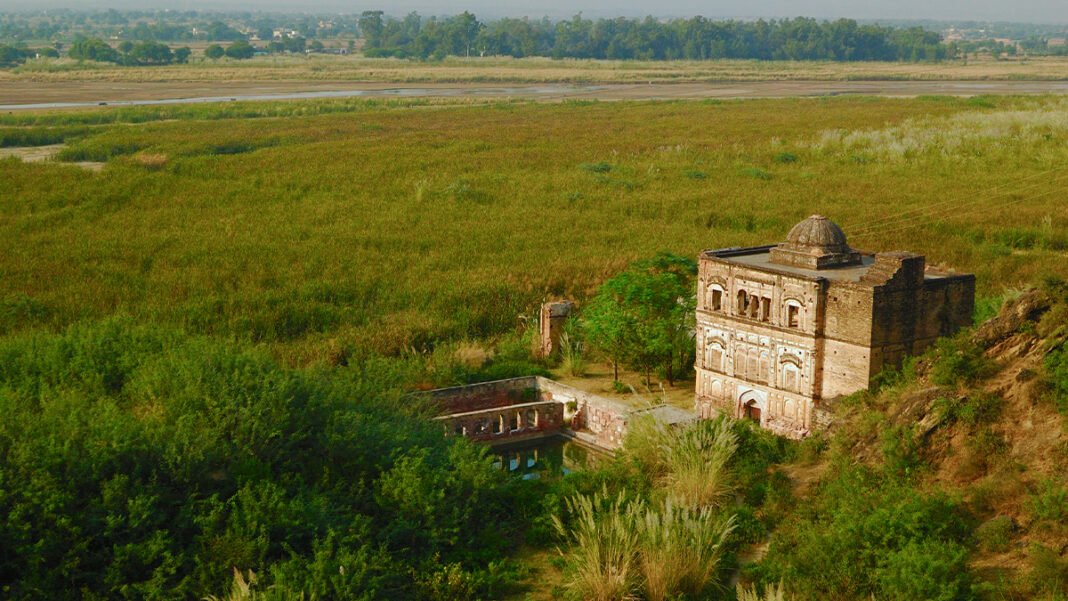
Let us be honest with you from the start: Gurdwara Chowmala Sahib no longer exists as a building. What exists is its site — a lane in Chowmala Mohalla inside Bhati Gate, where ordinary three-storey houses now stand over the spot where the sixth Sikh Guru once stayed, preached, and blessed his followers. If you need a gleaming shrine with a dome, this is not your destination. But if you are the kind of traveller who walks old cities to feel their layers, this quiet corner of the Walled City is worth every step.
Here is why. In the early 1600s, this lane held the house of Bhai Jivan, a devotee of Guru Hargobind. The Guru stayed here during his visits to Lahore and held diwans — congregations — in which he gave his followers their spiritual and worldly teachings. It was here, too, that Bhai Bidhi Chand rested while on his daring mission to recover the Guru’s seized horses. Bhai Jivan later converted his own house into a gurdwara, and for generations it served pilgrims with a hall, rooms for travellers, and the daily prakash (ceremonial opening) of the Guru Granth Sahib. A Basant Panchami fair gathered devotees here each spring. That is a lot of history for one lane.
Visiting the site today is an act of remembrance — and, frankly, of witness. The shrine was wiped out after Partition and built over, but its name board is still intact, and the Auqaf Department still holds the title. Standing in Chowmala Mohalla, finding that board, and knowing what happened in that vanished hall connects you to Lahore’s Sikh centuries in a way no museum plaque can. Pair it with the Walled City around it — Bhati Gate, the Oonchi Mosque, the food streets — and you have one of Lahore’s most meaningful half-day heritage walks.
This guide tells you exactly what to expect, what survives, and how to build a rewarding visit around a place that lives on in memory rather than in stone.
History of Gurdwara Chowmala Sahib (site), Bhati Gate
The story begins in the time of Guru Hargobind, the sixth Sikh Guru, who succeeded his father Guru Arjan in 1606 and transformed the Sikh community with his twin swords of miri and piri — worldly and spiritual authority. During his travels to Lahore, the Guru stayed in the house of his devoted follower Bhai Jivan in what is now Chowmala Mohalla, inside Bhati Gate. There he held a number of diwans, blessing the sangat (congregation) with his teachings.
The house also sheltered one of the most colourful figures of Sikh history: Bhai Bidhi Chand, the Guru’s trusted follower, stayed here when he came to Lahore to take back the Guru’s horses — the celebrated episode in which the Guru’s steeds, seized by the Mughal authorities, were recovered through Bidhi Chand’s daring. Out of reverence, Bhai Jivan converted his house into a gurdwara.
The shrine’s later history is well documented. Its initial charge lay with mahants (hereditary custodians). In 1915 the gurdwara’s hall was enlarged. In 1921 the Sikh sangat took control from Mahant Hari Singh, a local committee was formed, and from 1927 until 1947 the shrine passed under the control of the Shiromani Gurdwara Parbandhak Committee (SGPC) — the elected body that managed Sikh shrines. The prakash of the Guru Granth Sahib took place daily, there were many rooms for pilgrims to stay, and the shrine was endowed with a house in Bhati Gate and 87 ghumaon of land in Khudpur village of Lahore tehsil. Every year a fair was held on Basant Panchami, the spring festival.
Partition in 1947 ended that chapter. Possession passed to the Auqaf Department, which still holds the legal title — but the building itself was gradually wiped out, and private individuals constructed three-storey buildings over the site. Sikh chroniclers mourn this as a destroyed page of history. What remains today is the location itself, in Chowmala Mohalla, and a name board stating the gurdwara’s name — reportedly still intact and the only visible clue to what once stood here.
Top Things to Do in Gurdwara Chowmala Sahib (site), Bhati Gate
Find the site in Chowmala Mohalla
Your first mission: walk in through Bhati Gate and find Chowmala Mohalla. Ask shopkeepers for “Chowmala” or the gurdwara’s name board — locals know the lane. Finding the board is the emotional centre of the visit: the single surviving marker of the shrine where Guru Hargobind held his diwans. Take a quiet moment there. For Sikh heritage travellers, standing on this ground matters; the Guru’s presence here is a matter of recorded history, even if the walls are gone.
Walk the Bhati Gate quarter
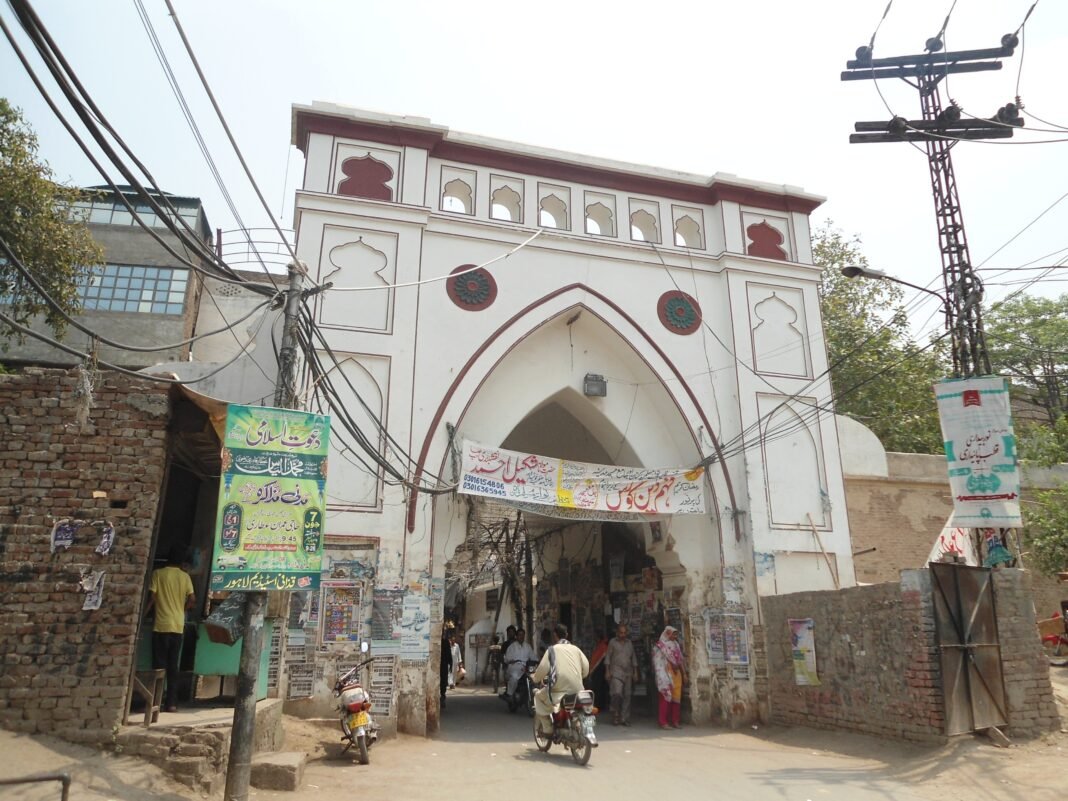
Bhati Gate stands at the southwest corner of the Walled City. Rebuilt by the British in a Western style with rooms on either side, it was named after the Bhatis — a Rajput family that lived in the city — by the Mughal architect Amir Ayaz. Walk the lanes around it: this is one of the oldest, most atmospheric quarters of Lahore, full of centuries-old havelis, shrines, and bazaars layered on top of each other.
See the Oonchi Mosque and neighbouring shrines
Inside Bhati Gate you will also find the Oonchi Mosque and a cluster of other historic religious buildings — the Walled City’s famous pluralism, where mosque, shrine, and gurdwara sites sit streets apart. The walk from Bhati Gate toward Delhi Gate passes some of Lahore’s greatest monuments.
Eat your way through Androon Lahore
No Walled City walk is complete without its food. The streets around Bhati Gate and toward Fort Road serve the Lahori classics — more on these in the food section below. Time your visit to end at lunch or dinner.
Famous Places In and Around Gurdwara Chowmala Sahib (site), Bhati Gate
- Bhati Gate — the historic gate itself, your entry point and one of the Walled City’s great landmarks.
- Badshahi Mosque — Lahore’s magnificent Mughal mosque, a short walk away; see our Badshahi Mosque travel guide.
- Lahore Fort and Gurdwara Dera Sahib — the fort complex and the samadhi of Maharaja Ranjit Singh by the Roshnai Gate.
- Wazir Khan Mosque — the stunning 17th-century mosque inside Delhi Gate, famed for its tile work.
- Shahi Hammam — the restored Mughal-era royal baths near Delhi Gate.
- Fort Road Food Street — dinner with a floodlit view of the Badshahi Mosque.
How to Reach Gurdwara Chowmala Sahib (site), Bhati Gate
The site is inside Lahore’s Walled City, so you travel to Lahore first, then navigate the old city on foot — the lanes of Chowmala Mohalla are far too narrow for cars.
- From Islamabad: About 300 km via the M-2 motorway — roughly 4 to 4.5 hours by car. Daewoo and other bus services run constantly between the two cities.
- From Lahore (elsewhere): Take the Orange Line metro to a nearby station (such as Chauburji) or a rickshaw/Careem to Bhati Gate, then walk in.
- From Karachi: Around 1,200 km — fly to Lahore (about 1 hour 45 minutes), then head to the Walled City. The overnight train to Lahore Railway Station is the classic alternative.
The nearest airport is Allama Iqbal International Airport, Lahore (about 25–30 km from the Walled City depending on route). Lahore Junction railway station is very close to the old city. Once at Bhati Gate, everything is on foot: enter the gate, ask for Chowmala Mohalla, and follow the lanes. A local guide — available through Walled City of Lahore Authority walking tours — is highly recommended; the old city’s lanes are a maze, and a guide will also unlock the stories of the surrounding havelis and shrines.
Route Details
- Step 1: Reach Bhati Gate (southwest corner of the Walled City) by rickshaw, taxi, or metro plus a short walk. There is no parking inside the old city — leave the car outside.
- Step 2: Enter through the gate on foot into the Bhati Gate quarter.
- Step 3: Ask shopkeepers for “Chowmala Mohalla” — it is a short walk inside. Look for the gurdwara’s name board, still reported intact on the site.
- Step 4: Combine the visit with a walking loop: Bhati Gate → Chowmala Mohalla → toward Delhi Gate (Wazir Khan Mosque, Shahi Hammam) or toward the Fort and Badshahi Mosque.
- Guided option: Book a Walled City walking tour; guides know the mohallas and can take you to the site efficiently along with the quarter’s other heritage.
Where to Stay in Gurdwara Chowmala Sahib (site), Bhati Gate
Nobody stays at the site itself — you stay in Lahore, which has every tier of accommodation, and visit the Walled City as a half-day excursion.
- Budget: Simple hotels and guesthouses cluster around Lahore Railway Station and the old city — basic, convenient, and easy on the pocket.
- Mid-range: Comfortable hotels along Mall Road, in Gulberg, and near the airport offer good rooms with dining and parking.
- Upper range: Lahore’s well-known five-star and boutique properties in Gulberg and DHA suit travellers who want full comfort after a dusty day in the old city.
- Heritage stays: A handful of restored havelis in and around the Walled City operate as guesthouses — book well ahead, as they are few and popular.
Stay anywhere central; the Walled City is a 20–40 minute ride from most Lahore neighbourhoods. Book early during the spring festival season and winter, Lahore’s peak tourist months.
Where to Eat: Local Foods of Gurdwara Chowmala Sahib (site), Bhati Gate
This is one of the great joys of the visit: Androon Lahore is Pakistan’s most famous food territory, and the streets around Bhati Gate serve it at its most authentic.
- Lahori breakfast: Halwa puri, pathoray chanay, and doodh patti at the old city’s breakfast shops — arrive hungry and early.
- The classics: Nihari, paye, murgh cholay, and daal at decades-old eateries in the Bhati Gate and Delhi Gate quarters.
- Grill and kebabs: Seekh kebabs, tikka, and malai boti from the bazaar grills; Lahoris take their barbecue seriously.
- Sweets and lassi: Rabri, kulfi, jalebi, and thick Lahori lassi from the sweet shops near the gates.
- Food streets: Fort Road Food Street (dinner with the floodlit Badshahi Mosque in view), Lakshmi Chowk, and Gawalmandi for the full night-food experience.
Old-city eateries are overwhelmingly budget-friendly — a full Lahori meal at a traditional shop costs little by big-city standards. Drink bottled water, eat where the crowd is thickest (high turnover means fresh food), and save room: you will want to try more than one stop.
Weather in Gurdwara Chowmala Sahib (site), Bhati Gate
Lahore has classic Punjab plains weather: blazing summers, a monsoon interlude, and short, pleasant winters. The Walled City’s narrow lanes offer shade, but summer afternoons there are still punishing — winter mornings are the ideal time for this walk.
| Season | Temperature Range | Conditions |
|---|---|---|
| Winter (Dec–Feb) | 5–20°C | Cool, often foggy mornings; crisp afternoons — best walking weather |
| Spring (Feb–Apr) | 15–32°C | Pleasant and festive; the historic Basant season |
| Summer (May–Jun) | 32–45°C | Extremely hot; walk only early morning, hydrate constantly |
| Monsoon (Jul–Sep) | 30–38°C | Humid with heavy downpours; old-city lanes can flood briefly |
| Autumn (Oct–Nov) | 18–32°C | Clearing and comfortable; second-best walking season |
Language and Culture of Gurdwara Chowmala Sahib (site), Bhati Gate
The Walled City speaks Punjabi in its warmest, most idiomatic Lahori form; Urdu is universal, and English works in shops and restaurants. This quarter is deeply traditional — greet elders with respect, dress modestly (covered shoulders and knees are appreciated in the old city), and ask before photographing residents in the narrow lanes.
The site itself carries Sikh sacred history, so show the respect you would at any shrine: keep your voice low at the site, do not litter in the lane, and remember that the vanished gurdwara is still a place of reverence for Sikh visitors. The Walled City’s beauty is its layered faiths — mosque, shrine, temple, and gurdwara sites within a few streets — and visitors are welcomed when they honour all of them.
Shopping in Gurdwara Chowmala Sahib (site), Bhati Gate
The Walled City is one of Pakistan’s great shopping experiences, and your walk naturally passes through it. Shah Alam Market (nearby) is Lahore’s wholesale bazaar for everything; the Delhi Gate area has traditional crafts, khussas (embroidered shoes), and brassware; Anarkali — a short ride away — is the classic bazaar for clothes, jewellery, and street food combined. For traditional Lahori souvenirs — blue pottery, camel-skin lamps, embroidered textiles — the shops around Delhi Gate and Fort Road are the honest, old-city choice. Bargain politely; it is expected.
Travel Tips for Gurdwara Chowmala Sahib (site), Bhati Gate
Packing Essentials
Sturdy walking shoes (the old city’s stone and brick lanes are uneven), a water bottle, sun protection, a scarf (useful for shrines and for dust), and a fully charged phone for maps and photos. Travel light — you will be on foot for hours.
Safety Tips
The Walled City is busy and generally safe for visitors, but its lanes are a genuine maze: do not wander alone into unfamiliar side alleys after dark, keep valuables discreet, and consider a registered guide. In summer, the heat is the real hazard — start at 8–9 a.m. and be done by early afternoon.
Money & Connectivity
Carry cash — small old-city shops and food stalls are cash-only, though ATMs are plentiful on the main roads outside the gates. All mobile networks work well in Lahore, and 4G coverage inside the Walled City is good.
Best Time to Visit Gurdwara Chowmala Sahib (site), Bhati Gate
December to February — the prime season
Winter mornings in the Walled City are made for this walk: cool air, soft light on the old brick, and comfortable hours of wandering. This is when Lahore hosts most of its heritage walks.
February to March — spring and Basant memories
The season of the gurdwara’s historic Basant Panchami fair. Lahore’s spring is short and lovely; even without the old kite festival in full swing, the city’s festive mood is at its peak.
October to November — the pleasant shoulder
Clear skies and moderate temperatures return after the monsoon — an excellent second window for the old city.
May to September — visit with caution
Extreme heat followed by monsoon humidity makes the Walled City walk uncomfortable. If you must come, go at dawn and plan indoor sights (museums, the fort’s covered galleries) for midday.
Final Thoughts
Gurdwara Chowmala Sahib will not give you a grand building to photograph. It will give you something rarer: a direct, physical connection to Guru Hargobind’s Lahore, in a lane where history happened and the city simply grew over it. Finding the site, reading its name board, and walking the quarter around it is heritage travel at its most honest — you come for the story, and the story is real.
Let this lane be your doorway into the Walled City rather than your only stop. Walk on to the mosques, the fort, and the food streets, and you will understand why Lahore’s old city rewards the curious. For more journeys like this, explore our Explore Pakistan guides — from the Sikh heritage of Gurdwara Bhai Buddhu Da Awa in Lahore to the mountain calm of Hunza Valley.
FAQs
Where is Gurdwara Chowmala Sahib located?
In Chowmala Mohalla, inside Bhati Gate in Lahore’s Walled City. The gurdwara building no longer stands — private houses cover the site — but the location and its name board survive.
Can I still visit the site if the gurdwara is gone?
Yes. The lane is publicly accessible on foot. Find Chowmala Mohalla inside Bhati Gate, look for the intact name board, and treat it as a heritage walk rather than a shrine visit.
What is the historical importance of Chowmala Sahib?
Guru Hargobind, the sixth Sikh Guru, stayed in Bhai Jivan’s house here and held congregations; Bhai Bidhi Chand stayed here during the mission to recover the Guru’s horses. Bhai Jivan later converted the house into a gurdwara that served pilgrims from the 1600s until 1947.
What is the best time to visit Bhati Gate and the Walled City?
December to February for cool, comfortable walking weather; October–November and February–March are also pleasant. Avoid summer afternoons.
How do I reach Chowmala Mohalla from elsewhere in Lahore?
Take the Orange Line metro, a rickshaw, or a ride-hailing car to Bhati Gate, then walk in — the lanes are too narrow for cars. Ask locals for “Chowmala”; a Walled City guide makes it effortless.
Is the area safe for tourists?
Yes — the Walled City is busy and welcoming, and guided heritage walks run regularly. Go in daylight, keep valuables discreet, and hire a guide if you are unfamiliar with the lanes.
What else can I see near the site?
Bhati Gate itself, the Oonchi Mosque, Wazir Khan Mosque and Shahi Hammam near Delhi Gate, Lahore Fort, Gurdwara Dera Sahib, Badshahi Mosque, and Fort Road Food Street — all within a compact walking zone.
What food should I try around Bhati Gate?
Androon Lahore classics: halwa puri and pathoray chanay for breakfast; nihari, paye, murgh cholay, and kebabs through the day; lassi, kulfi, and jalebi for dessert — plus Fort Road Food Street for dinner with a view.