


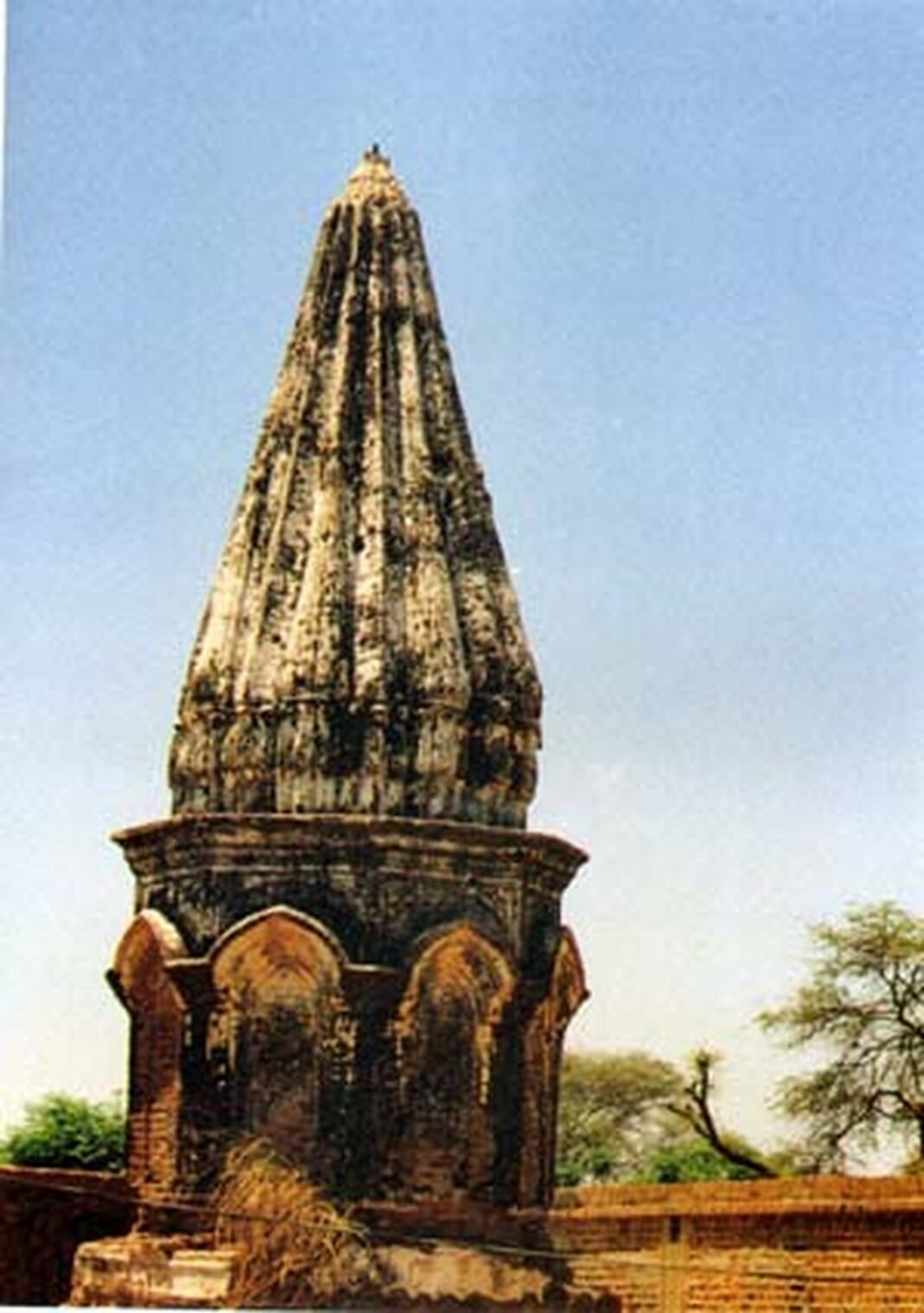
Just over a kilometre from the international border, in a Sialkot village most Pakistanis have never heard of, three shrines remember the visit of a Sikh Guru — and one of them survives only as a single meditation room at the edge of a vanished pool. Gurdwara Kund Sahib in Rehsema (now Salehpur) is not a grand pilgrimage destination. It is something rarer: a frontier shrine, fragile and half-forgotten, where the sixth Sikh Guru, Guru Hargobind Ji, once stopped on his travels. If you are the kind of traveller who is drawn to the edges of the map — to places where history feels thin, precious, and urgently worth seeing — this Gurdwara Kund Sahib travel guide will show you why Rehsema deserves your journey.
Quick Facts
- Location: Rehsema village (now called Salehpur), Sialkot district and tehsil, Punjab — just over 1 km from the Indian border; reached by crossing the embankment near Chaprar
- Altitude: Around 240 metres (flat border plain)
- Famous For: The first of Rehsema’s three Guru Hargobind shrines; the surviving tapasthan (meditation room) at the edge of the old kund (pool)
- Nearest City: Sialkot, about 21 km by road via Chaprar; Chaprar itself is the nearest town
- Accessibility: Moderate — village tracks via the Chaprar embankment; follow local advice as this is a border area
- Known Landmarks: The tapasthan at Kund Sahib; nearby Gurdwara Gurusar Sahib and Gurdwara Tahli Sahib
- Best For: Sikh heritage travellers, offbeat explorers, photographers of vanishing heritage, and history lovers visiting Sialkot
Why Visit Gurdwara Kund Sahib, Rehsema (Salehpur)
Let us be honest: Gurdwara Kund Sahib is a ruin. The gurdwara building itself has been completely destroyed, and what remains is a single tapasthan — a small meditation chamber — standing at the edge of the old kund. So why go? Because some of the most meaningful travel is not about seeing perfection; it is about witnessing survival. This little room is the last standing fragment of one of three shrines marking Guru Hargobind Ji’s visit to a border village, and every year that passes makes its survival more remarkable.
Rehsema’s story is extraordinary in its concentration. This one small village — now renamed Salehpur — holds three gurdwaras associated with the sixth Sikh Guru: Kund Sahib, Gurusar Sahib, and Tahli Sahib. Few villages anywhere in Punjab can claim such a density of sacred memory. Visiting Kund Sahib means unlocking all three: the meditation room at the vanished pool, the Gurusar shrine where the Guru made water spring from dry earth with his lance, and Tahli Sahib in the east of the village, where he tied his horse to a sheesham tree on his way to Kashmir and blessed a sadhu’s daughter’s wedding. Together they form a complete, walkable heritage circuit in a single village — a Sikh history lesson you can cover on foot in an afternoon.
There is also the frontier itself. Rehsema sits just over a kilometre from the border, in the quiet, watchful countryside of Sialkot’s edge. The journey here — crossing the embankment near Chaprar, driving through border villages where life moves at the pace of the fields — is an experience most travellers never have. It is a side of Punjab that is neither city nor tourist trail: just villages, hospitality, and memory. For photographers, the tapasthan against the big border sky is hauntingly beautiful. For Sikh pilgrims, paying respects here is an act of preservation in itself — every visitor is a vote for remembering.
This trip suits the historically curious, the Sikh diaspora traveller completing the map of Guru Hargobind’s journeys, and anyone based in Sialkot or Lahore who wants a genuinely offbeat day out. It pairs naturally with Sialkot’s own heritage — Iqbal Manzil, the old fort area, and the city’s other gurdwaras, including Gurdwara Bair Sahib. And for the wider picture of sacred travel in Pakistan, our Explore Pakistan guides will keep you moving.
History of Gurdwara Kund Sahib, Rehsema (Salehpur)
Rehsema is a border village of Sialkot district and tehsil — its police station is Chaprar — and at some point in its modern history it was renamed Salehpur, though the old name survives in Sikh historical records. What makes this village remarkable is that it holds not one but three gurdwaras associated with Guru Hargobind Ji, the sixth Sikh Guru (who led the Sikh community from 1606 to 1644). The three are: Kund Sahib, Gurusar Sahib, and Tahli Sahib.
Gurdwara Kund Sahib was the first of the three. The village is reached by crossing an embankment near Chaprar, and the shrine stood at the edge of a kund — a pool or tank. Time has not been kind: the gurdwara building has been completely destroyed, and the kund itself is gone. What survives, remarkably, is the tapasthan — the meditation quarter — a small chamber at the edge where the kund once lay. That a single prayer room outlasted the shrine around it tells you something about how these places were built and how stubbornly sacred ground holds on.
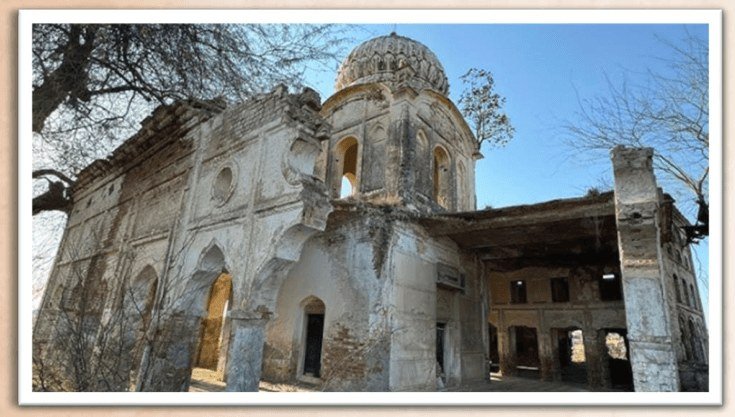
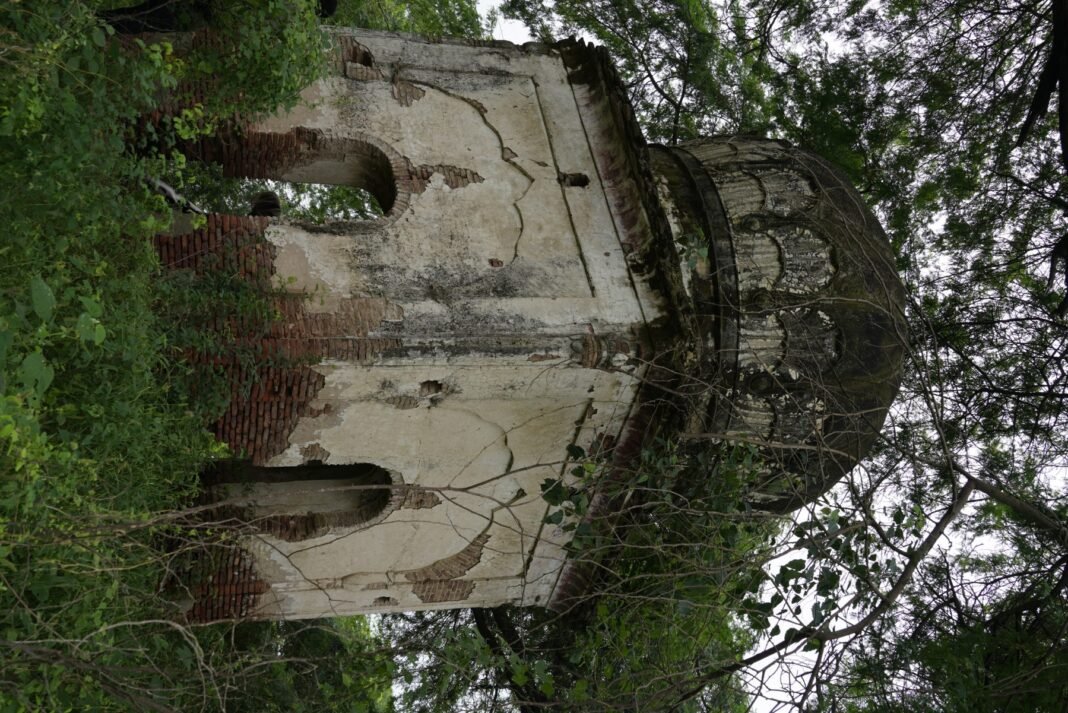
The second shrine, Gurdwara Gurusar Sahib, stands about half a kilometre from the village. Its story is one of the beloved miracle tales of Guru Hargobind’s travels: when the Guru arrived, the pond was dry, and he made fresh sweet water ooze from the earth by throwing his lance into the ground. A gurdwara was raised there and the Guru Granth Sahib was recited in it. Today the sacred pond has been levelled and the gurdwara building is occupied and used as shelter — another fragile survivor of Partition’s long aftermath.
The third, Gurdwara Tahli Sahib, lies on the eastern side of the village and has the richest documented story. Guru Hargobind Ji stayed here while on his way to Kashmir. During his stay he tied his horse to a sheesham (tahli) tree — giving the shrine its name. While he was there, the marriage of a Gosain sadhu’s daughter was being solemnised; at the sadhu’s humble request, the Guru graced the house with his presence and presented the family with a purse containing one hundred rupees and a sehli (cap). Those relics were preserved at the shrine. The pond where the Guru washed his feet was later turned into a place of worship. The shrine was built by the Sangat (congregation) of Amritsar, three ghumaon of land were endowed to it, and a fair was held there on the 1st, 2nd, and 3rd of Har (the Punjabi month falling in June). Today the shrine looks like an ordinary house, and local people live in it.
Together, the three shrines of Rehsema map a single journey of the sixth Guru through this border country — toward Kashmir, through villages, blessing weddings, striking water from dry earth, and leaving behind meditation rooms and relics. Kund Sahib’s ruined state is honest history: it shows what Partition, time, and the border did to Punjab’s sacred geography. Visiting is a way of saying that this history still matters.
Top Things to Do in Gurdwara Kund Sahib, Rehsema (Salehpur)
See the Tapasthan at Kund Sahib
The meditation room is the entire reason to come — a small, plain chamber that has outlasted the gurdwara it served. Stand at the edge where the kund once lay and picture the pool, the shrine, and the travellers who stopped here four centuries ago. It is a profoundly quiet spot. Photograph it respectfully; this is less a monument than a memorial, and its fragility is the point.
Walk to Gurdwara Gurusar Sahib
About half a kilometre from the village, find the site of the second shrine — where Guru Hargobind’s lance is said to have brought water from dry earth. The pond has been levelled and the building is occupied, so manage your expectations: this is about standing on storied ground rather than touring a shrine. The walk itself, through border-country fields, is lovely in the cool months.
Visit Gurdwara Tahli Sahib
On the village’s eastern side, look for the house-like shrine where the Guru tied his horse to the sheesham tree. Ask villagers about the Tahli Sahib story — the wedding of the sadhu’s daughter, the purse of a hundred rupees, the sehli cap kept as relics. Oral history is strong in these villages, and the details people remember add colour no record preserves. Remember that people live in this building; ask permission and be gracious.
Experience Border-Village Punjab
Rehsema’s location — just over a kilometre from the border — shapes everything about it. Take a slow drive or walk through the surrounding villages, watch the rhythms of border agriculture, and accept the tea you will inevitably be offered. This is Punjab at its most unvarnished, far from any tourist circuit, and the hospitality is genuine.
Combine with Sialkot’s Heritage
Base yourself in Sialkot (21 km via Chaprar) and make a full heritage day of it: Rehsema’s three shrines in the morning, then the city — Iqbal Manzil (the birthplace of Allama Iqbal), the historic core, and the city’s own gurdwaras, including Gurdwara Bair Sahib and Gurdwara Baoli Sahib. Sialkot rewards travellers who look beyond its famous sports-goods factories.
Famous Places In and Around Gurdwara Kund Sahib, Rehsema (Salehpur)
- Gurdwara Gurusar Sahib (0.5 km): The second shrine — the lance-and-water miracle site.
- Gurdwara Tahli Sahib (east of village): The third shrine — the sheesham tree, the horse, and the wedding blessings.
- Chaprar (nearby): The market town and police-station centre; cross its embankment to reach Rehsema.
- Sialkot city (21 km): Iqbal Manzil, the old city, and world-famous sports-goods and surgical-instrument industries.
- Head Marala (nearby): The historic headworks on the Chenab, a scenic stop in the border countryside.
How to Reach Gurdwara Kund Sahib, Rehsema (Salehpur)
Rehsema (Salehpur) is reached by crossing the embankment near Chaprar, in Sialkot tehsil. The village is a border settlement, so plan your logistics in advance, travel in daylight, and follow local advice — the route is straightforward but remote.
From Sialkot: About 21 km by road to Chaprar (roughly 40 minutes), then local village tracks across the embankment to Rehsema. This is the natural gateway — base yourself in Sialkot.
From Lahore: About 124 km to the Chaprar area — roughly 2.5 hours via the Sialkot road network. Many visitors combine Rehsema with a Sialkot overnight stay.
From Islamabad: About 181 km to Chaprar — roughly 3 to 3.5 hours via the motorway network toward Sialkot.
From Karachi: Fly to Sialkot International Airport (which serves the region with domestic and international flights), then drive the 21 km to Chaprar and on to the village.
Nearest airport: Sialkot International Airport — the closest major airport, about half an hour from Chaprar.
Road conditions: The Sialkot–Chaprar road is paved and fine. The embankment crossing and village tracks are narrower and can be rough after rain — a car with decent ground clearance is ideal, though a normal car manages in dry weather.
Transport options: A private car or hired taxi from Sialkot is by far the best option — you need flexibility and local knowledge for the border-village tracks. Public vans reach Chaprar from Sialkot, but the last leg to Rehsema needs a local vehicle or a guide. Consider hiring a Sialkot-based driver who knows the border villages.
Route Details
Sialkot → Chaprar → Rehsema (Salehpur): Leave Sialkot heading for Chaprar (21 km, about 40 minutes on the paved road). At Chaprar, cross the embankment on the village track leading to Rehsema — ask locals for “Salehpur” (the village’s current name) or “Kund Sahib.” The tapasthan stands at the edge of the old kund site; villagers will point you to it, and to Gurusar and Tahli Sahib. Allow a half day for the village circuit, and plan to be back on the main road before dusk.
Where to Stay in Gurdwara Kund Sahib, Rehsema (Salehpur)
Rehsema is a border village — there is no accommodation here, and you should not plan to stay overnight in the immediate border zone. Sialkot city, 21 km away, is your base: it has a solid range of mid-range hotels and guesthouses catering to business travellers (the city’s export industries bring constant visitors), with comfortable air-conditioned rooms, restaurants, and reliable services.
For budget travellers, Sialkot’s guesthouses near the city centre and railway station area are clean and very affordable. For more comfort, the city’s business hotels offer the full modern package. There is no reason to look further afield — Sialkot puts you within 40 minutes of the shrine, and the city itself deserves exploration. Book ahead only during peak business seasons; otherwise, walk-in availability is usually fine.
Where to Eat: Local Foods of Gurdwara Kund Sahib, Rehsema (Salehpur)
Eat in Sialkot before or after your village visit — there are no restaurants at Rehsema itself. Sialkot’s food scene is classic Punjabi with its own local pride. Start with a proper breakfast: halwa puri or desi-ghee parathas with lassi from an old-city dhaba. For lunch and dinner, the city’s restaurants and dhabas serve chicken karahi, daal with tandoori roti, saag and makki di roti in winter, and excellent barbecue platters in the evening.
Sialkot is also a sweets city — its mithai shops do superb barfi, gulab jamun, and ras malai; pick up a box for the road. A hearty dhaba meal costs a few hundred rupees per person — budget-friendly by any standard. In the village, if a family offers you food or tea, accept with thanks; village hospitality in this border country is heartfelt, and sharing a meal is the fastest way to hear the shrine’s stories firsthand. Carry drinking water and snacks for the shrine circuit itself.
Weather in Gurdwara Kund Sahib, Rehsema (Salehpur)
At around 240 metres on the Sialkot plain, Rehsema shares the northeastern Punjab climate: distinctly cold winters, hot summers, and a strong monsoon. The best months for the border-village tracks are November to March, when the ground is dry and the air is clear.
| Season | Temperature Range | Conditions |
|---|---|---|
| Winter (Dec–Feb) | 4°C – 19°C | Cold, often foggy mornings; crisp afternoons. Best for village walks. |
| Spring (Mar–Apr) | 15°C – 32°C | Pleasant and green; good for the shrine circuit. |
| Summer (May–Jun) | 30°C – 43°C | Very hot; visit only early morning. |
| Autumn (Oct–Nov) | 14°C – 31°C | Clear and comfortable — an excellent window. |
The monsoon (July–September) hits Sialkot district hard — heavy rains can make the embankment crossing and village tracks difficult or impassable. Avoid the border-village leg in peak monsoon.
Language and Culture of Gurdwara Kund Sahib, Rehsema (Salehpur)
Punjabi is the language of Rehsema’s lanes and fields; Urdu works everywhere for visitors. Border-village culture here is marked by resilience, strong community bonds, and deep hospitality — life within sight of the border breeds a particular warmth toward guests. The village’s Sikh heritage is remembered with matter-of-fact respect; the shrines are part of local geography even where they are no longer places of worship.
As a visitor, be mindful that this is a sensitive border area: carry identification, follow any guidance from local authorities or village elders, stick to the village tracks, and do not photograph security installations or the border fencing — photograph the shrines and village life instead. Dress modestly, ask permission before photographing people, and let the village set the pace. Your respect will be returned many times over.
Shopping in Gurdwara Kund Sahib, Rehsema (Salehpur)
There are no shops at the shrine — this is a village, not a tourist site. Do your shopping in Sialkot, and you are in for a treat: this is the city that makes the world’s footballs, surgical instruments, and leather goods. The city’s bazaars sell top-quality sports goods, leather jackets and bags, and surgical-grade steel items at factory-town prices — genuinely world-class souvenirs you cannot buy cheaper anywhere else.
Sialkot’s traditional bazaars also offer Punjabi khussas, embroidered fabrics, and excellent mithai. There is no need for malls here (and none near the shrine); the bazaar experience — bargaining politely, drinking chai between shops — is the authentic Sialkot way.
Local Events and Festivals
Tahli Sahib Fair — 1st to 3rd of Har (June): Historically, a fair was held at Gurdwara Tahli Sahib on the first three days of Har, the Punjabi month falling in June — a tradition tied to the shrine built by the Sangat of Amritsar. Like many Partition-era fairs, it is no longer held in its historic form, but the dates remain part of the village’s sacred calendar and are worth knowing if you visit in early summer.
Baisakhi (13–14 April): While Rehsema’s own historic fair belonged to June, the wider Sikh calendar’s great spring festival is felt across Sialkot district’s gurdwaras. Spring is a beautiful time to walk the three-shrine circuit, with green fields and mild weather.
Travel Tips for Gurdwara Kund Sahib, Rehsema (Salehpur)
Packing Essentials
Sturdy closed shoes (village tracks and field paths), a head covering, sun protection, and plenty of water and snacks — there are no facilities at the site. In winter, bring a warm layer and start after the morning fog clears. A fully charged phone, a power bank, and offline maps are essential; do not rely on finding your way by signposts.
Safety Tips
This is a border area: the golden rules are to travel in daylight, stay on village tracks, carry ID, follow local advice without argument, and never approach or photograph border security infrastructure. The village itself is safe and welcoming. Visit the shrines with a local guide or driver who knows the area — this is not a place to wander alone off-track.
Money & Connectivity
Carry cash — there are no ATMs in the village (Sialkot and Chaprar have them). Mobile signals from the major networks reach the area, but coverage can be patchy on the border tracks; download offline maps in Sialkot before heading out. Inform your hotel of your plans and expected return time.
Best Time to Visit Gurdwara Kund Sahib, Rehsema (Salehpur)
Winter — November to February (Best Season)
Dry tracks, clear skies, and cool air made for walking between the three shrines. Morning fog can delay starts in December–January, but afternoons are glorious. This is the prime window for the Rehsema circuit.
Spring — March to April (Lovely)
Green wheat fields, mild temperatures, and the Baisakhi season’s festive feel across the district. An excellent second choice, with beautiful photography light.
Summer — May to June (Difficult)
Very hot, and the historic Tahli Sahib fair dates (early June) fall in the fiercest heat. If you come now, restrict the village circuit to the early morning hours and carry ample water.
Monsoon — July to September (Avoid)
Sialkot district gets heavy monsoon rain; the embankment crossing and village tracks can become difficult or impassable. Skip the border-village leg in these months.
Final Thoughts
Gurdwara Kund Sahib will never compete with the great shrines of Punjab, and it was never meant to. It is a meditation room at the edge of a vanished pool, in a renamed village, a kilometre from a border — and it is precious precisely because it survived at all. To visit is to bear witness: to Guru Hargobind’s journey through this country, to the three shrines of a single village, and to the quiet persistence of sacred ground.
Go in winter, when the tracks are dry and the light is kind. Walk all three shrines, drink the offered tea, and listen to the village’s stories. Then return to Sialkot and keep exploring — our Gurdwara Bair Sahib guide and the full Explore Pakistan collection are waiting. The edges of the map, it turns out, are where some of the best stories live.
FAQs
Where is Gurdwara Kund Sahib located?
In Rehsema village (now called Salehpur), Sialkot district, Punjab — just over 1 km from the Indian border, reached by crossing the embankment near Chaprar.
What remains of the gurdwara?
The gurdwara building has been completely destroyed; only the tapasthan (meditation room) at the edge of the old kund still stands.
Which Guru is associated with Rehsema?
Guru Hargobind Ji, the sixth Sikh Guru. Three shrines in the village — Kund Sahib, Gurusar Sahib, and Tahli Sahib — mark his visit.
What is the best time to visit?
November to March, when the weather is dry and cool and the village tracks are passable. Avoid the July–September monsoon.
How do I reach Rehsema from Sialkot?
Drive 21 km to Chaprar (about 40 minutes), then cross the embankment on village tracks to Rehsema. A private car or hired local driver is strongly recommended.
Is it safe to visit a border village?
Yes, with sensible precautions: travel in daylight, carry ID, follow local advice, stay on village tracks, and do not photograph border security installations.
Where should I stay?
In Sialkot city (21 km away), which has mid-range hotels and guesthouses. Do not plan to stay overnight in the border village itself.
Can I see all three shrines in one visit?
Yes — Kund Sahib, Gurusar Sahib (0.5 km from the village), and Tahli Sahib (east of the village) form a walkable circuit you can cover in half a day.
, Pakistan? Discover why it deserves your visit, the best time to go, top things to do.)