If you want to walk where Guru Nanak Dev Ji once rested under the shade of a flowering tree — not in a grand marble complex, but in a quiet village near the border — then this gurdwara lahura sahib, ghawindi travel guide is for you. This is not a tourist-trap shrine. It is a small, half-forgotten, deeply authentic piece of Sikh heritage on the Lahore–Ghawindi road, where one of the most touching stories of the Guru’s travels took place. The kind of place you visit not for photographs, but for what it makes you feel.
Quick Facts
- Location: Ghawindi village area, about 2 km from Ghawindi, on the Lahore–Ghawindi road, southeast of Lahore, Punjab
- Famous For: The lahura (also called rahura/rahira) tree under which Guru Nanak rested, and the story of Bhai Mardana and the gypsy family
- Nearest City: Lahore (southeast, via Barki Road)
- Accessibility: Easily reached by road from Lahore; the last stretch is a village road. No air travel needed — Lahore’s airport is the gateway
- Known Landmarks: The shrine complex itself, the surviving rooms of the old gurdwara building, the two sitting platforms (one for Guru Nanak, one for Bhai Mardana)
- Best For: Heritage travelers, Sikh pilgrims, photographers of forgotten places, anyone exploring Punjab’s spiritual landscape beyond the famous shrines
Why Visit Gurdwara Lahura Sahib, Ghawindi
Most people who come to Pakistan’s Punjab to follow the footsteps of Guru Nanak visit the big names — Nankana Sahib, Panja Sahib, Kartarpur. But the Guru’s life was not lived only in grand places. He walked through small villages, sat under village trees, and met ordinary people: hungry travelers, grieving families, nomads camping at the edge of the fields. Gurdwara Lahura Sahib is one of those places. It remembers an afternoon in a village where a tree gave shade, a child was born and died in a single day, and a shabad was composed that still carries the weight of that day.
That is why you should visit. Not for spectacle — there is none here — but for intimacy. The shrine stands where Guru Nanak came from the village of Jahman and rested under a lahura tree, a tree that bursts into saffron-colored flowers each spring. The story attached to this spot is one of the most human episodes in the Guru’s travels: Bhai Mardana, his companion, hungry for two days, asking permission to go to the village for food; the Guru telling him he may go, but not beg for it; a gypsy family too joyful at the birth of a son to notice the stranger; and then, by divine will, the baby dying and the joy turning to mourning. Out of that grief came consolation — the Guru composed a shabad in Sri Rag, titled “Pere,” for the mourning family. You do not get this kind of story at a marble-clad complex. You get it here, under the trees, in the quiet.
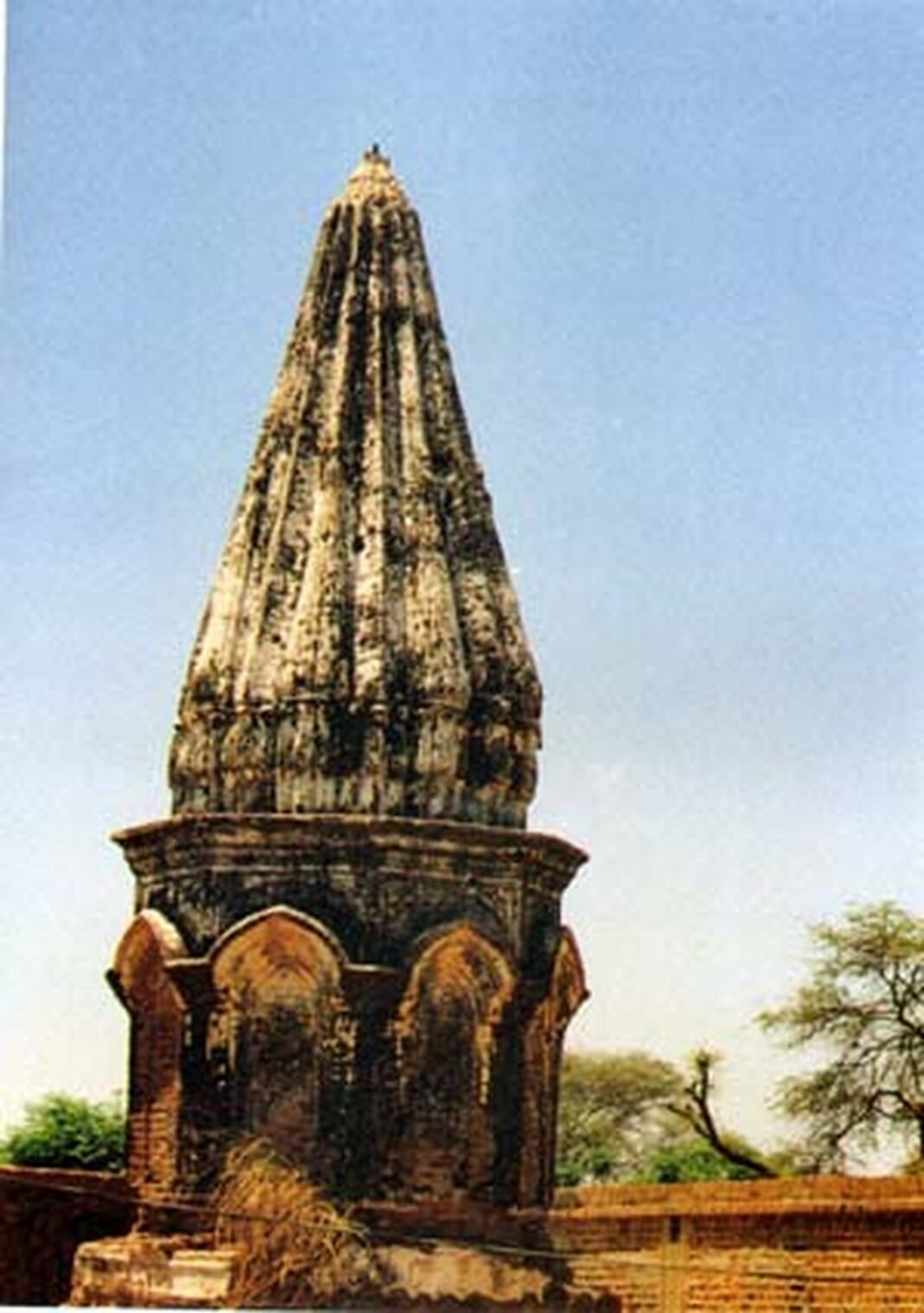
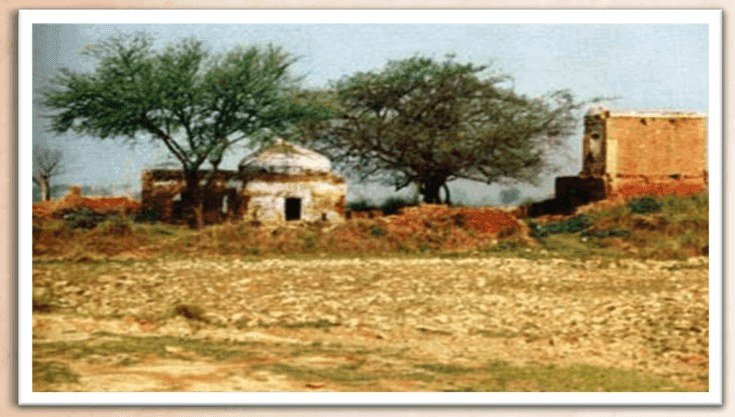
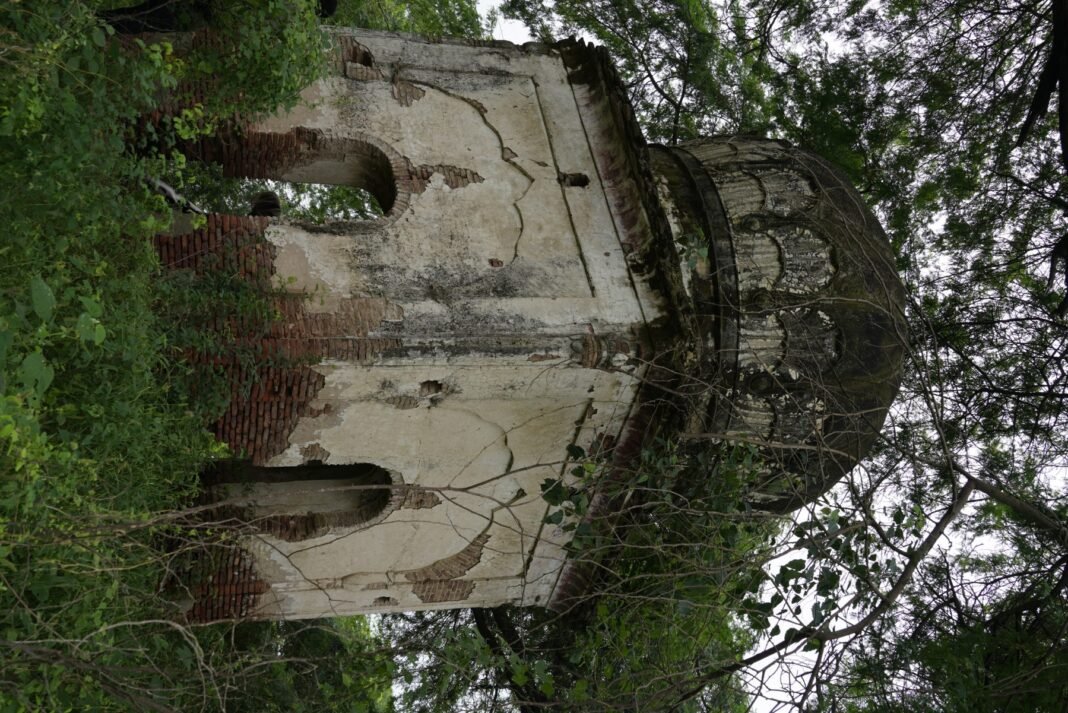
The second reason to visit is rarity. This is a shrine that almost vanished. Its main gate has fallen, its prakashasthan — the place where the Guru Granth Sahib was kept — no longer exists, and only two rooms of the old building survive, now used for offices. The Union Council office is housed in the complex, and 20 bighas of land remain attached to it. A Dawn report on the gurdwaras near the Kartarpur Corridor described what remains: a modest structure with a single room and a small dome, hidden among trees, with two platforms for sitting — the higher one representing Guru Nanak, the lower one Bhai Mardana. Villagers had placed straw and salt on the platforms, a sign that the shrine still held spiritual meaning for the local people even without any organized congregation. Visiting is also a small act of witness — you help keep the memory of such places alive.
Finally, it is perfect for a half-day escape from Lahore. Southeast of the city, out past Barki Road toward the border, the noise of Lahore falls away and the Punjab countryside takes over — wheat fields, village roads, the open sky. Combine it with the area’s other borderland shrines and you have one of the most unusual day trips in Pakistani Punjab: heritage, nature, and the strange poetry of a landscape that sits a kilometre from one of the most guarded borders in the world.
History of Gurdwara Lahura Sahib, Ghawindi
The history of this place begins, like so much of Guru Nanak’s story, on the road. The village called Ghawindi lies on the Lahore–Ghawindi road, and the shrine known as Lahura Sahib stands about two kilometres from Ghawindi itself. According to the accounts preserved by historians of Sikh shrines in Pakistan — including the detailed records compiled by Iqbal Qaiser in his work on historical Sikh shrines — Guru Nanak had come to this village from “Jahman” and stayed under the benign shade of a lahura tree. That single act of rest gave the shrine its name.
The lahura tree itself deserves a paragraph of its own, because it is part of the story. Also known as the rahura or rahira, it is a tree of the north-west Punjab whose wood is prized for making sarangi and other stringed musical instruments — a fitting detail, given that Bhai Mardana was a rabab player. In spring the tree bears saffron-coloured flowers, so when Guru Nanak rested beneath it, he was under a canopy of gold. One account adds a lovely tradition: that Guru Nanak brought a lahura plant from the Kallar Kahar hills on the Khushab side and planted it here, and that he wanted lahura wood for Bhai Mardana’s rabab.
At the time of the Guru’s visit, there was a settlement of gypsies — Roma nomads — near the village. The recorded narrative says a boy was born in one of the gypsy families and everyone was celebrating. Bhai Mardana, who had eaten nothing for two days, appealed to the Guru: “Patshah, I am hungry for the last two days; if you permit, I may go to the village to eat food.” The Guru replied that he might go if he liked, but must not beg for bread. Mardana went to the house of the celebrating family, but they were so absorbed in their joy that they paid him no attention. Then, the accounts say, by divine will the baby boy died, and the celebration collapsed into mourning. Guru Nanak told the villagers to submit before the divine will and composed the shabad in Sri Rag whose title is “Pere.” The gurdwara was later built over the site by the Sikhs of the Guru, and the prakash of the Guru Granth Sahib continued there for centuries.
What happened to the building is the melancholy part of the history. After Partition in 1947, like hundreds of rural gurdwaras, it lost its congregation. Over the decades the structure decayed: the main gate fell, the prakashasthan vanished, and only two rooms survived — the ones now used for the Union Council office. The 20 bighas of endowed land are still attached to the shrine. In recent years there have been efforts to preserve the shrine in its original spirit, and the site has been surveyed by heritage documentation projects. A Dawn report from 2018, written when the Kartarpur Corridor was in the news, described the shrine as a modest single-room building with a small dome, hidden in trees, with the two sitting platforms for the Guru and Mardana — the border fence visible just a kilometre away. That is the Lahura Sahib of today: fragile, real, and waiting for visitors who care.
Top Things to Do in Gurdwara Lahura Sahib, Ghawindi
Stand Under the Lahura Trees
The first thing to do is also the simplest: find the trees. The grove of lahura — desert teak — trees around the shrine is the living relic here. In spring, when the saffron flowers bloom, this is one of the most quietly beautiful spots in the Lahore district. Walk slowly, look up through the branches, and remember that the entire shrine exists because one traveller once found shade here. If you visit in February or March, the flowers will show you exactly why the place is named what it is.
See the Two Sitting Platforms
Inside the tree-shaded compound, look for the two platforms described by visitors: the higher platform representing Guru Nanak and the slightly lower one representing Bhai Mardana. Locals have been known to place straw and salt on them — offerings from villagers to whom the shrine still matters. It is a small detail, but it tells you more about living heritage than any plaque could. Sit on the lower platform for a few minutes, if the caretakers allow, and you will understand the companionship the two platforms commemorate.
Explore the Surviving Old Rooms
Only two rooms of the old gurdwara building survive, and they now serve as offices. Be respectful — this is a working Union Council office — but ask politely whether you may look around the compound. The contrast between the ruined grandeur and the everyday bureaucracy of the present is itself a lesson in how heritage survives: not always in museums, sometimes simply by continuing to be used.
Photograph the Borderland Landscape
This is one of the few heritage sites in Pakistan where you can stand in a 500-year-old story and see the modern border fence not far away. The landscape — flat fields, scattered trees, the low sky of the Punjab plains — photographs beautifully in the clear winter light. Dawn’s 2018 account made a point of this juxtaposition, and it remains one of the site’s most striking features. (Do not photograph the border fencing itself or any security installations — keep your lens pointed at the shrine and the fields.)
Reflect on the Shabad “Pere”
Before you visit, look up the shabad in Sri Rag titled “Pere” that Guru Nanak composed here. Even in translation, reading it at the place where it was composed — after the story of Mardana’s hunger and the grieving family — gives the visit a depth that no guide can manufacture. Pilgrims who do this consistently describe it as the highlight of the trip.
Famous Places In and Around Gurdwara Lahura Sahib, Ghawindi
Barki Road and the border belt: The road out to Ghawindi passes through some of Lahore’s most historic border country, including the approaches to Barki, the site of famous 1965 war history.
Gurdwara Baba Jamiat Singh Ji, Kahna Nau: Another Lahore-district gurdwara associated with Guru Nanak’s travels, combinable in the same day trip — see our Gurdwara Baba Jamiat Singh Ji, Kahna Nau travel guide.
Nankana Sahib: The birthplace of Guru Nanak, about a two-hour drive away, and the natural anchor of any Guru Nanak heritage circuit in Punjab — start with our Gurdwara Bal Lila Sahib, Nankana Sahib travel guide.
Kartarpur Corridor: The shrine where Guru Nanak spent his final years lies further north near Narowal; Lahura Sahib sits on the same cultural map of borderland gurdwaras. Browse more ideas in our Explore Pakistan collection.
How to Reach Gurdwara Lahura Sahib, Ghawindi
Reaching Lahura Sahib is straightforward if you are based in Lahore — this is very much a Lahore day trip. The shrine lies southeast of the city, in the village belt on the Lahore–Ghawindi road, reachable via Barki Road. The final two kilometres are village road, so a car or a hired van is the comfortable option; leave the motorway-grade expectations behind once you turn off the main road.
From Lahore: Roughly 40–50 km southeast of central Lahore (depending on your starting point), about 1 to 1.5 hours by car via Barki Road toward Ghawindi. This is the natural and by far the easiest approach — set out in the morning and you are back by afternoon.
From Islamabad: About 380 km via the M2 motorway to Lahore, then onward to Ghawindi — plan 5 to 6 hours of driving in total. Most Islamabad-based visitors sensibly overnight in Lahore and do Lahura Sahib as a day trip.
From Karachi: About 1,200 km by road — this is a flight trip. Fly to Lahore (Allama Iqbal International Airport), then drive. Budget at least two days: one for the flight and Lahore, one for the shrine.
Nearest airport: Allama Iqbal International Airport, Lahore.
Transport options: Private car or hired car/van is ideal, since the last stretch is a village road with no scheduled public transport. Ride-hailing works within Lahore but confirm the driver will wait or return, because finding a ride back from the village can be difficult. There is no railway station at the shrine itself.
Road conditions: Barki Road and the Lahore–Ghawindi road are metalled and fine year-round. Village lanes can get muddy during the July–August monsoon, so winter and spring are the comfortable seasons for the drive.
Route Details
Step 1: Leave Lahore via Barki Road, heading southeast out of the city. Step 2: Follow the Lahore–Ghawindi road toward Ghawindi village. Step 3: About 2 km before Ghawindi, look for the shrine compound — ask any villager for “Lahura Sahib” or “Gurdwara Lahura Sahib”; everyone in the area knows it. Step 4: Park at the edge of the compound and walk in; the shrine, the trees and the platforms are all within a small area.
Where to Stay in Gurdwara Lahura Sahib, Ghawindi
There is no accommodation at the shrine itself and none in the immediate village — this is a day-visit site, and everyone stays in Lahore. That is actually good news, because Lahore has one of the widest ranges of stays in Pakistan.
Luxury: Lahore’s five-star hotels (on and around Mall Road, Gulberg and the DHA) put you 45–60 minutes from Ghawindi and give you the full comfortable base — pool, restaurants, secure parking for your car.
Mid-range: The Gulberg, DHA and Model Town areas are full of well-kept three-star hotels and serviced apartments at sensible rates; most include breakfast and can arrange a car with driver for the day trip.
Budget and guesthouses: Guesthouses cluster around Gulberg, Johar Town and near the airport — clean, simple rooms that cost far less than the big hotels. Ask the owner to pack or point you to breakfast before your early start.
What to ask for: Since you are heading out at opening hours, request an early breakfast or a packed one, and arrange your return transport in advance. There is no camping option at the shrine — it is a heritage visit, not an overnight expedition.
Where to Eat: Local Foods of Gurdwara Lahura Sahib, Ghawindi
You will eat in Lahore before and after the trip, and that is a feast in itself. The classic Lahori spread is the reward for your morning at the shrine: nihari, paye, haleem, chana chaat, dahi bhallay, and the famous Lahori chargha. For a lighter, Punjabi-countryside mood that matches the shrine visit, look for desi-ghee parathas, lassi in a tall glass, and saag with makki di roti in winter — the food of the villages you will drive through.
On the road, the dhabas along Barki Road serve fresh tandoori roti, daal fry, chicken karahi and omelettes at very budget-friendly prices — a full dhaba meal for two typically costs less than a single restaurant dish in Gulberg. Carry water and a few snacks for the shrine itself, since there are no shops at the compound. If you are visiting as a Sikh pilgrim, remember that langar is not currently served at this shrine (no prakash takes place), so plan your meals around Lahore.
Weather in Gurdwara Lahura Sahib, Ghawindi
The shrine sits on the Punjab plains, so the weather follows Lahore’s familiar rhythm: a cool, clear winter; a glorious spring; a fierce summer; and a humid monsoon. The visit is entirely outdoors — trees, platforms, open compound — so the season genuinely shapes the experience.
| Season | Temperature Range | Conditions |
|---|---|---|
| Winter (Nov–Feb) | ~8–22°C | Clear, crisp days; the best light for photography; carry a jacket for mornings |
| Spring (Feb–Apr) | ~15–30°C | The finest season — lahura trees bloom with saffron flowers; mild and pleasant |
| Summer (May–Jun) | ~30–45°C | Very hot afternoons near 39–45°C; visit early morning only if you must come |
| Monsoon/Autumn (Jul–Oct) | ~25–38°C | Humid monsoon rains in July–August; village lanes can get muddy; autumn clears up |
Language and Culture of Gurdwara Lahura Sahib, Ghawindi
The language of the area is Punjabi, spoken in the warm, musical Lahori dialect; Urdu is understood everywhere and works fine for visitors. English is understood in Lahore’s hotels and by educated guides, but in the village itself, a few words of Punjabi or Urdu go a long way — and a smile goes further.
Culturally, remember that you are visiting a Sikh shrine in a Muslim-majority village. The etiquette is the same as at any gurdwara: cover your head before entering (carry a scarf or handkerchief), remove your shoes, dress modestly, and do not carry tobacco or alcohol into the compound. Ask before photographing people. The villagers are generally welcoming to visitors — the shrine has survived partly because the local community never stopped respecting it — and a polite greeting in Punjabi (“Sat Sri Akal” works at the shrine; “Assalam-o-Alaikum” in the village) opens doors.
Shopping in Gurdwara Lahura Sahib, Ghawindi
There is no bazaar at the shrine — bring any souvenirs from Lahore instead. The old city around Delhi Gate, Ichhra Bazaar and Anarkali are the classic hunting grounds: khussas (embroidered shoes), phulkari textiles, brass work, and Punjabi juttis. For Sikh-heritage keepsakes — books on the Guru’s life, prints of the shrines — the bookshops around Urdu Bazaar in Lahore are worth an hour. There are no shopping malls anywhere near Ghawindi village; do your shopping in Lahore before or after the trip.
Local Events and Festivals
No regular fair or festival is currently documented at Lahura Sahib itself — the shrine’s congregation dispersed long ago, and no prakash takes place there now. But the wider Sikh calendar gives the visit context. Vaisakhi (April) is the great Sikh festival, celebrated with processions at the major gurdwaras of Punjab, including Nankana Sahib. Gurpurab — the birth anniversary of Guru Nanak, in November — draws Sikh yatris from around the world to Pakistan’s shrines. And Saka Nankana (February) commemorates the martyrs of the 1921 Nankana Sahib tragedy. Visiting Lahura Sahib during any of these seasons lets you combine the quiet of the village shrine with the living celebration at the great gurdwaras — the small story and the big one, together.
Travel Tips for Gurdwara Lahura Sahib, Ghawindi
Packing Essentials
A head covering (scarf, bandana or handkerchief) for the shrine; comfortable walking shoes you can slip off easily; sun protection — hat, sunglasses, sunscreen — because the compound is mostly open; water and light snacks; and a power bank, since you will be out of the city for several hours. In winter, a warm layer for the early morning drive.
Safety Tips
The area is a normal, settled part of Lahore district and safe for day visitors. Go in daylight, travel with your driver or a companion, and keep your vehicle on the metalled road. Because the shrine sits close to the international border, do not wander off toward the fence, do not photograph security installations, and carry your ID — standard sense for any border-belt visit in Punjab.
Money & Connectivity
Carry cash in Pakistani rupees — there are no ATMs in the village, and the dhabas on the road are cash-only. Mobile signals from all major networks (Jazz, Telenor, Zong, Ufone) work in the area since it is within Lahore district, though data can be patchy inside the tree grove. Download offline maps of the Lahore–Ghawindi road before you set out.
Best Time to Visit Gurdwara Lahura Sahib, Ghawindi
Winter (November–February)
Clear skies, cool air, and the best light for the shrine and the fields. The most comfortable season for the drive and the walk. Gurpurab in November adds a pilgrimage atmosphere across Punjab’s gurdwaras.
Spring (February–April)
The single best time: the lahura trees bloom with their saffron flowers, the weather is mild (days around 22–28°C), and the countryside is green. If you can choose one month, choose March.
Summer (May–June)
Avoid if you can — afternoons run near 39–45°C on the plains, and the visit is entirely outdoors. If summer is your only window, go at sunrise and be back in Lahore by 10 a.m.
Monsoon and Autumn (July–October)
Humid and rainy in July–August; village lanes can be muddy. Autumn (September–October) clears and cools — a perfectly good second choice after spring.
Final Thoughts
Gurdwara Lahura Sahib will never be the most famous stop on a Guru Nanak heritage tour of Pakistan — and that is exactly its power. The great gurdwaras tell you what the tradition became; this small shrine tells you how it felt at the beginning: a tired traveller under a flowering tree, a hungry companion, a grieving family, and a song composed to hold their sorrow. You leave with something the big complexes cannot give you — a sense of the human scale of the Guru’s life.
Go in spring, when the lahura flowers are out. Stand under the trees. Read the “Pere” shabad where it was born. And on the drive back to Lahore, you will understand why this gurdwara lahura sahib, ghawindi travel guide exists at all: because some places deserve visitors not for what they show, but for what they remember. For more journeys like this, explore our Explore Pakistan collection — or begin with the classic Malam Jabba and Hunza Valley features to see the full range of the country.
FAQs
Where is Gurdwara Lahura Sahib, Ghawindi?
It is in the village belt about 2 km from Ghawindi, on the Lahore–Ghawindi road southeast of Lahore in Punjab, near Barki Road and close to the border with India.
What is the best time to visit Gurdwara Lahura Sahib?
February to early April — mild weather and the lahura trees in saffron bloom. Winter (November–February) is also excellent; avoid the May–June heat.
How do I reach Gurdwara Lahura Sahib from Lahore?
Drive southeast via Barki Road on the Lahore–Ghawindi road — roughly 40–50 km, about 1 to 1.5 hours. A private car or hired van is best, as the last 2 km are village road.
Is Gurdwara Lahura Sahib safe to visit?
Yes, it is a normal settled area of Lahore district and safe for day visitors. Visit in daylight, stay on the metalled roads, and do not approach or photograph border fencing.
Is it suitable for families?
Yes — it is a short, easy day trip from Lahore with no climbing or rough terrain. Children enjoy the tree grove and the story; carry water and snacks.
Where should I stay when visiting?
In Lahore — there is no accommodation at the shrine. Gulberg, DHA and Model Town offer the widest choice of hotels and guesthouses, 45–60 minutes away.
What food will I find near the shrine?
Roadside dhabas on Barki Road serve fresh, budget-friendly Punjabi food; the real feast is back in Lahore (nihari, paye, lassi). No langar is currently served at the shrine.
What is the story behind the name “Lahura Sahib”?
Guru Nanak rested under a lahura tree here (also called rahura/rahira), which blooms with saffron flowers in spring. The shrine is named after the tree — and after the visit that gave rise to the story of Bhai Mardana and the gypsy family.