This Gurdwara Baba Jamiat Singh, Kahna Nau travel guide introduces one of Lahore’s most storied hidden shrines — the three-storey gurdwara of the thief who became a saint, standing on the old Lahore–Ferozepur road. Inside you will find the remarkable story of Baba Jamiat Singh, the architecture of the 140-year-old complex, how to reach Kahna Nau from Lahore, Islamabad and Karachi, the best time to visit, where to stay and eat, nearby Lahore attractions, and practical tips for a respectful heritage trip.
Quick Facts
- Location: Kahna Nau town, on the Lahore–Ferozepur road, Lahore District, Punjab — about 20–25 km south of central Lahore
- Altitude: Around 218 m (the Lahore plain)
- Famous For: The three-storey shrine of Baba Jamiat Singh — the notorious thief who became a lifelong devotee of the Guru; its two-storey langar hall, pilgrim rooms, and a yearly fair
- Nearest City: Lahore (20–25 km) — Kahna Nau is now effectively a suburban hub of the city
- Accessibility: Very easy — a short drive from anywhere in Lahore via Ferozepur Road or the Lahore Ring Road; the gurdwara is a well-known local landmark in Kahna Nau town
- Known Landmarks: The three-storey gurdwara complex, the two-storey langar hall, Kahna Nau’s Ghalia Mandi (grain market)
- Best For: Sikh-heritage travelers, Lahore day-trippers, history and story lovers, photographers of old religious architecture, spiritual seekers
Why Visit Gurdwara Baba Jamiat Singh, Kahna Nau
Every great shrine has a story, but few have a story like this one. Baba Jamiat Singh was, by every account, a notorious thief — until the night he fled with stolen buffaloes, felt capture closing in, whispered the name of the Sat Guru, and vowed never to steal again. The pursuing owner reached his cattle but could not identify them; Jamiat Singh walked free and kept his vow for the rest of his life, becoming a devotee whose name is still honored in a three-storey gurdwara in Kahna Nau. A travel vlogger recently called it “the 140-year-old gurdwara” — and standing before its weathered facade, you feel every one of those years. This is the rare heritage site that is really about transformation, and that alone makes it worth the short drive from Lahore.
Kahna Nau makes the perfect half-day escape for anyone based in Lahore. The shrine sits right on the historic Lahore–Ferozepur road, the old artery that once connected Lahore to Ferozepur across what is now the border. In under an hour from the city centre you trade traffic for a town that still moves at an older rhythm — grain markets, old lanes, and a gurdwara complex with a two-storey langar hall and residential rooms built for the Sikh pilgrims who once filled them. For travelers building a Sikh-heritage itinerary — Nankana Sahib, Kartarpur, Panja Sahib — Kahna Nau is the easy, overlooked Lahore chapter.
There is also a poignancy here that thoughtful travelers will appreciate. The complex is now largely deserted and has suffered encroachment; a local caretaker looks after it, and the annual fair it once hosted has lost much of its old lustre. Visiting respectfully — and telling its story — is a small act of witness for a place that embodies Punjab’s shared, complicated, beautiful past. Come for the story of the thief-turned-saint, stay for the architecture, and leave with a deeper sense of what Lahore’s outskirts still hold.
And practically speaking, this is one of the easiest heritage trips in Pakistan. No long drives, no difficult terrain, no special permissions — just Ferozepur Road, a town with 80,000 people and one of the region’s great grain markets, and a shrine with one of the best origin stories in Punjab. Pair it with Lahore’s great monuments and you have a full, rich day.
History of Gurdwara Baba Jamiat Singh, Kahna Nau
Kahna Nau’s own history sets the scene. Once a small rural outpost on the Lahore–Ferozepur road, it has grown into a bustling suburban hub of Lahore, its population passing 80,000 in the 2017 census. Its position on Ferozepur Road — one of Lahore’s primary arteries — and its proximity to the Lahore Ring Road turned it into a commercial and residential centre, famous for its Ghalia Mandi, the grain market that serves as a central trade point for surrounding villages. Local lore even links the broader area to the family of Guru Nanak, noting maternal ancestral connections in the vicinity — a reminder that this whole belt south of Lahore is steeped in early Sikh history.
Into this landscape came the story of Baba Jamiat Singh. As the traditional account preserved in heritage records tells it, Jamiat Singh was a notorious thief of his area. One night, fleeing with stolen buffaloes, he found a pursuit closing in and capture all but certain. In fear, he silently recited the name of the Sat Guru and resolved never to steal again. The owner of the buffaloes came right up to his cattle — yet could not identify them. Spared, Jamiat Singh kept his vow: he became a devotee of the Guru and spent the rest of his life reciting the name of the Sat Guru. The shrine at Kahna Nau rose to honor that transformation.
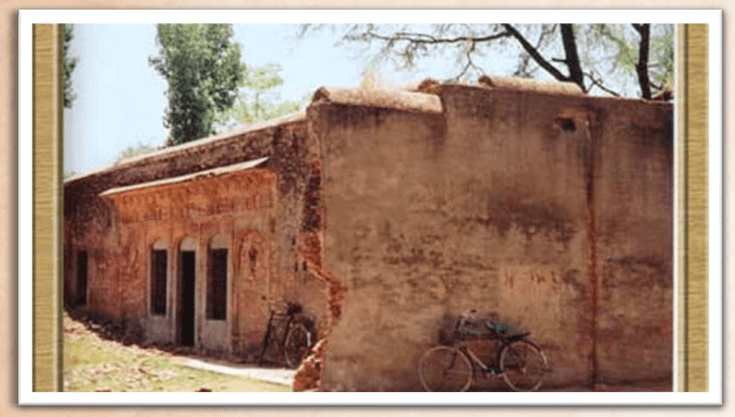
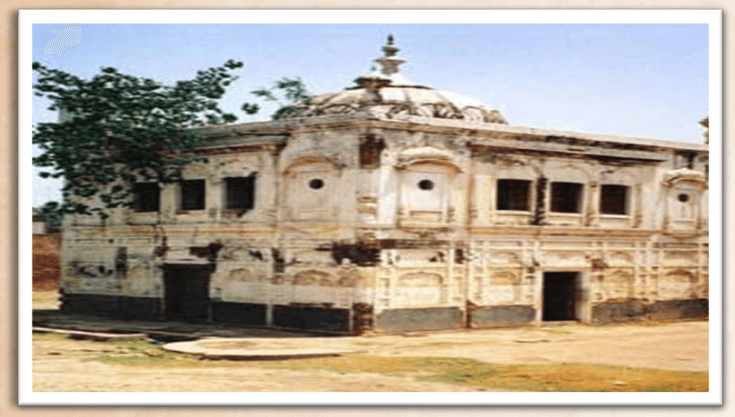
The gurdwara complex was built on an impressive scale: a beautifully built three-storeyed main building, a two-storey langar hall, and residential rooms for Sikh pilgrims in front of it. Construction was completed in Samvat 1942 of the Bikrami calendar — roughly 1885 CE — making the shrine about 140 years old, as recent visitors have noted. The institution was well endowed: a jagir of 500 ghumaon of agricultural land and ten shops in the village supported it, marking it as a significant religious centre of its time.
Partition changed everything. The congregation dispersed, and the complex slipped into the long decline familiar to many minority shrines: today it is described as a deserted place, looked after by a local caretaker (recorded as the “Karyalewale Pir”), with encroachment eating at its edges. A fair is still organized every year, though it lacks the lustre of the past. The building stands — strong, storied, waiting — a 140-year-old witness to one man’s transformation and to a Punjab where such stories were the fabric of community life.
Top Things to Do in Gurdwara Baba Jamiat Singh, Kahna Nau
Explore the three-storey complex
Walk the gurdwara complex slowly: the three-storey main shrine, the two-storey langar hall, and the pilgrims’ residential rooms in front. Even in its deserted state, the scale of the place communicates how important it once was. Look for the architectural details of the 1880s — the brickwork, the proportions, the courtyard organization — and imagine it full of pilgrims.
Stand where the story happened
The shrine exists because of one night, one vow, and one man’s transformation. Standing in the courtyard knowing the story of Baba Jamiat Singh — the thief who whispered the Guru’s name and was spared — gives the visit a narrative power few heritage sites can match. It is a story about second chances, and the building is its monument.
Visit the Ghalia Mandi grain market
Kahna Nau’s famous grain market is one of the great working sights of Lahore’s outskirts — sacks of wheat and grain, traders, porters, and the organized chaos of a market that feeds the region. Go in the morning when it’s at its busiest, and pair it with the quiet of the gurdwara for a full picture of the town.
Photograph the old Ferozepur Road belt
The Lahore–Ferozepur road is one of the historic arteries of Punjab, and the stretch around Kahna Nau still shows its age in old buildings, roadside shrines and markets. Photographers will find rich material — but remember the complex is partly encroached and privately watched over, so be respectful and ask the caretaker before taking pictures inside.
Time your visit for the annual fair
A fair is still organized at the shrine every year. It no longer draws the crowds of the past, but attending — respectfully, as an observer — connects you to the living thread of the shrine’s community life. Ask locally for the dates, which follow the traditional calendar.
Famous Places In and Around Gurdwara Baba Jamiat Singh, Kahna Nau
- Lahore Fort and Badshahi Mosque — Lahore’s Mughal crown jewels, about 25–30 km north; the essential pairing for a heritage day
- Gurdwara Dera Sahib, Lahore — the great Sikh shrine of Guru Arjan Dev beside the Lahore Fort; combine it with Kahna Nau for a full Sikh-heritage day in Lahore
- Shalimar Gardens — the Mughal paradise gardens, on the way into the city
- Minar-e-Pakistan and Greater Iqbal Park — the national monument and its sprawling park
- Anarkali and Ichhra Bazaars — Lahore’s historic shopping streets for crafts, fabrics and street food
How to Reach Gurdwara Baba Jamiat Singh, Kahna Nau
This is one of the easiest heritage destinations in Pakistan to reach — Kahna Nau sits on Ferozepur Road, one of Lahore’s main southern arteries, well connected to the Lahore Ring Road.
- From Lahore: About 20–25 km from central Lahore — 30 to 60 minutes depending on traffic. Take Ferozepur Road south toward Kahna Nau, or use the Lahore Ring Road for a faster run. Ride-hailing apps and local taxis all serve the route.
- From Islamabad: About 380 km via the M-2 Lahore–Islamabad motorway — roughly 4.5 to 5 hours to Lahore, then under an hour to Kahna Nau.
- From Karachi: About 1,200 km — 14 to 16 hours by road. Fly to Lahore (about 1.5 hours) and drive to Kahna Nau; this is the sensible option.
- Nearest airport: Allama Iqbal International Airport, Lahore — about 25–30 km from Kahna Nau, 45 minutes to an hour by road.
- Road conditions: Ferozepur Road is a busy, mostly dual-carriageway urban highway; the Ring Road is excellent. Inside Kahna Nau town, streets are congested — park near the main road and walk or take a rickshaw to the gurdwara (Avenue 9 area).
- Transport options: Private car, ride-hailing (Careem/InDrive/Uber all operate in Lahore), local taxis, and wagons/minibuses running the Ferozepur Road corridor from Lahore’s southern terminals.
Route Details
- From central Lahore, take Ferozepur Road south (or join the Lahore Ring Road and exit toward Kahna Nau).
- Continue about 20–25 km to Kahna Nau town — you’ll pass the Ghalia Mandi grain market area.
- The Gurdwara Baba Jamiat Singh complex is a known local landmark in the town (Avenue 9 area) — ask any shopkeeper for the old gurdwara.
- Check in with the caretaker on arrival; the complex is deserted in parts, so don’t wander into unsafe or encroached sections alone.
Where to Stay in Gurdwara Baba Jamiat Singh, Kahna Nau
Kahna Nau is a Lahore suburb — stay in Lahore, where the choice is enormous, and visit the gurdwara as a half-day trip.
- Luxury: Lahore’s five-star hotels (along the Mall Road, Gulberg and DHA corridors) offer the full international-standard experience — the comfortable base for a heritage-focused trip.
- Mid-range: Dozens of good three- and four-star hotels and serviced apartments across Gulberg, Johar Town and DHA — excellent value, and closest to the Ferozepur Road route south.
- Budget: Guesthouses and budget hotels cluster around the railway station, Mozang and Ichhra — simple, cheap, and fine for a short stay.
- Heritage option: A few boutique and heritage-style guesthouses operate in old Lahore — atmospheric if you want your stay to match your sightseeing.
- Booking tip: Lahore fills up during wedding season (winter) and around major events — book ahead, and choose Johar Town or DHA-side accommodation to minimize the drive to Kahna Nau.
Where to Eat: Local Foods of Gurdwara Baba Jamiat Singh, Kahna Nau
You’re in Lahore — one of the great food cities of the world. Eat well; it’s practically mandatory.
- Lahori breakfast — halwa puri, nihari, paya and lassi at the old city’s famous breakfast spots; start your Kahna Nau day the Lahori way.
- Food streets — Fort Road Food Street (with the Badshahi Mosque lit up at night) and the newer food streets serve everything from chargha to falooda.
- Kahna Nau local eats — the town’s dhabas and bazaar stalls do hearty Punjabi staples: dal, sabzi, fresh tandoori roti and doodh patti at very local prices.
- Anarkali and Ichhra street food — samosas, dahi bhallay, gol gappay and fresh juices in the historic bazaars.
- Costs: Lahore suits every budget — street food and dhaba meals are very cheap, mid-range restaurants are reasonable, and even fine dining stays affordable by international standards. Carry cash for bazaars and dhabas.
Weather in Gurdwara Baba Jamiat Singh, Kahna Nau
Kahna Nau shares Lahore’s climate: long, hot summers, a monsoon interlude, and short, pleasant winters. Winter is the season for heritage walks; summer afternoons are for air-conditioned museums.
| Season | Temperature Range | Conditions |
|---|---|---|
| Winter (Dec–Feb) | 7°C to 20°C | Cool and pleasant; foggy mornings in December–January. Best season for sightseeing. |
| Spring (Mar–Apr) | 15°C to 35°C | Lovely turning hot; March is ideal, April already warm. |
| Summer (May–Jun) | 30°C to 44°C | Intensely hot; sightsee at dawn or after sunset only. |
| Monsoon (Jul–Sep) | 28°C to 38°C | Humid with heavy showers; the countryside turns green but streets can flood. |
| Autumn (Oct–Nov) | 15°C to 32°C | Cooling down; November is excellent — clear, comfortable, crowd-free. |
Language and Culture of Gurdwara Baba Jamiat Singh, Kahna Nau
Punjabi is the everyday language of Kahna Nau, with Urdu universally understood — Lahore’s famous warmth and hospitality need no translation. Expect to be offered chai, asked where you’re from, and given enthusiastic directions. Lahoris are famously proud of their city and love visitors who show interest in its heritage.
At the gurdwara, observe Sikh-shrine etiquette: cover your head, remove your shoes, dress modestly, and keep your voice low. The complex is partly deserted and encroached — treat it as the fragile heritage it is: don’t climb on structures, don’t remove anything, and follow the caretaker’s guidance about which areas are safe to enter. In Lahore generally, modest dress is appreciated in religious places and old-city areas.
Shopping in Gurdwara Baba Jamiat Singh, Kahna Nau
Combine the shrine with Lahore’s legendary shopping — from centuries-old bazaars to modern malls.
- Anarkali Bazaar — one of South Asia’s oldest markets: fabrics, traditional shoes, jewelry and street food in historic lanes.
- Ichhra Bazaar — Lahore’s beloved bargain market for clothes, embroidery and household goods.
- Liberty Market — Gulberg’s famous market for fashion, fabrics and accessories.
- Modern malls — Lahore has several large shopping malls (including Emporium Mall and Packages Mall) with international and Pakistani brands, cinemas and food courts — useful for a comfortable, air-conditioned shopping break.
- Kahna Nau’s Ghalia Mandi — not a souvenir stop, but a fascinating working grain market and a great photography subject.
Travel Tips for Gurdwara Baba Jamiat Singh, Kahna Nau
Packing Essentials
- A head covering for the gurdwara and modest clothing.
- Comfortable walking shoes for the shrine complex and Lahore’s old city.
- Winter: a warm jacket — December–January mornings are cold and foggy.
- Summer: sun protection, water, light cotton clothes; plan outdoor sightseeing for morning or evening.
- A mask can help on high-smog winter days in Lahore.
Safety Tips
- Lahore is Pakistan’s most tourist-friendly big city, but standard precautions apply: keep valuables discreet, use registered transport, and avoid isolated areas after dark.
- At the gurdwara: the complex is partly deserted and encroached — go with the caretaker’s permission, don’t enter unstable structures, and visit in daylight.
- Keep your phone charged and share your live location with someone when exploring unfamiliar areas.
Money & Connectivity
- ATMs are everywhere in Lahore; carry cash for Kahna Nau’s bazaars, dhabas and rickshaws.
- All major mobile networks offer strong 4G across Lahore and Kahna Nau. Ride-hailing apps work well for the trip.
Best Time to Visit Gurdwara Baba Jamiat Singh, Kahna Nau
Winter (November to February) — the best season
Cool, clear days around 12–20°C make this the perfect window for the gurdwara, the grain market and all of Lahore’s outdoor heritage. December–January mornings can be foggy — plan a slightly later start.
Spring (March to April) — lovely
March is arguably Lahore’s most beautiful month; April warms up but mornings remain pleasant. A great shoulder season.
Summer and monsoon (May to September) — avoid for heritage walks
Extreme heat (up to 44°C) followed by humid monsoon makes outdoor sightseeing punishing. If you must come, visit the shrine at dawn.
Autumn (October to November) — excellent
Cooling temperatures, clear skies and thinner crowds — November is a superb month for this trip.
Final Thoughts
Gurdwara Baba Jamiat Singh, Kahna Nau, is proof that the best heritage stories are not always in the guidebooks. A thief’s midnight vow, a lifetime of devotion, a three-storey shrine raised in 1885 on the old road to Ferozepur — this is the Punjab of storytellers, and it sits less than an hour from Lahore’s city centre. The building is weathered and the fair has faded, but the story hasn’t lost an ounce of its power.
Make it a day: dawn at the gurdwara, morning in the Ghalia Mandi, afternoon at the Lahore Fort and Badshahi Mosque, evening on Fort Road Food Street with the mosque glowing gold. That’s a day that moves from a village shrine to imperial splendor without ever leaving the story of Punjab. Come between November and February, bring a scarf and your curiosity, and let the thief-turned-saint of Kahna Nau remind you why we travel: for second chances, and for stories worth keeping.
FAQs
Where is Gurdwara Baba Jamiat Singh, Kahna Nau?
In Kahna Nau town on the Lahore–Ferozepur road, Lahore District, Punjab — about 20–25 km south of central Lahore (Avenue 9 area).
Who was Baba Jamiat Singh?
A notorious thief who, fleeing with stolen buffaloes, whispered the name of the Sat Guru, vowed never to steal again, was miraculously spared — and spent the rest of his life as a devotee. The gurdwara honors his transformation.
How old is the gurdwara?
Construction was completed in Samvat 1942 (about 1885 CE), making the complex roughly 140 years old.
What is the best time to visit Kahna Nau?
November to February — cool, clear winter weather (7–20°C) ideal for the shrine and for exploring Lahore. Avoid the May–June heat.
How do I reach Kahna Nau from Lahore?
Drive 20–25 km south on Ferozepur Road (or via the Lahore Ring Road) — 30 to 60 minutes. Ride-hailing apps, taxis and Ferozepur Road wagons all serve the route.
Is the gurdwara open to visitors?
The complex is largely deserted and partly encroached, with a local caretaker. Visit in daylight, check in with the caretaker, and don’t enter unstable sections.
Is this a good family trip?
Yes — it’s an easy half-day outing from Lahore. Combine it with Lahore Fort and the food streets for a full family day; keep children close in the old parts of the complex.
What else can I see nearby?
Lahore Fort, Badshahi Mosque, Gurdwara Dera Sahib, Shalimar Gardens, Minar-e-Pakistan, Anarkali Bazaar — and Kahna Nau’s own Ghalia Mandi grain market.
Discover more on our Explore Pakistan page, walk more of old Lahore in our Bagh-e-Jinnah Lahore travel guide, and trace more Sikh heritage in our Ali Baig Gurdwara travel guide. For northern mountains after the plains, see Malam Jabba.