


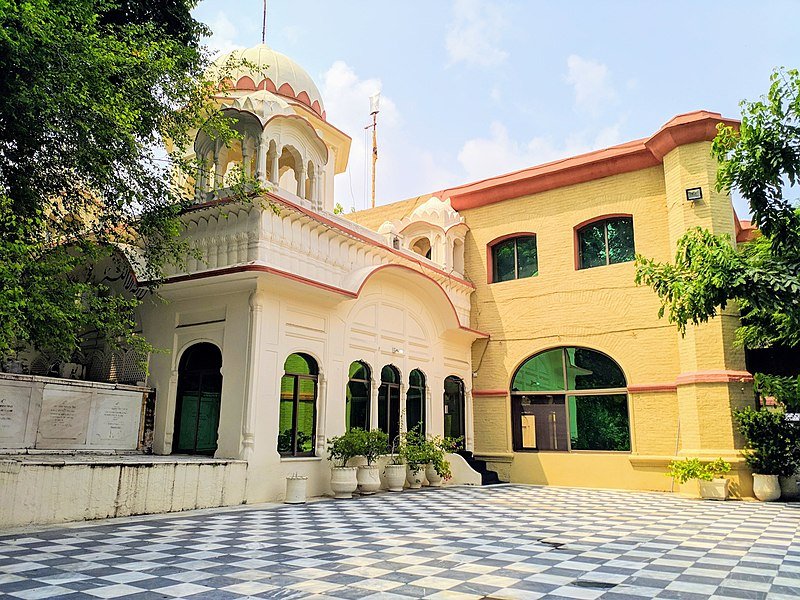
Most travelers who land in Sialkot head straight for its famous sights and never realize that some of the oldest footprints of Guru Nanak lie a short drive away, hidden in a quiet town called Pasrur. If you are the kind of traveler who is moved more by a crumbling wall with a five-hundred-year-old story than by a polished monument, then Gurdwara Manji Sahib at Deokay deserves a place on your list. This Gurdwara Manji Sahib, Deokay (Pasrur) travel guide will tell you why this fragile, overlooked shrine matters, when to go, and how to reach it.
Quick Facts
- Location: Deokay, on the Narowal–Sialkot road, about half a kilometer from Pasrur railway station, Pasrur tehsil, Sialkot district, Punjab, Pakistan
- Altitude: around 250 meters (Punjab plains — no mountain climb involved)
- Famous For: the site of Guru Nanak’s discourse with the Sufi mystic Mian Mittha; the raised Manji Sahib platform with a beautiful door at the end of an old tank
- Nearest City: Sialkot, roughly 30 km away; Pasrur town itself is within walking distance of the shrine
- Accessibility: easy road access — the shrine sits right beside the Narowal–Sialkot road; nearest airport is Sialkot International Airport
- Known Landmarks: the bair (jujube) garden with its gate on the main road, the large pond/tank beside it, the elevated Manji Sahib platform, three historic houses behind the platform
- Best For: heritage lovers, spiritual travelers, photographers of fading history, and anyone tracing Guru Nanak’s travels through Pakistan
Why Visit Gurdwara Manji Sahib, Deokay (Pasrur)
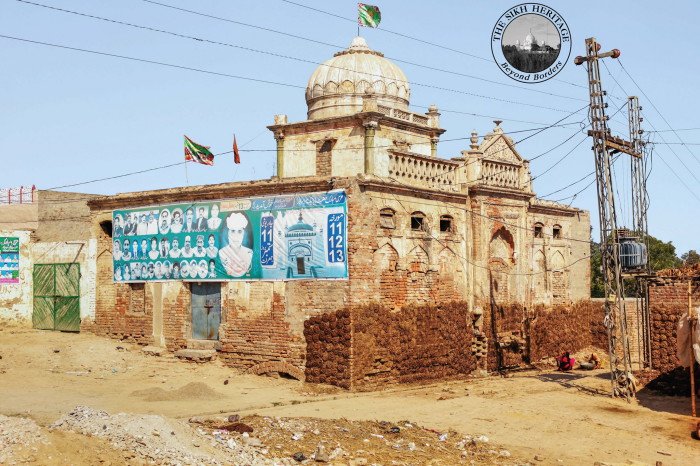
Let us be honest with you: Gurdwara Manji Sahib at Deokay is not a grand, gleaming gurdwara. There is no golden dome here, no marble courtyard, no lines of pilgrims. What there is, instead, is something rarer — a place where the story of Guru Nanak’s life is still anchored to the ground in its most unadorned form. This was the spot where Jagat Guru Guru Nanak sat in discourse with a Muslim mystic named Mian Mittha, and the very platform where the Guru Granth Sahib later rested still stands, roofless but dignified, at the end of an old tank.
If you care about history, this shrine gives you what restored monuments cannot: the truth of survival. The bair garden that once shaded the place is still a big garden. The pond that cooled travelers is still there, though its water is stagnant now. The beautiful door of the Manji Sahib still stands. You can walk the same few hundred meters from Pasrur railway station that visitors have walked for generations and stand exactly where the tradition says the discourse happened. For anyone putting together a Guru Nanak heritage trail through Pakistan, Deokay belongs on it next to the bigger names.
This is also a journey for the thoughtful traveler. The shrine is currently under the occupation of the District Board and is in a poor state of repair, with the water tank turned into a stagnant pond. Visiting with respect, documenting what you see, and sharing the story helps keep the memory of the place alive. Heritage only survives when people know it exists — and right now, Deokay needs people who know.
And practically speaking, this is one of the easiest heritage sites in Punjab to visit. It sits on a main road, a short walk from Pasrur town center, with Sialkot’s hotels and restaurants a short drive away. You can see it in under an hour and combine it with a full day of exploring Pasrur and Sialkot. Come for the story, stay for the quiet, and leave with a deeper understanding of how deeply the Sufi and Sikh traditions of Punjab are woven together.
History of Gurdwara Manji Sahib, Deokay (Pasrur)
The history of this shrine begins with the travels of Guru Nanak, the founder of the Sikh faith, who lived from 1469 to 1539. According to the historical tradition recorded by researchers of Sikh shrines in Pakistan, Jagat Gur Guru Nanak reached Pasrur from Sialkot during his missionary journeys. Pasrur was — and remains — the leading town and tehsil of Sialkot district. The place where Guru Nanak stayed became known as Deokay (also written Deoka).
When Guru Nanak arrived in Pasrur, a renowned Muslim mystic was in the town, busy in his prayers. The tradition remembers him as Mian Mittha — though his real name is said to have been forgotten with the passage of time, because people began calling him Mian Mittha on account of his soft, sweet speech (“mittha” meaning sweet). Guru Nanak held a discourse with Mian Mittha at this place. Tradition preserves the exchange of verses between them: Mian Mittha said, “Pehla Nao Khudai da, doja Nao Rasool — Nanak kalma je pare tan dargah paway kabul” (the first name is God’s, the second the Prophet’s — if Nanak recites the kalma, he will find acceptance in the divine court). Guru Nanak replied in kind: “Pehla Nao Khudai da, dar ditta Rasool — Sheikha niat ras kar to dargah paway kabul” (the first name is God’s, given by the Prophet — O Sheikh, purify your intention, and you will find acceptance in the divine court).
The spot of this discourse was first known as “Kotla Mian Mittha,” after the Sufi saint. Over time, the name Deoka — and later Deokay — became the popular name of the place. The geography around the shrine has also changed with time: the Dek stream once used to flow close to the site, but it has since shifted its course. A very big garden of bair (jujube trees) stood here, with one of its gates opening on the Narowal–Pasrur road, and beside that gate stood a large pond.
At the end of that tank, a simple Manji Sahib was built — literally a “room to keep the Granth Sahib.” It was constructed as an elevated platform on the right-hand side of the tank, without any roof but with a beautiful door. Three houses stood behind the Manji Sahib, and the Guru Granth Sahib resided in one of them. In living memory, a devoted caretaker named Bhai Mohan Singh Ji used to clean and maintain the shrine. After the upheaval of 1947 and the migration of the Sikh population, the shrine passed under the occupation of the District Board. The water tank has become a stagnant pond, and the gurdwara itself is no longer in good condition — but the structure, the door, the houses, and the garden still mark the spot where the story happened.
Top Things to Do in Gurdwara Manji Sahib, Deokay (Pasrur)
Stand at the Manji Sahib Platform
The heart of your visit is the elevated platform at the end of the tank. Walk up to it slowly and take in the details: the platform raised above the ground, the absence of a roof that leaves it open to the sky, and the beautiful door that once framed the entry to the room where the Granth Sahib was kept. Photographers will find the textures of weathered brick and old woodwork deeply evocative. Remember this is a sacred place — keep your head covered, remove your shoes before stepping close, and keep your voice low.
Walk Around the Old Tank and Bair Garden
Beside the gate of the bair garden lies the large pond, and beyond it the tank at the end of which the Manji Sahib stands. Walk the perimeter and picture what the surveyors of old described: a big garden of bair trees, water cool and clean, travelers resting in the shade. The tank is stagnant now, but the geometry of the place — garden, pond, platform, houses — is still readable, and that is exactly what makes a heritage visit rewarding.
See the Three Houses Behind the Shrine
Behind the Manji Sahib stand three houses, one of which once housed the Guru Granth Sahib. These modest structures are as much a part of the story as the platform itself. See them from outside with respect; families or caretakers may be living around the site. This is where you feel the living edge of the place — history that did not get a fence around it.
Explore Pasrur Town
Pasrur is one of the oldest towns of the Sialkot region, and the shrine is only about half a kilometer from Pasrur railway station, so the town itself is right at your doorstep. Walk its old bazaars, try the local food, and watch small-town Punjab go about its day. The town sits on the Narowal–Sialkot road, which has connected travelers for centuries — the same road that brought Guru Nanak here from Sialkot.
Famous Places In and Around Gurdwara Manji Sahib, Deokay (Pasrur)
- Pasrur Railway Station — the historic station half a kilometer from the shrine; the old rail link of the region
- Gurdwara Babe di Ber (Beri Sahib), Sialkot — the great Guru Nanak shrine of Sialkot city, the natural companion visit to Deokay
- Gurdwara Baoli Sahib, Sialkot — another historic Sialkot gurdwara with its stepwell
- Sialkot Fort — the ancient fort in Sialkot city, a short drive from Pasrur
- Kartarpur (Narowal) — the final resting place of Guru Nanak lies in the same broader region, reachable by road
How to Reach Gurdwara Manji Sahib, Deokay (Pasrur)
Getting to Deokay is straightforward. The shrine sits on the Narowal–Sialkot road, about half a kilometer from Pasrur railway station, and a gate of the bair garden opens directly on the road — you cannot miss it once you know where to look.
Route Details
From Lahore (roughly 135 km, about 2 hours): Take the M-11 Sialkot Motorway from Lahore to Sialkot, then continue north to Pasrur on the Sialkot–Pasrur road (around 30 km). At Pasrur, follow the Narowal road toward the railway station; the shrine’s garden gate is on this road about half a kilometer from the station.
From Islamabad (roughly 250 km, about 4 to 4.5 hours): Drive the motorway network (M-2 to Lahore, then M-11 to Sialkot) or take the GT Road via Gujranwala to Sialkot, then head to Pasrur. The roads are in generally good condition year-round except during heavy monsoon spells.
From Karachi (roughly 1,300 km): Flying is the sensible choice — take a flight to Sialkot International Airport, then drive to Pasrur (under an hour from the airport). The long drive or train journey to Lahore/Sialkot is an alternative for those with time.
Nearest airport: Sialkot International Airport, under an hour’s drive from Pasrur. Nearest railway station: Pasrur railway station itself, about half a kilometer from the shrine.
Public transport options include buses and wagons from Sialkot and Narowal to Pasrur, and rickshaws within the town. For the most comfortable trip, hire a car with a driver from Sialkot or Lahore, or use a ride-hailing app in the cities and a local rickshaw for the last stretch.
Where to Stay in Gurdwara Manji Sahib, Deokay (Pasrur)
Pasrur is a small town, so most visitors base themselves in Sialkot, roughly 30 km away, where the full range of accommodation is available. In Sialkot city you will find mid-range hotels with air-conditioned rooms, hot water, and in-house restaurants, along with budget guesthouses and small hotels near the bus stands and railway station for travelers watching their spending. A comfortable mid-range hotel in Sialkot generally costs a few thousand rupees per night; budget guesthouses cost less.
If you want to stay closer to the shrine, Pasrur has simple local guesthouses and rest houses suited to an overnight stop — clean, basic, and inexpensive. For a more upscale stay, Lahore offers every tier of hotel and is only about two hours away, so some heritage travelers day-trip to Pasrur from Lahore. There is no camping scene at the shrine itself; this is a half-day heritage stop, not a wilderness camp.
Where to Eat: Local Foods of Gurdwara Manji Sahib, Deokay (Pasrur)
The food around Pasrur and Sialkot is classic Punjabi fare, and eating it is half the pleasure of the trip. Start your morning like a local with a glass of thick, creamy lassi or a plate of halwa puri from a dhaba near Pasrur’s bazaars. For lunch, the roadside hotels serve chicken karahi, daal fry, and tandoori naan straight from the clay oven — simple, honest food at budget-friendly prices.
In Sialkot, the food scene widens: try sarson da saag with makki di roti in winter, seekh kebabs and malai boti from the grill shops, and finish with barfi or gulab jamun from the old mithai shops. A full meal at a local dhaba typically costs a few hundred rupees per person; a sit-down restaurant meal in Sialkot costs more but remains reasonable by city standards. Drink bottled water, as you should anywhere in rural Punjab, and carry snacks and water for the short walk around the shrine.
Weather in Gurdwara Manji Sahib, Deokay (Pasrur)
Deokay sits on the Punjab plains, so its weather follows the classic Sialkot pattern: a cold, foggy winter, a blazing summer, and a heavy monsoon. The shrine is an open-air site with no shade over the platform, so the season you choose shapes the experience completely.
| Season | Temperature Range | Conditions |
|---|---|---|
| Winter (Dec–Feb) | 8°C to 23°C | Cold mornings, frequent fog that can delay road travel; pleasant, clear afternoons — the best walking weather |
| Spring (Mar–Apr) | 15°C to 36°C | Warming up fast; green fields around Pasrur, good for photography before the heat sets in |
| Summer (May–Jun) | 26°C to 41°C | Very hot and dry; visit only early morning or late evening; carry plenty of water |
| Autumn (Oct–Nov) | 15°C to 32°C | Comfortable and dry; the second-best window after winter for heritage walks |
The monsoon (July–September) brings heavy rain to Sialkot district — the year’s wettest months — so avoid the shrine visit then; the unpaved ground around the tank gets muddy and rural roads can flood.
Language and Culture of Gurdwara Manji Sahib, Deokay (Pasrur)
Punjabi is the language of everyday life in Pasrur — warm, direct, and musical. Urdu is understood everywhere, so you will have no trouble communicating. The town’s culture is the classic Punjabi mix of hospitality and piety: expect strangers to offer you tea, and expect genuine curiosity about why you have come.
What makes Deokay culturally special is the memory it carries of a moment when Sikh and Sufi traditions met in dialogue rather than distance. Guru Nanak’s discourse with Mian Mittha is remembered here not as a debate won, but as a conversation between two seekers. Visit in that spirit. Cover your head at the shrine (carry a scarf or cap), remove your shoes before approaching the platform, dress modestly, and ask before photographing any people or homes around the site. The shrine’s surroundings are partly residential — your courtesy is your welcome.
Shopping in Gurdwara Manji Sahib, Deokay (Pasrur)
There is no souvenir market at the shrine, and there should not be — but Pasrur’s bazaars and Sialkot’s famous markets are close by. Sialkot is world-famous for its sports goods (footballs, cricket gear), surgical instruments, and leather products; the city’s main bazaars are a treasure hunt for quality goods at local prices. In Pasrur, the old bazaars sell everyday Punjabi goods — cloth, steel utensils, and sweets.
For edible souvenirs, pick up fresh mithai from a trusted sweet shop in Pasrur or Sialkot, or a packet of the region’s dry fruits and nuts. Bargaining is normal in the bazaars; do it with a smile. Do not expect shopping malls in Pasrur — for branded retail, Sialkot city has modern shopping centers a short drive away.
Travel Tips for Gurdwara Manji Sahib, Deokay (Pasrur)
Packing Essentials
Carry a head covering (scarf or cap) for the shrine, comfortable walking shoes, sunscreen and a hat for the open platform, drinking water, and a power bank. In winter, bring a warm jacket and shawl — foggy mornings in Sialkot are genuinely cold. A camera is a must; the textures of the old shrine photograph beautifully in morning light.
Safety Tips
Pasrur and the Sialkot region are generally safe for visitors, and heritage travelers are welcomed warmly. Keep to daylight hours for the shrine visit, as the site has no lighting or facilities. The tank is stagnant — do not wade in. Travel with a local guide or driver if you are unfamiliar with the area; the shrine is small and unmarked, and a local will help you find it and explain the site.
Money & Connectivity
ATMs are available in Pasrur town and plentiful in Sialkot, but carry enough cash for the day — small dhabas and rickshaws do not take cards. Mobile signals from all major networks work fine in Pasrur; 4G data is reliable enough for maps and ride-hailing in town.
Best Time to Visit Gurdwara Manji Sahib, Deokay (Pasrur)
Winter (November to March) — the ideal season
This is when Deokay is at its best. The air is cool and clear, the light is soft for photography, and walking the shrine’s grounds is genuinely pleasant. Morning fog can slow your drive from Sialkot or Lahore, so plan to arrive mid-morning. If you can only choose one season, choose winter.
Spring (March to April) — short and sweet
The fields around Pasrur are green, the weather is still bearable, and the crowds are nonexistent. Late April starts getting hot, so come early in the season.
Summer (May to June) — only for the determined
Temperatures push past 40°C. If you must come in summer, visit at sunrise or just before sunset, keep the visit short, and carry water. The shrine has no shelter from the sun.
Monsoon (July to September) — avoid
Heavy rains make the ground around the old tank muddy and can disrupt road travel in the district. Save Deokay for drier months.
Final Thoughts
Gurdwara Manji Sahib at Deokay will not impress you with grandeur — it will move you with honesty. Here, in a bair garden beside a quiet pond, is where Guru Nanak once sat in dialogue with a Sufi mystic, and the platform that held the Granth Sahib still rises from the ground with its beautiful door. It is a place that asks nothing of you except attention, and it rewards that attention with one of the most human stories in Punjab’s spiritual history.
If you are exploring the Explore Pakistan series, pair Deokay with Gurdwara Babe di Ber in Sialkot and Gurdwara Baoli Sahib for a full day of Guru Nanak heritage in the Sialkot region. Come in winter, come with respect, and come ready to listen — the walls here still have something to say.
FAQs
Where is Gurdwara Manji Sahib, Deokay (Pasrur)?
It is in Deokay, on the Narowal–Sialkot road, about half a kilometer from Pasrur railway station in Pasrur tehsil, Sialkot district, Punjab, Pakistan.
What is the history of Gurdwara Manji Sahib at Deokay?
Guru Nanak traveled here from Sialkot and held a discourse with the Sufi mystic Mian Mittha. The spot was first called Kotla Mian Mittha, later Deokay. A simple Manji Sahib — an elevated platform where the Granth Sahib was kept — was built at the end of the old tank beside a bair garden.
What is the best time to visit Deokay?
November to March, when the weather is cool and clear. Avoid the summer heat (May–June) and the monsoon rains (July–September).
How do I reach Gurdwara Manji Sahib from Lahore?
Drive the M-11 Sialkot Motorway to Sialkot (roughly 135 km, about 2 hours), then continue about 30 km to Pasrur. The shrine is on the Narowal road, half a kilometer from Pasrur railway station.
Is Gurdwara Manji Sahib safe for families?
Yes — Pasrur is a peaceful town and the shrine is a short, easy walk. Keep to daylight hours, as the site has no facilities or lighting, and supervise children near the stagnant tank.
Where can I stay near Deokay?
Base yourself in Sialkot (about 30 km away), which has mid-range hotels and budget guesthouses. Pasrur has simple local guesthouses for a basic overnight stay.
What food is available near the shrine?
Classic Punjabi food — lassi, halwa puri, chicken karahi, daal, and tandoori naan at Pasrur’s dhabas, with a wider restaurant scene in Sialkot.
Can I visit Deokay and other Sialkot gurdwaras in one day?
Easily. Combine Deokay with Gurdwara Babe di Ber and Gurdwara Baoli Sahib in Sialkot city for a rewarding one-day Guru Nanak heritage trail.
, Pakistan? Discover why it deserves your visit, the best time to go, things to do and how to reach)