


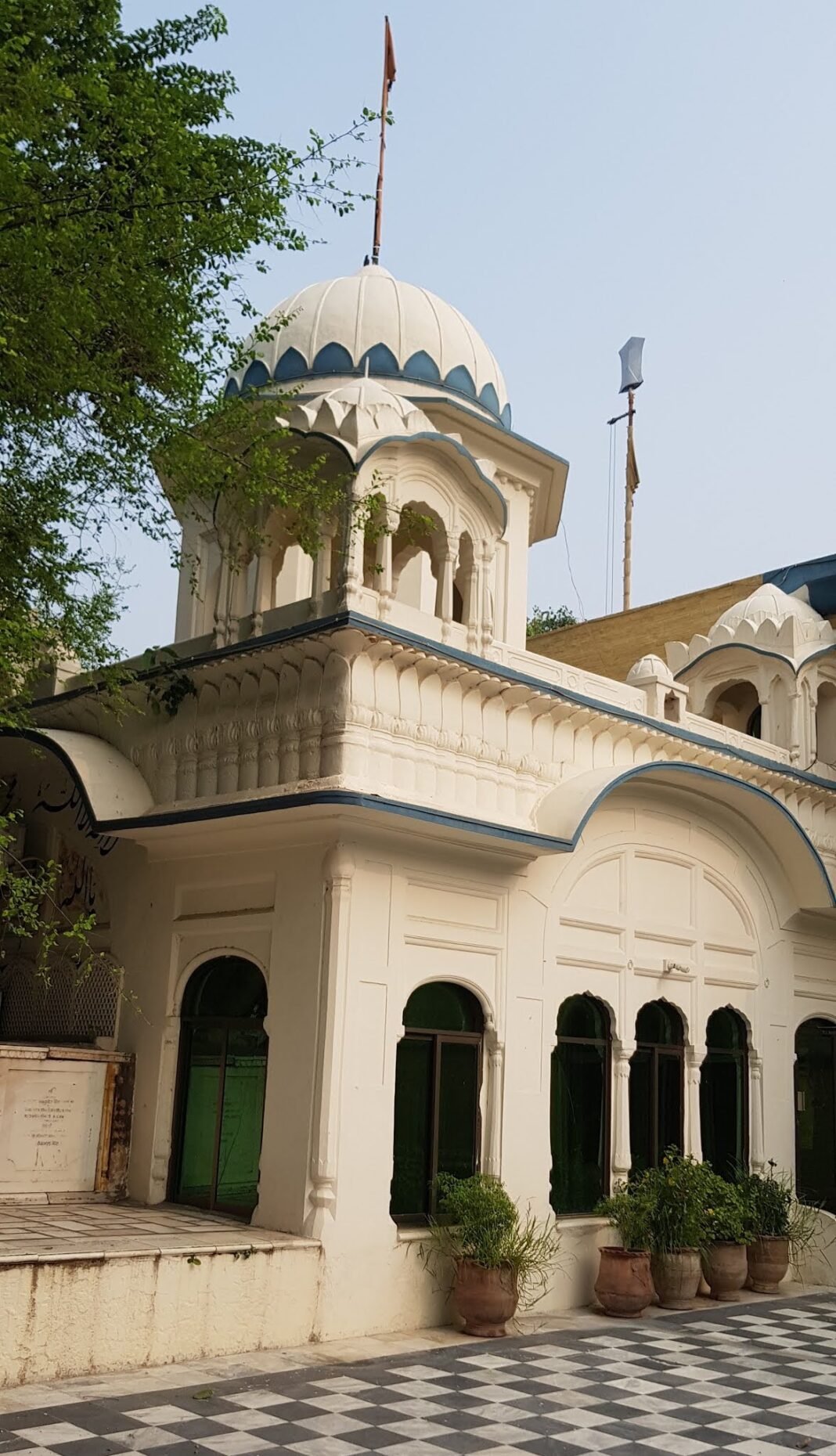
On the Sialkot–Chaprar road, about twenty kilometers from Sialkot city, a few old walls stand by the roadside before a village high school. To a passing driver they are nothing — but to those who know, they are the last remains of a shrine where Guru Nanak once rested on his way back from Jammu. This Gurdwara Nanaksar (Guru Sar), Tilakpur travel guide is for travelers who believe that the smallest, most fragile places often carry the deepest stories — and who want to stand where history stood, even when only walls are left.
Quick Facts
- Location: Tilakpur village (twin villages Tilakpur and Kanur, also called Kapur), on the Sialkot–Chaprar road, Sialkot district, Punjab, Pakistan — the shrine stood on the road before the village High School
- Altitude: around 250 meters (Punjab plains)
- Famous For: the spot where Guru Nanak stayed while returning from Jammu; once called “Guru Sar”
- Nearest City: Sialkot, about 20 km away
- Accessibility: roadside site on the Sialkot–Chaprar road — easy to reach by car, van, or local wagon
- Known Landmarks: the surviving walls of the shrine, the village High School, the twin villages of Tilakpur and Kanur (Kapur)
- Best For: heritage documenters, spiritual pilgrims tracing Guru Nanak’s routes, photographers of vanishing history, and travelers already exploring Sialkot district
Why Visit Gurdwara Nanaksar (Guru Sar), Tilakpur
There are two kinds of heritage sites in Pakistan: the ones that were restored, and the ones that are still waiting. Gurdwara Nanaksar at Tilakpur belongs firmly to the second kind. The shrine is in total shambles — only some walls remain standing, and the land around it has been caught in litigation with various occupants. Visiting it will not give you a polished photo opportunity. It will give you something else entirely: the rare, quiet feeling of arriving at a place of memory before it disappears.
What makes Tilakpur worth the detour is the story it anchors. Guru Nanak stayed at this spot while on his way back from Jammu, and for generations the place was known as Guru Sar — the Guru’s tank, the Guru’s resting place. The name has faded into local memory, but it is still there for those who ask. Standing by those surviving walls, you are standing on a route the founder of the Sikh faith actually walked. That is the kind of travel that changes how you read history books afterward.
This is also a trip for the traveler with a conscience. Documenting the Tilakpur shrine — photographing its walls, noting its condition, writing about it — is itself an act of preservation. Heritage researchers have surveyed the site and recorded its state; every visitor who respectfully records what remains adds to the public memory of the place. If you care about Pakistan’s Sikh heritage and believe these small shrines deserve the same attention as the famous ones, Tilakpur is where that belief becomes action.
And on a purely practical level, this is the easiest kind of heritage stop there is: a roadside site on a main district road, twenty kilometers from a major city, visitable in half an hour. Pair it with a day of exploring Sialkot — its gurdwaras, its fort, its bazaars — and you will return home with a story almost nobody else has told. That, for the curious traveler, is the whole point.
History of Gurdwara Nanaksar (Guru Sar), Tilakpur
The story of Tilakpur is tied to the journeys of Guru Nanak, who traveled widely across the Indian subcontinent in the late 15th and early 16th centuries, spreading his message of one God, honest living, and the equality of all people. During these travels — known as the udasis — Guru Nanak passed through the Sialkot region more than once, and the villages and towns around Sialkot hold some of the oldest Guru Nanak associations in Pakistan.
According to the historical tradition documented in surveys of Sikh shrines in Pakistan, this sacred shrine is located in Tilakpur village on the Sialkot–Chaprar road. The locality is actually made up of two villages — Tilakpur and Kanur, the latter also known as Kapur. The village lies about 20 kilometers from Sialkot city. The shrine of Jagat Guru stood on the road before the High School of the village. Guru Nanak stayed at this place while he was on his way back from Jammu, resting here during his long journeys.
The shrine’s old name carries its history in a single phrase: it was once called Guru Sar. “Sar” in this context evokes the tank or resting place of the Guru — the spot where the traveler stopped, drank, and rested. Over the generations since, and especially after the partition of 1947 scattered the Sikh community of the region, the shrine fell into ruin. Heritage surveys found the shrine in total shambles, with only some walls remaining standing. Litigation against various occupants of the land belonging to the gurdwara has been in progress. What was once Guru Sar is now, in the words of the survey, “just a memory.”
That phrase should not be read as an ending. Across Pakistan, awareness of Sikh heritage is growing, and documentation projects continue to record sites like Tilakpur so that their stories are not lost. The walls by the roadside before the village high school are still there — and as long as travelers keep coming to stand by them, Guru Sar is more than a memory.
Top Things to Do in Gurdwara Nanaksar (Guru Sar), Tilakpur
Visit the Surviving Walls of the Shrine
The main act of your visit is simple: find the walls of the old shrine on the road before the village High School, and spend time with them. Walk around them slowly, observe the old brickwork, and photograph the details — the textures, the way the light falls on them, the road stretching in both directions. This is heritage photography at its most meaningful: you are recording something that may not exist forever. Keep your head covered and your manner respectful; this is sacred ground even in ruin.
Ask the Village About Guru Sar
The people of Tilakpur and Kanur know their own history. Ask the elders — over a cup of tea from a village shop — about “Guru Sar,” and you will hear what the surveys recorded: that this was where Guru Nanak stayed on his way back from Jammu. Local memory is the living archive of places like this. Listen more than you speak, and accept any hospitality that is offered; Punjabi villages are famously generous to guests.
Walk the Village and the Chaprar Road
Tilakpur and its twin Kanur (Kapur) are classic Punjab villages — wheat fields, buffalo carts, the sound of tube wells, children walking home from school. Take a slow walk through the lanes after visiting the shrine walls. The Sialkot–Chaprar road itself is part of the experience: this is the old route network along which travelers have moved for centuries, and Guru Nanak among them.
Photograph Rural Punjab at Golden Hour
The flat plains around Tilakpur are made for evening photography. Arrive an hour or two before sunset: the low sun turns the fields gold, and the old shrine walls cast long shadows. Bring a camera or a good phone and patience — the best shots here are the quiet ones.
Famous Places In and Around Gurdwara Nanaksar (Guru Sar), Tilakpur
- Sialkot City (20 km) — the district capital: Gurdwara Babe di Ber, Gurdwara Baoli Sahib, Sialkot Fort, and the famous sports-goods bazaars
- Gurdwara Babe di Ber (Beri Sahib), Sialkot — the great Guru Nanak shrine of the city, the essential companion visit
- Gurdwara Baoli Sahib, Sialkot — the historic stepwell gurdwara of Sialkot
- Chaprar — the road’s namesake town further along the route, a glimpse of small-town Punjab
- Head Marala and the Chenab — the river landscape north of Sialkot, worth the drive for nature lovers
How to Reach Gurdwara Nanaksar (Guru Sar), Tilakpur
Tilakpur sits on the Sialkot–Chaprar road, about 20 kilometers from Sialkot city, with the shrine walls on the road before the village High School. Any driver in Sialkot will know the Chaprar road; ask for Tilakpur village and the High School.
Route Details
From Lahore (roughly 155 km, about 2 to 2.5 hours): Take the M-11 Sialkot Motorway to Sialkot, then drive out of the city on the Sialkot–Chaprar road for about 20 km to Tilakpur. Look for the village High School; the shrine walls stand on the road just before it.
From Islamabad (roughly 270 km, about 4.5 hours): Take the motorway network to Sialkot (M-2 to Lahore, then M-11), then the Chaprar road to the village. Alternatively, drive the GT Road to Gujranwala and cut across to Sialkot — slower but scenic.
From Karachi (roughly 1,320 km): Fly to Sialkot International Airport and drive to Tilakpur (under an hour from the airport via Sialkot city). This is the only practical option for a short trip.
Nearest airport: Sialkot International Airport. Public transport: wagons and buses run from Sialkot to villages along the Chaprar road; a rickshaw from the nearest stop covers the last stretch. For comfort and flexibility, hire a car with a driver in Sialkot — the whole trip is easily done in half a day.
Where to Stay in Gurdwara Nanaksar (Guru Sar), Tilakpur
Tilakpur is a village with no hotels, so Sialkot city — just 20 km away — is the natural base. Sialkot offers mid-range hotels with air conditioning, hot water, and restaurants, as well as budget guesthouses near the bus stands and station areas. A mid-range room typically costs a few thousand rupees a night; budget options cost less.
There is no reason to stay overnight in Tilakpur itself; the shrine visit takes under an hour and the village has no tourist accommodation. If you prefer a more upscale base, Lahore is about two hours away and offers every tier of hotel. Plan Tilakpur as a morning or afternoon excursion from Sialkot, with lunch back in the city.
Where to Eat: Local Foods of Gurdwara Nanaksar (Guru Sar), Tilakpur
Eat in Sialkot before or after your village visit — the city is the region’s food capital. Start with the Punjabi classics: a breakfast of halwa puri and lassi, a lunch of chicken karahi or daal with tandoori naan, and an evening round of seekh kebabs and malai boti from the grill shops. In winter, sarson da saag with makki di roti and a dollop of white butter is the dish the whole region waits for.
In Tilakpur itself, the village shops sell tea, biscuits, pakoras, and fresh fruit — perfect for a short stop. If a local family offers you tea or food, accept it graciously; village hospitality in Punjab is heartfelt and it would be rude to refuse. A dhaba meal in the area costs a few hundred rupees per person. Carry drinking water and snacks for the roadside stop, since there are no restaurants at the shrine itself.
Weather in Gurdwara Nanaksar (Guru Sar), Tilakpur
Tilakpur shares Sialkot’s plains climate — cold foggy winters, fierce summers, and a drenching monsoon. Since the shrine is an open roadside site with no shelter, timing your visit for the cool months makes all the difference.
| Season | Temperature Range | Conditions |
|---|---|---|
| Winter (Dec–Feb) | 8°C to 23°C | Cold foggy mornings that can slow the drive from Sialkot; bright clear afternoons — ideal for the visit |
| Spring (Mar–Apr) | 15°C to 36°C | Pleasant early, heating up fast; green fields and good light for photography |
| Summer (May–Jun) | 26°C to 41°C | Intensely hot; visit only at sunrise or sunset and keep it brief |
| Autumn (Oct–Nov) | 15°C to 32°C | Dry and comfortable; the second-best season for the trip |
Avoid the monsoon months of July to September, when Sialkot district receives its heaviest rains and rural roadsides turn muddy. Winter fog deserves a special note: visibility on the Chaprar road can drop sharply on December and January mornings, so start your drive after the fog lifts.
Language and Culture of Gurdwara Nanaksar (Guru Sar), Tilakpur
Punjabi is the mother tongue of Tilakpur, spoken in the warm, earthy dialect of the Sialkot plains, and Urdu works everywhere for visitors. The village culture is classic rural Punjab: deeply hospitable, religiously observant, and curious about guests in the best way. If you stop to ask directions, expect to be offered tea before you get your answer.
The cultural weight of the place lies in its name — Guru Sar. This was a resting place of Guru Nanak on his return from Jammu, and that memory is honored even in the shrine’s ruined state. Show the respect the place deserves: cover your head near the walls, keep your voice down, do not climb on the old brickwork, and ask before photographing people. Dress modestly, as you would anywhere in rural Punjab. The land around the shrine is under litigation, so do not wander into disputed plots or private fields — admire the walls from the roadside and the public path.
Shopping in Gurdwara Nanaksar (Guru Sar), Tilakpur
There is nothing to buy at the shrine — and that is as it should be. Do your shopping in Sialkot, twenty kilometers away, where the options are excellent. Sialkot’s global fame rests on its sports goods: footballs, cricket bats, and hockey gear made in the city’s factories and sold in its bazaars at a fraction of export prices. The city is also known for surgical instruments and fine leather goods.
For food souvenirs, Sialkot’s old mithai shops sell barfi, gulab jamun, and patisa worth carrying home, and the dry-fruit sellers stock almonds, pistachios, and dates. Bargain politely in the bazaars. You will not find shopping malls in Tilakpur village; Sialkot city has modern retail for anything else you need.
Travel Tips for Gurdwara Nanaksar (Guru Sar), Tilakpur
Packing Essentials
Bring a head covering for the shrine, sun protection (hat, sunscreen, sunglasses), drinking water, and comfortable shoes — the ground by the roadside is uneven. A camera is essential; this is a documentation trip as much as a visit. In winter, layer up: a warm jacket for the foggy morning drive, lighter clothes for the sunny afternoon.
Safety Tips
The Sialkot–Chaprar road is a normal, busy district road and the area is safe for daytime visits. Go in daylight — the site has no lighting, facilities, or boundary wall. Do not enter any fenced or clearly private land around the shrine walls, given the ongoing litigation over the gurdwara’s land. Keep valuables in the car and travel with a companion or driver if you are new to rural Punjab.
Money & Connectivity
There are no ATMs in Tilakpur village — withdraw cash in Sialkot before heading out. Small village shops run on cash only. Mobile coverage from all major networks is good along the Chaprar road, and 4G data works well enough for navigation and ride-hailing apps in Sialkot.
Best Time to Visit Gurdwara Nanaksar (Guru Sar), Tilakpur
Winter (November to March) — the best season
Cool air, clear skies, and soft light make winter the perfect time to stand by the old walls and walk the village. This is also the season when heritage surveys recommend visiting the region’s small shrines. Plan around the morning fog: leave Sialkot after it lifts, usually by mid-morning.
Spring (March to April) — brief and beautiful
Green wheat fields, mild mornings, and almost no other tourists. Come early in the season before the heat builds.
Summer (May to June) — avoid if you can
With temperatures above 40°C and no shade at the site, summer is punishing. If you must come, make it a sunrise stop on your way somewhere else.
Monsoon (July to September) — skip it
Heavy rains, muddy roadsides, and poor light for photography. The shrine will still be there in October.
Final Thoughts
Gurdwara Nanaksar at Tilakpur is not a destination for everyone — and that is exactly why it matters. It is for the traveler who understands that a few walls by a village road can hold more meaning than a marble monument, because those walls mark a spot where Guru Nanak actually rested on his way back from Jammu. Guru Sar: the name alone is worth the twenty-kilometer drive from Sialkot.
As you continue through the Explore Pakistan series, combine Tilakpur with Gurdwara Babe di Ber and Gurdwara Baoli Sahib in Sialkot for a full day tracing Guru Nanak’s footsteps through the district. Come in winter, come with a camera and a covered head, and come ready to remember a place the world is in danger of forgetting.
FAQs
Where is Gurdwara Nanaksar (Guru Sar), Tilakpur?
It is in Tilakpur village (with twin village Kanur/Kapur) on the Sialkot–Chaprar road, about 20 km from Sialkot city, Punjab, Pakistan. The shrine stood on the road before the village High School.
What is the history of the Tilakpur shrine?
Guru Nanak stayed here while returning from Jammu. The place was known as Guru Sar. After 1947 it fell into ruin; heritage surveys found it in total shambles with only some walls standing, and litigation over the gurdwara’s land is in progress.
What is the best time to visit Tilakpur?
November to March, when the weather is cool and clear. Avoid the summer heat and the July–September monsoon.
How do I reach Tilakpur from Sialkot?
Drive about 20 km out of Sialkot on the Sialkot–Chaprar road to Tilakpur village; the shrine walls are on the road before the village High School. A hired car from Sialkot is the easiest option.
Is the shrine safe to visit for families?
Yes, in daylight. The site is a roadside stop with no facilities, so keep children close to the road-side path and do not climb on the old walls.
Where can I stay near Tilakpur?
In Sialkot city, 20 km away, which has mid-range hotels and budget guesthouses. The village has no tourist accommodation.
What should I eat during the trip?
Eat in Sialkot: lassi, halwa puri, chicken karahi, kebabs, and in winter sarson da saag with makki di roti. Village shops in Tilakpur sell tea and snacks.
Can I combine Tilakpur with other shrines in one day?
Yes — it pairs perfectly with Gurdwara Babe di Ber and Gurdwara Baoli Sahib in Sialkot for a one-day Guru Nanak heritage circuit.
, Tilakpur, Pakistan? Discover why it deserves your visit, the best time to go, things to do and how to reach.)