Quick Facts
- Location: Village Beherwal, between Jamber and Pattoki on the Lahore–Multan road, Kasur district, Punjab, Pakistan
- Altitude: around 194 m (low Punjab plains)
- Famous For: The spot where Guru Arjan Dev Ji turned a brackish well sweet; the ancestral village of Bhai Hema, forebear of the Nakai Misl
- Nearest City: Pattoki (a short drive north on the Multan road)
- Accessibility: Road-only; get down at the Bhonni Kay More bus stop on the Lahore–Multan road and walk into the village
- Known Landmarks: The gurdwara building (now housing the Union Council offices), the sacred well and acacia tree in its corner, the samadh of Chaudhary Hem Raj in the nearby fields
- Best For: Sikh heritage pilgrims, history buffs, rural Punjab explorers, and anyone tracing Guru Arjan Dev Ji’s journey through the Kasur belt
Why Visit Gurdwara Panjvin Patshahi, Beherwal
Some shrines are famous for what stands on them. Beherwal is famous for what happened on them. This large, baked-brick village between Jamber and Pattoki holds one of the most beloved stories of Guru Arjan Dev Ji’s travels: on a scorching summer day, the Fifth Guru asked a villager named Hema Chaudhary for water, was offered only brackish well water, and declared it sweet — and sweet it was. A gurdwara was later built on that very spot. If you want to understand why the Guru’s name is still spoken with such warmth across the Punjab, this is the kind of story — and the kind of place — where you feel it.
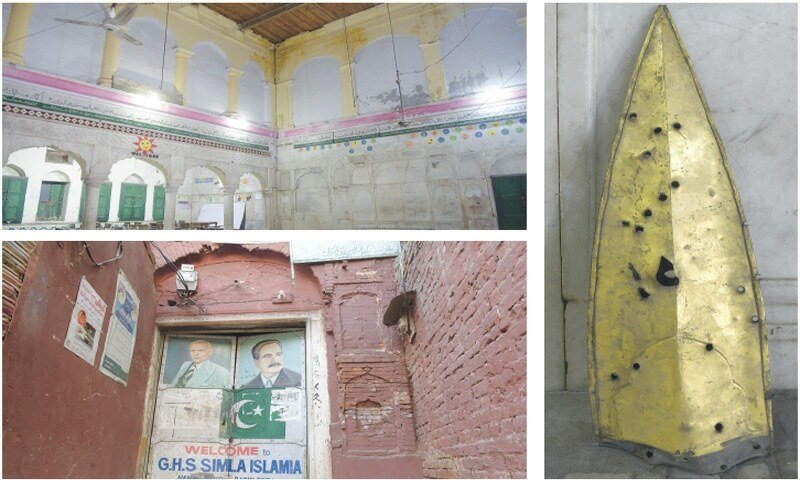
Beherwal rewards the traveler who likes their history human-sized. There is no grand complex here and no crowd of tourists. The gurdwara building still stands, though its roofs have collapsed and it now houses the offices of the Union Council — the well the Guru sweetened and the old acacia tree beside it are still there in the corner, and the samadh of Chaudhary Hem Raj rests in the fields nearby. Standing by that well, you are at the center of a chain of history that runs from a summer afternoon centuries ago straight into the politics of modern Punjab: Bhai Hema’s descendant Hira Singh founded the Nakai Misl, and another descendant, Sardar Arif Nakai, became the chief minister of Punjab. Few village shrines in the world can claim a lineage like that.
This is also a trip for the senses. Beherwal sits in the agricultural heartland of the Kasur district — wheat and rice fields, buffalo carts, the smell of the tandoor at dusk — and the journey itself, down the old Lahore–Multan road past Jamber and Pattoki, is a slice of the real Punjab that motorway travelers never see. Come for the Guru’s story; stay for the village’s.
Pair it with the gurdwaras of nearby Jamber and Sheikam, and you have a full day’s pilgrimage through a corner of Pakistan that most travel guides skip entirely. For the heritage traveler, that is exactly the point.
History of Gurdwara Panjvin Patshahi, Beherwal
To understand Beherwal, you need to know Guru Arjan Dev Ji (1563–1606). The fifth Sikh Guru compiled the Adi Granth in 1604, completed the Harmandir Sahib at Amritsar, and in 1606 became Sikhism’s first martyr, dying in Lahore on 30 May 1606. His life was spent building the Sikh community — traveling constantly through the villages of the Punjab, teaching, and gathering followers. The Kasur belt, with its network of villages along the old Multan road, was part of that traveling ministry, and Beherwal was one of its stops.
The histories of the shrine — recorded by researchers including Iqbal Qaiser in Historical Sikh Shrines in Pakistan — tell the story this way. Guru Arjun Dev Ji arrived in Beherwal from Jamber. It was summer, and the Guru asked a villager, Hema Chaudhary, for water to drink. The Chaudhary answered honestly: the well water here is brackish; he would fetch sweet water from the village instead. But the Guru replied, “Bhai Hema! This water is sweet!” — and when Hema drew the water and the Guru drank, and then the villagers drank, they all found it sweet. The brackish well had been sweetened by the Guru’s word.
What followed was just as human. The Guru told the Chaudhary to keep serving the sangat — and Hema folded his hands and answered that he had neither money nor a wife in his house. The Guru asked whether there was a widow in the village; the sangat brought one before him; and at the Guru’s command, the widow accepted Hema as her husband. The Guru was pleased and blessed them both. They had children — and from that line came Hira Singh, born in Samvat 1763, who took Amrit in Samvat 1788 and became the founder and first chief of the Nakai Misl, one of the twelve Sikh confederacies of the 18th century. Centuries later, Sardar Arif Nakai, a descendant of the same family, became the chief minister of Punjab.
A gurdwara was built at the spot where the Guru had sweetened the brackish water. Its endowment was recorded: 39 ghumaon of land granted by Mai Bishan Kaur, and 3.5 ghumaon bestowed by another devotee. A fair used to be held on the 7th of Poh. Then came 1947. Like so many shrines of the region, the gurdwara lost its sangat in the Partition, and without worshippers to maintain it, the building declined. Today the gurdwara houses the offices of the Union Council, its roofs have collapsed, and no Prakash (daily scripture reading) takes place there — but the sacred well and the acacia tree still stand in the right-hand corner of the complex, and the samadh of Chaudhary Hem Raj lies in the fields to the left of the gurdwara. It is, as the histories say, a golden page in the history of this village.
Top Things to Do in Gurdwara Panjvin Patshahi, Beherwal
Visit the sacred well the Guru sweetened
This is the heart of the visit. In the right-hand corner of the gurdwara complex you will find the well whose brackish water Guru Arjan Dev Ji declared sweet — and beside it the old acacia tree that has shaded this corner for generations. Stand there quietly and the story tells itself. Local accounts say the well is still there; ask the Union Council staff or nearby residents to point it out, since the complex is now used as offices and the shrine’s old layout is not obvious at first glance.
See the gurdwara building and its Union Council offices
The shrine that rose over the sweetened well is still standing, though time has been hard on it: the roofs have collapsed and the building now houses the offices of the local Union Council. It is a bittersweet sight — a sacred place pressed into everyday administrative service — but it also means the building survives, and you can walk its rooms and courtyards. Be respectful: it is a working government office during the day, so visit politely and ask permission before wandering or photographing.
Pay respects at the samadh of Chaudhary Hem Raj
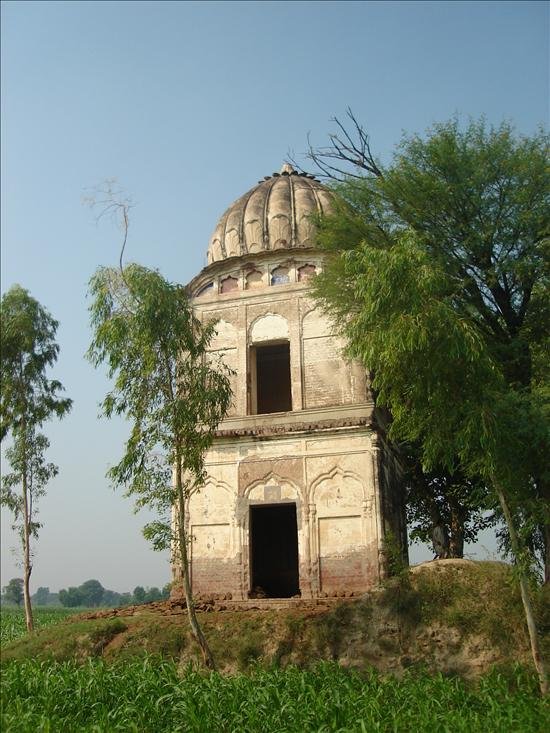
In the fields to the left of the gurdwara stands the samadh (memorial) of Chaudhary Hem Raj — Hema Chaudhary, the villager of the sweet-water story. This is the human anchor of the legend: the man who offered the Guru brackish water honestly, who was married at the Guru’s command, and whose descendants shaped Sikh history. Few visitors make it out to the fields; those who do say it is the most peaceful moment of the trip.
Walk the village and meet Beherwal
Beherwal is described in the histories as a large village built of baked bricks and cement — a prosperous farming settlement on the Multan road. Take an hour to walk it: the wheat and rice fields, the village well culture, the dhabas along the road. The people here know the Guru’s story well; it is their village’s golden page, and they tell it with pride.
Famous Places In and Around Gurdwara Panjvin Patshahi, Beherwal
- Gurdwara Panjvin Patshahi, Sheikam: Just 3 km from Pattoki on the Pattoki–Halla road — the Guru came here from Beherwal; its small shrine now houses the Sheikam Union Council offices. Read our full travel guide.
- Gurdwara Tham Sahib, Jamber: The Guru’s next stop after Beherwal — a tall, beautiful, spacious gurdwara in the twin villages of Jamber Kalan and Jamber Khurd, where several villagers embraced Sikhism.
- Gurdwara Malji Sahib, Kanganpur: Another historic Kasur-district shrine — see our full guide.
- Pattoki: The nearest town, known for its flower nurseries and as a gateway to the Chhanga Manga forest, one of the largest man-made forests in the world.
- Kasur city: The district headquarters, famous for its shrines, its sweets (Kasuri methi and falooda), and the shrine of Baba Bulleh Shah.
How to Reach Gurdwara Panjvin Patshahi, Beherwal
Beherwal lies between Jamber and Pattoki on the Lahore–Multan road (N-5). The standard instruction, straight from the heritage surveys, is: get down at the Bhonni Kay More bus stop, and the village is right there. The whole trip is on flat, paved plains roads.
From Lahore
Drive south on the Multan Road (N-5) — Pattoki is about 76 km from Lahore, roughly 1.5 hours. Beherwal is just before Pattoki, between Jamber and Pattoki; get off at the Bhonni Kay More stop. Total from Lahore: roughly 70 km, about 1.5 hours.
From Islamabad
Take the M-2 motorway to Lahore, then continue south on the N-5 — total roughly 370 km, 5 to 6 hours.
From Karachi
Fly to Lahore (Allama Iqbal International Airport) and drive from there; the road journey from Karachi would be over 900 km. Lahore is the nearest international airport.
Nearest Airport
Allama Iqbal International Airport, Lahore — about 80–90 km by road, roughly 2 hours.
Road Conditions by Season
The N-5 Multan Road is a major highway, paved and usable year-round. Monsoon rains (July–September) can slow traffic; winter fog (December–January) is the main hazard — drive in daylight. The village link road from Bhonni Kay More is short and paved.
Transport Options
A private car is the easiest option. Public transport is genuinely practical here: buses and wagons run constantly between Lahore, Pattoki, and Multan on the N-5 — simply ask the conductor for Bhonni Kay More. From the stop, the village is walkable; a rickshaw can cover the last stretch. Pilgrim groups usually travel by tour van.
Route Details
- Lahore → Multan Road (N-5) south → past Jamber → Bhonni Kay More bus stop (approx. 70 km, 1.5 hrs)
- Walk or take a rickshaw into Beherwal village
- Ask for the gurdwara / Union Council office — the sacred well is in the right-hand corner of the complex
- Walk to the fields on the left of the gurdwara for the samadh of Chaudhary Hem Raj
- Optional: continue to Pattoki (flower nurseries) or back north to Jamber’s Gurdwara Tham Sahib
Where to Stay in Gurdwara Panjvin Patshahi, Beherwal
Beherwal is a village — you will not find hotels here, and you should not need one. The visit takes half a day at most, and the surrounding towns cover every budget.
Mid-range hotels: Pattoki has simple, comfortable mid-range hotels and guesthouses aimed at highway travelers and wedding parties — clean AC rooms and attached baths at very reasonable rates. This is the most convenient base for the Beherwal–Sheikam–Jamber circuit.
Budget guesthouses: The N-5 corridor is lined with highway motels and dhabas-with-rooms; basic but serviceable for a night. Kasur city also has budget options.
Luxury: Stay in Lahore. The city’s full range of five-star and boutique hotels is 1.5 hours away, making Beherwal an easy day trip.
Camping: Not applicable — settled farmland, not wilderness. Overnight in town.
Where to Eat: Local Foods of Gurdwara Panjvin Patshahi, Beherwal
Eat on the Multan Road and you eat well. The dhabas between Lahore and Pattoki are famous across Punjab: fresh tandoori rotis slapped onto the clay oven wall, daal fry bubbling in desi ghee, karahi chicken, saag with makki di roti in winter, and endless glasses of lassi or chai. This is honest, generous, delicious food at prices that will make city dwellers smile — a full dhabha meal typically costs just a few hundred rupees per person.
Pattoki specialties: Pattoki is known for its nurseries and its sweets shops; the town’s barfi and fresh jalebi are worth a stop. If you continue to Kasur city, do not leave without trying Kasuri falooda and the district’s famous andrassay (rice-flour sweets).
Village food: In Beherwal itself, small tea stalls and a couple of local eateries serve parathas, omelettes, and chai — simple, hot, and perfect after walking the fields. For a bigger meal, Pattoki’s bazaar restaurants are minutes away.
Weather in Gurdwara Panjvin Patshahi, Beherwal
The Kasur plains share central Punjab’s classic climate: a short cool winter, a long fierce summer, and a monsoon that breaks the heat. Approximate ranges for the Pattoki–Beherwal area:
| Season | Temperature Range | Conditions |
|---|---|---|
| Winter (Dec–Feb) | 5–18°C | Cool, crisp days; morning fog in Dec–Jan; the best season for the heritage circuit |
| Spring (Mar–Apr) | 18–33°C | Pleasant and green; wheat harvest season; excellent for village walks |
| Summer (May–Jul) | 30–45°C | Intensely hot — the very season of the Guru’s sweet-water story; visit at dawn, avoid midday |
| Monsoon/Autumn (Aug–Nov) | 25–38°C, cooling later | Humid with heavy showers Jul–Sep; October–November clear and pleasant again |
Language and Culture of Gurdwara Panjvin Patshahi, Beherwal
Punjabi (Majhi dialect) is the language of Beherwal, with Urdu understood everywhere. A few words of Punjabi open every door here — this is a village that loves its story and loves telling it.
The culture is rural Punjab at its warmest: joint families, tandoor smoke at dusk, and a deep, matter-of-fact respect for the Guru’s memory. Remember that the gurdwara building now serves as a Union Council office — you are visiting a working government building that happens to be sacred ground. Dress modestly, remove your shoes if you approach the well corner as a place of reverence, keep your voice low, and ask before photographing people or offices.
For Sikh visitors, the usual courtesies apply: cover the head at the sacred spot, and receive the villagers’ hospitality graciously. The shared custodianship of this heritage — Muslim villagers preserving a Sikh shrine’s story — is one of the quietest, finest things about the Kasur belt.
Shopping in Gurdwara Panjvin Patshahi, Beherwal
Beherwal itself has only village shops, but Pattoki’s bazaar is a proper small-town market: cloth, khussa shoes, steel utensils, and excellent sweet shops. Pattoki is also famous for its plant nurseries — if you garden, the rows of nurseries along the Multan Road are a delight, and saplings are cheap. Kasur city’s bazaars offer a bigger selection, including the district’s famous sweets and Kasuri methi (fenugreek). There is no shopping mall in the area, and the village trip does not need one.
Local Events and Festivals
One festival belongs to this shrine’s history: a fair used to be held on the 7th of Poh (late December to early January in the Gregorian calendar) at the Beherwal gurdwara. The Poh fair was the shrine’s annual gathering day in the days when the sangat still worshipped here. Today the fair is a memory rather than a living event, but its date is still part of the village’s lore — visiting in late December connects you to the old rhythm of the shrine.
The wider Kasur district celebrates the usual Punjabi calendar — Eid, Basant-season festivities in spring, and the urs of Baba Bulleh Shah in Kasur city — but for this shrine specifically, the 7th of Poh is the date that matters.
Travel Tips for Gurdwara Panjvin Patshahi, Beherwal
Packing Essentials
Winter visitors (the recommended season) should pack a warm layer for foggy mornings. A headscarf or cap is respectful at the sacred well and useful against sun and dust. Carry drinking water — do not drink from old wells — plus snacks, since the village has only basic tea stalls. Offline maps help on the village lanes. If you are combining Beherwal with Sheikam and Jamber, plan a full day and start early.
Safety Tips
The area is peaceful and accustomed to highway travelers. Visit in daylight, keep valuables discreet, and be polite at the Union Council offices — you are a guest in a working government building. Sikh pilgrims in organized groups should coordinate through their tour operator.
Money & Connectivity
Carry cash; the nearest ATMs are in Pattoki. All major mobile networks cover the N-5 corridor and the village with 4G. Fuel stations line the Multan Road, so top up before turning into the village.
Best Time to Visit Gurdwara Panjvin Patshahi, Beherwal
Winter (November–March): The Ideal Season
Cool, clear, and comfortable — this is when the heritage surveys themselves recommend visiting the Kasur belt. Late December even lets you stand at the shrine on the old fair date of 7th Poh.
Spring (March–April): Lovely
Green fields, mild temperatures, and the harvest season’s energy. A fine alternative to winter.
Summer (May–July): For the Story, Not the Comfort
The Guru’s visit happened on a summer day, and standing by the sweetened well in the heat does give the story an extra dimension — but 40°C-plus afternoons are punishing. If you come, come at dawn.
Monsoon/Autumn (August–October): Mixed
Humid and wet through September; October and November turn pleasant again. Fine for a quick stop on the Multan Road.
Final Thoughts
Beherwal is proof that the greatest shrines are not always the grandest ones. A brackish well, an honest villager, a Guru’s word — and from that afternoon flowed a gurdwara, a Misl, and a chief minister. The building may now house Union Council offices and its roofs may have fallen, but the well is still there, the acacia still shades it, and the story is still told.
Come in the cool months, combine it with Sheikam and Jamber, and let the Kasur belt show you the Punjab that the history books only summarize. For more heritage journeys, explore our Explore Pakistan collection.
FAQs
Where is Gurdwara Panjvin Patshahi, Beherwal?
In the village of Beherwal, between Jamber and Pattoki on the Lahore–Multan road, Kasur district, Punjab. Get down at the Bhonni Kay More bus stop.
What is the story of the sweetened well?
On a summer day, Guru Arjan Dev Ji asked Hema Chaudhary for water. The well water was brackish, but the Guru declared it sweet — and all who drank found it sweet. A gurdwara was later built on the spot.
Who was Bhai Hema?
Hema Chaudhary, the villager of the well story. The Guru married him to a village widow and blessed them; their descendant Hira Singh founded the Nakai Misl, and Sardar Arif Nakai later became chief minister of Punjab.
Can I still see the well?
Yes — the sacred well and the old acacia tree still stand in the right-hand corner of the gurdwara complex. The samadh of Chaudhary Hem Raj is in the fields to the left of the gurdwara.
Is the gurdwara still a place of worship?
No. The building now houses the Union Council offices, its roofs have collapsed, and no daily Prakash takes place. Visit respectfully as a heritage site and working office.
What is the best time to visit Beherwal?
November to March, when the plains are cool. Late December coincides with the traditional fair date of 7th Poh.
How do I reach Beherwal from Lahore?
Drive south on the Multan Road (N-5) toward Pattoki — about 70 km, 1.5 hours. Get off at Bhonni Kay More and walk into the village. Buses and wagons on the N-5 also stop there.
What else can I see nearby?
The Gurdwara Panjvin Patshahi at Sheikam (3 km from Pattoki), Gurdwara Tham Sahib at Jamber, Pattoki’s nurseries, and the Chhanga Manga forest are all close by.